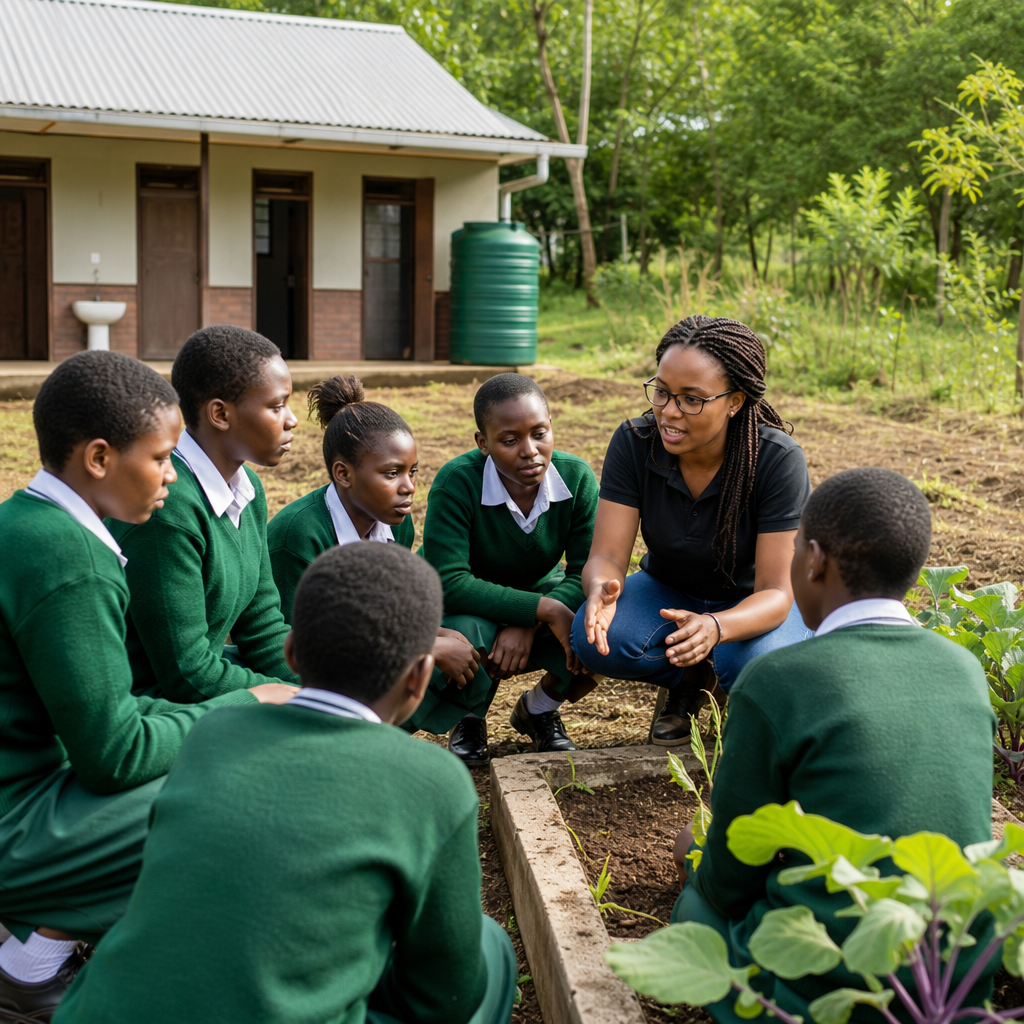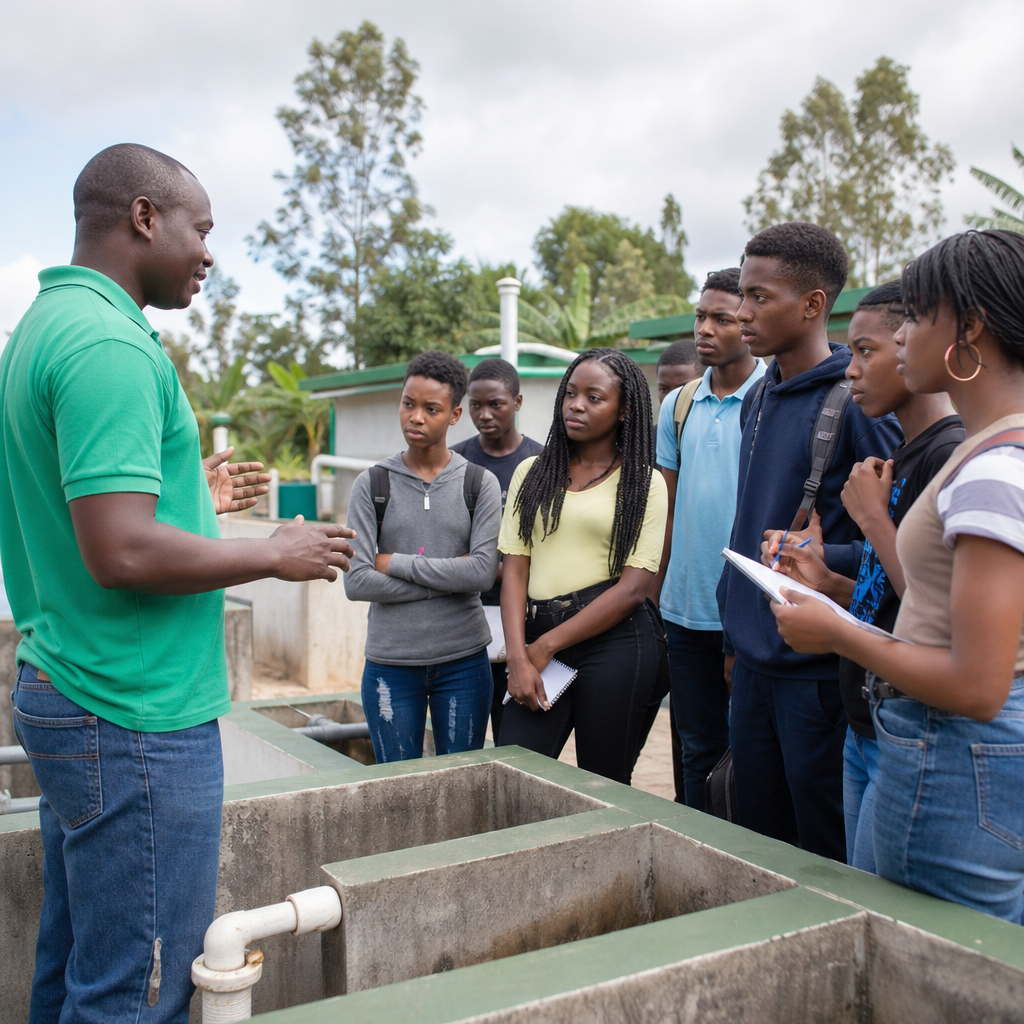
EcoSan field trips turn sanitation from an abstract public service into a visible, memorable learning experience that communities can understand, discuss, and improve together. In this context, EcoSan means ecological sanitation: systems that treat human waste as a resource to be safely managed, recovered, and reused through approaches such as urine diversion, composting, decentralized treatment, nutrient recovery, and water-saving toilet design. A field trip is more than a site visit. Done well, it is a structured educational program that helps residents, students, municipal staff, and local organizations see how sanitation connects to health, agriculture, water quality, climate resilience, and dignity. That is why EcoSan field trips matter within community engagement and education: they foster participation and learning by moving people from passive awareness to informed involvement.
I have seen this shift repeatedly when groups move from a classroom discussion to a real treatment site, a school toilet block, or a community composting demonstration. Questions become sharper, misconceptions surface quickly, and technical ideas that seemed difficult suddenly make sense. Participants can compare odors, cleanliness, maintenance routines, handwashing access, and reuse outcomes with their own eyes. They also meet the people who operate systems every day, which makes sanitation planning more grounded and more human. As a hub topic, fostering participation and learning through EcoSan field trips includes outreach design, curriculum alignment, safety procedures, interpretation methods, inclusive facilitation, and follow-up activities that convert one visit into long-term civic action.
For communities building support for better sanitation, field trips answer practical questions directly. How does an ecological toilet work? Is it hygienic? Who empties it? What does treatment cost? Can treated by-products actually support farming or landscaping? What behavior changes are required, and which are optional? A strong field trip addresses these points in plain language while respecting local concerns about culture, gender, privacy, and maintenance capacity. It also creates internal linking value across a broader education program because the same trip can connect to school sanitation, waste reuse, community health promotion, operator training, and participatory planning. In short, EcoSan field trips are not side activities; they are one of the most effective ways to build shared understanding around sanitation systems that people must trust before they will use, fund, or maintain them.
What an EcoSan field trip should teach
An effective EcoSan field trip teaches five things clearly. First, it explains the sanitation chain: capture, storage, treatment, transport where needed, reuse or disposal, and ongoing maintenance. Many public discussions stop at the toilet, but field visits should show the full pathway because health protection depends on every step. Second, the trip should explain risk reduction. This includes pathogen control, safe handling practices, personal protective equipment, handwashing, vector management, and treatment time requirements. Third, it should make resource recovery visible. Participants need concrete examples such as compost used in tree planting, treated effluent used for irrigation under local rules, or nutrient recovery products that reduce fertilizer purchases.
Fourth, the trip should show governance and accountability. People often assume sanitation fails only because of technology, yet in practice weak maintenance contracts, unclear responsibilities, missing budgets, and poor user communication are more common causes. A good guide explains who owns the system, who inspects it, how complaints are handled, and what records are kept. Fifth, the trip should present tradeoffs honestly. Urine-diverting dry toilets can save water and support nutrient recovery, but they require user understanding, regular maintenance, and careful management of cover material. Composting toilets can work well in low-water settings, but only if moisture, aeration, and emptying schedules are controlled. Septic-linked systems may feel familiar, yet they can contaminate groundwater if poorly sited or rarely desludged. People trust what they can evaluate, and field trips create the conditions for that evaluation.
Designing visits that foster participation and learning
Participation does not happen automatically because a bus arrives at a demonstration site. It has to be designed. The most successful visits start with clear learning objectives tailored to the audience. For primary students, the focus may be hand hygiene, water saving, and respect for shared facilities. For secondary or university groups, the emphasis may expand to nutrient cycles, treatment processes, and local public health data. For community leaders, housing groups, or municipal committees, the visit should center on service models, operation and maintenance costs, monitoring responsibilities, and adoption barriers. In my experience, mixing these audiences without adapting the message usually weakens outcomes, because technical detail overwhelms some participants while others leave with questions unanswered.
Pre-visit preparation is essential. A short orientation should define the site, explain expected behavior, and introduce key terms such as fecal sludge management, source separation, dehydration, compost maturation, and pathogen inactivation. This saves time on site and improves the quality of discussion. It also helps facilitators identify sensitive issues before the visit, including concerns around smell, safety, menstruation, disability access, or use of recovered products. During the trip, the guide should pause at planned stations rather than talking continuously. People learn more when they observe a toilet interface, storage chamber, leach field, drying bed, or compost pile and then answer a focused question about what they see, why it matters, and what could go wrong. That structure supports both understanding and participation.
| Field trip component | Purpose | Good practice example |
|---|---|---|
| Pre-visit briefing | Build shared baseline knowledge | Define EcoSan terms, hygiene rules, and site goals in a 15-minute orientation |
| Observation stations | Turn technical systems into visible lessons | Stop at toilets, storage, treatment, and reuse areas with one clear question at each point |
| Operator interaction | Add practical credibility | Let caretakers explain cleaning schedules, failures, and repairs in their own words |
| Reflection activity | Convert information into insight | Ask participants to compare the site with sanitation conditions in their homes or schools |
| Follow-up plan | Extend learning into action | Assign a project, meeting, or audit within two weeks of the trip |
Accessibility and inclusion should be built into the design from the start. Routes need to be safe and navigable, signage should use plain language, and discussion formats should allow quieter participants to contribute. If the group includes children, teachers and caregivers should be briefed on supervision ratios. If the topic includes menstrual hygiene, privacy and gender-sensitive facilitation matter. If local farmers are involved, the reuse discussion should cover crop restrictions, storage times, and local regulations rather than assuming support. Participation improves when people feel that the visit respects their realities. Learning improves when examples reflect the decisions they actually face at home, in schools, or in public facilities.
Using real-world sites to explain EcoSan systems
The strongest EcoSan field trips use real sites, not idealized diagrams alone. A school with urine-diverting toilets can show how user education affects cleanliness and diversion quality. A peri-urban composting site can demonstrate how feedstock balance, moisture control, and curing time influence end-product safety and usability. A decentralized wastewater treatment system can make baffled reactors, planted gravel filters, or effluent polishing ponds understandable when participants can see flow direction, maintenance access, and vegetation management. These examples matter because people judge sanitation by observable performance. If a site is visibly well-run, with maintenance logs and clear routines, confidence rises. If a demonstration facility is neglected, the educational message fails no matter how good the theory sounds.
Plain language is critical when interpreting complex systems. Instead of saying only that urine contains recoverable nutrients, explain that urine is a major source of nitrogen and can be managed separately to reduce dilution and simplify nutrient recovery. Instead of discussing pathogen die-off in abstract terms, explain that treatment time, temperature, moisture, and pH determine whether material is safer to handle and reuse. Connect every concept to a visible feature: a sealed chamber, a diversion pan, a drying rack for protective gear, or a posted emptying schedule. I have found that participants retain technical points better when each one is tied to a specific object or task they witnessed directly.
Good examples also acknowledge limits. Some reuse pathways are appropriate for tree crops or landscaping but not for all food crops. Some dry systems are excellent where water is scarce but can struggle where users are unfamiliar with separation practices. Some decentralized treatment systems are robust, yet still need trained oversight and routine desludging. A field trip should never suggest that one sanitation model fits every settlement. The educational value lies in helping people understand selection criteria: water availability, soil conditions, density, cultural acceptance, operating skills, land availability, and budget. Once participants understand those variables, they can engage in planning discussions more constructively and ask better questions of vendors, NGOs, and public agencies.
From observation to community action
A field trip has lasting value only when it leads to action. The immediate post-visit period is the best time to capture momentum, because participants still remember what surprised them, what concerned them, and what seemed transferable. In community programs, I recommend a short debrief structured around three questions: what worked well at the site, what would need to change for this approach to work locally, and what is one next step we can take within thirty days. That next step might be a school toilet audit, a meeting with a local health committee, a maintenance training session, or a pilot demonstration in a public institution. Without this bridge, even a strong visit becomes informational rather than transformational.
Documentation strengthens learning and accountability. Simple tools such as observation sheets, photo logs with permission, maintenance checklists, and participant feedback forms help organizers compare visits and improve them over time. Schools can turn field observations into science projects on nutrient cycles, water use, or pathogen risk reduction. Community-based organizations can use the visit to support advocacy for cleaner shared toilets or more realistic maintenance budgets. Municipal teams can compare service models and then integrate lessons into sanitation master planning, asset management, or public communication strategies. These follow-up pathways are what make a hub topic valuable: the field trip becomes a doorway to broader participation in sanitation decisions rather than a stand-alone event.
Measurement matters. Useful indicators include attendance diversity, knowledge gain from pre- and post-visit questions, number of follow-up activities launched, maintenance improvements at local facilities, and changes in user satisfaction. Where programs are linked to schools, teachers can assess whether students understand key messages such as safe handwashing, toilet use etiquette, and why treatment processes matter. Where programs target local leadership, outcomes can include budget discussions initiated, inspection routines formalized, or partnerships formed with farmers, utilities, or technical colleges. Learning is important, but participation means people actually contribute to better sanitation outcomes. Field trips should be judged by that standard.
Best practices, common mistakes, and why this hub matters
Best practice starts with credibility. Choose sites that are operational, safe, and representative of conditions participants may realistically encounter. Involve operators, not just project staff, because caretakers often give the clearest explanation of daily realities. Use local data where possible, including water scarcity trends, sanitation coverage gaps, desludging frequency, or school attendance impacts linked to inadequate facilities. Align messages with recognized public health guidance and local regulations, especially when discussing handling and reuse. Keep the visit interactive, but never casual about risk: provide handwashing access, define restricted areas, and model safe behavior. These basics make the educational message stronger, not weaker.
Common mistakes are predictable. Some organizers overload participants with technical jargon and forget the practical questions people actually ask. Others present only success stories and avoid discussing odors, misuse, vandalism, clogging, or maintenance costs. Another frequent error is treating communities as audiences rather than partners. When participants are invited to observe but not to question, critique, or compare with local realities, engagement stays superficial. Poor logistics can also undermine trust. Late transport, inaccessible routes, inadequate interpretation, or lack of sanitation and drinking water during the trip send the wrong message. Since this page serves as a hub within community engagement and education, its purpose is to frame those lessons comprehensively and connect them to deeper topics such as school outreach, behavior change communication, sanitation technology literacy, operator training, and participatory planning.
EcoSan field trips work because they make sanitation visible, discussable, and actionable. They teach the full sanitation chain, clarify risk and resource recovery, and help communities judge options based on evidence rather than assumption. They also create a practical foundation for broader learning programs by linking technical understanding with civic participation. If you are building a community engagement strategy, use field trips deliberately: select credible sites, prepare participants well, facilitate honest discussion, and plan follow-up action. That is how fostering participation and learning moves from a single visit to lasting sanitation improvement.
Frequently Asked Questions
What makes EcoSan field trips more effective than classroom-only sanitation education?
EcoSan field trips are effective because they move sanitation from theory into real life. In a classroom, people can learn definitions, diagrams, and public health principles, but sanitation often still feels distant, technical, or invisible. A field trip changes that by allowing participants to see toilets, treatment systems, composting processes, urine diversion setups, drainage pathways, and reuse practices in action. When learners can observe how ecological sanitation works on the ground, they are more likely to understand the full sanitation cycle, from safe waste collection to treatment, nutrient recovery, and practical reuse.
These visits also create memorable learning moments. Participants can ask questions in real time, compare different designs, and speak directly with operators, educators, farmers, school staff, or community members who use the systems every day. That direct exposure helps people understand not just how a system works technically, but why it matters socially, environmentally, and economically. They can see how water-saving toilets reduce demand on scarce resources, how decentralized treatment can serve communities beyond sewer networks, and how safely managed waste can become compost or other useful outputs rather than a hazard.
Another major advantage is that field trips encourage discussion and community ownership. Sanitation is not only an engineering issue; it is also about behavior, trust, maintenance, affordability, and cultural acceptance. Seeing a functioning EcoSan system helps reduce skepticism and opens space for practical conversations about what could work locally. In that sense, a well-designed field trip is not merely educational. It is a powerful tool for awareness, confidence-building, and collective problem-solving.
What do participants typically learn during an EcoSan field trip?
Participants usually gain a broad, hands-on understanding of ecological sanitation and how it differs from conventional waste disposal. A strong EcoSan field trip often introduces the idea that human waste is not simply something to hide or discard, but a resource that can be safely managed and, in some cases, recovered for beneficial use. This includes learning about urine diversion, composting toilets, decentralized treatment units, nutrient recovery methods, and toilet designs that reduce water consumption while protecting health and the environment.
In practical terms, participants may learn how waste is separated at the source, how pathogens are reduced through controlled treatment, and how end products can be handled safely. They may also see the importance of maintenance routines, user behavior, handwashing facilities, odor control, and monitoring procedures. These operational details matter because EcoSan succeeds not only through smart design, but through consistent management and community understanding. A field trip helps connect those pieces in a way that is much easier to grasp than reading about them in isolation.
Beyond the technical side, participants often learn about the wider impacts of sanitation choices. They can see how ecological sanitation supports water conservation, reduces pollution risks, lowers pressure on centralized infrastructure, and contributes to circular economy thinking by recovering nutrients that would otherwise be wasted. Just as importantly, they may explore how sanitation influences dignity, school attendance, public health, environmental protection, and local livelihoods. This broader perspective helps people understand EcoSan as part of a larger system of community well-being rather than a single toilet technology.
Who benefits most from EcoSan field trips?
EcoSan field trips benefit a wide range of audiences because sanitation touches nearly every part of community life. Students are one of the most obvious groups because field visits make abstract environmental and public health topics more engaging and easier to remember. Teachers also benefit because the trip provides a concrete learning platform for discussing hygiene, biology, sustainability, water use, and civic responsibility. In many cases, the trip can connect directly to lessons in science, geography, health, or social studies.
Community leaders, local government officials, public health workers, engineers, planners, and sanitation practitioners also gain significant value from these visits. For decision-makers, field trips offer a realistic look at how EcoSan systems perform under actual conditions, including what is required for operation, maintenance, financing, and user acceptance. That kind of direct observation is especially useful when evaluating sanitation options for schools, informal settlements, rural communities, or areas where conventional sewer expansion is impractical or too costly. Seeing a system work in context often leads to better planning and more informed policy conversations.
Households, farmers, and community-based organizations may benefit as well, particularly when the field trip demonstrates safe reuse and resource recovery in a way that is practical and locally relevant. Farmers may be interested in nutrient recovery and compost use, while household users may focus on affordability, cleanliness, privacy, and ease of maintenance. NGOs and development organizations can use field trips to support training, stakeholder engagement, and behavior change initiatives. In short, EcoSan field trips are valuable for anyone involved in learning about, managing, promoting, or living with sanitation systems.
How should an EcoSan field trip be planned to make it truly engaging and educational?
A successful EcoSan field trip needs more than transportation and a site visit. It should be planned as a structured learning experience with clear goals, relevant content, and opportunities for active participation. The first step is identifying the audience and the learning objectives. A trip for schoolchildren should be designed differently from one for engineers, municipal leaders, or community groups. Once the audience is clear, organizers can choose a site that demonstrates the most relevant systems and challenges, such as urine-diverting toilets, composting units, decentralized treatment facilities, or nutrient reuse applications.
Good planning also includes preparation before the visit. Participants should receive a simple introduction to ecological sanitation, key terms, safety expectations, and the purpose of the trip. This helps them arrive ready to observe, ask questions, and connect what they see to broader sanitation issues. During the visit, the most engaging field trips include guided explanations, demonstrations, site maps, question-and-answer sessions, and time for participants to interact with the people who operate or use the system. Observation prompts, worksheets, or discussion questions can help participants focus on important themes such as hygiene, water savings, waste treatment, reuse, cost, and maintenance.
Finally, the learning should continue after the trip. A debrief session, reflection activity, group discussion, or follow-up assignment helps participants process what they observed and identify lessons relevant to their own context. This is often where the real educational value becomes clear. Participants can compare EcoSan with conventional sanitation, discuss barriers to adoption, and think critically about what improvements are possible in their schools or communities. When the trip is carefully planned from preparation through follow-up, it becomes a meaningful educational experience rather than a one-time tour.
Are EcoSan field trips mainly about technology, or do they also help communities improve sanitation together?
EcoSan field trips are absolutely about more than technology. While the physical systems are important, the deeper value of these visits lies in how they create shared understanding and open dialogue within communities. Sanitation problems are rarely solved by hardware alone. Even the best-designed system depends on user behavior, routine maintenance, institutional support, affordability, cultural fit, and trust in how waste is handled. A field trip gives people a common reference point so they can discuss these issues based on something visible and tangible rather than assumptions or misconceptions.
These visits can be especially useful for building community engagement because they make sanitation easier to talk about. In many places, sanitation is seen as a sensitive or private topic, which can limit honest discussion. Seeing a functioning EcoSan system in practice helps normalize the conversation and shows that sanitation can be addressed in practical, respectful, and innovative ways. Participants often leave with a better understanding of roles and responsibilities, including what households, schools, local governments, and service providers each need to do to keep systems safe and effective.
Field trips can also support collective improvement by sparking ideas, strengthening local buy-in, and helping communities evaluate options together. When people observe a system that manages waste safely, saves water, and recovers useful resources, they are more likely to see sanitation as an area for local action rather than a distant government service. That shift matters. It encourages communities to ask better questions, demand better solutions, and participate more actively in planning and maintaining sanitation systems that fit their needs. In that sense, EcoSan field trips are both educational and empowering.