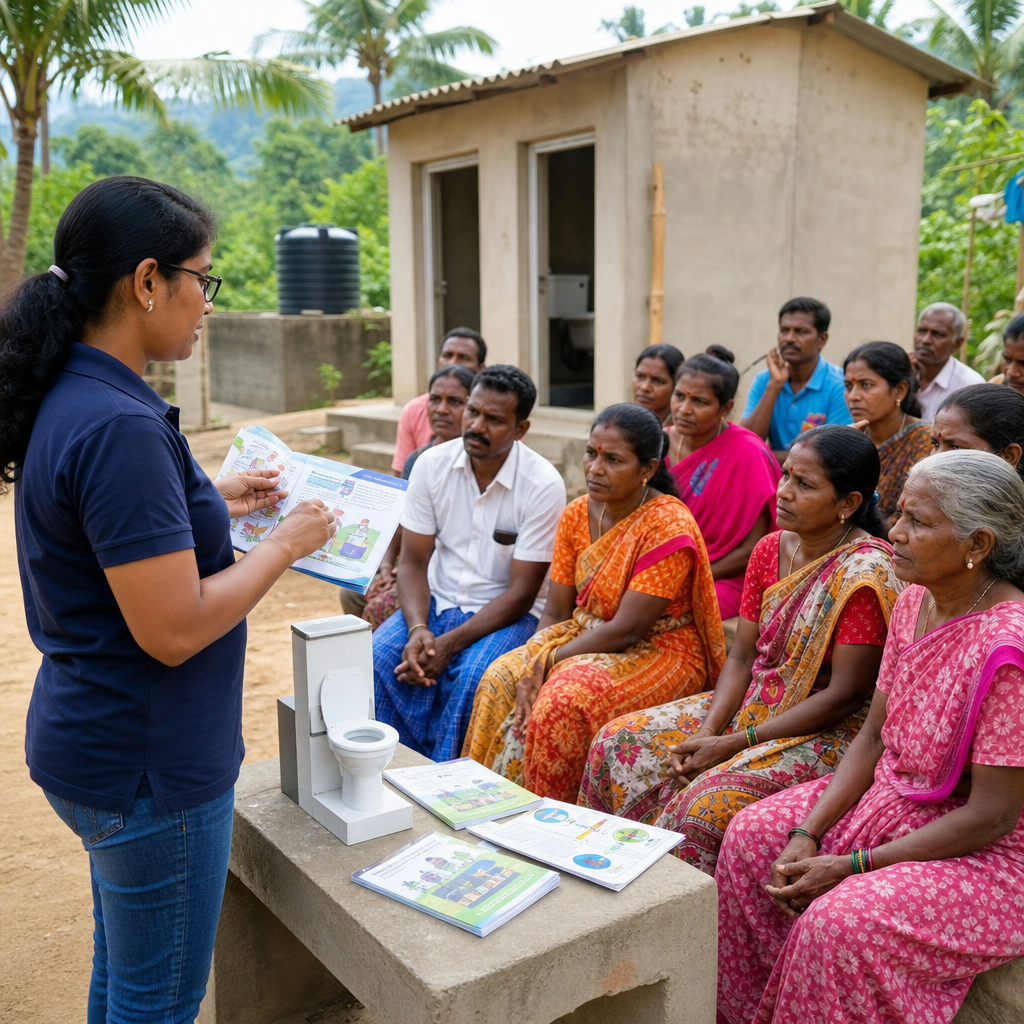
Sanitation literacy is the practical understanding people need to manage water, waste, hygiene, and shared spaces in ways that protect health, dignity, and the environment. It goes beyond knowing that toilets, handwashing, drainage, and waste collection matter. It includes understanding how systems work, why behaviors change disease risk, who is responsible for maintenance, and how communities can participate in decisions that shape daily living conditions. In sustainable communities, sanitation literacy is not a side topic for schools or public health campaigns. It is a foundation for participation, local problem solving, and long-term resilience.
I have worked on community education projects where infrastructure existed but outcomes stayed poor because residents had never been invited to understand the system around them. A new toilet block failed because no one knew the desludging schedule. A drainage channel clogged because households did not recognize how food waste and plastic moved from kitchens to floodwater. Handwashing stations were installed, yet soap use remained inconsistent because messaging focused on rules rather than habits, social norms, and practical barriers. Those experiences made one fact clear: sanitation systems succeed when people can read the physical, social, and civic dimensions of sanitation in everyday life.
For a hub page under community engagement and education, sanitation literacy connects participation and learning across many related articles and programs. It links household hygiene, menstrual health, school sanitation, behavior change communication, waste segregation, community-led monitoring, public meetings, youth engagement, and local governance. It also supports stronger outcomes in health, education, safety, gender equity, and climate adaptation. The World Health Organization and UNICEF Joint Monitoring Programme consistently show that safe sanitation and hygiene services remain unevenly distributed, especially for low-income households, informal settlements, rural communities, and people living with disabilities. Literacy helps close the gap between installed services and effective use.
Put simply, sanitation literacy means people know what safe sanitation is, how contamination happens, what behaviors reduce risk, where services begin and end, and how to act collectively when systems fail. Communities that understand these basics are better able to demand accountability, maintain facilities, teach children, support vulnerable neighbors, and respond to emergencies. That is why fostering participation and learning is essential: sustainable sanitation is built not only with pipes, pits, and pumps, but with informed residents who can sustain change.
What sanitation literacy includes in everyday community life
Sanitation literacy covers a broad set of competencies. At household level, it includes toilet use, cleaning routines, safe child feces disposal, handwashing with soap at critical times, menstrual hygiene management, and waste separation. At neighborhood level, it includes understanding drainage, communal toilet management, vector control, wastewater pathways, and reporting failures to local authorities or service providers. At civic level, it includes reading utility notices, participating in consultations, understanding tariffs or user fees, and recognizing the difference between safe containment, transport, treatment, and disposal or reuse.
These competencies matter because sanitation is a chain. If one link breaks, health risk increases. A household may use a toilet consistently, but if fecal sludge is emptied unsafely into a drain or open area, contamination simply shifts location. A school may have handwashing stations, but if girls lack privacy, water, or bins for menstrual materials, attendance suffers. A market may be cleaned daily, yet if food vendors lack drainage and waste collection, flies and wastewater still create exposure. Literacy helps residents see the entire sanitation service chain instead of isolated activities.
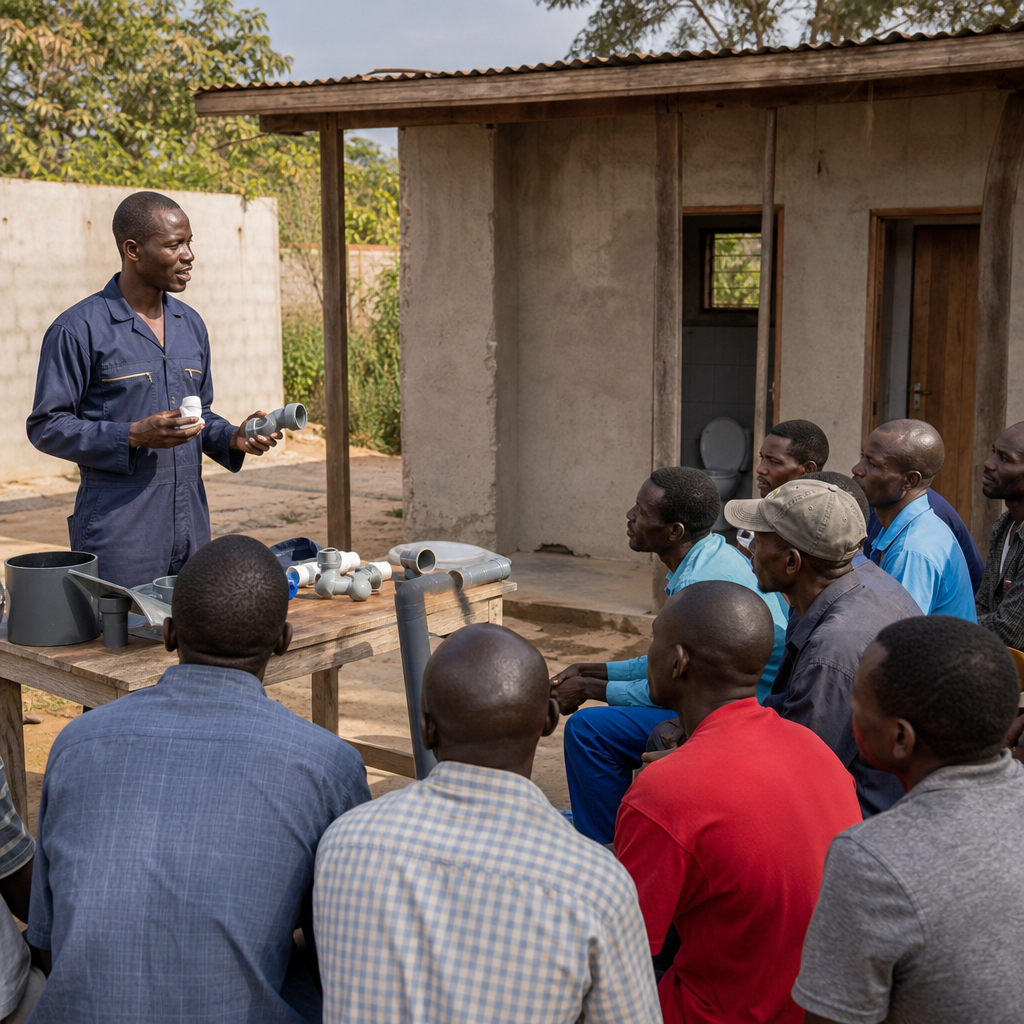
Good sanitation education uses plain language and observable examples. Rather than teaching abstract microbiology only, effective facilitators explain how germs travel through hands, water, surfaces, food, flies, and soil. They show why a cracked slab, blocked vent pipe, or overflowing soak pit is not just a maintenance issue but a health issue. They discuss why children under five face higher risk from diarrheal disease, why older adults may need adapted facilities, and why people with limited mobility are often excluded when design decisions ignore accessibility.
Community learning should also address rights and responsibilities. Residents need to know what local government is expected to provide, what landlords must maintain, what schools and employers are required to offer, and what households must manage themselves. This balance prevents the common failure where authorities shift responsibility downward while communities are left without resources, information, or legal authority to solve structural problems.
Why participation determines whether sanitation programs last
Participation is not a symbolic meeting or a poster campaign. In sanitation, it means communities help define problems, map risks, choose options, monitor services, and review results. Programs last when residents see sanitation as something they shape, not something delivered to them. I have seen neighborhood committees maintain shared toilets successfully for years when they agreed on cleaning rosters, fee structures, supply purchasing, and complaint procedures from the start. I have also seen expensive facilities deteriorate within months when decisions were made externally and users felt no ownership or trust.
Participation improves accuracy. Residents know where flooding starts first, which lanes service trucks cannot access, which hours women avoid public toilets because of safety concerns, and which landlords ignore maintenance requests. This local knowledge often reveals hidden barriers that technical surveys miss. It also improves fairness. Women, children, people with disabilities, sanitation workers, tenants, and informal vendors experience sanitation differently. Without participatory methods, the loudest or most formal voices dominate planning, and the resulting system serves only part of the community.
Participation also strengthens behavior change. People adopt new practices more consistently when they understand the reason, help design the solution, and see their peers involved. Social norms shift faster when trusted local actors reinforce messages. Community health workers, teachers, youth clubs, religious leaders, and market associations often matter more than one-off media campaigns because they translate sanitation messages into local routines and expectations. Learning becomes social, not just instructional.
One caution is important: participation must be structured. Token consultations create fatigue and distrust. Effective participation includes clear goals, documented decisions, feedback loops, timelines, and shared data. If a community reports overflowing latrines or broken taps, there must be a transparent path from complaint to action. Otherwise education efforts lose credibility, and residents conclude that learning and engagement are being used to compensate for weak service delivery.
Core methods for fostering participation and learning
Community engagement works best when it combines multiple methods rather than relying on a single campaign. Household visits help educators understand private practices and constraints. School clubs build habits early and allow children to influence home behavior. Public demonstrations make invisible contamination routes visible. Community mapping identifies hotspots such as illegal dumping points, stagnant water zones, unsafe toilets, and unserved blocks. Focus groups surface sensitive issues, including menstruation, safety, disability access, and cost burdens. Digital tools such as SMS reporting, WhatsApp groups, and simple dashboards can add speed and accountability where mobile access is common.
Effective learning design follows adult education principles. People retain information better when they connect it to immediate problems, practice actions directly, and discuss tradeoffs honestly. For example, teaching waste segregation works better when residents physically sort common household materials, learn collection schedules, and know what happens downstream at transfer stations or recycling points. Teaching hand hygiene works better when people identify the actual moments they handle food, care for children, return from markets, or use shared toilets, rather than memorizing generic advice.
Local facilitators matter. Training respected residents as peer educators can reduce mistrust and improve follow-through. However, peer models need support: clear scripts, refresher training, supervision, and pathways to escalate technical issues they cannot solve. Community engagement fails when volunteers are expected to replace public services or provide endless unpaid labor. The strongest programs define where learning ends and where institutional response must begin.
| Method | Best use | Practical example | Main limitation |
|---|---|---|---|
| Household visits | Understanding daily practices and barriers | Checking soap availability, toilet condition, child feces disposal | Time intensive |
| Community mapping | Identifying shared risks and service gaps | Residents mark flood points, dumping areas, broken drains | Needs facilitation to avoid elite capture |
| School sanitation clubs | Building long-term habits | Students monitor handwashing stations and lead assemblies | Impact weak if facilities are poor |
| Public meetings | Negotiating roles, fees, and priorities | Agreeing on communal toilet cleaning and maintenance plans | Quiet groups may be excluded |
| Mobile reporting tools | Rapid feedback and transparency | Residents submit photos of blocked drains or full pits | Excludes people without devices or data |
Linking sanitation literacy to schools, households, and public spaces
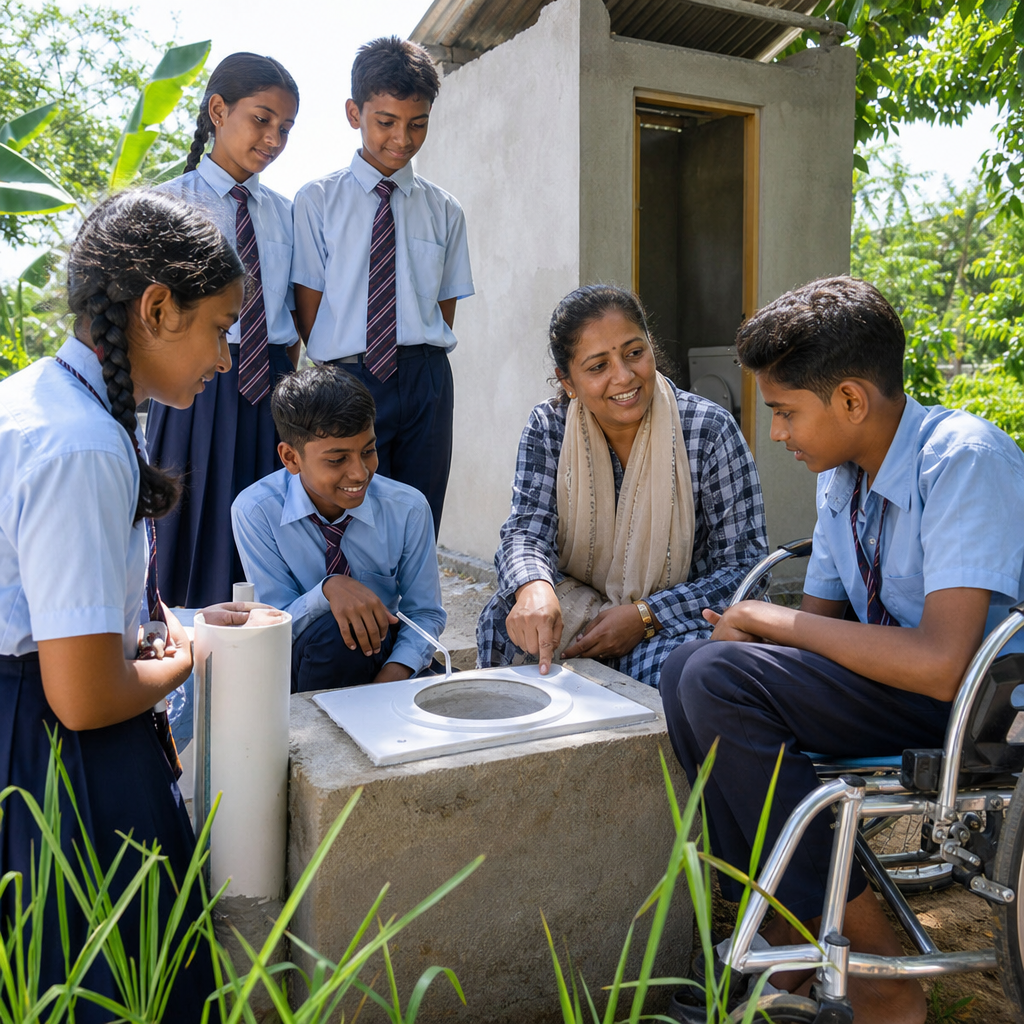
Sanitation learning is strongest when messages align across the places people move through every day. In schools, children need functioning toilets, handwashing stations with soap, privacy, disability access, and age-appropriate lessons. UNESCO and UNICEF guidance has long emphasized that school sanitation affects attendance, concentration, and dignity, especially for girls during menstruation. But school lessons alone are not enough. If children return to households without water storage safety, waste services, or hygienic toilet options, habits are harder to sustain.
At household level, education must adapt to reality. Tenants in dense settlements may share toilets with multiple families, limiting control over cleanliness. Rural households may rely on pits affected by seasonal flooding or high water tables. Urban low-income areas may face irregular collection and unsafe informal emptying. Good sanitation literacy programs do not blame residents for these constraints. They teach risk reduction within current limits while also building demand for better services. That might include safe water handling, establishing cleaning agreements among shared users, creating protected pathways to toilets at night, or organizing for more reliable desludging access.
Public spaces require a different approach because responsibility is dispersed. Markets, bus stations, parks, and faith venues need visible standards, caretakers, maintenance budgets, and user communication. Signage can help, but signs alone rarely change behavior. People respond when facilities are clean, supplies are present, misuse is addressed consistently, and users understand where fees go. In several municipal programs, posting cleaning times and caretaker contact numbers increased trust because users could see that management existed and complaints had a destination.
This is why hub-level education content should connect multiple audience groups. Parents, teachers, youth leaders, landlords, employers, local officials, and sanitation workers all influence outcomes. Treating sanitation literacy as a shared civic skill prevents the common mistake of aiming all behavior messages only at mothers or schoolchildren while ignoring the people who control infrastructure, budgets, and enforcement.
Measuring progress and sustaining change over time
Sanitation literacy should be measured, not assumed. Counting workshops or posters is not enough. Better indicators include whether households can name critical handwashing times, whether users know whom to contact for repairs, whether shared toilets have functioning cleaning systems, whether school facilities remain usable throughout the term, and whether complaints lead to action. Observation is important because reported behavior often differs from actual practice. Spot checks for soap, water availability, toilet cleanliness, fecal sludge overflow, drainage blockage, and waste separation reveal whether learning has translated into routine behavior and service performance.
Programs should combine quantitative and qualitative evidence. Surveys can track knowledge and facility use. Community scorecards can compare neighborhoods on cleanliness, maintenance response, inclusion, and user satisfaction. Transect walks can verify hotspots and seasonal risks. Short interviews can uncover why some messages land and others fail. In my experience, the most useful reviews happen quarterly, with residents, service providers, schools, and local government in the same room examining the same evidence. Shared review reduces blame and speeds corrective action.
Long-term sustainability depends on financing, maintenance, and institutional ownership. Education cannot compensate for no budget line for soap, no contract for sludge emptying, or no staff assigned to public toilet oversight. Likewise, infrastructure funding without education often leads to misuse and rapid decline. The durable model is integrated: clear roles, regular communication, trained local actors, reliable services, and simple monitoring systems. When communities understand the sanitation chain and can participate in decisions, they protect assets better and advocate more effectively for upgrades.
Sanitation literacy is essential for sustainable communities because it turns sanitation from an invisible background service into a shared public practice. People who understand how contamination spreads, how facilities should be maintained, and how decisions are made are better equipped to protect health and dignity every day. Participation makes that understanding actionable. Learning gives residents the confidence to ask better questions, challenge unsafe conditions, and support practical solutions in homes, schools, and public spaces.
For community engagement and education work, this topic should anchor related efforts on hygiene behavior, school WASH, menstrual health, waste management, inclusive design, local governance, and citizen monitoring. The central lesson is simple: infrastructure matters, but informed participation determines whether infrastructure delivers lasting value. Communities do not become sustainable when facilities are installed once. They become sustainable when people can use, manage, improve, and defend those systems over time.
If you are building a participation and learning strategy, start with a sanitation literacy baseline, identify the audiences who influence outcomes, and connect education to visible service improvements. Use practical examples, local data, and regular feedback loops. When residents can understand the system and act within it, sanitation stops being a recurring crisis and becomes a durable community asset.
Frequently Asked Questions
What is sanitation literacy, and why is it essential for sustainable communities?
Sanitation literacy is the practical knowledge and decision-making ability people need to safely manage water, human waste, household waste, hygiene, drainage, and shared living spaces. It is not limited to knowing that toilets and handwashing are important. It also includes understanding how sanitation systems function, how contamination spreads, why certain daily habits increase or reduce disease risk, who is responsible for operating and maintaining services, and how residents can help improve local conditions. In other words, sanitation literacy connects awareness with action.
It is essential for sustainable communities because sanitation affects nearly every part of daily life. Good sanitation protects public health by reducing exposure to bacteria, viruses, and parasites that spread through unsafe waste disposal, stagnant water, and poor hygiene. It supports dignity and safety by ensuring that toilets, washing facilities, and waste systems are usable, private, and accessible for everyone, including women, children, older adults, and people with disabilities. It also strengthens environmental sustainability because communities that understand wastewater, drainage, and solid waste impacts are better equipped to prevent pollution of soil, rivers, groundwater, and shared public spaces.
Sanitation literacy also helps communities move from short-term fixes to long-term resilience. When people understand how systems break down and how maintenance works, they are more likely to report problems early, support proper use of infrastructure, and participate in planning decisions. This reduces the cycle of neglected facilities, repeated repairs, and preventable illness. For sustainable development, infrastructure alone is not enough. Communities need the knowledge to use, maintain, improve, and advocate for sanitation systems that remain safe and effective over time.
How does sanitation literacy improve public health outcomes?
Sanitation literacy improves public health by helping people recognize how disease transmission happens in everyday settings and what practical steps interrupt it. Many illnesses linked to poor sanitation do not spread randomly. They move through contaminated hands, unsafe water storage, leaking sewage, open defecation, unmanaged waste, blocked drainage, food contamination, and surfaces used by many people. When individuals and households understand these pathways, they can make informed choices that significantly reduce exposure.
For example, a community with strong sanitation literacy is more likely to use toilets properly, wash hands at critical times, separate drinking water from wastewater, dispose of child feces safely, keep food preparation areas clean, and prevent trash from clogging drains. These are simple actions, but together they reduce diarrheal disease, parasitic infections, skin conditions, and other sanitation-related health problems. Sanitation literacy also helps people identify warning signs of system failure, such as overflowing pits, foul odors, mosquito breeding in standing water, sewage backups, and illegal dumping, before those hazards grow into larger health threats.
Another major benefit is that sanitation literacy supports consistent behavior, not just one-time awareness. Health campaigns often fail when people hear messages but do not understand the reasons behind them or how to apply them in their own context. Literacy changes that dynamic. It gives people the confidence to adapt practices to local realities, ask better questions, and hold service providers accountable. Over time, this leads to healthier homes, safer schools, cleaner public spaces, and reduced pressure on clinics and health systems. Public health improves most when communities understand both the infrastructure and the behaviors that keep sanitation systems working.
What role does sanitation literacy play in environmental protection and resource sustainability?
Sanitation literacy plays a central role in protecting ecosystems and using resources more responsibly. Poor sanitation does not only harm human health; it also contaminates land, water, and air. When wastewater is discharged untreated, when pits are badly located, when drains are blocked with litter, or when solid waste is burned or dumped carelessly, the environmental consequences can be severe. Rivers and groundwater can become polluted, flooding can worsen, soil quality can decline, and local biodiversity can be affected. Communities that understand these connections are far more capable of preventing long-term environmental damage.
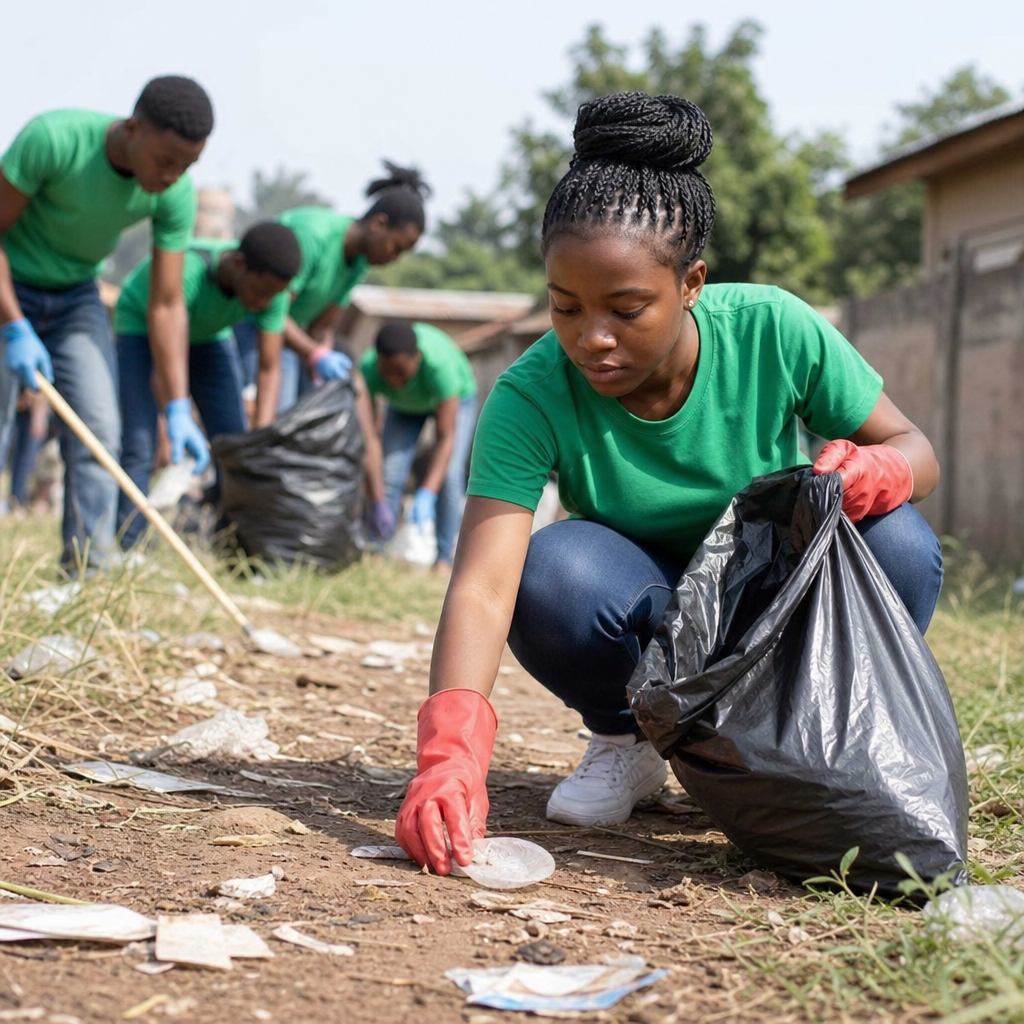
This literacy also helps people think beyond disposal and toward system management. Residents who understand where waste goes, how treatment works, and what happens when systems are overloaded are more likely to support practices that reduce contamination at the source. That may include protecting water points from runoff, avoiding disposal of plastics and oils into drains, separating waste where possible, and advocating for safe fecal sludge management rather than informal dumping. In many places, it also means recognizing sanitation as part of climate resilience, because poorly managed drainage and wastewater systems can intensify flood risks, especially during extreme weather.
From a sustainability perspective, sanitation literacy encourages communities to value maintenance, prevention, and efficient use of resources. It supports smarter decisions about water use, local infrastructure, and long-term planning. It also creates stronger public understanding of why sanitation investments matter financially and environmentally. Sustainable communities are not built only by constructing facilities; they are built by ensuring people understand how daily actions affect shared resources and future conditions. That understanding is what allows sanitation systems to remain effective without causing new environmental problems elsewhere.
Who is responsible for sanitation in a community, and how can residents participate effectively?
Sanitation responsibility is shared across households, landlords, community leaders, service providers, local governments, schools, health institutions, and in some cases private operators or civil society organizations. Households are responsible for daily hygiene practices, safe toilet use, and proper handling of waste within the home. Property owners may be responsible for maintaining toilets, septic systems, connections, and drainage on their premises. Municipal authorities typically oversee public sanitation planning, regulations, waste collection services, drainage systems, treatment arrangements, and broader public health protection. Schools and workplaces also have responsibilities to provide safe, usable sanitation facilities for the people they serve.
Sanitation literacy helps clarify these roles, which is important because many community sanitation problems persist when responsibility is assumed to belong to someone else. If residents do not know who manages desludging, who repairs public toilets, who handles drainage complaints, or what local standards exist, issues often go unreported until they become serious. A sanitation-literate community is better able to distinguish between personal responsibility, shared responsibility, and government duty. That creates more effective cooperation and more realistic expectations.
Residents can participate effectively in several ways. They can report infrastructure failures early, join community meetings, support maintenance funds where appropriate, help identify unsafe sanitation conditions, promote inclusive design for vulnerable groups, and contribute local knowledge during planning. They can also ask informed questions: Is waste being safely transported and treated? Are public facilities accessible and secure? Are drainage systems designed for local conditions? Are tenants and low-income households being included? Participation is strongest when it moves beyond complaints and becomes structured engagement. Sanitation literacy gives residents the language, confidence, and practical understanding needed to influence decisions and support solutions that are both equitable and sustainable.
How can communities build stronger sanitation literacy over time?
Communities build stronger sanitation literacy through continuous education, practical demonstration, trusted local leadership, and participation in real sanitation decisions. One-off awareness campaigns are rarely enough. People learn best when information is connected to daily routines, visible problems, and clear solutions. Effective sanitation literacy efforts explain not just what people should do, but why it matters, how systems work, what barriers exist, and where support can be found. This means linking topics such as hand hygiene, toilet use, drainage, wastewater, waste collection, menstrual hygiene, and facility maintenance into one understandable picture of community health and environmental management.
Schools, health workers, community groups, faith leaders, local officials, and service providers can all contribute. Schools can teach practical hygiene and environmental stewardship from an early age. Health workers can explain disease risks and prevention in ways that are locally relevant. Municipal authorities can make service information clearer, including reporting channels, maintenance responsibilities, and schedules for waste collection or desludging. Community meetings and neighborhood demonstrations can help residents understand issues such as drain blockage, safe water storage, toilet upkeep, and proper waste segregation. The most effective programs respect local experience and use plain, actionable communication rather than technical language alone.
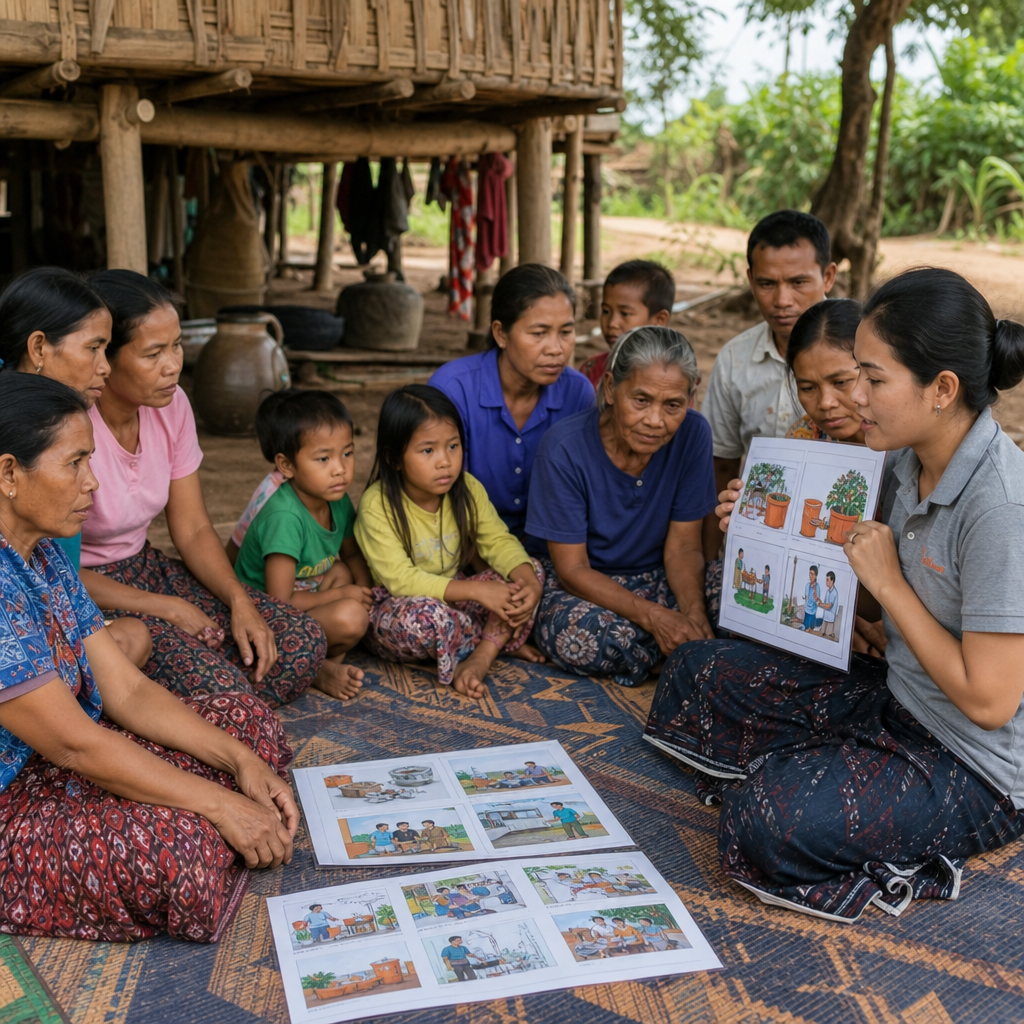
Long-term progress also depends on making sanitation literacy inclusive. Information must reach renters, informal settlement residents, people with disabilities, older adults, women and girls, and those with limited literacy or limited access to digital information. Visual materials, peer education, local-language communication, and participatory mapping of sanitation problems can all help. Over time, communities strengthen sanitation literacy when they see that knowledge leads to real improvements: cleaner streets, safer toilets, fewer illness outbreaks, better maintained infrastructure, and more responsive local services. When people understand the system and see that their actions and voices matter, sanitation becomes not just a service they receive, but a shared foundation for sustainable community life.