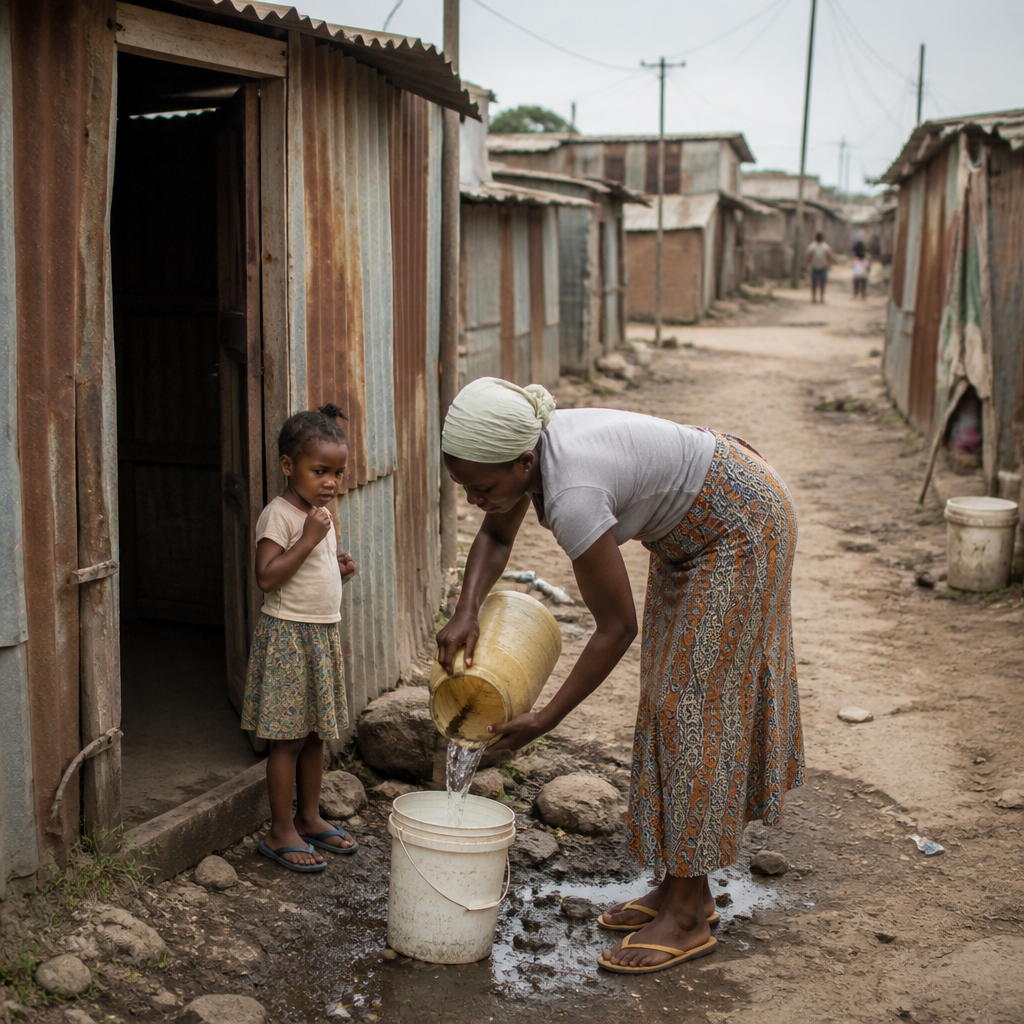
Sanitation advocacy has become one of the clearest examples of how global citizen movements can turn a basic human need into a shared public priority. In practical terms, sanitation means the safe management of human waste, including toilets, sewerage, fecal sludge treatment, handwashing facilities, drainage, and the policies that keep communities healthy. Advocacy is the organized effort to influence decisions, budgets, laws, and social norms so that sanitation is treated not as a side issue, but as a foundation for health, dignity, education, gender equity, and economic resilience.
I have worked on sanitation communications and public-interest campaigns long enough to see the same pattern repeat across regions: progress accelerates when citizens, community groups, researchers, local governments, and global institutions push in the same direction. Technical fixes matter, but they rarely scale without public demand. A toilet can be built by a contractor; a sanitation system that is financed, maintained, accepted, and expanded depends on civic pressure, political will, and collaboration across borders. That is why global citizen movements matter. They translate local realities into national agendas and international commitments.
The stakes are enormous. According to joint monitoring by WHO and UNICEF, billions of people still lack safely managed sanitation services, and hundreds of millions still practice open defecation. Poor sanitation contributes to diarrheal disease, stunting, missed school days, unsafe working conditions for sanitation workers, and contamination of groundwater and rivers. Women and girls face particular risks when toilets are unavailable, unsafe, or unaffordable, especially during menstruation, at night, or in informal settlements. Climate stress increases the urgency, because floods, droughts, and rapid urbanization can overwhelm fragile sanitation systems.
This hub article explains how global initiatives and collaborations in sanitation work, why citizen movements are so effective, which organizations and frameworks shape the field, and where the biggest opportunities lie. It is designed as a central guide to the subtopic, connecting grassroots action with international policy, finance, innovation, and accountability. If you want to understand how sanitation advocacy creates lasting change, start with this principle: the strongest progress happens when affected communities are not treated as beneficiaries, but as organizers, decision-makers, and credible public voices.
Why global citizen movements change sanitation outcomes
Global citizen movements change sanitation outcomes because they solve a problem that engineering alone cannot solve: low political priority. In many countries, sanitation has historically been underfunded because its failures are normalized, hidden in household routines, or pushed onto marginalized communities. Citizen movements make those failures visible. They gather evidence from neighborhoods, schools, health clinics, and worker groups, then convert that evidence into petitions, public campaigns, budget demands, legal claims, and media pressure.
In my experience, sanitation advocacy becomes powerful when it links individual stories to system-level facts. A parent describing repeated childhood illness is compelling; pairing that testimony with local disease surveillance, service maps, and budget shortfalls turns it into a policy argument. This is how movements influence mayors, ministries, utilities, and donors. They show that sanitation is not a private inconvenience. It is a public service failure with measurable costs in healthcare spending, school attendance, labor productivity, and environmental damage.
Citizen movements also create accountability between election cycles. They track promises, publish scorecards, attend council meetings, challenge incomplete infrastructure projects, and insist on service quality, not just construction targets. That distinction is essential. A city may report thousands of toilets built, yet still fail if pits are not emptied safely, treatment plants do not operate, or low-income households cannot access services. Effective advocacy focuses on the full sanitation chain, from containment to transport, treatment, reuse, and worker protection.
The global sanitation architecture: institutions, goals, and partnerships
Sanitation advocacy operates within a well-defined international architecture. The most important reference point is Sustainable Development Goal 6, especially target 6.2, which calls for access to adequate and equitable sanitation and hygiene for all and an end to open defecation, with special attention to the needs of women, girls, and vulnerable populations. That target matters because it gives campaigners a recognized benchmark for demanding action from governments and development partners.
Several institutions shape this agenda. WHO and UNICEF run the Joint Monitoring Programme, the leading global source for sanitation and hygiene data. The World Bank supports sanitation financing, urban service reform, and results-based programs. UN-Water coordinates across the UN system. UNICEF, WaterAid, SNV, the Gates Foundation, Plan International, and many national NGOs support community engagement, systems strengthening, behavior change, and market development. City networks, research centers, utilities, social enterprises, and worker associations all play distinct roles.
Global partnerships are most effective when they combine three functions. First, they generate comparable evidence so countries can measure gaps and progress consistently. Second, they mobilize money and technical support for governments, utilities, and local organizations. Third, they create platforms where citizens can influence priorities rather than merely receive interventions. The Sanitation and Water for All partnership is a notable example because it brings together governments, civil society, donors, utilities, and research institutions around mutual accountability and sector commitments.
Collaboration does not mean uniformity. Rural sanitation, dense informal settlements, refugee settings, schools, healthcare facilities, and small towns require different approaches. Strong global initiatives acknowledge that sanitation systems must fit local hydrogeology, land tenure, affordability, cultural practices, and governance capacity. The role of international collaboration is not to impose a single model. It is to accelerate learning, share standards, reduce duplication, and help citizen advocates use proven evidence when pressing for local solutions.
How grassroots advocacy connects to global campaigns
The best global sanitation campaigns are built from local organizing upward. Grassroots groups document broken toilets in schools, overflowing drains, inaccessible public facilities, unsafe manual emptying, and exclusion in informal settlements. Those observations feed district advocacy, national coalitions, and eventually international reporting. What looks like a global movement is often a networked chain of local evidence and local leadership.
One reason this model works is that sanitation failures are highly specific. A rural community may need climate-resilient latrines above the flood line. A fast-growing secondary city may need fecal sludge treatment plants, private emptier regulation, and tariff reform. A disability rights organization may prioritize accessible cubicles, handrails, lighting, and menstrual hygiene facilities. Global campaigns gain credibility when they elevate these detailed needs instead of reducing sanitation to a single slogan.
Digital tools have made this connection faster and harder to ignore. Civil society organizations use GIS mapping, mobile surveys, citizen reporting platforms, and open budget portals to show where service gaps persist. Journalists can compare official claims with geotagged photographs, facility audits, and procurement records. When citizens publicly map which settlements lack toilets, drainage, or desludging services, decision-makers face stronger pressure to respond because the evidence is visible, shareable, and difficult to dismiss.
| Advocacy level | Main actors | Typical sanitation focus | Example of impact |
|---|---|---|---|
| Community | Residents, teachers, health workers, local NGOs | Toilet access, safety, behavior change, maintenance | School toilet repairs funded through district budgets |
| Municipal | City councils, utilities, worker groups, media | Fecal sludge management, public toilets, drainage, tariffs | Licensing system for safe pit emptying introduced |
| National | Coalitions, ministries, parliamentarians, regulators | Policy, budget allocation, standards, subsidy design | National sanitation strategy updated with inclusion targets |
| Global | UN agencies, donors, international NGOs, networks | Monitoring, financing, norms, cross-country learning | Country commitments tied to international review processes |
Major global initiatives advancing sanitation collaboration
Several global initiatives have shaped sanitation advocacy over the past two decades. Community-Led Total Sanitation helped shift attention toward behavior change and collective action in rural areas, although practitioners now recognize its limitations where affordability, disability access, or sustained service management are weak. Citywide Inclusive Sanitation has become especially influential in urban policy because it emphasizes service outcomes for everyone, not only households connected to sewers. That framework is particularly relevant in low-income cities where onsite sanitation is the dominant reality.
Another major area is sanitation in schools and healthcare facilities. UNICEF, WHO, and partner organizations have pushed governments to track whether schools have sex-separated toilets, handwashing stations, and menstrual hygiene support, and whether clinics have basic water, sanitation, waste management, and environmental cleaning. These facilities matter because they shape educational attendance, maternal health, infection prevention, and trust in public institutions. Advocacy has been strongest where parent groups, nurses, teachers, and youth organizations use facility data to demand specific upgrades.
International collaboration has also expanded around sanitation workers, an issue long neglected in mainstream policy. Worker-led advocacy and allied NGOs have drawn attention to occupational hazards, stigma, inadequate protective equipment, unsafe confined-space entry, and the persistence of manual scavenging in parts of South Asia. This has pushed governments and donors to address worker safety, mechanization, legal enforcement, and social protection as sanitation priorities, not side concerns. A sanitation system cannot be called successful if it depends on dangerous, degrading labor.
Climate adaptation is the newest frontier. Flood-resilient toilets, wastewater reuse, sludge-to-energy models, and integrated urban drainage are receiving greater investment as cities confront extreme weather and water stress. Citizen movements have strengthened this agenda by showing that climate and sanitation are inseparable at neighborhood level. When floods spread fecal contamination through streets and homes, communities do not experience climate impacts and sanitation failures as separate categories. Policy should not treat them separately either.
What effective sanitation advocacy looks like in practice
Effective sanitation advocacy is specific, evidence-based, and persistent. It starts by asking practical questions. Who lacks access, and where? Is the problem infrastructure, affordability, land tenure, weak utility service, gender safety, worker protection, or political neglect? Which budget line is responsible? What standard applies? What agency can act within the next planning cycle? Strong campaigns answer these questions before they launch public messaging.
In practice, the most successful sanitation advocates combine quantitative and qualitative proof. They use household survey data, service-level ladders, treatment plant performance records, school audits, and public health statistics alongside interviews, photographs, and testimonies. They understand the difference between access and safe management. They know that a subsidized toilet program may fail if pits cannot be emptied, and that a treatment plant may underperform if tanker discharge is unregulated or electricity supply is unreliable.
Messaging also matters. Fear-based appeals can create urgency, but they often fail to sustain public support. The campaigns I have seen work best frame sanitation as dignity, safety, economic common sense, and competent governance. They show that every dollar spent on sanitation can reduce health and environmental costs downstream, and they give officials a credible path to act. That may mean proposing a municipal sanitation plan, a targeted pro-poor subsidy, a public toilet operating model, or enforcement against illegal dumping.
Coalition design is another differentiator. Public health experts, women’s groups, disability advocates, engineers, labor representatives, educators, and climate organizations do not always use the same language, yet sanitation intersects with all of their goals. Bringing them together increases legitimacy and expands leverage. It also makes the movement more accurate, because sanitation is multidimensional. A campaign that ignores accessibility, menstrual health, child feces disposal, or worker safety is advocating for only part of the system.
Barriers, tradeoffs, and the opportunities ahead
Sanitation advocacy faces real barriers. Data can be incomplete, especially in informal settlements and peri-urban areas. Governments may prefer counting infrastructure outputs over measuring service quality. Donor priorities can shift quickly. Community participation can be tokenized if meetings are held after decisions are already made. In some settings, sanitation remains politically invisible because discussing human waste is still taboo. These constraints are common, and effective advocates plan for them rather than pretending they do not exist.
There are also tradeoffs. Sewerage can deliver strong public health benefits in dense urban areas, but it is capital-intensive and slow to expand. Onsite sanitation is often more realistic in the near term, yet it requires strong regulation of emptying, transport, and treatment. Subsidies can help low-income households, but poorly targeted subsidies may miss renters or informal settlements. Behavior change campaigns are important, but they cannot substitute for affordable infrastructure and reliable services. Good advocacy acknowledges these tensions and still pushes toward measurable progress.
The opportunities are substantial. Better satellite mapping, utility digitization, and open data can expose gaps faster. Youth-led climate activism offers a powerful entry point for sanitation demands. Blended finance, municipal bonds, and outcome-based funding can bring new resources if safeguards protect equity. Partnerships with health systems can strengthen infection prevention and antimicrobial resistance strategies. Most important, a growing body of practical urban sanitation experience now exists across Africa, Asia, and Latin America. Cities no longer need to start from zero; they can adapt tested models.
The power of global citizen movements in sanitation advocacy lies in their ability to connect lived experience with institutions capable of change. They make sanitation visible, measurable, and politically urgent. They strengthen global initiatives by grounding them in real communities, and they strengthen local campaigns by linking them to international goals, data, and allies. For anyone working in global challenges and opportunities, sanitation is not a narrow technical niche. It is a decisive test of whether collaboration can deliver healthier, safer, and more dignified lives. Use this hub as your starting point, then follow the connected topics, case studies, and policy guides to turn awareness into action.
Frequently Asked Questions
What is sanitation advocacy, and why do global citizen movements matter so much in this area?
Sanitation advocacy is the organized effort to push governments, institutions, funders, and communities to treat sanitation as a public priority rather than an afterthought. It focuses on the systems that safely manage human waste, including toilets, sewer networks, fecal sludge treatment, drainage, handwashing facilities, maintenance services, and the policies and budgets that make all of those systems work. At its core, sanitation advocacy is about influencing decisions: how money is spent, what laws are enforced, which communities are served first, and whether sanitation is recognized as essential to health, dignity, education, gender equality, and economic opportunity.
Global citizen movements matter because sanitation challenges are widespread, but political attention is often inconsistent. Individual communities may struggle to get heard on their own, especially when sanitation is stigmatized or seen as too technical, too local, or too invisible to attract broad support. Citizen movements change that dynamic by connecting local experiences to global values such as human rights, public health, and social justice. When people across countries raise the same demand, sanitation becomes harder for leaders to ignore. It shifts from being a narrow infrastructure issue to being understood as a shared public responsibility.
These movements also help create pressure from multiple directions at once. Communities can document lived realities, civil society organizations can organize campaigns, researchers can provide evidence, journalists can amplify neglected stories, and international networks can compare progress across regions. Together, that kind of collective action builds accountability. It pushes decision-makers not only to announce sanitation goals, but to fund them, implement them, monitor them, and improve them over time. That is the real power of global citizen movements: they turn a basic human need into a visible, urgent, and sustained public demand.
How do citizen movements influence sanitation policy and public spending in practical terms?
Citizen movements influence sanitation policy by making needs visible, framing sanitation as a priority, and holding institutions accountable for results. In practical terms, this often begins with storytelling and evidence gathering. Residents, organizers, health workers, and advocacy groups document conditions such as unsafe toilets, overflowing drains, lack of handwashing stations, poor wastewater treatment, or the absence of services in informal settlements and rural communities. Once those conditions are publicly documented, advocates can connect them to broader impacts like disease outbreaks, school absenteeism, environmental contamination, threats to women’s safety, and economic losses.
From there, movements often use coordinated strategies to influence decisions. They may petition local councils, organize public forums, submit policy recommendations, meet with ministry officials, or campaign during elections to secure sanitation commitments. They can also use budget advocacy, which is one of the most effective tools available. Budget advocacy means examining whether sanitation funding is adequate, where funds are allocated, whether they are actually disbursed, and who is left out. This is important because policy promises without funding rarely produce real improvements. Citizen groups that understand budget processes can push for more equitable investments in toilets, treatment infrastructure, waste management services, school sanitation, and operations and maintenance.
Another practical mechanism is public accountability. Global and national movements often track government pledges, compare performance across regions, and publish scorecards or reports that make gaps impossible to hide. Social media campaigns, public demonstrations, community monitoring, and strategic partnerships with researchers or media outlets can all increase pressure on officials to act. In some cases, advocacy contributes directly to legal reforms, stronger sanitation standards, better data collection, and more inclusive urban planning. The key point is that citizen movements do not just raise awareness. When they are organized and persistent, they shape the policy agenda, influence spending priorities, and improve the chances that sanitation systems serve the people who need them most.
Why is sanitation often described as a human rights and public health issue, not just an infrastructure issue?
Sanitation is often described as a human rights and public health issue because its effects extend far beyond the physical presence of toilets or pipes. Infrastructure matters, of course, but the deeper issue is whether people can live with safety, dignity, and equal opportunity. When sanitation systems fail, the consequences touch every part of daily life. Unsafe waste disposal can contaminate water sources, increase exposure to infectious disease, and create conditions that harm entire communities. Inadequate handwashing facilities and poor drainage can deepen health risks and make outbreaks harder to control. These are not isolated inconveniences; they are serious threats to well-being.
The human rights dimension is equally important. Access to safe sanitation affects privacy, bodily dignity, and personal security. Women and girls are often disproportionately affected when toilets are unsafe, distant, poorly lit, or unavailable in schools and workplaces. Children may miss school because sanitation facilities are inadequate or unhygienic. People living in low-income settlements, remote villages, refugee settings, or marginalized communities may be excluded from services altogether, which reinforces inequality. In that sense, sanitation is about fairness and inclusion as much as engineering. A community cannot claim meaningful progress if some groups remain exposed to preventable health risks and indignity.
Calling sanitation only an infrastructure issue can also lead to narrow solutions. It may encourage projects that focus on construction without considering affordability, maintenance, behavior change, regulation, waste treatment, or long-term service delivery. A rights-based and public health perspective broadens the conversation. It asks whether systems are safe, accessible, sustainable, and equitable. It also emphasizes that governments have responsibilities to protect public health and ensure that essential services reach everyone. That is why sanitation advocacy is so powerful when it combines technical planning with human-centered values. It helps leaders understand that sanitation is not just about building facilities; it is about protecting life, dignity, and social equity.
What makes a sanitation advocacy campaign effective at the local and global levels?
An effective sanitation advocacy campaign usually succeeds because it combines credible evidence, strong community leadership, clear messaging, and practical policy goals. At the local level, campaigns are strongest when they are grounded in lived experience. Communities understand better than anyone where systems are failing, who is being excluded, and what daily risks people face. That local knowledge gives advocacy legitimacy and precision. Instead of making vague demands, effective campaigns can point to specific issues such as broken public toilets, missing services in informal settlements, poor school sanitation, unmanaged fecal sludge, or underfunded municipal maintenance systems.
At the same time, effective campaigns translate those local realities into language that decision-makers and the public can immediately understand. They connect sanitation to health, education, safety, climate resilience, environmental protection, and economic productivity. This matters because sanitation competes with many other issues for political attention. When advocates show that sanitation improvements reduce disease, support school attendance, protect water resources, and strengthen communities, they make the case harder to dismiss. The most effective campaigns also set concrete asks, such as increasing sanitation budgets, enforcing standards, improving monitoring systems, expanding services to underserved populations, or including sanitation targets in development plans.
At the global level, effectiveness often depends on coalition building. International networks, nonprofits, researchers, community organizations, and public health advocates can reinforce each other by sharing data, campaign tools, legal strategies, and public messaging. Global visibility helps local struggles gain momentum, while local evidence keeps global advocacy grounded and credible. Strong campaigns also understand that awareness alone is not enough. They build follow-through through public commitments, deadlines, scorecards, citizen monitoring, and ongoing pressure after announcements are made. In short, the best sanitation advocacy campaigns are those that combine moral urgency with practical solutions, public energy with policy expertise, and local voice with global reach.
How can ordinary people support global sanitation advocacy even if they are not experts?
Ordinary people can play a meaningful role in sanitation advocacy without having technical expertise, because advocacy is not limited to engineers, public health specialists, or policymakers. One of the most important contributions anyone can make is helping break the silence around sanitation. In many places, sanitation remains overlooked because it is uncomfortable to discuss or considered too mundane for public debate. Simply treating it as a legitimate civic issue helps shift social norms. People can talk about sanitation in connection with community health, school conditions, housing, gender equity, environmental safety, and public investment, which helps normalize the idea that sanitation deserves attention and action.
People can also support advocacy by engaging with organizations and campaigns that are already doing the work. That may include donating, volunteering, attending public meetings, signing petitions, sharing credible information, or amplifying local sanitation concerns through community groups and digital platforms. Residents can ask local representatives how sanitation funds are being used, whether schools and clinics have adequate facilities, how wastewater and sludge are managed, and what plans exist for underserved neighborhoods. These questions matter because accountability often begins when citizens show consistent interest in how systems are planned and maintained.
Another powerful contribution is centering equity. Ordinary citizens can support the voices of people most affected by inadequate sanitation, including low-income communities, rural populations, women and girls, persons with disabilities, and residents of informal settlements. Listening to those experiences and helping elevate them in public discussions strengthens advocacy and keeps it focused on real needs rather than abstract promises. People can also encourage institutions such as schools, workplaces, faith communities, and neighborhood associations to include sanitation in their broader health and development agendas. The larger lesson is simple: sanitation advocacy is most powerful when it is collective. Experts are important, but lasting change usually happens when everyday people insist that safe, dignified sanitation is not optional, not secondary, and