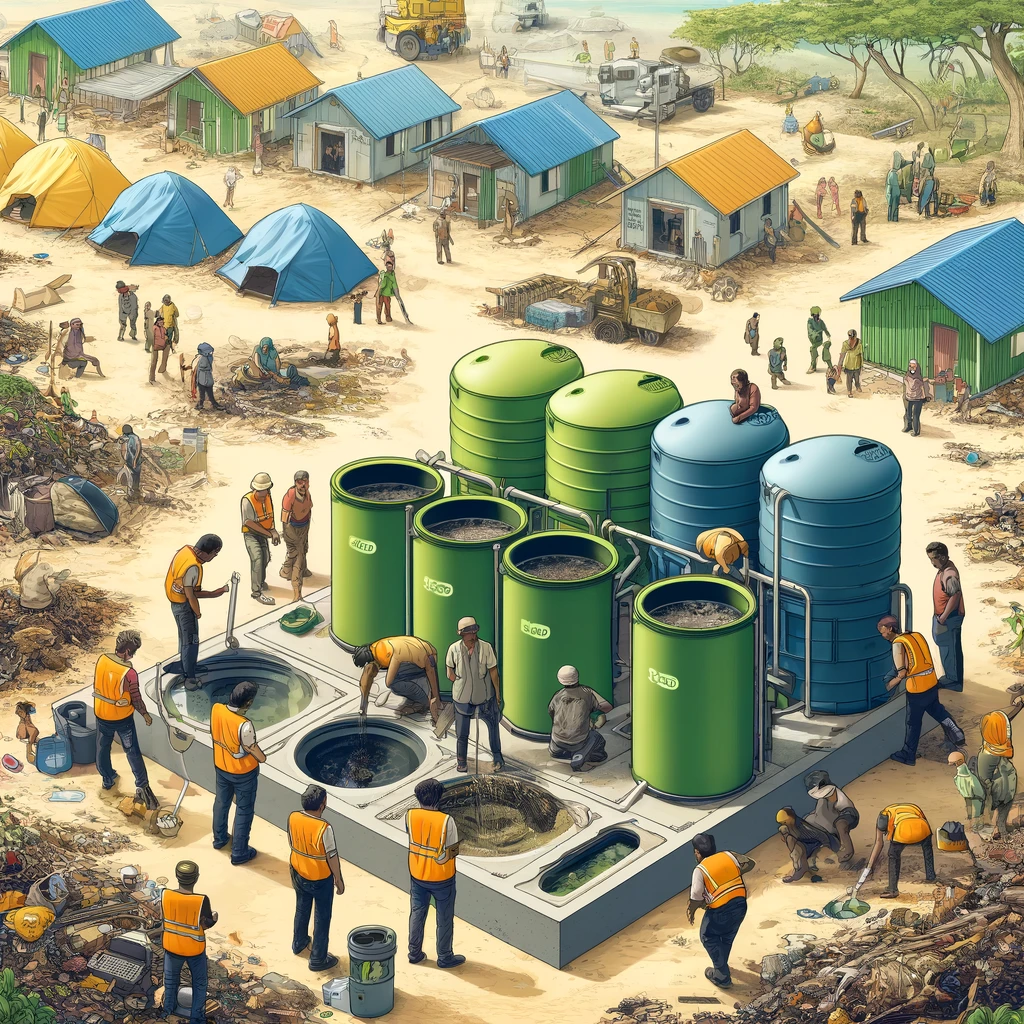
Collaboration in sanitation technology development has become one of the most practical ways to improve public health, reduce environmental damage, and extend safe services to communities that conventional sewer systems still do not reach. In this field, collaboration means structured cooperation among governments, utilities, universities, manufacturers, financiers, nonprofits, and community groups to design, test, fund, and scale sanitation solutions. Sanitation technology includes toilets, fecal sludge management systems, wastewater treatment processes, resource recovery equipment, monitoring tools, and digital platforms that help operators run services more reliably. When these actors work alone, promising ideas often stall between pilot and deployment. When they work together with clear roles, shared standards, and long-term financing, innovation moves from demonstration units to real service coverage.
I have seen this pattern repeatedly in sanitation programs: the technical problem is rarely just the toilet, reactor, or treatment train. The harder challenge is aligning product design, user behavior, regulation, land constraints, supply chains, and operating budgets. A toilet that performs well in a laboratory can fail in dense settlements if spare parts are unavailable or sludge collection is unaffordable. A decentralized wastewater unit can meet discharge targets during commissioning yet struggle within a year if no operator training or remote monitoring plan exists. Collaboration matters because sanitation is a systems problem. It sits at the intersection of engineering, governance, climate resilience, and social acceptance.
This hub page on global initiatives and collaborations in sanitation explains how partnerships shape technology development, what models work in practice, where the main bottlenecks remain, and which institutions are driving progress. It also serves as a central reference point for deeper articles on financing, non-sewered sanitation, wastewater reuse, inclusive design, and public-private delivery models. Around the world, organizations such as UNICEF, the World Bank, WHO, the Gates Foundation, WaterAid, the Sanitation and Water for All partnership, and city utilities are pushing sanitation forward through coordinated research, standards, procurement reform, and service delivery innovation. Understanding how these collaborations operate helps decision-makers choose better technologies, reduce project risk, and scale solutions that actually last.
Why global collaboration is essential in sanitation technology
Global collaboration is essential because sanitation failures create cross-border consequences while solutions depend on local adaptation. Unsafe sanitation contributes to diarrheal disease, cholera outbreaks, stunting, antimicrobial resistance pathways, and polluted waterways. According to WHO and UNICEF Joint Monitoring Programme reporting, billions of people still lack safely managed sanitation, and hundreds of millions continue to practice open defecation or use unimproved services. Those figures are not abstract. They represent overloaded pits in flood-prone neighborhoods, untreated wastewater released into rivers, schools without menstrual hygiene facilities, and clinics where infection prevention is compromised.
No single institution can solve this alone. Governments set policy and enforce standards, but they often need technology validation, concessional finance, and implementation partners. Private firms can develop hardware, sensors, treatment modules, and logistics platforms, yet they need predictable regulation and a route to market. Researchers generate evidence on pathogen reduction, nutrient recovery, user acceptance, and lifecycle cost, but evidence only matters if utilities and ministries use it in procurement and planning. Community organizations bring lived knowledge of access barriers, tenancy patterns, and safety concerns that engineers routinely miss. The strongest sanitation collaborations deliberately combine all of these capacities.
Technology development also benefits from collaboration because sanitation products must work across diverse conditions. A container-based sanitation system, urine-diverting dry toilet, biodigester, membrane bioreactor, or black soldier fly treatment line may succeed in one setting and fail in another. Soil infiltration rates, groundwater depth, informal housing density, fecal sludge haul distance, electricity reliability, and household willingness to pay all change the design equation. International collaboration helps by pooling data from multiple pilots, comparing performance under different climates, and developing interoperable standards that manufacturers can build against. That reduces duplication and speeds learning.
Who drives global initiatives and collaborations in sanitation
Global initiatives and collaborations in sanitation are driven by a layered ecosystem rather than a single lead actor. At the policy level, multilateral institutions and global partnerships shape goals, reporting frameworks, and investment priorities. The Sustainable Development Goals, especially SDG 6, gave sanitation a shared results framework. WHO provides health guidance. UNICEF supports national systems and service delivery, particularly for vulnerable populations. The World Bank and regional development banks provide lending, technical assistance, and sector diagnostics. Sanitation and Water for All has helped align ministers, donors, and civil society around accountability.
Philanthropic and research-backed initiatives have also played a major role in sanitation technology development. The Gates Foundation accelerated work on reinvented toilets and non-sewered sanitation through targeted grants, field testing, and support for market shaping. The International Organization for Standardization created ISO 30500 for non-sewered sanitation systems, a significant milestone because it gives manufacturers and regulators a shared performance benchmark. Engineering universities, public health institutes, and specialist networks such as the Sustainable Sanitation Alliance have translated pilot experience into practical guidance that cities and implementers can use.
Utilities, local governments, and entrepreneurs convert global agendas into services. In many countries, fecal sludge management has advanced because municipalities partnered with private emptiers, digital dispatch providers, and treatment plant operators. In rapidly urbanizing regions, city authorities have worked with NGOs and engineering firms to map containment systems, optimize desludging routes, and establish tipping fees that make treatment plants viable. These local collaborations matter most because they reveal whether a technology can survive actual operating conditions, not just donor-funded pilots.
| Collaboration actor | Main contribution | Typical sanitation example |
|---|---|---|
| National government | Policy, regulation, public finance | Setting effluent standards and urban sanitation strategies |
| Municipality or utility | Service delivery, procurement, operations | Contracting desludging services and managing treatment plants |
| Private company | Product design, manufacturing, maintenance | Building modular treatment units or digital monitoring tools |
| University or lab | Testing, validation, applied research | Verifying pathogen reduction and lifecycle cost |
| NGO or community group | User engagement, inclusion, field implementation | Co-designing school toilets and hygiene programs |
| Donor or development bank | Grants, loans, risk reduction | Funding citywide inclusive sanitation programs |
How collaborative technology development works in practice
In practice, sanitation collaboration works best when it follows the full service chain instead of focusing narrowly on a single device. That chain includes user interface, containment, emptying, transport, treatment, discharge or reuse, and long-term maintenance. I have found that projects break down when one partner funds toilets, another studies wastewater quality, and no one owns sludge logistics or operator training. Effective partnerships begin with a shared service model and only then select technologies that fit it. This approach is common in citywide inclusive sanitation planning, where the objective is safe service for every neighborhood through a mix of sewered, decentralized, and non-sewered options.
Co-development usually starts with diagnostics: settlement mapping, customer segmentation, public health risk analysis, and baseline data on existing infrastructure. Teams then compare options using criteria such as capital expenditure, operating expenditure, land footprint, energy demand, skill requirements, resilience to flooding, and compliance with local discharge standards. Prototypes or pilot units should be validated under real loading rates and maintenance conditions, not idealized assumptions. For example, a treatment system intended for schools must be tested during peak occupancy and irregular water availability. A fecal sludge process should be assessed for grit, trash, variable moisture content, and haulage delays.
After technical validation, collaboration shifts toward commercialization and scale. Manufacturers need suppliers, certification pathways, after-sales service networks, and financing products for buyers. Public agencies need standard bidding documents, performance-based contracts, and monitoring systems. Communities need clear tariff communication and channels for complaint resolution. The transition from pilot to scale is where many sanitation technologies fail, not because the underlying science is weak, but because partnership design did not address procurement, ownership, and maintenance responsibilities early enough.
Major global models and examples shaping the sector
Several collaboration models have shaped modern sanitation technology development. One model is the research-to-standard pipeline. In non-sewered sanitation, laboratory innovation led to field demonstrations, then to internationally recognized performance standards, and finally to early market adoption. That sequence matters because it reduces uncertainty for regulators and buyers. Another model is the utility-centered partnership, where municipalities work with development banks, engineering consultants, and private operators to upgrade wastewater treatment, extend fecal sludge services, and digitize operations. A third model is social enterprise collaboration, often used in dense low-income urban areas where container-based sanitation or subscription services can outperform static infrastructure.
Real-world examples illustrate the range. In Senegal, structured fecal sludge management reforms in Dakar combined public oversight with private emptying and treatment operations, showing that sanitation markets can be formalized when regulation and infrastructure are aligned. In India, the sanitation agenda broadened from toilet access toward fecal sludge and septage management, prompting collaboration among state governments, utilities, NGOs, and technical support providers. In South Africa, research on decentralized and non-sewered systems has been paired with standards development and municipal pilots. In East Africa, container-based service models have demonstrated how tightly managed collection and treatment partnerships can deliver safe sanitation in places where sewers are unrealistic.
Wastewater reuse is another area where collaboration is producing measurable gains. Water-scarce regions increasingly integrate sanitation and water planning, linking treatment plants with agriculture, landscaping, or industrial reuse. These projects require health regulators, farmers, utilities, and technology suppliers to agree on treatment targets, monitoring protocols, and distribution arrangements. Where collaboration is strong, reuse lowers freshwater demand and can improve revenue recovery. Where it is weak, public trust erodes quickly, especially if communication about safety and quality standards is inconsistent.
Persistent barriers and what strong partnerships do differently
The main barriers in sanitation collaboration are usually institutional, not purely technical. Fragmented mandates are common: one ministry handles water quality, another health promotion, another urban development, and local governments manage day-to-day services with limited budgets. Procurement can favor lowest upfront cost instead of lifecycle value, leading to systems that are cheap to install and expensive to keep functional. Data quality is often poor. Many cities still lack reliable information on onsite containment, sludge volumes, treatment capacity, or service gaps for renters, women, and people with disabilities.
Strong partnerships address these barriers by setting measurable outcomes at the beginning. Instead of asking only how many toilets will be installed, they ask whether excreta will be safely contained, removed, treated, and monitored for five to ten years. They define who owns assets, who pays for major repairs, what performance indicators trigger payment, and how customer feedback will be collected. They also include operators early. Plant staff, emptiers, plumbers, and maintenance technicians often identify failure points faster than senior planners because they know what actually happens during storms, power cuts, or peak demand.
Financing remains decisive. Grants are useful for innovation and public goods, but sanitation technology scales when blended finance, tariffs, taxes, and targeted subsidies are aligned. Results-based financing can help if indicators are realistic and independently verified. Carbon finance and nutrient recovery revenues may support some projects, but they rarely replace the need for stable service finance. The most durable collaborations are honest about this. They do not promise that technology alone will make sanitation self-funding in low-income settings.
What this hub covers next and why the opportunity is growing
This hub on global initiatives and collaborations in sanitation is the starting point for a broader set of articles that examine the sector from multiple angles. Related pages should explore citywide inclusive sanitation, fecal sludge management, sanitation financing, school and healthcare facility sanitation, wastewater reuse, climate adaptation, monitoring and digital tools, and inclusive design for women, children, older adults, and people with disabilities. Together, those articles show how policy, engineering, behavior change, and market development interact. They also help readers move from broad strategy to implementation details, which is where successful sanitation programs are won or lost.
The opportunity is growing because sanitation is no longer treated only as a social service. It is increasingly recognized as core infrastructure linked to health security, urban productivity, environmental compliance, and water resilience. Better sensors, remote monitoring platforms, modular treatment units, and standardized testing protocols are improving technology readiness. At the same time, governments and funders are placing more emphasis on service outcomes, not just construction counts. That shift favors collaboration because outcomes depend on coordinated performance across the full sanitation chain.
The key takeaway is simple: collaboration in sanitation technology development works when partners build around service delivery, evidence, standards, and long-term operations. Global initiatives provide direction, funding, and common frameworks, but lasting progress happens when local institutions, private providers, researchers, and communities turn those frameworks into reliable daily services. Use this hub to map the field, compare partnership models, and identify the articles most relevant to your next decision. If you are planning a program, procurement, or investment, start with the collaboration structure first, then choose the technology that the partnership can sustain.
Frequently Asked Questions
1. What does collaboration in sanitation technology development actually involve?
Collaboration in sanitation technology development involves more than a loose partnership or occasional consultation. It is a structured process in which multiple stakeholders work together to solve sanitation challenges that no single organization can address alone. In practice, this includes governments setting regulatory standards and public health priorities, utilities contributing operational knowledge, universities and research centers testing performance and safety, manufacturers refining products for durability and affordability, financiers identifying viable funding models, nonprofits supporting implementation, and community groups ensuring that solutions match real user needs.
This kind of cooperation is especially important because sanitation technology is not limited to a single device. It includes toilets, fecal sludge management systems, treatment technologies, monitoring tools, reuse systems, and service delivery models that must function as part of a complete chain. A toilet alone is not a sanitation solution if waste cannot be safely collected, treated, transported, or reused. Collaboration helps align these connected components so that technologies are not just innovative on paper, but practical, safe, and scalable in real conditions.
Strong collaboration also reduces the risk of failure. When users are involved early, technologies are more likely to be acceptable, usable, and maintained over time. When regulators and utilities participate from the beginning, promising innovations can move more smoothly into pilot programs and formal service systems. When manufacturers and financiers are engaged, there is a better chance that successful ideas can be produced at scale and offered at a price communities and service providers can sustain. In short, collaboration turns sanitation technology development from isolated invention into coordinated problem-solving with public health impact.
2. Why is collaboration so important for improving sanitation in underserved communities?
Collaboration matters in underserved communities because sanitation challenges are rarely only technical. They are usually tied to infrastructure gaps, land constraints, income limitations, governance issues, climate risks, cultural preferences, and service delivery barriers. A technology that works well in a laboratory or a high-income urban setting may fail in an informal settlement, a flood-prone rural area, or a rapidly growing peri-urban community if those realities are not built into the design and deployment process. Collaboration helps ensure that sanitation technologies are adapted to actual local conditions rather than imposed as one-size-fits-all solutions.
For underserved populations, the most effective sanitation improvements often emerge when local knowledge and institutional expertise are combined. Community groups can identify practical concerns such as safety for women and girls, household space limitations, cleaning preferences, and willingness to pay. Public agencies can connect projects to health and environmental standards. Engineers and researchers can tailor designs for low-water use, decentralized treatment, or difficult terrain. Nonprofits and social enterprises can support outreach, training, and behavior change efforts. Financial partners can help structure subsidies, blended finance, or microfinance options that make services more accessible.
Another reason collaboration is essential is that underserved communities are too often excluded from the innovation process. When collaboration is done well, those communities become co-designers rather than passive recipients. That shift improves trust, increases adoption, and often reveals solutions that outsiders would miss. It also supports more equitable outcomes by ensuring that sanitation technology development serves the people with the greatest unmet need, rather than only those markets that are easiest to reach or most commercially attractive.
3. Which organizations typically collaborate in sanitation technology development, and what does each contribute?
Sanitation technology development usually brings together a broad mix of actors because sanitation systems cross public health, engineering, urban management, environmental protection, and finance. Governments often play the central enabling role by creating policy frameworks, approving pilots, enforcing safety standards, and integrating sanitation innovation into national or municipal plans. Utilities and service providers contribute operational insight, including what can realistically be maintained, monitored, and expanded over time. Their involvement is critical because they understand the day-to-day realities of service delivery.
Universities, technical institutes, and research organizations contribute evidence. They evaluate treatment performance, pathogen reduction, material durability, energy use, and environmental impacts. Their testing helps separate promising technologies from those that are not ready for deployment. Manufacturers and engineering firms then translate technical concepts into products and systems that can be fabricated, installed, repaired, and scaled. This is where collaboration often determines whether a prototype remains experimental or becomes a viable market offering.
Nonprofits, development agencies, and community-based organizations often act as connectors. They support community engagement, field implementation, training, and inclusion of vulnerable groups. They can also help bridge gaps between technical teams and local users. Financiers, including development banks, impact investors, public funding agencies, and commercial lenders, help determine whether a solution can move from pilot to widespread adoption. Their participation is especially important because many sanitation technologies require upfront capital, patient funding, and clear evidence of long-term value.
Most importantly, end users and community representatives should not be treated as secondary participants. They provide direct insight into affordability, cultural acceptance, safety, accessibility, and maintenance behavior. Without their input, even technically strong solutions can fail. The most successful collaborations recognize that each partner brings a different form of expertise and that durable progress depends on integrating those contributions rather than prioritizing one perspective alone.
4. What are the biggest challenges in collaborative sanitation innovation, and how can they be addressed?
One of the biggest challenges is misalignment of incentives. Researchers may focus on technical novelty, governments may prioritize compliance and public accountability, businesses may need commercial viability, and communities may care most about affordability, convenience, and dignity. These priorities are all legitimate, but they can clash if expectations are not discussed clearly. Effective collaborations address this by defining shared goals at the outset, agreeing on roles and decision-making processes, and setting measurable outcomes that reflect both technical performance and social impact.
Another common challenge is fragmentation across the sanitation value chain. A project may produce a well-designed toilet but fail to consider waste collection, treatment, disposal, or reuse. In other cases, an advanced treatment technology may be developed without a workable service model or local operator capacity. Collaboration needs to be systems-based, meaning partners look at sanitation as an interconnected service rather than a stand-alone product. Planning for maintenance, financing, regulation, supply chains, and user support should happen alongside technical design, not after it.
Funding is also a major barrier. Sanitation innovation often falls into a difficult middle ground: too applied for some research grants, too early-stage for commercial investors, and too infrastructure-oriented for traditional startup models. Collaborative projects can respond by combining public funding, philanthropic support, development finance, and private investment in stages. Pilot projects that generate strong evidence on health, environmental, and operational outcomes are especially valuable because they build confidence for future scale-up.
Trust and communication can be underestimated challenges as well. Cross-sector collaborations often involve different terminology, timelines, and working cultures. Engineers, public officials, social scientists, and community leaders may approach the same issue in very different ways. Regular communication, transparent data sharing, participatory planning, and realistic timelines are essential. When these practices are in place, collaboration becomes more than a formal partnership; it becomes a reliable mechanism for learning, adapting, and improving sanitation outcomes.
5. How does collaboration help sanitation technologies scale successfully and create long-term impact?
Scaling sanitation technology is rarely just a matter of manufacturing more units. Long-term impact depends on whether a solution can perform consistently across different settings, fit within regulations, attract investment, gain user acceptance, and be supported by a sustainable service model. Collaboration helps with each of these requirements. Early testing with researchers and manufacturers improves technical reliability. Engagement with regulators and public agencies helps technologies meet standards and enter official programs. Input from utilities and operators ensures systems can be maintained in real-world conditions rather than only ideal ones.
Collaboration also strengthens the business and financing side of scale. Technologies that are promising in small pilots often struggle when they face procurement rules, distribution costs, workforce limitations, and payment constraints. By involving financiers, social enterprises, local governments, and private suppliers early on, teams can build realistic scale-up pathways. These may include public-private partnerships, output-based funding, service contracts, franchise models, or targeted subsidies for low-income households. The right collaborative structure can make sanitation innovation investable without losing its public health mission.
Perhaps most importantly, collaboration supports adaptation over time. Sanitation systems operate in changing environments shaped by urban growth, climate pressures, migration, and evolving health risks. A technology that succeeds in one region may need modifications elsewhere. Collaborative networks make that adaptation possible because they create channels for feedback, monitoring, and continuous improvement. Communities report what is working and what is not, operators identify maintenance patterns, researchers analyze outcomes, and policymakers adjust standards or incentives as needed.
When collaboration is sustained, the result is not just a better product, but a stronger sanitation ecosystem. That ecosystem can support innovation, accountability, service quality, and equitable access over the long term. In that sense, collaboration is one of the most effective ways to turn sanitation technology development into measurable gains in public health, environmental protection, and inclusive service delivery.