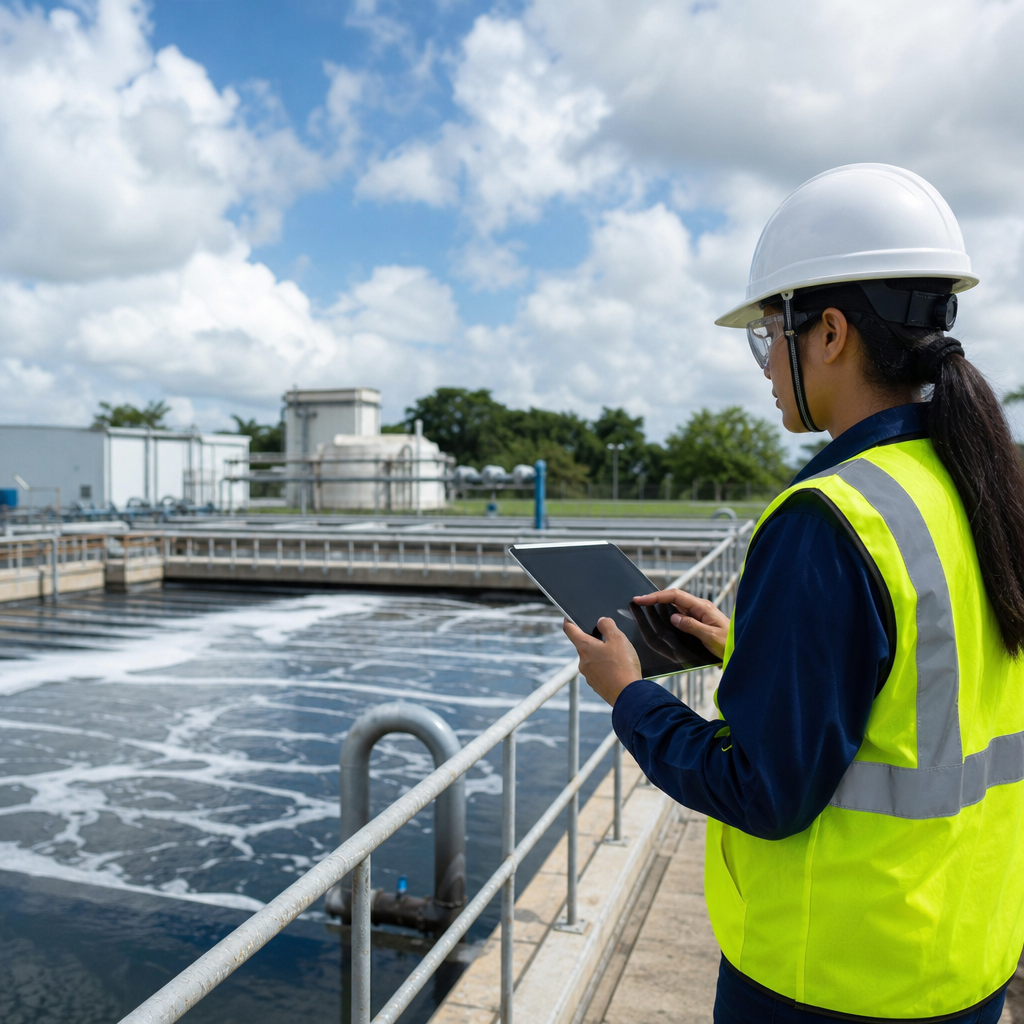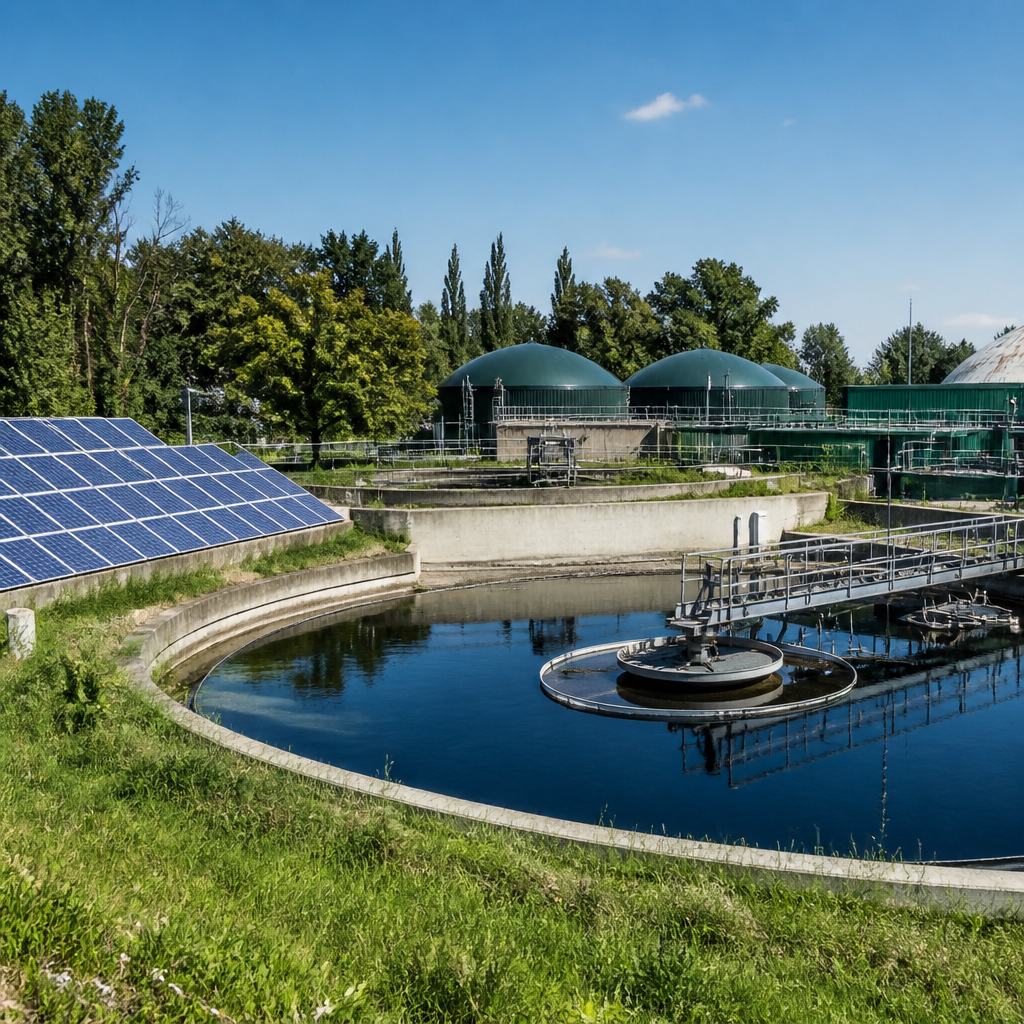
Harnessing renewable energy in sanitation facilities is one of the most practical ways to expand safe services, cut operating costs, and unlock broader global opportunities in sanitation. In this context, sanitation facilities include toilets, sewer networks, decentralized treatment plants, fecal sludge treatment sites, wastewater plants, and reuse systems that handle biosolids, nutrients, and water. Renewable energy refers to power and heat from sources that replenish naturally, including solar, wind, hydropower, geothermal energy, and biogas produced from organic waste. When these systems are designed together, sanitation shifts from a costly public service into a more resilient utility platform that can recover energy, water, and nutrients while protecting health.
The importance is global and immediate. According to WHO and UNICEF monitoring, billions of people still lack safely managed sanitation, and many utilities struggle with unreliable grids, high diesel costs, and weak cost recovery. I have worked on sanitation planning where a treatment site had pumps, blowers, and drying equipment installed, but power failures made the plant perform far below design. In those cases, renewable energy was not a branding exercise; it was the difference between a functioning service and untreated waste entering drains, rivers, or coastal zones. Energy reliability directly affects disinfection, aeration, sludge dewatering, odor control, and monitoring systems.
This hub article covers global opportunities in sanitation through the lens of renewable energy integration. It explains where energy is used across the sanitation chain, which technologies fit different contexts, how financing and policy shape adoption, and what implementation lessons matter in low-income, middle-income, and industrialized settings. It also frames sanitation as a circular economy sector. Wastewater and fecal sludge contain embedded chemical energy, recoverable nutrients such as nitrogen and phosphorus, and reusable water. Properly managed, sanitation facilities can become local infrastructure assets that support climate adaptation, public health, agriculture, and urban resilience instead of remaining permanent municipal cost centers.
For governments, utilities, investors, NGOs, and engineering teams, the main opportunity is clear: pair service expansion with energy-smart design from the start. That means selecting treatment processes with realistic energy demand, sizing renewable generation around actual load profiles, and valuing co-products such as biogas, compost-like biosolids, recovered water, or struvite. It also means acknowledging tradeoffs. Not every site can become energy positive, and not every rural toilet block needs advanced treatment. The best projects match technology to sludge characteristics, user demand, land availability, operator capacity, grid conditions, and long-term maintenance economics.
Why sanitation facilities are ideal sites for renewable energy deployment
Sanitation facilities are unusually well suited for renewable energy because they combine constant service demand with predictable process loads and, in many cases, on-site organic feedstock. Wastewater treatment plants use energy for pumping, screening, grit removal, aeration, mixing, sludge thickening, dewatering, and disinfection. Fecal sludge treatment plants often need pumps, drying support, conveyors, and laboratory equipment. Public toilet blocks need lighting, ventilation, water pumping, and handwashing stations. These loads are tangible and measurable, which makes them easier to pair with solar photovoltaics, battery storage, efficient motors, variable frequency drives, and biogas engines.
The other advantage is that sanitation assets are fixed, long-lived, and often publicly controlled. A utility can install rooftop solar on an administration building, canopy arrays over drying beds, or ground-mounted systems on buffer land near treatment ponds. Digesters can convert primary sludge, waste activated sludge, and co-digested organic waste into methane-rich biogas. Combined heat and power units can then generate electricity while capturing heat for digester temperature control or sludge drying. In practice, these arrangements reduce purchased electricity and improve operational stability, especially where outages are common or tariffs are volatile.
There is also a strong climate case. Wastewater and sludge release methane and nitrous oxide when poorly managed. Capturing methane through anaerobic digestion or covered lagoons can cut emissions while replacing fossil energy. Efficient treatment and powered pumping also reduce uncontrolled discharges that contaminate groundwater and waterways. Cities looking to meet climate commitments under national plans increasingly find sanitation to be an underused mitigation sector. Unlike some decarbonization pathways, sanitation energy projects often deliver immediate co-benefits in disease prevention, odor reduction, flood resilience, and local job creation.
Where energy fits across the sanitation value chain
To identify global opportunities in sanitation, it helps to map energy use across the full service chain rather than only at large treatment plants. Containment systems such as septic tanks and lined pits need little direct power, but associated toilet blocks often require lighting, ventilation fans, pumps, and payment systems. Emptying and transport depend on fuel or electricity for vacuum trucks, transfer stations, and hose systems. Treatment sites use the most energy, especially where activated sludge, membrane processes, or mechanical dewatering are involved. Reuse steps, including irrigation pumping, pelletization, drying, or nutrient recovery, add further demand but can also create revenue.
In dense urban areas, sewers and pumping stations are critical power users. Topography, infiltration, and old pipe networks can sharply increase pumping needs. In decentralized systems, packaged treatment units may have lower conveyance energy but require careful operator attention to avoid process failure. In rural settings, solar-powered water supply and sanitation can be paired, but timing matters because sanitation loads are often lower and more intermittent than water pumping loads. The practical lesson is simple: facilities should begin with an energy audit and a process mass balance before selecting renewable equipment.
In my experience, one of the biggest design mistakes is adding generation before reducing avoidable demand. Oversized aeration blowers, clogged diffusers, poor pump selection, and uncontrolled recirculation loops can lock in high energy use for years. The cheapest kilowatt-hour in sanitation is usually the one not consumed. Utilities that benchmark kilowatt-hours per cubic meter treated, track specific energy by process step, and maintain instrumentation get better renewable returns because they know their true baseload and peak demand.
Technology pathways: solar, biogas, wind, and hybrid systems
Solar power is the fastest entry point for many sanitation facilities because panels are modular, prices are well understood, and daytime loads often align with pumping, offices, and mechanical equipment. Grid-tied solar suits plants with stable interconnection and net metering or self-consumption rules. Off-grid or weak-grid sites often need battery storage for controls, lighting, telemetry, and critical pumping. Solar thermal applications are less common but useful for sludge drying, hot water in public wash blocks, or supporting thermophilic digestion where climate and scale justify it.
Biogas is the most distinctive sanitation energy source because it comes directly from the waste stream. Anaerobic digesters, upflow anaerobic sludge blanket reactors, anaerobic baffled reactors, and covered lagoons can recover methane from sewage sludge, septage, food waste, and market organics. At larger plants, biogas can fuel boilers, combined heat and power units, or upgrading systems that produce biomethane for injection or vehicle fuel. The economics improve where facilities can co-digest organic municipal waste, brewery waste, dairy residues, or slaughterhouse waste, provided contaminant control and feedstock agreements are strong.
Wind is more site-specific but can complement coastal or open-land sanitation sites with favorable resources. Small wind systems are less common today because maintenance and capacity factors are often less attractive than solar, yet hybrid solar-wind arrangements can support remote treatment or monitoring stations where seasonal complementarity matters. Hydropower and geothermal applications are niche but viable in certain geographies, especially where wastewater outfalls, heat recovery loops, or district energy systems already exist. The key principle is not choosing a fashionable technology; it is matching resource quality, process demand, and operator skill to a bankable design.
| Technology | Best sanitation applications | Main strengths | Main constraints |
|---|---|---|---|
| Solar photovoltaic | Pumping, lighting, controls, offices, decentralized plants | Modular, mature supply chain, low operating cost | Intermittent output, space needs, storage may be required |
| Biogas from digestion | Sludge treatment, large wastewater plants, co-digestion hubs | On-site fuel, emissions reduction, heat and power recovery | Needs reliable feedstock, gas cleaning, skilled operation |
| Wind | Remote or coastal facilities with strong wind resources | Can complement solar seasonally | Site-specific, maintenance complexity, variable output |
| Hybrid systems | Weak-grid plants, resilient public sanitation hubs | Higher reliability, optimized load coverage | More complex controls and financing structure |
Real-world examples and what they demonstrate
Some of the strongest global opportunities in sanitation come from projects that combine service delivery with resource recovery. East Bay Municipal Utility District in California is widely cited for co-digestion that boosts biogas production by accepting food waste alongside wastewater solids. The result is a plant that has generated substantial on-site energy while diverting organics from landfill. In Europe, utilities in Germany, Denmark, and the Netherlands have advanced energy-neutral or energy-positive wastewater treatment through efficient aeration, digestion, heat recovery, and data-driven controls. These examples show that the sanitation sector can move far beyond compliance toward utility-scale efficiency.
Lower-income contexts offer equally important lessons. In India, solar-powered public toilet complexes and fecal sludge treatment plants have helped reduce dependence on erratic grids, particularly where pumping and lighting are essential for user safety and uptime. In parts of sub-Saharan Africa, container-based sanitation and decentralized treatment models use solar energy for site operations, digital monitoring, and water services in areas where extending sewers is unrealistic. In Rwanda and Uganda, donor-supported fecal sludge treatment initiatives have explored drying, briquetting, and co-treatment pathways that turn sanitation residuals into marketable fuel products when moisture control and quality assurance are handled correctly.
These cases underline a simple truth: scale changes the technology choice, but the planning logic stays the same. A megacity wastewater utility may justify combined heat and power with SCADA optimization and advanced digestion. A secondary town may get better results from planted drying beds, solar-powered pumps, and a modest sludge drying line. A humanitarian settlement may prioritize rugged solar lighting, water-efficient toilets, and safe sludge transfer before any energy recovery investment. Successful programs do not copy equipment lists; they adapt proven process principles to local constraints.
Financing, policy, and the business case for adoption
The business case for renewable energy in sanitation facilities depends on more than electricity savings. Direct returns include lower grid purchases, reduced diesel consumption, avoided methane emissions, and revenues from power export, biomethane, biosolids, compost, reclaimed water, or tipping fees for co-digested organics. Indirect returns can be just as important: fewer service interruptions, better effluent compliance, lower odor complaints, safer nighttime operation, and stronger resilience during storms or grid failures. When utilities calculate only simple payback on electricity, they often undervalue these benefits and underinvest.
Policy can unlock or block adoption. Feed-in tariffs, net metering, renewable energy certificates, and carbon credit mechanisms improve project economics. Clear sludge reuse standards, interconnection rules, and public-private partnership frameworks reduce investor uncertainty. Development banks and climate funds increasingly support sanitation-energy projects because they produce measurable health and emissions outcomes together. In procurement, performance-based contracts can work well when the operator is paid for uptime, energy generation, and effluent quality rather than only for installed hardware. That structure aligns incentives better than one-time capital delivery.
Blended finance is especially useful for emerging markets. Grants can cover early-stage feasibility studies, environmental and social assessments, or pilot phases, while concessional loans or green bonds fund larger capital works. Results-based financing can reward verified energy generation or safely managed sanitation outcomes. The practical requirement is credible data. Lenders and public agencies want load profiles, sludge volumes, biochemical methane potential, tariff assumptions, spare parts plans, and operator training budgets. Projects fail financing review when they rely on generic vendor brochures instead of site-specific engineering and realistic cash flow modeling.
Implementation priorities, risks, and the path forward
Implementation starts with fundamentals. First, quantify the sanitation service objective: more toilet access, better sludge treatment, improved effluent quality, lower greenhouse emissions, or lower operating cost. Second, gather baseline data on flows, solids, energy demand, outages, and land availability. Third, reduce waste through efficient pumps, leak control, aeration tuning, and preventive maintenance. Only then should teams size renewable generation, storage, and recovery equipment. This sequence avoids the common trap of treating renewable power as a patch for poor process design. Good sanitation engineering and good energy engineering are inseparable.
Risks are manageable when named early. Biogas systems need gas-tight construction, hydrogen sulfide control, flare safety, condensate management, and trained operators. Solar systems need theft prevention, cleaning protocols, inverter replacement planning, and realistic assumptions about battery life in hot climates. Reuse schemes need regulatory compliance and market development, because producing a fertilizer pellet or reclaimed water stream is not the same as selling it consistently. Institutional risk matters too. If the sanitation utility, energy regulator, and municipality cannot coordinate permits, billing, and maintenance responsibility, even technically sound projects can stall.
The path forward for global opportunities in sanitation is therefore practical, not abstract. Cities should audit wastewater and fecal sludge assets for energy recovery potential. Utilities should benchmark process energy and publish performance data. Governments should align sanitation plans with renewable energy policy, climate targets, and circular economy regulation. Donors and investors should prioritize projects with clear operations funding, not only capital grants. Engineers should design for maintainability and local supply chains. If your organization works in sanitation, start with one facility, build a verified business case, and scale what performs.
Frequently Asked Questions
1. What does renewable energy in sanitation facilities actually include?
In sanitation facilities, renewable energy includes any naturally replenishing energy source used to power treatment, conveyance, pumping, heating, drying, monitoring, or reuse operations. In practice, this often starts with solar power for lighting, controls, pumping, ventilation, and small treatment units, but the concept is much broader. It can also include biogas generated from anaerobic digestion of sludge or wastewater, small-scale wind in suitable locations, micro-hydropower in gravity-fed or flowing systems, and solar thermal applications for sludge drying, water heating, or process heat.
The term sanitation facility also covers a wide range of systems, from public and institutional toilets to sewer networks, decentralized wastewater treatment units, fecal sludge treatment plants, centralized wastewater treatment plants, and resource recovery systems that produce reclaimed water, biosolids, or nutrients. Each of these systems has different energy demands. For example, a public toilet block may need modest solar electricity for lighting and washwater pumping, while a wastewater plant may use a combination of solar generation and biogas-based combined heat and power to offset aeration and sludge processing loads.
What makes renewable energy especially valuable in sanitation is that it can be matched to both centralized and off-grid conditions. In areas with unreliable electricity, renewables can improve service continuity and reduce downtime. In larger facilities, they can lower operating expenses and improve resilience against rising energy prices. When planned well, renewable energy does not just replace grid power; it can become part of a broader strategy to make sanitation systems cleaner, more reliable, and more financially sustainable.
2. Why is renewable energy such a practical fit for sanitation systems?
Sanitation systems are energy-dependent by nature. Pumps move wastewater and sludge, blowers support biological treatment, screens and mixers keep processes stable, and disinfection, dewatering, drying, and reuse steps can all require electricity or heat. Because these needs are ongoing and often predictable, sanitation facilities are well suited for renewable energy integration. Many assets also have available roof space, open land, or process byproducts that can support energy generation on site.
The practical benefits are significant. First, renewable energy can reduce operating costs, which is a major issue for utilities, municipalities, and service providers working under tight budgets. Electricity is frequently one of the largest recurring expenses in wastewater and sludge management. Offsetting that consumption with solar power or generating usable biogas from sludge can meaningfully improve financial performance over time. Second, renewable energy can strengthen reliability. In places where outages are common, sanitation services are vulnerable to service interruptions, untreated discharges, equipment damage, and health risks. Backup renewable systems paired with storage or hybrid controls can help facilities maintain essential functions during grid instability.
There is also a strong environmental case. Sanitation facilities can contribute to greenhouse gas emissions through energy use and unmanaged methane releases. Renewable energy helps address both issues. Solar and wind displace fossil-based electricity, while capturing and using biogas from treatment processes turns a potent greenhouse gas into a useful energy source. Beyond emissions, renewable-powered sanitation supports broader development goals by expanding services in underserved areas, enabling decentralized treatment, and improving the long-term viability of safe waste management and water reuse systems.
3. Which renewable energy options work best for toilets, treatment plants, and fecal sludge facilities?
The best option depends on the facility type, energy demand profile, climate, available space, and operational capacity. For toilets, public sanitation blocks, and small decentralized systems, solar photovoltaic systems are often the most straightforward choice. They are modular, increasingly affordable, and well suited for powering lighting, fans, smart locks, sensors, payment systems, washwater pumps, and compact treatment units. In remote or peri-urban settings, solar paired with batteries can provide reliable service where grid access is weak or unavailable.
For fecal sludge treatment plants and wastewater facilities, the picture is more varied. Larger plants often benefit from a combination of technologies rather than a single source. Solar can offset daytime electricity use, especially for pumping and controls, while anaerobic digestion can convert sludge and high-strength organic waste into biogas. That biogas can then be used for heating digesters, drying sludge, running boilers, or generating electricity through engines or combined heat and power systems. Facilities with strong organic loads and consistent feedstock are particularly good candidates for biogas recovery.
Solar thermal systems can also be highly effective, especially where drying is important. They can support sludge drying, reduce moisture content, cut transport costs, and improve downstream reuse or disposal efficiency. In certain geographies, wind or micro-hydropower may also contribute, though these are generally more site-specific. The most successful projects usually begin with an energy assessment, identify critical loads, improve efficiency first, and then size renewable technologies around realistic operational conditions. That approach leads to better performance than simply installing panels or digesters without aligning them to the actual treatment process.
4. What are the main challenges of using renewable energy in sanitation facilities?
While the opportunity is strong, implementation is not automatic. One common challenge is system sizing and design. Sanitation loads can vary by hour, season, rainfall, influent quality, and maintenance conditions. If a renewable system is undersized, it may not support critical operations; if oversized, it may become unnecessarily expensive or underused. Facilities therefore need clear data on energy consumption, load priorities, and process requirements before selecting technology.
Another challenge is operations and maintenance. Renewable energy systems are often described as low-maintenance, but in sanitation environments they still require routine attention. Dust, corrosion, humidity, gas quality variation, sludge characteristics, and harsh operating conditions can affect performance. Biogas systems, in particular, need trained operators to manage digestion conditions, gas cleaning, safety controls, and equipment upkeep. Solar systems also require good installation quality, secure mounting, inverter protection, battery management where applicable, and a plan for spare parts and servicing.
Financing and institutional readiness can be barriers as well. Although renewable systems often save money over time, upfront costs can be difficult for utilities or local governments to absorb. Procurement processes may not be designed for performance-based energy investments, and tariff structures may limit the value of exported power where net metering is not available. In addition, sanitation projects sometimes focus heavily on treatment compliance without fully integrating energy planning. The solution is not to avoid renewables, but to approach them strategically: combine technical design with lifecycle costing, staff training, monitoring systems, and governance arrangements that support long-term operation. Facilities that do this well tend to see stronger returns and fewer performance problems.
5. How can sanitation providers get started with renewable energy in a way that is cost-effective and scalable?
The best starting point is a structured assessment. Providers should first understand how the facility uses energy today, which processes are essential, where the biggest costs occur, and what efficiency improvements can be made before adding generation. Energy efficiency and renewable energy work best together. Replacing oversized pumps, improving aeration control, reducing leaks, optimizing operating schedules, and modernizing motors can lower total demand, which in turn makes renewable systems smaller and more affordable.
After that, facilities should evaluate their available resources. This includes solar exposure, roof and land area, sludge quantity and quality, wastewater organic load, heat demand, local electricity tariffs, grid reliability, and opportunities for water or nutrient reuse that could improve project economics. A phased approach is often the smartest path. For example, a provider might begin with solar power for lighting, pumping, and controls at a toilet block or decentralized treatment site, then expand to larger treatment units, battery storage, or biogas recovery as capacity and financing improve.
Scalability also depends on choosing the right business model. Some facilities can invest directly, while others may benefit from energy service agreements, public-private partnerships, climate finance, development funding, or blended finance models. Strong projects typically include measurable targets for cost savings, service reliability, emissions reduction, and operational performance. Just as important, they include operator training and remote monitoring so issues can be identified early. When sanitation providers treat renewable energy as part of core infrastructure planning rather than an add-on, they are far more likely to build systems that are financially sound, operationally reliable, and expandable across multiple sites or service areas.