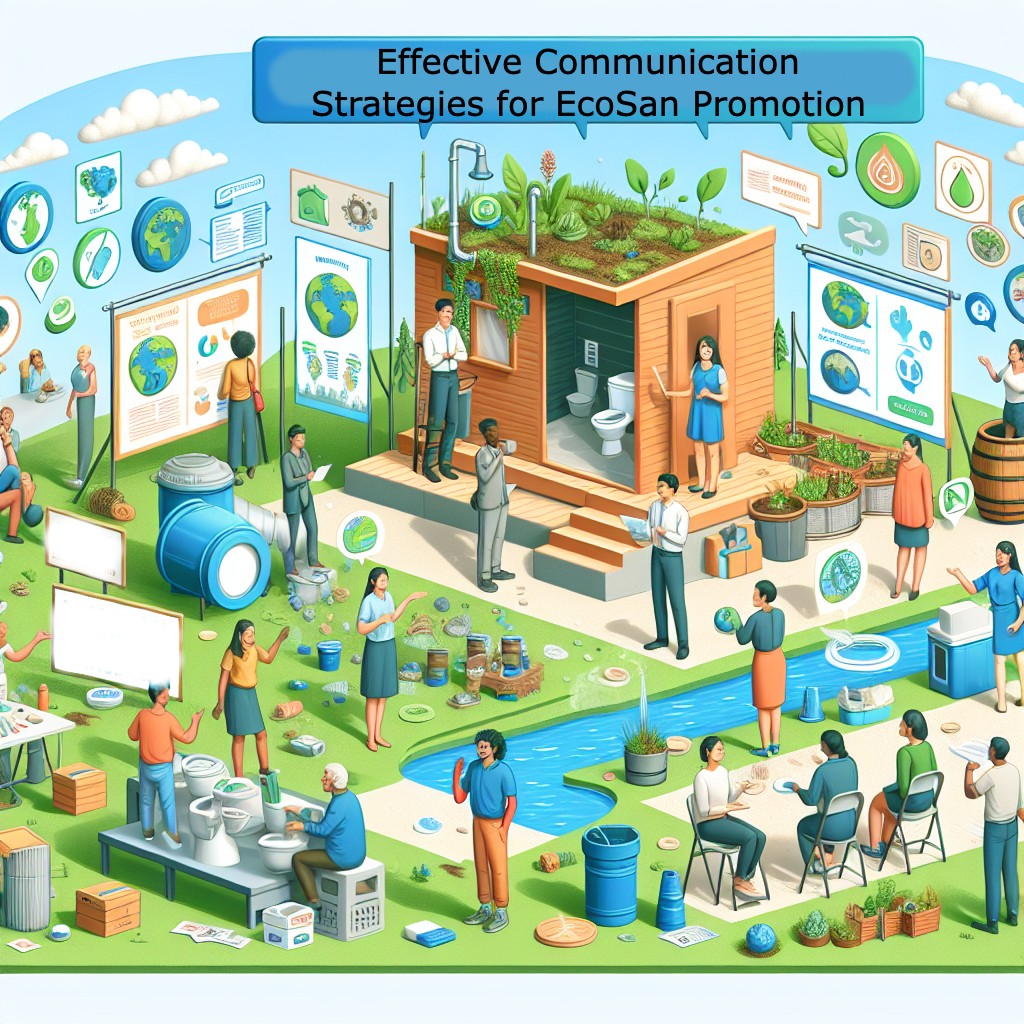
Ecological sanitation (EcoSan) solutions pave the way for sustainable waste management by evolving beyond conventional sanitation systems. By promoting the conversion of waste into resources, EcoSan solutions play a crucial role in ensuring environmental sustainability and resource efficiency. Yet, with rapid technological advancements, the challenge becomes striking a harmony between innovation and practical implementation. More advanced technology often implies higher costs, complexity, and potential accessibility issues. Hence, it’s crucial to balance cutting-edge innovation with practical design and usability, ensuring that benefits are universally accessible, especially in developing regions where such systems are often needed the most.
Innovation in EcoSan aims to transform human waste into valuable resources like fertilizer, but its implementation must also account for local social, economic, and environmental contexts. While technology offers innovative potential, this does not guarantee successful adoption and long-term sustainability. Thus, considerations encompass not just the technological feasibility, but also the ecological, economic viability and societal acceptability. This article discusses how striking the right balance between these aspects can result in successful EcoSan implementations.
The Role of Technological Innovation in EcoSan
Technological advancements in EcoSan solutions have revolutionized how we view waste management, providing new pathways for converting waste into resources. Innovations such as membrane bioreactors, composting toilets, and urine-diverting dry toilets (UDDTs) exemplify how technology empowers EcoSan systems to operate effectively in diverse environments. For instance, membrane bioreactors have the remarkable ability to treat wastewater to a standard where it can be reused, significantly conserving water resources in water-scarce regions.
Composting toilets, another hallmark of EcoSan innovation, enable the biological breakdown of human waste into compost. This transformation not only recycles waste into useful biological matter but also aids in preventing groundwater contamination, a critical concern in densely populated areas. Meanwhile, urine-diverting dry toilets effectively separate urine and feces at the source, strategically allowing for individualized processing and reducing the necessity for water consumption typical in traditional flush systems. Such technological strides are instrumental in minimizing environmental impacts while leveraging waste as a recoverable resource.
However, while these innovations enhance technical performance, challenges can arise in broader implementation contexts. Complex systems sometimes demand technical expertise for installation, operation, and maintenance — an impediment in communities lacking these resources. Thus, while innovation is crucial, it must be matched by ensuring accessible technologies that do not alienate the populations they aim to assist.
Ensuring Practicality of Technological Solutions
To facilitate wider adoption and sustained use of EcoSan systems, practical considerations must come to the forefront. A significant factor is the cost associated with implementing and maintaining advanced technologies. While high-end solutions may offer superior performance, they often come with a price tag that limits their accessibility, especially in economically disadvantaged regions. Thus, technologies must be cost-effective, scalable, and adaptable to local resources and conditions to ensure long-term viability.
Moreover, simplicity in design and operation is essential. A system that is easy to understand and manage can significantly increase its acceptance in a community. For example, a complex membrane bioreactor system may not be suitable in a rural village with limited access to technology and educational infrastructure. Instead, simpler, low-tech solutions like composting toilets may be more effective in promoting sustainable sanitation behaviors. By aligning with the practical realities of the user base, EcoSan solutions can better integrate into daily life.
In addition, maintenance is a critical consideration. Systems that are labor-intensive or require frequent repairs can become burdensome and are prone to neglect. There’s a need for technology that can be easily maintained with locally available resources and expertise. Education and training programs play a vital role in empowering local communities to manage and maintain these systems effectively. When users feel ownership and responsibility, systems are more likely to be cared for and remain operational over the long term.
Balancing Local Context and Technological Advancements
Understanding the local context is vital for the successful implementation of EcoSan solutions. Cultural norms, existing infrastructure, and environmental conditions all influence how new technologies can be adopted. In some societies, using human waste in agriculture might be culturally unacceptable, whereas in others, it may be an established practice. Thus, the introduction of EcoSan systems must be sensitive to these nuances and aim to foster cultural acceptance alongside technological deployment.
Furthermore, environmental factors such as climate, geography, and biodiversity impact technology choice. A system well-suited for an arid region may not function with equal efficiency in a humid, tropical environment. For instance, the effectiveness of solar thermal toilets is contingent on adequate sunlight exposure, making them impractical in predominantly cloudy climates. Such realizations underscore the importance of adaptable technologies that reflect environmental realities while still maintaining performance standards.
Infrastructure also plays a significant role. The presence or absence of certain facilities, such as sewer networks or electricity grids, determines what is technically feasible or economically viable. Urban areas may have different requirements and challenges compared to remote, rural locations. Technologies must be selected not only for their innovation but also for their compatibility with existing infrastructure or their ability to function independently if necessary.
The Economic Aspect of EcoSan Implementations
Economic considerations are central to the sustainable implementation of EcoSan technologies. The direct costs of installation and ongoing operational expenses must align with the financial capabilities of the users or communities. This is especially important in lower-income regions where budget constraints are more pressing. Thus, efforts to reduce costs and develop affordable solutions are ongoing goals for designers and developers in this field.
In addition to initial costs, the economic benefits gained from EcoSan systems can be significant. By transforming waste into usable products such as fertilizers or biogas, these systems can generate revenue or reduce costs for communities. Composting toilets, for example, convert organic waste into a valuable soil amendment, potentially boosting agricultural productivity. Similarly, systems that capture biogas offer a renewable energy source that can satisfy local energy needs or even supply larger markets.
Supporting micro-enterprises around EcoSan technologies can further aid economic development. Communities can engage in activities such as the production and sale of eco-friendly fertilizers, thereby integrating EcoSan into the local economy. This can lead to increased economic resilience and a more sustainable financial ecosystem. Successful EcoSan systems thus create a positive loop where economic incentives drive ecological benefits and foster further local investment in such technologies.
Sociocultural Acceptance: A Key to Success
For EcoSan technologies to be embraced fully, they must achieve sociocultural acceptance. This relates to how well the technology aligns with existing social norms, values, and practices. Public education and engagement are essential to overcome any initial resistance or skepticism. Community workshops and pilot programs can play a critical role in demonstrating the benefits and usability of EcoSan systems.
Sociocultural acceptance can be particularly challenging in regions where sanitation practices are steeped in traditional beliefs. Technology that imposes radical shifts in behavior is unlikely to be accepted unless it is accompanied by broad educational efforts. Involving community leaders and stakeholders in the planning and implementation phases can help address these challenges, allowing for nuanced solutions that respect cultural intricacies.
Moreover, user-centric design greatly aids in enhancing sociocultural acceptance. Technologies that incorporate feedback and preferences from end-users generally see higher adoption rates and satisfaction. By engaging communities in the design process, designers can ensure that solutions are not only functional but also culturally congenial. This participatory approach can be the cornerstone of not just user acceptance but sustained use.
Case Studies: Learning from Success and Failure
Examining case studies offers valuable insights into both the successes and pitfalls of EcoSan implementations. Successful case studies highlight the importance of integrated approaches that consider all dimensions—technological, economic, social, and environmental. For instance, the success of EcoSan implementations in Kerala, India, underscores the importance of community involvement and government support in large-scale projects.
Conversely, failures, such as certain high-tech implementations in rural sub-Saharan Africa, have taught us crucial lessons about the dangers of overlooking local realities. Overly complex systems failed to be sustained due to inadequate infrastructure, technical skills, and local industry support. These failures emphasize the necessity of simpler, adaptable solutions that are attuned to the local conditions and are supported by adequate training and educational initiatives.
By carefully studying these varied outcomes, stakeholders can develop a more nuanced understanding of how to navigate the challenges of implementing EcoSan technologies. Learning from both successes and failures ensures that new projects are rooted in proven strategies, cultivating environments where EcoSan solutions can not only take root but also thrive.
Conclusion
In the quest to provide sustainable sanitation, EcoSan technologies represent a pivotal advancement in how we manage human waste. Yet, as we drive towards more sophisticated solutions, the balance between cutting-edge technology and practical execution becomes increasingly critical. Innovation should not overshadow the necessity for technologies that are affordable, adaptable, and culturally acceptable.
Sustainable EcoSan solutions stem from inclusive approaches that account for the full spectrum of influencing factors—technological capacity, economic viability, environmental adaptability, and sociocultural acceptability. This multi-faceted approach ensures that EcoSan systems are not only deployed but are sustained and optimized over time. This involves prioritizing user needs, emphasizing local training, and continuously iterating on technologies to align better with real-world conditions.
Ultimately, the goal is to transform EcoSan from a mere sanitation alternative to a holistic system that contributes to ecological health, economic revitalization, and community resilience. By navigating the fine line between innovation and practicality, we establish a foundation for future generations where waste management contributes positively to our ecological and societal well-being. Such ambitions require collaborative efforts across sectors, and guided by lessons from past implementations, we can march towards a sustainable future where everyone benefits from intelligent, considerate, and inclusive sanitation solutions.
Frequently Asked Questions
1. What exactly are EcoSan solutions?
EcoSan solutions, or ecological sanitation solutions, represent a progressive approach to waste management by transforming what is typically considered waste into valuable resources. Unlike conventional sanitation systems that focus primarily on waste disposal, EcoSan focuses on creating environmentally sustainable processes that cycle nutrients back into the ecosystem. This often involves processes like composting human waste or urine-diverting techniques that can simultaneously promote health, sustainability, and efficiency. Ecological sanitation systems are designed to manage waste without polluting water resources and to maximize the economic value of waste-derived resources. As a result, they are a crucial part in transitioning towards more sustainable urban development and rural hygiene solutions.
2. How do EcoSan innovations contribute to environmental sustainability?
EcoSan innovations are pivotal because they uphold several key principles of environmental sustainability. Firstly, they support nutrient recycling, a major component of sustainable agriculture. By converting human waste into compost or fertilizer, these solutions return vital nutrients to the soil, thereby reducing the dependency on chemical fertilizers which can be harmful to ecosystems. Additionally, EcoSan practices conserve water by employing dry sanitation technologies or systems that recirculate water efficiently. Furthermore, by preventing pollution of water bodies and reducing greenhouse gas emissions related to standard waste treatment processes, EcoSan contributes to overarching goals of reducing environmental impact. Ultimately, these solutions aim to reduce the ecological footprint of sanitation infrastructure by leveraging natural processes and renewable resources.
3. What challenges exist in balancing technological innovation with practicality in EcoSan solutions?
Balancing innovation and practicality in EcoSan solutions is a complex challenge due to a range of technological, economic, cultural, and infrastructural factors. On one hand, innovative technologies can offer increased efficiency, robustness, and resource recovery, but they often come with high installation costs and require precise operation and maintenance protocols. These factors can pose a substantial barrier to implementation, especially in under-resourced or developing regions. On the other, simpler, low-tech solutions may be more easily adopted but may lack the capacity to fully leverage the resource recycling potentials that cutting-edge technologies offer. Furthermore, community acceptance and engagement play critical roles, as solutions must align with local practices and beliefs to be truly practical. Thus, successful EcoSan projects often require a thorough understanding of and adaptation to local contexts to strike a true balance between advanced technology and real-world applicability.
4. Are technological advancements in EcoSan solutions accessible to developing countries?
Accessibility to EcoSan technologies in developing countries varies significantly. While new technologies continue to emerge, their adoption is often hindered by financial constraints, limited technical expertise, and infrastructural gaps. The cost of cutting-edge systems can be prohibitive for many communities, and the expertise needed to operate and maintain them is not always readily available. However, many organizations and developers are working to design scalable solutions that are more cost-effective and easier to maintain. Additionally, international collaborations and funding are increasingly focusing on building local capacity to support EcoSan systems. Also, embracing a community-centered design approach often helps modify advanced innovations to better suit the financial and social structures prevalent in developing regions, thereby enhancing their accessibility and usability.
5. What role do governments and policy-makers play in implementing effective EcoSan systems?
Governments and policymakers are integral to the widespread adoption and implementation of EcoSan systems. They set the regulatory frameworks that can either enable or hinder the development of ecological sanitation solutions. Through policy advocacy and regulatory reforms, policymakers can promote the adoption of standards that support environment-friendly sanitation practices. Governments can also allocate subsidies and incentives to lower the financial barriers to adopting EcoSan technologies, thus stimulating market growth and innovation. Moreover, policies focusing on public education about the benefits of EcoSan systems can foster societal acceptance and participation, which are essential for successful implementation. At a larger scale, governments can engage in international cooperation to exchange knowledge, create strategic collaboration networks, and tap into sustainable development resources that empower localized EcoSan solutions.