Bridging the sanitation gap starts with a simple truth: infrastructure alone does not change health outcomes unless people trust it, understand it, and can use it consistently. In public health practice, sanitation refers to the safe management of human waste, wastewater, solid waste, drainage, and hygiene behaviors that prevent disease transmission. Disadvantaged communities are groups facing persistent barriers such as poverty, insecure housing, disability, discrimination, migration status, low literacy, or geographic isolation. When these barriers overlap, education becomes the mechanism that turns technical sanitation plans into lived behavior change. I have seen projects fail because toilets were installed without community dialogue, and I have seen modest budgets outperform large capital programs because residents were treated as partners, not recipients. That is why educating for change is the core of community engagement and education in sanitation.
The stakes are high. The World Health Organization and UNICEF Joint Monitoring Programme consistently shows that billions still lack safely managed sanitation, and the burden falls hardest on informal settlements, remote rural areas, Indigenous communities, refugees, and low-income urban neighborhoods. Poor sanitation increases diarrheal disease, parasitic infection, malnutrition, school absenteeism, gender-based safety risks, and lost income. It also deepens stigma. In many communities, open defecation, overflowing pits, or blocked drains are not signs of indifference; they are signs of exclusion from planning, finance, and municipal services. Education closes that gap by making information actionable, culturally relevant, and locally owned. It connects sanitation with dignity, convenience, cost savings, child development, and environmental quality, which are often the motivations that matter most in daily life.
This hub article explains how to engage disadvantaged communities through sanitation education that produces durable change. It defines what effective sanitation education includes, shows how to tailor messages for different groups, outlines proven outreach methods, and explains how to measure whether engagement is working. It also serves as the organizing page for deeper content across this subtopic, including behavior change communication, school sanitation, community-led approaches, hygiene promotion, inclusive design, and local leadership development. If you need a practical framework, the answer is direct: successful sanitation engagement combines trust building, audience-specific education, visible service improvements, and feedback loops that allow communities to shape decisions over time.
Why sanitation education must be community-centered
Community-centered sanitation education begins with listening before messaging. In fieldwork, the most useful first questions are not “Do people know the health risks?” but “What currently happens when a toilet fills, a child gets diarrhea, or rain floods the lane?” Those answers reveal constraints that standard awareness campaigns miss. A family may know handwashing matters yet still ration water because supply is intermittent. A tenant may want a latrine upgrade but lacks permission from the landlord. A person with limited mobility may avoid shared toilets because there is no handrail, light, or path. Education that ignores these realities sounds correct on paper and fails in practice.
Community-centered approaches treat sanitation as a social system. They recognize that behavior is shaped by service reliability, gender norms, time burdens, privacy, price, and social influence. They also recognize that disadvantaged communities often distrust institutions for good reason. Promises have been broken before. That is why local facilitators, resident associations, health volunteers, faith leaders, teachers, and women’s groups are often more effective messengers than outside experts alone. The role of the practitioner is to translate technical standards into options people can understand and assess, then support community decisions with transparent information on costs, maintenance, safety, and responsibilities.
Good education also avoids blaming communities for structural failures. Telling residents to “stop dumping waste” without addressing collection gaps is ineffective. Urging toilet use where facilities are unsafe for women at night is irresponsible. The most credible sanitation education links behavior with feasible improvements. For example, when a municipality pairs drain-cleaning campaigns with scheduled waste pickup, participation rises because the message is backed by a visible service response. When schools combine menstrual hygiene education with functioning water points and disposal bins, attendance improves because information is aligned with usable facilities. Change happens when education is practical, respectful, and tied to everyday conditions.
Understanding barriers faced by disadvantaged communities
The sanitation gap persists because barriers stack up. Economic barriers are obvious: households may not afford connection fees, toilet construction materials, desludging charges, soap, or menstrual products. Yet social barriers are equally important. Caste discrimination, anti-migrant sentiment, stigma around disability, and restrictions on women’s movement can block access even where infrastructure exists. Language barriers prevent residents from understanding public notices. Low literacy makes text-heavy posters ineffective. Informal settlement residents may avoid reporting service issues because they fear eviction or harassment. In rural areas, distance and seasonal flooding can make even well-designed facilities impractical.
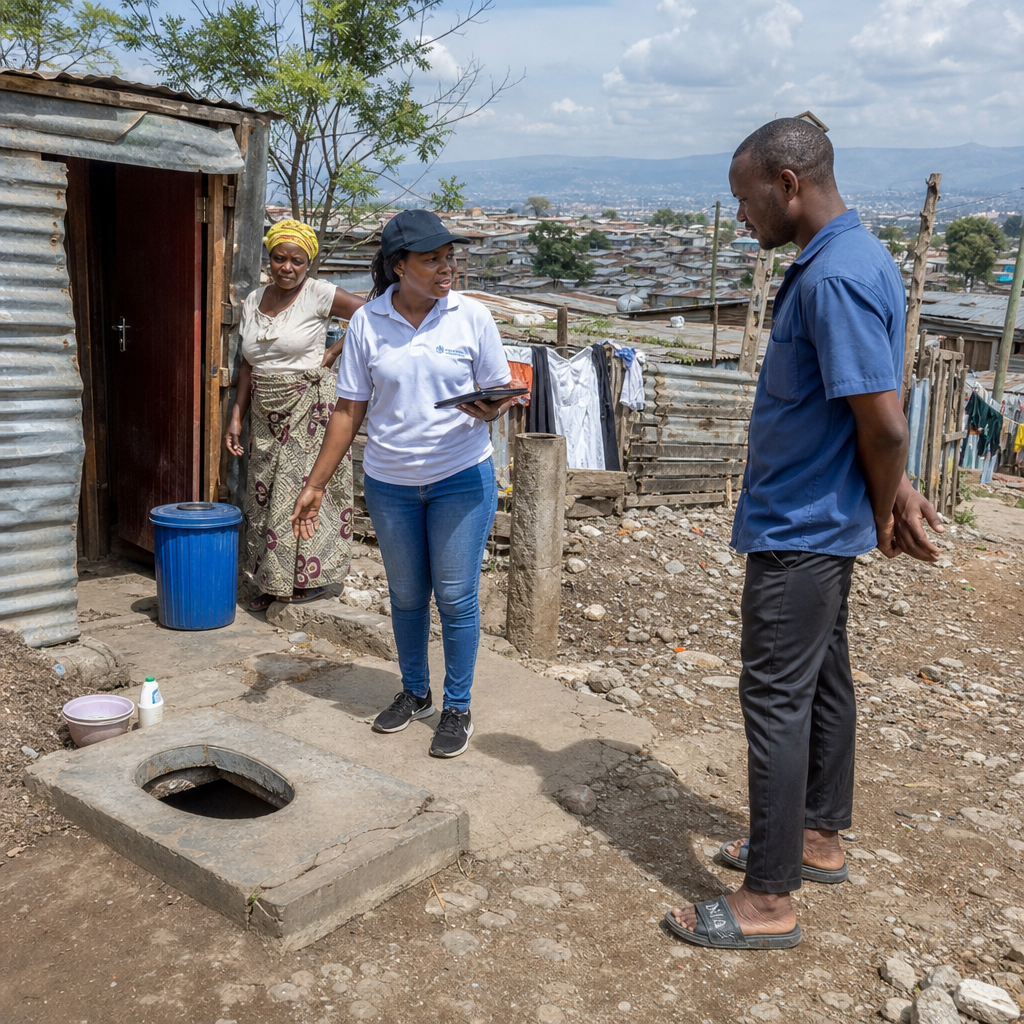
Physical design barriers often go unrecognized until users describe them. Steps that are manageable for one person can exclude an older adult. Narrow doors can prevent wheelchair access. Poor lighting increases assault risk. Shared toilets without locks reduce privacy and discourage use by girls and women. Pits located too close to water sources create contamination risks. Where fecal sludge management is absent, toilets become temporary storage rather than safe sanitation. In my experience, communities engage more seriously when education includes these specific design and service issues rather than limiting the conversation to generic hygiene advice.
Behavioral barriers also deserve nuance. People do not change routines simply because they receive facts. Social norms, habits, and perceptions of cleanliness strongly influence sanitation behavior. A caregiver may prioritize sweeping a yard over safe child feces disposal if child stools are not considered dangerous. A household may reject a new toilet design if it smells, overheats, or conflicts with cultural preferences for anal cleansing water. Effective educators map these barriers openly and address them one by one, using demonstration, discussion, and local problem solving rather than one-way instruction.
What educating for change looks like in practice
Educating for change means moving from awareness campaigns to sustained learning systems. The goal is not to deliver a single message but to build sanitation capability across households, schools, local government, and service providers. At household level, this includes practical instruction on toilet use, cleaning routines, safe child feces disposal, handwashing with soap at critical times, menstrual hygiene management, and what to do when pits fill or drains clog. At community level, it includes public discussion of roles, tariffs, reporting channels, maintenance schedules, and rights to safe, inclusive services. At institutional level, it includes training teachers, health workers, landlords, desludging operators, and local officials so messages and services reinforce each other.
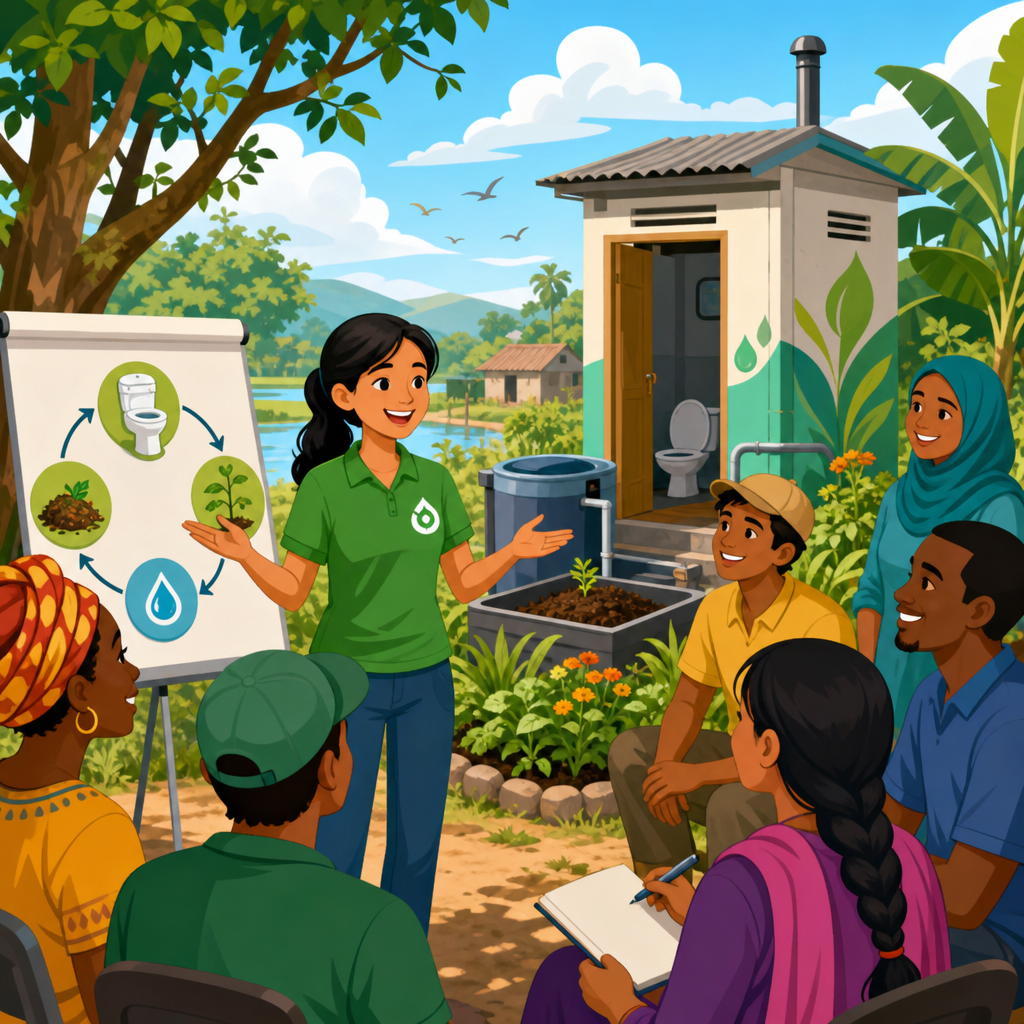
Several methods consistently work. Participatory rural appraisal tools, community mapping, and sanitation walks help residents identify contamination points and prioritize action. Demonstration toilets and handwashing stations make abstract advice tangible. Peer educators increase uptake because people trust those who share their language and circumstances. School clubs can normalize hygiene habits that children carry home. Mobile messaging and WhatsApp groups are effective where phone access is common, but they work best as reinforcement, not replacement, for face-to-face engagement. The key principle is repetition through multiple channels over time.
| Engagement method | Best use | Example in disadvantaged communities |
|---|---|---|
| Community mapping | Identify risks and priorities visually | Residents mark overflowing pits, unsafe paths, and flooding hotspots in an informal settlement |
| Peer educators | Build trust and improve message relevance | Local mothers teach safe child feces disposal during home visits |
| School sanitation clubs | Reinforce daily habits and family spillover | Students monitor handwashing stations and share hygiene lessons at home |
| Demonstration facilities | Show realistic, affordable options | Accessible toilet models displayed at a community center with cost breakdowns |
| Two-way digital messaging | Reminders and issue reporting | Residents report blocked drains by phone and receive maintenance updates |
These methods work because they answer practical questions directly. What toilet option fits a flood-prone plot? How often should shared facilities be cleaned, and by whom? Where can sludge be emptied legally? How can a woman report harassment near a communal toilet? When education is specific enough to solve real problems, participation increases and sanitation becomes a manageable community issue rather than an abstract health campaign.
Designing messages for trust, inclusion, and behavior change
The most effective sanitation messages are simple, direct, and adapted to audience priorities. For caregivers, preventing child illness and reducing cleaning burdens may matter most. For adolescents, privacy, dignity, menstrual hygiene, and safe school attendance may be stronger motivators. For landlords, tenant retention and compliance can be persuasive. For local officials, reduced complaints, better service performance, and lower disease burden may drive action. Message design should therefore begin with audience segmentation, not with a master slogan.
Plain language is essential. Instead of saying “fecal-oral transmission pathways,” explain that germs from feces reach hands, food, water, and surfaces, then enter the body. Instead of “safely managed sanitation,” explain that waste must be contained, emptied, transported, treated, or disposed of without exposing people. Visual communication matters when literacy is low: picture cards, color coding, route maps, and live demonstrations often outperform printed brochures. Translation into local languages is necessary but not sufficient; examples and metaphors must also fit local life. In one settlement project, replacing technical diagrams with a simple rainy-season contamination map changed meeting participation immediately because residents could see their own streets in the discussion.
Trust depends on honesty about tradeoffs. Shared toilets can improve access quickly, but they require clear cleaning agreements and reliable water. Pit latrines are affordable, but in dense areas they create desludging and groundwater challenges. Sewer connections provide long-term benefits, but connection fees and construction disruption can deter uptake. Communities respond better when these tradeoffs are discussed openly. Fear-based messaging has limited value. Clear evidence helps, but shame rarely produces durable sanitation behavior. Respectful communication, social proof, and visible local champions are more reliable drivers of change.
Working through schools, health systems, and local leadership
Sanitation education succeeds faster when institutions repeat the same core practices. Schools are especially important because they combine routine, peer influence, and parent contact. Effective school sanitation programs go beyond posters. They ensure toilets are functional, separate where needed, equipped for menstrual hygiene, and linked to supervised handwashing. Teachers need practical guidance, not just policy statements. Students can track soap availability, report maintenance issues, and lead anti-stigma activities around hygiene and menstruation. When school systems do this well, children become credible messengers at home.
Primary health systems also play a central role. Community health workers can integrate sanitation into prenatal visits, child growth monitoring, vaccination outreach, and diarrhea case management. This works because households are already engaging with health services at moments when prevention advice is relevant. Clinics can demonstrate handwashing, explain oral rehydration alongside sanitation prevention, and refer households to subsidy programs or municipal contacts. In outbreaks, trusted health workers can counter rumors quickly, especially where social media misinformation spreads faster than official notices.
Local leadership turns education into governance. Ward committees, resident associations, traditional leaders, and faith institutions can convene meetings, mediate disputes, and normalize collective standards for cleaning, maintenance, and reporting. The strongest community engagement programs do not bypass these structures; they strengthen them with data, training, and accountability tools. For example, a neighborhood sanitation committee that posts desludging schedules and complaint numbers publicly creates a feedback loop residents can verify. That transparency builds credibility and keeps education linked to action.
Measuring progress and sustaining change
Sanitation education should be measured by behavior and service outcomes, not by the number of workshops delivered. Useful indicators include toilet usage, functionality, handwashing station availability, soap presence, safe child feces disposal, school attendance for girls, reported user safety, desludging compliance, and response time for repairs or blockages. Baseline and follow-up surveys help, but direct observation, spot checks, and community scorecards often reveal more. If a campaign reports high awareness but soap is absent and toilets are broken, the intervention is not working.
Sustaining change requires institutional follow-through. Communities lose trust when they participate in mapping or meetings and hear nothing afterward. Every engagement process should end with a clear action list, named responsibilities, dates, and a return meeting. Financing must be realistic. Microfinance, targeted subsidies, output-based aid, and landlord incentives can all help, but they need transparent eligibility rules. Maintenance systems matter as much as construction. If sludge cannot be emptied safely or shared toilets cannot be cleaned reliably, educational gains erode quickly.
As the hub page for educating for change within community engagement and education, this article points to the practical agenda ahead: build trust first, tailor messages to lived barriers, use institutions people already rely on, and measure what actually changes. Bridging the sanitation gap is not only about more facilities. It is about helping disadvantaged communities gain the knowledge, confidence, voice, and service connections needed to make sanitation safe, inclusive, and durable. Use this hub as your starting point, then develop the linked strategies for behavior change, school engagement, inclusive design, and local leadership so education leads to measurable sanitation progress.
Frequently Asked Questions
What does it really mean to bridge the sanitation gap in disadvantaged communities?
Bridging the sanitation gap means going beyond simply building toilets, drainage systems, or waste collection points. It involves making sure sanitation services are safe, affordable, accessible, understandable, and trusted by the people who need them most. In disadvantaged communities, barriers to sanitation are often layered. A family may live in informal housing without legal tenure, a person with a disability may be unable to use a standard latrine design, migrant households may avoid public services because of fear or discrimination, and low-income residents may not be able to afford user fees, soap, menstrual products, or transport to disposal sites. As a result, even when infrastructure exists, it may remain underused, poorly maintained, or inaccessible to large parts of the community.
In public health terms, sanitation includes the safe management of human waste, wastewater, solid waste, drainage, and the hygiene behaviors that reduce disease transmission. That broader definition matters because illness does not spread through one pathway alone. Overflowing drains, unmanaged solid waste, open defecation, unsafe child feces disposal, and the lack of handwashing facilities can all contribute to diarrheal disease, parasitic infections, skin conditions, and other preventable health problems. Bridging the gap therefore requires a systems approach that addresses the full environment in which people live.
Most importantly, bridging the sanitation gap means engaging communities as partners rather than treating them as passive recipients of services. When local residents help identify barriers, shape design decisions, and define what safe and acceptable sanitation looks like in their context, solutions are more likely to work over time. Effective efforts recognize dignity, privacy, safety, gender needs, disability inclusion, and cultural practices. The goal is not just infrastructure coverage on paper, but consistent, equitable sanitation use that improves health outcomes in daily life.
Why is community engagement so important for improving sanitation outcomes?
Community engagement is essential because sanitation behavior is deeply influenced by trust, habit, social norms, perceived safety, and everyday practicality. A facility can be technically well designed and still fail if people do not feel comfortable using it, do not understand how it should be maintained, or believe it is unsafe for women, children, older adults, or people with disabilities. Engagement helps public health practitioners and service providers understand how residents actually experience sanitation in their environment, including concerns that may not be obvious in engineering plans or administrative data.
For example, a communal toilet block may appear to solve a sanitation access problem, but women may avoid it at night if lighting is poor and harassment is common. Parents may not bring young children if the design is unsafe or difficult to clean. People with limited mobility may find steps, narrow doorways, or squat toilets impossible to use. Households with irregular income may not be able to pay fees consistently. Without community input, these issues can be missed, and the result is low uptake, rapid deterioration, and minimal health impact.
Engagement also builds ownership and accountability. When residents are involved in planning, monitoring, maintenance arrangements, and hygiene promotion, they are more likely to trust the intervention and support its long-term use. Community leaders, tenants, women’s groups, disability advocates, youth representatives, and informal workers can all help identify realistic solutions and encourage adoption. This does not mean shifting responsibility away from governments or service providers. Rather, it means combining institutional responsibility with community knowledge so that sanitation systems are responsive, inclusive, and sustainable.
What barriers prevent disadvantaged communities from accessing safe sanitation consistently?
The barriers are rarely just technical. Cost is one of the most common obstacles, but affordability includes more than construction expenses. Households may struggle with connection fees, user charges, pit emptying costs, repairs, soap, water, menstrual hygiene materials, or transport related to waste disposal. Even small recurring costs can discourage regular use, especially in communities where income is unstable or seasonal. In rental or informal settlements, residents may also lack control over sanitation decisions because landlords, local authorities, or land tenure issues shape what can be built or upgraded.
Physical accessibility is another major barrier. Standard sanitation designs often fail to meet the needs of people with disabilities, older adults, pregnant women, and those with chronic illness. Uneven paths, steps, narrow entries, poor lighting, and slippery surfaces can all make facilities difficult or dangerous to use. Safety concerns are equally important. If toilets are far from homes, lack privacy, or are located in areas where violence, theft, or harassment occur, people may avoid them, particularly after dark. Women and girls are often disproportionately affected by these risks.
Social and institutional barriers can be just as powerful. Discrimination based on caste, ethnicity, migration status, religion, disability, or income can limit who is allowed to use shared facilities or receive services. Language barriers and low literacy can reduce access to health messages, service information, or complaint systems. In some settings, residents may distrust authorities because of prior neglect, forced evictions, or punitive enforcement. There may also be weak maintenance systems, irregular waste collection, poor drainage, and no clear responsibility for repairs. These conditions create a cycle in which infrastructure deteriorates, trust falls, and sanitation use becomes inconsistent. Addressing the sanitation gap requires recognizing this combination of financial, physical, social, and governance-related barriers rather than assuming one solution fits everyone.
How can sanitation programs be designed to be more inclusive and effective?
Inclusive sanitation programs start with listening. Before selecting technologies or launching campaigns, program teams should work with community members to map who is excluded, why they are excluded, and what practical changes would make services usable. This means involving groups that are often overlooked in consultation processes, including women, people with disabilities, older adults, tenants, migrants, informal settlement residents, and adolescents. It is not enough to hold a single meeting with local leaders. Effective design uses multiple engagement methods such as household visits, focus groups, accessibility assessments, participatory mapping, and feedback mechanisms that are safe and easy to use.
From a service perspective, inclusivity often requires flexible design and delivery. Facilities may need ramps, handrails, wider doors, child-friendly features, menstrual hygiene provisions, adequate lighting, locks, water access, and safe drainage. Programs should also consider how services will be maintained and paid for over time. If the model depends on costs that residents cannot sustain, adoption will likely drop. Subsidies, targeted financing, pro-poor tariffs, landlord regulation, and partnerships with local organizations can help close affordability gaps. Clear roles for cleaning, waste removal, repairs, and monitoring are equally important because neglected facilities quickly become health risks instead of health protections.
Behavior change should be integrated with infrastructure from the beginning. People need practical information on safe use, handwashing, child feces disposal, menstrual hygiene, and reporting breakdowns. Messaging should be culturally appropriate, available in relevant languages, and grounded in respect rather than blame. Strong programs also use data to check whether all groups are benefiting. It is important to ask not only how many facilities were built, but who uses them, who does not, and why. When sanitation programs combine inclusive design, financial realism, responsive management, and continuous community engagement, they are much more likely to produce lasting public health gains.
How do you measure whether sanitation efforts are actually improving health and equity?
Measuring success requires looking beyond construction numbers. Counting toilets built or households reached can be useful, but those figures do not show whether sanitation is safe, used consistently, maintained properly, or accessible to everyone. A stronger approach combines service indicators, behavior indicators, and health equity indicators. For example, programs should assess whether facilities are functional, clean, private, safely managed, and available when needed. They should also evaluate whether people are using them regularly, washing hands at critical times, disposing of child feces safely, and managing wastewater and solid waste in ways that reduce exposure to contamination.
Equity measurement is especially important in disadvantaged communities because average results can hide exclusion. A sanitation initiative may appear successful overall while still failing people with disabilities, residents of informal settlements, female-headed households, migrants, or those living in the most flood-prone areas. Data should therefore be disaggregated wherever possible by income level, gender, disability status, age, location, and other locally relevant factors. Community feedback should be treated as a core part of monitoring, not an afterthought. Complaints about safety, accessibility, affordability, maintenance, or discrimination often reveal why a program is not delivering the intended health benefits.
Health improvement itself may be reflected in reductions in diarrheal disease, fewer sanitation-related infections, lower environmental contamination, better school attendance, improved dignity and safety, and reduced time spent accessing sanitation or dealing with illness. In some settings, gains in mental well-being and personal security are also meaningful outcomes, especially for women and vulnerable groups. The most credible evaluations recognize that sanitation works through multiple pathways and over time. When programs monitor usage, quality, accessibility, trust, and inclusion alongside health trends, they get a far clearer picture of whether they are truly bridging the sanitation gap rather than simply expanding infrastructure coverage.