Building resilient sanitation systems for climate adaptation is now a public health priority, an infrastructure challenge, and a practical development strategy for cities, towns, and rural communities facing rising climate risk. Sanitation refers to the safe management of human waste across the full service chain: containment, emptying, transport, treatment, reuse, and final disposal. A resilient sanitation system continues to protect health and the environment during floods, droughts, heat waves, storms, sea level rise, population growth, and service disruptions. In my work reviewing urban WASH plans and fecal sludge management projects, the strongest systems were never defined by a single toilet technology. They were defined by how well the entire chain performed under stress.
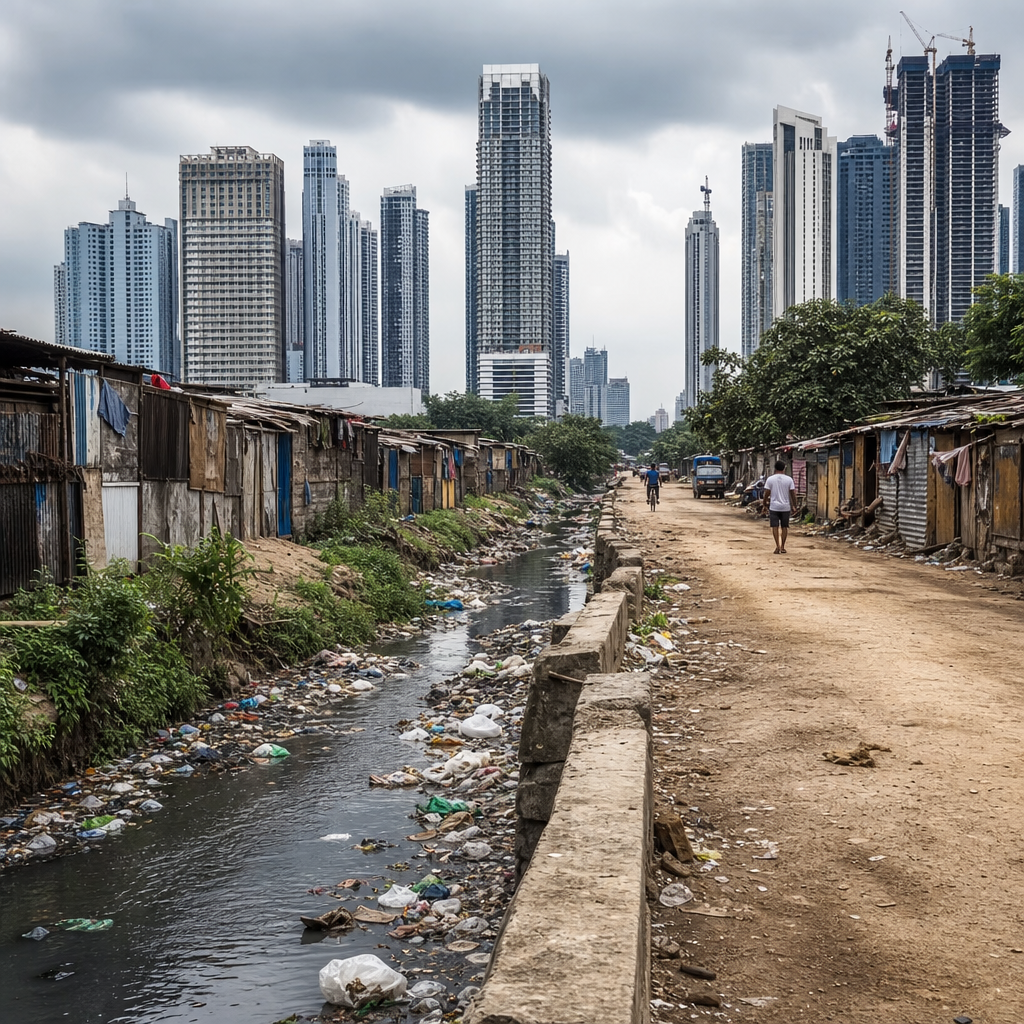
This matters because sanitation failures spread disease quickly, contaminate drinking water sources, damage livelihoods, and deepen inequality. According to the WHO and UNICEF Joint Monitoring Programme, billions of people still lack safely managed sanitation, and climate hazards are intensifying service gaps. Heavy rainfall can overwhelm sewers and treatment plants, while drought limits water for flushing and hygiene. Informal settlements, coastal cities, and floodplains face especially high exposure. Poorly designed latrines collapse in saturated soils; unsealed pits leak into shallow aquifers; combined sewer overflows discharge untreated wastewater into rivers and streets. The result is not only environmental degradation but also higher rates of diarrheal disease, helminth infection, stunting, and lost school and work time. Building climate-resilient sanitation is therefore central to adaptation, health security, and inclusive economic development.
Addressing global sanitation challenges requires a systems approach that links engineering, governance, finance, behavior change, and climate science. The best hub pages on sanitation do more than list problems. They clarify the options, the tradeoffs, and the decision points that shape results. This article does that by covering major sanitation risks, service models, planning methods, and implementation priorities, with examples that apply across low-income, middle-income, and high-income settings. If a policymaker asks what climate adaptation means for sanitation, the direct answer is this: design and operate every part of the service chain so it can absorb shocks, recover quickly, and continue delivering safe service for all users, especially the most vulnerable.
Why climate change is reshaping sanitation risk
Climate change affects sanitation through multiple pathways, and each one changes technical choices. Flooding is the most visible risk because it damages toilets, inundates pits, backs up drains, and spreads fecal contamination into homes, roads, and water bodies. In coastal areas, saline intrusion can corrode concrete and metal components and raise groundwater tables, reducing the effectiveness of conventional pits and septic systems. Heat matters too. Higher temperatures accelerate odor generation and can stress biological treatment processes if operations are weak. Drought creates a different problem: water-dependent sewerage and flush toilets become harder to maintain, and handwashing may decline when water is rationed.
Risk also depends on settlement patterns and infrastructure age. Dense informal settlements often have narrow access lanes, high water tables, and insecure tenure, which makes conventional network expansion difficult. Older sewer systems in many cities were built for historical rainfall patterns and lower peak flows. When extreme events exceed design assumptions, pumping stations fail, treatment plants are bypassed, and operators are forced into emergency discharge. I have seen municipalities focus only on replacing damaged assets after storms, when the real issue was that the original design never considered changing rainfall intensity or prolonged power outages. Climate adaptation starts with acknowledging that yesterday’s design storm is no longer enough for tomorrow’s sanitation network.
Understanding the sanitation service chain
Resilient sanitation depends on the full service chain, not just household toilets. Containment includes pit latrines, septic tanks, urine-diverting dry toilets, container-based systems, and sewer connections. Emptying and transport involve manual or mechanized desludging, transfer stations, vacuum trucks, and safe routing. Treatment may include waste stabilization ponds, anaerobic baffled reactors, planted drying beds, activated sludge systems, constructed wetlands, co-composting, or thermal processes. Reuse can involve biosolids, treated effluent, biogas, nutrients, or energy recovery, while final disposal must meet environmental standards where reuse is not feasible.
Weakness in any link causes system failure. A household may have an improved toilet, but if sludge is illegally dumped into drains, the public health benefit disappears. Likewise, a high-quality treatment plant adds little value if trucks cannot reach neighborhoods during the rainy season or if tariffs do not cover operation and maintenance. This is why sanitation planning increasingly uses service chain mapping and shit flow diagrams, often called SFDs, to show where excreta is safely managed and where it escapes into the environment. For city leaders, these tools are powerful because they turn a hidden issue into a visible service gap that can be prioritized, budgeted, and monitored.
Choosing technologies for resilience
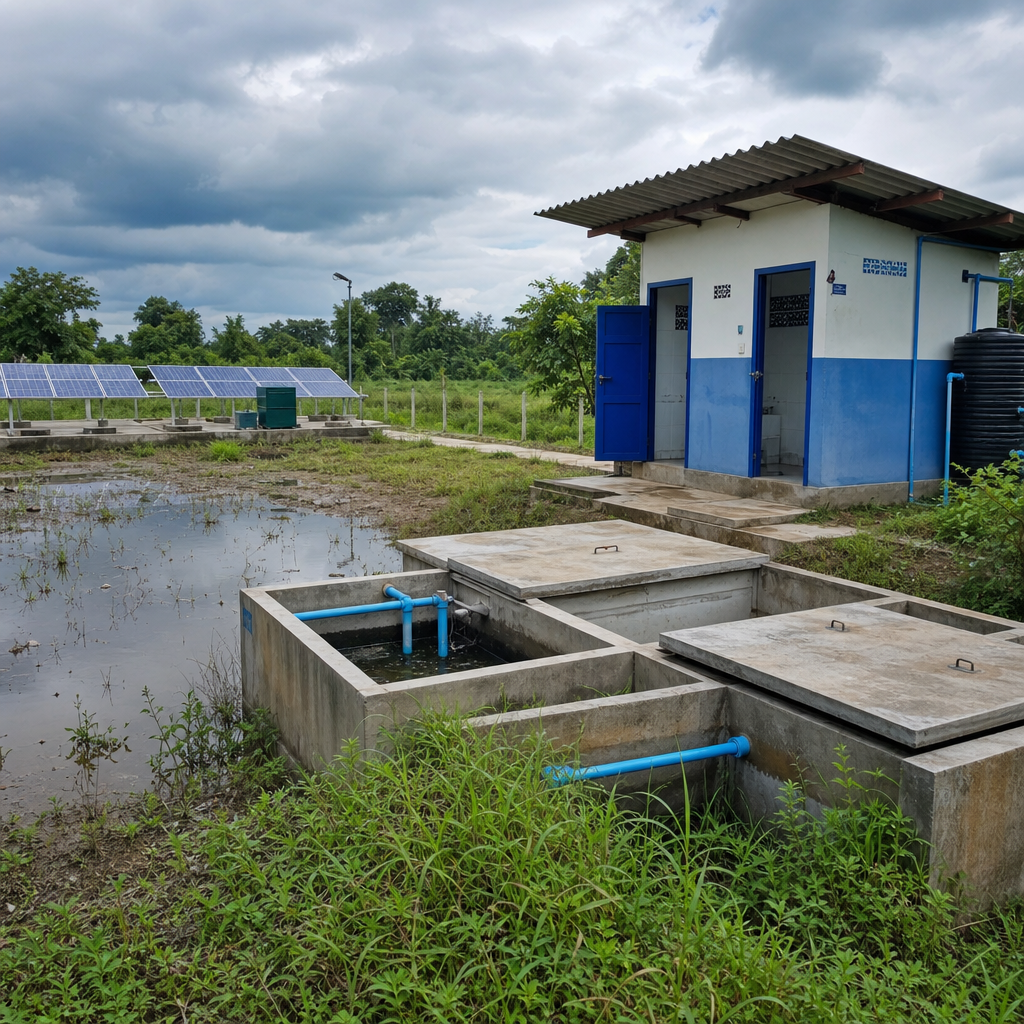
No single sanitation technology is climate proof. The correct choice depends on water availability, soil conditions, flood exposure, density, affordability, institutional capacity, and user preferences. In flood-prone areas, raised toilets, sealed tanks, anchored superstructures, and elevated electrical components reduce damage. In areas with high groundwater, lined containment and frequent emptying are safer than deep unlined pits. In water-scarce settings, low-flush, pour-flush, or dry sanitation options can be more robust than conventional high-water systems. In dense urban districts, simplified sewers or solids-free sewers may reduce costs compared with conventional sewerage, but only when gradients, maintenance, and treatment capacity are carefully assessed.
The comparison below summarizes common options and the conditions where they perform best.
| System option | Best context | Climate strengths | Main limitations |
|---|---|---|---|
| Raised pit or septic system | Flood-prone peri-urban and rural areas | Reduces inundation and structural failure | Higher construction cost; requires good sealing |
| Urine-diverting dry toilet | Water-scarce areas with reuse potential | Needs little water; supports nutrient recovery | Requires user training and regular management |
| Container-based sanitation | Dense informal settlements with poor access | Avoids groundwater contamination; adaptable during floods | Needs reliable collection service and regulation |
| Simplified sewerage | Dense neighborhoods with moderate water use | Lower capital cost than conventional sewerage | Needs steady maintenance and treatment capacity |
| Constructed wetlands and ponds | Small towns with available land | Low energy demand and shock tolerance | Land intensive; performance varies with design |
Good adaptation planning avoids false choices between centralized and decentralized systems. Many resilient cities use hybrid models: sewers in dense cores, fecal sludge management in peripheral zones, and targeted non-sewered solutions where terrain or poverty limits expansion. The key is interoperability. Transfer stations, scheduled desludging, digital customer records, and standard discharge points can make mixed systems function as one coherent service rather than a patchwork of disconnected projects.
Designing for public health, equity, and continuity
Sanitation is often discussed as hardware, but resilient performance depends just as much on service continuity and equitable access. During climate shocks, the people most affected are usually low-income households, renters, people with disabilities, women and girls, older adults, and residents of informal settlements. Toilets that are technically sound can still fail users if they are unsafe at night, inaccessible during floods, or impossible to empty at an affordable price. Universal design, menstrual hygiene needs, child-friendly features, lighting, drainage, and privacy are not add-ons. They are part of resilience because they determine whether people can use facilities consistently and safely in difficult conditions.
Public health protection also requires multiple barriers against contamination. Source separation, sealed containment, safe emptying, treatment verification, worker protection, and environmental monitoring all reduce risk. Operators need standard operating procedures, backup power, spare parts, and emergency response plans. Utilities that performed best during recent floods typically had asset registers, critical equipment maps, mutual aid agreements, and protocols for temporary bypasses that minimized exposure. By contrast, systems with unclear responsibilities often lost days simply deciding who should act. Clear governance is therefore a resilience measure in the same way that elevated pumps or reinforced slabs are resilience measures.
Financing and governing resilient sanitation
One of the biggest global sanitation challenges is that sanitation is chronically underfinanced, especially outside large sewer projects. Yet adaptation does not always require megaprojects. It requires reliable capital planning and sustainable operating finance. Governments should distinguish between household costs, service provider costs, and public good functions such as regulation, treatment, and fecal sludge disposal. Tariffs alone rarely cover all needs, particularly for low-income users. Blended finance is often more realistic: public investment for backbone infrastructure, targeted subsidies for poor households, user fees for routine services, and results-based contracts to improve performance.
Governance determines whether money translates into service. Effective systems assign responsibility for policy, regulation, service delivery, environmental compliance, and emergency response. Utilities, municipalities, private emptiers, and public health agencies need aligned incentives and enforceable standards. I have seen desludging markets work well when cities license operators, publish disposal fees, and monitor truck movements to prevent illegal dumping. Without that framework, informal providers may be cheaper in the short term but can undermine the entire sanitation chain. Regulation should be practical, not aspirational. Standards that no operator can meet will simply push service further into informality.
Planning tools matter here. Citywide inclusive sanitation frameworks, sanitation safety planning from the World Health Organization, and climate risk screening help decision-makers prioritize investments based on exposure, consequence, and feasibility. Asset management systems can identify components most likely to fail during extreme events. Life-cycle costing can reveal that a cheaper toilet or plant is more expensive over ten years because of desludging frequency, energy demand, or storm damage. Resilience is strengthened when planning, budgeting, and regulation all use the same risk logic.
Data, operations, and innovation that improve outcomes
Better data makes sanitation adaptation more precise. Utilities and municipalities should track service coverage, sludge volumes, overflow frequency, flood exposure, downtime, energy use, water quality, and customer complaints. Geographic information systems help map vulnerable assets and underserved neighborhoods. Remote sensors can monitor pump status or lagoon levels, while mobile apps can log desludging trips and household service requests. None of these tools replaces strong operations, but they improve accountability and response time.
Innovation is most useful when it solves a known operational problem. Examples include prefabricated flood-resistant toilet slabs, solar-assisted drying, geobags for sludge dewatering, modular treatment units, and condominial network designs that reduce cost in dense settlements. Container-based sanitation has shown value in places where roads are too narrow for vacuum trucks and where groundwater contamination is severe. Resource recovery can also strengthen resilience if markets are real. Co-composting fecal sludge with organic waste can produce soil amendments, and anaerobic digestion can generate biogas, but only when contamination control, quality assurance, and offtake arrangements are in place. The lesson from successful programs is consistent: innovation must fit local institutions, supply chains, and user behavior, or it will remain a pilot.
From hub strategy to local action
As a hub topic, addressing global sanitation challenges means connecting multiple related decisions rather than treating each one in isolation. Communities need guidance on rural sanitation, urban fecal sludge management, school and healthcare facility sanitation, wastewater treatment, hygiene behavior, workforce safety, financing, and climate adaptation. The practical sequence is straightforward. First, assess hazards, service gaps, and vulnerable groups. Second, map the service chain and identify failure points. Third, choose technical and institutional options suited to local climate, density, and capacity. Fourth, fund operation and maintenance from the start, not as an afterthought. Fifth, measure performance and adjust before the next shock exposes the same weaknesses again.
Building resilient sanitation systems for climate adaptation delivers a clear benefit: it keeps waste safely out of people’s bodies, homes, water sources, and neighborhoods even when conditions are harsh. That protection reduces disease, preserves dignity, supports school attendance and work, and helps cities and rural districts recover faster after disasters. The core lesson is simple. Resilience is not one toilet, one sewer, or one treatment plant. It is a managed service chain designed for uncertainty, backed by realistic finance, accountable institutions, and inclusive planning. Use this article as the starting point for your sanitation strategy, then move from diagnosis to implementation with projects that match real risks and local conditions.
Frequently Asked Questions
What does “resilient sanitation” mean in the context of climate adaptation?
Resilient sanitation means designing, operating, and improving sanitation systems so they continue to protect public health and the environment even when climate conditions become more extreme or less predictable. In practical terms, this includes the entire sanitation service chain: safe containment of human waste, reliable emptying, transport, treatment, reuse where appropriate, and final disposal. A climate-resilient system is not just one that works during normal conditions; it is one that can withstand flooding, high groundwater, drought, heat waves, storm damage, power outages, and service disruptions without causing widespread contamination or system failure.
In cities, resilient sanitation may involve flood-protected treatment plants, decentralized backup options, stronger drainage coordination, and service plans for informal settlements that are often hit hardest by climate impacts. In rural areas, it may mean toilets and pits designed for unstable soils, elevated water tables, or seasonal inundation. Across all settings, resilience depends on both infrastructure and institutions. Even well-built systems can fail if there is no maintenance plan, no budget for repairs, weak monitoring, or no emergency response procedures. That is why climate adaptation in sanitation is as much about governance, financing, and service delivery as it is about engineering.
The core goal is continuity of safe service. When sanitation systems fail during climate shocks, the consequences can be severe: disease outbreaks, contamination of drinking water sources, unsafe exposure for sanitation workers, and damage to ecosystems and livelihoods. Resilient sanitation reduces those risks by anticipating likely hazards and building flexibility into the system from the start. It is a practical adaptation strategy because it directly supports health, dignity, environmental protection, and long-term community stability.
Why is climate change making sanitation planning more urgent for communities and utilities?
Climate change is increasing the frequency, intensity, and unpredictability of conditions that can undermine sanitation systems. Floods can inundate pits, septic tanks, pumping stations, and treatment plants, spreading untreated waste into homes, streets, farmland, and waterways. Drought can reduce water availability for sewered systems and hygiene practices, while also concentrating pollutants in already stressed water bodies. Heat waves can accelerate odor problems, increase pathogen risks in some treatment contexts, strain energy-dependent infrastructure, and worsen working conditions for sanitation personnel. These pressures affect both large urban utilities and smaller local service providers.
The urgency comes from the fact that sanitation systems are foundational public health infrastructure, yet many were not originally designed for current climate extremes, much less future ones. In rapidly growing urban areas, informal expansion often outpaces service provision, leaving vulnerable populations with inadequate or unsafe sanitation in locations highly exposed to floods or erosion. In rural communities, on-site sanitation may be common, but poorly sited or weakly constructed facilities can fail quickly under changing rainfall patterns or rising groundwater. Without adaptation, climate stress turns existing service gaps into major health emergencies.
Planning ahead is more cost-effective than repeatedly rebuilding after failures. Communities and utilities that assess climate risk early can prioritize investments that reduce long-term damage, avoid contamination events, and preserve service continuity. This may include upgrading assets, diversifying technologies, improving fecal sludge management, strengthening operations, and integrating sanitation into broader climate, water, and land-use planning. In short, climate change makes sanitation planning more urgent because sanitation failure is not an isolated infrastructure problem; it quickly becomes a health, environmental, and social crisis.
What features make a sanitation system more resilient to floods, droughts, and heat waves?
Resilient sanitation systems are built around risk-informed design. For flood-prone areas, important features may include raised toilets and containment units, sealed or reinforced pits and tanks, backflow prevention, protected electrical components, and treatment facilities located outside high-risk flood zones where possible. Drainage and sanitation should also be planned together, because poor stormwater management can overwhelm sanitation infrastructure. Access routes for desludging vehicles matter as well; a containment system is not truly resilient if it cannot be safely emptied after heavy rains.
For drought-prone regions, resilience often means reducing dependence on large volumes of water while maintaining safe hygiene and waste handling. Technologies such as low-water or dry sanitation options may be appropriate in some contexts, provided they are supported by reliable service arrangements and user acceptance. Wastewater treatment processes may also need to adapt to lower flows and changing influent characteristics. At the same time, planners must protect water sources from contamination, since drought can intensify the consequences of sanitation failures by reducing dilution and increasing competition for safe water.
Heat resilience involves material choices, ventilation, worker protection, odor management, and treatment performance under high temperatures. Some components can degrade faster under prolonged heat exposure, and some biological treatment processes may need closer operational control as temperatures shift. A resilient system also includes redundancy, monitoring, and maintenance capacity. Sensors, inspections, spare parts access, trained staff, emergency protocols, and clear institutional responsibilities are often just as important as physical structures. In many cases, resilience comes from combining centralized and decentralized solutions so that if one part of the system is disrupted, the entire service chain does not collapse.
Ultimately, no single technology is universally “climate-proof.” The most resilient sanitation systems are tailored to local hazards, geography, population density, budgets, and management capacity. That is why vulnerability assessment, community engagement, and lifecycle planning are essential. A technically advanced facility that cannot be operated or maintained locally may be less resilient than a simpler system designed specifically for real-world conditions.
How can cities, towns, and rural communities choose the right sanitation solutions for climate adaptation?
Choosing the right solution starts with understanding local risk and current service realities. Decision-makers should first map climate hazards such as flooding, drought, erosion, sea-level influence, heat exposure, and seasonal water table changes. They should then assess the full sanitation service chain, not just toilet access. A community may have high toilet coverage but still face major climate vulnerability if pits flood, sludge cannot be safely emptied, transport routes are cut off, or treatment is inadequate. Looking at the whole system helps identify where the greatest risks actually lie.
Local conditions matter enormously. Dense urban neighborhoods may need a mix of simplified sewers, decentralized treatment, container-based services, or improved fecal sludge management depending on land availability, settlement form, and flood exposure. Small towns often benefit from modular systems that can expand over time rather than oversized infrastructure that is expensive to maintain. Rural communities may need robust on-site sanitation adapted to soil conditions, water availability, and access constraints. In all cases, solutions should match institutional capacity, financing mechanisms, and user needs, not just technical ideals.
Community participation is critical because residents understand seasonal patterns, service barriers, and practical constraints that outside planners may miss. Engagement also improves acceptance and long-term use, which is essential for sanitation performance. Equally important is the inclusion of sanitation workers and service providers in planning. They know where systems fail during storms, what equipment is difficult to operate, and what safety risks are most common. Their experience can significantly improve adaptation choices.
Good planning also weighs long-term costs and benefits. The cheapest option upfront may be the most expensive over time if it fails repeatedly under climate stress. Communities should evaluate durability, operation and maintenance requirements, energy and water dependence, emergency performance, and upgrade potential. Climate adaptation in sanitation is most successful when it is integrated with water supply, drainage, solid waste management, housing, and public health planning. That broader approach helps ensure the chosen solution is not only technically sound, but also workable, affordable, and sustainable.
What are the biggest implementation challenges, and how can they be addressed?
One of the biggest challenges is underinvestment. Sanitation has often been neglected compared with other infrastructure sectors, and climate resilience adds new design, maintenance, and monitoring needs that require funding. Many local governments and service providers struggle to cover even routine service costs, making it difficult to invest in upgrades before disasters occur. Addressing this requires stronger financial planning, blended funding approaches, better cost recovery where feasible and equitable, and clearer recognition that sanitation resilience is a public good with major health and economic returns.
A second major challenge is fragmented responsibility. In many places, sanitation functions are split among multiple agencies responsible for water, health, drainage, environment, housing, and emergency management. When roles are unclear, critical gaps appear in planning and response. Stronger coordination mechanisms, shared risk assessments, and clear accountability across the sanitation service chain can help prevent this. Climate resilience works best when sanitation is not treated as a stand-alone issue, but as part of integrated urban and rural development.
Technical capacity is another barrier. Designing for climate uncertainty requires data, skilled professionals, and operational know-how that may be limited, especially in fast-growing or under-resourced areas. Capacity-building for utilities, municipalities, local engineers, and service operators is essential. So is improving climate and service data, including information on flood-prone zones, groundwater conditions, infrastructure performance, desludging demand, and treatment reliability. Without good data, adaptation investments can be poorly targeted or miss the most vulnerable populations.
Social equity must also be addressed directly. Low-income households, informal settlements, remote rural communities, and sanitation workers often face the highest exposure to climate-related sanitation risks but have the least protection. Resilience strategies should therefore include targeted service improvements, safe worker protections, inclusive financing, and policies that prioritize vulnerable areas rather than only the easiest places to serve