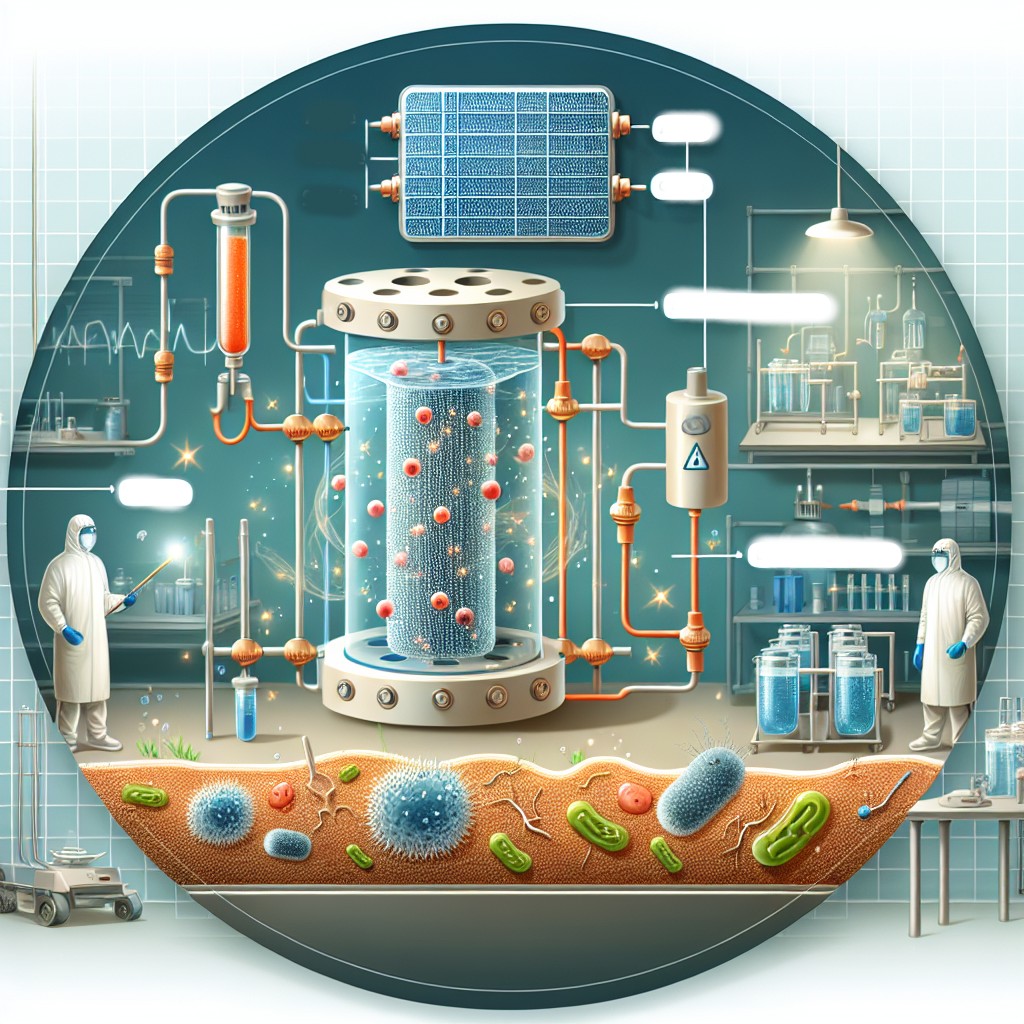
Imagine being confined to a spacecraft millions of miles from Earth, where every drop of water and gram of waste must be meticulously managed. The sustainable living and sanitation practices enforced in the vacuum of space offer intriguing insights into how we can better manage our resources on Earth. This article delves into the world of ecological sanitation, or EcoSan, with a focus on closed-loop sanitation systems used in space missions and explores how these principles can be applied to create more sustainable waste management solutions on our planet.
Understanding Closed-Loop Sanitation Systems in Space
In space, astronauts live in a closed environment where virtually everything is recycled. This concept is fundamental due to the challenges and costs associated with launching and resupplying missions. The International Space Station (ISS) is a prime example of this closed-loop system, where urine is recycled into drinking water and human waste is converted into nutrient-rich fertilizer.
These closed-loop systems are designed to mimic the natural recycling processes found on Earth but in a far more controlled and efficient manner. The water recovery system aboard the ISS, for instance, recycles about 93% of the water used on the station, which is critical for sustaining long-term missions.
Beyond mere survival, these systems are pushing the boundaries of waste management technology and providing crucial knowledge that can be translated into more efficient and sustainable practices here on Earth. For instance, advanced filtration, disinfection, and bioreactor technologies developed for space can offer improved methods for treating wastewater on the ground.
Technological Innovations in Space Sanitation
The closed-loop sanitation systems in space have led to some remarkable technological innovations. For example, NASA’s Water Recovery System (WRS) uses a combination of chemical treatment, filtration, and distillation processes to purify water from urine and wash water. This high-efficiency system goes beyond what is typically used in terrestrial applications, showing how space technology can drive advancements in Earth-based sanitation.
Another notable innovation is the use of bioreactors for waste decomposition. In space, biological systems are used to break down organic waste, including human excrement, into basic elements that can be recycled. These bioreactors manage to replicate Earth’s natural processes in a condensed, accelerated manner, highlighting the potential for enhanced bio-waste treatment systems on Earth.
Furthermore, the emphasis on minimal waste generation and maximum resource recovery in space propels the need for highly efficient and compact systems. These advancements have inspired the development of portable waste treatment units that can be deployed in remote or disaster-stricken areas on Earth.
The Challenges of Implementing Space Technologies on Earth
While the closed-loop systems developed for space missions are revolutionary, translating these technologies for Earth application presents several challenges. One of the main hurdles is cost. The materials and processes developed for space are often prohibitively expensive for widespread use on Earth.
Another challenge is scale. Space systems are designed for a small group of people in a highly controlled environment. Scaling these systems up to serve larger populations in diverse terrestrial settings require significant adaptation and customization.
Additionally, regulatory and logistical issues must be considered. Implementing these advanced systems requires changes in infrastructure, regulatory approval, and substantial public education to ensure proper usage and maintenance.
Learning from Space: Adaptations for Earth
Despite the challenges, there are numerous ways in which space sanitation technologies can be adapted for Earth. One such adaptation is the decentralized waste management systems modeled after space systems. These can be particularly useful in rural or remote areas where access to centralized sanitation infrastructure is limited.
Schools, hospitals, and community centers can benefit from compact, efficient waste treatment technologies inspired by space missions. These systems can greatly reduce the environmental impact of human waste while providing valuable resources such as clean water and fertilizers.
Moreover, the principles of closed-loop systems—minimizing waste, maximizing resource recovery, and maintaining system efficiency—are universally applicable. By fostering these principles on Earth, we can move towards a more sustainable future.
Future Prospects: Innovative Research and Emerging Solutions
The potential for future innovations in this field is vast. Research is currently being conducted on new materials and methods for more effective and sustainable closed-loop systems. For example, scientists are exploring the use of advanced membranes and nanotechnology to enhance filtration processes.
Emerging solutions such as algae-based bioreactors are being developed to convert human waste into biofuels and other valuable products. These cutting-edge technologies not only address sanitation issues but also contribute to energy production and resource sustainability.
The collaboration between space agencies, universities, and private enterprises creates a fertile ground for the rapid advancement and application of these technologies. The lessons learned from space missions continue to inform Earth-based projects, driving innovation and enabling the development of practical solutions for global sanitation challenges.
Conclusion
In conclusion, the ecological sanitation principles and technologies developed for space missions hold significant promise for addressing Earth’s sanitation challenges. By examining and adapting these closed-loop systems, we can find sustainable solutions that minimize waste, recover valuable resources, and promote environmental stewardship.
The insights gained from space missions highlight the importance of efficient resource management and provide a roadmap for developing advanced sanitation systems that can be implemented both in developed and developing regions.
As research and development continue to evolve, the collaboration between space technology and terrestrial applications will be crucial in pushing the boundaries of what is possible. By embracing these innovative solutions, we can work towards a future where sanitation is sustainable, efficient, and accessible for all.