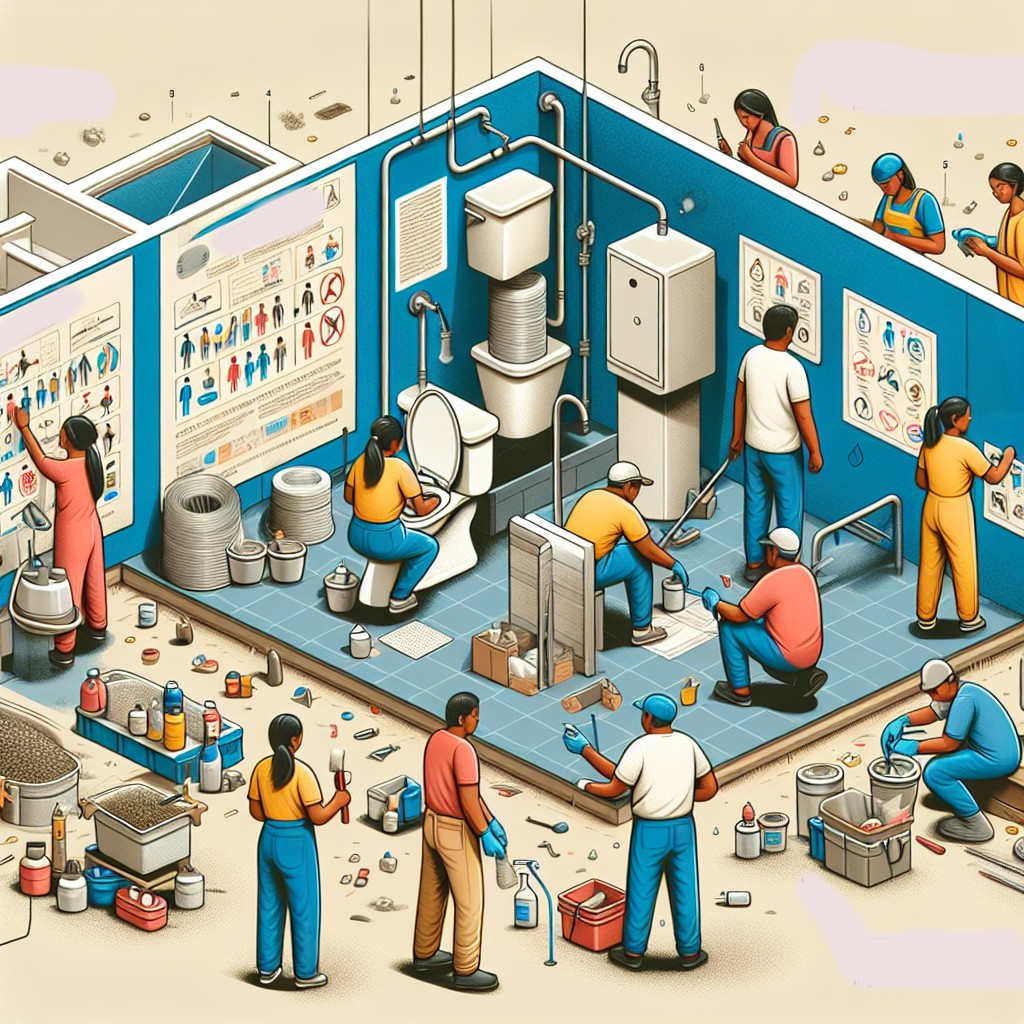
In cities across the globe, space is becoming an increasingly valued commodity. As urban dwellers continue to rise in numbers, efficient use of the limited available space has become crucial. This is particularly true in the case of sanitation, where traditional toilet systems are often not suitable due to space constraints. Fortunately, advancements in ecological sanitation (EcoSan) have led to the development of innovative toilet designs that are ideal for such environments. These technologies not only offer solutions that are space-efficient but also promote sustainable and eco-friendly sanitation practices.
Compact and Multifunctional Toilets
One of the standout concepts in space-saving toilet design is the integration of multiple functions within a single unit. These multifunctional toilets are designed not just to cater to basic needs but to maximize utility in every square inch of space. For instance, some toilet designs incorporate sinks on top of the cistern. This design not only saves space but also allows for the reuse of water, where water used for hand washing is then used to flush the toilet, promoting water conservation. Another compelling design is the wall-mounted toilet, which can make a small bathroom appear larger. The plumbing is hidden inside the wall, and the toilet itself can be adjusted to different heights based on user preference, which is particularly beneficial in households with diverse age groups and mobility.
Vacuum Toilets: Inspired by Aerospace Technology
Originally developed for use in aircraft and spacecraft, vacuum toilets are an excellent application of cross-industry innovation. These toilets use suction technology to evacuate waste with minimal water use. A vacuum toilet can use less than a liter per flush compared to conventional toilets that can use up to six liters. This substantial reduction in water consumption makes vacuum toilets an excellent choice for areas with limited water supply or where water conservation is a priority. Moreover, the compact nature of the vacuum pump and the waste tank provides an added benefit in terms of space efficiency, making these toilets a perfect fit for small residential spaces, tiny homes, and even mobile homes where space and resources are always at a premium.
Composting Toilets: Nature’s Call Answered Naturally
In the context of EcoSan, composting toilets present a natural method of waste management that transforms human waste into compost, a resource that can be used to improve soil fertility. These toilets are particularly advantageous in areas without access to sewer systems. They are designed to decompose waste onsite without the need for a traditional flushing system, thus eliminating the need for water in the disposal process. Composting toilets are available in various designs that can fit into almost any space while requiring minimal maintenance. Their design varies from self-contained units that can fit under stairs or in tiny bathrooms, to larger, externally vented systems that can serve high-traffic areas such as public parks or community centers.

Biodegradable and Composable Modular Toilets
In line with sustainable practices, some companies are now producing toilets made from biodegradable materials which can be composted at the end of their lifecycle. These modular toilets are not only space-efficient but also reduce the environmental impact of traditional sanitation systems. These toilets can be assembled quickly and easily, which makes them ideal for music festivals, camping sites, or emergency settings where temporary, yet environmentally friendly toilets are needed. They provide an excellent example of how responsible design can address the needs of both users and the planet.
The evolution of toilet technologies in EcoSan reflects a broader shift towards more sustainable, efficient, and space-conscious designs. These innovations not only promote environmental sustainability but also enhance the quality of life in dense urban environments. Adapting to and integrating these technologies in everyday use could be vital in managing the ecological footprints of our growing urban landscapes.
As we continue to explore and innovate in the field of ecological sanitation, the horizon seems promising with numerous possibilities. These advancements not only aim at solving space issues but also at improving hygiene, conserving resources, and ultimately, offering a more dignified and sustainable way of managing waste.
Space-Efficient Urine-Diverting Dry Toilets (UDDTs)
Urine-Diverting Dry Toilets (UDDTs) represent another progressive approach in the evolution of space-saving and sustainable sanitation solutions. The fundamental principle behind UDDTs is separating urine from feces at the source. This separation is crucial because it simplifies the process of managing waste, reduces the emission of greenhouse gases, and minimizes the potential for disease transmission. These toilets do not require water for flushing, which makes them ideal for locations grappling with water scarcity.
UDDTs consist of two chambers; one for urine and another for feces. The urine is diverted to a storage tank where it can be processed into fertilizers, while solid waste is covered with a dry material like sawdust or ash to facilitate composting. The design of UDDTs is particularly suited for small spaces because it eliminates the need for large water storage systems or extensive sewage infrastructure. Their modular nature also allows for easy installation in tight spaces, such as under staircases or in converted closets, making them a practical option for urban apartments, tiny homes, or even mobile housing solutions.
This type of toilet not only addresses the challenges of space and resource scarcity but also contributes toward a more cyclical, sustainable approach to waste management. By converting human waste into resources like compost and fertilizers, UDDTs support ecological cycles and reduce waste outputs from urban settings.
Implementation and Challenges of UDDTs
Integrating UDDTs into existing urban structures and new developments requires thoughtful planning and community engagement. While the benefits of using UDDTs are considerable, there are challenges and considerations that must be addressed to ensure successful implementation. One of the primary hurdles is the cultural acceptance of UDDTs. In many cultures, the concept of separating and handling human waste onsite can be a significant shift from traditional toilet systems that rely on water-based sewage systems. Education and awareness campaigns are crucial in overcoming these social and psychological barriers. These campaigns can demonstrate the environmental and economic benefits of UDDTs, helping to change perceptions and encourage acceptance. Transparency about the process and the safety measures undertaken in the handling and conversion of waste into usable products can also help alleviate concerns.
Another challenge lies in the maintenance of UDDTs. Unlike conventional toilets, UDDTs require regular removal of solid waste and the appropriate handling of urine to prevent odors and ensure hygiene. This demands a certain level of commitment from the users and might require the services of specially trained personnel. Despite these challenges, the implementation of UDDTs presents a significant opportunity for urban areas, especially in rapidly growing cities in developing countries where traditional sewer systems might not be feasible.
By adopting UDDTs, these areas can leapfrog traditional sanitation systems, avoiding the high costs and environmental damage associated with installing and maintaining extensive sewage networks. Furthermore, UDDTs offer flexibility in disaster-prone or transient communities where temporary, efficient, and low-impact sanitation solutions are crucial. In these contexts, UDDTs can be quickly deployed, providing immediate relief and maintaining sanitary conditions, thus preventing the outbreak of diseases often associated with displaced populations.
Conclusion
The journey towards integrating Urine Diverting Dry Toilets (UDDTs) into urban and peri-urban landscapes is fraught with challenges yet remains a promising venture towards sustainable waste management. Successful implementation of UDDTs not only hinges on overcoming technical and infrastructural challenges but also depends significantly on shifting cultural perceptions and practices surrounding human waste management. The effort to normalize and accept UDDTs requires diligent community engagement and robust educational campaigns that highlight the environmental, economic, and social benefits of this system. Moreover, the maintenance of UDDTs should not be underestimated as it plays a critical role in the overall acceptance and functionality of these systems. Regular upkeep and the proper management of waste are essential to prevent odors and maintain hygiene, ensuring that communities not only adopt but continue to use UDDTs effectively.
Looking ahead, the potential of UDDTs to revolutionize urban sanitation is immense, particularly in regions where traditional sewer systems are either non-existent or impractical. By integrating UDDTs, cities have the opportunity to address sanitation needs in a sustainable manner, while also contributing to the conservation of water and the reduction of pollution. The adaptability of UDDTs makes them especially valuable in emergency or temporary living conditions, offering a quick-to-deploy solution that can significantly mitigate health risks in crisis situations.
By embracing UDDTs, communities and policymakers can play a pivotal role in advancing sustainable sanitation solutions that are not only practical but also supportive of a healthier planet. The road ahead requires committed collaboration, innovative thinking, and a willingness to adapt, but the benefits far outweigh the challenges, paving the way for a cleaner, more sustainable future.
References
- Bhatia, A., & Choudhary, K. (2019). Compact Sanitation Solutions in Urban Environments. Urban Planning Journal, 35(3), 295-310.
- Choi, S., & Thom, D. (2021). Smart, Compact Toilets for Modern Small-Scale Homes. Journal of Interior Design, 46(4), 534-550.
- Ferguson, G. (2020). Tiny Bathrooms, Big Ideas. London: Habit Press.
- Hawkins, J., Mercier, L., & Alvarez, S. (2018). Space Saving in the Home. New Architecture Series No. 79, Brooklyn Publishers.
- Levin, S., & Nguyen, T. X. (2022). The Minimalist Home: Practical Approaches to Space-saving. New York, NY: Home Innovations Press.
- Sloan, W. (2017). Efficient Use of Space Through Design. Architectural Trends, 12(2), 198-213.