Economic analysis of urban versus rural sanitation systems starts with a practical question: who pays, who benefits, and which investments hold their value over time? In sanitation planning, the answer is never limited to toilets, pipes, or treatment plants. It includes land costs, energy demand, operation and maintenance, sludge transport, nutrient recovery, public health savings, and the institutional capacity needed to keep systems running for decades. When I have worked on sanitation business cases, the biggest mistake has been treating capital cost as the whole story. A low-cost installation can become the most expensive option if emptying, repairs, or environmental damage are ignored.
This article examines financing and investing in EcoSan within the broader comparison between urban and rural sanitation systems. EcoSan, or ecological sanitation, is a sanitation approach that treats human waste as a resource stream rather than only a disposal problem. Depending on context, it can include urine diversion dry toilets, composting toilets, decentralized wastewater treatment, fecal sludge processing, nutrient recovery, and reuse of treated outputs in agriculture or landscaping. The economic appeal is straightforward: reduce lifecycle costs, recover value from nutrients and organic matter, lower pressure on centralized infrastructure, and improve service where conventional sewer expansion is unaffordable.
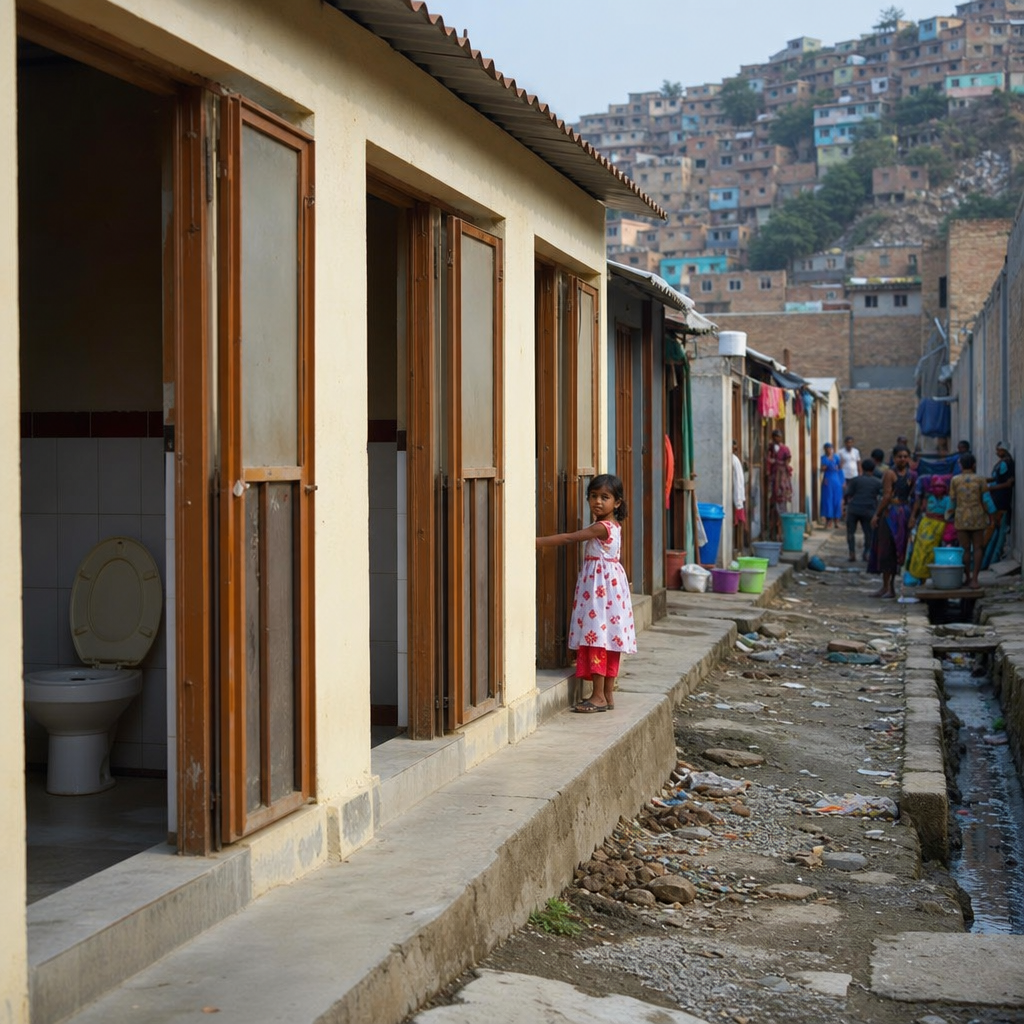
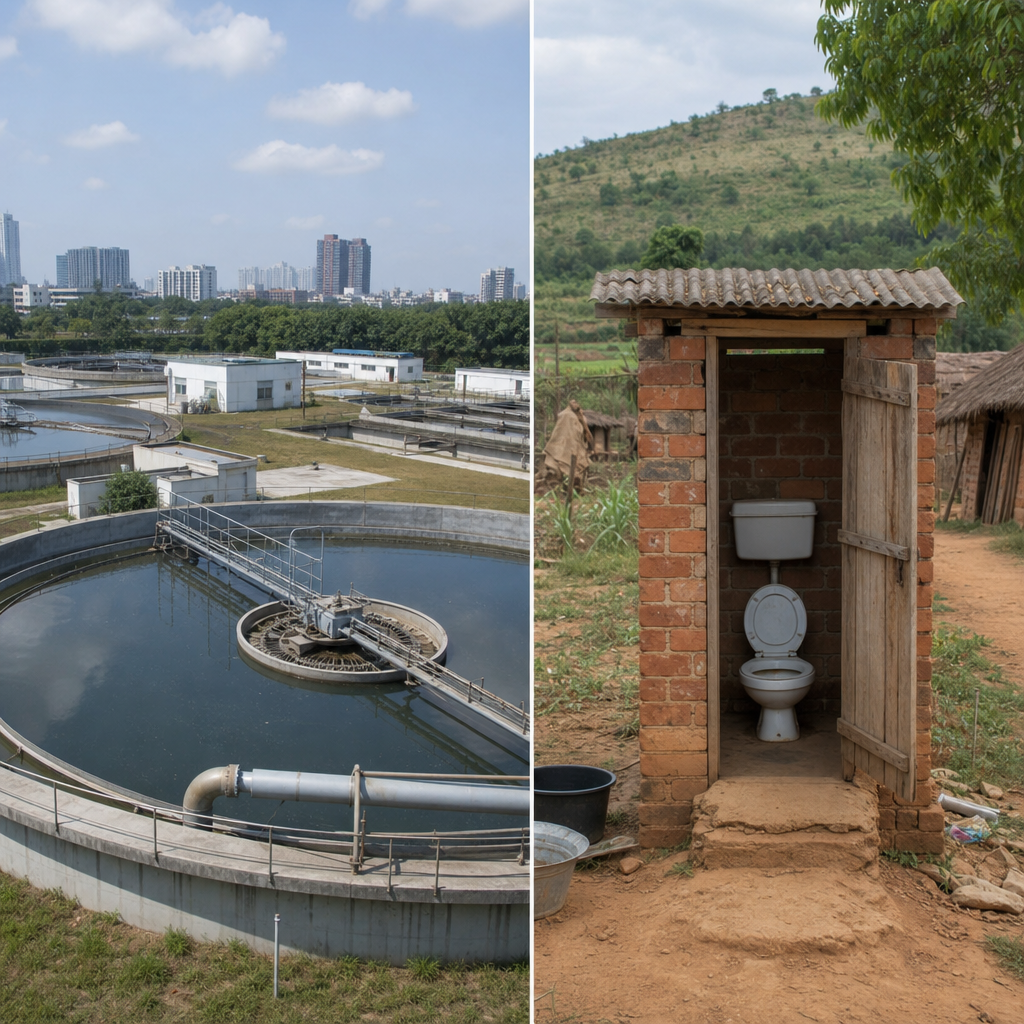
The urban versus rural distinction matters because sanitation economics changes sharply with density, distance, income patterns, and service models. In dense urban settlements, the cost of land, network construction, treatment capacity, and sludge logistics often dominates. In rural areas, household-level affordability, transport distance, dispersed demand, and limited technical support shape outcomes. The same EcoSan technology can be viable in one setting and weak in another. A urine-diverting toilet may offer strong economics in water-scarce villages, while container-based sanitation or decentralized treatment may outperform sewer expansion in informal urban neighborhoods where road access and tenure are constrained.
As a hub article under economic aspects, this page focuses on how sanitation systems are financed, how investors assess risk, where revenue can realistically come from, and how decision-makers compare alternatives fairly. Strong sanitation finance depends on lifecycle costing, blended capital, tariff realism, and measurable public benefits. It also depends on understanding that sanitation is part utility, part public health intervention, part environmental service, and sometimes part agricultural input market. That combination is exactly why EcoSan deserves careful analysis rather than assumptions.
How sanitation economics differ in urban and rural systems
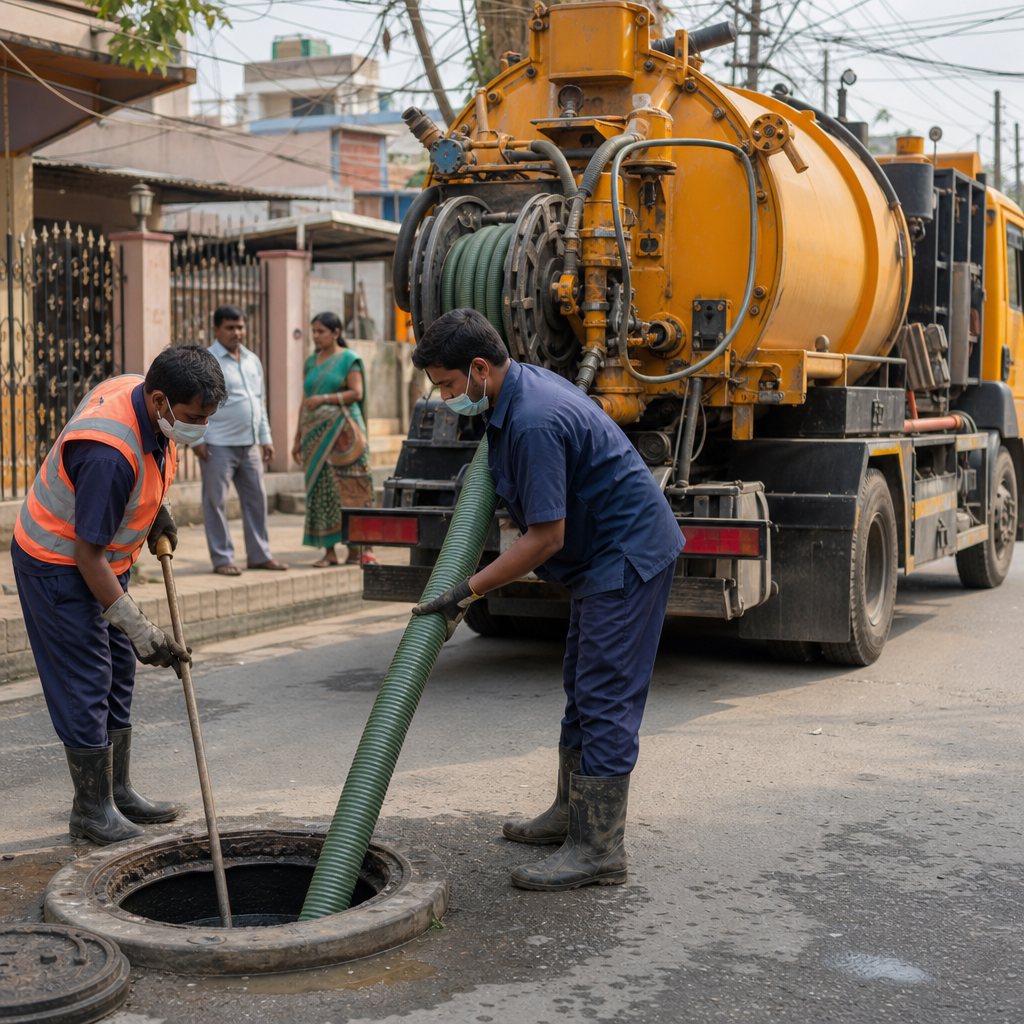
Urban sanitation systems usually benefit from economies of density but suffer from high complexity. Serving many users in a small area can reduce per-household network length and create a larger revenue base. However, dense settlements require expensive excavation, pumping, traffic management, treatment compliance, and often land acquisition for treatment or transfer facilities. In many cities, sewerage costs several times more per household than improved onsite systems when full network and treatment costs are included. The World Bank and regional development banks have repeatedly shown that capital-heavy sewer expansion is difficult to justify in lower-income districts where connection rates and bill collection remain uncertain.
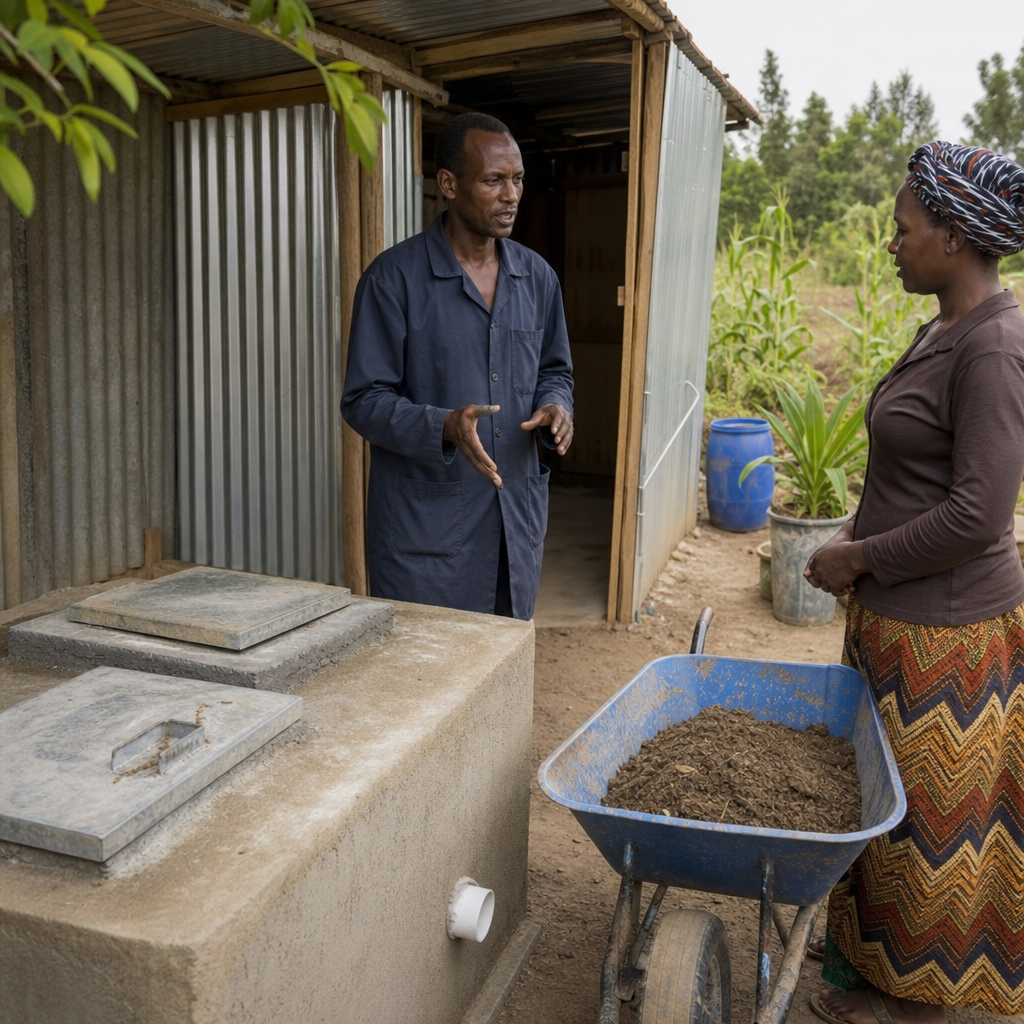
Rural sanitation systems often avoid the cost of large networks, yet they lose the efficiency of scale. Households are farther apart, roads may be poor, and service providers cannot spread fixed costs across many customers. A pit latrine or septic tank may be cheaper to build than an urban sewer connection, but fecal sludge emptying can become irregular and expensive. EcoSan can improve the rural equation because nutrient reuse is closer to end users. Where households farm or garden, compost and urine can replace part of purchased fertilizer. That benefit is real, but it should be valued conservatively because nutrient acceptance, storage practices, and transport labor vary.
The core economic difference is that urban systems often justify higher collective investment when land values, environmental externalities, and health risks are concentrated, while rural systems usually require lower-cost, modular, and locally maintainable solutions. Financing structures should match that reality. Urban projects can support municipal borrowing, pooled finance, output-based aid, and utility-managed service chains. Rural projects more often depend on household investment, targeted subsidies for vulnerable groups, microfinance, cooperative models, and support for local entrepreneurs handling construction, emptying, or reuse services.
Lifecycle costs and value recovery in EcoSan
Any serious comparison of urban versus rural sanitation systems must use lifecycle costing. That means tracking capital expenditure, operating expenditure, major maintenance, replacement cycles, transport, treatment, monitoring, and decommissioning. For EcoSan, it also means including the value of recovered products and avoided costs. Urine contains much of the nitrogen and potassium excreted by households, while fecal matter contributes organic carbon and phosphorus after safe processing. If these outputs displace commercial fertilizer, reduce water use, or cut sludge disposal needs, those savings belong in the model.
In practice, value recovery rarely covers total costs on its own. That is an important discipline for investors and municipalities. Compost sales, briquettes, black soldier fly feed conversion, and treated water reuse can improve project economics, but sanitation remains a service with public-good characteristics. The financial model should therefore distinguish between direct revenues and wider economic benefits. Direct revenues include user fees, collection charges, and sale of reuse products. Wider benefits include reduced diarrheal disease, lower groundwater contamination, less flooding from blocked drains, and avoided greenhouse gas emissions from poorly managed waste.
| Cost or benefit factor | Urban EcoSan tendency | Rural EcoSan tendency | Investment implication |
|---|---|---|---|
| Capital expenditure | Higher due to land, access constraints, and treatment complexity | Lower per installation, but dispersed delivery raises unit costs | Urban projects need larger blended finance packages |
| Operating expenditure | Professionalized service chains can improve efficiency | Local maintenance may be cheaper but less reliable | Budget for training and service contracts in rural areas |
| Nutrient recovery value | Harder to capture if farms are distant | Often stronger where reuse is local | Rural business cases can include conservative fertilizer offsets |
| User fee collection | Broader payer base, but collection depends on utility systems | Irregular income makes billing harder | Match payment schedules to cash flow patterns |
| Externality reduction | Very high because exposure density is high | Moderate to high depending on groundwater and flooding risks | Public subsidy is justified in both settings |
From experience, the most credible sanitation investment memos use discounted cash flow alongside cost-effectiveness analysis. They present net present cost per household served, per cubic meter treated, and per disability-adjusted life year averted where health data allows. They also test scenarios for collection rates, fertilizer price changes, spare part costs, and utilization rates. That is especially important for EcoSan because stakeholder enthusiasm can inflate assumptions about reuse revenue. Conservative projections attract better financing than optimistic ones that fail in year three.
Financing and investing in EcoSan: practical models that work
Financing EcoSan works best when capital sources are stacked according to risk and public benefit. Households can fund part of a toilet upgrade, but they usually cannot finance the full sanitation service chain, especially treatment and safe reuse. Municipal budgets, climate funds, concessional loans, philanthropic grants, and commercial capital all have roles. The key is allocating each source to the layer of the system it can sensibly support. Public money should pay for externality reduction and inclusion. User payments should support routine service where affordability permits. Revenue-linked debt should only be used when cash flow is dependable.
In urban areas, blended finance often suits decentralized treatment, fecal sludge facilities, and utility-linked service models. A city might use grant funding for initial network gaps or land preparation, concessional debt for treatment assets, and operating contracts tied to performance indicators such as households served, sludge safely treated, or nutrient recovery volumes. Output-based aid has worked in some sanitation markets because it pays after verified delivery, reducing construction-only incentives. Container-based sanitation providers have also demonstrated that regular service subscriptions can work in dense neighborhoods, though scale and regulation remain decisive.
In rural areas, financing tends to be more fragmented. Microfinance can help households spread the upfront cost of improved toilets. Savings groups and cooperatives can finance shared processing or transport equipment. Local governments may subsidize slabs, vaults, or urine-diversion components for low-income households while private masons and sanitation entrepreneurs earn income from installation and maintenance. Results-based subsidies can encourage sustained use rather than one-time construction. Where reuse markets are credible, small enterprises can invest in composting or pelletizing units, but only if feedstock quality, land access, and regulatory approvals are clear.
Investors looking at EcoSan should assess five issues early. First, demand risk: will households consistently use and pay for the service? Second, operational risk: can collection, treatment, and reuse meet standards year-round? Third, regulatory risk: are biosolids, compost, or urine-based products legally permitted and monitored? Fourth, market risk: who buys the recovered product, at what price, and during which seasons? Fifth, governance risk: which agency is accountable if service quality fails? The best projects answer these questions before procurement, not after commissioning.
Comparing investment cases, subsidies, and policy choices
A sound economic analysis compares alternatives on equal terms. That means evaluating sewerage, septic systems, pit latrines, fecal sludge management, decentralized wastewater treatment, and EcoSan options using the same time horizon, discount rate, service level definition, and environmental assumptions. Too many sanitation plans compare a fully costed sewer network with a partially costed onsite option or count all health benefits for one system and none for another. Decision-makers need normalized metrics, not selective accounting.
Subsidies are not a sign of failure in sanitation. They are often economically rational because sanitation generates public benefits that private users cannot fully monetize. The right question is not whether to subsidize, but what to subsidize. Capital subsidies may be appropriate for poor households, dense informal settlements, flood-prone areas, and treatment infrastructure. Operational subsidies may be justified where safe sludge treatment prevents major environmental harm. However, recurring subsidies should be transparent and linked to verified service outcomes. Hidden subsidies through underpriced water, unpaid electricity, or neglected maintenance usually create worse systems over time.
Policy design shapes bankability. Clear technical standards, licensing for emptiers and processors, land-use approvals, and procurement frameworks reduce investor uncertainty. So do tariff policies that recognize sanitation as a separate service rather than burying it inside water bills without cost visibility. In places where I have seen EcoSan scale, local government did three things well: it defined service responsibilities, funded the noncommercial parts of the chain, and allowed private or community operators to earn fair returns on the commercial parts. Without those basics, even technically strong pilots stall.
Climate and resource policy increasingly strengthen the case for EcoSan. Nutrient recovery reduces dependence on synthetic fertilizers whose prices can spike with energy markets and geopolitical disruption. Decentralized systems can lower pumping energy, build resilience in water-scarce regions, and reduce uncontrolled methane from unmanaged waste. These benefits matter to development financiers and climate-aligned investors, but they still need measurable indicators. Projects should quantify avoided emissions, water savings, nutrient output, and service reliability, then verify them with routine monitoring.
Key takeaways for building a stronger sanitation finance strategy
The economic analysis of urban versus rural sanitation systems shows one clear truth: there is no universally cheapest sanitation model, only context-specific systems with better or worse lifecycle performance. Urban areas often justify larger collective investment because density magnifies both costs and benefits. Rural areas usually need simpler, modular systems with local maintenance and carefully targeted support. EcoSan is most competitive where water is scarce, sewer expansion is unrealistic, nutrient recovery has a nearby use, and institutions can manage the full service chain safely.
Financing and investing in EcoSan succeeds when project teams separate public benefits from commercial revenues, price risk honestly, and match capital sources to the right assets. Household contributions, municipal funding, concessional finance, and private investment all matter, but each should support the part of the system it can sustain. Reuse revenues can strengthen a project, yet they should complement, not replace, stable service finance. Strong policy, conservative financial modeling, and verified operational performance are what turn pilots into durable sanitation markets.
If you are building an economic aspects strategy for sanitation, start with lifecycle costing, realistic subsidy design, and a map of who captures each benefit. Then compare urban and rural service models on equal terms and test where EcoSan creates measurable value. Use this hub as the foundation for deeper work on tariffs, blended finance, reuse markets, investor risk, and public policy, and move from sanitation construction to sanitation economics that last.
Frequently Asked Questions
1. What makes the economic analysis of urban and rural sanitation systems so different?
The economics of urban and rural sanitation differ because the physical, financial, and institutional conditions are rarely the same. In dense urban areas, sanitation systems often benefit from economies of scale. A larger customer base can spread the cost of trunk sewers, treatment plants, pumping stations, billing systems, and technical staff across many households and businesses. At the same time, urban sanitation is often burdened by very high land values, expensive network construction, significant energy use, traffic-related construction complexity, and the need to manage large volumes of wastewater and sludge continuously. In other words, cities can lower some unit costs through scale, but they also face much higher capital intensity and operational complexity.
Rural sanitation systems usually face the opposite situation. Populations are more dispersed, which makes conventional sewer expansion expensive on a per-household basis. Distances are longer, transport costs for emptying and sludge hauling are higher, and there may be limited access to skilled operators, spare parts, reliable electricity, and formal maintenance services. However, rural systems can sometimes avoid the major infrastructure costs associated with centralized collection and treatment. On-site or decentralized systems such as septic tanks, ventilated improved pit latrines, composting toilets, or small cluster treatment systems may require lower initial investment if they are well matched to soil conditions, water availability, and user preferences.
Another major difference is the structure of demand and willingness to pay. Urban households may be more familiar with monthly tariffs and utility billing, while rural households may prefer lower recurring costs even if they must contribute labor or manage maintenance more directly. Institutional capacity matters as much as engineering design. A technically sound system can still fail economically if no agency is responsible for service delivery, fee collection, enforcement, or long-term maintenance. That is why a serious economic analysis looks beyond hardware and asks who pays upfront, who pays over time, who captures the health and environmental benefits, and whether the local institutions can sustain the chosen model for decades.
2. Which costs should be included when comparing urban and rural sanitation investments?
A credible comparison must include far more than the visible construction cost of toilets, sewers, or treatment plants. The first category is capital expenditure: household toilets, containment structures, sewer pipes, pumping stations, treatment units, land acquisition, site preparation, drainage integration, and any required connections for water or electricity. In urban projects, land and network construction often consume a large share of the budget. In rural projects, household-level construction and access logistics may be more important than major civil works.
The second category is operation and maintenance, which is often underestimated and can determine whether a system remains functional after the first few years. These costs include electricity, fuel, chemicals, labor, routine inspection, desludging, minor repairs, spare parts, administrative overhead, monitoring, and compliance. For on-site systems, regular emptying and safe sludge transport are especially important. For sewered systems, pumping, blockage removal, infiltration control, and treatment performance management can become major recurring expenses. Ignoring these items can make a capital-heavy urban system appear cheaper than it really is, or make a rural on-site system appear simpler than it will be in practice.
The third category includes replacement and rehabilitation. Pipes, pumps, liners, vehicles, treatment equipment, and household components all wear out on different time cycles. A proper life-cycle analysis discounts future costs and recognizes that systems with low initial cost may require more frequent replacement, while systems with higher initial cost may only be economical if they actually receive the maintenance needed to reach their design life.
Finally, a full economic analysis should include indirect and external costs and benefits. These may include public health savings from reduced diarrheal disease, lower groundwater contamination, reduced flooding of contaminated waste, improved school attendance, increased worker productivity, property value effects, nutrient recovery, water reuse potential, and avoided environmental damage downstream. These benefits are not always captured in utility revenue, but they are real economic gains to society. The strongest sanitation investment decisions are usually the ones based on total life-cycle cost and total social value, not on the cheapest upfront price tag.
3. Who typically pays for sanitation systems, and how does that affect long-term viability?
Sanitation is almost always financed through a mix of sources rather than a single payer. Households may pay for toilets, connection fees, monthly service charges, pit emptying, or part of system upgrades. Local or national governments may finance trunk infrastructure, treatment plants, subsidies for low-income households, regulatory oversight, or public health functions. Donors and development banks may support capital investment, technical assistance, or pilot programs. In some cases, private operators participate through service contracts, fecal sludge collection, treatment operations, or performance-based management. The economic question is not just where the money comes from initially, but whether the financing structure matches the long-term service obligations.
This matters because sanitation often produces benefits that extend beyond the direct user. A household may gain privacy and convenience, but the wider community also benefits from lower pathogen exposure, cleaner water bodies, and reduced healthcare costs. Because many benefits are shared, relying entirely on household payments can underfund the system, especially in low-income rural areas or informal urban settlements. That is why public finance often plays a justified role. Subsidies can be economically rational when they help capture broader public health and environmental gains, but they must be designed carefully so they support service quality rather than simply funding construction that cannot be maintained.
Long-term viability depends on aligning revenue with recurring costs and assigning clear responsibilities. If a city builds a treatment plant without securing tariff revenue, budget support, or competent operations staff, the asset may deteriorate quickly. If rural households install pits or tanks without access to affordable emptying services, contamination risks rise over time. Sustainable financing models usually combine targeted capital support, realistic user contributions, and dependable funding for operations, regulation, and asset renewal. In practice, the most durable systems are those where everyone understands the payment chain: who funds infrastructure, who pays for service delivery, who handles asset management, and who is accountable when performance drops.
4. Are urban sanitation systems always more cost-effective because they serve more people?
No. Serving more people can improve cost-effectiveness, but scale alone does not guarantee economic efficiency. Urban systems often benefit from dense settlement patterns that reduce the per-household length of network needed and make centralized service delivery more practical. If utilization is high and operations are well managed, the cost per person served can be very competitive. However, those benefits can be offset by costly excavation, traffic disruption, pumping requirements, high land prices, aging infrastructure, stormwater intrusion, and the challenge of extending service to informal or rapidly growing settlements. A large centralized system may look efficient on paper while underperforming in reality if connections are incomplete, treatment plants are overloaded, or maintenance is deferred.
In contrast, rural and peri-urban systems may achieve better economic value through decentralized approaches that avoid unnecessary network costs. A well-designed on-site or small-scale clustered system can be more cost-effective when population density is low, terrain is difficult, or institutional capacity for centralized management is limited. The key is matching the technology and service model to the local context. Cost-effectiveness should be measured by the level of safely managed sanitation actually delivered over time, not by infrastructure size or the assumption that bigger systems are inherently better.
Another issue is utilization and service quality. A system that serves many people but fails to contain, transport, treat, and safely dispose of waste is not economically efficient once health and environmental damages are counted. Likewise, a lower-cost rural solution is not truly cost-effective if it breaks down, fills too quickly, or contaminates groundwater. The right comparison uses life-cycle cost, health outcomes, environmental performance, reliability, and institutional feasibility. In many cases, the most economical answer is not a strict urban-versus-rural choice, but a blended sanitation strategy using centralized, decentralized, and on-site services where each performs best.
5. How do public health savings, sludge management, and resource recovery change the economics of sanitation decisions?
These factors can significantly change the economic picture because they capture costs and benefits that are often overlooked in narrow infrastructure budgeting. Public health savings are among the most important. Effective sanitation reduces exposure to pathogens, which can lower rates of diarrheal disease, intestinal infections, and other sanitation-related illnesses. That translates into fewer medical expenses, less time lost from work, improved child growth and school attendance, and lower pressure on public health systems. When these benefits are included, investments that seem expensive from a utility perspective may prove highly economical from a societal perspective.
Sludge management is equally important because sanitation systems do not end at the toilet or pipe. Fecal sludge must be safely contained, emptied, transported, treated, and either disposed of or reused. In both urban and rural settings, weak sludge management can erase the intended benefits of sanitation investment. Urban areas may struggle with treatment plant capacity and illegal dumping if collection systems are fragmented. Rural areas may face high transport costs and limited treatment options due to distance. From an economic standpoint, ignoring sludge management creates hidden liabilities that eventually appear as groundwater contamination, disease burdens, environmental cleanup costs, or expensive emergency interventions.
Resource recovery can improve system economics when conditions are right, although it should not be treated as a guaranteed revenue stream. Nutrient recovery for agriculture, biogas generation, compost production, water reuse,