EcoSan in Action shows how sanitation systems can do more than manage waste: they can restore landscapes, protect water, recover nutrients, and strengthen community resilience. In practice, EcoSan, short for ecological sanitation, treats human waste as a resource stream rather than an end product to be flushed away and forgotten. That definition matters because conventional sewerage often relies on heavy water use, expensive centralized treatment, and discharge pathways that shift pollution downstream. Ecological sanitation instead focuses on source separation, safe treatment, nutrient recovery, water conservation, and local reuse under controlled conditions.
I have worked on sanitation and environmental planning projects where the turning point came when teams stopped viewing toilets as isolated hardware and started seeing them as part of a local ecosystem. Once that shift happens, restoration goals become tangible. A urine-diverting dry toilet can reduce pathogen loads entering a wetland. A decentralized treatment unit can protect a shallow aquifer from fecal contamination. Composting and nutrient recovery can reduce synthetic fertilizer demand while improving degraded soils. These are not abstract benefits. They are measurable environmental outcomes tied to design, operation, maintenance, and community adoption.
Advancing environmental sustainability with EcoSan matters for three reasons. First, sanitation failures are still a major source of water pollution, especially where pit latrines leak or wastewater treatment is absent. Second, climate pressure and water scarcity are exposing the limits of flush-heavy systems. Third, phosphorus and nitrogen are valuable agricultural inputs, yet many cities pay to discard them while farms pay to replace them. The hub topic, Environmental Impact, therefore needs a practical center of gravity: real EcoSan applications that show how sanitation can support environmental restoration, public health, and circular resource use at the same time.
This article serves as that hub by connecting the core concepts, field-tested models, and success stories that define EcoSan in action. It explains what makes an intervention environmentally restorative, where EcoSan works best, how performance is evaluated, and what tradeoffs must be managed. It also links the main themes that deeper articles typically explore: nutrient cycling, soil rehabilitation, decentralized wastewater treatment, wetland protection, climate resilience, and governance. If you need a clear answer to whether EcoSan can genuinely improve environmental outcomes, the evidence is yes, provided systems are matched to place, managed professionally, and judged by long-term results rather than installation counts alone.
What EcoSan Looks Like on the Ground
EcoSan is not one technology. It is a design approach that includes urine-diverting dry toilets, composting toilets, container-based sanitation, biogas digesters, blackwater separation, greywater reuse, and decentralized wastewater treatment. The common thread is controlled recovery and reduced ecological harm. In field work, the first question is never which toilet is fashionable. It is what environmental problem needs to be solved. If the issue is groundwater contamination in dense settlements, lined vaults and off-site treatment may be essential. If the issue is water scarcity, dry or low-water systems become more attractive. If soil degradation is severe, nutrient recovery and compost quality move to the center.
A useful way to define success is to ask whether the system improves at least one environmental asset without degrading another. A project that saves water but creates unsafe sludge handling is not a success. A project that recovers nutrients but loses user acceptance will usually fail operationally. Strong EcoSan programs balance five criteria: pathogen reduction, nutrient capture, water efficiency, operational reliability, and user uptake. Established guidance from the World Health Organization on sanitation safety planning and excreta reuse helps teams assess these dimensions systematically, especially where reuse is part of the model.
Real-world implementation usually combines infrastructure with service design. For example, urine-diverting toilets require correct user behavior, periodic vault management, and a planned reuse pathway. Decentralized treatment units need power, spare parts, sludge removal schedules, and trained operators. In other words, environmental restoration does not happen because a technology brochure promises it. It happens because the sanitation chain, from capture to treatment to reuse or disposal, works consistently under local conditions. That is why the strongest success stories feature institutions, financing, and maintenance routines as prominently as hardware.
Restoring Soil Fertility Through Nutrient Recovery
One of EcoSan’s clearest environmental benefits is nutrient cycling. Human urine contains most of the nitrogen and a large share of the phosphorus and potassium excreted by households. When safely collected and applied according to agronomic guidance, it can substitute for part of the fertilizer used in forestry, landscaping, and agriculture. Fecal compost, once sufficiently treated, can contribute organic matter that improves soil structure, moisture retention, and microbial activity. In degraded peri-urban soils, that combination can support revegetation and reduce erosion, especially where topsoil has been stripped or repeatedly cultivated without replenishment.
I have seen the biggest gains where recovery is linked to a clear land management objective rather than treated as a side benefit. In one municipal pilot supporting restoration of exhausted community garden plots, sanitized urine was diluted and applied to nitrogen-hungry crops while matured compost was incorporated before planting. The most important result was not just yield response. It was soil recovery over multiple seasons: better infiltration, less crusting, and improved plant vigor during dry periods. Farmers accepted the inputs because the project monitored storage times, application rates, and crop restrictions carefully, reducing perceived risk.
Sweden’s long-running work with source-separating systems helped normalize this logic by demonstrating that nutrient recovery can be handled with modern logistics and quality controls. In South Africa and parts of East Africa, urine-diverting dry toilets have also shown how nutrient capture can reduce environmental loading where sewer expansion is unrealistic. These examples differ in scale and setting, but the lesson is consistent: recovered nutrients have the greatest environmental value when reuse is planned from the start, transport distances are manageable, and product standards are clear enough to build confidence among users and regulators.
| EcoSan approach | Primary environmental benefit | Best-fit context | Main management requirement |
|---|---|---|---|
| Urine-diverting dry toilets | Nutrient recovery and water savings | Water-scarce areas, weak sewer coverage | User training and safe storage of urine and feces |
| Composting toilets | Soil amendment production | Low-density sites, parks, remote facilities | Moisture, aeration, and curing control |
| Biogas digesters | Renewable energy and sludge stabilization | Institutions, farms, clustered housing | Steady feedstock and skilled operation |
| Decentralized wastewater treatment | Reduced surface water pollution | Small towns, campuses, informal edge growth | Routine maintenance and sludge management |
Protecting Water Resources and Aquatic Ecosystems
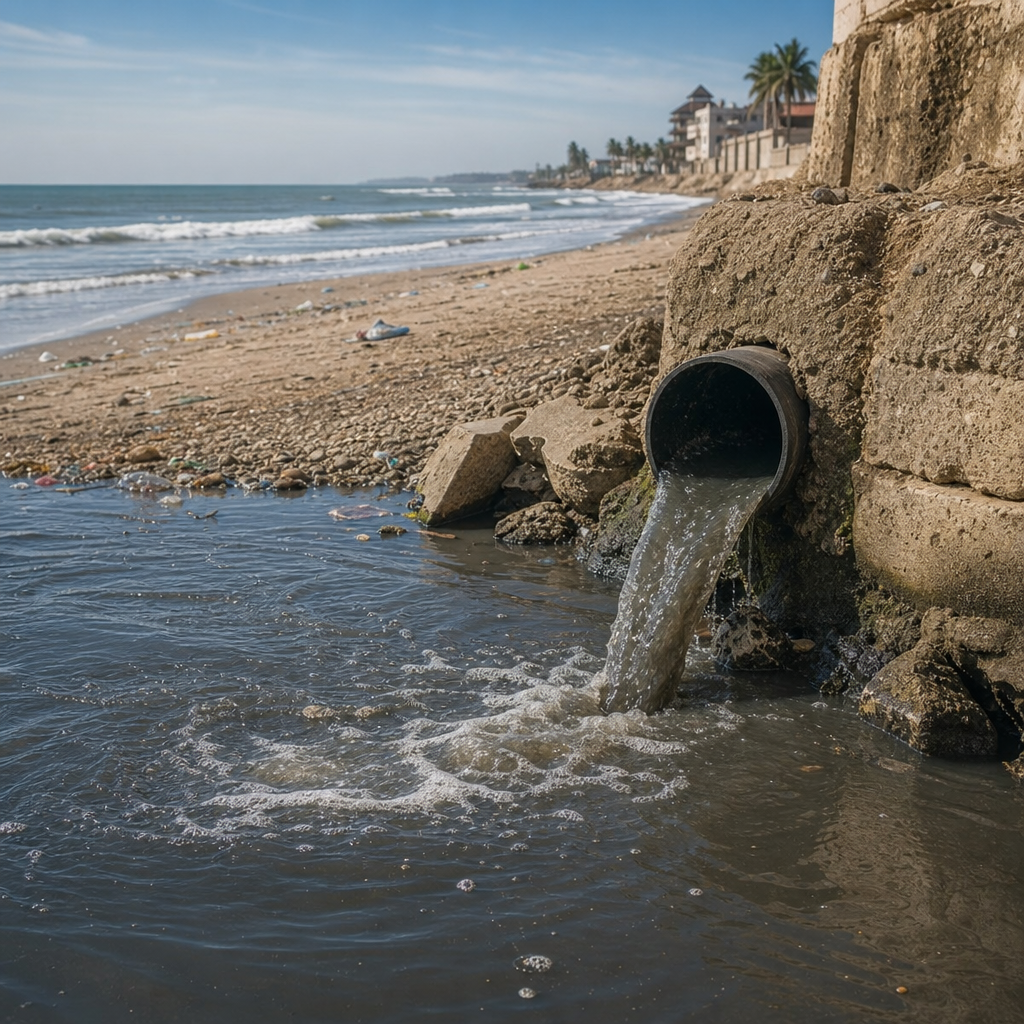
Environmental restoration often starts with water because contamination is visible, politically urgent, and damaging across sectors. Poorly sited pit latrines can leach nitrate and pathogens into shallow groundwater. Untreated wastewater can drive eutrophication in lakes, reservoirs, and estuaries by adding nitrogen and phosphorus that stimulate algal blooms. EcoSan reduces these risks by limiting uncontrolled discharge and creating treatment barriers closer to the source. In hydrogeologically sensitive areas, this is not optional design refinement. It is core environmental protection.
Several successful cases come from settlements near wetlands and flood-prone water bodies where conventional sewer rollouts were too slow or costly. Decentralized wastewater treatment systems, including baffled reactors, planted gravel filters, and polishing ponds, have been used to cut organic loads and suspended solids before effluent reaches natural ecosystems. Where properly operated, these systems lower biochemical oxygen demand, reduce fecal indicator bacteria, and protect habitat quality. The environmental gain is especially strong when greywater and blackwater are managed separately, because treatment can then be tailored to pollutant strength and reuse potential.
A useful example comes from peri-urban restoration corridors where stream quality had collapsed under a mix of failing septic tanks and direct discharge. Replacing scattered, poorly maintained containment systems with clustered decentralized treatment units created a visible ecological response within a few seasons. Riparian vegetation recovered because raw sewage inputs declined. Odor complaints fell. Invertebrate life returned to reaches that had become biologically stressed. The lesson from such work is that sanitation interventions can be counted as restoration infrastructure when they produce measurable improvements in water quality and ecological function, not merely cleaner toilet interfaces.
Building Climate Resilience With Low-Water and Decentralized Systems
Climate resilience is increasingly part of environmental sustainability planning, and EcoSan contributes in practical ways. Conventional sewer systems are vulnerable to both drought and flooding. Drought exposes the inefficiency of using potable water to move waste. Flooding can overwhelm sewers, spread contamination, and disable treatment plants. EcoSan diversifies risk by reducing dependence on continuous water supply, distributing treatment functions, and allowing modular expansion. In settlements facing recurring climate shocks, that flexibility can protect both public health and nearby ecosystems.
Dry and low-water systems are especially valuable in regions where groundwater tables are falling or where tanker water dominates household supply. Every avoided flush matters in those contexts. But resilience also means recoverability after disruption. Container-based sanitation and service-linked dry systems can continue operating when pipes fail, roads are damaged, or centralized plants lose power. I have seen emergency sanitation responses evolve into longer-term environmental solutions when municipalities recognized that decentralized systems offered not only speed but lower watershed stress than the previous status quo.
Biogas-linked sanitation adds another dimension. At institutions, markets, and farms, anaerobic digestion can reduce volatile solids, cut odors, and generate usable gas for cooking or heating water. The climate case should be stated carefully: biogas systems are not automatically low-emission, because leaks and poor digestion performance can undermine benefits. Yet when designed and maintained well, they turn waste liabilities into energy assets and reduce pressure on biomass fuels. For restoration programs working near deforested catchments, that indirect benefit matters because cleaner sanitation and reduced fuelwood demand can reinforce each other.
Why Some EcoSan Projects Succeed and Others Stall
The strongest EcoSan success stories share operational discipline. They start with a site assessment, including hydrogeology, climate, settlement density, farming patterns, and regulatory limits. They specify who empties, transports, treats, and monitors materials. They budget for maintenance from day one. And they treat user acceptance as a design parameter, not a communication problem to be solved later. Many stalled projects did the opposite: they distributed units without service plans, ignored cultural preferences, or assumed reuse would happen automatically.
Monitoring is another dividing line. Installation numbers reveal almost nothing about environmental performance. Better indicators include groundwater nitrate trends, E. coli reductions in receiving waters, vault emptying compliance, nutrient recovery volumes, compost maturity, effluent biochemical oxygen demand, and user retention after two or three years. On projects I have reviewed, the most convincing evidence came from mixed monitoring: laboratory data, operator logs, and household feedback together. That combination catches failures early, such as urine diversion plates being bypassed, compost chambers remaining too wet, or treatment wetlands clogging due to poor pretreatment.
Policy alignment also determines scale. Environmental agencies, public health departments, utilities, and agriculture ministries often work under different rules, which can leave recovered products in a legal grey zone. Successful programs create clear standards for treatment, storage, transport, and end use. They also define who is liable if products are misapplied. This sounds bureaucratic, but it is the reason some cities can expand decentralized sanitation confidently while others remain trapped in pilot mode. Restoration outcomes improve when regulation supports safe reuse, enforces performance, and rewards prevention of pollution rather than only end-of-pipe treatment.
The Future of Advancing Environmental Sustainability With EcoSan
The next phase of EcoSan is less about inventing entirely new toilets and more about integrating sanitation into environmental planning, utility management, and circular economy policy. Digital service tracking, container logistics, remote monitoring of decentralized plants, and better product certification are already improving reliability. The most promising frontier is coordination: sanitation teams working with watershed managers, restoration ecologists, and agricultural extension services so that recovered water and nutrients flow into real land and water improvement programs.
For this sub-pillar hub, the central point is simple. EcoSan in action succeeds when it closes loops safely and measurably. It can restore soil fertility, reduce pressure on freshwater resources, protect wetlands and streams, and strengthen climate resilience. It can also fail if systems are poorly matched to place or left without management. The benefit is not theoretical. When capture, treatment, reuse, and oversight are all designed as one chain, sanitation becomes environmental infrastructure.
If you are building an Environmental Impact content strategy, use EcoSan as the connecting theme between water protection, nutrient recovery, land restoration, and resilient infrastructure. Start with local environmental pressures, choose technologies that fit them, and measure outcomes that matter in the field. That is how advancing environmental sustainability with EcoSan moves from pilot language to lasting restoration.
Frequently Asked Questions
What does EcoSan mean in the context of environmental restoration?
EcoSan, or ecological sanitation, is an approach to sanitation that views human waste as a recoverable resource rather than something to be diluted with large volumes of water and disposed of elsewhere. In environmental restoration, that distinction is especially important. Traditional systems often move pollutants away from homes and businesses, but they do not always eliminate environmental harm. In many places, waste ultimately reaches rivers, lakes, groundwater, or coastal ecosystems through leaks, overflows, or inadequate treatment. EcoSan systems are designed to interrupt that pattern by safely separating, treating, and reusing nutrients and organic matter in ways that reduce pollution and support ecological recovery.
In practical restoration projects, EcoSan can help degraded landscapes heal by reducing nutrient loading in waterways, lowering pathogen exposure, and creating valuable soil amendments for reforestation, land rehabilitation, or agriculture. For example, composted outputs from properly managed systems may improve soil structure, water retention, and fertility in areas where erosion or nutrient depletion has damaged local productivity. Urine-diverting systems can also enable nutrient recovery, returning nitrogen, phosphorus, and potassium to the land instead of allowing them to become water contaminants. That is why EcoSan is often discussed not only as a sanitation solution, but also as part of a broader environmental management strategy that connects public health, water protection, soil recovery, and long-term resilience.
How has EcoSan been used successfully to protect water sources and reduce pollution?
One of the most compelling EcoSan success stories is its ability to protect vulnerable water sources by reducing the amount of untreated or poorly treated waste entering the environment. In communities where pit latrines flood, septic systems fail, or centralized sewers are unavailable, human waste can seep into groundwater or wash into streams during storms. EcoSan systems address that risk by using containment, source separation, and treatment methods that are better suited to local ecological conditions. This is particularly valuable in restoration settings where watersheds, wetlands, or shallow aquifers are already under stress.
Successful applications often involve dry or low-water sanitation systems that prevent the constant flushing of nutrients and pathogens into waterways. In areas facing eutrophication, for instance, EcoSan has helped cut nutrient runoff by capturing waste streams before they reach lakes and rivers. That matters because excess nutrients can trigger algal blooms, lower oxygen levels, and damage aquatic biodiversity. By stopping pollution closer to its source, EcoSan supports cleaner water, healthier habitats, and lower downstream treatment burdens. Communities also benefit from a more visible and accountable sanitation process, because waste is managed intentionally rather than being hidden in underground infrastructure that may be difficult to monitor or maintain.
Another measure of success is resilience during extreme weather. In flood-prone regions, conventional sanitation systems can fail dramatically, spreading contamination over large areas. Well-designed EcoSan installations can be elevated, sealed, or adapted to site conditions, making them less vulnerable to flood-related pollution events. This kind of performance is especially important in environmental restoration projects, where gains in water quality can be quickly undone by repeated contamination. EcoSan helps create a preventive barrier, making restoration efforts more durable over time.
Can EcoSan really contribute to landscape restoration and soil recovery?
Yes, and this is one of the most promising aspects of EcoSan in action. Many degraded landscapes suffer from multiple problems at once: nutrient depletion, poor soil structure, water stress, erosion, and loss of vegetation cover. EcoSan can contribute to restoration by recovering nutrients and organic matter from sanitation systems and returning them to the land in a safe, treated form. When managed correctly and in accordance with health guidelines, these recovered resources can support revegetation, improve soil fertility, and strengthen the biological activity that healthy soils depend on.
In restoration success stories, the benefits are often most visible where soils have been exhausted by overuse or where communities cannot easily access commercial fertilizers. Treated compost-like materials can help rebuild soil carbon, improve aggregation, and increase the ability of soil to hold moisture. Those changes can make it easier for trees, grasses, and crops to establish themselves, especially in dry or degraded environments. Nutrient recovery from urine can also provide a targeted fertilizer source, reducing dependence on synthetic inputs while helping plants grow more vigorously. Over time, stronger vegetation cover can stabilize slopes, reduce sediment runoff, and begin restoring ecological function across damaged sites.
Just as important, EcoSan-based restoration links sanitation to circular resource use. Instead of paying the environmental cost of waste disposal and then paying again for imported fertilizers or soil amendments, communities can close part of that loop locally. That creates both ecological and economic value. While EcoSan is not a standalone answer to every restoration challenge, it can be a highly effective component in integrated projects that combine sanitation, reforestation, water management, and community land stewardship.
What makes EcoSan a strong option for community resilience and long-term sustainability?
EcoSan strengthens community resilience because it is often more adaptable, decentralized, and resource-efficient than conventional sewer-based systems. In many regions, centralized sanitation requires heavy infrastructure investment, continuous water supply, reliable electricity, and technical maintenance capacity that may not always be available. When any part of that chain breaks down, the environmental and public health consequences can be severe. EcoSan offers an alternative that can be tailored to local geography, climate, settlement patterns, and resource constraints, which is one reason it has gained attention in both rural and peri-urban restoration settings.
From a sustainability perspective, EcoSan reduces water demand, promotes nutrient recycling, and can lower the burden on overstretched treatment systems. These advantages are especially relevant in areas facing drought, rapid population growth, or climate-related disruptions. A system that uses little or no flush water can preserve scarce freshwater resources, while also reducing the volume of waste that must be transported or processed. At the same time, local reuse of treated outputs can create practical benefits for households, farmers, schools, or restoration teams. That local value helps build support for proper operation and maintenance, which is essential for lasting success.
Community resilience also depends on ownership and participation. Many EcoSan projects succeed because they involve education, behavior change, and local management from the beginning. When people understand how the system works, why separation and treatment matter, and how recovered resources can be used safely, they are more likely to maintain the system well and protect the surrounding environment. In that sense, EcoSan is not only a technical solution. It is also a governance and community engagement model that can make environmental restoration more practical, inclusive, and durable.
What are the main challenges to implementing EcoSan successfully, and how are they overcome?
Although EcoSan has clear advantages, success depends on thoughtful design, training, and long-term management. One of the most common challenges is public perception. In places where sanitation has long been associated with rapid disposal and invisibility, the idea of recovering resources from human waste can initially face resistance. Concerns about safety, odor, cleanliness, or social acceptance are real and need to be addressed directly. Successful EcoSan programs typically overcome these barriers through clear communication, demonstration projects, user education, and transparent health safeguards. When communities can see that systems are clean, practical, and beneficial, acceptance tends to grow.
Technical fit is another major factor. EcoSan is not a one-size-fits-all solution. Soil type, rainfall patterns, flood risk, cultural norms, land availability, and maintenance capacity all influence what kind of system will work best. Poorly matched technologies can fail, just as poorly managed conventional systems can fail. The strongest success stories come from projects that begin with local assessment and design systems around real conditions rather than imported assumptions. This may include urine diversion, composting toilets, dehydration systems, or hybrid models connected to broader water and land management strategies.
Safe treatment and reuse standards are also essential. Environmental restoration benefits only materialize when waste-derived products are handled correctly and applied in ways that protect public health. That requires training, monitoring, and in many cases supportive policy frameworks. Governments, NGOs, and local institutions often play a key role by setting guidelines, funding pilot programs, and helping communities build technical capacity. When these elements are in place, EcoSan can move from a promising concept to a proven restoration tool, delivering cleaner water, healthier soils, and stronger communities over the long term.