Sustainable sanitation and wildlife protection are tightly linked because the way human waste is collected, treated, and reused shapes water quality, soil health, disease pressure, and habitat integrity. In environmental planning, sustainable sanitation means sanitation systems that protect public health while conserving water, recovering nutrients, reducing pollution, and functioning over the long term within local social and ecological limits. EcoSan, short for ecological sanitation, is a practical approach within that broader field. It treats human excreta not only as waste to be disposed of, but also as a resource that can be safely transformed into fertilizer, soil amendment, energy, or reclaimed water when conditions allow.
I have worked on sanitation assessments where the environmental damage was not caused by dramatic industrial spills, but by ordinary failures: leaking pits near wetlands, untreated sludge dumped into streams, and overburdened sewer networks discharging during storms. Those failures matter for wildlife. Excess nitrogen and phosphorus fuel algal blooms that strip oxygen from lakes and estuaries. Pathogens from poorly managed waste can contaminate habitat used by mammals, birds, amphibians, and fish. Chemical residues and high organic loads alter microbial communities in soils and waterways, changing food webs from the bottom up.
This is why EcoSan and the environment belong in the same discussion. Well-designed systems can lower nutrient losses, reduce groundwater contamination, cut freshwater demand, and create circular nutrient flows that reduce pressure on natural ecosystems. They can also fail if they are poorly maintained, socially unacceptable, or installed in places with the wrong hydrogeology. A useful hub article must therefore do two jobs at once: explain the environmental promise of sustainable sanitation and show the conditions that determine whether that promise becomes real. The sections below cover the main environmental pathways, common technologies, wildlife risks, planning standards, and implementation priorities that shape better outcomes.
How sanitation affects ecosystems and wildlife
Sanitation affects ecosystems through four main pathways: nutrient loading, pathogen release, water extraction, and land disturbance. Nutrient loading is often the most visible. When untreated sewage or leaking onsite systems release nitrogen and phosphorus into rivers, lakes, marshes, or coastal waters, primary productivity rises beyond natural levels. The result can be eutrophication, harmful algal blooms, fish kills, submerged vegetation loss, and declining biodiversity. The U.S. Environmental Protection Agency and the European Environment Agency have both documented nutrient enrichment as a major driver of water quality impairment. Wildlife does not need to drink sewage directly to be harmed; habitat degradation alone is enough.
Pathogens are the second pathway. Fecal contamination introduces bacteria, viruses, protozoa, and helminths into the environment. Species using contaminated water bodies can face direct exposure, while predators may be affected indirectly through weakened prey populations and altered ecological interactions. Amphibians, already stressed by habitat loss and climate shifts, are especially vulnerable to changes in microbial and chemical conditions. In floodplains and riparian corridors, poorly contained fecal sludge can spread widely during storm events, extending the footprint of contamination well beyond the original source.
Water extraction is the third pathway and is often overlooked. Conventional flush sanitation can demand large volumes of potable water. In water-scarce regions, diverting clean water into waste transport strains aquifers, wetlands, and environmental flows that sustain wildlife. Land disturbance is the fourth pathway. Sewer expansion, treatment plants, sludge drying beds, access roads, and disposal sites all occupy space and can fragment habitat if poorly sited. Sustainable sanitation reduces these pressures by matching technology to local ecology, limiting discharges, and recovering materials safely rather than transferring pollution downstream.
What EcoSan includes and why it changes environmental outcomes
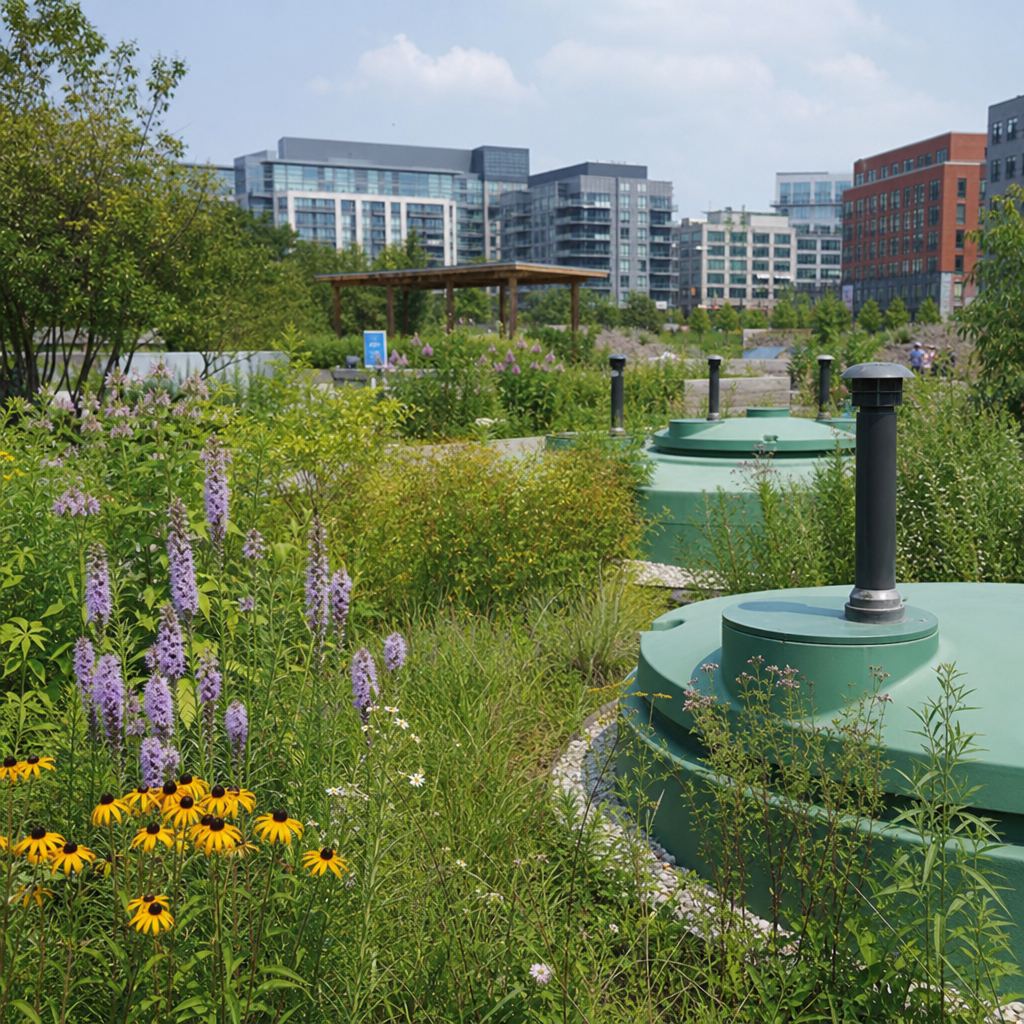
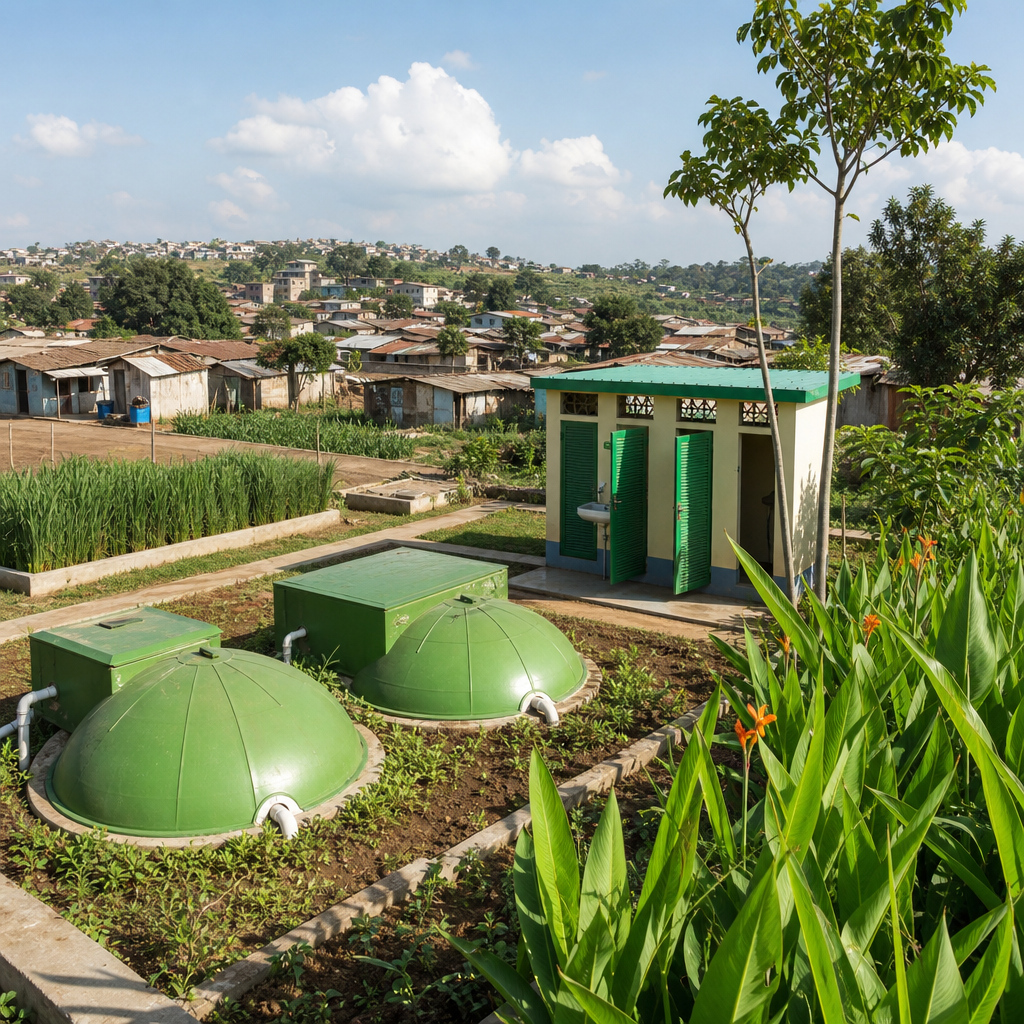
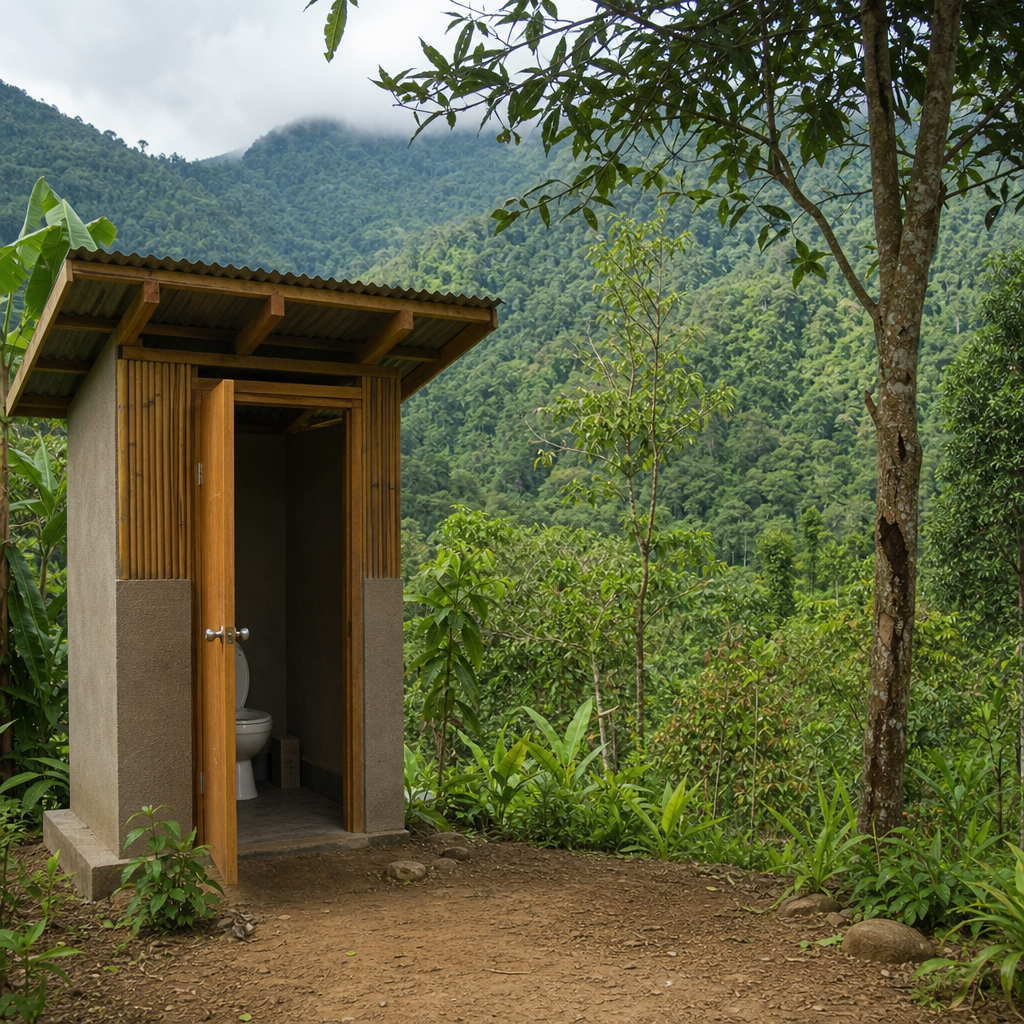
EcoSan is not one device. It is a design philosophy supported by technologies such as urine-diverting dry toilets, composting toilets, container-based sanitation, decentralized wastewater treatment, constructed wetlands, anaerobic digesters, and systems for safe fecal sludge treatment and reuse. The core principle is separation and treatment at a scale that preserves value and reduces environmental harm. Urine contains most of the nitrogen and a large share of the phosphorus excreted by humans, while feces carry most pathogens and organic matter. Separating these streams can simplify treatment and improve nutrient recovery.
In practical terms, EcoSan changes environmental outcomes by preventing dilution and enabling control. A conventional sewer mixes nutrients, pathogens, greywater, industrial contaminants, and stormwater, creating a large treatment burden and increasing overflow risk during heavy rain. By contrast, source-separating systems can keep nutrient-rich fractions concentrated, making them easier to sanitize and apply with agronomic precision. Decentralized systems can also reduce long conveyance networks that leak, clog, or discharge during storms. Where central infrastructure is weak, these advantages are significant.
That said, EcoSan is not automatically greener. A composting toilet that is never emptied safely can become a hazard. A urine reuse program without pharmaceutical risk management or application guidance can create new concerns. A constructed wetland sized incorrectly may fail to remove sufficient nutrients. Environmental performance depends on treatment time, temperature, moisture control, carbon-to-nitrogen balance, pathogen barriers, monitoring, and user behavior. The lesson from field work is simple: sustainable sanitation succeeds when engineering, operations, and community adoption are planned together.
Comparing common sanitation approaches through an environmental lens
Different sanitation systems create different environmental tradeoffs. The best choice depends on density, soil type, groundwater depth, climate, water availability, energy access, and institutional capacity. In low-density areas with suitable soils and strong maintenance, onsite systems can work well. In flood-prone settlements with shallow groundwater, they often fail. In dense cities, sewers may be necessary, but only if collection and treatment remain reliable under growth and extreme rainfall. EcoSan options are especially valuable where nutrient recovery, water conservation, or off-grid operation are priorities.
| Approach | Main environmental strengths | Main environmental risks | Best-fit context |
|---|---|---|---|
| Conventional sewer with centralized treatment | High user convenience; can achieve strong treatment when plants are well operated | High water use; overflow risk; expensive expansion; energy demand | Dense urban areas with strong utilities |
| Septic tank with soil absorption | Low energy use; decentralized treatment | Groundwater contamination if poorly sited or maintained | Peri-urban or rural sites with suitable soils |
| Urine-diverting dry toilet | Very low water use; strong nutrient recovery potential | User acceptance and handling errors can reduce safety | Water-scarce areas and reuse-oriented programs |
| Composting toilet | Low water use; potential soil amendment recovery | Incomplete pathogen reduction without correct operation | Remote sites, ecolodges, low-water settings |
| Constructed wetland or decentralized treatment | Lower energy demand; habitat co-benefits when designed well | Requires land and careful hydraulic design | Institutions, campuses, small communities |
The table shows a recurring pattern: no system is inherently sustainable in every setting. Environmental performance comes from fit-for-purpose design. I have seen basic urine diversion outperform sewer extensions in dry regions because it avoided groundwater depletion and reduced fertilizer demand. I have also seen elegant dry systems abandoned because spare parts, training, and collection services were not built into the program. Technology choice must be anchored in service delivery, not only equipment selection.
Nutrient recovery, soil health, and reduced pressure on wild habitats
One of the strongest environmental arguments for EcoSan is nutrient recovery. Human excreta contain nitrogen, phosphorus, potassium, sulfur, and organic carbon that can substitute for synthetic inputs when treated correctly. Phosphorus is especially important because global phosphate rock is finite and geographically concentrated. Recovering nutrients from sanitation streams supports circularity and can reduce the mining, processing, and transport impacts associated with conventional fertilizers. It can also lower runoff if nutrients are applied at the right rate, time, and place using agronomic guidance.
Wildlife benefits indirectly from that circularity. When agriculture becomes less dependent on virgin inputs and more efficient in nutrient management, pressure on sensitive landscapes can fall. Better soil structure and organic matter improve water retention, reducing erosion into streams used by fish and aquatic invertebrates. In peri-urban farming systems, sanitized compost or treated urine can support local food production without the same transport footprint as imported fertilizers. This is not theoretical; programs in parts of Sweden, South Africa, and East Africa have demonstrated that nutrient recovery can work when storage, treatment, and farmer training are handled seriously.
However, nutrient reuse requires discipline. Application must match crop demand, and treatment must reduce pathogen risks to accepted levels. World Health Organization guidance on sanitation and safe reuse remains essential, as do local agricultural regulations. Reuse should also consider pharmaceuticals, heavy metals, and industrial cross-contamination where waste streams are mixed. The environmental goal is not simply reuse at any cost. It is safe reuse that keeps nutrients in productive cycles and out of rivers, lakes, mangroves, grasslands, and coastal nurseries where excess nutrients damage habitat.
Protecting water bodies, wetlands, and biodiversity hotspots
Water protection is where sustainable sanitation delivers its most immediate wildlife gains. Wetlands, estuaries, coral-adjacent coasts, peatlands, and headwater streams are biologically rich and highly sensitive to contamination. In these settings, even small sanitation failures can have outsized consequences. A leaking pit latrine upslope from a marsh can raise nutrient and pathogen loading enough to change plant composition and oxygen dynamics. A sludge dumping site beside a stream can contaminate downstream spawning grounds within hours of rain. Good sanitation planning therefore begins with watershed thinking, not just household coverage targets.
For biodiversity hotspots, setbacks and hydrogeological assessments are non-negotiable. Separation distances from wells, springs, wetlands, and streams should reflect soil permeability, slope, and seasonal water table fluctuation. Flood recurrence intervals matter because a pit that is safe in the dry season may overflow in a one-in-five-year storm. In protected areas and ecotourism zones, container-based sanitation or sealed vault systems often outperform soak pits because waste can be removed without infiltrating vulnerable ground. Constructed wetlands may also be useful, but only when they are engineered for treatment rather than assumed to purify waste by nature alone.
Monitoring is equally important. Useful indicators include biochemical oxygen demand, total suspended solids, ammonia, nitrate, total phosphorus, E. coli, and groundwater nitrate trends. In wildlife-sensitive areas, habitat indicators should be tracked alongside sanitation metrics: dissolved oxygen, macroinvertebrate diversity, fish presence, amphibian breeding success, or vegetation shifts. This integrated monitoring shows whether sanitation improvements are actually reducing ecological stress, which is the standard that matters most.
Implementation challenges, governance, and the path forward
The biggest barrier to EcoSan and the environment is rarely technology; it is governance. Sustainable sanitation requires clear responsibility for operation, safe emptying, transport, treatment, reuse, and monitoring. If any link fails, environmental harm returns quickly. Municipalities need service models, not one-time installations. That means tariffs or subsidies that cover maintenance, licensing for emptiers, treatment standards for compost or biosolids, and enforcement against illegal dumping. It also means community engagement from the start. People must understand how a system works, what behavior it requires, and what benefits it delivers.
Climate change raises the stakes. More intense rainfall increases overflow and leaching risks, while drought increases the value of water-efficient systems and nutrient reuse. Resilient sanitation planning should include flood-safe siting, modular treatment capacity, protected storage, and contingency plans for service disruptions. Tools such as sanitation safety planning, life-cycle assessment, and watershed-based risk mapping help decision-makers compare options rigorously. In my experience, the most successful projects are those that begin with local constraints and build outward: geology, hydrology, settlement form, livelihoods, and institutional capacity first; hardware second.
Sustainable sanitation and wildlife protection should be planned as one agenda, not two. EcoSan offers a credible route to cleaner water, recovered nutrients, lower resource use, and healthier ecosystems, but only when design quality, management discipline, and ecological context are taken seriously. For organizations building an environmental impact strategy, this topic deserves hub-level attention because it connects public health, agriculture, climate resilience, and biodiversity protection. Review your current sanitation systems, map the pathways of pollution, and prioritize solutions that keep waste from becoming habitat damage. That is where meaningful environmental improvement begins.
Frequently Asked Questions
How are sustainable sanitation and wildlife protection connected?
Sustainable sanitation and wildlife protection are closely connected because sanitation systems influence the quality of water, soil, and habitat far beyond homes and cities. When human waste is poorly managed, nutrients, pathogens, pharmaceuticals, and chemical residues can enter rivers, wetlands, estuaries, and groundwater. That pollution can trigger algal blooms, reduce oxygen in water, contaminate food sources, and spread disease among fish, amphibians, birds, and mammals. In sensitive ecosystems, even small increases in contamination can disrupt breeding areas, migration corridors, and feeding habitats.
By contrast, sustainable sanitation is designed to protect public health while reducing environmental harm. It focuses on safe collection, treatment, reuse where appropriate, efficient water use, and long-term operation within local ecological limits. That means less untreated sewage entering habitats, less nutrient overload in waterways, and less pressure on freshwater resources that wildlife also depends on. Good sanitation planning also helps communities avoid placing treatment systems in flood-prone or ecologically fragile areas, which reduces the chance of spills and chronic contamination. In practical terms, protecting sanitation systems is often part of protecting biodiversity, because healthy ecosystems depend on clean water, balanced nutrient cycles, and low disease pressure.
What makes a sanitation system “sustainable” in environmental planning?
In environmental planning, a sanitation system is considered sustainable when it does more than simply move waste away from people. It must protect public health, perform reliably over time, fit the local economy and culture, and operate within environmental limits. A sustainable system minimizes pollution, conserves water, supports safe treatment, and, where feasible, recovers useful resources such as nutrients, organic matter, energy, or treated water. It also has to be manageable in real conditions, which means maintenance, affordability, user acceptance, regulation, and operator capacity all matter just as much as engineering design.
From a wildlife and ecosystem perspective, sustainability also means reducing runoff, preventing leakage into streams and aquifers, and avoiding treatment failures during storms, droughts, or power interruptions. The best solution is not always the most centralized or the most technologically advanced; it is the one that consistently works in its setting. Dense urban neighborhoods, rural villages, floodplains, coastal zones, and arid regions all have different sanitation needs. Environmental planners therefore evaluate land conditions, water tables, local biodiversity, climate risks, and long-term funding before selecting a system. A sustainable sanitation approach is successful when it protects people today without creating contamination, habitat degradation, or resource depletion that harms wildlife and future generations.
What is EcoSan, and how can it benefit ecosystems and wildlife?
EcoSan, or ecological sanitation, is an approach to sanitation that treats human waste not only as something to be disposed of safely, but also as a potential resource that can be managed in a closed or semi-closed loop. The core idea is to prevent pollution while recovering value from sanitation flows, especially nutrients such as nitrogen and phosphorus, organic matter, and sometimes water. Depending on the system, EcoSan may involve urine diversion, composting toilets, dehydrating toilets, container-based collection, or other designs that separate waste streams and make treatment and reuse safer and more efficient.
The environmental benefit of EcoSan is that it can sharply reduce the release of untreated waste into ecosystems. When nutrients are captured and reused in controlled ways rather than washed into rivers or wetlands, the risk of eutrophication and habitat degradation declines. This is especially important near lakes, coastal areas, and biodiversity-rich wetlands, where nutrient pollution can rapidly alter ecological balance. EcoSan can also reduce dependence on large volumes of flush water, which helps conserve freshwater for both human communities and wildlife. In addition, recovering nutrients can lower reliance on synthetic fertilizers, whose production and runoff create their own environmental burdens.
That said, EcoSan only benefits wildlife when it is carefully designed, monitored, and accepted by users. Reuse must be hygienically safe, treatment must be complete, and applications to land must match agronomic needs so that pathogens and excess nutrients do not create new risks. In other words, EcoSan is not automatically sustainable simply because it sounds natural. Its strength lies in combining sanitation, resource recovery, and ecological protection in a way that is practical for local conditions.
Can poor sanitation really affect animal health and biodiversity?
Yes, poor sanitation can have serious effects on animal health and biodiversity, and those effects are often underestimated. Untreated or inadequately treated sewage can carry bacteria, viruses, parasites, excess nutrients, microplastics, and pharmaceutical compounds into natural systems. Wildlife may be exposed through drinking water, feeding in contaminated areas, contact with sediment, or consuming prey that has accumulated pollutants. This can weaken immune systems, alter behavior, reduce reproductive success, and increase mortality, especially in already stressed populations.
Nutrient pollution is one of the clearest examples. When too much nitrogen and phosphorus enter water bodies, algal blooms can expand quickly. Some blooms are toxic, while others consume oxygen as they decay, creating conditions that kill fish and aquatic invertebrates. That loss then ripples through the food web, affecting birds, reptiles, and mammals that depend on those species. Amphibians are also highly vulnerable because they are sensitive to changes in water quality and pathogens. In terrestrial areas, repeated sewage contamination can degrade soil quality and alter plant communities, which affects habitat structure and food availability for insects, pollinators, and larger animals.
There is also a disease dimension. Poor sanitation can increase pathogen circulation among humans, livestock, and wildlife, especially where settlements overlap with natural habitat. This raises concern for zoonotic disease dynamics and for threatened species living near polluted waterways or informal waste discharge areas. For conservation planning, sanitation is therefore not a secondary infrastructure issue; it is part of basic ecosystem health management.
What are the best strategies for protecting wildlife while improving sanitation access?
The most effective strategies combine sound sanitation engineering with landscape-level environmental planning. First, communities and planners need systems that safely contain, transport, treat, and where appropriate reuse waste without routine discharge into natural habitats. That may include decentralized wastewater treatment, fecal sludge management programs, constructed wetlands designed and monitored for treatment, sewer upgrades, composting or urine-diverting toilets in water-scarce areas, and resilient on-site systems in rural settings. The key is matching the technology to the setting rather than forcing a one-size-fits-all model.
Second, wildlife-sensitive planning matters. Sanitation infrastructure should avoid wetlands, floodplains, breeding areas, and zones with shallow groundwater where leakage can quickly spread contamination. Buffer zones, storm resilience, and routine maintenance are essential because even well-designed systems can fail if they are neglected or overwhelmed by extreme weather. Monitoring should include not just human health indicators, but also environmental indicators such as nutrient loads, pathogen presence, water quality trends, and habitat condition downstream of sanitation sites.
Third, long-term success depends on governance and public participation. Communities need affordable services, clear responsibilities, trained operators, and realistic funding for maintenance. Farmers and land managers need guidance if treated biosolids or recovered nutrients are reused, so applications remain safe and environmentally appropriate. Education also plays a major role, because people are more likely to support sustainable sanitation when they understand its benefits for drinking water, fisheries, soil health, and local wildlife. The strongest strategy is an integrated one: protect people, recover resources responsibly, and design sanitation systems as part of broader watershed and biodiversity conservation goals.