Ecological sanitation, commonly shortened to EcoSan, changes the way communities handle human waste by treating it as a resource rather than a disposal problem, and that shift has direct consequences for reducing land degradation. Land degradation refers to the decline in soil quality, vegetation cover, water retention, and biological productivity caused by erosion, nutrient depletion, salinization, contamination, and unsustainable land use. EcoSan systems typically separate urine and feces, sanitize them through controlled storage or composting, and return nutrients and organic matter to productive land in safe, managed ways. I have worked on sanitation and land restoration projects where the biggest surprise for local stakeholders was not that toilets improved health, but that better nutrient management improved soils, reduced pressure on forests, and lowered runoff damage on farms.
This matters because degraded land is both an environmental and economic risk. The Food and Agriculture Organization and the United Nations Convention to Combat Desertification have repeatedly shown that soil fertility loss, erosion, and poor nutrient cycling reduce crop yields, intensify poverty, and make communities more vulnerable to drought and floods. Conventional sanitation often contributes to the problem indirectly. Flush systems can require expensive water infrastructure, leak nutrients into waterways, and disconnect households from local nutrient cycles. Pit latrines can contaminate groundwater, become difficult to empty, and concentrate waste in ways that offer no agricultural recovery value. EcoSan addresses a different question: how can sanitation support healthier land rather than merely moving waste out of sight?
As a hub page on EcoSan and the environment, this article explains how ecological sanitation influences soil health, erosion control, nutrient recovery, water quality, climate resilience, and land management decisions. It also covers where EcoSan works well, where caution is needed, and how performance depends on design, treatment, user behavior, and regulation. The core idea is simple: when sanitation systems keep nutrients in a controlled loop, protect water, and create usable soil amendments, they can help reverse several drivers of land degradation at once.
How EcoSan reduces land degradation at the source
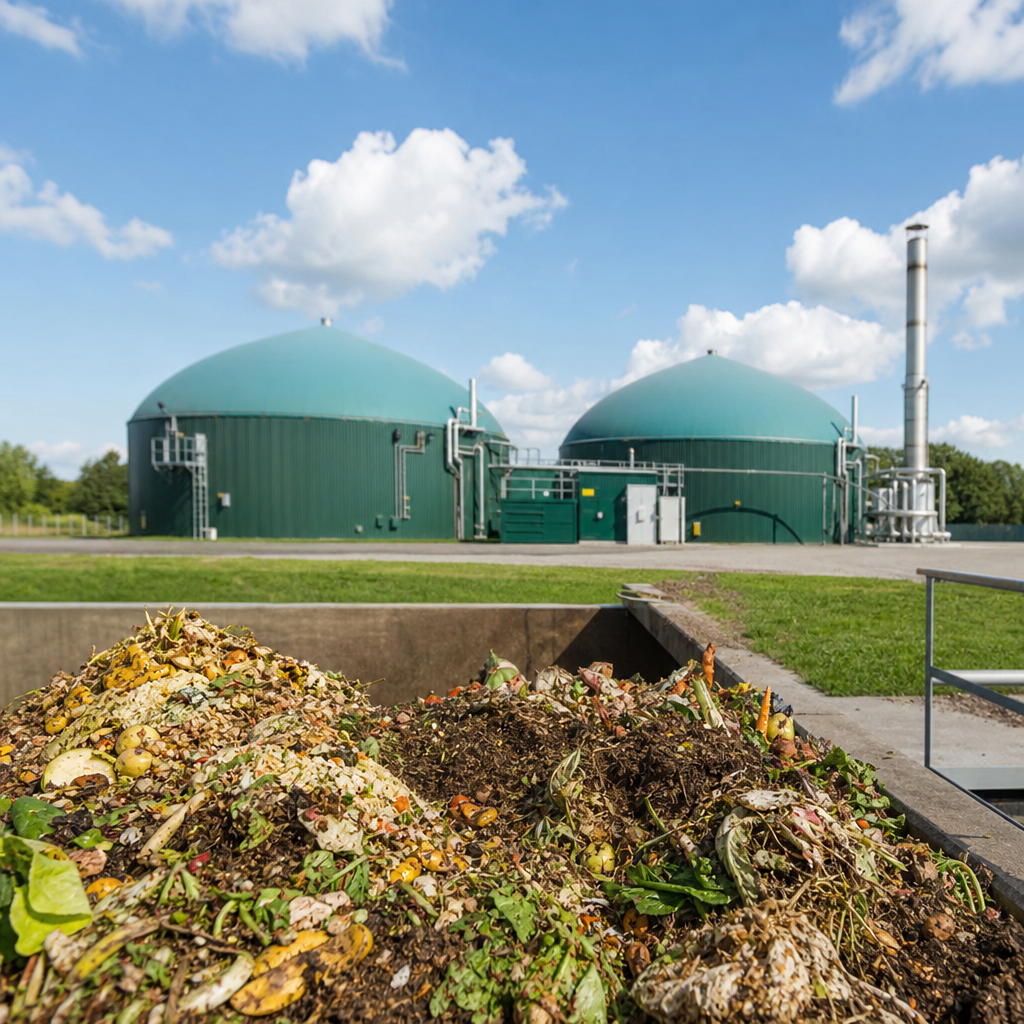
EcoSan reduces land degradation first by interrupting the waste pathways that strip nutrients from local ecosystems. Human excreta contains nitrogen, phosphorus, potassium, sulfur, and micronutrients that originally came from food grown on land. In conventional systems, those nutrients are often diluted in water, discharged into rivers, lost in poorly managed sludge, or trapped in pits where they create localized pollution. In EcoSan systems, especially urine-diverting dry toilets and composting toilets, nutrients are captured separately and processed for reuse. That means the land that produced the food has a better chance of receiving some of those nutrients back.
The environmental significance is substantial. Soil degradation is often accelerated by nutrient mining, where repeated harvests remove fertility faster than farmers can replace it. In smallholder systems, this commonly leads to lower organic matter, weaker soil structure, and declining yields. Where I have seen EcoSan integrated into farm planning, households used sanitized urine as a nitrogen-rich fertilizer for maize, vegetables, and fruit trees, while composted fecal matter and cover material improved soil texture and moisture retention. The result was not a miracle cure, but a measurable reduction in dependence on expensive synthetic fertilizer and a practical way to rebuild exhausted soils over time.
EcoSan also reduces the need to excavate new pits or dispose of sludge in unmanaged dumping areas, both of which can damage land. Repeated pit digging disturbs soil profiles and can be especially harmful in dense settlements, flood-prone areas, rocky terrain, and fragile slopes. Managed reuse systems avoid that cycle. Instead of turning land into a series of contaminated disposal points, they create a monitored treatment-and-return process. This is one reason ecological sanitation is increasingly discussed not only in sanitation planning but also in circular economy, watershed management, and land restoration strategies.
Soil fertility, organic matter, and productive land use
One of the strongest links between EcoSan and reduced land degradation is its effect on soil fertility. Degraded soils typically suffer from low organic carbon, poor aggregation, reduced microbial activity, and limited nutrient availability. EcoSan products can address several of these deficits when properly sanitized and applied at agronomic rates. Urine provides readily available nitrogen and potassium, while composted fecal matter contributes phosphorus, organic matter, and a broader range of nutrients. The exact composition varies by diet, storage method, moisture content, and added bulking materials such as ash, sawdust, or crop residues.
In practice, the benefit is not just nutrient addition but improved soil function. Organic matter helps soils form stable aggregates, which improve infiltration and reduce crusting. Better infiltration means rainfall enters the soil instead of running off the surface, which lowers erosion risk. Improved structure also helps roots penetrate deeper and access water during dry periods. On degraded plots with compacted or nutrient-poor topsoil, even modest additions of mature compost can improve tilth and crop establishment. I have seen farmers report clearer differences in seedling vigor and water retention after repeated applications over two or three seasons rather than after a single application.
There are important limits. EcoSan outputs are not interchangeable with fully formulated fertilizer programs, and nutrient balances still matter. Overapplication of urine can cause salt stress or nitrogen losses. Immature compost can harm crops and create odor problems. Safe reuse depends on pathogen reduction through storage, composting time, pH conditions, moisture control, and user training. However, when those controls are respected, EcoSan becomes a practical soil restoration tool, especially where farmers cannot afford large fertilizer inputs or where degraded land needs both nutrients and carbon.
Water protection, erosion control, and healthier landscapes
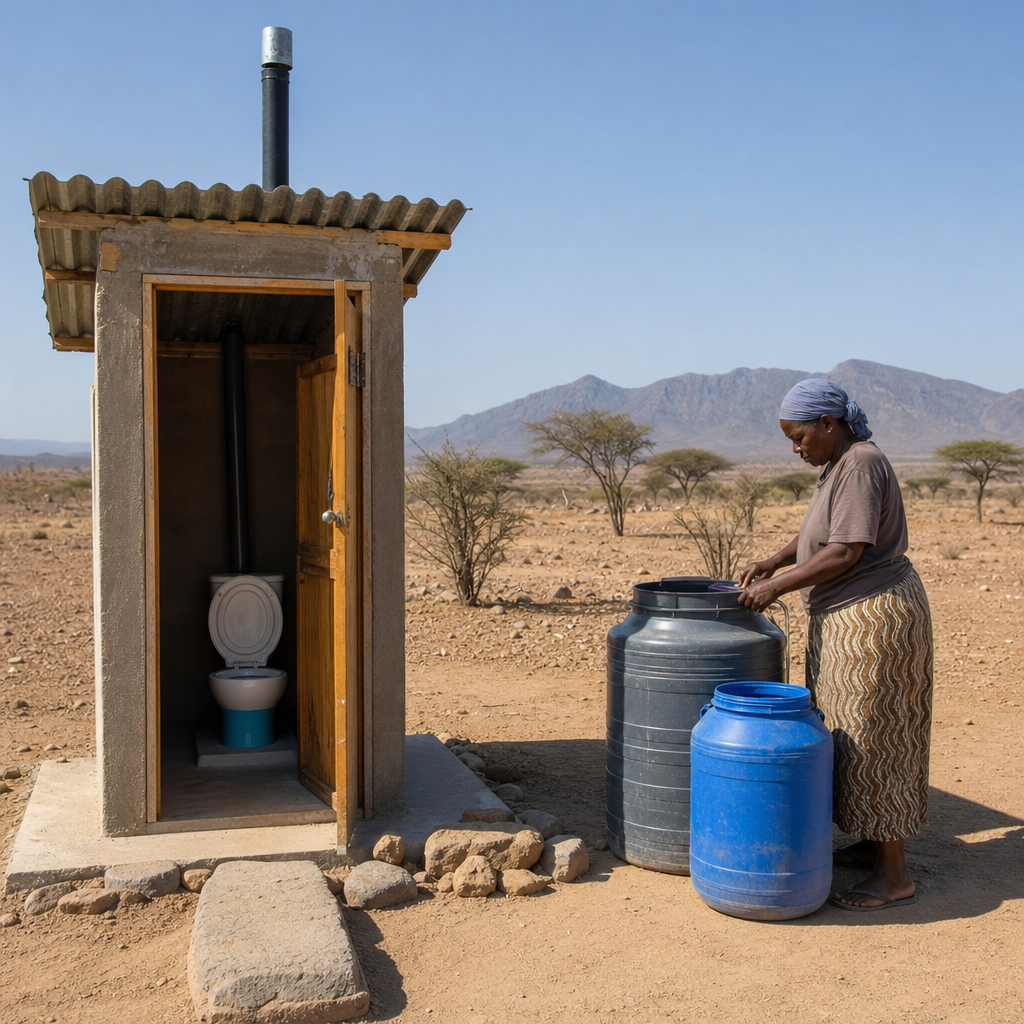
Land degradation rarely occurs in isolation from water problems. When sanitation systems leak or overflow, they contaminate groundwater, pollute streams, and accelerate the breakdown of surrounding land use. EcoSan helps by minimizing uncontrolled discharge and reducing the hydraulic burden associated with water-based sewerage in places where treatment capacity is weak. Dry or low-water EcoSan systems are particularly useful in arid, rocky, or flood-vulnerable areas where pit collapse, leaching, or wastewater mismanagement can intensify environmental stress.
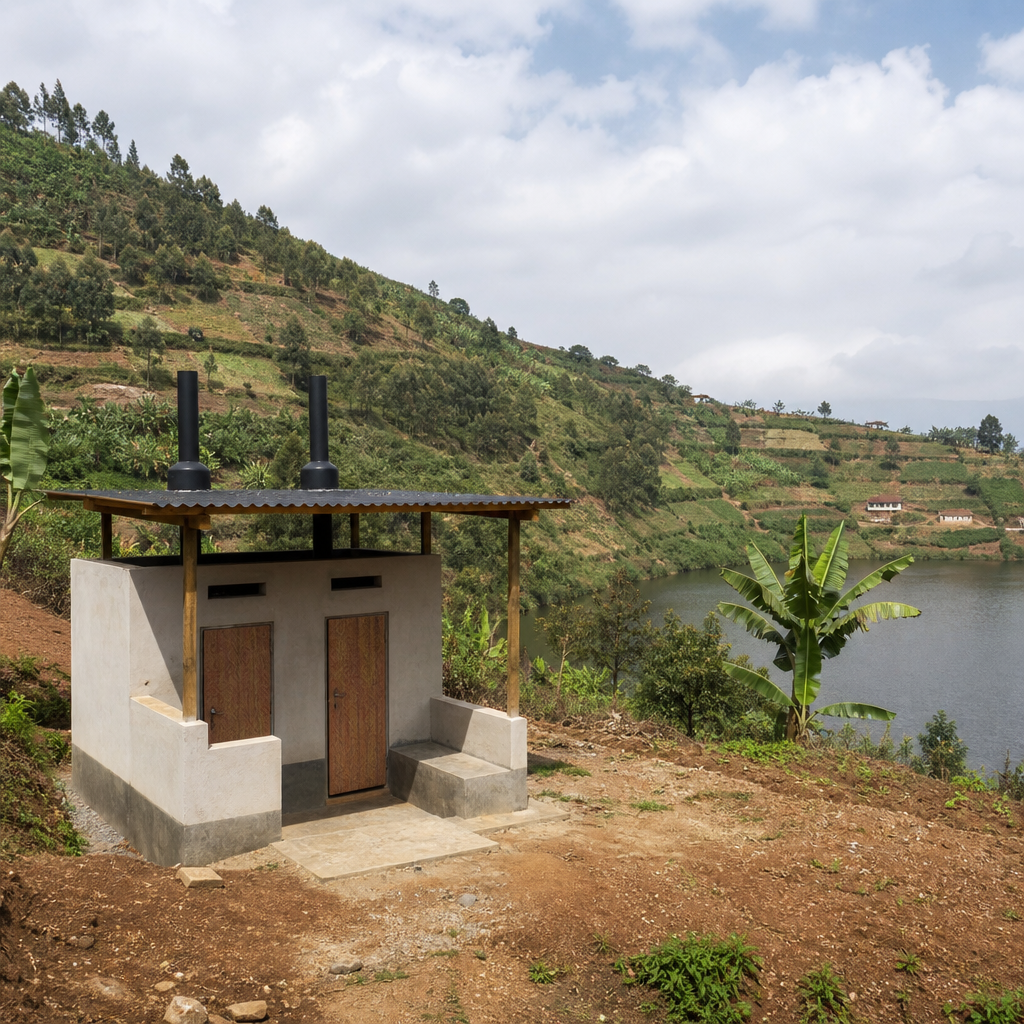
The relationship to erosion is indirect but real. Better soil fertility and organic matter increase ground cover and crop vigor, which protect the soil surface from raindrop impact. Better infiltration reduces runoff velocity. More reliable nutrient access can also make it feasible to establish grasses, trees, or agroforestry systems on degraded land, creating long-term stabilization. In watershed work, this matters because degraded hillsides often lose topsoil not only from rain intensity but from chronic under-fertilization that prevents dense vegetative cover from recovering.
Another environmental gain comes from lowering nutrient pollution in water bodies. Excess nitrogen and phosphorus discharged into lakes and rivers can trigger eutrophication, algal blooms, and oxygen depletion. By recovering those nutrients for controlled land application, EcoSan shifts them from a pollution pathway into a productive pathway. This is not automatic; poor handling can still create contamination risks. But well-managed source separation is far easier to monitor than diffuse leakage from failing pits or untreated wastewater channels. For communities balancing sanitation needs with watershed protection, that distinction is critical.
Environmental benefits of major EcoSan approaches
Different EcoSan models affect land degradation in different ways. Selection should match climate, soil conditions, farming systems, settlement density, and user capacity. The table below summarizes the main environmental patterns seen across common systems.
| EcoSan approach | How it reduces land degradation | Main environmental caution |
|---|---|---|
| Urine-diverting dry toilet | Recovers nitrogen and potassium efficiently, reduces pit excavation, supports targeted fertilizer use on crops | Needs correct storage, dilution guidance, and user compliance to avoid odor, nutrient loss, or unsafe handling |
| Composting toilet | Adds stabilized organic matter to soil, improves structure, infiltration, and moisture retention on degraded land | Requires adequate composting time, temperature management, and moisture balance for pathogen reduction |
| Arborloo or shallow movable pit system | Allows tree planting over filled pits, increases biomass cover, and can support small-scale soil rehabilitation | Less precise nutrient recovery and may be unsuitable in high water table or dense urban areas |
| Decentralized fecal sludge composting linked to EcoSan collection | Turns concentrated waste into usable soil amendment and reduces illegal dumping on open land | Needs transport logistics, quality control, and local market acceptance for reuse products |
In rural settings, urine-diverting systems often provide the clearest nutrient recovery benefits because farmers can use urine quickly on nearby fields. In peri-urban areas, composting and organized collection models may be more practical, especially where space is limited and agricultural users are located outside the settlement. The environmental lesson is straightforward: the best EcoSan system is the one that people can operate consistently and that local institutions can regulate safely.
Climate resilience, resource efficiency, and pressure on degraded land
EcoSan contributes to climate resilience in ways that directly affect land degradation risk. Degraded land becomes more vulnerable when drought reduces vegetative cover, when floods wash away topsoil, and when fertilizer prices prevent farmers from maintaining productivity. Because EcoSan can improve soil organic matter and nutrient access, it helps land hold moisture and sustain plant growth under stress. That resilience benefit becomes more important as rainfall variability increases.
Resource efficiency is another major advantage. Conventional sanitation and food production systems often operate as a broken chain: nutrients are mined from soil, food is consumed, waste is discarded, and farmers then buy replacement inputs. EcoSan closes part of that loop. Phosphorus is especially important because global phosphate rock is finite and geographically concentrated. Recovering phosphorus through sanitation does not replace all mined fertilizer, but it improves long-term nutrient security and reduces pressure to intensify marginal land simply because existing plots are losing fertility.
There is also a land-use dimension beyond soils. In many low-income areas, households rely on biomass for cooking and on local vegetation for soil cover materials or compost feedstocks. When sanitation failures contaminate living areas and water sources, communities often shift resources toward coping rather than restoration. By improving local sanitation and producing usable amendments, EcoSan can support kitchen gardens, tree planting, and small-scale land rehabilitation that would otherwise be neglected. The system works best when linked with mulching, contour planting, compost management, and conservation agriculture rather than treated as a standalone toilet intervention.
Implementation challenges, safeguards, and what determines success
EcoSan does not reduce land degradation automatically. The environmental outcome depends on treatment quality, cultural acceptance, maintenance, supply chains, and governance. The most common failure point is not technology but management. If users do not separate urine properly, add the right cover materials, respect storage periods, or apply outputs safely, both health and environmental benefits decline. I have seen well-designed units fail because no one planned for emptying tools, seasonal rainfall, or training after the initial installation.
Public health safeguards are non-negotiable. The World Health Organization’s sanitation safety planning approach is useful because it identifies hazards from collection to reuse and assigns control measures at each step. For land application, this includes storage duration, restricted crop choices where necessary, personal protective equipment, handwashing, and timing applications to reduce direct exposure. Quality assurance also matters. Compost maturity, moisture content, and contamination with trash or chemicals influence whether the product genuinely helps soil or simply creates a disposal problem in another form.
Policy and market conditions shape success as much as engineering. Municipal rules may not yet recognize sanitized excreta-derived products as legitimate soil amendments. Farmers may accept urine on maize but reject it for leafy vegetables sold fresh. Transport costs can erase the value of compost if collection points are too far from fields. The strongest programs solve these issues early by combining user education, demonstration plots, local bylaws, and partnerships with agricultural extension services. When EcoSan is embedded in wider land management planning, its environmental benefits are durable and easier to scale.
EcoSan reduces land degradation by reconnecting sanitation to soil health, water protection, and resource recovery. Instead of allowing nutrients and organic matter to become pollutants or wasted sludge, ecological sanitation captures them, treats them, and returns them to productive use. That supports better soil structure, higher fertility, improved infiltration, stronger vegetative cover, and less pressure on fragile land. It also helps communities reduce contamination risks associated with unmanaged pits, wastewater leakage, and indiscriminate sludge disposal.
The main benefit is not just cleaner sanitation infrastructure. It is a practical environmental system that can restore nutrient cycles, strengthen climate resilience, and make land management more sustainable. The evidence from rural farms, peri-urban reuse schemes, and decentralized composting programs points in the same direction: when EcoSan is properly designed and governed, it can become part of a land restoration strategy, not merely a household toilet choice. The tradeoffs are real, especially around training, pathogen control, and user acceptance, but they are manageable with good design and oversight.
For organizations building out an Environmental Impact content hub, EcoSan and the environment should be treated as a central topic because it connects sanitation, agriculture, water, and climate adaptation in one framework. Use this page as the starting point, then explore related areas such as EcoSan and soil fertility, nutrient recovery, water conservation, safe reuse standards, and decentralized sanitation planning. If you are assessing sanitation options for land restoration goals, start with a site-specific EcoSan feasibility review and map the nutrient loop before choosing a system.
Frequently Asked Questions
1. How does EcoSan help reduce land degradation?
EcoSan helps reduce land degradation by changing sanitation from a waste disposal model into a nutrient recovery model. In conventional systems, human waste is often flushed away, dumped, or poorly managed, which can contaminate soil and water while also wasting nutrients that could be returned to the land. EcoSan systems, by contrast, typically separate urine and feces, sanitize them, and enable their safe reuse in agriculture or land restoration. This reduces pressure on soils by replacing some of the nutrients that crops remove every season, especially nitrogen, phosphorus, and potassium.
That nutrient return is important because one of the main drivers of land degradation is soil fertility decline. When soils lose nutrients year after year without replenishment, crop yields fall, vegetation cover weakens, and land becomes more vulnerable to erosion by wind and rain. EcoSan can interrupt that cycle by supplying locally available organic inputs that improve soil structure, support plant growth, and increase ground cover. Better vegetation cover helps protect the soil surface, slows runoff, and improves water infiltration, all of which are central to reducing degradation over time.
EcoSan also lowers the risk of contamination associated with unmanaged excreta. Where open defecation, leaking pits, or poorly designed waste systems are common, pathogens and pollutants can damage land quality and nearby ecosystems. By safely containing and treating waste, EcoSan reduces these harmful impacts and supports healthier, more productive landscapes.
2. In what ways does EcoSan improve soil health and fertility?
EcoSan improves soil health and fertility by returning essential nutrients and organic matter to the soil in a managed, deliberate way. Urine is typically rich in nitrogen and potassium, while treated fecal matter can contribute phosphorus, organic carbon, and other micronutrients. When these resources are safely processed and correctly applied, they can act as valuable soil amendments, especially in areas where farmers struggle to afford commercial fertilizers or where soils have been depleted by repeated cultivation.
Healthy soils are not defined by nutrients alone. Soil structure, moisture retention, microbial activity, and organic matter content all play major roles in determining whether land remains productive or becomes degraded. EcoSan-derived inputs can support these qualities by helping soils hold water more effectively, resist compaction, and sustain beneficial biological activity. This matters because degraded soils often become hard, dry, crusted, or easily eroded, making it difficult for crops and native plants to establish strong root systems.
Over time, improved fertility can contribute to more consistent plant growth and better crop cover, which in turn protects the land from erosion and further decline. In rain-fed farming systems, where land degradation often accelerates after nutrient depletion and loss of vegetation, even moderate improvements in soil quality can have a significant cumulative effect. EcoSan is therefore not only about sanitation; it can also be part of a broader soil restoration strategy when used safely and alongside good land management practices.
3. Can EcoSan reduce soil erosion and loss of vegetation cover?
Yes, EcoSan can indirectly but meaningfully reduce soil erosion and vegetation loss. Erosion usually intensifies when soil is bare, infertile, compacted, or unable to absorb rainfall. When EcoSan supports improved soil fertility and moisture retention, crops and other vegetation are more likely to establish dense cover across the land. That cover is one of the most effective natural defenses against degradation because plant roots stabilize the soil, leaves soften the impact of rainfall, and surface residues reduce runoff.
In many degraded landscapes, the problem is not only the physical removal of soil but also the loss of productivity that leaves land exposed season after season. If farmers can use sanitized EcoSan by-products to improve crop performance or restore degraded plots, they may be able to maintain more continuous vegetation cover and reduce the need to expand cultivation into fragile areas. This is especially important in places where land pressure is high and soils are already under stress from overuse.
EcoSan can also support small-scale reforestation, agroforestry, and community land rehabilitation efforts by providing nutrient inputs for seedlings, trees, and soil-building initiatives. While EcoSan alone is not a complete erosion control solution, it can strengthen the biological foundation needed for other land protection measures to succeed. Combined with contour planting, mulching, cover crops, and careful water management, EcoSan can play a practical role in slowing soil loss and restoring ground cover.
4. Is EcoSan safe to use in agriculture and land restoration?
EcoSan can be safe and effective in agriculture and land restoration, but safety depends on proper design, treatment, storage, handling, and application. The core principle is that human waste should not be used fresh or carelessly. EcoSan systems are specifically designed to separate, contain, and sanitize waste so that pathogens are reduced before reuse. Depending on the system, this may involve dehydration, composting, alkaline treatment, storage for specific time periods, or other approved sanitation methods.
When those safety steps are followed, EcoSan products can be used in ways that reduce environmental harm and support soil recovery. Urine is often easier to manage because it is usually low in pathogens when collected separately, though it still requires careful storage and appropriate dilution or application rates. Treated fecal matter requires stricter controls, but when adequately sanitized, it can contribute valuable nutrients and organic material to the soil. Training, monitoring, and community awareness are essential to ensure that benefits are achieved without creating health risks.
It is also important to follow local public health regulations, agricultural guidance, and environmental standards. Not every crop, soil type, or climate requires the same approach. Safe reuse works best when it is adapted to local conditions and integrated into a broader sanitation and land management plan. In short, EcoSan is not simply about reusing waste; it is about safely recovering resources in a way that protects people, improves land quality, and strengthens long-term sustainability.
5. What are the long-term environmental benefits of EcoSan for degraded land?
The long-term environmental benefits of EcoSan can be substantial because it addresses several root causes of land degradation at once. First, it helps close the nutrient loop. Instead of losing nutrients through waste disposal pathways, communities can recover and return them to the soil, reducing nutrient mining and supporting more balanced land use. This can gradually improve soil productivity, reduce dependence on external fertilizer inputs, and make farming systems more resilient.
Second, EcoSan can contribute to stronger vegetation cover and healthier soils, which improves water infiltration and reduces runoff. These changes matter because degraded land often loses its capacity to absorb and store water, increasing drought stress, erosion, and declining biological activity. By supporting soils that hold moisture and sustain plant growth, EcoSan can help restore ecological functions that are essential for long-term land stability.
Third, EcoSan reduces pollution pressures that can worsen degradation. Poorly managed sanitation can contaminate land and water bodies, damage ecosystems, and create conditions that undermine agricultural and environmental health. EcoSan systems reduce these risks by containing and treating waste more effectively. Over time, this can support cleaner landscapes, improved biodiversity in soil systems, and more productive use of local resources.
Perhaps most importantly, EcoSan encourages a circular relationship between people, sanitation, and the environment. That shift in thinking is valuable for long-term restoration because it promotes resource efficiency, local self-reliance, and more sustainable land stewardship. For communities dealing with declining soil quality, reduced yields, and environmental stress, EcoSan can be a practical part of a broader strategy to rebuild land productivity and prevent further degradation.