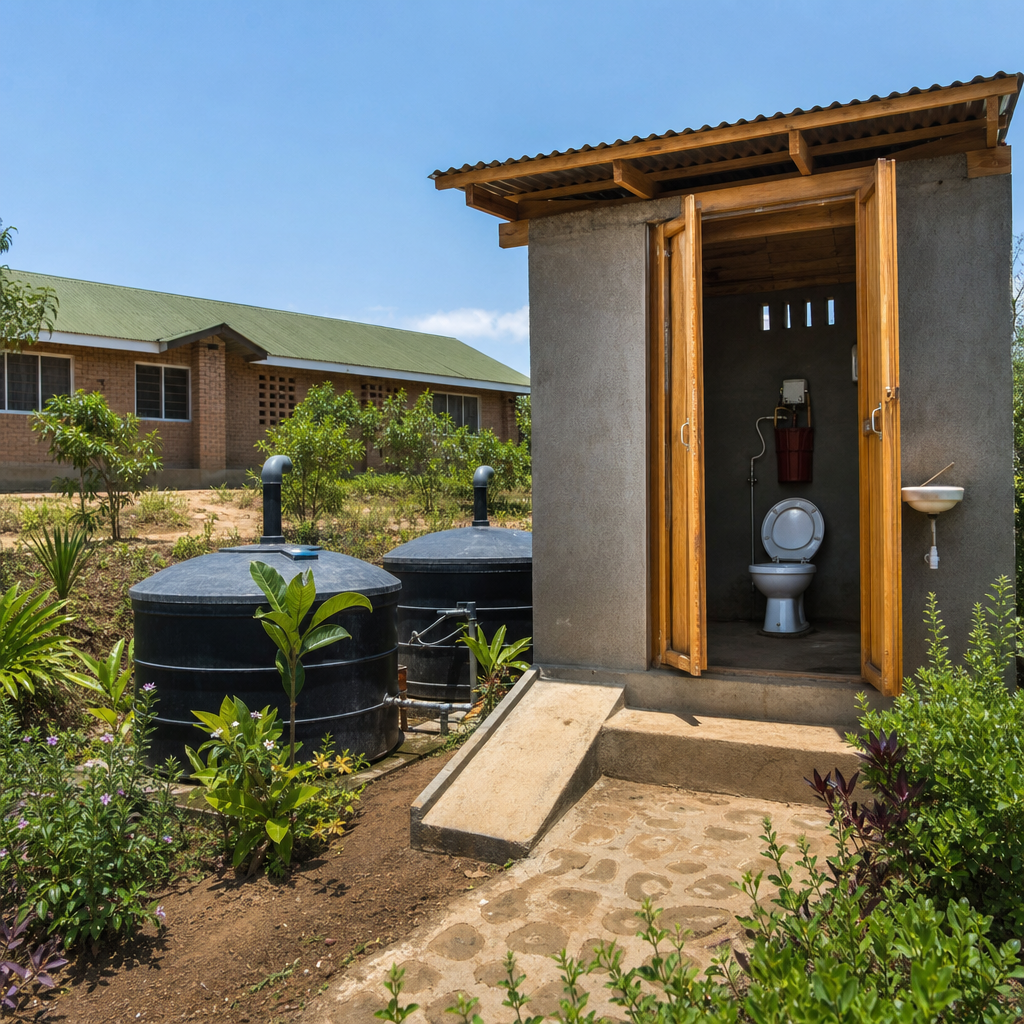
Greywater and rainwater systems are practical tools for reducing demand on municipal supplies, lowering wastewater volumes, and strengthening environmental sustainability in homes, commercial buildings, and community infrastructure. In water management, greywater refers to relatively clean wastewater from showers, bathroom sinks, laundry, and sometimes baths, while rainwater harvesting captures precipitation from roofs or other surfaces for storage and later use. Both approaches sit at the center of advancing environmental sustainability with EcoSan because they turn water from a single-use commodity into a managed resource that can be reused, redirected, and conserved.
The environmental case is straightforward. Freshwater withdrawals continue to rise in many regions even as drought, aquifer depletion, and aging infrastructure increase supply risks. At the same time, much of the water delivered to buildings does not need drinking-water quality. Toilet flushing, irrigation, cooling, and some cleaning tasks can often use nonpotable water when systems are designed correctly. I have worked on projects where a simple separation of water streams cut potable demand dramatically, not through exotic technology, but by matching water quality to end use. That principle is foundational to modern sustainable design and to the EcoSan approach.
EcoSan, or ecological sanitation, is broader than any single device. It is a systems-based method that treats water, nutrients, sanitation, and waste flows as connected parts of an environmental cycle. Within this subtopic, greywater reuse and rainwater harvesting act as the hub because they link directly to source reduction, decentralized treatment, stormwater control, nutrient management, landscape resilience, and circular resource planning. A well-designed hub page must therefore do more than define terms. It should explain how these systems work, where they fit, what standards guide them, and how organizations can evaluate them responsibly.
Why this matters now is simple: water efficiency is no longer a niche sustainability measure. It affects operating costs, regulatory compliance, climate adaptation, site resilience, and public perception. In dense urban areas, rainwater systems can reduce runoff and combined sewer overflow pressure. In water-stressed suburbs, greywater irrigation can preserve landscapes without increasing potable demand. In schools, resorts, multifamily housing, and industrial facilities, integrated nonpotable water systems can support measurable conservation targets. When EcoSan strategies are planned early, they often deliver the strongest environmental return because plumbing layout, storage sizing, treatment selection, and end-use planning are coordinated from the start.
How greywater systems work and where they deliver the most value
Greywater reuse begins with source separation. Water from showers, bathroom sinks, and laundries is diverted before it mixes with blackwater from toilets or kitchen waste streams, which carry higher pathogen and grease loads. The diverted water may pass through screening, surge tanks, filtration, disinfection, or subsurface dispersal depending on the intended use and local code. The most common applications are landscape irrigation and toilet flushing. In practice, the highest-value opportunities appear where there is a steady source of greywater and a predictable nonpotable demand profile. Hotels, apartment buildings, student housing, and sports facilities often fit this pattern well.
The environmental benefit of greywater reuse comes from two directions at once. First, it reduces potable water consumption. Second, it decreases the volume entering sewer systems or septic fields. In regions with wastewater treatment constraints, that reduction matters as much as the supply savings. I have seen facilities underestimate this second benefit because they focus only on utility bills. Yet lower discharge volumes can reduce infrastructure stress and, in some jurisdictions, defer capacity upgrades. The tradeoff is that greywater quality is variable. Laundry water may contain surfactants, sodium, lint, and bleach residues, while personal care products can affect salinity and soil health. Good design accounts for these risks rather than ignoring them.
Maintenance is the dividing line between a successful greywater project and a disappointing one. Filters clog, storage tanks can turn anaerobic if retention is too long, and poor signage can lead to cross-connection risks. For that reason, many designers prefer simple, low-storage systems for irrigation and more engineered treatment trains for indoor reuse. NSF/ANSI 350 is commonly referenced in North America for onsite residential and commercial water reuse treatment systems, and local plumbing codes usually dictate allowable end uses, setbacks, labeling, and inspection requirements. The practical lesson is clear: greywater is sustainable only when treatment, monitoring, and user behavior are aligned.
Rainwater harvesting as supply, stormwater control, and climate adaptation
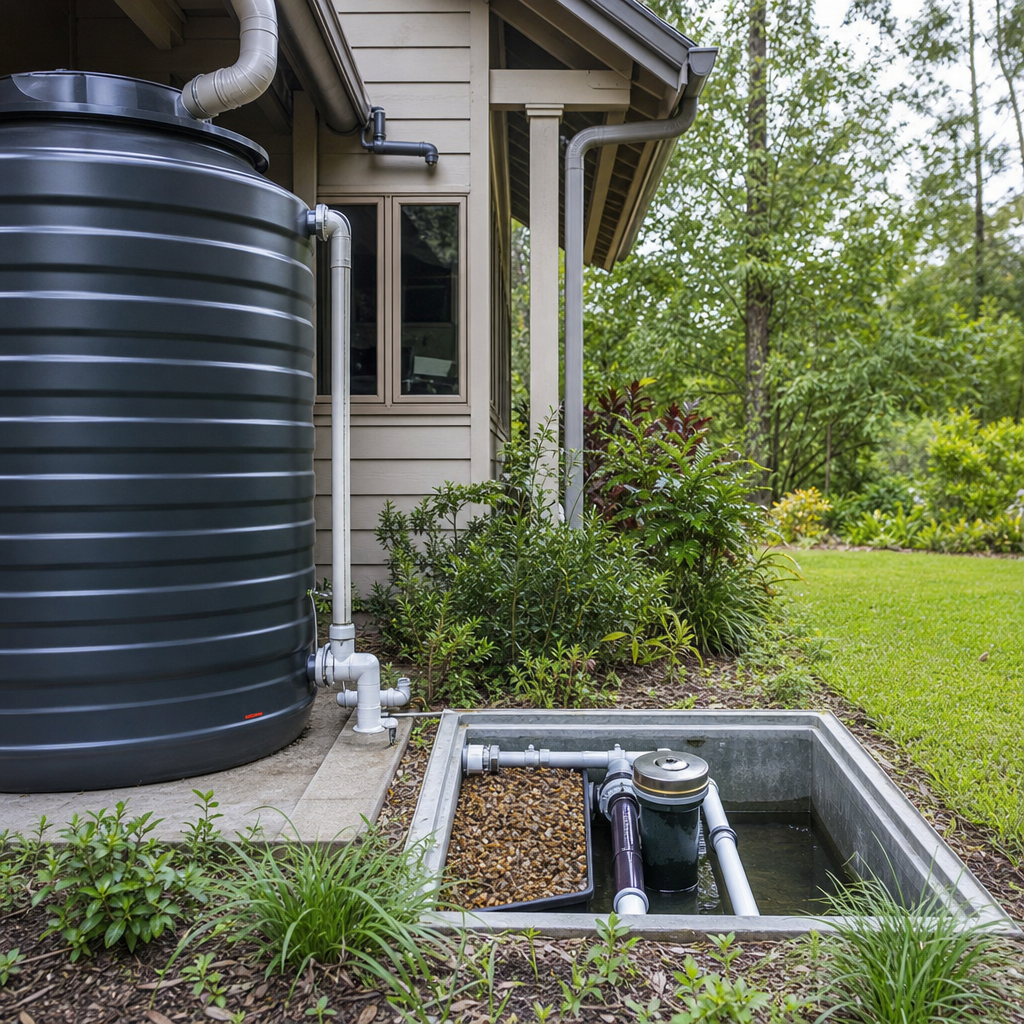
Rainwater harvesting captures runoff from roofs, then stores and conditions it for later use. A basic system includes a catchment surface, gutters, downspouts, first-flush diversion, leaf screening, a cistern, overflow routing, and distribution controls such as pumps or gravity feed. More advanced systems add cartridge filtration, ultraviolet disinfection, level sensors, and automated switching to mains supply. The environmental value of rainwater goes beyond supply substitution. It is also a stormwater management tool. By slowing runoff, reducing peak discharge, and keeping polluted first-flush water out of drainage systems, rainwater harvesting supports watershed protection and urban resilience.
Its performance depends on rainfall patterns, roof area, storage size, and demand timing. A small home in a humid climate may collect enough for seasonal irrigation, while a large warehouse roof can support toilet flushing, vehicle washing, or cooling tower makeup if treatment and storage are sized properly. Australia provides some of the most visible examples of mainstream rainwater adoption, especially in drought-prone regions where household tanks became normalized through both regulation and public awareness. In the United States, cities such as Tucson and Austin have encouraged harvesting through ordinances, rebates, and landscape policies. These examples show that adoption rises quickly when local policy matches local water stress.
Rainwater quality is often better than people expect, but it is not automatically safe for every use. Roofing material, bird droppings, airborne pollutants, and stagnant storage can affect microbiological and chemical quality. That is why end-use matching matters. Untreated or minimally treated water may be suitable for irrigation, while indoor nonpotable applications usually require additional treatment and backflow protection. In commercial projects, I recommend treating the cistern as part of a building-wide water balance rather than an isolated green feature. Once rainwater is linked to demand analysis, overflow pathways, and maintenance responsibilities, its benefits become quantifiable instead of aspirational.
Comparing greywater and rainwater in EcoSan planning
Greywater and rainwater are often discussed together because both reduce potable demand, but they behave differently in design and operations. Greywater is generated by occupancy and therefore tends to be more predictable indoors, especially in residential and hospitality settings. Rainwater depends on climate and storage, making it intermittent but often cleaner at the source than greywater. From an EcoSan perspective, the question is not which one is universally better. The right question is how each water stream fits a site’s resource loops, infrastructure limits, and environmental priorities. In many of the best-performing projects, the answer is both.
| Factor | Greywater | Rainwater |
|---|---|---|
| Primary source | Showers, baths, bathroom sinks, laundry | Roof runoff and other catchment surfaces |
| Supply pattern | Tied to occupancy and daily use | Tied to rainfall and storage capacity |
| Common uses | Irrigation, toilet flushing | Irrigation, toilet flushing, cleaning, cooling support |
| Main risks | Pathogens, surfactants, salinity, clogging | Debris, microbes, roof contaminants, stagnation |
| Best fit | Buildings with steady internal water use | Sites with large roofs and seasonal runoff management needs |
This comparison highlights a planning principle that consistently improves outcomes: start with the water balance. Estimate source volumes, match them to nonpotable demand, define treatment requirements, and then test economics, code compliance, and maintenance capacity. A school may produce limited greywater during holidays but still harvest substantial roof runoff. A multifamily building may have reliable greywater year-round but limited roof area per resident. EcoSan planning treats these realities as design inputs, not obstacles. The result is a system chosen for context rather than trend value.
Environmental benefits across buildings, landscapes, and communities
The direct environmental benefits of greywater and rainwater systems include reduced potable consumption, lower wastewater discharge, decreased runoff, and less strain on centralized treatment and distribution infrastructure. The indirect benefits are equally important. Lower demand can reduce the energy intensity associated with pumping, heating, and treating municipal water. In water-scarce regions, that translates into lower greenhouse gas emissions per unit of service when compared with expanding distant supply projects. Sustainable water management therefore intersects with climate strategy, especially in facilities where water and energy loads are tightly linked, such as hotels, hospitals, and manufacturing sites.
Landscape outcomes are another major advantage. Irrigating with alternative water sources can help maintain urban tree cover, reduce heat-island effects, and support soil moisture during drought restrictions. The caveat is that irrigation must be managed to avoid oversaturation, salinity buildup, and runoff. Subsurface drip systems are often favored for greywater because they reduce human contact and improve distribution efficiency. Rainwater, meanwhile, works well with bioswales, rain gardens, and permeable landscape strategies that retain water onsite. These linked systems can transform a property from a runoff generator into a small watershed asset.
At the community scale, decentralized water reuse improves resilience because it diversifies supply and reduces dependence on single-point infrastructure. During service disruptions, facilities with stored nonpotable water may still support sanitation or essential irrigation. Campuses and district-scale developments increasingly use integrated water planning that combines stormwater capture, reuse networks, and ecological treatment zones. Singapore’s broader water strategy, while not limited to household rain barrels or greywater loops, demonstrates the power of treating every drop as part of a national portfolio. The lesson for EcoSan is practical: local reuse systems work best when they connect to a wider environmental management framework.
Design standards, treatment choices, and operational realities
Successful systems depend on standards-based design, not improvised plumbing. Key references often include the International Plumbing Code, the Uniform Plumbing Code, local health regulations, NSF/ANSI treatment standards, and backflow prevention requirements from water authorities. In commercial design, hazard analysis should address cross-connections, aerosol exposure, storage residence time, freeze protection, overflow routing, and alarm conditions. Treatment selection must match end use. For subsurface irrigation, coarse filtration and flow control may be enough. For indoor flushing, filtration plus disinfection is typically required. For potable use, where allowed, treatment becomes much more stringent and should be handled only under robust regulatory oversight.
Operations deserve equal attention. Sensors fail, tanks need cleaning, pumps have service intervals, and occupants may use products that affect water quality. That is why owner training, clear O&M manuals, and monitoring plans are essential. On one project, a system underperformed not because the treatment skid was poorly designed, but because replacement filters were not budgeted and facility staff had not been trained on alarms. The fix was operational, not technological. This is a recurring pattern in sustainable water systems: simple, maintainable designs often outperform ambitious systems that exceed the operator’s capacity.
Economics should also be evaluated honestly. Payback can be attractive where water and sewer rates are high, irrigation demand is large, or stormwater compliance costs are significant. In other cases, the financial return is modest, but the resilience and environmental benefits justify adoption. Lifecycle costing is the right lens. Include capital, treatment components, permitting, maintenance labor, replacement parts, monitoring, and avoided utility or infrastructure costs. When clients use this broader analysis, they make better decisions and are less likely to abandon a promising EcoSan strategy because of an overly narrow first-cost comparison.
Building an EcoSan hub: related strategies and decision pathways
As a hub within the environmental impact topic, this page should guide readers toward the wider EcoSan system rather than isolate greywater and rainwater as stand-alone measures. The natural adjacent topics include composting toilets, blackwater treatment, nutrient recovery, nature-based wastewater treatment, low-flow fixtures, permeable site design, biosolids management, and water-sensitive urban design. These are not separate conversations. They are linked decisions about how a site handles water quantity, water quality, sanitation, and ecological performance. Readers evaluating greywater reuse often also need guidance on detergents, irrigation methods, storage design, permitting, and monitoring technology.
A useful decision pathway starts with four questions. What water demands do you want to offset? What local codes allow? What source volumes are actually available across seasons? What maintenance capacity exists after installation? From there, site teams can compare system options with realistic assumptions. A homeowner might begin with outdoor rainwater storage and basic distribution. A multifamily developer may prioritize central greywater treatment for toilet flushing. A school campus may combine roof capture, bioretention, and fixture upgrades before considering more complex reuse. EcoSan planning is effective because it sequences interventions logically instead of treating sustainability as a menu of disconnected products.
The core takeaway is that greywater and rainwater management are not symbolic green features. They are measurable infrastructure strategies that can cut water demand, improve resilience, reduce runoff, and support broader ecological sanitation goals when designed and operated properly. For organizations advancing environmental sustainability with EcoSan, this hub is the starting point: understand the water balance, match source quality to end use, follow standards, and plan for maintenance from day one. Then explore the connected strategies across this subtopic to build a water system that is efficient, resilient, and environmentally responsible over the long term.
Frequently Asked Questions
What is the difference between greywater and rainwater, and how are they used in sustainable water management?
Greywater and rainwater are both valuable alternative water sources, but they come from very different places and are managed in different ways. Greywater is relatively clean wastewater generated from showers, bathroom sinks, bathtubs, and laundry systems. In some settings, it may also include water from similar low-contamination uses, though kitchen sink water and toilet wastewater are usually excluded because they contain higher levels of grease, food waste, and pathogens. Rainwater, by contrast, is precipitation collected from roofs or other catchment surfaces and stored for later use. Because of these differences, each source has distinct treatment, storage, and reuse requirements.
In practical water management, greywater is often reused close to where it is produced, especially for subsurface landscape irrigation or, when properly treated, for toilet flushing and certain non-potable building uses. Rainwater harvesting systems are commonly used to offset demand for irrigation, toilet flushing, cooling tower make-up, and, in some cases, potable supply if advanced treatment and local approvals are in place. Together, these systems reduce dependence on municipal drinking water, decrease the amount of wastewater sent to sewers or septic systems, and improve overall resource efficiency. They are especially important in regions facing water scarcity, rising utility costs, aging infrastructure, or a growing need for climate-resilient design.
What are the main environmental and economic benefits of using greywater and rainwater systems?
The environmental benefits are substantial because both systems help conserve treated drinking water for uses that truly require potable quality. A large percentage of household and commercial water demand does not need to be met with fully treated municipal water. When greywater is reused for irrigation or indoor non-potable applications, and when rainwater is captured and stored instead of being allowed to run off, overall freshwater withdrawals can be reduced significantly. This lowers pressure on rivers, reservoirs, aquifers, and centralized treatment systems. It also helps reduce stormwater runoff, which can carry pollutants into local waterways, contribute to erosion, and overwhelm urban drainage infrastructure during heavy rainfall events.
Economically, greywater and rainwater systems can lower water and sewer bills, particularly in buildings with high irrigation demand or significant non-potable water use. In some municipalities, reducing wastewater discharge may also reduce sewer-related charges. Over time, these savings can help offset installation and maintenance costs, especially when systems are integrated during new construction or major renovations. There are also indirect financial benefits, such as improved site resilience during drought restrictions, reduced strain on septic systems, and potential value enhancement for properties designed with sustainability in mind. For larger facilities and community infrastructure, the benefits can scale even further by supporting long-term water security and reducing the burden on public water and wastewater networks.
Is greywater or rainwater safe to use, and what treatment or maintenance is required?
Yes, both can be safe and highly effective when the system is properly designed, installed, operated, and maintained according to local regulations. The key issue is matching the quality of the water to its intended end use. Greywater typically contains soaps, detergents, lint, body oils, and microorganisms, so it is not automatically safe for every application. It is usually best used quickly after collection because stored greywater can degrade in quality and develop odors if left untreated. Depending on how it will be reused, greywater systems may include filtration, settling, disinfection, and other treatment steps. Simple systems are often limited to direct landscape irrigation, while more advanced systems can support toilet flushing or other building uses when engineered correctly.
Rainwater quality depends heavily on the collection surface, local air quality, storage conditions, and system design. Roof materials, debris, animal droppings, and dust can all affect the harvested water. Common protective measures include gutter screens, first-flush diverters, sealed storage tanks, filtration, and, when needed, ultraviolet treatment, chlorination, or other disinfection methods. Maintenance is essential for both system types. Filters must be cleaned or replaced, tanks inspected, pumps checked, and distribution components monitored for leaks or blockages. Homeowners and facility managers should also use products that are compatible with reuse systems, such as biodegradable, low-salt detergents in greywater-fed applications. A well-maintained system can operate safely for years, but neglecting maintenance can quickly reduce performance and increase health or operational risks.
Where can greywater and rainwater systems be used in homes, commercial buildings, and community infrastructure?
These systems are flexible and can be adapted to a wide range of scales. In homes, greywater is commonly used for landscape irrigation, especially in subsurface distribution systems that minimize human contact and reduce evaporation. Treated greywater may also be reused for toilet flushing in some jurisdictions. Rainwater systems in residential settings often supply irrigation, garden use, vehicle washing, and sometimes indoor non-potable uses such as laundry or toilet flushing. In areas with supportive codes and robust treatment systems, rainwater may even contribute to potable water supply, though that requires much stricter oversight and design controls.
In commercial and institutional buildings, the opportunities are broader because water demand is often larger and more predictable. Offices, schools, hotels, multifamily buildings, and industrial sites may use treated greywater or rainwater for toilet and urinal flushing, irrigation, cooling tower supply, process water, or maintenance uses. At the community and district scale, decentralized reuse networks can capture and redistribute non-potable water across multiple buildings or public landscapes, improving efficiency and resilience. Parks, streetscapes, transit facilities, and civic campuses can all benefit from integrated rainwater and greywater planning. The most successful applications are those that align supply and demand patterns, account for seasonal variations, and incorporate smart controls, storage, and monitoring to ensure reliable performance.
What should be considered before installing a greywater or rainwater harvesting system?
Before installation, the most important consideration is understanding the site, the water demand, and the applicable regulations. Local plumbing codes, public health rules, stormwater ordinances, and building requirements often determine what is allowed, how systems must be labeled, what treatment is needed, and whether professional design or permits are required. Not every property is equally suited for every system. For greywater, the volume and consistency of indoor water sources matter, as does the compatibility of household products with landscape or reuse goals. For rainwater, the size and material of the roof, local rainfall patterns, available storage space, and intended end uses will strongly influence system feasibility and performance.
It is also important to evaluate costs, maintenance capacity, and long-term operational expectations. A smaller, simpler system may deliver excellent results if it matches the property’s needs and the owner’s ability to maintain it. Larger or more complex systems can provide greater savings and flexibility, but they require more careful design, monitoring, and upkeep. Property owners should think about backflow prevention, freeze protection where relevant, overflow handling, mosquito control, water quality testing, and how the system integrates with existing plumbing and irrigation infrastructure. Working with qualified designers, plumbers, engineers, or water reuse specialists is the best way to ensure the system is safe, compliant, and worth the investment. When planned thoughtfully, greywater and rainwater harvesting can become practical, durable components of a broader sustainable water management strategy.