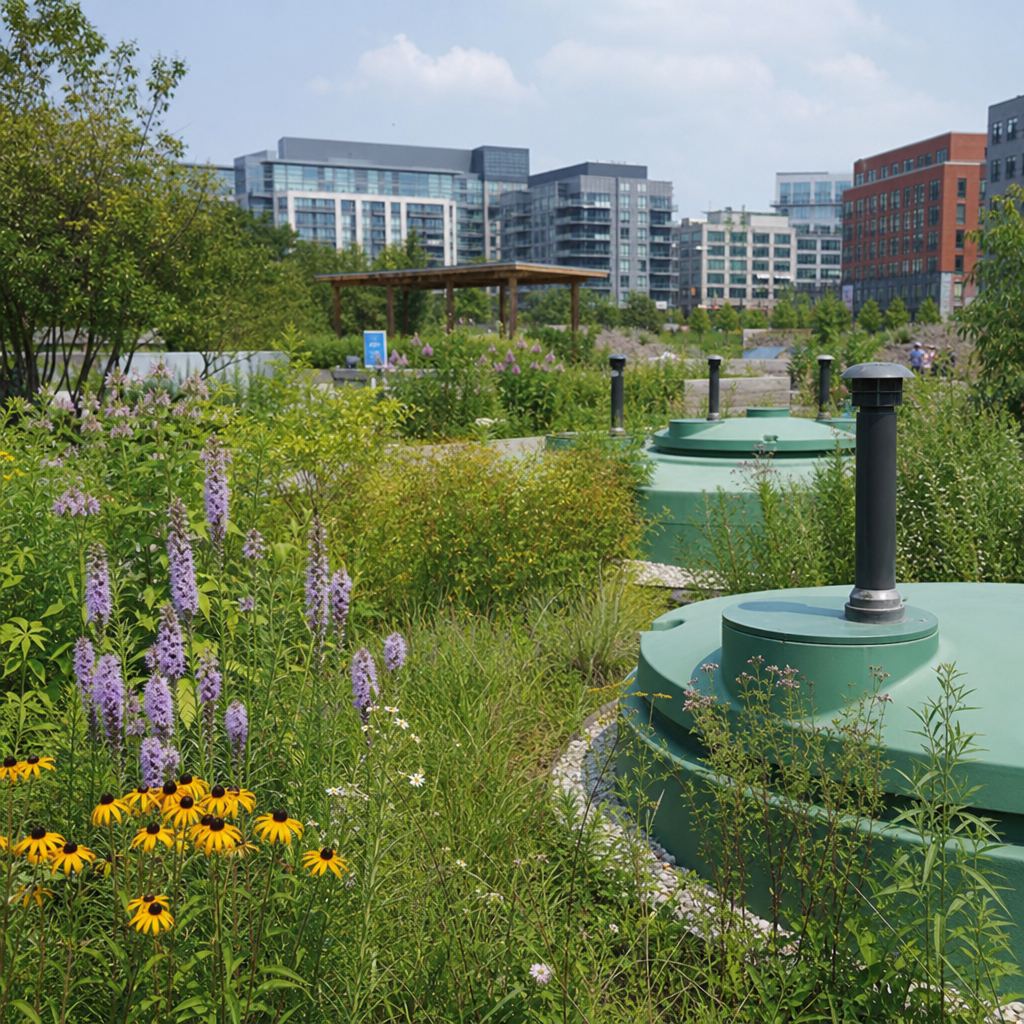
Sustainable solutions for urban waste management are no longer optional city improvements; they are core public health, climate, and economic strategies. Urban waste management refers to the systems cities use to prevent, collect, sort, process, recycle, treat, and safely dispose of municipal solid waste, organic waste, wastewater byproducts, and selected commercial discards. Sustainability in this context means reducing environmental harm while preserving resources, protecting workers, and delivering reliable service at a cost communities can sustain. As cities expand, these goals become harder and more urgent at the same time.
I have worked with municipal teams evaluating collection routes, contamination rates, landfill diversion targets, and sanitation technology pilots, and the same pattern appears everywhere: unmanaged waste quickly becomes an environmental multiplier. It drives methane emissions from landfills, clogs drains and worsens flooding, contaminates soil and groundwater through leachate, attracts vectors, and erodes trust in local government. The World Bank has projected that global waste generation will keep rising sharply with urbanization and income growth, which means city leaders cannot solve tomorrow’s problem with yesterday’s disposal model.
This is where Advancing Environmental Sustainability with EcoSan becomes practical rather than promotional. EcoSan, short for ecological sanitation, is an approach that treats waste streams as manageable resource flows instead of valueless residue. In urban settings, that includes source separation, composting and anaerobic digestion of organics, materials recovery for paper, metals, glass, and plastics, sanitary containment where needed, and smart service design that reduces leakage into streets, waterways, and open land. For a sub-pillar hub under Environmental Impact, this topic matters because every related issue touches waste: air quality, water resilience, carbon reduction, circular economy planning, public health, and neighborhood livability.
A strong urban waste strategy answers straightforward questions residents, planners, and investors ask. What systems actually reduce landfill dependence? Which technologies are proven and which are overhyped? How can low-income districts receive equitable service? What role do households, businesses, and informal waste workers play? The most effective answer is integrated management. No single tool fixes urban waste. Cities need prevention, efficient collection, reliable sorting, biological treatment for organics, engineered disposal for residuals, and policy signals that reward better behavior. EcoSan provides a framework for connecting those parts into one environmental sustainability plan.
Why urban waste management is a sustainability priority
Urban waste management matters because waste is both a visible service issue and an invisible systems issue. Residents notice overflowing bins immediately, but they may not see the downstream effects: methane from decomposing food waste, black carbon from open burning, marine litter from stormwater transport, and nutrient loss when organics are buried instead of returned to soil. In practice, the environmental impact of waste depends less on how much a city generates than on how well each stream is handled after disposal.
Food and green waste usually make up a large fraction of municipal waste in many cities. When these materials decompose anaerobically in landfills, they generate methane, a greenhouse gas far more potent than carbon dioxide over a twenty-year period. Diverting organics through composting or anaerobic digestion is therefore one of the fastest ways for cities to reduce emissions from sanitation services. I have seen diversion programs fail when planners focused only on buying equipment. They succeed when cities also standardize bins, train crews, enforce contamination limits, and build stable end markets for compost or digestate.
The public health case is equally strong. Poorly managed waste increases pests, odors, smoke exposure, and pathogen risks, especially where collection is irregular or illegal dumping is common. Environmental sustainability is not separate from sanitation performance; it depends on it. EcoSan aligns these concerns by pairing containment and hygiene with material recovery and treatment pathways that reduce long-term ecological damage.
Core principles behind EcoSan in cities
Advancing Environmental Sustainability with EcoSan starts with a simple principle: separate waste by type as early as possible. Mixed waste is expensive to recover and often too contaminated to process well. Source separation at homes, apartment blocks, markets, schools, and businesses improves recovery quality and lowers processing costs. In dense neighborhoods, this may require shared bins, building-level sorting rooms, and frequent collection schedules. In lower-density districts, it may rely on curbside programs supported by clear signage and feedback tags for contamination.
Another principle is to match treatment technology to waste composition. Organics need biological treatment. Recyclables need clean sorting and stable buyers. Hazardous household items such as batteries, paints, and electronics need dedicated collection points and compliant downstream handling. Residual waste still requires engineered landfills or waste-to-energy facilities with strict emissions controls, but only after prevention and recovery options are exhausted. Cities that reverse this order usually lock themselves into high disposal costs and weak recycling performance.
EcoSan also depends on service equity. A technically elegant plan fails if informal settlements, peri-urban districts, and commercial clusters receive inconsistent coverage. In several municipal audits I have reviewed, collection maps looked complete on paper but missed narrow access roads, informal transfer points, and unregistered households. Sustainable waste management requires route design, container placement, and transfer infrastructure that reflect how neighborhoods actually function.
System components that make sustainable waste management work
A citywide system needs coordinated components, not isolated projects. Waste prevention comes first: procurement rules that reduce single-use items, pay-as-you-throw pricing where feasible, food rescue partnerships, and packaging redesign encouraged through extended producer responsibility. Collection comes next. Route optimization software, GPS fleet monitoring, and standardized carts can reduce missed pickups, fuel use, and labor strain. Cities using tools such as ArcGIS, SAP EHS modules, or specialized route planning platforms often find that operational data reveals where contamination, overflow, and illegal dumping concentrate.
Processing infrastructure determines whether collected materials become resources or costs. Materials recovery facilities sort dry recyclables using screens, magnets, optical sorters, balers, and manual quality control lines. Composting sites stabilize source-separated organics into soil amendments, while anaerobic digesters produce biogas for heat, electricity, or upgraded biomethane. Transfer stations reduce long-haul inefficiencies by consolidating loads. Sanitary landfills remain necessary for residuals, but they should include liners, leachate collection, landfill gas capture, stormwater management, and post-closure monitoring consistent with recognized environmental engineering practice.
| Waste stream | Preferred sustainable option | Main environmental benefit | Key operational requirement |
|---|---|---|---|
| Food and green waste | Composting or anaerobic digestion | Methane reduction and nutrient recovery | Low contamination source separation |
| Paper, metal, glass, plastics | Materials recovery and recycling | Resource conservation and lower embodied emissions | Stable end markets and quality sorting |
| Household hazardous waste | Dedicated drop-off and compliant treatment | Reduced soil and water contamination | Public education and licensed handlers |
| Residual mixed waste | Sanitary landfill or controlled thermal treatment | Safer final disposal | Engineered facilities and emissions oversight |
The table shows a practical truth: sustainability improves when each waste stream goes to the right destination. This sounds obvious, yet many city systems still collect unlike materials together and hope technology can sort the problem out later. That approach raises cost and lowers recovery.
Policy, financing, and measurement
Policy determines whether sustainable solutions scale. Cities need ordinances that define separation requirements, franchise terms, reporting duties, contamination thresholds, and enforcement mechanisms. National policy often shapes the economics through landfill taxes, recycled content mandates, producer responsibility laws, and renewable energy incentives for biogas projects. Without policy alignment, local pilots remain isolated successes.
Financing must cover full lifecycle costs, including replacement of bins and vehicles, worker training, facility maintenance, environmental monitoring, and public outreach. I advise cities to resist judging options only by headline capital cost. A cheaper collection model that drives contamination and disposal fees is not actually cheaper. Blended finance can help, especially when climate funds, green bonds, development finance institutions, or public-private partnerships support infrastructure with measurable emissions and health benefits.
Measurement is where serious programs separate from symbolic ones. Useful metrics include collection coverage, kilograms generated per capita, diversion rate, contamination rate, missed pickup rate, greenhouse gas emissions per ton managed, worker incident frequency, customer complaints, and cost per household served. Life cycle assessment can compare treatment pathways more accurately than intuition. For example, recycling plastic is not automatically superior in every context if transport distances are extreme and output quality is poor, but in most mature systems it still outperforms disposal on resource conservation and emissions.
Real-world implementation challenges and practical fixes
The hardest part of urban waste management is implementation. Residents may support sustainability in principle yet ignore sorting rules when labels are confusing or service is inconsistent. Property managers may lack storage space for multiple containers. Informal waste pickers may be excluded from modernization plans even though they already recover valuable materials. Contractors may be paid by tonnage collected, creating incentives that conflict with waste reduction goals.
Practical fixes are usually operational, not rhetorical. Standardize colors and labels citywide. Start with a few waste streams residents can identify easily. Design apartment programs differently from single-family routes. Integrate informal workers through cooperatives, contracting, protective equipment, and access to sorting facilities. Link payment structures to service quality and diversion outcomes instead of raw tonnage alone. Use pilot districts to test collection frequency, contamination messaging, and bin placement before scaling citywide.
Communication matters, but it must be specific. Telling residents to recycle more is weak guidance. Showing them that greasy pizza boxes belong with organics where accepted, batteries require separate drop-off, and plastic film should not enter curbside bins is the kind of instruction that changes performance. The most successful EcoSan programs treat communication as infrastructure, not decoration.
The future of advancing environmental sustainability with EcoSan
The next phase of sustainable solutions for urban waste management will be more data-driven, decentralized in selected streams, and more tightly linked to climate policy. Sensors on bins and vehicles can support dynamic routing, though cities should adopt them only when the operational benefit is clear. Decentralized composting and neighborhood organics hubs can work well for markets, campuses, and large residential estates where transport adds avoidable cost. Digital material tracking is improving compliance and transparency across recycling supply chains.
Even so, the fundamentals will not change. Cities that cut waste generation, separate materials at source, invest in organics treatment, protect workers, and measure outcomes rigorously will outperform cities chasing single technology fixes. Advancing Environmental Sustainability with EcoSan is ultimately about system design grounded in sanitation reality. It connects environmental impact reduction with daily municipal competence.
For this hub topic, the key takeaway is clear: sustainable urban waste management succeeds when cities treat waste as a set of distinct material streams requiring prevention, tailored handling, and accountable governance. EcoSan provides that structure. It helps reduce methane, conserve resources, improve neighborhood cleanliness, support circular economy jobs, and strengthen climate resilience at the same time.
No city starts from perfect conditions. Budgets are limited, housing patterns are uneven, and public behavior changes slowly. But progress does not require perfection. It requires sequence: understand local waste composition, expand equitable collection, separate organics and recyclables, build the right facilities, align policy and contracts, and track results that matter. Those steps are practical, proven, and adaptable across city sizes.
If you are shaping an Environmental Impact strategy, use this article as the hub and build outward into specific topics such as composting systems, recycling contamination reduction, landfill gas recovery, informal sector integration, and municipal waste audits. Start with one district, measure honestly, then scale what works. That is how EcoSan moves from concept to measurable environmental sustainability.
Frequently Asked Questions
What does sustainable urban waste management actually include?
Sustainable urban waste management covers the full chain of how a city handles discarded materials, not just trash pickup. It begins with waste prevention, such as reducing unnecessary packaging, encouraging reusable products, and designing procurement policies that create less waste in the first place. From there, it includes source separation, collection, transfer, sorting, recycling, composting, anaerobic digestion, wastewater residual handling, safe treatment of contaminated materials, and final disposal of only the waste that cannot be recovered. A truly sustainable system also accounts for public health, worker safety, climate impact, neighborhood cleanliness, and long-term financial viability.
In practical terms, cities with sustainable systems usually combine multiple strategies rather than relying on a single facility or technology. They build policies that help households and businesses sort recyclables and organics correctly, invest in infrastructure that can process those materials efficiently, and use data to improve collection routes and reduce fuel use. They also focus on social equity by making sure all communities receive reliable service and are not disproportionately burdened by pollution from landfills, transfer stations, or incineration. The goal is to move away from a linear “collect and dump” model and toward a circular system that conserves resources, reduces emissions, protects residents, and creates jobs.
Why are sustainable waste solutions so important for cities?
Sustainable waste solutions matter because urban waste is directly tied to public health, environmental quality, and municipal budgets. When waste is poorly managed, cities can face blocked drains, pest infestations, illegal dumping, foul odors, fires, soil contamination, and air and water pollution. Organic waste breaking down in unmanaged landfills produces methane, a potent greenhouse gas that significantly contributes to climate change. In densely populated areas, even small failures in collection or disposal systems can quickly become large-scale sanitation and health problems.
At the same time, sustainable systems offer measurable economic and social benefits. Recycling, repair, composting, and material recovery can lower disposal costs, extend landfill life, and reduce dependence on virgin raw materials. Better route planning and cleaner fleets can cut fuel expenses and emissions. Organics diversion can produce compost or biogas, creating value from materials that would otherwise become pollution. Cities also benefit from more resilient local economies because waste reduction and recovery industries often create more jobs per ton of material than landfilling alone. In short, sustainable waste management is not just an environmental goal; it is a foundational urban strategy that supports cleaner neighborhoods, stronger infrastructure, and more efficient use of public funds.
What are the most effective sustainable strategies for reducing urban waste?
The most effective strategies start with waste prevention, because the most sustainable waste is the waste that is never created. Cities can reduce material use through policies that discourage single-use items, promote refill and reuse systems, require more sustainable public purchasing, and support businesses that offer repair, refurbishment, and product take-back programs. Education also plays an important role, especially when residents and commercial generators understand how their consumption choices affect collection systems, contamination rates, and disposal costs.
After prevention, high-performing cities focus on separation and recovery. That usually means clear recycling programs, dedicated collection for food and yard waste, and facilities that can process these streams reliably. Organics diversion is especially important because food scraps and green waste make up a large share of the urban waste stream and are a major source of landfill methane. Composting and anaerobic digestion can convert these materials into useful soil amendments or renewable energy. Pay-as-you-throw pricing, deposit return systems, construction and demolition recycling requirements, and digital tools that track contamination or missed pickups can further improve results. The strongest programs combine policy, infrastructure, enforcement, and public participation instead of treating waste reduction as a stand-alone awareness campaign.
How can cities increase recycling and composting without overwhelming residents?
Cities improve participation when systems are simple, consistent, and convenient. Residents are much more likely to sort materials correctly when they receive clear instructions, standardized bin colors, easy-to-read labels, and regular communication in multiple languages. Collection schedules should be reliable, and accepted materials should remain as stable as possible to avoid confusion. Apartment buildings, mixed-use properties, schools, and commercial districts often need tailored solutions, including shared containers, onsite signage, property manager training, and targeted outreach based on the type of waste generated.
Infrastructure and feedback are just as important as education. If cities ask residents to separate organics and recyclables, they must provide enough containers, efficient collection service, and processing capacity that can actually handle the material. Contamination drops when people understand what happens after collection and receive practical feedback rather than generic messaging. Some municipalities use bin audits, cart tags, mobile apps, and incentive-based pricing to guide better behavior. Others support participation with community ambassadors, school programs, and partnerships with local businesses. The key is to make the sustainable option the easiest option. When the system is well designed, residents do not feel overwhelmed; they feel confident that their effort matters and that the city is doing its part to manage materials responsibly.
What challenges do cities face when trying to build more sustainable waste systems?
One of the biggest challenges is that waste systems are complex and expensive to change. Many cities are working with aging infrastructure, limited land availability, uneven collection coverage, and long-standing contracts built around disposal rather than recovery. Upgrading fleets, adding organics collection, building sorting or composting facilities, and modernizing transfer systems all require capital, technical planning, and political commitment. In some cases, markets for recyclable materials are volatile, which can make program budgeting more difficult. Cities must also deal with contamination in recycling streams, illegal dumping, seasonal fluctuations, and public skepticism about whether separated materials are truly being recovered.
There are also governance and equity challenges. Waste management often involves multiple departments, private haulers, regional authorities, and regulators, which can slow decision-making and create gaps in accountability. Lower-income communities may have less access to convenient services while bearing greater environmental burdens from waste infrastructure. Informal workers who recover valuable materials may be excluded from formal planning even though they play an important role in diversion. To overcome these barriers, cities need integrated policy, transparent data, realistic financing, community engagement, and strong performance standards. The most successful urban waste strategies are not built overnight, but with steady investment, cross-sector coordination, and a clear commitment to reducing waste, protecting health, and recovering value from materials that were once treated as disposable.