Sustainable sanitation and climate resilience are now inseparable goals because toilets, wastewater systems, and resource recovery infrastructure sit at the intersection of public health, water security, energy use, and environmental protection. In practical terms, sustainable sanitation means sanitation services that safely manage human waste while protecting ecosystems, conserving resources, and remaining affordable and inclusive over time. Climate resilience means those services continue functioning during floods, droughts, heat waves, storms, and long-term environmental change. When these goals are pursued together through EcoSan, or ecological sanitation, communities can reduce pollution, recover nutrients, lower emissions, and strengthen local capacity to cope with climate stress.
I have worked with sanitation planning teams that focused first on pipes, pumps, and treatment capacity, only to discover that the most costly failures came from ignoring watershed conditions, power reliability, sludge handling, and reuse markets. EcoSan changes that lens. Instead of treating human waste only as a disposal problem, it treats it as a resource stream containing water, nitrogen, phosphorus, potassium, organic matter, and recoverable energy. That shift matters because conventional sanitation often depends on large volumes of water, centralized treatment, and uninterrupted energy supply, all of which become more fragile as climate risks increase.
The environmental case is straightforward. Poorly managed sanitation contaminates rivers, lakes, groundwater, and coastal zones with pathogens and excess nutrients. It can release methane and nitrous oxide from unmanaged sludge and wastewater. It also contributes to biodiversity loss when eutrophication depletes oxygen in waterways. At the same time, agriculture depends heavily on mined phosphorus and energy-intensive nitrogen fertilizer, while many regions face water scarcity and degraded soils. EcoSan addresses these linked pressures by closing loops: separating waste streams where useful, treating them appropriately, and returning safe products to productive use.
This hub article explains how advancing environmental sustainability with EcoSan supports climate resilience across households, cities, farms, and institutions. It defines the core approaches, outlines the environmental mechanisms that matter most, and shows where systems succeed or fail in the real world. It also serves as a foundation for related discussions on urine diversion, composting toilets, fecal sludge management, wastewater reuse, decentralized treatment, and nutrient recovery. If you need one strategic overview of why sustainable sanitation belongs inside every climate adaptation and environmental planning agenda, this is it.
What EcoSan Means in Practice
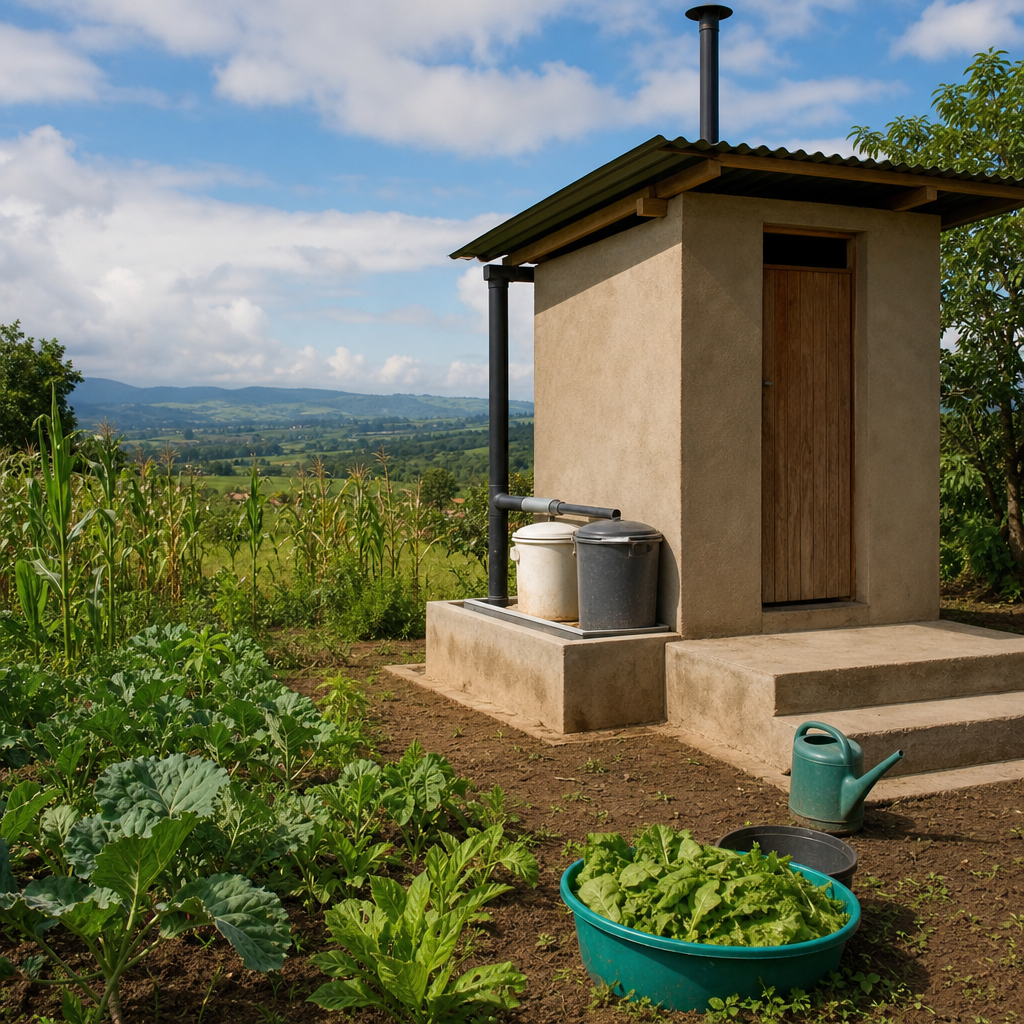
EcoSan is a sanitation approach designed around safe containment, treatment, and beneficial reuse rather than simple conveyance and disposal. The most recognized models include urine-diverting dry toilets, composting toilets, container-based sanitation, source-separated wastewater systems, biogas digesters, and decentralized treatment units that produce reusable water, compost-like soil amendments, or fertilizer products. The exact technology varies by context, but the design principle remains consistent: protect health first, then maximize environmental value from what would otherwise become pollution.
In field planning, I distinguish EcoSan from generic onsite sanitation by looking at four features. First, does the system reduce water demand compared with flush-dependent designs? Second, does it enable nutrient or organic matter recovery? Third, can it operate reliably under local climate stresses such as flooding or drought? Fourth, is there a complete service chain for collection, transport, treatment, quality control, and end use? A toilet alone is not a sanitation system. Without safe downstream management, environmental claims fall apart quickly.
EcoSan is especially relevant where sewer expansion is financially unrealistic, where settlements are too dispersed for centralized systems, or where climate extremes regularly disrupt conventional infrastructure. In peri-urban areas, for example, container-based services can avoid pit overflow during seasonal floods. In drought-prone regions, urine diversion and dry systems can preserve scarce freshwater. In farming communities, treated urine and composted fecal matter can supplement fertilizers, provided pathogen reduction and application standards are respected. These are not fringe applications. They are practical responses to infrastructure, ecology, and budget realities.
How Sustainable Sanitation Supports Climate Resilience
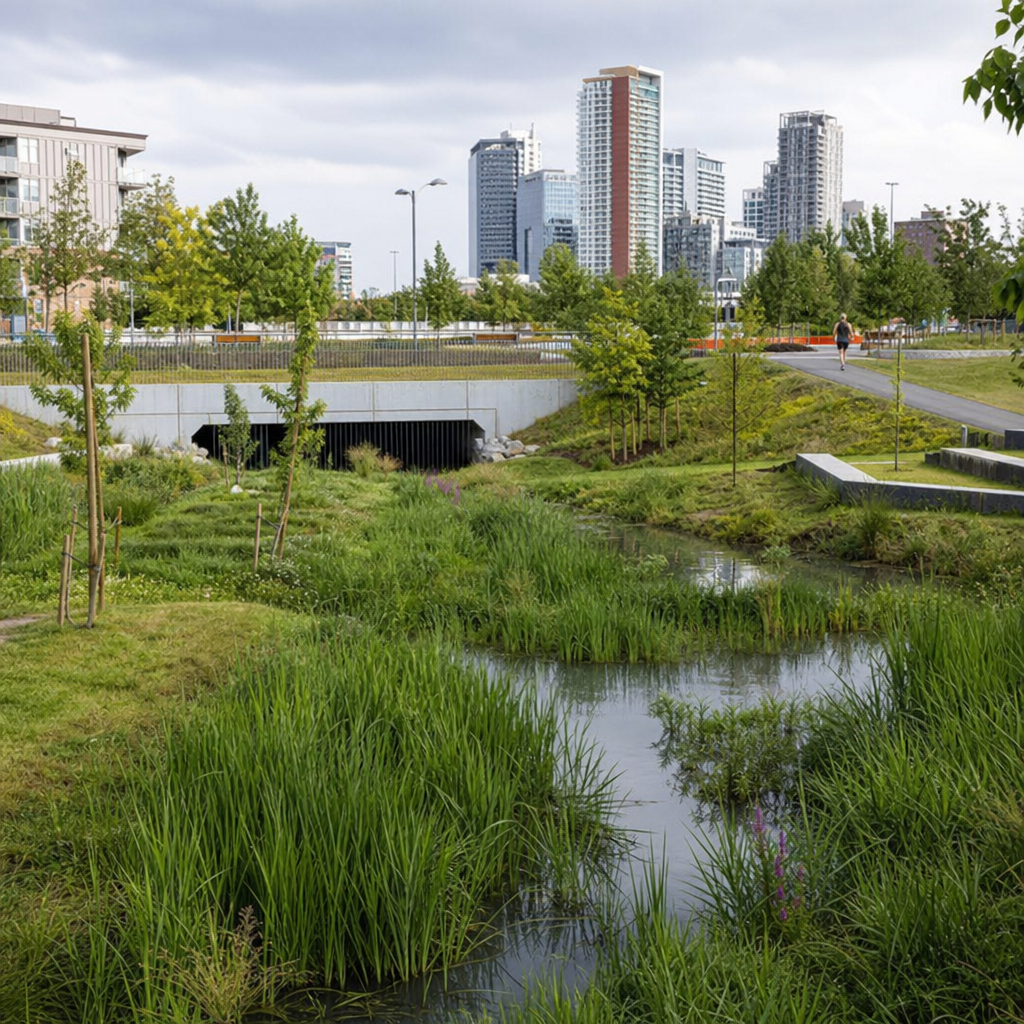
Climate resilience in sanitation depends on redundancy, flexibility, and reduced dependence on vulnerable inputs. Conventional sewerage can work extremely well, but it is vulnerable to power outages, infiltration during heavy rainfall, storm damage, and expensive treatment upgrades. EcoSan options often distribute risk across smaller units and reduce pressure on centralized networks. A urine-diverting toilet is not affected by drought in the same way as a flush toilet. A decentralized treatment wetland can continue polishing wastewater during grid disruptions. A properly designed fecal sludge treatment facility can prevent emergency dumping when roads become impassable after storms.
Flood resilience is one of the clearest examples. In low-lying settlements, pit latrines and septic systems commonly flood, spreading pathogens into homes, drains, and groundwater. Raised toilets, sealed containment, container-based collection, and flood-adapted treatment sites reduce that exposure. During drought, low-water or waterless systems become equally important because they maintain sanitation access without competing with drinking water supplies. During heat waves, treatment performance can change, odors can intensify, and worker safety risks rise; EcoSan planning accounts for those operational realities through ventilation, shading, storage timing, and maintenance schedules.
Resilience also includes economic durability. Systems that recover fertilizer value, irrigation water, or biogas can offset part of their operating costs and create stronger local incentives for maintenance. That does not mean reuse always pays for the full service chain. In my experience, it rarely does. But it can improve cost recovery, reduce imported inputs, and make sanitation budgets less exposed to energy price shocks and fertilizer market volatility. In a climate-constrained world, those co-benefits are not secondary. They are central to long-term service reliability.
Environmental Sustainability Gains from EcoSan
The environmental benefits of EcoSan come from three mechanisms: pollution prevention, resource recovery, and lower lifecycle impacts. Pollution prevention begins with keeping pathogens and nutrients out of the environment. Untreated sewage and leaking pits contaminate water bodies with fecal bacteria, viruses, helminths, nitrogen, and phosphorus. By containing waste and treating it before discharge or reuse, EcoSan reduces disease risk and protects aquatic ecosystems. This is particularly important in watersheds already stressed by agriculture and urban runoff, where even modest nutrient reductions can improve water quality outcomes.
Resource recovery is the second mechanism. Human urine contains most of the nitrogen and a large share of the phosphorus and potassium excreted by households. Fecal solids contain organic carbon and nutrients that can improve soil structure when safely treated. Anaerobic digestion can produce biogas for cooking or heat, reducing reliance on firewood or fossil fuels. Reclaimed water can support irrigation, landscaping, or industrial uses where freshwater is limited. These outputs are not hypothetical. They are used in projects from Sweden’s source-separation pilots to city-scale reuse programs in Namibia and water-scarce regions of India.
The third mechanism is reduced lifecycle impact. Water-saving sanitation lowers pumping and treatment demand. Decentralized systems can reduce the need for deep sewer excavation, concrete-intensive infrastructure, and long-distance conveyance. Where treatment includes methane capture, greenhouse gas emissions can drop substantially compared with unmanaged anaerobic decomposition. The exact climate balance depends on design and operation, especially around nitrous oxide emissions, transport distances, and end-product quality. That is why rigorous monitoring matters. Good EcoSan is evidence-led. It measures containment, treatment efficacy, nutrient recovery, and environmental performance rather than assuming any reuse claim is inherently sustainable.
Core EcoSan Pathways and Their Best Uses
Different EcoSan pathways suit different settlement patterns, climate conditions, and user preferences. Urine-diverting dry toilets work well where water scarcity is severe and users can manage source separation. Composting toilets can serve households, parks, or institutions where organic bulking material is available and maintenance is disciplined. Container-based sanitation is highly effective in dense informal settlements because waste is sealed, collected frequently, and moved to centralized treatment without waiting for sewers. Anaerobic digesters fit institutions, farms, and clustered communities with consistent organic input and an immediate use for biogas.
Decentralized wastewater treatment systems, including constructed wetlands, anaerobic baffled reactors, and membrane-based units, are often the strongest option for schools, clinics, residential compounds, and peri-urban developments. They provide treatment near the source, reduce conveyance costs, and can produce reusable effluent for irrigation or non-potable purposes. In larger towns, fecal sludge management is the backbone strategy. That includes scheduled desludging, transfer stations, treatment plants, drying beds, composting lines, co-composting with organic waste, and regulated end-use markets. Without fecal sludge management, onsite systems become deferred pollution.
| EcoSan pathway | Best-fit context | Main environmental benefit | Key limitation |
|---|---|---|---|
| Urine-diverting dry toilets | Drought-prone households, remote areas | Water savings and nutrient recovery | User training and handling discipline |
| Composting toilets | Parks, homes, eco-lodges, institutions | Organic matter recovery and low water use | Moisture and pathogen control |
| Container-based sanitation | Dense informal settlements, flood zones | High containment in difficult terrain | Requires reliable collection service |
| Anaerobic digestion | Farms, schools, markets, clustered housing | Biogas production and sludge stabilization | Feedstock consistency and O&M needs |
| Decentralized treatment and reuse | Campuses, compounds, peri-urban sites | Local water reuse and reduced sewer load | Effluent quality management |
The correct choice is rarely a single technology. Hybrid systems usually perform best. A flood-prone district might combine raised toilets, sealed containers, neighborhood transfer points, and a composting or thermal treatment facility outside the floodplain. A water-scarce town might pair source separation in new developments with decentralized greywater reuse and a fecal sludge plant for legacy areas. The hub principle here is simple: sustainable sanitation succeeds when technology selection follows climate exposure, land availability, service capacity, and reuse demand, not when a favored device is imposed everywhere.
Public Health, Standards, and Safe Reuse
Environmental sustainability depends on health protection, and that requires standards. The World Health Organization has long emphasized risk-based sanitation and wastewater reuse through multiple barriers, including treatment, safe handling, controlled application, and user protection. The International Organization for Standardization has also published guidance relevant to non-sewered sanitation systems, including performance expectations for units designed to treat and contain waste safely. These frameworks matter because nutrient recovery without pathogen control is not sustainable. It simply relocates risk from drains to fields, workers, or consumers.
In operational terms, safe reuse starts with understanding the waste stream. Source-separated urine typically has lower pathogen loads than feces, but storage, dilution, and application practices still matter. Compost-like products from fecal matter require validated treatment conditions, often involving temperature, time, moisture management, and post-treatment handling controls. Reclaimed water needs quality targets matched to end use, such as irrigation of non-food crops, landscape watering, or toilet flushing. Monitoring should include microbial indicators, nutrient concentrations, salinity where relevant, and contaminant screening if industrial inputs are mixed into the system.
Social acceptance is equally important. I have seen technically sound reuse programs stall because planners assumed farmers or households would adopt products automatically. They do not. Users need clear evidence of safety, predictable product quality, practical delivery arrangements, and pricing that competes with conventional alternatives. Branding, extension support, and demonstration plots often matter as much as treatment chemistry. When reuse products are standardized and regulations are enforced consistently, trust grows. That trust is essential for scaling environmental sustainability with EcoSan beyond pilot projects.
Implementation Challenges and How to Solve Them
The biggest barrier to EcoSan is not usually technology. It is service design. Projects fail when they stop at toilet installation, underbudget operations, neglect operator training, or ignore who will buy recovered products. Strong implementation starts with a full sanitation service chain assessment, climate risk screening, and financial modeling that includes maintenance, transport, spare parts, monitoring, and replacement cycles. Institutional clarity matters too. Municipalities, utilities, private operators, farmers, and public health agencies each need defined roles. Without that, accountability disappears as soon as a component underperforms.
Financing is another challenge. Upfront costs for source-separation fixtures, storage systems, transfer logistics, or treatment equipment can exceed the apparent cost of basic pits, even when lifecycle performance is far better. The solution is to compare whole-life costs, environmental externalities, and avoided losses from flood damage, water contamination, and fertilizer dependence. Blended finance can help, combining household contributions, municipal budgets, climate adaptation funds, carbon-related financing where eligible, and revenue from service fees or resource sales. Results-based contracts can also reward operators for sustained containment and treatment performance rather than one-time construction.
Capacity building is the final make-or-break issue. Operators need practical skills in sludge handling, dehydration, composting parameters, digestion stability, pump maintenance, odor control, and occupational safety. Regulators need methods for inspecting non-sewered systems and certifying reuse products. Communities need clear communication about use, cleaning, and service schedules. Digital tools increasingly support this work. Utilities and social enterprises now use route optimization, barcode tracking for containers, mobile payment systems, and dashboard reporting for desludging and treatment volumes. EcoSan becomes resilient when management is treated as infrastructure, not as an afterthought.
The Strategic Role of EcoSan in Environmental Impact Planning
As a hub within environmental impact planning, EcoSan connects sanitation to water stewardship, circular economy policy, climate adaptation, sustainable agriculture, and urban resilience. It should be evaluated alongside stormwater management, watershed restoration, solid waste systems, and energy planning because these sectors influence one another directly. For example, co-composting fecal sludge with market waste can reduce landfill pressure while producing soil amendments. Treated wastewater reuse can lower freshwater abstraction in stressed basins. Biogas recovery can support institutional kitchens while reducing methane release from unmanaged organic waste streams.
The strategic value of EcoSan is that it turns sanitation from a hidden liability into a visible environmental asset. Cities that map sanitation flows, quantify nutrient losses, and identify climate vulnerabilities make better capital decisions than cities that measure only toilet access. The next step for most organizations is practical: assess local risks, identify the service gaps in containment and treatment, and prioritize EcoSan models that fit the climate, the budget, and the reuse market. Sustainable sanitation and climate resilience advance together when planning moves from waste disposal to resource stewardship, and that is the direction worth pursuing now.
Frequently Asked Questions
Why are sustainable sanitation and climate resilience so closely linked?
Sustainable sanitation and climate resilience are closely linked because sanitation systems depend on stable water supplies, functioning infrastructure, safe waste treatment, and healthy ecosystems, all of which are being affected by climate change. Toilets, sewers, septic systems, treatment plants, fecal sludge management services, and resource recovery facilities are exposed to floods, droughts, sea-level rise, heat, and extreme storms. When these systems fail, the consequences are immediate: contamination of drinking water, disease outbreaks, environmental pollution, service interruptions, and higher costs for households and utilities.
At the same time, sanitation itself influences climate outcomes. Wastewater treatment and poorly managed human waste can generate greenhouse gases such as methane and nitrous oxide. Energy-intensive treatment systems can also increase emissions if they rely on fossil-based electricity. A sustainable approach addresses both sides of this relationship by improving service reliability while reducing environmental harm. That includes designing systems that can withstand climate stress, use water and energy more efficiently, recover nutrients and biogas where appropriate, and protect rivers, aquifers, soils, and coastal areas from pollution. In short, climate resilience ensures sanitation keeps working under pressure, while sustainability ensures it does so in a way that supports long-term public health, affordability, and ecological balance.
What does sustainable sanitation look like in practice?
In practice, sustainable sanitation means much more than installing toilets. It involves the full service chain: user access, safe containment, emptying, transport, treatment, reuse, and final disposal. A system is only truly sustainable if waste is managed safely at every stage and if the service remains financially viable, socially inclusive, and environmentally sound over time. That can include sewered systems in dense urban areas, decentralized wastewater treatment, well-managed septic systems, container-based sanitation, urine-diverting toilets, or fecal sludge treatment facilities, depending on local geography, income levels, water availability, and institutional capacity.
A practical sustainable sanitation system is designed around local conditions rather than a one-size-fits-all model. In water-scarce regions, low-water or dry sanitation technologies may be more resilient than conventional flush toilets. In flood-prone settlements, raised toilets, sealed tanks, and protected treatment sites can reduce overflow and contamination. In growing cities, scheduled desludging programs and regulated fecal sludge transport may be essential where sewers are incomplete or unaffordable. Sustainability also includes resource efficiency and recovery. Treated wastewater can sometimes be reused for irrigation or industry, biosolids may be processed for soil improvement when safe, and biogas can help offset energy demand. Most importantly, sustainable sanitation is inclusive: it must work for women, children, older adults, people with disabilities, low-income households, and informal communities, not just those already served by formal infrastructure.
How does climate change threaten sanitation systems and public health?
Climate change threatens sanitation systems through multiple pathways, and each one has direct implications for public health. Heavy rainfall and flooding can overwhelm sewers, inundate pit latrines and septic tanks, wash untreated waste into streets and waterways, and disable treatment plants. Drought reduces water availability for flushing, cleaning, and wastewater transport, which can impair hygiene and system performance. Higher temperatures can accelerate odor, biological activity, and infrastructure wear, while sea-level rise can damage coastal sanitation assets and contaminate groundwater with saltwater, making both sanitation and drinking water management more difficult.
The public health risks are substantial. When sanitation systems fail, pathogens can spread through water, food, soil, and direct contact, increasing the risk of diarrheal disease, cholera, typhoid, intestinal parasites, and other infections. Healthcare facilities, schools, and densely populated settlements are especially vulnerable because service disruptions can quickly affect large numbers of people. Climate-related displacement can add further strain by forcing more people into temporary or under-served locations where sanitation is inadequate. There are also indirect impacts: polluted waterways reduce ecosystem health, damaged infrastructure increases utility costs, and repeated service breakdowns can deepen inequality because lower-income communities often have the least resilient systems and the fewest resources to recover. Strengthening sanitation resilience is therefore a core public health strategy, not simply an infrastructure upgrade.
What strategies can make sanitation systems more climate-resilient?
Climate-resilient sanitation starts with risk-informed planning. Utilities, local governments, and service providers need to understand which hazards are most likely in a given area, whether flooding, drought, erosion, salinity intrusion, power outages, or heat stress. That understanding should shape technology choices, siting decisions, construction standards, maintenance schedules, and emergency response plans. For example, treatment plants and pumping stations can be located outside high-risk flood zones where possible, critical components can be elevated, backup power can be installed, and drainage around sanitation facilities can be improved to prevent infiltration and overflow.
Operational resilience matters just as much as physical design. Systems perform better under climate stress when desludging is routine, sewer networks are maintained, spare parts are available, operators are trained, and monitoring data is used to identify weak points early. Diversification also improves resilience. A city that relies entirely on one centralized system may be more vulnerable than one that combines centralized treatment with decentralized or on-site solutions. Water efficiency measures, nature-based solutions, and circular economy approaches can also help. Constructed wetlands, watershed protection, wastewater reuse, nutrient recovery, and biogas capture can reduce pressure on freshwater supplies, lower emissions, and improve long-term affordability. The strongest strategies integrate engineering, governance, financing, and community engagement, because resilience depends not only on infrastructure, but also on institutions that can maintain and adapt that infrastructure over time.
Why is equity and inclusion essential in sustainable sanitation planning?
Equity and inclusion are essential because sanitation failures do not affect everyone equally. Women and girls may face safety and dignity risks when toilets are inaccessible, damaged, or too far away. Children, older adults, and people with disabilities may be excluded by designs that do not consider mobility, privacy, menstrual health needs, or caregiver access. Low-income households and informal settlements are often located in flood-prone or environmentally degraded areas where sanitation systems are weakest and climate impacts are most severe. If resilience planning ignores these realities, it can unintentionally reinforce existing inequalities.
Inclusive sanitation planning means involving affected communities in decision-making, understanding how people actually use sanitation services, and ensuring that solutions are affordable, safe, and practical for different users. It also means looking beyond infrastructure to service delivery, regulation, land tenure barriers, and the needs of sanitation workers, who often face unsafe conditions during waste collection and treatment. A climate-resilient sanitation system should protect both users and workers while maintaining service during disruptions. From an implementation standpoint, equitable planning improves outcomes because systems are more likely to be accepted, maintained, and used correctly when they reflect real social and economic conditions. From a policy standpoint, inclusion ensures that resilience investments improve public health broadly rather than benefiting only well-served neighborhoods. In that sense, equity is not a side issue; it is a defining requirement of truly sustainable sanitation.