Biogas from waste turns organic residues into usable energy, and that simple idea sits at the center of EcoSan’s contribution to renewable energy and environmental protection. In practice, biogas is a combustible gas produced when microorganisms break down biodegradable material without oxygen, a process called anaerobic digestion. The gas usually contains methane and carbon dioxide, with smaller traces of hydrogen sulfide and water vapor. When cleaned and managed properly, it can fuel cooking, heating, electricity generation, and even upgraded transport gas. I have worked on sanitation and waste recovery projects where the biggest shift was not technical but conceptual: once communities and operators start seeing waste as a resource stream, decisions around toilets, sludge treatment, organics collection, and energy use change quickly.
EcoSan, short for ecological sanitation, applies that resource-based thinking to human waste and related organic materials. Instead of treating wastewater, fecal sludge, food waste, and agricultural residues only as disposal problems, EcoSan systems aim to recover value through nutrients, water, soil amendments, and energy. Within the broader environmental impact conversation, EcoSan’s role in environmental protection is significant because it connects sanitation outcomes with climate action, pollution prevention, and local energy resilience. It addresses several problems at once: unmanaged waste contaminates land and water, decomposing organics release methane into the atmosphere, and households or institutions often rely on fossil fuels or unsustainably harvested biomass for energy. A well-designed biogas system can reduce each of those pressures.
This hub article explains how biogas from waste works, where EcoSan fits, and why the model matters for municipalities, farms, institutions, and underserved communities. It also serves as the central overview for the wider Environmental Impact subtopic, linking the themes that support EcoSan’s role in environmental protection: greenhouse gas reduction, water quality protection, nutrient recycling, public health improvement, circular economy design, and responsible waste infrastructure. If a reader asks whether waste-to-energy systems are truly clean, whether human waste can be used safely, what conditions make projects succeed, or where limitations appear, those questions need direct answers. The short answer is that biogas is not a universal fix, but as part of an integrated EcoSan strategy, it is one of the most practical ways to convert environmental liabilities into measurable benefits.
How biogas from waste works in an EcoSan system
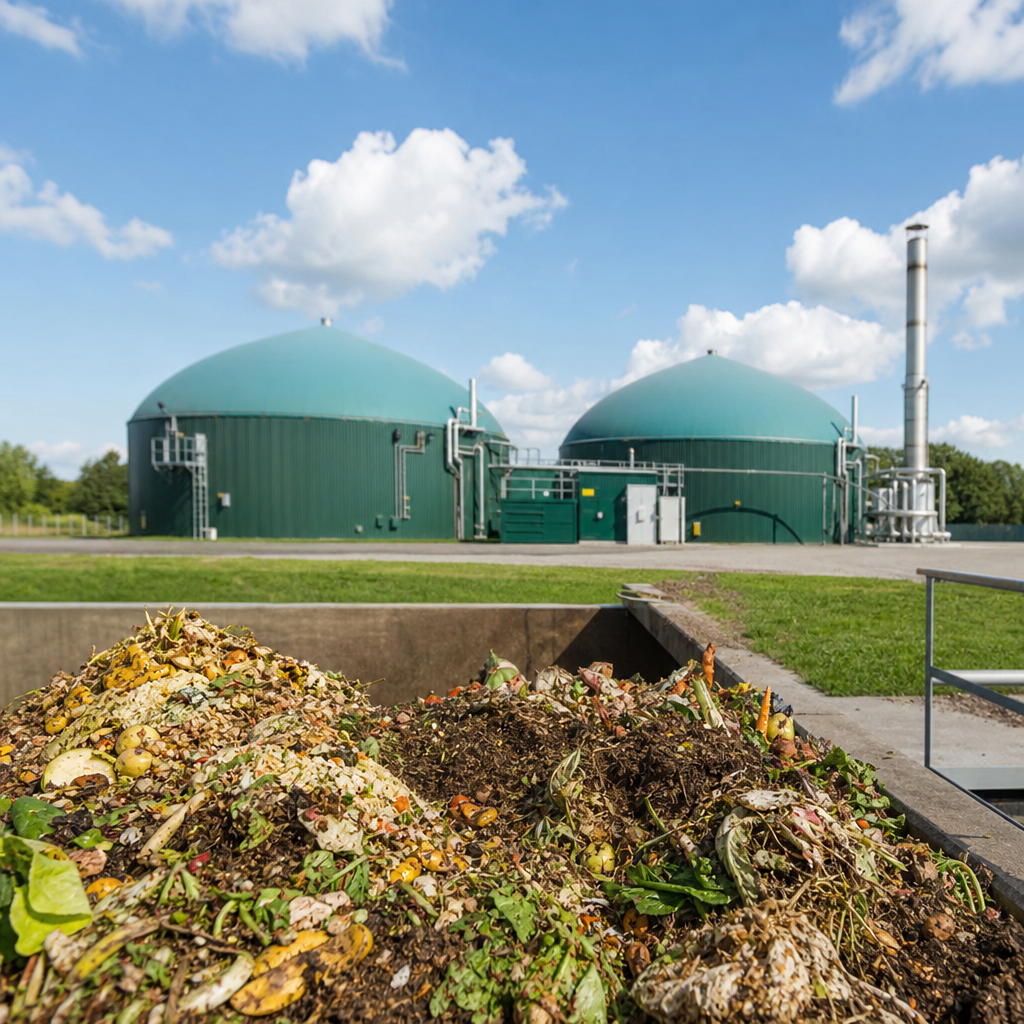
Biogas production begins with feedstock: fecal sludge, sewage solids, livestock manure, food scraps, market waste, crop residues, or mixtures of these materials. In an anaerobic digester, bacteria convert complex organic matter through hydrolysis, acidogenesis, acetogenesis, and methanogenesis. The result is biogas plus digestate, a semi-solid or liquid residue that still contains nutrients such as nitrogen, phosphorus, and potassium. In EcoSan practice, that output matters as much as the gas itself. A sanitation project that produces energy but ignores safe digestate handling is incomplete. A strong system plans for pretreatment, retention time, pathogen reduction, gas storage, and final reuse pathways from the start.
Different digester designs suit different contexts. Fixed-dome digesters are common in rural and peri-urban settings because they are durable and have low operating costs once built correctly. Plug-flow digesters can work well with thicker manure slurries. Continuous stirred tank reactors are more common in industrial settings where feedstocks vary and process control is critical. For fecal sludge treatment plants, covered lagoons or more engineered anaerobic reactors may be appropriate depending on climate, solids content, and budget. In every case, operators must manage pH, temperature, organic loading rate, and mixing. Methanogens are sensitive organisms. If a digester is overloaded with acidic feed, starved of buffering capacity, or allowed to cool too much, gas production drops fast.
From an environmental standpoint, the mechanism is straightforward and important. Organic waste left in open pits, dumps, or uncontrolled lagoons decomposes and releases methane directly to the atmosphere. Methane has a much higher warming effect than carbon dioxide over a twenty-year period, so capturing and burning it is a major climate intervention. Combustion converts methane largely into carbon dioxide and water, which sharply lowers the overall warming impact. That is why biogas from waste is considered renewable energy and a mitigation tool. It uses carbon already cycling through biological systems rather than adding new fossil carbon from underground reserves.
Why EcoSan matters for environmental protection beyond energy
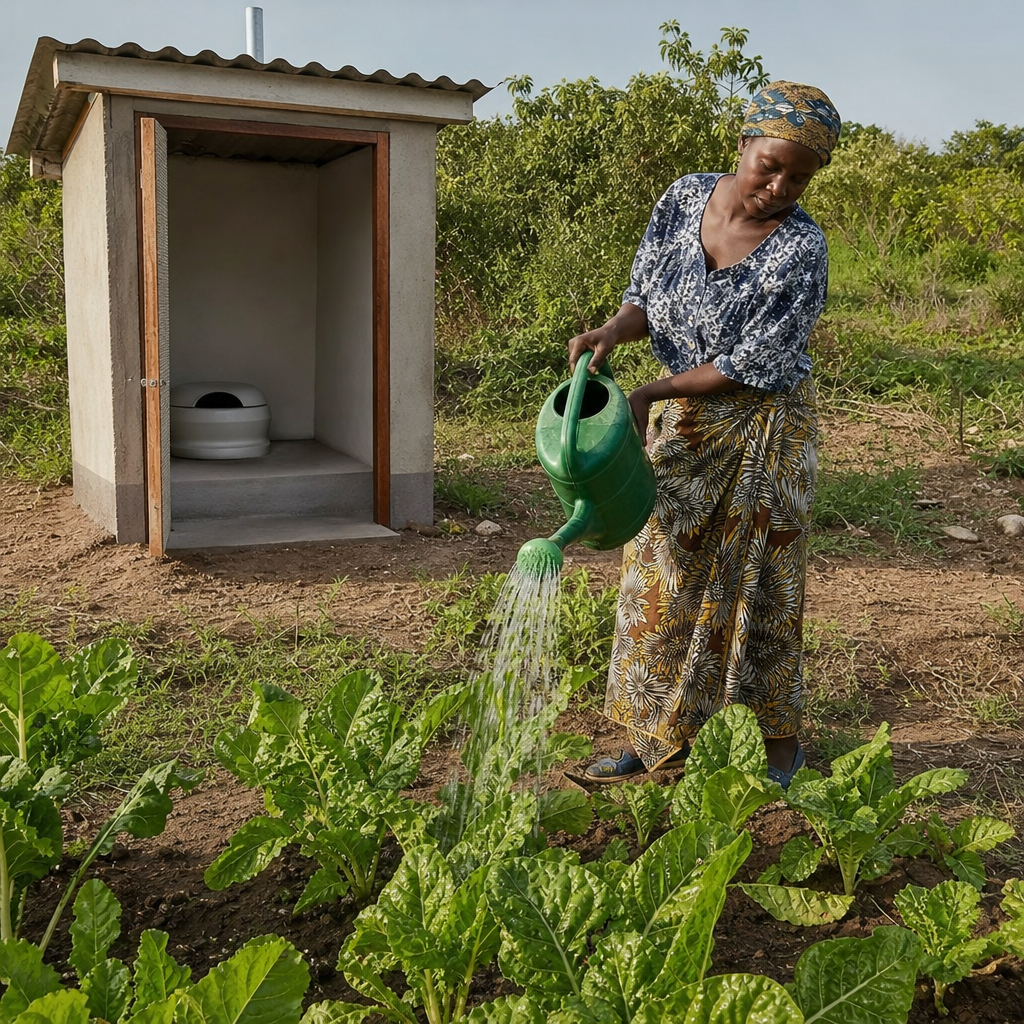
The most valuable EcoSan projects are not those that maximize gas volume alone; they are the ones that reduce multiple environmental harms at once. First, they improve sanitation management. Human waste that leaks into drains, waterways, and shallow groundwater spreads pathogens and increases nutrient pollution. By collecting and treating that waste in controlled systems, EcoSan reduces contamination at the source. Second, it cuts reliance on open dumping and open burning of organics, both of which damage air quality. Third, it supports nutrient recovery. Digestate, when properly treated and applied according to agronomic needs, can substitute for part of the synthetic fertilizer demand. Since synthetic nitrogen fertilizer production is energy intensive, that substitution can lower upstream emissions.
In field projects, I have seen this systems view make the difference between a demonstration unit and infrastructure that communities actually protect. A school biogas toilet system is easier to maintain when administrators value the fuel savings in the kitchen, the cleaner grounds, and the reduced emptying burden together. A municipal fecal sludge treatment plant attracts more policy support when planners can show avoided discharge, reduced odor, lower diesel use for sludge hauling, and usable biosolids outputs rather than a narrow sanitation compliance story. EcoSan’s role in environmental protection is therefore cumulative. It links sanitation service delivery with climate, water, soil, and land management outcomes in one operating model.
There are limits, and they should be stated clearly. Biogas systems do not eliminate all emissions. Leaks from pipes, valves, gas bags, and poorly sealed digesters can erode climate benefits. Digestate can pollute water if overapplied or stored badly. Human waste feedstocks require robust pathogen management and worker safety measures. Some sites simply do not produce enough consistent organic material to justify a digester. These tradeoffs do not weaken the model; they define the conditions for responsible deployment. Good environmental protection comes from disciplined design and operation, not from assuming any waste-to-energy label guarantees sustainability.
Key environmental benefits and how they are measured
Environmental claims should be tied to measurable indicators. For biogas from waste, the core metrics usually include feedstock diverted from uncontrolled disposal, methane captured, renewable energy generated, fossil fuel displaced, effluent quality, pathogen reduction, and nutrient recovery. Engineers often use chemical oxygen demand, total solids, volatile solids, biochemical methane potential, and hydraulic retention time to characterize performance. For sanitation-linked systems, fecal sludge volume treated, helminth egg reduction, and compliance with local discharge or reuse standards also matter. When organizations quantify these indicators consistently, they can compare project outcomes and improve credibility with regulators, investors, and communities.
A practical way to understand the environmental benefit is to compare the counterfactual. If food waste goes to an unmanaged dump, it decomposes and emits methane. If manure is stored in open lagoons, it emits methane and ammonia and can contaminate runoff. If fecal sludge is dumped illegally, it threatens public health and ecosystems. A digester changes that pathway. The exact savings depend on collection efficiency, gas capture rates, and end use. For example, biogas replacing firewood can reduce pressure on local forests and cut indoor smoke exposure. Biogas replacing diesel or liquefied petroleum gas can reduce fuel costs and fossil emissions, especially where transport distances are high.
| Environmental issue | Conventional waste pathway | EcoSan biogas pathway | Main measurable benefit |
|---|---|---|---|
| Organic waste disposal | Open dumping or uncontrolled decay | Controlled anaerobic digestion | Methane capture and lower odor |
| Human waste management | Leakage to drains, soil, or water | Contained treatment with reuse planning | Reduced pathogen spread and pollution |
| Cooking or heating fuel | Firewood, charcoal, LPG, or diesel | On-site renewable biogas use | Lower fossil or biomass fuel demand |
| Plant nutrition | Synthetic fertilizer only | Digestate or compost use | Nutrient recycling and soil support |
| Community sanitation costs | Frequent transport and disposal burden | Resource recovery integrated with treatment | Better lifecycle value from waste streams |
Lifecycle assessment is useful here because it tests whether a project performs well across construction, operation, transport, and end-use stages. A digester built with poor concrete and no maintenance plan may fail early and waste embedded carbon and capital. A plant that captures gas but flares it continuously without using the energy can still be better than open emissions, yet it misses much of the social value. The strongest projects optimize both environmental and practical performance: they capture methane, use the gas productively, and manage digestate within a safe nutrient plan.
Real-world applications: households, farms, institutions, and cities
Household biogas is the most familiar model in many parts of Asia and Africa. Families feed manure and toilet waste into a small digester and use the gas for daily cooking. The environmental impact appears modest at single-household scale, but the cumulative effect is meaningful where adoption is broad. Less firewood collection reduces local deforestation pressure. Cleaner combustion reduces soot in kitchens. Better containment of waste reduces flies, odors, and contaminated runoff. Success depends on stable water supply, reliable feeding, and households having enough animals or toilet-linked organic input to maintain production through the year.
On farms, the business case is often stronger because manure is abundant and the pollution risk is visible. Dairy operations use digesters to reduce lagoon emissions, manage odor, and produce electricity or thermal energy for milking and processing. In countries with grid interconnection incentives, larger farms may export power. Even without feed-in tariffs, they benefit from avoided energy purchases and improved manure handling. Separation equipment can turn digestate into fiber bedding or more manageable fertilizer fractions. These are not fringe examples; they are established practices where policy, technical service, and scale align.
Institutions offer another strong fit for EcoSan. Schools, hospitals, prisons, markets, and food processing facilities generate steady organic waste streams and have on-site energy demand. I have seen market waste digesters perform best when managers treat segregation as a daily operating rule rather than an awareness campaign. Plastic contamination destroys efficiency. In contrast, a well-run market can channel fruit, vegetable, and slaughter residues into digestion, supply gas for canteens, and reduce hauling costs. Toilet-linked systems in boarding schools can also work, but only when maintenance responsibilities, desludging schedules, and user behavior are clearly assigned. Infrastructure alone never guarantees environmental outcomes.
At city scale, EcoSan’s role in environmental protection expands into formal waste management strategy. Municipal fecal sludge treatment plants can integrate anaerobic treatment and gas recovery. Separate collection of food waste can supply codigestion plants that improve gas yield compared with sludge alone. Cities such as Stockholm and several Indian municipalities have demonstrated the value of upgrading biogas for vehicle fuel or using it in combined heat and power systems. The urban challenge is coordination: collection logistics, contamination control, land availability, utility regulation, and long-term finance all determine whether biogas from waste becomes core infrastructure or remains a pilot.
What makes biogas projects succeed or fail
The most common reason biogas projects fail is not the digester technology itself but weak system design around it. Feedstock quantity and quality must be verified before construction. Slurry consistency, contamination risks, seasonal variation, and collection routes should be measured, not guessed. Gas demand must also be real. A plant that produces gas when kitchens are closed or generators are undersized creates storage and flaring problems. Operation and maintenance planning is equally important. Valves corrode, condensate accumulates in pipes, burners clog, and digesters need trained oversight. Without budget and accountability, small faults become system-wide shutdowns.
Institutional structure matters as much as engineering. Clear ownership, tariff policy, spare parts access, operator training, and monitoring routines are the backbone of performance. Standards from organizations such as the World Health Organization, ISO, and national environmental regulators provide guidance on sanitation safety, effluent management, and occupational protection. Financial models should include capital cost, depreciation, desludging, labor, gas utilization equipment, and digestate handling. When project developers count only the digester shell and assume the rest will be managed informally, performance disappoints. The strongest EcoSan programs treat waste, energy, and agricultural reuse as one service chain with defined responsibilities.
Social acceptance is another decisive factor. Communities may support biogas from animal manure but hesitate when human waste is included. The answer is transparency, not marketing spin. Explain treatment barriers, retention times, post-treatment steps, and safe-use restrictions. Demonstrate that gas itself is clean after combustion and that the real safety questions concern handling of incoming waste and digestate. When users understand the process, resistance often drops. If you want EcoSan’s role in environmental protection to endure, the technology must be trusted, locally managed, and visibly useful.
Biogas from waste shows why EcoSan’s contribution to renewable energy deserves a central place in environmental planning. It captures methane that would otherwise intensify climate change, converts organic residues into useful fuel, improves sanitation management, and supports nutrient recovery when digestate is handled properly. That combination makes EcoSan’s role in environmental protection broader than a typical energy project. It is a practical framework for connecting waste treatment, public health, water protection, and low-carbon development in one system.
The main lesson is simple: successful projects treat the whole chain seriously. Feedstock assessment, digester design, gas use, leak prevention, pathogen control, operator training, and end-use planning all determine whether environmental gains are real. Households, farms, institutions, and cities can all benefit, but each setting needs a design matched to its waste stream, climate, budget, and management capacity. There is no shortcut around good operations, and there is no environmental value in resource recovery that ignores safety or maintenance.
As the hub page for this subtopic, this article frames the wider discussion around greenhouse gas reduction, cleaner water, circular nutrient use, and resilient local infrastructure. If you are evaluating EcoSan’s role in environmental protection, start by mapping your waste streams, energy needs, and reuse options together rather than in separate silos. That systems approach is where biogas from waste delivers its strongest and most durable impact.
Frequently Asked Questions
What is biogas from waste, and how does it support renewable energy?
Biogas from waste is a renewable fuel created when organic materials such as food scraps, agricultural residues, animal manure, sewage sludge, and other biodegradable waste break down in an oxygen-free environment. This natural biological process is known as anaerobic digestion. During digestion, microorganisms convert the organic matter into a combustible gas mixture made up primarily of methane and carbon dioxide, along with smaller amounts of hydrogen sulfide and water vapor. Because methane is an energy-rich gas, biogas can be captured and used instead of being released into the atmosphere or allowing waste to decompose unmanaged.
Its value in renewable energy is significant because it transforms a disposal problem into a practical energy resource. Rather than depending entirely on fossil fuels, communities and industries can use biogas for cooking, heating, electricity generation, and in some systems, upgraded biomethane can even be used in vehicle fuel applications or injected into gas networks. This creates a circular system in which waste becomes part of the energy supply. In the case of EcoSan’s contribution, the focus is not only on producing usable energy, but also on improving sanitation, reducing environmental pollution, and helping organizations and communities manage organic waste more responsibly. That combination of waste treatment and clean energy generation makes biogas a highly effective renewable solution.
How does the anaerobic digestion process work in a biogas system?
A biogas system works by feeding biodegradable waste into a sealed digester where oxygen is excluded. Inside this controlled environment, naturally occurring microorganisms begin breaking down the organic material in stages. First, complex organic compounds such as carbohydrates, fats, and proteins are broken into simpler molecules. Then these compounds are converted into organic acids, hydrogen, and carbon dioxide. Finally, specialized methane-producing microorganisms transform those intermediate products into biogas, which is collected from the top of the digester for storage or immediate use.
The process requires careful operating conditions to remain efficient. Temperature, moisture, pH balance, feedstock consistency, and retention time all influence gas production. If the system is properly designed and maintained, it can steadily produce biogas while also reducing odors, pathogens, and the overall pollution burden associated with unmanaged organic waste. In many applications, the raw biogas is then cleaned to remove moisture and corrosive compounds such as hydrogen sulfide, making it safer and more suitable for end use. EcoSan’s role in this space is especially important because successful biogas generation depends on both technical reliability and proper waste-handling practices. A well-designed anaerobic digestion system is not simply a tank that produces gas; it is an integrated environmental management solution that links sanitation, resource recovery, and renewable energy production.
What types of waste can be used to produce biogas?
Many forms of organic waste can be used to produce biogas, provided they are biodegradable and suitable for anaerobic digestion. Common examples include kitchen waste, crop residues, market waste, livestock manure, food processing by-products, wastewater sludge, and human sanitation waste in properly engineered systems. These materials contain organic compounds that microorganisms can digest and convert into methane-rich gas. The exact amount of gas produced depends on the type of material, its moisture content, its chemical composition, and how well it is prepared before entering the digester.
This flexibility is one of biogas technology’s strongest advantages. It allows different sectors to manage waste streams that would otherwise create disposal challenges, unpleasant odors, greenhouse gas emissions, and contamination risks. For farms, manure and crop residues become energy inputs. For municipalities, organic waste and sludge become recoverable resources. For institutions and commercial operations, food waste can be converted into useful fuel rather than sent to landfill. EcoSan’s contribution is especially relevant here because effective waste selection, collection, and treatment are essential to making a biogas project successful over the long term. By helping ensure that appropriate waste streams are directed into controlled treatment systems, EcoSan supports a model in which waste management and renewable energy development reinforce one another.
What are the environmental benefits of biogas systems like those supported by EcoSan?
Biogas systems offer several major environmental benefits, beginning with waste reduction. Instead of allowing organic waste to pile up in open dumps, lagoons, or unmanaged disposal sites, anaerobic digestion treats that material in a contained system. This helps reduce odors, pests, and local contamination while improving overall sanitation conditions. Just as importantly, it captures methane that might otherwise escape directly into the atmosphere. Since methane is a potent greenhouse gas, capturing and using it as fuel can make a meaningful contribution to climate change mitigation.
Biogas also reduces dependence on conventional fossil fuels such as coal, kerosene, diesel, or liquefied petroleum gas in certain applications. When used for cooking, heating, or electricity generation, it displaces energy that would otherwise come from nonrenewable sources. In addition, the digestion process produces a nutrient-rich residue known as digestate, which can often be further treated and used as a soil amendment or fertilizer, helping recover nutrients rather than wasting them. EcoSan’s contribution stands out because it connects these environmental gains with practical waste and sanitation management. The result is a more holistic sustainability approach: cleaner surroundings, lower emissions, improved resource recovery, and a renewable energy source generated from materials that are often treated as useless waste.
Why is EcoSan’s contribution important in advancing biogas as a practical energy solution?
EcoSan’s contribution matters because biogas projects succeed only when waste management, system design, sanitation practices, and energy use are addressed together. Producing biogas is not just about generating gas; it requires reliable feedstock supply, safe handling of organic waste, proper digester operation, gas cleaning where needed, and a clear plan for how the energy will be used. Without that integrated approach, systems can underperform or fail to deliver their expected environmental and economic benefits. EcoSan helps bridge that gap by supporting solutions that treat waste as a resource while maintaining a strong emphasis on public health, environmental protection, and long-term operational effectiveness.
This is especially important in settings where organic waste is abundant but infrastructure may be limited or poorly managed. By promoting systems that convert waste into usable energy, EcoSan contributes to cleaner communities, lower pollution levels, and more resilient local energy options. It also helps demonstrate that renewable energy does not always require large, centralized infrastructure; in many cases, it can begin with better handling of everyday organic residues. That practical, circular approach makes biogas highly relevant for sustainable development. EcoSan’s role is therefore valuable not only because it supports renewable energy generation, but because it helps turn sanitation and waste challenges into measurable environmental and social benefits.