Phytoremediation uses living plants, their roots, and associated microbes to capture, break down, stabilize, or remove pollutants from water, soil, and sludge, and in EcoSan systems it turns sanitation from a waste-disposal problem into a resource-recovery process. EcoSan, short for ecological sanitation, is a design approach that treats human waste, greywater, and organic residues as nutrient streams that can be safely managed, reused, and returned to ecosystems. When these two ideas are combined, sanitation infrastructure can reduce contamination, conserve water, protect public health, and create useful outputs such as irrigation water, biomass, compost feedstock, and soil amendments. I have seen this shift clearly in decentralized sanitation projects where conventional treatment was too expensive, too energy intensive, or too fragile for local operating conditions. In those settings, planted treatment units often performed best not because they were simple in theory, but because they matched local climate, labor capacity, and land availability. For communities evaluating sustainable practices in sanitation, phytoremediation matters because it can lower operating costs, reduce nutrient discharge, support circular resource use, and provide visible environmental benefits that residents immediately understand. It is not a magic fix, and it does not replace pathogen control, sound engineering, or maintenance discipline. However, when designed around hydraulic loading, pollutant type, climate, and end-use goals, planted systems become one of the most practical tools in the EcoSan toolbox. This hub article explains how phytoremediation works in sanitation, where it fits, which plants and system types are used, what standards and limits apply, and how decision makers can evaluate performance across the broader field of sustainable sanitation.
How phytoremediation works in EcoSan systems
In sanitation applications, phytoremediation usually operates through several mechanisms at once. Phytoextraction pulls nutrients or trace metals into plant tissue. Rhizofiltration allows roots to adsorb or absorb contaminants from water. Phytodegradation and rhizodegradation rely on enzymes and root-zone microbes to break down organic compounds. Phytostabilization immobilizes pollutants so they are less mobile and less bioavailable. In wetlands and planted filters, evapotranspiration also helps reduce water volume. Most EcoSan systems use these mechanisms to target nitrogen, phosphorus, suspended solids, biochemical oxygen demand, and in some cases trace contaminants such as pharmaceuticals. The plant itself is only part of the treatment train. The root zone creates oxygen transfer pathways, biofilm habitat, and surface area for filtration, nitrification, denitrification, and adsorption in gravel, sand, or soil media. This is why a well-designed planted bed can outperform an unplanted basin using the same footprint. For sanitation planners, the key question is not whether plants alone clean wastewater, because they do not. The real value is that plants make natural treatment processes more stable, more resilient to flow variation, and easier to integrate into decentralized water and nutrient recovery systems.
Where planted treatment fits within sustainable sanitation
Sustainable practices in sanitation aim to protect health, prevent pollution, recover resources, and remain operable over the long term. Planted treatment supports those goals at multiple points in the service chain. It can treat greywater at household scale, polish effluent from septic tanks or anaerobic baffled reactors, dewater and mineralize sludge in planted drying beds, and improve stormwater or urine-diverting system runoff before reuse or discharge. In peri-urban settlements, I have seen horizontal subsurface flow wetlands paired with septic pretreatment to cut odors and improve effluent consistency before irrigation reuse. In institutional settings such as schools or lodges, vertical flow wetlands are often selected because they provide stronger aeration and better ammonia removal under intermittent loading. In fecal sludge management, planted sludge drying beds can reduce moisture content while the vegetation keeps the media permeable and supports evapotranspiration. The broader sanitation value is strategic: phytoremediation extends the performance of primary treatment, reduces mechanical dependence, and creates a visible landscape element rather than a hidden nuisance. As a hub topic within environmental impact, it connects directly to water conservation, nutrient recycling, decentralized infrastructure, low-energy treatment, and climate-resilient sanitation planning.
Common EcoSan configurations and what each does best
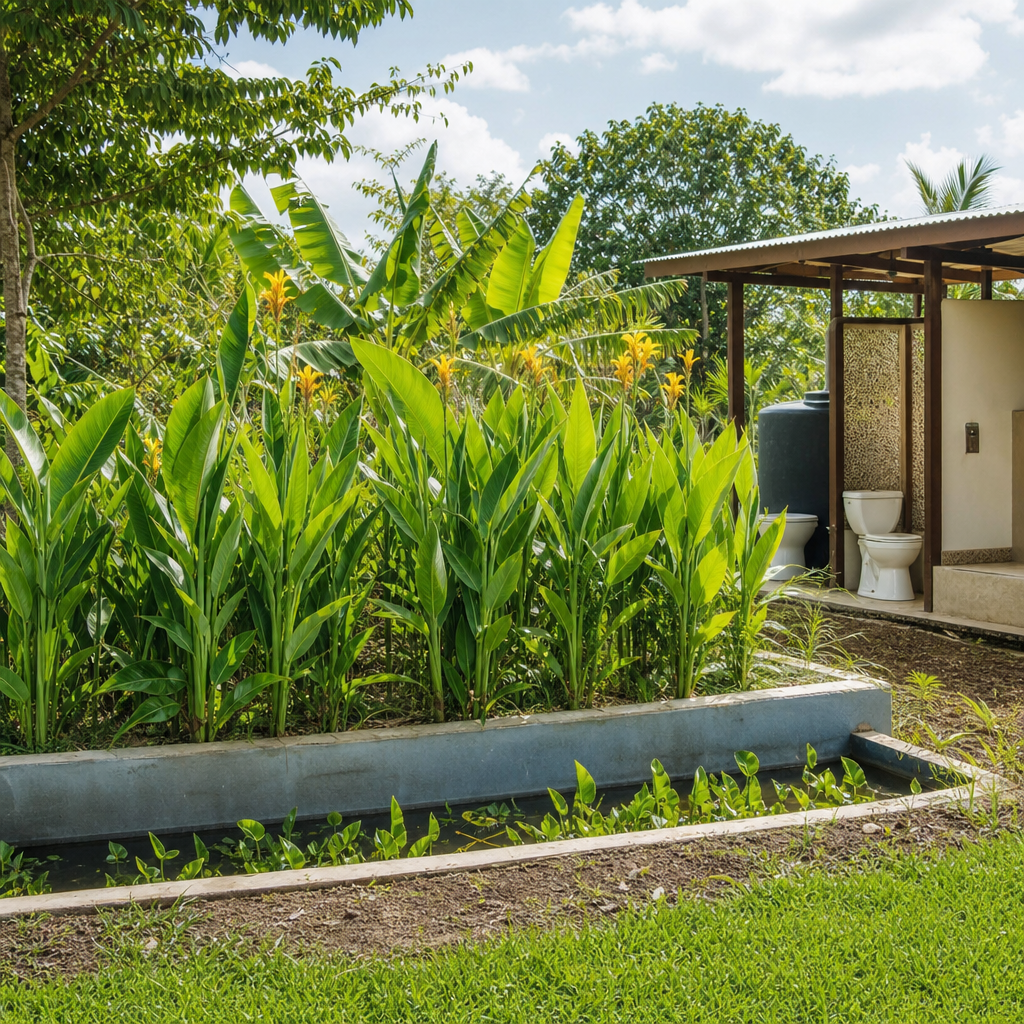
Different configurations solve different sanitation problems, and choosing the right one depends on influent strength, land area, climate, and reuse targets. Constructed wetlands are the most established option. Horizontal subsurface flow wetlands move wastewater through planted gravel beds below the surface, which limits mosquitoes and odors while supporting solids capture and denitrification. Vertical flow wetlands dose wastewater onto the surface and allow it to percolate downward, improving oxygen transfer and nitrification. Hybrid wetlands combine both to improve total nitrogen removal. Reed beds and planted filters are commonly used for sludge dewatering. Floating treatment wetlands can polish ponds but are usually secondary options rather than primary sanitation units. Soil infiltration fields planted with tolerant grasses or wetland species can also play a role where groundwater separation is adequate. The table below summarizes common options.
| System type | Best use in EcoSan | Main strengths | Key limitation |
|---|---|---|---|
| Horizontal subsurface wetland | Septic or anaerobic effluent polishing | Low odor, reliable solids filtration, good denitrification | Needs more area and may have lower ammonia removal |
| Vertical flow wetland | Intermittent domestic wastewater treatment | Better aeration, stronger nitrification, compact footprint | Requires dosing control and pretreatment |
| Hybrid wetland | Sites targeting high overall nutrient removal | Balances nitrification and denitrification | More complex layout and operation |
| Planted sludge drying bed | Fecal sludge dewatering | Lower sludge volume, durable media, simple operation | Slow startup and careful sludge loading needed |
Plant selection, microbial partnerships, and pollutant removal
Plant choice affects resilience more than headline removal percentages. The species must tolerate waterlogging, variable nutrient loads, occasional toxicity, and local temperature swings. Common wetland plants include Phragmites australis, Typha latifolia, Scirpus species, Cyperus papyrus, Juncus species, and Canna indica. In tropical EcoSan projects, vetiver grass is sometimes used around treatment zones because of its deep root mass and erosion control value, though it is not a universal substitute for wetland macrophytes. The reason these plants matter is structural. Their roots and rhizomes maintain pore space, host dense microbial communities, and leak oxygen into otherwise anaerobic media. That oxygen supports nitrifying bacteria, while deeper anoxic zones support denitrifiers that convert nitrate to nitrogen gas. Phosphorus removal often depends more on media composition than on the plant alone; substrates rich in calcium, aluminum, or iron can improve sorption, though capacity declines over time. Heavy metals may accumulate in roots or shoots, but harvesting protocols are essential if biomass contains contaminants. For domestic wastewater, plants are usually selected first for local adaptation, root architecture, and maintenance tolerance, then for biomass utility. The supporting microbial ecology does most of the chemical work; the plant creates the habitat that keeps that biology functioning season after season.
Performance expectations, monitoring, and operational realities
Well-run planted systems can achieve substantial reductions in total suspended solids, biochemical oxygen demand, and fecal indicator bacteria after appropriate pretreatment, but performance depends heavily on loading rates and maintenance. In practical design reviews, I focus on four variables first: hydraulic retention time, areal loading, pretreatment quality, and seasonal temperature. If septic tanks are not desludged, wetlands clog. If inflow distribution is uneven, treatment short-circuits. If harvested biomass is ignored for years, channels form and pest habitat increases. Typical monitoring should include flow, pH, electrical conductivity, dissolved oxygen where relevant, total suspended solids, BOD or COD, ammonium, nitrate, total nitrogen, orthophosphate or total phosphorus, and microbiological indicators such as E. coli where reuse is planned. For fecal sludge drying beds, solids content and drainage performance are also critical. The World Health Organization reuse guidance and national discharge standards should determine the actual treatment target, not generic assumptions about natural systems. A wetland that produces aesthetically clear water may still be unsuitable for unrestricted irrigation without additional pathogen barriers. Conversely, a system designed for restricted irrigation or subsurface reuse may be entirely appropriate. Reliable phytoremediation is therefore less about romanticizing plants and more about disciplined operations, data review, and matching treatment outcomes to a clearly defined reuse pathway.
Environmental benefits, tradeoffs, and public health safeguards
The environmental case for phytoremediation in EcoSan is strong because it addresses multiple impacts at once. It can reduce nutrient discharge that would otherwise fuel eutrophication, lower energy use compared with intensive mechanical treatment, and create habitat or cooling benefits in dense settlements. By slowing water and filtering solids, planted systems can also protect downstream rivers and recharge areas. Resource recovery strengthens the case further. Treated effluent may support landscape irrigation, and harvested biomass can sometimes be composted, mulched, or used as nonfood fiber depending on contamination risk. Yet the tradeoffs are real. Land demand can be significant, phosphorus removal can decline as media saturates, and cold climates reduce biological activity. Mosquito risks rise when surface water is exposed or maintenance lapses. Most importantly, phytoremediation does not guarantee pathogen safety on its own. Sanitation systems must still apply multiple barriers: source separation where appropriate, pretreatment, retention time, restricted crop choices, controlled irrigation methods, worker protection, and safe sludge handling. Standards from WHO, ISO-aligned water reuse frameworks, and national environmental agencies matter because they convert a good ecological idea into a defensible public health practice. The best projects are transparent about this balance: low-energy and regenerative, yes, but never casual about hygiene, monitoring, or long-term stewardship.
Planning a successful phytoremediation-based sanitation project
Success starts with site assessment, not plant selection. Measure wastewater volumes, peak flows, influent characteristics, groundwater depth, soil permeability, slope, flood risk, and required effluent quality before choosing a system. Then define the service model. Who empties pretreatment tanks, cuts vegetation, clears inlets, samples water, and pays for replacement media if needed? In decentralized programs, these governance questions determine performance as much as engineering details. I advise clients to design from the reuse objective backward. If the goal is ornamental irrigation, treatment and storage requirements differ from those for groundwater protection only. If the system must serve a school with irregular attendance, dosing and resilience to shock loading become central. Plant procurement should favor locally available species with proven treatment performance and no invasive risk. Construction quality is equally important: level beds, correct media gradation, underdrains, liners where needed, and accessible sampling points are not optional details. Commissioning should include vegetation establishment, phased loading, and a baseline monitoring plan for at least the first year. As the hub for sustainable practices in sanitation, this topic ties together nature-based treatment, source separation, fecal sludge management, reuse planning, and lifecycle cost control. The practical lesson is simple: phytoremediation delivers the most value when it is integrated into the full sanitation chain rather than added as a decorative afterthought.
Phytoremediation gives EcoSan systems a practical way to align sanitation with ecology by using plants and root-zone biology to improve water quality, support nutrient management, and reduce environmental harm. The core takeaway is that planted systems work best as part of a complete treatment train that includes pretreatment, hydraulic control, monitoring, and clear reuse or discharge targets. They are especially valuable where communities need low-energy, decentralized, and visually acceptable sanitation solutions, but they still require disciplined design and public health safeguards. For the wider field of sustainable sanitation, this makes phytoremediation more than a niche technology. It is a bridge between wastewater treatment, resource recovery, landscape design, and climate resilience. It also helps frame the rest of this subtopic hub: water reuse, sludge management, nutrient recycling, decentralized treatment, and lifecycle environmental impact all connect back to how sanitation systems handle biological flows. If you are planning, upgrading, or evaluating an EcoSan approach, start by mapping where planted treatment can add measurable environmental value, then compare system options against your site conditions, operating capacity, and safety requirements.
Frequently Asked Questions
What is phytoremediation, and how does it work within EcoSan systems?
Phytoremediation is the use of living plants, their root systems, and the communities of microorganisms around those roots to clean, contain, or transform contaminants in water, soil, and sludge. In an EcoSan system, this approach fits naturally because ecological sanitation is built around the idea that waste is not simply something to dispose of, but a set of nutrient-rich streams that can be treated, recovered, and safely returned to the environment. Instead of relying only on energy-intensive mechanical treatment, EcoSan systems can use planted components such as constructed wetlands, vegetated infiltration beds, reed beds, and sludge-drying areas to support natural treatment processes.
Plants contribute in several ways. Their roots slow water flow, trap suspended solids, release oxygen into the rhizosphere, and create a habitat for bacteria and fungi that carry out much of the actual breakdown of organic matter. Some plants take up nutrients such as nitrogen and phosphorus, while others help immobilize metals or support microbial degradation of organic pollutants. The result is a treatment train that can reduce pathogen risks, improve water quality, stabilize residuals, and create opportunities for water reuse, composting, biomass production, or landscape restoration. In practical terms, phytoremediation makes EcoSan more circular by linking sanitation treatment with ecological function and resource recovery.
What types of pollutants can plants help remove or control in ecological sanitation systems?
In EcoSan applications, phytoremediation is especially useful for managing nutrients, organic loads, suspended solids, and certain trace contaminants. Plants and their associated microbes can help remove excess nitrogen through a combination of plant uptake and microbial nitrification-denitrification processes. Phosphorus can be reduced through plant absorption, adsorption to the treatment media, and sedimentation, although phosphorus management often depends heavily on system design and substrate selection. Organic matter from greywater or partially treated wastewater is commonly reduced as microbes break it down in oxygen-rich and oxygen-poor zones around the root network.
Phytoremediation can also help control heavy metals and other persistent pollutants, but this is where expectations need to be realistic. Some plants are known to accumulate metals, while others are better at stabilizing them in the root zone and preventing movement into groundwater or nearby ecosystems. In EcoSan systems handling domestic waste streams, the more common focus is on nutrient polishing, solids stabilization, odor reduction, and improving the safety of effluent for reuse in irrigation or soil enhancement. Pathogens are not “removed” by plants alone, but planted treatment units can contribute to pathogen reduction indirectly through filtration, longer retention times, sunlight exposure, microbial competition, and drying. A well-designed EcoSan system uses phytoremediation as one part of a broader safety strategy rather than assuming plants alone can solve every contamination issue.
What are the main benefits of combining phytoremediation with EcoSan design?
The biggest benefit is that the system begins to function more like an ecosystem than a disposal infrastructure. When phytoremediation is integrated into EcoSan, treatment does not stop at waste containment. It extends into nutrient recovery, biomass production, water polishing, habitat creation, and sometimes even improved local aesthetics. Planted treatment units can reduce the need for chemical inputs and lower operational energy demands compared with highly mechanized alternatives, which makes them especially attractive in decentralized, peri-urban, rural, and resource-constrained settings.
There are also strong resilience and sustainability advantages. EcoSan systems that include plants can buffer fluctuations in flow, reduce erosion, improve soil structure, and support beneficial microbial activity. In many cases, they are easier to adapt to local climates, local materials, and community maintenance capacities than centralized treatment technologies. The harvested plant biomass may have value as mulch, compost feedstock, fiber, fuel, or other non-food uses, depending on the contaminants involved and the safety rules being followed. Just as important, these systems help shift public perception. Instead of viewing sanitation outputs only as hazardous waste, communities can begin to see them as manageable nutrient streams that, after appropriate treatment, can contribute to agriculture, landscaping, and ecosystem repair. That mindset is central to EcoSan philosophy.
Are there limitations or risks when using plants to treat sanitation-related waste streams?
Yes, and this is an essential point. Phytoremediation is effective, but it is not a universal or instant solution. It usually works more slowly than intensive engineered treatment and depends heavily on climate, plant species, hydraulic loading, pollutant type, retention time, and maintenance quality. If a system is overloaded with solids, nutrients, toxic compounds, or pathogens, plant performance can decline and treatment goals may not be met. Seasonal variation can also affect growth and uptake rates, particularly in colder regions or in areas with long dry periods.
There are safety concerns as well. If plants are exposed to metals or other harmful contaminants, the biomass may require controlled harvesting and disposal or restricted reuse. Direct use of contaminated biomass in food chains is generally inappropriate unless testing clearly shows it is safe. Mosquito breeding, odor, clogging, invasive plant behavior, and uneven hydraulic distribution are additional design and management risks. Most importantly, sanitation systems must protect public health first. That means phytoremediation should be paired with source separation, pretreatment, containment, safe handling practices, and monitoring. A successful EcoSan design does not rely on green appearance alone; it relies on evidence-based sizing, operation, and risk management.
What plants and system designs are commonly used for phytoremediation in EcoSan projects?
The most common designs include constructed wetlands, subsurface-flow reed beds, free-water-surface wetlands, planted gravel filters, vegetated leach fields, and sludge-drying beds planted with robust wetland species. Plant selection depends on local climate, water availability, pollutant profile, root structure, growth rate, and maintenance needs. Frequently used species include reeds, cattails, bulrushes, sedges, rushes, vetiver grass, canna, and other hardy macrophytes that tolerate nutrient-rich and periodically saturated conditions. The best species are often local or naturalized plants that are already adapted to site conditions and are easier for communities to manage over time.
Good system design matters more than choosing a “magic” plant. Engineers and practitioners typically consider flow rates, bed depth, media type, inlet and outlet structures, retention time, sludge characteristics, harvesting schedules, and protection from flooding or drought. In urine-diverting or source-separating EcoSan systems, planted units may be used downstream to polish greywater or treat diluted liquid fractions, while composting or dehydration handles the concentrated solids separately. In other setups, wetlands may follow septic tanks, anaerobic baffled reactors, or settling chambers to improve final effluent quality before reuse. The most effective EcoSan phytoremediation projects are those that match the plant community, the treatment objective, and the local operational capacity, rather than copying a design from somewhere else without adjustment.