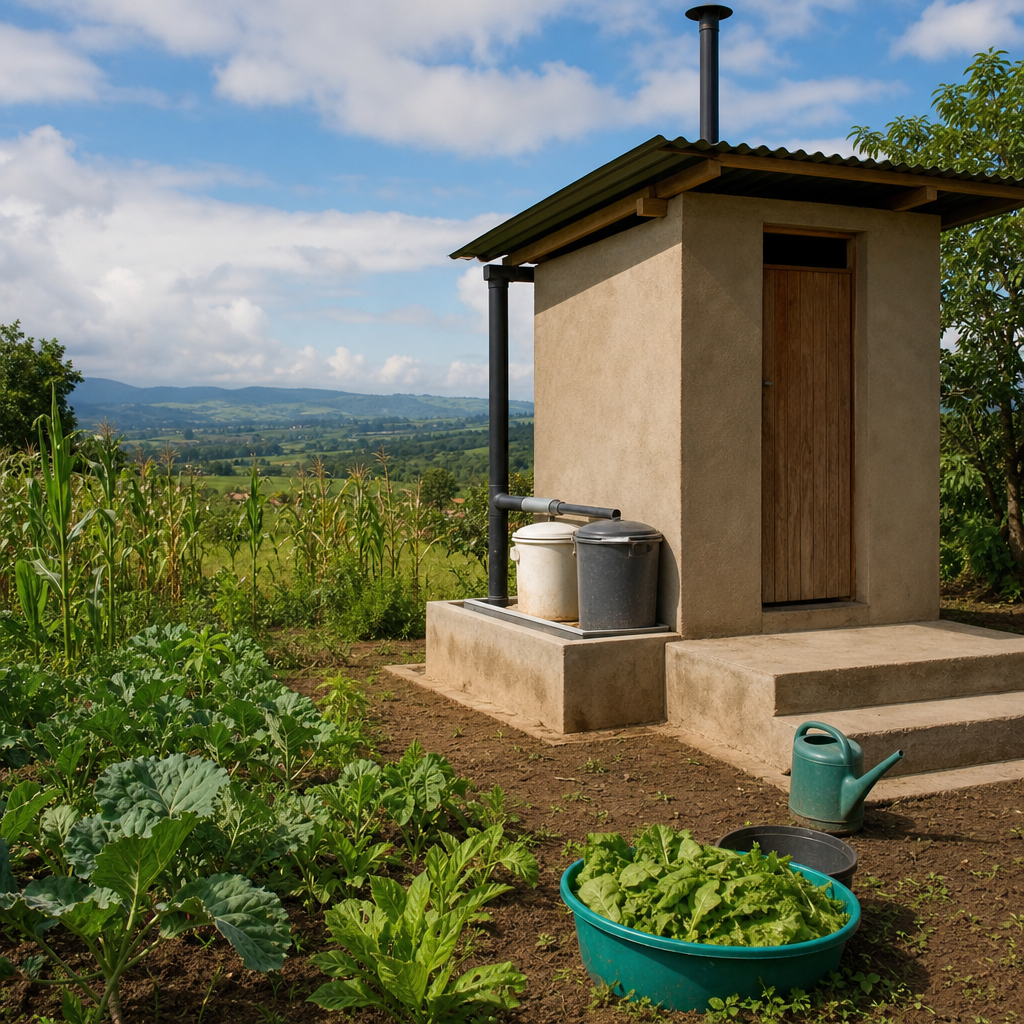
Promoting sustainable land use through EcoSan starts with a simple idea: human waste is not only a sanitation challenge, but also a resource that can protect soils, conserve water, and reduce pollution when managed correctly. EcoSan, short for ecological sanitation, is an approach that treats urine and feces as valuable nutrient streams rather than material to be flushed away and forgotten. In practice, EcoSan systems separate, sanitize, and reuse these outputs in ways that support agriculture, restore degraded land, and reduce pressure on fragile ecosystems.
This matters because land use and sanitation are tightly linked. Conventional sanitation often relies on water-intensive sewerage or poorly managed pits that can contaminate groundwater, emit greenhouse gases, and disconnect nutrients from the land that needs them. At the same time, many farming systems suffer from depleted soils, expensive synthetic fertilizers, and declining organic matter. I have worked with sanitation and resource recovery projects where those two problems were treated separately, and that separation usually made both harder to solve. EcoSan brings them together by closing nutrient loops.
For environmental sustainability, the relevance is immediate. Sustainable land use means using land in ways that maintain productivity, protect biodiversity, and avoid long-term degradation. It includes soil conservation, nutrient balance, water stewardship, and resilient local food systems. EcoSan contributes to each of these goals by recovering nitrogen, phosphorus, potassium, and organic matter; by reducing untreated waste entering waterways; and by creating local inputs for farms, gardens, forestry, and landscape rehabilitation. It is not a single toilet design but a management philosophy backed by practical technologies such as urine-diverting dry toilets, composting toilets, dehydration vaults, and safe storage systems.
As a hub for advancing environmental sustainability with EcoSan, this article explains how the approach works, where it delivers the strongest land-use benefits, what standards and safeguards matter, and how communities, planners, and land managers can apply it responsibly. The central point is clear: when sanitation systems are designed around recovery instead of disposal, they can become part of climate-smart agriculture and sustainable land management rather than a source of environmental loss.
What EcoSan Means for Sustainable Land Use
EcoSan promotes sustainable land use by returning plant nutrients and organic material to soils in a controlled manner. Human urine contains most of the nitrogen and a large share of the phosphorus and potassium excreted by households. Fecal matter contains organic carbon, additional nutrients, and microorganisms that must be reduced through treatment before reuse. In a conventional flush system, these materials are diluted with water and transported to centralized treatment, where nutrient recovery is often partial and expensive. In many low-service settings, they are not treated adequately at all.
By contrast, EcoSan aims to capture resources close to the source. Urine diversion is especially effective because it keeps the highest nutrient fraction separate and relatively low in pathogens. After storage or treatment according to recognized guidance, urine can be applied as fertilizer to crops, orchards, and tree belts. Treated fecal matter or composted biosolids can support soil structure, especially in degraded lands where organic matter is low. This directly influences land use outcomes: better soil aggregation reduces erosion, higher organic matter improves water retention, and balanced nutrients support stable yields.
From a land planning perspective, EcoSan also changes infrastructure demands. Areas with water scarcity, rocky terrain, flood risk, or dispersed settlements often struggle with sewer expansion. Decentralized EcoSan systems can fit these contexts better, reducing excavation, pumping, and long pipe networks. That lowers disturbance to land and often makes sanitation service possible in places where conventional systems remain unaffordable. The environmental gain is not only in reuse; it is also in avoiding the land and energy footprint of inappropriate infrastructure.
How EcoSan Supports Soil Health and Agricultural Productivity
Healthy soils are the foundation of sustainable land use, and EcoSan can strengthen them in several ways. First, it recycles essential nutrients. Phosphorus is especially important because it is mined from finite phosphate rock reserves, and many countries depend on imports. When communities recover phosphorus locally through ecological sanitation, they reduce reliance on external fertilizer markets and help maintain nutrient availability for food production. Nitrogen recovery is equally significant because synthetic nitrogen fertilizer production is energy-intensive and commonly linked to fossil fuels through the Haber-Bosch process.
Second, EcoSan can improve soil organic matter when treated solids are applied appropriately. Organic matter increases cation exchange capacity, supports microbial activity, and helps sandy or degraded soils hold water. In field projects I have reviewed, farmers were often less interested in sanitation language than in visible changes such as darker soil, better moisture retention, and lower fertilizer bills. Those practical results matter because adoption of sustainable land use practices depends on whether users see consistent agronomic value.
Third, EcoSan supports diversified land management. Nutrient-rich urine is well suited to high-demand crops if applied at the right rate and time, while sanitized compost-like products can benefit agroforestry plots, non-food crops, biomass plantations, and land restoration sites. This flexibility is useful where different land uses sit close together. Instead of treating sanitation as an isolated urban service, EcoSan integrates it with agriculture, forestry, and watershed management.
| EcoSan output | Main resource value | Best-fit land uses | Key management point |
|---|---|---|---|
| Stored urine | Nitrogen, phosphorus, potassium | Field crops, orchards, tree planting, gardens | Apply at agronomic rates and avoid direct contact with edible plant parts |
| Dehydrated fecal material | Organic matter and residual nutrients | Forestry, soil rehabilitation, non-food crops | Use only after validated treatment and restricted handling |
| Composted toilet residues | Soil conditioning and carbon addition | Landscaping, agroforestry, erosion control areas | Confirm pathogen reduction and maturity before field use |
The agronomic benefit is real, but it is not automatic. Nutrient content varies by diet, dilution, storage, and system design. That is why successful EcoSan programs use application guidelines, farmer training, and, where possible, laboratory analysis. Sustainable land use depends on matching recovered nutrients to crop demand rather than assuming any recycled product is automatically beneficial.
Water Protection, Pollution Prevention, and Landscape Resilience
One of EcoSan’s strongest environmental advantages is the reduction of water pollution. Poorly designed pit latrines in high water table areas, dense settlements, or flood-prone zones can leach nutrients and pathogens into aquifers and nearby streams. Sewer overflows and failing septic systems create different but equally serious risks. EcoSan reduces these pathways by separating waste streams, minimizing water use, and creating controlled treatment steps before reuse. In watershed terms, that means fewer nutrient losses to rivers and lakes and lower risk of eutrophication.
This is especially important in landscapes where land degradation and water degradation reinforce each other. When nutrients leave farms and settlements as waste, soils become poorer while downstream water bodies become overloaded. EcoSan interrupts that pattern. Recovered nutrients are returned to land where plants can use them, instead of becoming contaminants. The result is more coherent nutrient management across the landscape.
Resilience is another major benefit. In drought-prone regions, dry or low-water sanitation conserves freshwater for drinking, irrigation, and ecosystem needs. In flood-prone areas, raised or well-contained EcoSan units can be safer than pits that collapse or overflow. In informal settlements or peri-urban farming zones, decentralized systems can be phased in faster than trunk sewer projects. For local governments trying to balance environmental protection with land pressure, that flexibility is valuable.
There are limits, and they should be stated plainly. EcoSan does not eliminate all contamination risk. Poor storage, bad siting, weak maintenance, or untrained reuse can create hazards. That is why the World Health Organization’s sanitation safety planning principles are essential. Risk assessment must cover the full chain from toilet use to collection, treatment, transport, storage, application, and crop harvesting. Environmental sustainability requires control, not just good intentions.
Design Choices, Safety Standards, and Implementation Realities
Promoting sustainable land use through EcoSan depends on sound design and disciplined operation. The technology choice should reflect climate, culture, settlement density, user preferences, and intended reuse pathway. Urine-diverting dry toilets are common where water is scarce and nutrient recovery is a priority. Composting toilets may fit sites with available cover material and strong maintenance capacity. Container-based sanitation linked to off-site treatment can work in dense areas where household-level processing is difficult. There is no universal best option; the right system is the one that can be used correctly and managed safely over time.
Safety is non-negotiable. Urine generally carries lower pathogen loads than feces, but it still requires storage or treatment based on temperature, intended crop type, and handling practices. Fecal material requires more rigorous barriers, including dehydration, composting, alkaline treatment, thermal treatment, or extended storage, depending on the system. Programs that skip validation usually fail either environmentally or socially. If farmers, regulators, or households lose confidence in product safety, reuse collapses.
Implementation also depends on governance. Clear rules are needed on responsibilities for emptying, transport, treatment verification, and end-use approval. Municipalities often underestimate this because they focus on construction rather than service chains. In my experience, the most durable EcoSan initiatives treat sanitation like a managed utility and resource recovery business, not a one-time hardware distribution campaign. They budget for training, monitoring, spare parts, behavior support, and periodic inspection.
Economic realism matters as well. EcoSan can reduce fertilizer purchases and lower water use, but savings do not appear evenly or immediately. Households may bear maintenance effort while farms capture nutrient benefits. That imbalance can stall adoption unless programs create fair value sharing, service fees, or cooperative models. Good implementation is therefore technical, environmental, and institutional at the same time.
Where EcoSan Delivers the Greatest Environmental Impact
EcoSan delivers the strongest land-use impact in places where nutrient depletion, water stress, weak sewer access, or land degradation are already serious constraints. Smallholder farming areas are a clear example. Where soils are losing fertility and mineral fertilizers are costly, local nutrient recovery can improve productivity and reduce dependence on imports. Peri-urban agriculture is another strong fit because nutrient sources and land demand are physically close, making reuse logistics more practical.
Drylands and semi-arid regions also benefit. Conventional flush sanitation can be environmentally misaligned where water is scarce and soils need organic inputs. EcoSan conserves water while creating materials that support moisture retention and plant establishment. I have seen this logic shape successful tree planting and orchard programs, where recovered nutrients supported early growth during establishment phases. The value was not only yield; it was improved survival of plants on marginal land.
Post-disaster and climate-vulnerable settings are worth noting too. Decentralized ecological sanitation can restore service quickly without waiting for damaged sewer networks to be rebuilt. If linked to safe treatment, it can also provide soil inputs for revegetation and landscape stabilization efforts. For land managers dealing with erosion, salinity, or declining fertility, EcoSan should be evaluated as part of a broader resource recovery strategy rather than as a niche sanitation experiment.
The next step is practical: assess local land needs, map nutrient demand, review health regulations, and design EcoSan systems around verified reuse pathways. When sanitation planning aligns with soil restoration and water protection goals, communities gain cleaner environments, more productive land, and a more circular economy. That is the lasting benefit of advancing environmental sustainability with EcoSan. Start by identifying one settlement, farm cooperative, school, or peri-urban district where waste can be safely transformed into a resource, then build the system, safeguards, and partnerships needed to make it work.
Frequently Asked Questions
What is EcoSan, and how does it support sustainable land use?
EcoSan, or ecological sanitation, is an approach to sanitation that treats human waste as a recoverable resource rather than something to be disposed of as quickly as possible. Instead of relying only on water-intensive flush systems that move nutrients away from the land and into sewers, pits, or polluted waterways, EcoSan systems are designed to separate, sanitize, and safely reuse urine and feces. This creates a practical link between sanitation, soil health, agriculture, and environmental protection.
From a land-use perspective, EcoSan supports sustainability by returning valuable nutrients such as nitrogen, phosphorus, and potassium back to the soil. These nutrients are essential for plant growth, yet in many conventional systems they are lost, wasted, or become pollutants. When recovered and applied correctly, they can help improve soil fertility, reduce dependence on synthetic fertilizers, and support more productive farming systems. This is especially important in areas where soils are depleted, fertilizer costs are high, or access to agricultural inputs is limited.
EcoSan also helps conserve water because many systems use little or no flushing. That matters in regions facing water scarcity, groundwater stress, or rising competition for freshwater resources. In addition, by reducing untreated waste entering the environment, EcoSan can lower contamination risks for rivers, lakes, and farmland. In simple terms, it turns a sanitation problem into part of a circular system that protects land, supports crop production, and reduces environmental damage.
How are human waste products safely reused in EcoSan systems?
Safe reuse is one of the most important principles in EcoSan. The goal is not to use untreated waste directly, but to manage it through controlled processes that reduce pathogens and make the material safer for agricultural or land-restoration purposes. Most EcoSan systems are built around source separation, meaning urine and feces are collected separately so they can be handled in the most appropriate way. This improves sanitation performance and makes nutrient recovery much more effective.
Urine is often the easier stream to reuse because it is typically low in pathogens compared with feces and contains a large share of the nutrients plants need, especially nitrogen. In many systems, urine is stored for a defined period to reduce health risks further before being diluted or applied directly to crops according to agronomic guidelines. Proper storage, handling, and application timing are essential to prevent odor, nutrient loss, or overapplication.
Fecal matter requires stricter treatment because it may contain disease-causing organisms. Depending on the system, treatment can include dehydration, composting, alkaline treatment, long-term storage, or a combination of methods designed to inactivate pathogens. The treated product may then be used as a soil amendment, often for non-food crops, trees, or soil rehabilitation, depending on local regulations and safety standards. Successful reuse depends on clear operating procedures, user education, protective equipment when needed, and adherence to public health guidance. When these steps are followed, EcoSan can safely recover nutrients while protecting both people and the environment.
What are the environmental benefits of EcoSan compared with conventional sanitation systems?
EcoSan offers several environmental advantages because it is designed around nutrient recovery, pollution prevention, and resource efficiency. Conventional sanitation often treats human waste as a disposal issue, moving it away through sewer networks or storing it in pits and tanks. While these systems can provide important public health benefits, they may also consume large amounts of water, require expensive infrastructure, and allow nutrients to be lost from the local ecosystem. In some places, untreated or poorly treated waste ends up contaminating soil, groundwater, and surface water.
By contrast, EcoSan aims to close the nutrient loop. Instead of allowing nitrogen and phosphorus to become pollutants, it captures them for productive reuse. This can reduce eutrophication, which is the over-enrichment of water bodies that leads to algal blooms and ecosystem damage. EcoSan systems can also help lower greenhouse gas emissions in some contexts by reducing the need for energy-intensive fertilizer production and by improving organic matter management. Where systems are dry or low-flush, water savings can be substantial as well.
Another major benefit is reduced pressure on waste treatment infrastructure. Decentralized EcoSan solutions can work in rural areas, peri-urban settings, and water-limited regions where centralized sewer expansion is difficult or costly. They can also support better soil stewardship by returning nutrients and, in some cases, organic matter to degraded land. Overall, EcoSan aligns sanitation with broader environmental goals, including cleaner water, healthier soils, more efficient resource use, and more resilient land management systems.
Can EcoSan really improve soil fertility and agricultural productivity?
Yes, when properly designed and managed, EcoSan can make a meaningful contribution to soil fertility and agricultural productivity. Human urine and treated fecal matter contain nutrients that crops remove from the soil every season. If those nutrients are not replenished, soils can become exhausted over time, leading to lower yields and greater dependence on purchased fertilizers. EcoSan helps address that problem by recovering nutrients that would otherwise be wasted and putting them back into productive use.
Urine is especially valuable as a fertilizer because it contains readily available nitrogen, along with phosphorus and potassium. This makes it useful for supporting vegetative growth and boosting crop performance when applied at the right rates. Treated fecal material can also play a role, particularly as a soil amendment that may contribute organic matter and improve soil structure, depending on the treatment process and final product quality. Better soil structure can increase water retention, improve aeration, and support beneficial soil biology, all of which matter for sustainable land use.
That said, agricultural benefits depend on good management. Nutrient application needs to match crop demand, local soil conditions, and climate. Overapplication can lead to nutrient losses, odors, or runoff, while poor treatment can create health risks. Farmers and land managers also need practical guidance on storage, transport, timing, and crop suitability. With proper safeguards, EcoSan can become part of an integrated soil fertility strategy that complements compost, mulch, crop rotation, and other regenerative practices. The result is often a more circular and resilient agricultural system that supports both productivity and long-term land health.
What challenges can communities face when adopting EcoSan, and how can they overcome them?
Although EcoSan has strong environmental and agricultural potential, successful adoption depends on more than technology alone. Communities often face social, technical, institutional, and financial challenges when introducing any new sanitation approach. One common barrier is perception. Many people are unfamiliar with the idea of reusing nutrients from human waste, and concerns about safety, odor, cleanliness, or cultural acceptability can slow adoption. These concerns are understandable and should be addressed through respectful education, transparent communication, and demonstration of safe practices.
Operation and maintenance are also critical. EcoSan systems generally require users to understand how to separate waste streams, add drying materials where needed, manage storage, and handle end products responsibly. If systems are poorly maintained or if training is inadequate, performance can decline and community confidence can drop. This is why user-centered design, ongoing support, and locally appropriate system selection are so important. A solution that works well in one climate or settlement pattern may not be ideal in another.
Policy and regulation can present additional challenges. In some regions, there may be limited standards for safe reuse, unclear responsibilities among agencies, or weak links between sanitation and agriculture. Financing can also be a hurdle, especially during the early stages of implementation. Communities often overcome these barriers by combining technical planning with public engagement, pilot projects, training programs, and partnerships among local governments, health authorities, farmers, and development organizations. The most effective EcoSan initiatives are those that treat sanitation as part of a wider land-use and resource-management strategy. When people see cleaner environments, lower fertilizer costs, improved crop performance, and reliable system operation, acceptance and long-term success become much more likely.