EcoSan, short for ecological sanitation, is a sanitation approach that treats human excreta as a resource rather than an unavoidable waste stream. In practical terms, it links toilets, faecal sludge management, nutrient recovery, water protection, and safe reuse into one system. When designed well, EcoSan reduces pollution, conserves freshwater, lowers pressure on sewer networks, and returns nutrients and organic matter to soils. That combination makes it central to sustainable faecal sludge management, especially in rapidly growing cities, water-scarce regions, farming communities, and settlements beyond the reach of conventional sewers.
Faecal sludge refers to the semi-solid contents that accumulate in on-site sanitation systems such as pit latrines, septic tanks, urine-diverting dry toilets, and container-based toilets. Sustainable management means the full chain is handled safely: containment, collection, transport, treatment, reuse, or disposal. I have seen sanitation projects fail when they focused only on the toilet interface and ignored emptying logistics, treatment capacity, or community acceptance. EcoSan matters because it forces planners to think across that entire service chain. It asks a simple but important question: how can sanitation protect public health while also improving environmental outcomes?
The environmental stakes are high. According to global monitoring by WHO and UNICEF, billions of people still rely on on-site sanitation, and large shares of collected sludge are dumped untreated into drains, waterways, wetlands, or open land. Untreated faecal sludge carries pathogens, nitrogen, phosphorus, pharmaceuticals, and oxygen-demanding organic material. Once released into the environment, it contaminates groundwater, accelerates eutrophication, damages aquatic ecosystems, and contributes to greenhouse gas emissions through uncontrolled decomposition. In dense settlements, these failures also increase flood risk because clogged drains and poorly located pits interact badly with stormwater.
EcoSan responds by redesigning sanitation around circularity and risk reduction. Common EcoSan systems include urine-diverting dry toilets, composting toilets, arborloos, and decentralized treatment units that convert sludge into compost, dried fuel, black soldier fly larvae feed inputs, or co-composted soil amendments. The exact technology matters less than the principles behind it: separate waste streams where useful, minimize water use, contain pathogens, recover value, and keep harmful residues out of the environment. As a hub topic within environmental impact, EcoSan connects directly to climate resilience, water stewardship, soil health, waste reduction, urban planning, and public health protection.
Why EcoSan is central to sustainable faecal sludge management
EcoSan is central because most sanitation systems do not fail at the toilet; they fail between storage and final treatment. A pit latrine can serve a household for years, but once full, the sludge needs safe emptying, transport, and treatment. Septic tanks are often installed without proper desludging schedules. In many towns, treatment plants are undersized or absent. EcoSan improves this chain by matching toilet design with realistic downstream handling. For example, urine-diverting systems reduce moisture and sludge volume, making storage and treatment easier. Container-based sanitation creates predictable collection routes and avoids unsafe pit emptying in flood-prone areas.
From an environmental perspective, EcoSan reduces direct contamination at several points. First, better containment lowers leakage into soils and aquifers. Second, source separation can preserve nutrients in forms that are easier to reuse. Third, decentralized treatment cuts transport distances and illegal dumping. Fourth, reuse creates an economic reason to complete the service chain rather than abandoning sludge at transfer points. In practice, the strongest EcoSan programs combine engineering, operations, financing, regulation, and user education. They do not assume a single toilet model will solve everything. They build a managed sanitation service with measurable environmental performance.
EcoSan also supports the waste hierarchy by treating excreta as part of a resource loop. Human urine contains much of the nitrogen and potassium excreted by households, while faeces contain organic carbon and phosphorus. If these are recovered safely, they can partially replace synthetic fertilizers, improve soil structure, and reduce demand for mined phosphate. That is especially relevant as fertilizer prices fluctuate and soils lose organic matter. However, safe reuse depends on treatment quality, storage time, and crop restrictions. EcoSan is not about informal dumping on fields. It is about controlled processing based on pathogen reduction and agronomic value.
Core technologies and how they work in the field
Several EcoSan technologies are used in sustainable faecal sludge management, and each fits different contexts. Urine-diverting dry toilets separate urine from faeces at the user interface. This keeps faeces drier, reduces odor, and improves storage. Composting toilets rely on aerobic decomposition, usually with bulking materials such as sawdust, ash, or dry leaves. Arborloos are shallow pits moved periodically so the filled pit can decompose and support tree planting. Container-based toilets collect excreta in sealable cartridges that are removed on a service schedule. Decentralized sludge treatment plants may use drying beds, planted beds, co-composting, anaerobic digestion, or thermal drying.
In the field, performance depends less on brochures and more on operation details. A urine-diverting toilet fails if users do not understand correct positioning, if wash water enters the faeces vault, or if spare parts are unavailable. Composting systems fail when moisture is too high, temperature stays low, or retention time is too short for pathogen reduction. Septage treatment fails when incoming sludge characteristics vary widely and operators lack testing routines. I have found that the best projects build simple maintenance protocols, train local operators repeatedly, and use visual instructions at household and community level. Reliability is an operational outcome, not a design promise.
| EcoSan option | Best-fit context | Main environmental benefit | Key limitation to manage |
|---|---|---|---|
| Urine-diverting dry toilet | Water-scarce areas, off-grid settlements | Low water use and easier nutrient recovery | User training and urine handling logistics |
| Composting toilet | Rural homes, schools, eco-lodges | Organic matter recovery and reduced sludge volume | Moisture control and sufficient retention time |
| Container-based sanitation | Dense informal settlements, flood zones | Controlled collection and reduced illegal dumping | Ongoing service financing and route management |
| Decentralized co-composting plant | Small towns with market waste streams | Combines sludge and organics into usable compost | Quality control, odor management, market development |
Choosing among these options requires a settlement-level assessment. Population density, groundwater depth, flood frequency, land availability, user preferences, collection access, and end-use markets all matter. In peri-urban areas, for instance, decentralized co-composting often works better than long-haul trucking to a distant plant. In rocky terrain, where pits are hard to excavate, raised urine-diverting systems can be more practical. In dense coastal settlements with high water tables, sealed container-based systems may provide stronger environmental protection than infiltration-based on-site designs. The correct question is not which EcoSan technology is best overall, but which is best for a specific service environment.
Environmental benefits: water, soil, climate, and ecosystems
The most immediate environmental benefit of EcoSan is reduced water pollution. Conventional poorly maintained pits and septic tanks leak nutrients and pathogens into groundwater, while direct discharge of collected sludge degrades rivers and lakes. EcoSan systems with improved containment and verified treatment break that pathway. This matters for drinking water safety, especially where shallow wells are close to sanitation facilities. It also matters for urban watersheds, where nutrient enrichment can trigger algal blooms, fish kills, and foul odors. Protecting water quality through sanitation is often more cost-effective than trying to restore polluted water bodies later.
Soil benefits are equally important. Treated faecal sludge compost can increase soil organic carbon, improve moisture retention, and support microbial activity when applied correctly. In agriculture, that can improve resilience during dry periods and reduce runoff from degraded soils. Co-composting faecal sludge with market waste or crop residues can also divert organic waste from dumpsites while producing a more balanced amendment. The nutrient profile is not identical to mineral fertilizer, so farmers usually need application guidance. Still, in trials across parts of Africa and Asia, treated biosolids and urine-derived fertilizers have shown value for non-leafy crops, timber, and soil rehabilitation.
Climate implications are often overlooked. When sludge decomposes unmanaged in pits, drains, or dumping grounds, it can emit methane and nitrous oxide. EcoSan can lower emissions by reducing uncontrolled anaerobic breakdown, shortening storage times where appropriate, and channeling organics into managed composting or digestion. Some systems also lower energy demand by avoiding water-intensive conveyance and centralized wastewater treatment. The climate case should be stated carefully: benefits vary by technology, moisture content, transport distance, and treatment method. Even so, integrating sanitation with composting, biogas recovery, or fuel briquette production can create measurable emissions advantages alongside public health gains.
Public health protection and reuse safety standards
Sustainable faecal sludge management must protect health first. EcoSan only works when pathogen risks are controlled across collection, treatment, storage, transport, and end use. Human excreta can contain bacteria, viruses, protozoa, and helminth eggs, with Ascaris often used as a robust indicator because its eggs are highly persistent. Safe treatment therefore relies on validated barriers such as time, temperature, desiccation, alkaline stabilization, composting control, or combinations of these. The World Health Organization provides sanitation safety planning and health-based guidance that many strong EcoSan programs use as their operational foundation.
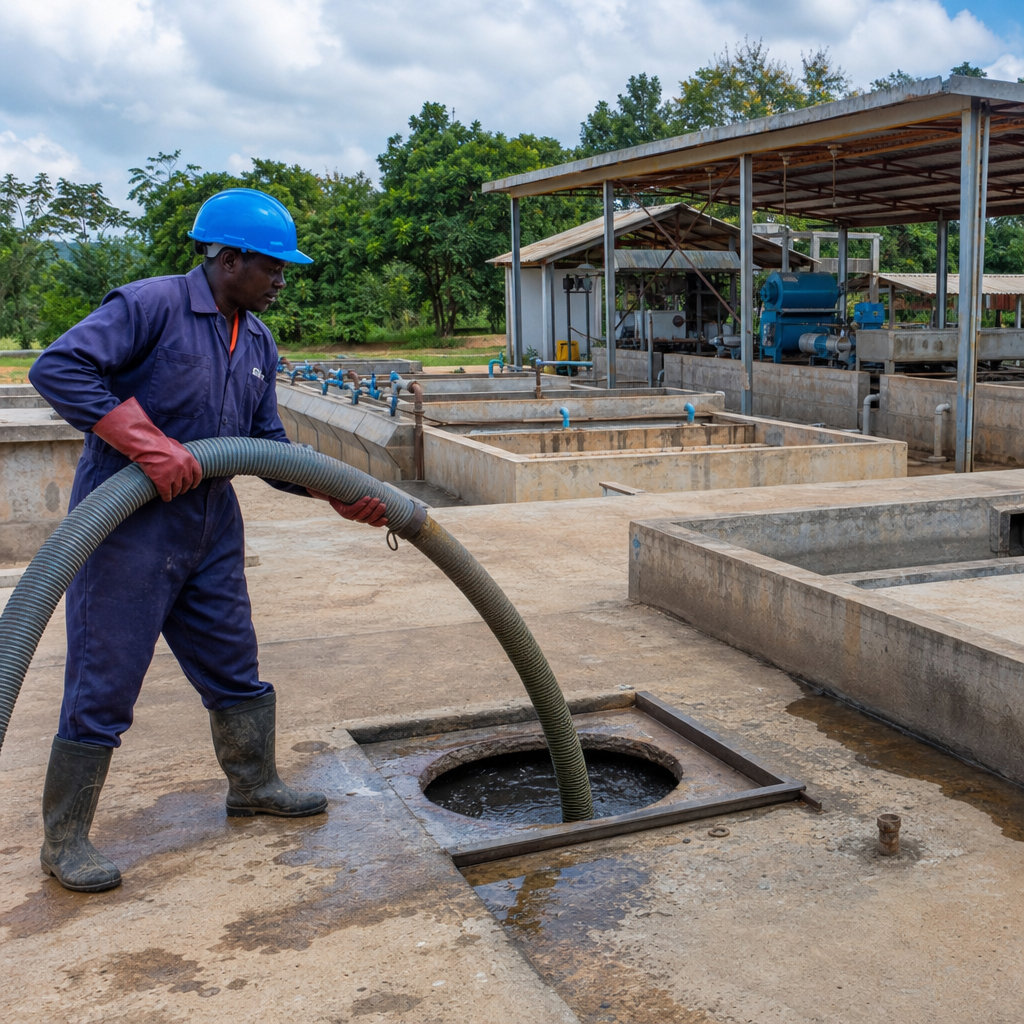
In practice, reuse safety requires more than a treatment unit. Workers need personal protective equipment, handwashing facilities, vaccination policies where appropriate, and safe standard operating procedures for emptying and transport. Treatment sites need drainage control, vector management, recordkeeping, and product testing for parameters such as moisture, stability, helminth reduction, and sometimes fecal indicator organisms. End users need instructions on crop restrictions, application rates, withholding periods, and storage conditions. If any link is weak, environmental and health gains are undermined. The lesson from successful programs is consistent: reusable products must be treated like regulated outputs, not informal byproducts.
There are also limits to what EcoSan should attempt. Not every sludge stream is suitable for every reuse pathway. Industrial contamination, heavy metals in mixed waste streams, and persistent chemical residues can restrict agricultural application. In some cities, the safest option for portions of the sludge may be controlled disposal or thermal treatment rather than land application. A balanced EcoSan strategy recognizes these constraints and avoids exaggerated claims. Circularity is valuable, but only when reuse is demonstrably safe, socially accepted, and environmentally preferable to the alternatives available in that location.
Implementation challenges, financing, and the path forward
The biggest implementation challenge is not technical feasibility; it is institutional alignment. EcoSan needs municipalities, utilities, public health agencies, private emptiers, farmers, and communities to work within one service model. Many failures happen because responsibilities are fragmented. A city may promote improved toilets without licensing emptiers, design a treatment plant without budgeting for operations, or produce compost without developing off-take markets. Financing must cover the whole chain. Common models include user tariffs, cross-subsidies, municipal contracts, sanitation levies, carbon-oriented climate finance in limited cases, and revenue from compost or fuel products, though reuse income rarely covers everything.
Social acceptance is another decisive factor. People must trust both the toilet and the reuse product. That trust is built through design quality, reliable service, odor control, visible cleanliness, and transparent testing. In projects I have reviewed, adoption improved when users were shown how systems worked, when collection schedules were predictable, and when farmers received side-by-side crop demonstrations. Language matters too. Communities respond better to clear explanations about soil improvement, water protection, and safe processing than to abstract sustainability claims. EcoSan succeeds when it fits daily behavior instead of asking households to become sanitation experts.
Advancing environmental sustainability with EcoSan means treating sanitation as essential green infrastructure. The main benefit is not one product or one toilet style; it is a managed system that protects water, recovers nutrients, reduces pollution, and supports climate resilience. For this hub topic, the priority is to evaluate every sanitation decision through the full faecal sludge chain: containment, collection, transport, treatment, and safe end use. Start with local conditions, choose technologies that operators can actually maintain, and apply clear safety standards. If you are planning sanitation improvements, use EcoSan principles to design services that are safer for people and better for the environment.
Frequently Asked Questions
What is EcoSan, and how does it relate to sustainable faecal sludge management?
EcoSan, or ecological sanitation, is an approach to sanitation that views human excreta as a recoverable resource instead of something that must simply be discarded. In the context of sustainable faecal sludge management, this is a major shift in thinking. Rather than focusing only on collection and disposal, EcoSan connects the full sanitation chain: toilet design, storage, treatment, transport where needed, nutrient recovery, water protection, and the safe reuse of treated outputs. The goal is to manage faecal sludge in a way that protects public health while also capturing value from nutrients and organic matter that would otherwise be wasted.
This matters because conventional sanitation systems often treat sludge as a burden, which can lead to unsafe dumping, water contamination, and the loss of valuable soil nutrients. EcoSan aims to break that pattern. By encouraging source separation, controlled treatment, and reuse in agriculture or landscaping where appropriate, it reduces pollution and supports circular resource use. In practical terms, EcoSan strengthens sustainable faecal sludge management by making the system safer, more efficient, and more environmentally responsible from start to finish.
How does EcoSan help reduce pollution and protect water resources?
One of the strongest benefits of EcoSan is its ability to reduce the movement of untreated or poorly managed human waste into rivers, groundwater, lakes, and coastal environments. Traditional sanitation failures often happen when pits leak, septic systems overflow, sewers are overloaded, or sludge is disposed of without proper treatment. EcoSan addresses these risks by promoting containment, treatment, and reuse methods that are designed to keep pathogens and nutrients out of water bodies. This is especially important in areas where communities depend on shallow groundwater or local surface water for drinking, washing, or irrigation.
EcoSan also supports water protection by reducing reliance on water-intensive sanitation systems. Many ecological sanitation models use little or no flush water, which helps conserve freshwater and lowers the volume of wastewater that must be managed downstream. Less water entering the sanitation chain can mean lower transport costs, simpler treatment needs, and less pressure on aging sewer networks. At the same time, when nutrients such as nitrogen and phosphorus are recovered through safe treatment and reuse, they are kept within productive land systems instead of becoming pollutants that trigger algal blooms, oxygen depletion, and ecosystem damage. In that way, EcoSan contributes directly to cleaner water, healthier ecosystems, and more resilient sanitation infrastructure.
Can treated faecal sludge really be reused safely in EcoSan systems?
Yes, treated faecal sludge can be reused safely, but only when treatment is properly designed, operated, and monitored. Safety is the central condition. EcoSan does not promote direct reuse of untreated excreta; instead, it supports treatment processes that reduce pathogens and stabilize the material so it can be handled and applied with much lower risk. Depending on the system, treatment may involve dehydration, composting, storage for pathogen die-off, alkaline treatment, co-composting with organic waste, or other controlled methods. The appropriate option depends on climate, system design, local regulations, and the intended end use.
Once adequately treated, the resulting material can provide organic matter and nutrients that improve soil structure and fertility. This can be particularly valuable in areas where soils are degraded or where farmers have limited access to commercial fertilizers. However, safe reuse requires more than treatment alone. It also depends on clear operational standards, user training, protective equipment where needed, transport controls, crop-use guidelines, and public health oversight. For example, some treated products may be better suited to non-food crops, trees, soil restoration, or landscaping, while others may meet stricter standards for agricultural use. In short, EcoSan supports reuse, but it does so through a risk-management framework that puts health, quality control, and environmental protection first.
What are the main advantages of EcoSan compared with conventional sanitation approaches?
EcoSan offers several important advantages over conventional sanitation, particularly in places where water is scarce, sewer infrastructure is limited, treatment capacity is weak, or nutrient loss is a major concern. First, it supports resource recovery. Human excreta contain nutrients such as nitrogen, phosphorus, and potassium, along with organic matter that can benefit soils after proper treatment. Conventional systems often dilute these materials with large volumes of water and then struggle to remove them during treatment, whereas EcoSan is designed to recover and reuse them productively.
Second, EcoSan can reduce environmental pressure. By minimizing untreated discharges, lowering freshwater demand, and easing stress on sewer systems and treatment plants, it helps create sanitation systems that are more sustainable over time. Third, EcoSan can improve resilience at the local level. Decentralized ecological sanitation options are often better suited to informal settlements, peri-urban areas, flood-prone zones, and rural communities where centralized sewerage is impractical or too expensive. Fourth, it can create economic value by turning waste management costs into opportunities for compost production, soil improvement, and nutrient recycling. While EcoSan is not a universal replacement for every sanitation model, it is a powerful strategy where integrated waste management, water conservation, and safe reuse are priorities.
What challenges must be addressed to make EcoSan successful at scale?
Although EcoSan has clear benefits, successful large-scale adoption depends on addressing technical, social, institutional, and economic challenges. On the technical side, systems must be properly designed for local conditions, including climate, soil type, water table levels, population density, and expected maintenance capacity. Poor design or weak operation can undermine both safety and user acceptance. Treatment performance must be reliable, and the full service chain must be planned carefully, from containment and collection to treatment, storage, transport, and final reuse or disposal.
Social acceptance is equally important. Because EcoSan changes how people think about sanitation and reuse, communities need clear communication, practical training, and confidence that the system is safe and dignified. Users are much more likely to support EcoSan when toilets are convenient, odor is controlled, maintenance is straightforward, and the benefits are visible. Institutional support also matters. Policies, technical standards, land-use rules, agricultural regulations, and monitoring systems all need to align so that safe reuse is encouraged rather than left informal or unmanaged. Finally, financing and market development are essential. Treated products need dependable end uses, and service providers need viable business models to sustain operations. When these challenges are addressed together, EcoSan can move beyond small pilot projects and become a practical, scalable component of sustainable faecal sludge management.