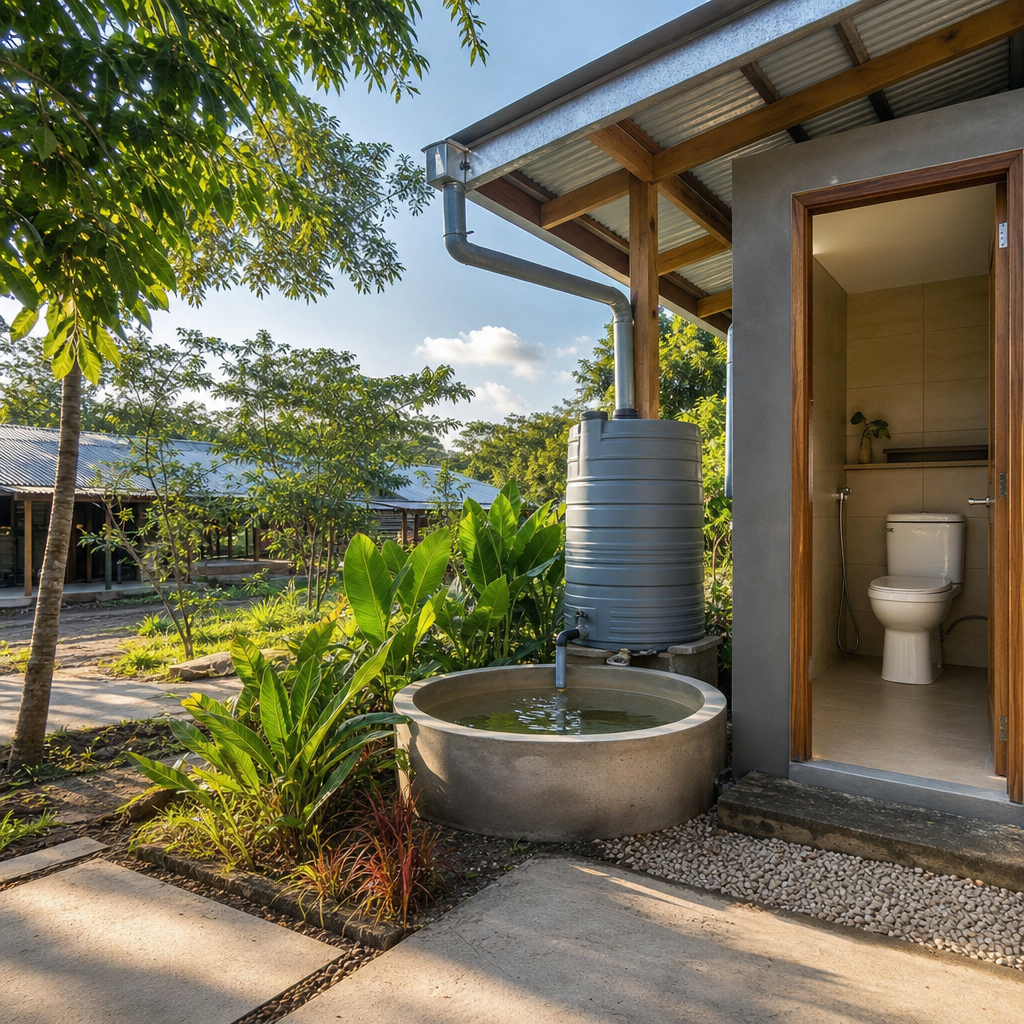
Eco-friendly toilets are one of the most practical tools for conservation because they reduce water use, prevent pollution, recover nutrients, and lower the burden on fragile sanitation infrastructure. In this context, “eco-friendly toilets” includes low-flow flush systems, composting toilets, urine-diverting dry toilets, vacuum toilets, and other designs that minimize resource consumption while protecting public health. When discussing EcoSan’s role in environmental protection, the term refers to ecological sanitation: a systems approach that treats human waste not as a disposal problem alone, but as a resource stream that can be safely managed, transformed, and returned to productive use. I have worked on sanitation content and project assessments where the environmental gains were clear only after looking beyond the bathroom itself and tracing water, energy, nutrient, and waste flows across the entire system.
This matters because conventional sanitation is resource intensive. A standard older toilet can use 3.5 to 7 gallons per flush, while modern WaterSense labeled models in the United States use 1.28 gallons or less. Multiply that by daily household use and the water demand becomes substantial, especially in drought-prone regions. Wastewater treatment also consumes energy and capital, and where sewerage is incomplete or failing, untreated sewage can contaminate rivers, groundwater, and coastal waters. Ecological sanitation addresses these pressures directly. It supports conservation by reducing freshwater withdrawals, cutting nutrient discharge that fuels algal blooms, and in some cases creating compost or fertilizer substitutes that reduce dependence on synthetic inputs. For households, institutions, campgrounds, off-grid buildings, and communities with limited sewer access, eco-friendly toilets can be both an environmental strategy and a practical sanitation solution.
As a hub within the broader environmental impact topic, this article explains how EcoSan protects water resources, soil, climate, and ecosystems; where different toilet technologies fit; what tradeoffs decision-makers should weigh; and how to evaluate performance in real settings. It is designed to answer the questions people usually ask first: Which eco-friendly toilet saves the most water? Are composting toilets sanitary? Can human waste really be reused safely? What role do regulations, maintenance, and user behavior play? By the end, the conservation value of ecological sanitation is straightforward: when designed and managed correctly, eco-friendly toilets convert sanitation from a linear, wasteful system into a circular one that uses fewer resources and causes less environmental harm.
How EcoSan Reduces Water Use and Protects Freshwater
The most immediate conservation benefit of eco-friendly toilets is water savings. Conventional flush toilets move excreta with potable water, which is often the highest-quality water in a building. That is an inefficient match between resource quality and function. Low-flow toilets improve the equation significantly, and dual-flush models go further by offering a reduced flush for liquid waste and a full flush for solids. Composting toilets and urine-diverting dry toilets remove flush water almost entirely. In homes where indoor water demand is a concern, toilet efficiency can reshape the whole water balance because toilets often account for a large share of indoor use.
Protecting freshwater is not only about using less water; it is also about keeping pollutants out of it. In areas with aging sewer lines, combined sewer overflows, poor septic performance, or informal sanitation, nutrient-rich waste can enter lakes and streams. Nitrogen and phosphorus are especially important because they drive eutrophication, a process that depletes oxygen and damages aquatic life. EcoSan systems reduce these risks by containing waste close to the source, separating urine where appropriate, and enabling controlled treatment rather than uncontrolled leakage. In rural areas with shallow groundwater, well-designed urine-diverting dry toilets can reduce pathogen and nutrient migration better than poorly sited pit latrines. The key is correct installation, adequate vault protection, and safe handling protocols.
From a planning perspective, water conservation also means resilience. During drought restrictions, households with dry or near-dry sanitation options are less exposed to supply disruptions. Parks, nature reserves, and remote tourism sites often choose composting or vault-based ecological systems because extending sewer lines is costly and environmentally disruptive. In those settings, the conservation case is stronger than a simple gallons-saved calculation: less trenching, fewer pumping requirements, and lower risk of contamination in sensitive habitats.
Nutrient Recovery and the Circular Use of Waste
EcoSan’s most distinctive contribution to environmental protection is nutrient recovery. Human urine contains most of the nitrogen and a substantial share of the phosphorus excreted by the body, while feces contain organic matter and additional nutrients. Conventional sewer systems dilute these materials and mix them with large volumes of water, making recovery more difficult and expensive. Ecological sanitation systems, especially urine-diverting models, preserve nutrient concentration and make targeted treatment possible.
In practice, the conservation value is significant. Phosphorus is a finite mineral resource, and agriculture depends on it. Nitrogen fertilizer production is energy intensive, relying largely on the Haber-Bosch process. When treated excreta products substitute for part of that demand, the environmental gains extend beyond sanitation into farming, mining, and industrial emissions. I have seen the concept explained most effectively when communities compare sanitation outputs to familiar agricultural inputs: the point is not that every household becomes a fertilizer producer, but that nutrient loops can be closed instead of broken.
Safe reuse requires discipline. Urine diversion, dehydration, composting, storage time, pH management, and temperature all matter. The World Health Organization has long provided sanitation and wastewater reuse guidance built around health protection barriers, and serious EcoSan projects follow that logic rather than assuming all recovered material is automatically safe. Crops, climate, pathogen risks, and local regulation determine what reuse pathway is appropriate. Even when direct agricultural reuse is not feasible, source separation can still reduce nutrient loading on wastewater systems and lower downstream treatment pressure.
| System type | Water use | Main conservation benefit | Best-fit settings |
|---|---|---|---|
| Low-flow or dual-flush toilet | Low | Reduces potable water demand with familiar user experience | Urban homes, retrofits, commercial buildings |
| Composting toilet | Very low to none | Cuts water use and can stabilize solids for beneficial use | Off-grid homes, parks, cabins, remote sites |
| Urine-diverting dry toilet | None | Enables nutrient recovery and limits wastewater generation | Water-scarce regions, rural projects, resilience planning |
| Vacuum toilet | Very low | Minimizes water use and supports concentrated waste collection | Transport hubs, specialized buildings, marine applications |
Pollution Prevention, Soil Protection, and Ecosystem Health
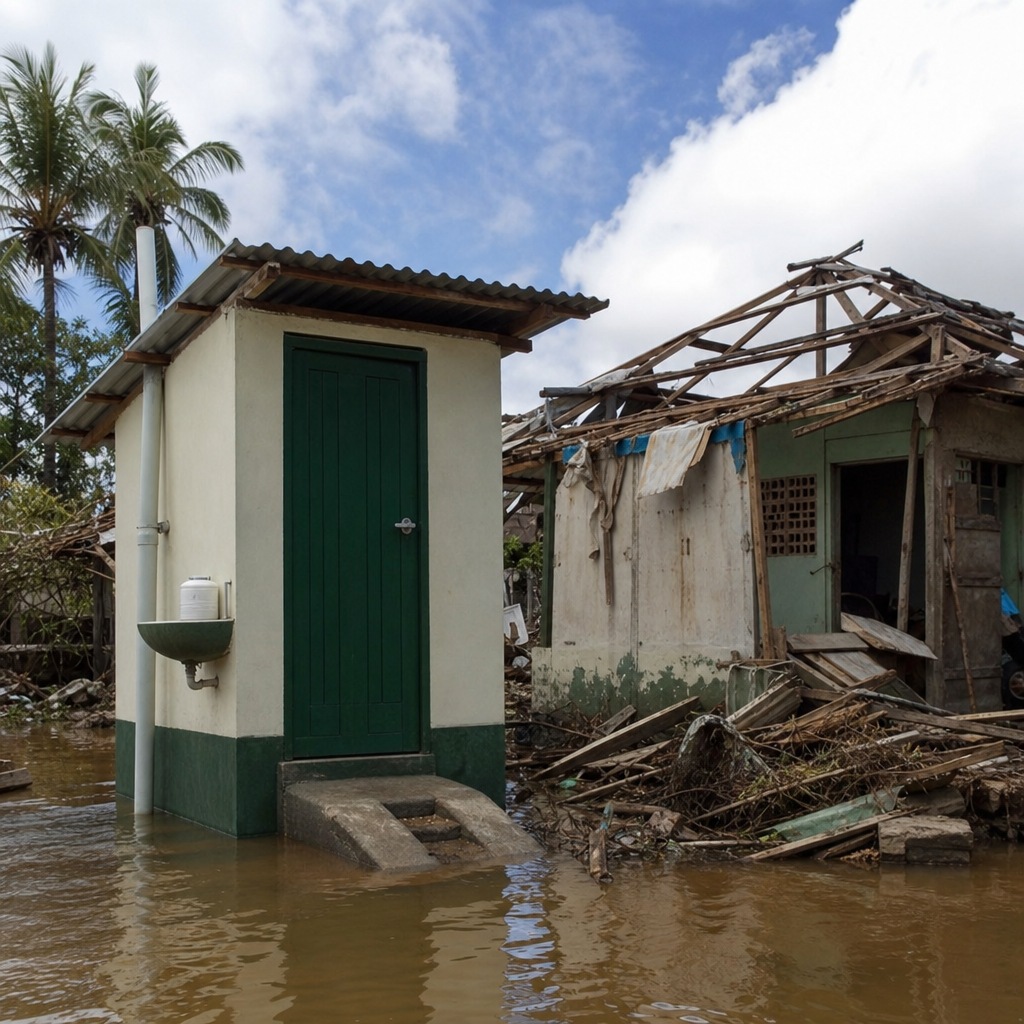
Sanitation failures often become environmental failures first. Leaking septic tanks, overloaded pit latrines, and untreated discharge can contaminate soils, ditches, wetlands, and waterways long before the damage is visible to non-specialists. Eco-friendly toilets help by reducing wastewater volume, improving containment, and making treatment steps more manageable. This is particularly important in flood-prone areas, where conventional pits and poorly sealed systems can overflow and spread pathogens across land and into water bodies.
Soil protection is an underrated benefit. When waste is managed badly, nutrient overload and pathogen contamination can degrade land near disposal sites. With ecological sanitation, the objective is controlled processing, not indiscriminate dumping. Composting toilets, for example, rely on aerobic decomposition, moisture control, and bulking agents such as sawdust or coconut coir to create conditions that reduce odors and support stabilization. They are not all the same: some are self-contained units for cabins, while others are central systems with larger composting chambers. Their environmental performance depends on design details such as ventilation, leachate management, and the separation of fresh inputs from maturing material.
Ecosystem protection also includes infrastructure effects. Every gallon not flushed is a gallon not transported, pumped, and treated. In decentralized settings, that can reduce the need for soakaways and drain fields that alter soil hydrology. In centralized systems, reduced inflow can help treatment plants cope with peak loads and infiltration issues. Conservation is therefore happening at several levels at once: source reduction, pollution prevention, and lower stress on natural receiving environments.
Climate, Energy, and Lifecycle Impacts
EcoSan contributes to climate protection in more than one way. First, lower water use means lower energy use for water extraction, treatment, distribution, and wastewater processing. Utilities spend substantial electricity moving water, and those emissions matter at scale. Second, nutrient recovery can displace a portion of synthetic fertilizer demand, avoiding part of the emissions associated with manufacturing and transport. Third, well-managed dry sanitation can reduce methane generation compared with anaerobic, poorly controlled waste breakdown, although outcomes depend heavily on system design and handling.
Lifecycle thinking is essential here. A toilet should not be called sustainable only because it uses less water. Materials, durability, maintenance frequency, transport needs, and end-of-life disposal all count. A high-quality composting toilet with durable components, effective ventilation, and a long service life may outperform a cheaper unit that fails early or requires constant replacement parts. Likewise, a low-flow flush toilet connected to an efficient treatment system may be the most realistic environmental choice in a dense urban area, while a dry toilet may be superior in an arid rural setting. There is no single best technology independent of context.
Transportation and servicing also affect outcomes. Some container-based sanitation models have strong environmental potential because they prevent open discharge and support centralized treatment, but collection logistics must be efficient. If service routes are poorly organized, fuel use and costs rise. Good project design accounts for those tradeoffs early by mapping user density, road access, storage intervals, and treatment capacity.
Public Health, Standards, and the Limits of Good Technology
No eco-friendly toilet protects the environment if it fails to protect people. Public health is the nonnegotiable foundation of ecological sanitation. Pathogen control, user safety, vector exclusion, odor management, and handwashing access are basic requirements, not optional upgrades. The conservation benefits of EcoSan are real only when systems are operated according to standards and matched to local capabilities.
This is where many discussions become too simplistic. A composting toilet is not automatically safe because composting sounds natural. A urine-diverting toilet is not automatically successful because it saves water. Performance depends on user training, maintenance schedules, cleaning practices, spare parts availability, and clear responsibility for final treatment or reuse. In schools and public facilities, I have repeatedly seen that governance matters as much as hardware. A well-specified system with no budget for caretaking often underperforms a simpler system with strong management.
Regulatory compliance varies by country and municipality, but the underlying principles are consistent: protect groundwater, prevent direct exposure, verify treatment, and manage residuals responsibly. Building codes, NSF or comparable product standards, local health department rules, and agricultural reuse regulations may all apply. Decision-makers should confirm what is permitted before selecting a system, especially if nutrient reuse is planned. That due diligence prevents expensive redesigns and protects public confidence.
Choosing the Right Eco-Friendly Toilet for Maximum Conservation
The right choice depends on water availability, soil conditions, occupancy patterns, user expectations, budget, servicing capacity, and legal constraints. For most existing urban homes, replacing an inefficient toilet with a WaterSense labeled model is the fastest conservation win because installation is straightforward and behavior change is minimal. For off-grid houses, cabins, tiny homes, and protected natural areas, composting toilets can provide major water savings and reduce infrastructure disturbance. For water-scarce regions or places where nutrient recovery is a strategic goal, urine-diverting dry toilets offer the strongest circularity benefits, provided training and safe reuse systems are in place.
Institutional and community projects should evaluate more than purchase price. They need a whole-system comparison that includes construction, maintenance labor, consumables, collection or emptying, treatment, user acceptance, and environmental risk reduction. Pilots are useful because they reveal practical issues such as urine scaling in pipes, poor ventilation placement, misuse by first-time users, or seasonal moisture problems in composting chambers. These are solvable problems, but they should be discovered before large-scale rollout.
EcoSan’s role in environmental protection is ultimately systemic. Eco-friendly toilets conserve water, reduce pollution, support nutrient recovery, and can lower energy and infrastructure burdens when they are chosen well and managed carefully. The main lesson is simple: sanitation design shapes environmental outcomes far beyond the restroom. If you are building, renovating, or planning facilities under the environmental impact umbrella, start by assessing local water stress, waste pathways, and maintenance capacity, then choose the eco-friendly toilet system that delivers measurable conservation benefits for your setting.
Frequently Asked Questions
What makes eco-friendly toilets an important tool for conservation?
Eco-friendly toilets support conservation by reducing the amount of water, energy, and raw materials needed for sanitation while also lowering the risk of pollution. Traditional toilets can use large volumes of clean drinking water to move waste through sewer systems, which places pressure on local water supplies, treatment facilities, and public budgets. In contrast, low-flow, vacuum, composting, and urine-diverting systems are designed to do the same essential job with far fewer resources. That makes them especially valuable in areas facing drought, rapid population growth, weak infrastructure, or environmental stress.
They also help protect ecosystems by reducing contamination of rivers, lakes, groundwater, and soil. When sanitation systems are inefficient, overloaded, or poorly maintained, untreated or partially treated waste can enter the environment and spread pathogens or excess nutrients. Eco-friendly toilet designs aim to prevent that outcome by containing waste more effectively, reducing wastewater volumes, and in some cases transforming waste into safe, usable compost or nutrient products. In the context of environmental protection, EcoSan refers to ecological sanitation approaches that treat human waste not simply as a disposal problem, but as a resource that can be managed safely to support public health, conserve water, and return nutrients to productive use.
How do eco-friendly toilets save water compared to conventional toilets?
Water savings are one of the clearest advantages of eco-friendly toilets. Conventional older toilets may use several gallons of water per flush, and even standard modern models still rely on potable water for every use. Eco-friendly options reduce that demand in different ways. Low-flow toilets use improved bowl and trapway design to achieve effective flushing with much less water. Dual-flush systems allow users to select a smaller flush for liquid waste and a larger one for solid waste, which helps reduce unnecessary water use throughout the day. Vacuum toilets go even further by using pressure differentials to move waste with very small amounts of water.
Some systems, such as composting toilets and urine-diverting dry toilets, eliminate flushing water almost entirely. That can make a major difference in homes, parks, remote facilities, off-grid buildings, and regions where water access is limited or expensive. Reduced water use also creates secondary conservation benefits. Less water entering the sanitation system means less wastewater to transport and treat, which can lower energy use, reduce strain on sewer infrastructure, and cut operating costs for municipalities and property owners. Over time, these combined savings make eco-friendly toilets a practical conservation strategy rather than just a niche sustainability upgrade.
Are composting and urine-diverting toilets safe and sanitary?
Yes, when they are properly designed, installed, used, and maintained, composting toilets and urine-diverting dry toilets can be safe, sanitary, and highly effective. Their safety depends on sound management practices that control moisture, odor, airflow, storage time, and handling procedures. Composting toilets work by creating conditions that support the controlled breakdown of waste, often through ventilation, carbon-rich cover material, and moisture balance. Urine-diverting systems separate liquid and solid waste at the source, which helps reduce odor, makes treatment more efficient, and supports nutrient recovery.
These systems are not simply improvised alternatives to flush toilets; many are engineered products with established performance standards. When operated correctly, they can limit human contact with waste, reduce fly breeding, and minimize contamination of water sources. The key is routine maintenance, user education, and compliance with local health and building regulations. In many settings, especially where sewer connections are unavailable or septic systems are unreliable, eco-friendly dry sanitation can improve hygiene by offering a more controlled and resilient waste management solution. As with any sanitation technology, public health outcomes depend less on the label and more on whether the system is selected appropriately and managed responsibly.
Can eco-friendly toilets really help reduce pollution and recover nutrients?
They can, and this is one of the most important reasons they are discussed in conservation and environmental planning. Human waste contains nutrients such as nitrogen, phosphorus, and potassium. In conventional sanitation systems, these nutrients often become pollutants when they enter waterways through leaks, overflow events, poor treatment, or runoff. Excess nutrients can contribute to algal blooms, oxygen depletion, and long-term damage to aquatic ecosystems. Eco-friendly toilets help address this by reducing wastewater volumes, separating waste streams, and enabling more controlled treatment.
Ecological sanitation approaches, including composting and urine diversion, are particularly relevant here because they support the recovery of nutrients in forms that may be reused safely under appropriate regulations and treatment standards. Urine, for example, contains a significant share of the nutrients excreted by humans and can be managed separately for more efficient recovery. Solid waste, once properly treated, may be converted into soil amendments in some systems. This does not mean every eco-friendly toilet automatically creates reusable products, but it does mean these toilets can be part of a circular sanitation model that reduces waste, prevents pollution, and conserves finite resources such as phosphorus. That combination of pollution prevention and resource recovery is central to EcoSan’s role in environmental protection.
What types of eco-friendly toilets are best for homes, businesses, and public facilities?
The best type depends on water availability, infrastructure, budget, maintenance capacity, user expectations, and local regulations. For many homes and commercial buildings connected to plumbing, low-flow and dual-flush toilets are often the easiest upgrade because they reduce water use without requiring major changes in user behavior. They are familiar, widely available, and compatible with conventional building layouts. Vacuum toilets may be a strong option in large facilities, transportation hubs, marine settings, or specialized buildings where very low water use and efficient waste transport are priorities.
Composting toilets and urine-diverting dry toilets can be excellent choices for off-grid homes, cabins, ecotourism sites, rural schools, parks, and places with limited sewer access or fragile water resources. These systems are especially useful where wastewater treatment is difficult, expensive, or environmentally risky. However, they require a realistic plan for maintenance, servicing, and user guidance. Public facilities may benefit from robust low-water systems if high traffic makes dry systems harder to manage, while remote or conservation-focused sites may find that dry or source-separating toilets align better with sustainability goals. The most effective approach is to match the toilet technology to the local context rather than assuming one design fits every situation. A well-chosen eco-friendly toilet improves sanitation performance, supports conservation goals, and remains practical for the people who use and maintain it every day.