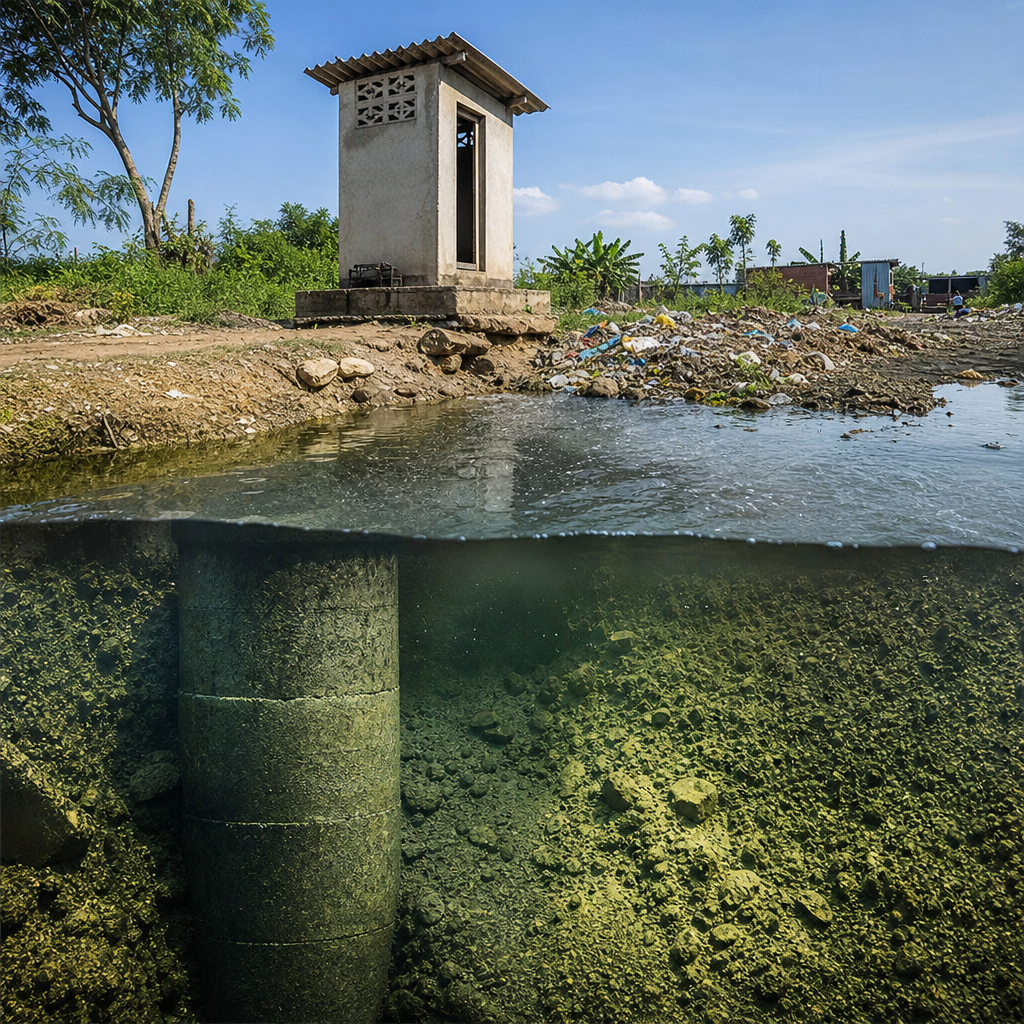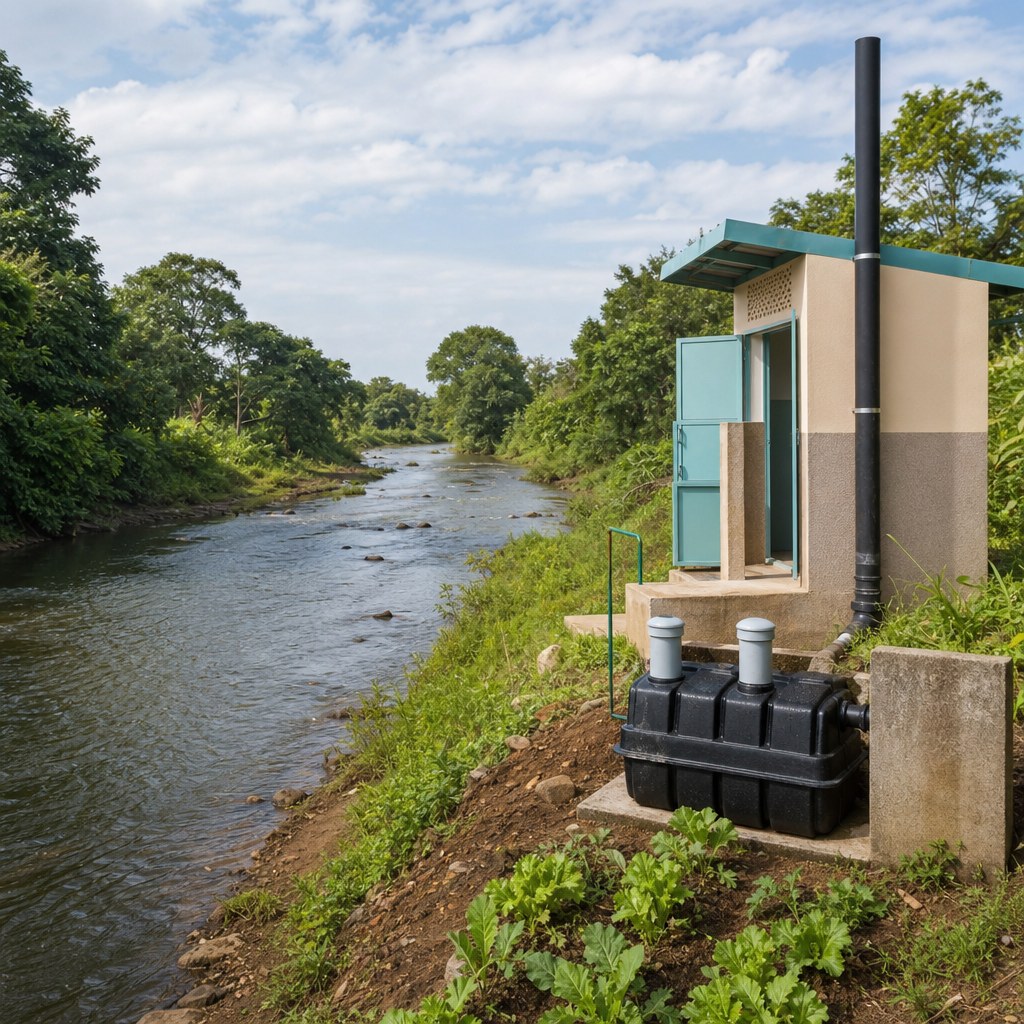
River sedimentation is one of the most visible signs of environmental decline, yet it often begins with hidden failures in sanitation, drainage, and land management upstream. When untreated waste, nutrient-rich effluent, and poorly managed sludge enter catchments, they destabilize soils, overload waterways, and accelerate the movement of fine particles into rivers. EcoSan, short for ecological sanitation, addresses that upstream problem by treating human waste as a resource rather than a disposal burden. In practice, EcoSan systems separate, contain, sanitize, and reuse nutrients and organic matter in ways that reduce water contamination, protect soils, and lower the pressure on river systems.
This matters because sedimentation is not just mud in the water. Excess sediment reduces reservoir capacity, smothers fish habitat, raises water treatment costs, increases flood risk, and carries attached pollutants such as phosphorus, pathogens, and heavy metals. According to the Food and Agriculture Organization and UNEP literature on land and water degradation, sediment loads often rise where sanitation infrastructure is weak and watershed management is fragmented. In projects I have worked on in peri-urban and rural settings, the pattern is consistent: where waste is flushed or dumped into unstable drainage channels, erosion worsens quickly during storm events. Where waste is captured, composted, dried, or reused near the source, runoff becomes cleaner and soils are easier to manage.
EcoSan’s role in environmental protection is therefore broader than toilet design. It includes source separation, nutrient recovery, pathogen reduction, safe reuse, reduced freshwater demand, and better integration with agriculture and watershed planning. Common systems include urine-diverting dry toilets, composting toilets, arborloo variants, dehydrating vaults, and container-based sanitation models linked to off-site treatment. Each aims to interrupt the pathway that normally carries waste into streams and rivers. As a hub topic under environmental impact, EcoSan connects directly to water quality, soil conservation, climate resilience, public health, and circular resource use. Understanding that connection is essential for anyone evaluating sustainable sanitation and river protection strategies today.
How EcoSan interrupts the sedimentation cycle
EcoSan reduces river sedimentation by breaking several linked processes at once. First, it limits the direct discharge of fecal sludge and wastewater into drains, gullies, and tributaries. In many low-infrastructure areas, pit overflow, open defecation, and damaged septic systems contribute not only pathogens but also high organic loads that strip vegetation from streambanks and compact surrounding ground through uncontrolled use. Once vegetation declines and soils are exposed, rainfall detaches particles more easily and runoff transports them into river channels. By safely containing excreta at the household or community level, EcoSan reduces that contamination pressure before it reaches the watershed.
Second, EcoSan supports nutrient recovery instead of nutrient dumping. Nitrogen and phosphorus from unmanaged waste can stimulate dense aquatic plant and algal growth. When that growth dies back, channel conditions change, dissolved oxygen drops, and fine organic sediments accumulate. In slower reaches and reservoirs, these deposits trap more material and alter flow patterns. Urine diversion and controlled composting keep a significant share of those nutrients on land, where they can be applied at agronomic rates. That lowers eutrophication risk and decreases the secondary sediment buildup associated with degraded aquatic ecosystems.
Third, EcoSan strengthens soil management. Sanitized compost or treated biosolids can increase soil organic matter, improve aggregate stability, and raise infiltration rates when applied correctly. Better soil structure means less crusting, less overland flow, and less erosion during rainstorms. I have seen farms using mature compost from ecological sanitation systems cut visible runoff from homestead plots after only two seasons because the soil held moisture better and supported denser ground cover. The sediment reduction benefit is indirect but important: healthier soils shed fewer particles into nearby streams.
Core environmental protection pathways
The environmental value of EcoSan is easiest to understand through its pathways of protection. One pathway is water source protection. Dry or low-water sanitation systems reduce blackwater volumes dramatically, which matters in settlements where drains ultimately empty into rivers without advanced treatment. Another pathway is groundwater protection, especially where lined vaults or properly sited systems replace leaky pits in high water table areas. A third pathway is nutrient cycling. Instead of treating excreta solely as waste, EcoSan recovers nitrogen, phosphorus, potassium, and carbon that would otherwise become pollutants.
A fourth pathway is land stabilization. When communities have safe sanitation close to home, trampling and informal waste disposal along riverbanks often decline. This protects riparian vegetation and reduces bank disturbance. Fifth, EcoSan can reduce demand on centralized wastewater systems that are expensive to build and frequently underperform during storms. In overloaded sewer networks, combined overflows can send both solids and contaminants into rivers. Decentralized ecological sanitation lowers that load at the source.
There are limits. Poorly maintained EcoSan units can still create environmental risks if vaults flood, urine is overapplied, or compost is removed before adequate pathogen reduction. Climate, user behavior, soil type, and institutional support all affect outcomes. The strongest environmental results come when sanitation design is paired with training, reuse protocols, and catchment-level planning rather than installed as a stand-alone hardware intervention.
| EcoSan practice | Environmental mechanism | Sedimentation benefit | Example |
|---|---|---|---|
| Urine-diverting dry toilet | Separates liquids and solids, reducing wastewater discharge | Lowers polluted runoff entering drainage channels | Water-scarce schools replacing pour-flush units |
| Composting toilet | Stabilizes organic matter for soil amendment | Improves soil structure and reduces erosion | Small farms using cured compost on degraded plots |
| Container-based sanitation | Captures waste for controlled off-site treatment | Prevents dumping into streams and gullies | Dense informal settlements without sewers |
| Arborloo or tree-linked reuse | Concentrates nutrients around perennial vegetation | Increases ground cover and root stabilization | Homesteads establishing fruit trees on former pits |
Why sanitation influences erosion and river health
At first glance, sanitation and sediment may seem like separate issues. In field assessments, they rarely are. Waste disposal patterns shape how people use land, where greywater flows, and whether drainage corridors become informal dumping sites. Once drains clog with solids and organic matter, stormwater overtops onto unprotected ground, cuts new channels, and transports silt into larger streams. In urban fringes, I have repeatedly observed eroded footpaths forming because wastewater was discharged daily onto compacted slopes. That persistent wetting killed vegetation, weakened the surface, and turned ordinary rain into a sediment transport event.
River health also depends on what sediment carries. Fine particles often bind phosphorus, fecal bacteria, microplastics, and trace contaminants. So reducing sedimentation through EcoSan improves more than turbidity. It can lower disease exposure, protect aquatic habitat, and reduce treatment costs for downstream users. Utilities spend significant amounts removing turbidity and associated organics from raw water; when upstream source protection fails, those costs rise. Ecological sanitation supports source protection by minimizing contaminant release at the household and community scale.
There is also a resilience dimension. During extreme rainfall, conventional pits and sewers can fail catastrophically, releasing sludge that settles in floodplains and channels. Well-designed EcoSan systems, especially raised, sealed, or containerized models, can be adapted to flood-prone sites more effectively. They do not eliminate flood risk, but they reduce the amount of mobile waste available to be washed into rivers during storm events.
Applications in rural watersheds, towns, and informal settlements
EcoSan is not one technology for one setting. In rural watersheds, urine-diverting dry toilets and composting systems often perform well where water is scarce and agriculture can absorb recovered nutrients. The environmental protection benefit is strongest when farmers apply treated outputs according to crop needs, maintain mulch cover, and combine sanitation improvements with contouring or agroforestry. In those conditions, EcoSan contributes to a full land-and-water management package rather than a narrow sanitation upgrade.
In small towns, markets, schools, and transport hubs, public EcoSan facilities can reduce pressure on undersized sewers and poorly maintained septic tanks. Schools are a good example because they generate predictable flows and can use urine diversion to reduce odors and water demand. When paired with handwashing, operation budgets, and scheduled emptying, such systems reduce local pollution loads that would otherwise move into drainage networks. For municipal planners, this makes EcoSan relevant to stormwater management as well as sanitation policy.
In dense informal settlements, space constraints change the equation. Large composting chambers may be impractical, but container-based sanitation linked to professional collection can prevent widespread dumping into canals and streams. Several operators in African and Asian cities have shown that reliable pickup and centralized thermophilic treatment can outperform informal pit emptying on both public health and environmental grounds. The lesson is simple: EcoSan works best when the service chain, not just the toilet, is designed around real settlement conditions.
Design, operation, and policy conditions that determine success
The impact of EcoSan on reducing river sedimentation depends on details. Siting is critical: systems should avoid floodways, unstable slopes, and shallow groundwater unless specifically engineered for those conditions. Vault ventilation, urine storage, moisture control, and safe access for emptying are not minor features; they determine whether waste stays contained and becomes reusable material. Pathogen reduction targets should align with WHO sanitation and reuse guidance, and local agricultural extension services should help set application rates for urine and compost.
Monitoring matters as much as construction. Communities and service providers should track fill levels, diversion performance, moisture balance, user compliance, and reuse outcomes. At the watershed scale, useful indicators include turbidity, total suspended solids, E. coli, riparian cover, and drainage blockages before and after implementation. Without baseline data, claims about environmental benefit remain anecdotal. With data, planners can compare EcoSan to septic upgrades, sewer extensions, or hybrid models and invest where returns are strongest.
Policy support is equally important. Building codes, fertilizer regulations, sludge transport rules, and land tenure all influence whether ecological sanitation can scale. Where regulations treat all recovered products as waste indefinitely, reuse becomes difficult and disposal costs rise. Where standards clearly define treatment, storage, and application requirements, safe nutrient recovery becomes feasible. The most effective programs also invest in user training, local maintenance enterprises, and links between sanitation departments, watershed agencies, and agricultural officers.
What this means for the broader environmental impact agenda
EcoSan’s role in environmental protection is best understood as prevention at the source. It reduces pollutant loading, protects soils, supports vegetation, conserves water, and turns a sanitation liability into a resource stream. Those benefits combine to reduce one of the most persistent drivers of river decline: the steady delivery of contaminated sediments from unmanaged human settlements and degraded land. It is not a silver bullet, and it does not replace erosion control, stormwater engineering, or wastewater treatment where those are needed. But it addresses a neglected link in the chain that connects sanitation failures to river sedimentation.
For organizations building an environmental impact strategy, EcoSan deserves hub-level attention because it connects multiple outcomes that are often managed separately. Better sanitation can mean cleaner rivers, lower turbidity, more stable soils, healthier riparian corridors, improved agricultural reuse, and stronger climate resilience. The practical takeaway is to evaluate sanitation decisions at watershed scale, not just at toilet or household scale. Ask where waste goes during storms, how nutrients are handled, whether reuse improves soil cover, and which service model can be maintained locally. If those questions guide planning, EcoSan becomes a measurable environmental protection tool, not just an alternative sanitation option. Explore the related subtopics under environmental impact and use this hub to map the right strategy for your watershed.
Frequently Asked Questions
1. How does EcoSan help reduce river sedimentation?
EcoSan helps reduce river sedimentation by addressing one of its lesser-known upstream causes: poorly managed human waste and wastewater. In many watersheds, untreated sewage, nutrient-rich runoff, and sludge disposal contribute to the breakdown of soils and the clogging of drainage systems. When these systems fail, stormwater flows faster across the land, carrying loose particles, organic matter, and contaminants into streams and rivers. EcoSan interrupts that cycle by safely containing, treating, and reusing nutrients from human waste instead of allowing them to enter surrounding soils and waterways in unmanaged ways.
Its impact is both direct and indirect. Directly, EcoSan reduces the volume of untreated waste entering river catchments, which helps prevent the nutrient overloads and biological imbalances that can weaken vegetation and destabilize banks. Indirectly, it supports healthier land management by turning sanitized waste into useful soil amendments, reducing pressure on degraded farmland and improving soil structure where applied correctly. Better soil structure means greater infiltration, less surface runoff, and fewer fine sediments moving downstream during rainfall events. In this way, EcoSan is not just a sanitation solution; it is part of a broader watershed protection strategy that can significantly reduce the conditions that lead to chronic river sedimentation.
2. Why is sanitation linked to sediment in rivers in the first place?
At first glance, sanitation and river sedimentation may seem like separate issues, but they are closely connected through hydrology, soil stability, and land-use pressure. When sanitation systems are inadequate, waste often ends up in open drains, pit overflows, informal dumping sites, or directly on the land. This pollution changes the physical and ecological condition of catchments. Nutrient loading can trigger excessive plant growth in some places and vegetation loss in others, while clogged drainage channels and saturated soils increase erosion risk during storms. Over time, these failures create pathways for soil particles to be detached and transported into nearby streams.
There is also a land management dimension. Communities without effective sanitation often face broader infrastructure weaknesses, including poor drainage and unmanaged greywater flows. These conditions can create gullies, weaken streambanks, and accelerate runoff velocity. In agricultural areas, the lack of safe nutrient recovery means farmers may rely on practices that do not rebuild soil health, leaving land more exposed to erosion. So the link is not simply that waste goes into rivers; it is that sanitation failures contribute to the exact landscape instability that produces sediment. EcoSan matters because it addresses those upstream failures at the source, helping restore the balance between waste management, soil health, and water quality.
3. What makes EcoSan different from conventional sanitation when it comes to protecting watersheds?
EcoSan differs from conventional sanitation because it is designed around resource recovery and ecological protection rather than simple waste disposal. Traditional systems often focus on moving waste away from households as quickly as possible, sometimes without fully considering what happens downstream. If treatment is incomplete or infrastructure is poorly maintained, nutrients, pathogens, and sludge can still reach drainage networks and waterways. In contrast, EcoSan systems aim to safely separate, treat, and reuse waste products in ways that reduce pollution loads and support local soil fertility.
From a watershed perspective, this is important because EcoSan can reduce contamination at the point where it begins, before it spreads through the landscape. Properly managed urine-diverting toilets, composting systems, and decentralized treatment approaches lower the risk of uncontrolled effluent entering streams or saturating nearby soils. They also create opportunities to return nutrients to land in a controlled manner, which can improve soil organic matter and enhance resistance to erosion. The watershed benefit is not just cleaner water; it is a more stable upstream environment where soils hold together better, runoff is moderated, and river systems are less burdened by suspended sediment. That systems-level benefit is what makes EcoSan particularly valuable in regions struggling with both environmental decline and infrastructure limitations.
4. Can EcoSan alone solve the problem of river sedimentation?
EcoSan is a powerful tool, but it is not a standalone cure for river sedimentation. Sediment loads in rivers are usually caused by multiple pressures acting together, including deforestation, poor farming practices, road construction, unstable riverbanks, urban runoff, mining, and weak drainage infrastructure. Sanitation is one important part of that picture, especially in densely populated or environmentally stressed catchments, but meaningful long-term reduction in sedimentation requires an integrated watershed approach.
That said, EcoSan can play a foundational role because it tackles an upstream driver that is often overlooked. By reducing untreated waste, improving nutrient management, and supporting healthier soils, it helps remove conditions that intensify erosion and runoff. When combined with riparian restoration, erosion control, stormwater planning, sustainable agriculture, and regular maintenance of drainage systems, its benefits become much larger. In practical terms, EcoSan should be seen as part of a coordinated strategy: one that improves public health, reduces pollutant loads, strengthens land resilience, and ultimately lowers the amount of fine sediment reaching rivers. So no, EcoSan alone is not enough, but in many watersheds it can be one of the most effective interventions for addressing the problem at its source.
5. What are the long-term environmental benefits of using EcoSan in river catchments?
The long-term environmental benefits of EcoSan in river catchments extend well beyond sanitation. One of the most significant advantages is improved water quality. By preventing untreated human waste and nutrient-rich effluent from entering the landscape, EcoSan reduces contamination that would otherwise travel into streams and rivers. Lower pollution levels can help protect aquatic habitats, reduce algal blooms, and support healthier oxygen levels in water bodies. These improvements matter because sedimentation and pollution often reinforce each other, creating degraded rivers that are harder and more expensive to restore.
Another major benefit is stronger soil and land resilience. When EcoSan outputs are safely processed and correctly applied, they can contribute to better soil fertility, increased organic matter, and improved moisture retention. Healthier soils are less prone to erosion, which means less sediment washing into rivers during heavy rain. Over time, this can support more stable agricultural production, reduced pressure on fragile land, and better functioning ecosystems across the catchment. EcoSan also encourages a circular approach to waste, where nutrients are recovered rather than lost, making communities less dependent on extractive or polluting alternatives. In the long run, that combination of cleaner water, healthier soils, and more sustainable resource use can make river basins more resilient to climate stress, population growth, and ongoing environmental change.