Enhancing urban biodiversity through EcoSan projects starts with a simple truth: cities do not have to be ecological dead ends. When sanitation systems are designed to recover nutrients, protect water, and reduce pollution, they create conditions in which soils, plants, insects, birds, and people can thrive together. EcoSan, short for ecological sanitation, treats human waste as a resource stream rather than a disposal problem. In practice, that means separating, treating, and safely reusing nutrients, water, and organic matter in ways that limit environmental damage and support local ecosystems. For urban planners, utilities, housing developers, and community organizations, EcoSan’s role in environmental protection is increasingly relevant because conventional sanitation often breaks nutrient cycles, consumes large volumes of water, and transfers pollution downstream.
I have worked on sanitation and landscape projects where a drainage decision changed whether a site became a mosquito-prone wasteland or a productive green corridor. That experience makes one point very clear: sanitation infrastructure shapes habitat quality as surely as parks policy does. In dense urban areas, biodiversity depends on many small environmental conditions being consistently protected. Soil health, stormwater quality, groundwater recharge, heat-island mitigation, and vegetation survival are all affected by how waste and water move through a neighborhood. EcoSan projects influence each of these variables by reducing untreated effluent, enabling nutrient recovery, and supporting decentralized green infrastructure that fits close to where people live.
Urban biodiversity refers to the variety of life found in cities, including native plants, pollinators, soil organisms, amphibians, birds, and beneficial microbes. Environmental protection in this context means preventing contamination, conserving water, cutting emissions, and improving ecological function. EcoSan contributes to all four. Properly designed urine-diverting toilets, composting toilets, blackwater treatment systems, greywater reuse networks, and constructed wetlands can lower nutrient loading in rivers, reduce pathogen risks, decrease demand for synthetic fertilizers, and create habitat patches within the built environment. This hub article explains how EcoSan supports environmental protection across urban systems, where it works best, what tradeoffs must be managed, and why it deserves a central place in environmental impact planning.
How EcoSan Protects Water, Soil, and Nutrient Cycles
EcoSan protects the urban environment by keeping waste streams separate enough to manage them intelligently. Conventional sewers mix feces, urine, greywater, industrial discharges, and stormwater, creating a diluted but highly contaminated stream that requires energy-intensive treatment and still often leaks nutrients into waterways. EcoSan systems aim to interrupt that pattern. Urine contains most of the nitrogen and a large share of the phosphorus excreted by humans, while feces contain organic matter and pathogens that require stronger treatment barriers. By separating streams at the source, cities can recover nutrients more efficiently and reduce uncontrolled discharge into rivers, lakes, and coastal zones.
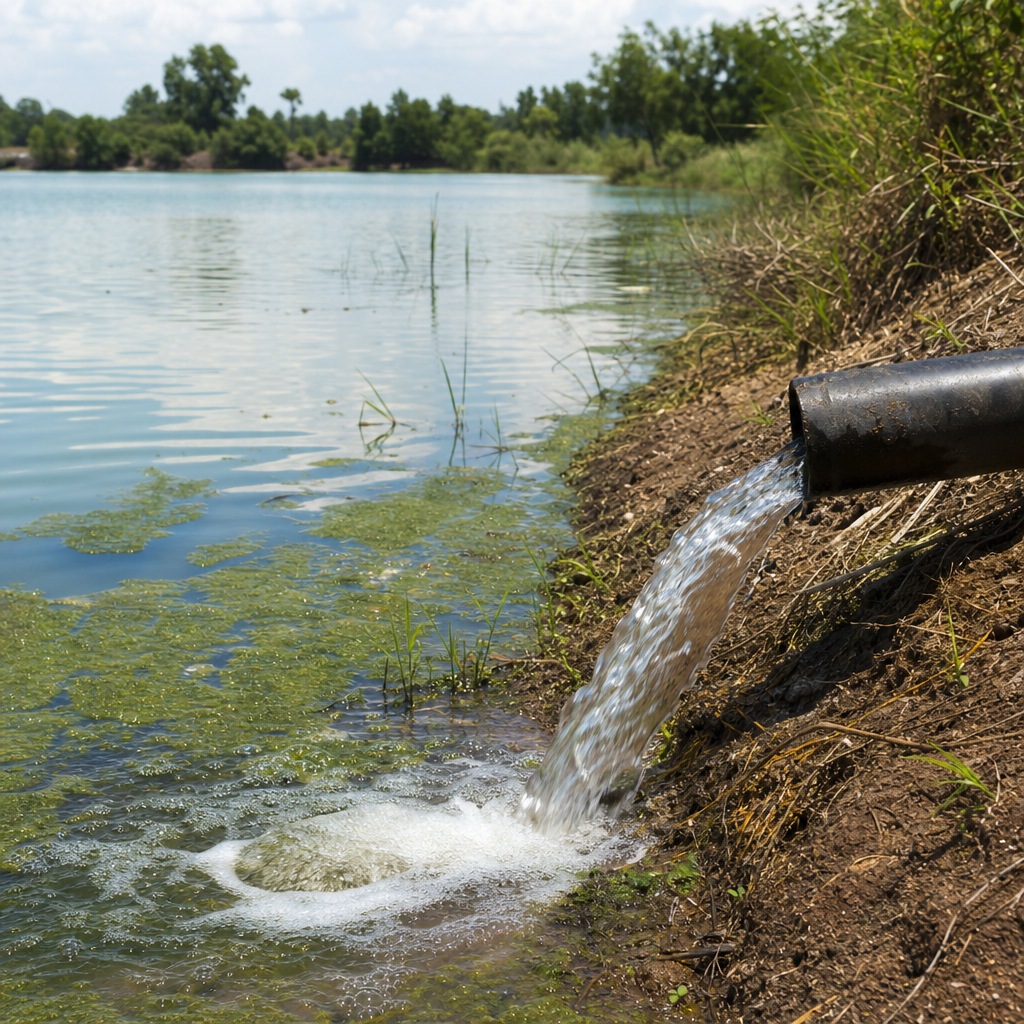
This matters for biodiversity because excess nitrogen and phosphorus trigger eutrophication. Algal blooms reduce dissolved oxygen, kill fish, and simplify aquatic ecosystems. In urban catchments I have assessed, even small chronic nutrient leaks from failing sanitation infrastructure produced visible ecological decline in downstream wetlands. EcoSan systems reduce that burden when collection, storage, and reuse protocols follow recognized guidance such as World Health Organization sanitation safety planning and ISO-aligned risk management practices. Treated urine can be used as fertilizer, stabilized compost can build soil carbon, and treated greywater can support irrigation without drawing additional freshwater supplies.
Healthy urban soil is an underrated biodiversity asset. Soil organisms regulate nutrient availability, root development, moisture retention, and carbon storage. EcoSan projects that return sanitized organic matter to soils improve structure and microbial activity, especially in degraded urban landscapes where topsoil has been stripped or compacted. Better soil supports more resilient planting palettes, from native grasses and shrubs to street trees and community gardens. That in turn supports insects and birds. The mechanism is direct: safer nutrient recovery reduces pollution while rebuilding the biological foundation that urban ecosystems need.
Creating Habitat Through Green Sanitation Infrastructure
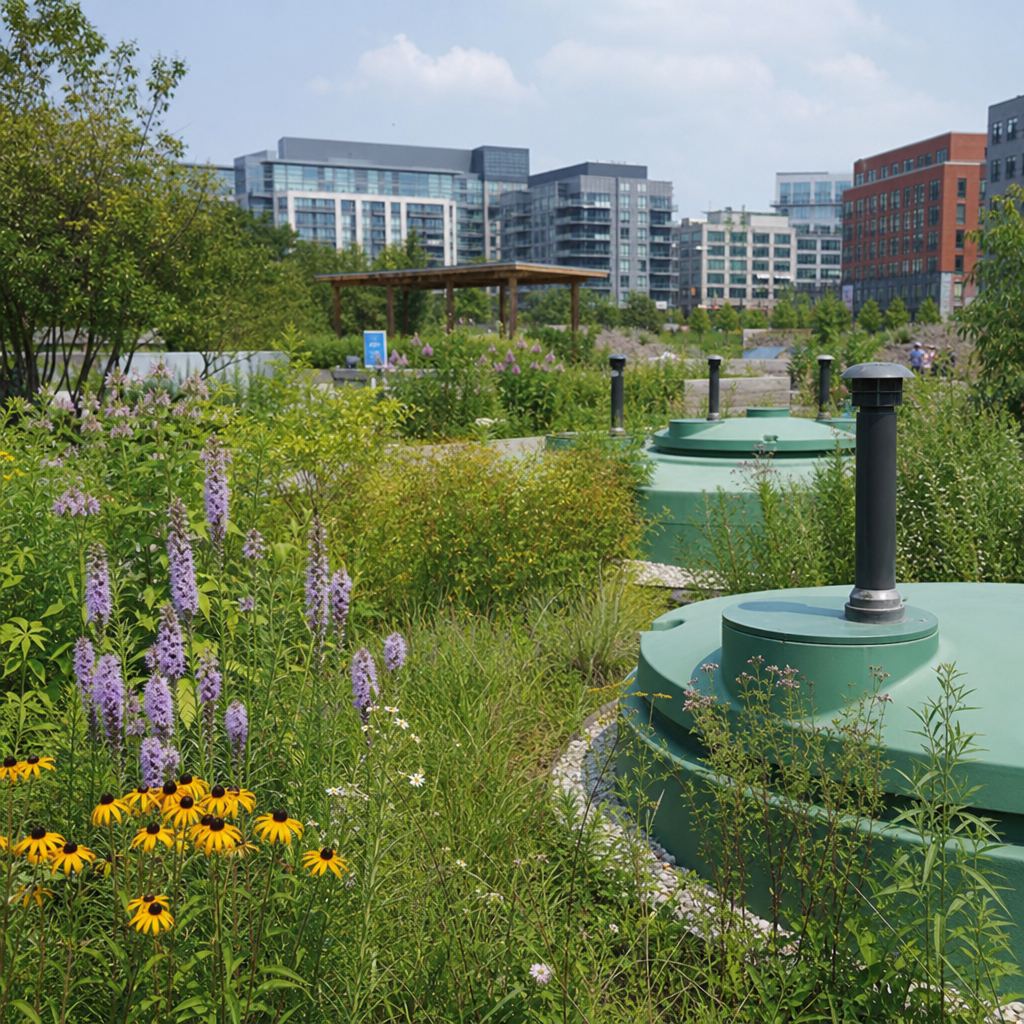
EcoSan is not only about toilets or waste treatment units. In urban biodiversity planning, its greatest environmental value often appears when sanitation is linked to green infrastructure. Constructed wetlands, bioswales receiving treated greywater, infiltration gardens, reed beds, and nutrient-managed urban agriculture plots can all serve sanitation functions while creating habitat. A well-designed wetland polishing system removes suspended solids, reduces biochemical oxygen demand, and lowers nutrient concentrations through sedimentation, plant uptake, and microbial transformation. At the same time, it provides shelter for pollinators, amphibians, and birds if water levels, vegetation zones, and maintenance schedules are properly managed.
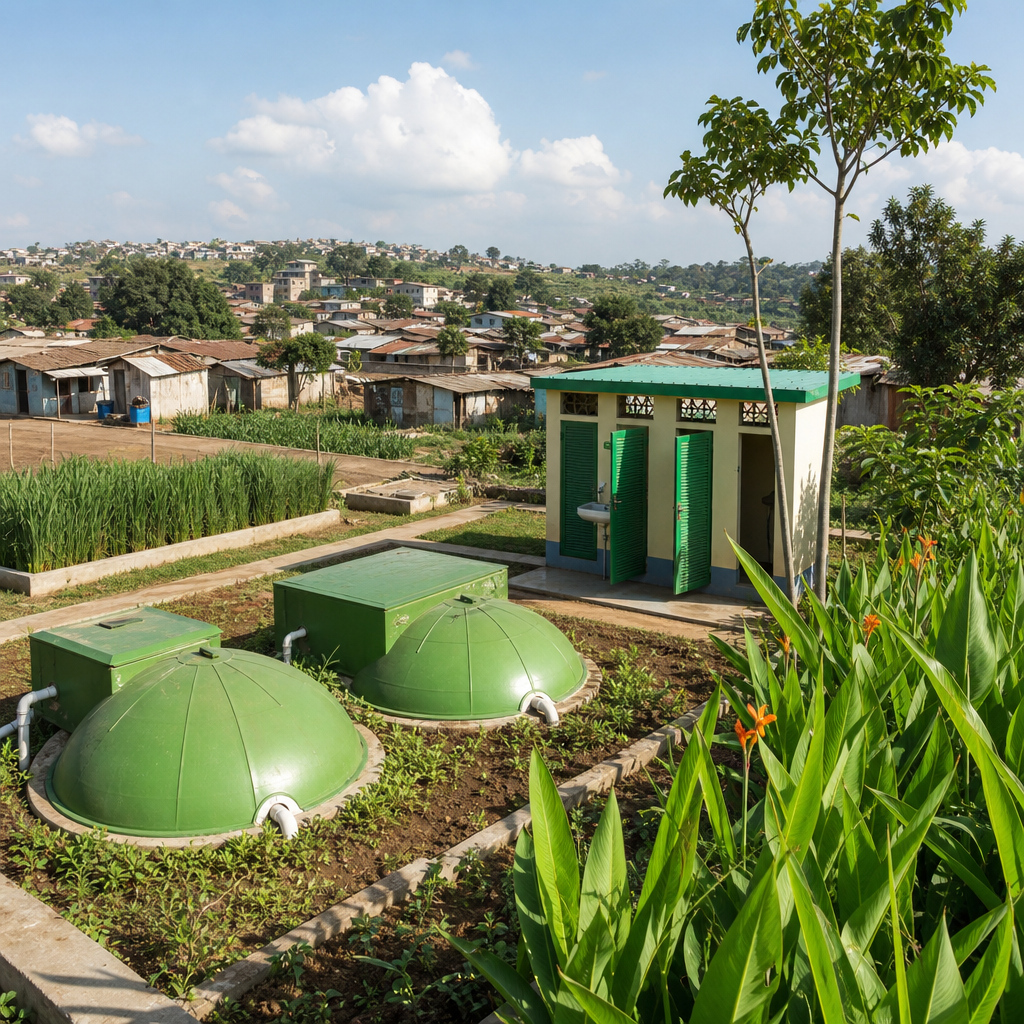
Real-world examples show this dual benefit. In parts of Europe, decentralized wastewater treatment with planted filters has been integrated into housing developments to reduce sewer loads and create attractive communal landscapes. In South Africa and India, source-separating sanitation pilots have linked nutrient recovery to local agriculture, reducing waste while improving green productivity. In informal or peri-urban districts, simplified decentralized systems can protect nearby streams that otherwise receive raw sewage. Every avoided sewage overflow improves habitat conditions immediately, especially for aquatic invertebrates and riparian plants that respond quickly to reduced contamination.
The biodiversity benefit is strongest when sanitation landscapes are designed intentionally rather than treated as leftover engineering space. Plant selection should favor native species adapted to fluctuating moisture. Edge conditions should avoid steep sterile concrete profiles where possible. Maintenance crews should understand that cutting all vegetation at once can destroy breeding refuge. Mosquito control should rely first on flow design, habitat balance, and predator support rather than indiscriminate chemical use. When those details are respected, EcoSan infrastructure becomes part of an urban ecological network rather than a hidden utility burden.
Key Environmental Protection Functions of EcoSan Projects
EcoSan’s role in environmental protection can be understood through a small set of repeatable functions. These functions help city teams evaluate project value beyond sanitation access alone.
| Function | How EcoSan Delivers It | Urban Biodiversity Benefit |
|---|---|---|
| Nutrient recovery | Separates and sanitizes urine and organic solids for controlled reuse | Reduces synthetic fertilizer demand and lowers nutrient pollution in waterways |
| Water conservation | Uses low-flush, dry, or greywater reuse systems | Preserves freshwater flows that sustain urban wetlands and riparian habitat |
| Pollution prevention | Contains pathogens and minimizes untreated sewage discharge | Improves water quality for fish, amphibians, insects, and birds |
| Soil restoration | Returns stabilized organic matter to landscapes where regulations allow | Supports soil microbes, plant health, and food-web resilience |
| Climate support | Reduces treatment energy, transport, and fertilizer-related emissions | Helps maintain conditions for species stressed by urban heat and drought |
These functions are practical, measurable, and relevant to environmental review. Nutrient recovery can be tracked through kilograms of nitrogen and phosphorus reused. Water conservation can be measured in liters saved per household. Pollution prevention shows up in lower fecal indicator bacteria counts, fewer combined sewer overflow events, and reduced nutrient loading. Soil restoration can be assessed through organic matter content, infiltration rates, and plant survival. Climate support can be estimated using lifecycle assessment tools that compare centralized and decentralized treatment pathways.
For urban biodiversity strategies, this measurability matters. Environmental protection claims should never rely on vague green language. They should be tied to indicators that planners, utilities, and regulators can monitor over time. EcoSan performs well when projects define those indicators at the start.
Reducing Urban Water Pollution and Eutrophication Risks
One of the clearest environmental advantages of EcoSan is water pollution control. Conventional sanitation failures in cities are common: cracked sewers leak, septic systems overflow, pumping stations fail during storms, and treatment plants become overloaded. The result is pathogen release and nutrient enrichment in receiving waters. Urban streams already face heat stress, channelization, and sediment runoff; sewage inputs push them closer to ecological collapse. EcoSan reduces this pressure by shortening waste pathways, diversifying treatment points, and enabling local containment before pollution spreads.
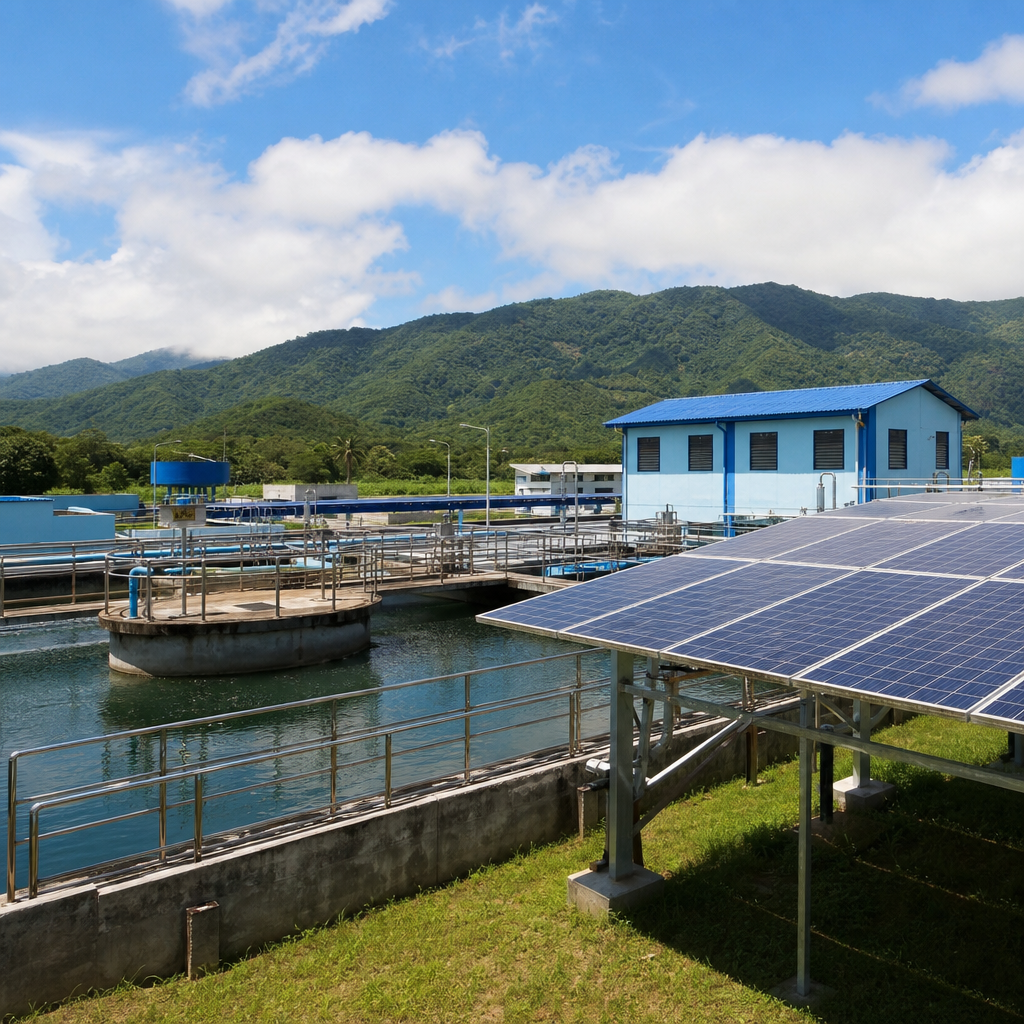
Decentralized treatment is especially useful in fast-growing districts where sewer expansion lags development. Instead of waiting years for large capital works, neighborhoods can deploy modular systems such as urine diversion units, anaerobic baffled reactors, planted gravel filters, or container-based sanitation linked to safe off-site processing. These are not one-size-fits-all solutions, but they often outperform unmanaged discharge. In my experience, the environmental win comes not from ideological preference for decentralized systems but from selecting a treatment chain that local institutions can actually maintain. A simpler system that is serviced consistently protects biodiversity better than a sophisticated one that fails silently.
Lower nutrient discharge benefits urban lakes, estuaries, and wetlands. When phosphorus inputs decline, algal bloom intensity often falls. When ammonia and organic loads are reduced, oxygen conditions improve for aquatic life. Cleaner water also supports recreational landscapes, which increases public support for habitat restoration. This is how EcoSan creates indirect environmental protection benefits: a cleaner stream is easier to replant, monitor, and defend politically than a polluted one.
Supporting Climate Resilience and Circular Urban Resource Use
EcoSan strengthens environmental protection by making cities more climate resilient. Drought-prone regions cannot afford sanitation systems that rely entirely on high-volume potable water flushing. Water-scarce cities benefit from dry or low-water systems, urine diversion, and greywater reuse because they reduce demand on reservoirs and aquifers. During heat waves, the water saved can help preserve urban trees and cooling landscapes. During intense rainfall, decentralized systems can reduce pressure on overburdened sewers, lowering overflow risk.
Circular resource use is another major advantage. Manufacturing synthetic nitrogen fertilizer through the Haber-Bosch process is energy intensive, and phosphorus is a finite mined resource with geopolitical supply risks. Recovering nutrients from sanitation streams does not replace all commercial fertilizer demand, but it materially offsets it. That matters for urban agriculture, municipal landscaping, and peri-urban food systems. When sanitized nutrient products are applied at agronomic rates, they close loops that conventional infrastructure leaves open.
Climate benefits also appear in lifecycle emissions. Transporting wastewater long distances, aerating huge treatment volumes, and producing synthetic fertilizers all carry carbon costs. EcoSan can reduce those emissions, although the result depends on system design, collection logistics, and treatment technology. Composting processes, for example, must be managed to limit methane and nitrous oxide formation. Anaerobic systems may generate biogas benefits when properly captured. The lesson is straightforward: EcoSan is environmentally strong when the full resource chain is engineered, monitored, and matched to local conditions.
Implementation Challenges, Safeguards, and Best Practices
EcoSan projects improve biodiversity only when public health protection is non-negotiable. Poorly managed reuse can spread pathogens, overload soils with salts, or create odor and vector problems that undermine community support. That is why successful projects use multiple barriers: source separation, storage, pathogen reduction, controlled application rates, worker training, and routine monitoring. The World Health Organization’s sanitation safety planning approach is especially useful because it maps hazards from containment through end use and assigns practical control measures at each step.
Governance is often the hardest part. Building codes may not recognize urine diversion fixtures. Utilities may resist decentralized assets they do not control. Residents may accept water reuse for landscaping but reject food-crop applications. These are manageable issues, but they require policy alignment, maintenance budgets, and transparent communication. I have seen technically sound systems underperform because no one clarified who empties containers, who tests compost, or who responds to complaints. Environmental protection depends on these operational details.
Best practice includes matching technology to context, designing for maintenance access, using certified treatment performance where available, and setting biodiversity goals alongside sanitation metrics. A wetland polishing unit, for example, should have hydraulic retention time targets, vegetation management plans, and ecological monitoring for indicator species. Community gardens using recovered nutrients should follow application protocols and soil testing schedules. If cities treat EcoSan as both infrastructure and ecological asset, they get better outcomes on both fronts.
Why EcoSan Belongs at the Center of Environmental Impact Planning
EcoSan’s role in environmental protection is broader than waste management. It is a framework for reducing pollution, conserving water, restoring soils, supporting habitat, and building climate resilience in places where ecological space is limited and environmental pressures are intense. For cities trying to enhance urban biodiversity, that combination is unusually valuable. Instead of separating sanitation from nature-based planning, EcoSan connects them through recoverable resources and cleaner local hydrology.
The main takeaway is practical. Urban biodiversity improves when sanitation stops exporting nutrients as pollution and starts managing them as assets. Cleaner waterways support aquatic life. Healthier soils support vegetation and pollinators. Water-efficient systems help landscapes survive drought. Decentralized treatment can protect neighborhoods that centralized networks do not yet serve well. None of these benefits happen automatically, but they are achievable with careful design, regulation, and maintenance.
As a hub within the broader environmental impact topic, this page sets the foundation for deeper work on nutrient recovery, water reuse, decentralized treatment, constructed wetlands, urban agriculture, and sanitation safety. If you are planning housing, retrofitting a district, or shaping sustainability policy, evaluate EcoSan early rather than as an afterthought. The environmental upside is measurable, and the biodiversity gains are real when projects are built to last.
Frequently Asked Questions
What is EcoSan, and how does it help improve urban biodiversity?
EcoSan, or ecological sanitation, is an approach to sanitation that views human waste as a recoverable resource rather than something to simply flush away and discard. Instead of relying entirely on conventional systems that often mix wastewater streams, consume large volumes of clean water, and transfer nutrients into rivers or treatment plants, EcoSan systems are designed to separate, treat, and safely reuse materials such as urine, feces, and organic matter. This can include composting toilets, urine-diverting dry toilets, decentralized treatment systems, and nutrient recovery methods that return valuable nitrogen, phosphorus, and organic carbon back into local landscapes.
That matters for urban biodiversity because biodiversity depends on healthy ecological conditions. When cities reduce nutrient pollution, protect waterways, improve soil structure, and create opportunities for greener public and private spaces, they support a wider range of life. Recovered nutrients can help feed urban trees, gardens, pollinator corridors, green roofs, and community landscapes. Healthier soils retain more moisture, support more microorganisms, and sustain stronger plant growth, which in turn provides habitat and food sources for insects, birds, and other urban wildlife.
In practical terms, EcoSan helps transform sanitation from a hidden utility into part of a regenerative urban system. It can reduce contamination in streams and wetlands, lower pressure on centralized sewer infrastructure, and support nature-based urban design. The result is not just cleaner sanitation, but city environments that are better able to sustain plant life, beneficial insects, birds, and the ecological relationships that make urban areas more resilient and livable.
How do EcoSan projects reduce pollution in cities?
EcoSan projects reduce pollution by preventing nutrients and pathogens from entering the wrong places in the first place. In many conventional systems, rainwater, sewage, and household wastewater can become mixed or overloaded, especially in fast-growing urban areas or during storms. This increases the risk of untreated or partially treated waste reaching rivers, lakes, canals, and coastal waters. Excess nitrogen and phosphorus can trigger algal blooms, oxygen depletion, foul odors, and damage to aquatic ecosystems. EcoSan systems are specifically designed to interrupt that cycle through source separation, targeted treatment, and controlled reuse.
For example, urine contains a large share of the nutrients found in household waste streams, while fecal matter contains most of the pathogens. By separating these streams, EcoSan systems make treatment more efficient and reduce the total burden on water infrastructure. Treated outputs can then be reused safely in agriculture, landscaping, or soil restoration instead of being discharged as waste. This reduces nutrient runoff, limits groundwater contamination, and helps keep urban water bodies cleaner and more biologically balanced.
There is also an important indirect pollution benefit. EcoSan can reduce dependence on synthetic fertilizers, which require energy-intensive manufacturing and can contribute to emissions and runoff when overapplied. When cities recover nutrients locally and apply them carefully in urban greening projects, they close resource loops and reduce environmental leakage. That combination of cleaner water, better nutrient management, and lower external inputs creates conditions that are much more favorable for urban biodiversity and public health alike.
Can EcoSan systems support urban gardens, green spaces, and wildlife habitats?
Yes, one of the most promising aspects of EcoSan is its ability to connect sanitation infrastructure with urban greening efforts. Properly treated and safely managed nutrient outputs from EcoSan systems can support community gardens, street tree programs, parks, habitat restoration projects, bioswales, and other green infrastructure. In cities where soils are degraded, compacted, or low in organic matter, EcoSan-derived composts or nutrient products can improve fertility and soil biology, making it easier for vegetation to establish and thrive.
That vegetation then becomes the foundation for biodiversity. Diverse plantings attract pollinators such as bees, butterflies, and hoverflies. Trees and shrubs provide nesting sites and food for birds. Groundcover and healthy soils support worms, beetles, fungi, and beneficial microbes. Even relatively small green spaces can function as stepping stones for wildlife if they are distributed thoughtfully across urban neighborhoods. EcoSan contributes by helping supply the nutrients and organic matter needed to maintain those spaces in a more circular and locally self-sustaining way.
Of course, the key phrase is “safely managed.” Any reuse must follow clear treatment standards, storage protocols, and local public health regulations. When done responsibly, EcoSan does not mean putting raw waste into public landscapes. It means converting waste streams into safe, useful inputs through tested processes. With strong design and governance, EcoSan can help cities build greener, more habitat-friendly environments while also improving sanitation performance.
Are EcoSan projects safe for people and the environment?
Yes, EcoSan projects can be very safe when they are properly designed, operated, and monitored. Safety in ecological sanitation depends on a few core principles: separating waste streams where appropriate, using reliable treatment methods, allowing enough time for pathogen reduction, training users and operators, and following established standards for storage, transport, and reuse. These safeguards are what turn potentially harmful materials into resources that can be used without creating new health risks.
Common treatment approaches include dehydration, composting, alkaline treatment, controlled storage, and decentralized biological treatment systems, depending on the technology being used. Each method has specific performance requirements. For example, temperature, moisture, pH, and retention time all influence how effectively pathogens are reduced. In successful EcoSan programs, these factors are not left to chance. They are built into the system design and backed by maintenance plans, user education, and oversight.
From an environmental perspective, EcoSan can actually reduce risk compared with poorly functioning conventional sanitation. It lowers the likelihood of sewage leakage, uncontrolled nutrient discharge, and contamination of nearby ecosystems. It can also be especially valuable in water-scarce cities, informal settlements, or areas where sewer expansion is costly or impractical. The bottom line is that EcoSan is not inherently risky or inherently safe; its success depends on professional planning and responsible management. When those are in place, it offers a practical path toward cleaner neighborhoods, healthier ecosystems, and more sustainable urban growth.
What does a successful urban EcoSan project need in order to work long term?
Long-term success requires much more than installing a new toilet or treatment unit. A strong urban EcoSan project needs integrated planning across sanitation, public health, land use, water management, and urban ecology. The technical system must fit the local context, including housing density, climate, water availability, existing infrastructure, cultural preferences, maintenance capacity, and legal requirements. A design that works well in one city or neighborhood may need major adjustments in another, so context-sensitive planning is essential.
Operations and maintenance are equally important. EcoSan systems need clear responsibilities for collection, treatment, inspections, repairs, and safe reuse. Cities and project partners must establish who manages the system, how performance is tracked, how users are trained, and how costs are covered over time. Without these basics, even well-designed projects can struggle. Successful programs often include local government support, community engagement, technician training, routine monitoring, and public communication that explains both the sanitation and environmental benefits.
Perhaps most importantly, successful EcoSan projects create visible links between sanitation and urban improvement. When residents see cleaner waterways, healthier trees, more productive gardens, reduced odors, and better neighborhood conditions, support tends to grow. That public trust is critical because EcoSan depends on both infrastructure and behavior. Over the long term, the most effective projects are the ones that treat sanitation as part of a circular city strategy—one that recovers resources, strengthens ecosystems, and makes urban biodiversity a practical outcome of smarter infrastructure design.