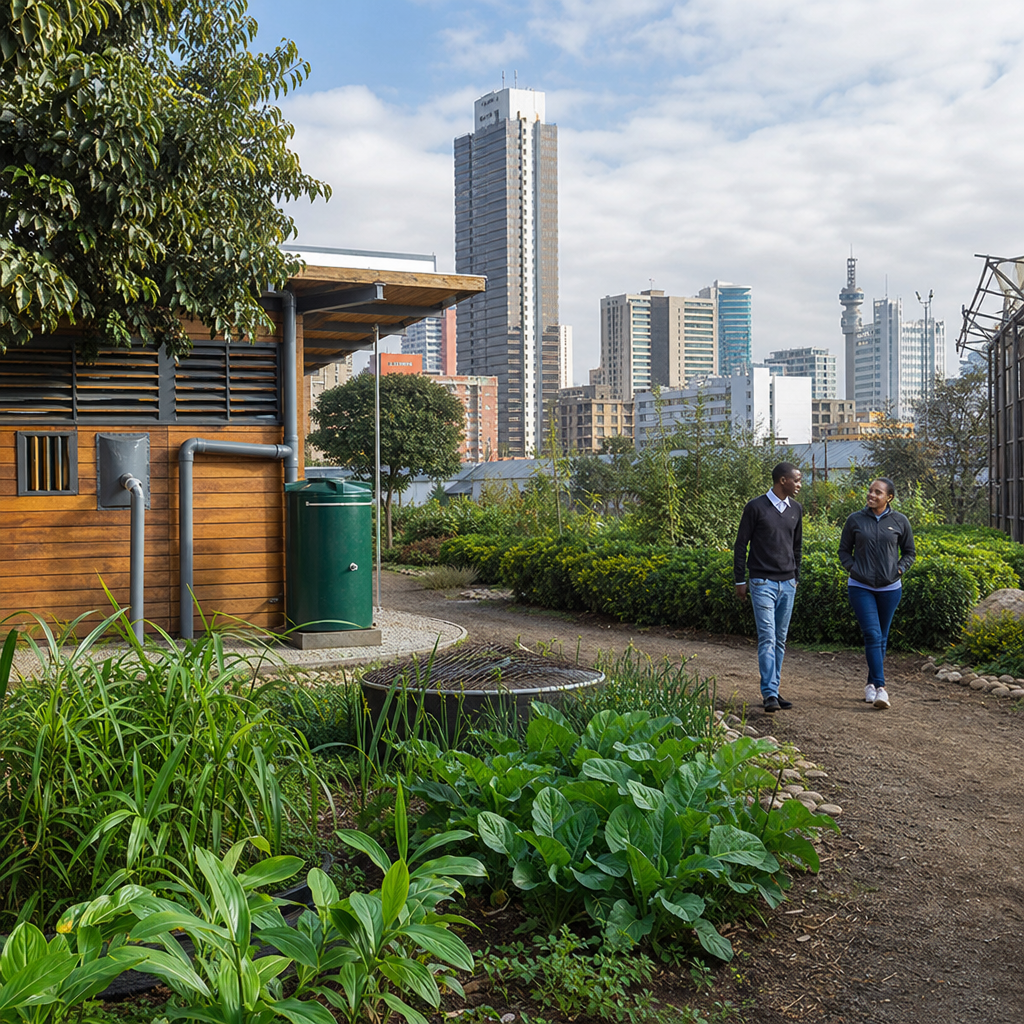
Bioremediation and EcoSan are natural partners because both aim to turn waste from an environmental burden into a managed resource that protects water, soil, and public health. Bioremediation uses microorganisms, plants, fungi, or enzymes to break down, immobilize, or transform pollutants into less harmful forms. EcoSan, short for ecological sanitation, is a sanitation approach that treats human waste as a recoverable flow of nutrients, organic matter, and sometimes energy rather than something to flush away and forget. When these systems are designed together, they reduce contamination, conserve freshwater, recover nitrogen and phosphorus, and support local agriculture. I have seen the difference on projects where conventional pit latrines polluted shallow wells, while source-separating toilets and biologically driven treatment systems sharply lowered odors, pathogen risks, and nutrient losses. This matters because sanitation failures still contaminate rivers, groundwater, and coastal zones, while fertilizer production remains energy intensive and costly for many communities. Advancing environmental sustainability with EcoSan therefore depends on understanding how biological treatment can close loops safely. A strong hub on this topic must connect sanitation design, soil restoration, nutrient recovery, wastewater treatment, climate resilience, and community adoption. That wider view is essential because no single toilet technology solves every environmental problem. The best results come from matching local conditions with treatment trains that rely on proven biological processes, clear operating rules, and measurable environmental outcomes.
Why EcoSan and bioremediation fit together
EcoSan works best when waste is separated, stabilized, and reused with minimal pollution. Bioremediation provides the mechanisms that make that possible. Bacteria can digest organic matter and lower biochemical oxygen demand. Nitrifying and denitrifying microbes can convert ammonia into nitrogen gas under the right aerobic and anoxic conditions. Fungi can help degrade complex organics. Wetland plants oxygenate root zones and support microbial biofilms that remove nutrients and pathogens. In practice, this means urine diversion, composting, anaerobic digestion, vermifiltration, and constructed wetlands can be linked into one system that treats waste while preserving resource value.
The environmental case is straightforward. Conventional sewered sanitation often requires large volumes of water and expensive centralized treatment. Where sewers are absent, unmanaged pits and septic systems can leak nitrate, phosphate, fecal bacteria, and pharmaceuticals into surrounding land and aquifers. EcoSan reduces those losses by keeping nutrient-rich fractions concentrated and by directing treatment where biology is most effective. For example, urine contains most of the nitrogen and a large share of phosphorus excreted by households, yet it is usually diluted in flush water. Separating it at the source makes storage, sanitization, and agricultural reuse far more practical.
This pairing also supports the waste hierarchy. Prevention comes first through water-saving fixtures and source separation. Recovery follows through compost, digestate, treated urine, and reclaimed water. Final disposal becomes the smallest fraction because biological treatment shrinks pollutant loads before anything reaches soil or waterways. Communities gain resilience as well. Decentralized EcoSan systems can keep functioning during droughts, power cuts, and overloaded municipal infrastructure, provided that maintenance and safe handling are built into the operating model from the start.
Core biological processes that make EcoSan sustainable
Several bioremediation pathways underpin effective EcoSan. Composting is the most familiar. Under controlled carbon-to-nitrogen ratios, moisture, and aeration, thermophilic microbes raise temperatures high enough to accelerate decomposition and reduce many pathogens. In fecal sludge or dry toilet vaults, bulking agents such as sawdust, ash, or chopped straw improve structure and moisture balance. The result is a more stable organic material that can be matured further before restricted or unrestricted reuse, depending on treatment performance and local regulations.
Anaerobic digestion is another important pathway, especially for mixed organic wastes. In sealed digesters, microbial consortia break down biodegradable solids and produce biogas containing methane and carbon dioxide. The gas can displace firewood, charcoal, or liquefied petroleum gas for cooking or heating. The digestate still requires management, but with post-treatment it can contribute nutrients and soil organic matter. I have found that digestion performs best where feedstock supply is steady and users are trained to avoid introducing plastics, grit, or disinfectants that disrupt microbial activity.
Constructed wetlands extend bioremediation into wastewater polishing. Gravel beds planted with reeds, cattails, or other wetland species create a large surface area for microbial communities. As wastewater moves through the substrate, suspended solids settle, organic matter is degraded, and nutrients are transformed or taken up by plants. Properly designed wetlands can significantly reduce fecal indicators and improve effluent quality, although they are not magic boxes. Hydraulic loading, retention time, climate, and maintenance determine outcomes.
Vermifiltration and biofilters are also valuable. Earthworms fragment solids and stimulate microbial decomposition, while trickling filters and aerobic media units support biofilms that oxidize organic matter efficiently. These options are especially useful where land is limited. The central point is that EcoSan succeeds environmentally when it harnesses living systems deliberately rather than leaving waste to decompose unmanaged in pits, drains, or open ground.
Environmental benefits across water, soil, and climate systems
The most immediate environmental benefit is water protection. Poor sanitation is a leading driver of fecal contamination in shallow groundwater and local streams, especially in dense settlements with permeable soils. By containing excreta, separating flows, and treating them biologically, EcoSan reduces direct pathogen release and lowers nutrient leakage. This matters for eutrophication control. Excess nitrogen and phosphorus stimulate algal growth, deplete dissolved oxygen, and damage fisheries and aquatic biodiversity. Intercepting those nutrients before they enter waterways is often cheaper than restoring a degraded lake or estuary later.
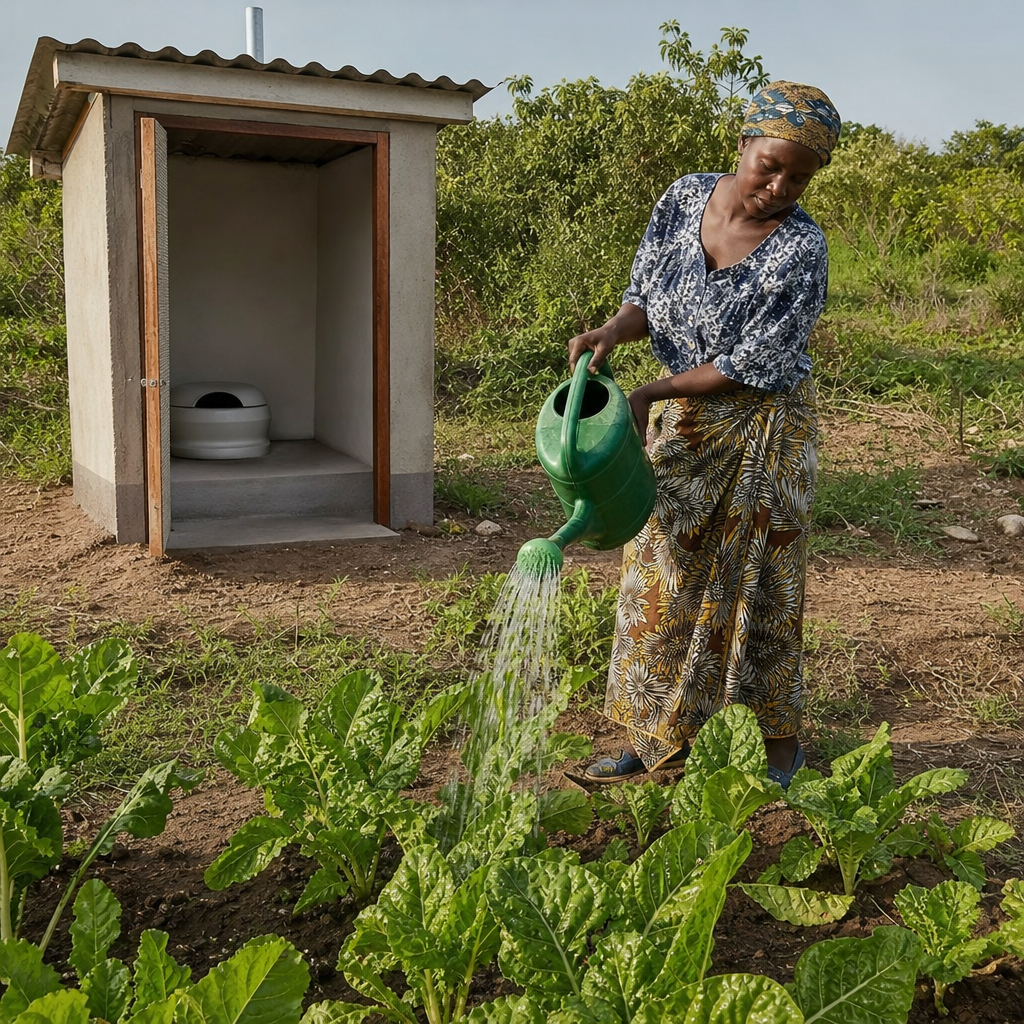
Soil health is the second major gain. Stabilized compost and other treated organic amendments improve soil structure, water-holding capacity, and cation exchange capacity. They can increase infiltration and reduce erosion, which is especially valuable in drought-prone or degraded farming areas. Farmers often see practical benefits first: better tilth, lower dependence on purchased inputs, and more reliable crop establishment. Treated urine can supply readily available nitrogen and potassium, making it useful for cereal crops when applied at agronomic rates and with attention to storage and timing.
Climate benefits are real but conditional. Dry or low-flush systems reduce the energy and emissions associated with pumping and centralized wastewater treatment. Anaerobic digestion can capture methane for beneficial use instead of allowing uncontrolled emissions from open decomposition. Returning organic matter to soils can support carbon retention over time. However, not every EcoSan system automatically reduces greenhouse gases. Poorly aerated compost heaps can emit methane and nitrous oxide, and long transport routes for sludge or reuse products can erode the advantage. Good design and monitoring are therefore essential.
| EcoSan element | Bioremediation mechanism | Main environmental benefit | Typical caution |
|---|---|---|---|
| Urine-diverting toilet | Source separation and storage sanitization | Nutrient recovery with less water use | Needs user compliance and correct diversion |
| Composting vault | Thermophilic microbial decomposition | Volume reduction and soil amendment production | Moisture and temperature must be controlled |
| Anaerobic digester | Methanogenic breakdown of organics | Biogas generation and organic stabilization | Requires consistent feedstock and maintenance |
| Constructed wetland | Plant-microbe pollutant removal | Effluent polishing and habitat value | Needs land area and hydraulic management |
Design choices that determine whether systems succeed
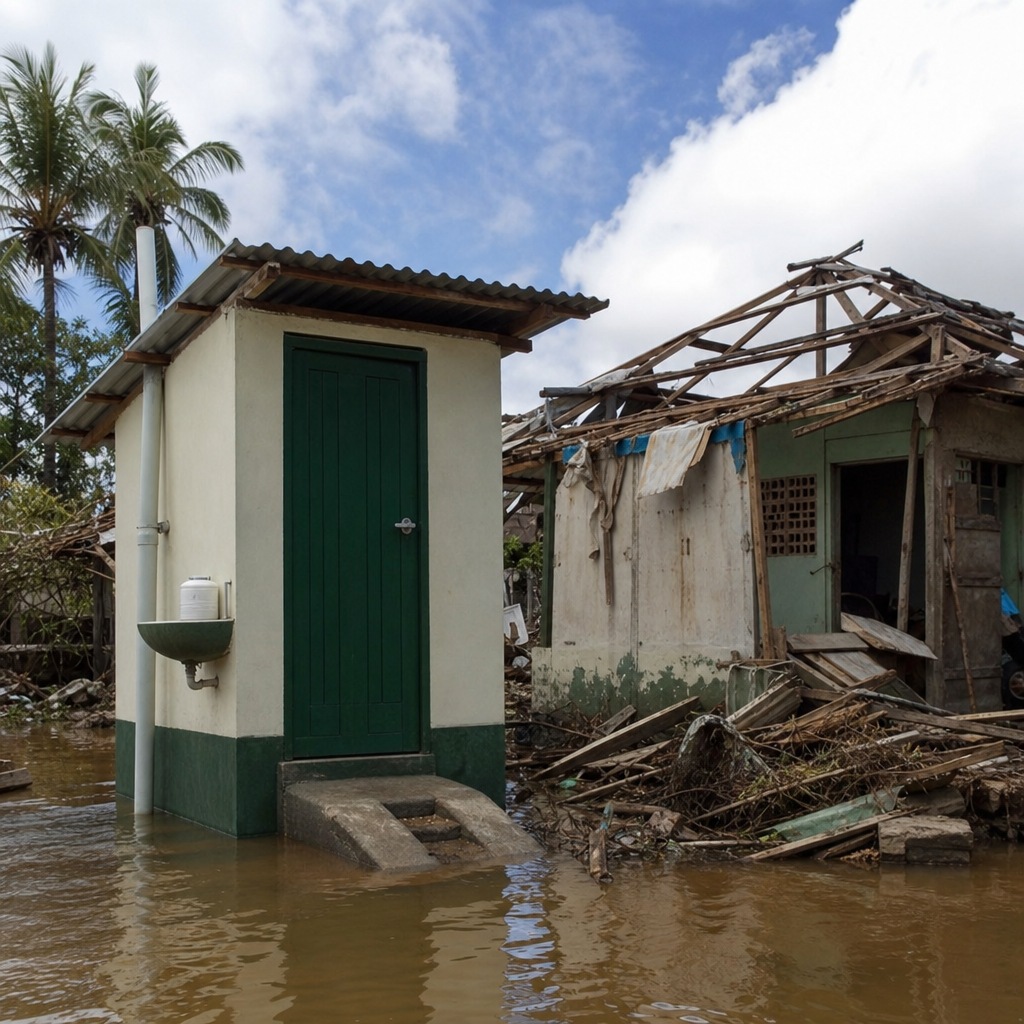
Technology selection should start with site realities, not with a preferred product. High water tables, flood risk, rocky ground, household density, farming patterns, and user preferences all affect what will work. In a flood-prone area, raised dry toilets or sealed tanks with off-site treatment may protect groundwater better than pits. In peri-urban locations with market gardens, urine diversion and composting can create a practical nutrient loop. In institutions such as schools, operation and maintenance capacity often matters more than technical elegance because a neglected system fails quickly.
Safe reuse depends on barrier thinking. No single treatment step should carry the full burden of risk reduction. Storage time, pH, temperature, dehydration, compost maturation, crop restriction, application method, and hand hygiene all combine to reduce exposure. The World Health Organization has long promoted this multiple-barrier logic in sanitation and wastewater reuse because it reflects how real systems operate. From experience, this is where many projects either become durable or unravel. Communities can manage a clear sequence of simple safeguards, but they struggle when designers assume perfect use and perfect maintenance.
Monitoring should be practical and targeted. At minimum, operators need indicators for moisture, temperature, filling rate, odors, vector presence, and user satisfaction. Larger schemes may test for E. coli, helminth eggs, ammonia, nitrate, phosphate, electrical conductivity, and organic load depending on the reuse pathway. Mapping where products go is equally important. If treated outputs are applied to land, record crop type, application rate, and timing. That information turns sustainability claims into something verifiable and helps prevent overapplication of nutrients or salts.
Real-world applications and lessons from the field
Rural agriculture offers some of the strongest examples of EcoSan and bioremediation working together. In water-scarce regions, urine-diverting dry toilets have allowed households to reduce water use while supplying nitrogen to maize, sorghum, or vegetable plots. Results vary by soil and management, but farmers often report that treated urine performs comparably to commercial nitrogen fertilizer for early vegetative growth when diluted or applied carefully. The advantage is not only yield. It is also cost stability, especially where fertilizer prices are volatile or transport is unreliable.
In peri-urban settlements, decentralized treatment trains can reduce the burden on weak sewer networks. A practical configuration may include source separation, solids collection, co-composting with market waste, and wetland treatment for graywater. This approach addresses multiple waste streams at once. Market organics provide carbon for composting, graywater receives polishing before discharge or irrigation, and sanitation products stay within a managed circular system. The lesson is that EcoSan rarely delivers its full environmental value when planned in isolation from broader solid waste and water management.
Schools and public facilities teach another lesson: social design matters as much as biological performance. I have seen technically sound urine-diversion toilets fail because cleaning staff were not trained, signage was unclear, or spare parts were unavailable locally. Conversely, modest systems have performed well for years when caretakers understood daily routines and local officials budgeted for consumables. Environmental sustainability with EcoSan therefore depends on governance, financing, and supply chains, not only reactors, vaults, and microbes.
Industrial and institutional settings are also expanding the model. Some campuses pair blackwater treatment with anaerobic digestion, then polish effluent through reed beds and reuse water for landscaping. Others recover nutrients from urine through struvite precipitation, producing a slow-release fertilizer. These examples show where the field is headed: more precise recovery, better pathogen control, and closer integration with circular economy goals.
Limits, risks, and the path to wider adoption
EcoSan is not universally appropriate, and bioremediation has limits. Persistent chemicals, heavy metals, and some pharmaceutical residues are not reliably removed by simple biological treatment. If industrial contamination enters the waste stream, land application may become unsafe. Pathogen reduction can also be inconsistent when users add too much liquid, when compost fails to heat, or when storage times are shortened. These are manageable problems, but only if projects acknowledge them openly and build safeguards into design, training, and oversight.
Public acceptance remains a decisive factor. Many households are open to resource recovery in principle but hesitate when handling or using sanitation-derived products. Clear messaging, visible cleanliness, and evidence from demonstration sites help bridge that gap. Regulations matter too. Where standards for treated excreta, biosolids, or reclaimed water are absent or contradictory, service providers face uncertainty and investors hold back. Governments can accelerate adoption by setting realistic quality targets, supporting operator training, and aligning sanitation policy with agriculture, water, and climate strategies.
The path forward is practical. Start with local resource flows, choose treatment trains that fit climate and capacity, and measure environmental outcomes consistently. Link this hub topic to detailed guidance on urine diversion, composting toilets, fecal sludge management, constructed wetlands, nutrient recovery, water reuse, and soil restoration so readers can move from concept to implementation. Bioremediation and EcoSan form a symbiotic relationship because each strengthens the other: sanitation creates a controlled stream for biological treatment, and biological treatment makes safe recovery possible. For communities seeking to advance environmental sustainability with EcoSan, the next step is simple: assess your waste streams, identify the biological processes that match them, and design for safe reuse from day one.
Frequently Asked Questions
What is the connection between bioremediation and EcoSan?
Bioremediation and ecological sanitation, or EcoSan, are closely connected because both are built on the idea that waste should be managed as part of a natural cycle rather than simply discarded. Bioremediation uses living organisms such as bacteria, fungi, plants, and naturally occurring enzymes to break down contaminants, stabilize harmful compounds, or convert pollutants into less hazardous forms. EcoSan applies a similar systems-based mindset to sanitation by treating human waste as a resource stream that can be safely processed and returned to productive use, often as nutrients, organic matter, or even energy.
When these approaches are combined, the result is a more resilient and environmentally sound sanitation strategy. EcoSan systems can separate, store, compost, digest, or otherwise treat human waste in ways that make recovery possible, while bioremediation processes can further reduce pathogens, transform residual contaminants, and improve the safety of outputs before reuse. This relationship is especially valuable in areas where water pollution, soil degradation, poor sanitation access, and nutrient loss are linked problems. Together, bioremediation and EcoSan help reduce environmental contamination, protect groundwater and surface water, improve soil health, and support a circular economy model in which waste is converted into a managed resource instead of becoming a public health hazard.
How does bioremediation improve the safety and effectiveness of EcoSan systems?
Bioremediation can strengthen EcoSan systems by adding natural treatment processes that target pollutants and improve the quality of recovered materials. In practical terms, this may involve microbial activity in composting toilets, anaerobic digestion systems, planted treatment beds, urine treatment units, or constructed wetlands. These biological processes can help decompose organic matter, reduce odors, lower pathogen loads, and transform nutrients into forms that are easier to manage or reuse. In some cases, bioremediation can also help immobilize heavy metals or reduce the impact of trace organic contaminants, depending on the treatment design and operating conditions.
This matters because EcoSan is not only about separating and collecting waste; it is also about making sure that any recovered products are safe for people and the environment. Biological treatment can improve this outcome by creating conditions where beneficial microorganisms outcompete harmful ones or where natural degradation pathways reduce risks over time. For example, composting and drying processes supported by microbial activity can make fecal matter safer for agricultural use when carried out correctly. Similarly, plant- and microbe-based systems can polish wastewater or liquid fractions before release or reuse. The overall benefit is that bioremediation adds an additional layer of ecological treatment, helping EcoSan systems perform more reliably while aligning with low-energy, low-chemical, and resource-recovery goals.
Can treated human waste from EcoSan systems be safely reused in agriculture?
Yes, treated human waste from properly designed and managed EcoSan systems can often be safely reused in agriculture, but safety depends on the treatment method, storage time, local regulations, crop type, and the quality control measures in place. One of the main goals of EcoSan is to recover valuable nutrients such as nitrogen, phosphorus, potassium, and organic matter that would otherwise be lost. When fecal matter is adequately composted, dehydrated, digested, or otherwise treated, and when urine is properly stored or processed, these materials can become useful soil amendments or fertilizers. This can improve soil fertility, reduce dependence on synthetic fertilizers, and support local food production.
However, safe reuse requires a disciplined approach. The primary concerns include pathogens, residual pharmaceuticals, heavy metals where relevant, and improper handling during collection, treatment, transport, or application. Bioremediation supports safer reuse by promoting natural treatment processes that reduce microbial risks and stabilize organic material. Even so, it is essential to follow health-based guidelines, verify that treatment targets have been met, and match the reuse application to the treatment level achieved. In many cases, treated outputs are best used first on non-food crops, trees, fiber crops, or soil restoration projects unless strong evidence supports broader agricultural use. With correct design, monitoring, and user training, EcoSan paired with bioremediation can make agricultural reuse both practical and environmentally beneficial.
What environmental benefits come from combining bioremediation with EcoSan?
The environmental benefits are significant because the combination addresses several challenges at once. First, it reduces pollution by keeping untreated human waste out of rivers, lakes, groundwater, and coastal systems. That directly lowers the risk of nutrient overload, pathogen contamination, and ecosystem damage. Second, it supports nutrient recovery by capturing nitrogen, phosphorus, and organic matter that can be returned to soils instead of being wasted. This is especially important in a world where phosphorus is a finite resource and many soils are losing fertility over time.
Third, the combined approach can improve soil quality through the addition of stabilized organic matter and recovered nutrients, which may enhance soil structure, moisture retention, and biological activity. Fourth, it often uses less water and less energy than conventional flush-and-dispose sanitation systems, making it attractive in water-scarce or infrastructure-limited settings. Fifth, bioremediation-based treatment methods such as wetlands, biofilters, composting, and microbial digestion can lower the need for harsh chemical interventions while still supporting effective treatment. Taken together, these benefits create a strong case for integrating bioremediation and EcoSan within sustainable development strategies, especially where communities are seeking sanitation solutions that also contribute to climate resilience, land restoration, and long-term resource security.
What are the main challenges of integrating bioremediation and EcoSan, and how can they be addressed?
The biggest challenges are usually not conceptual but practical. One major issue is ensuring consistent treatment performance, since biological systems depend on factors such as temperature, moisture, oxygen levels, pH, retention time, and feedstock characteristics. If an EcoSan system is poorly maintained or used incorrectly, the intended bioremediation processes may not fully reduce pathogens or contaminants. Another challenge is social acceptance. In many communities, there can be understandable hesitation about handling or reusing products derived from human waste, even when treatment has made them much safer. Infrastructure, training, financing, and supportive policy frameworks also play an important role and are often limiting factors.
These challenges can be addressed through better design, clear operating protocols, public education, and regular monitoring. Systems should be tailored to local climate, cultural preferences, agricultural needs, and regulatory standards rather than copied from unrelated contexts. Operators and users need practical guidance on separation, storage, treatment times, hygiene, and end-use restrictions. Where possible, treatment performance should be verified through testing or established safety benchmarks. It also helps to communicate the benefits in concrete terms, such as cleaner water, reduced fertilizer costs, healthier soils, and lower disease risks. When communities, engineers, public health professionals, and environmental specialists work together, the integration of bioremediation and EcoSan becomes far more effective and trusted. In that sense, the partnership succeeds best when it is treated not only as a technical solution, but as part of a broader ecological and public health system.