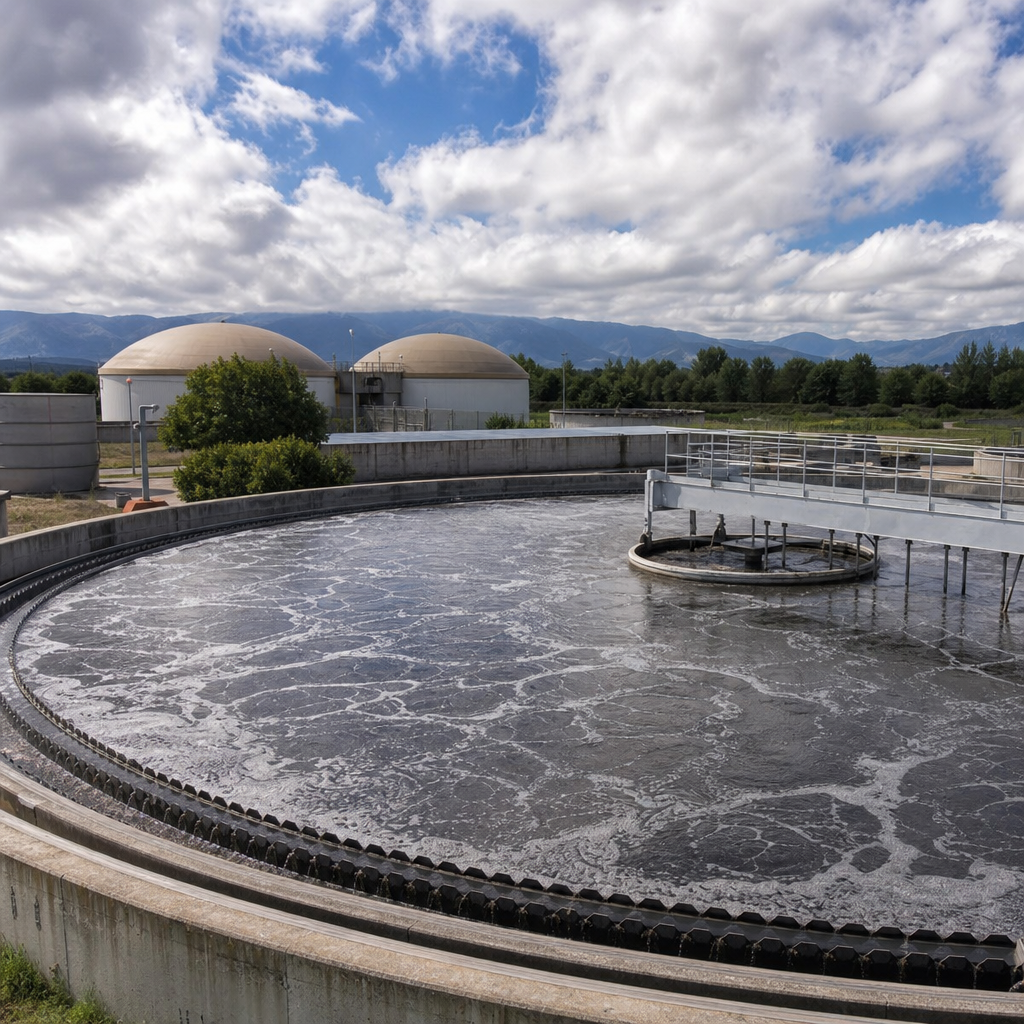
Greenhouse gas emissions and sanitation are tightly linked, yet the connection is often overlooked in climate planning. Sanitation includes the systems that capture, transport, treat, reuse, or dispose of human waste and wastewater, from sewer networks and septic tanks to pit latrines, treatment plants, and resource recovery facilities. Greenhouse gases are heat-trapping atmospheric compounds, chiefly carbon dioxide, methane, and nitrous oxide. In sanitation, methane is released when organic matter decomposes without oxygen, while nitrous oxide forms during nitrogen conversion in wastewater and sludge treatment. Carbon dioxide also appears through electricity use, fuel combustion, chemical production, and transport across the sanitation chain.
This matters because sanitation is both an essential public health service and a measurable source of climate pollution. According to the Intergovernmental Panel on Climate Change, wastewater contributes a meaningful share of global methane emissions, and those emissions are expected to rise where urbanization outpaces infrastructure upgrades. At the same time, poorly managed sanitation pollutes water, degrades soils, and weakens resilience to flooding and heat. In my work reviewing treatment systems and fecal sludge management plans, the same pattern appears repeatedly: utilities focus on compliance and service coverage first, then discover that energy use, fugitive methane, and sludge handling are silently driving costs and emissions.
Advancing environmental sustainability with EcoSan offers a practical response. EcoSan, or ecological sanitation, treats human waste as a resource stream rather than a disposal problem. It emphasizes source separation, nutrient recovery, water efficiency, local treatment, and safe reuse of treated outputs such as compost, biogas, reclaimed water, and soil conditioners. The climate value is direct. EcoSan can cut methane from anaerobic decay, reduce nitrous oxide through better process control, lower pumping and treatment energy, and displace synthetic fertilizer production by recovering nitrogen, phosphorus, and organic carbon. It can also shorten transport distances and support circular local economies.
As a hub for the environmental impact topic, this article explains where sanitation emissions come from, how EcoSan approaches mitigation, which technologies and design choices work in practice, and what tradeoffs must be managed. If you want a direct answer, here it is: the lowest-emission sanitation systems usually prevent uncontrolled decomposition, recover resources close to the source, optimize aeration and sludge handling, and reuse outputs safely under recognized health standards. The challenge is not whether sanitation can become climate smarter. The challenge is choosing solutions that fit local density, climate, financing, regulation, and user behavior.
Where sanitation greenhouse gas emissions come from
Sanitation emissions arise across the full service chain. In sewers and septic tanks, settled solids break down under anaerobic conditions and release methane. In activated sludge plants, nitrification and denitrification can generate nitrous oxide, especially when dissolved oxygen, carbon availability, pH, temperature, and ammonia loading fluctuate. Sludge thickening, storage lagoons, drying beds, and landfill disposal create additional methane and nitrous oxide pathways. Indirect emissions matter too: electricity for pumping and aeration, diesel for desludging trucks, lime and polymer production, incineration support fuel, and infrastructure materials all add carbon dioxide.
The highest climate impact is often not where operators expect it. Many teams assume energy is the main problem because utility bills are visible. In reality, fugitive methane from septic tanks, anaerobic ponds, uncovered sludge storage, and poorly managed fecal sludge transfer stations can dominate the footprint. Nitrous oxide is harder to measure, but even small mass releases matter because its warming impact is far stronger than carbon dioxide over a century. This is why robust greenhouse gas inventories for sanitation use process-based methods, field measurements where possible, and service-chain mapping rather than relying only on plant electricity data.
Urban form shapes the emissions profile. Dense cities with long sewer networks face pumping loads, infiltration, and treatment peaks during storms. Peri-urban areas often rely on septic systems that receive irregular desludging, creating hidden methane emissions. Rural communities may use pit latrines, urine-diverting dry toilets, or small-bore sewers with simpler local treatment. Climate also matters. Warm conditions accelerate biological activity, and heavy rainfall can flood pits or overwhelm treatment works, increasing untreated discharges. Any serious mitigation plan starts by asking a basic question: where in this specific sanitation chain are organics and nitrogen escaping control?
How EcoSan reduces climate impact across the service chain
EcoSan reduces emissions by redesigning flows before they become pollution. First, it separates streams when separation creates value. Urine diversion lowers nitrogen loading to downstream treatment and enables nutrient recovery. Dry or low-water systems reduce wastewater volumes and the energy needed for conveyance. Container-based sanitation can eliminate uncontrolled pit emissions in flood-prone settlements while improving collection logistics. Decentralized treatment keeps materials closer to the source, reducing pumping, pipe expansion, and dilution that make recovery harder.
Second, EcoSan stabilizes organic matter and captures energy. Anaerobic digesters convert concentrated sludge, blackwater, or co-substrates into biogas, which can replace liquefied petroleum gas, firewood, or grid electricity. When digesters are well sealed and gas use is monitored, the methane is captured instead of vented. Composting and co-composting can produce a stable soil amendment if moisture, carbon-to-nitrogen ratio, temperature, and pathogen reduction are managed correctly. The result is lower methane than uncontrolled decay and a product that can improve soil water retention, reducing irrigation demand and runoff.
Third, EcoSan closes nutrient loops. Producing synthetic nitrogen fertilizer through the Haber-Bosch process is energy intensive, and phosphorus mining has ecological costs. Recovering nutrients from urine, digestate, or compost can displace part of that upstream footprint. Struvite precipitation is one established route for phosphorus recovery in suitable wastewater streams. In agriculture, replacing a fraction of synthetic inputs with sanitized organic amendments can cut lifecycle emissions while building soil organic matter. That benefit is strongest where farmers are close enough to use products economically and where quality assurance supports trust.
Finally, EcoSan encourages system right-sizing. Conventional centralized systems are not always wrong; in many cities they are necessary. But oversizing sewers, pumping dilute wastewater over long distances, and treating every stream to the same endpoint can lock in decades of avoidable energy use. A hybrid model often works better: source separation or onsite containment in low-density areas, decentralized polishing where reuse demand exists, and centralized treatment for dense corridors and industry. The principle is straightforward: move less water, control decomposition early, and recover value before dilution destroys it.
Comparing sanitation approaches and their climate implications
No single sanitation technology is automatically low carbon. Performance depends on design, operation, maintenance, and end use. I have seen a technically sound digester underperform because gas piping leaked and no one calibrated the flow meter. I have also seen composting fail because feedstock stayed too wet and turned anaerobic. The table below shows how common approaches compare when climate impact, recovery potential, and implementation realities are considered together.
| Approach | Main emission risks | Mitigation strengths | Best-fit context |
|---|---|---|---|
| Conventional sewer plus activated sludge | High aeration energy, nitrous oxide from nitrogen removal, sewer methane | Strong pathogen control, scalable treatment, potential biogas from sludge digestion | Dense urban areas with reliable power and skilled operators |
| Septic tanks and periodic desludging | Fugitive methane, illegal dumping of fecal sludge, transport fuel | Lower capital cost, flexible for dispersed housing when desludging is regulated | Peri-urban and rural settlements |
| Urine-diverting dry toilets | Poor user compliance, odor if ventilation is weak, reuse quality failures | Very low water use, nutrient recovery, limited wastewater generation | Water-scarce areas and off-grid communities |
| Anaerobic digestion with biogas use | Methane leaks, poor solids balance, flare failure | Energy recovery, sludge stabilization, reduced uncontrolled emissions | Institutions, farms, markets, treatment hubs |
| Composting and co-composting | Methane from wet piles, nitrous oxide from poor aeration | Soil amendment production, local reuse, lower transport needs | Agricultural regions with product demand |
For decision makers, the practical lesson is clear. Compare systems by full-service-chain emissions, not by one asset class. A low-energy toilet can still produce high emissions if collected waste decomposes in open storage. A treatment plant with high electricity demand may still perform well if it captures biogas, controls nitrous oxide, and serves a dense population efficiently. Climate-smart sanitation is a systems engineering problem, not a product selection exercise.
Design, operations, and monitoring practices that deliver real reductions
The biggest emission cuts usually come from operations, not slogans. In aerobic treatment, optimize dissolved oxygen setpoints and aeration control with online sensors rather than over-aerating for safety. Excess oxygen wastes electricity, but poorly controlled low oxygen can increase nitrous oxide. In digesters, maintain solids retention time, mixing, and temperature, then inspect valves, seals, condensate traps, and flare systems for leaks. On septic and fecal sludge routes, establish licensed emptying, scheduled desludging, and discharge only to facilities designed to receive concentrated loads.
Monitoring should cover more than compliance indicators such as BOD, COD, total suspended solids, and fecal coliforms. Utilities need energy intensity per cubic meter treated, sludge destination tracking, biogas yield, flare runtime, chemical use, and where feasible direct methane and nitrous oxide measurements. The Global Methane Pledge has increased attention to methane accounting, but sanitation agencies still lag behind solid waste and oil and gas sectors in routine monitoring. Better data improves capital planning because it identifies whether the next dollar should go to covers, blowers, digesters, dewatering, or collection reform.
Health protection remains nonnegotiable. Reuse must follow risk-based frameworks such as the World Health Organization guidance on sanitation safety planning and wastewater reuse. Pathogen reduction targets, storage times, vector control, personal protective equipment, and product testing all matter. EcoSan succeeds when climate mitigation and public health reinforce each other, not when one is traded against the other. The strongest projects build user trust early, create markets for recovered products, and assign clear operating responsibility from household interface to final reuse.
Policy, finance, and scaling EcoSan within environmental sustainability goals
Scaling EcoSan requires institutions to treat sanitation as climate infrastructure, agricultural infrastructure, and public health infrastructure at the same time. Policy should align building codes, reuse standards, utility tariffs, fertilizer regulations, and municipal procurement so recovered products can move legally and predictably. Carbon accounting methods should recognize avoided methane, energy recovery, and fertilizer displacement without double counting. Cities can integrate sanitation into climate action plans, nationally determined contributions, and resilience strategies, especially where informal settlements and water stress increase the value of decentralized solutions.
Finance is often the deciding factor. Many EcoSan systems have lower lifecycle costs but higher upfront coordination needs. Blended finance works well: grants for early pilots and behavior change, concessional debt for treatment assets, tariff reform for operations, and revenue from compost, biogas, tipping fees, or nutrient products where markets exist. Results-based financing can reward verified service delivery and emissions reduction. The strongest business cases pair climate benefits with avoided costs such as reduced fertilizer purchases, lower sludge transport, less imported energy, and fewer flood-related sanitation failures.
Greenhouse gas emissions and sanitation can no longer be managed as separate agendas. Sanitation systems influence methane, nitrous oxide, water quality, soil health, energy demand, and community resilience all at once. EcoSan provides a practical framework for advancing environmental sustainability because it prevents uncontrolled decomposition, reduces water and energy intensity, and turns waste streams into useful products. When systems are designed around local conditions and operated with discipline, the climate gains are real and measurable.
The central takeaway is simple: the most effective sanitation climate strategy is to control organics and nitrogen early, recover value before dilution, and monitor the full service chain. For some places that means sewer optimization and better sludge digestion. For others it means urine diversion, container-based sanitation, co-composting, or decentralized reuse. There is no universal template, but there is a consistent rule: unmanaged waste creates emissions, while managed resource flows create environmental value.
Use this hub as the starting point for your environmental impact strategy under EcoSan. Map your sanitation chain, identify methane and nitrous oxide hotspots, compare technology pathways with lifecycle thinking, and set performance targets that include health, service, and emissions together. The sooner you design sanitation for recovery instead of disposal, the faster you reduce climate impact while building a cleaner, more resilient community.
Frequently Asked Questions
1. How does sanitation contribute to greenhouse gas emissions?
Sanitation contributes to greenhouse gas emissions mainly through the breakdown of organic matter in human waste and wastewater. When waste decomposes in low-oxygen or oxygen-free conditions, such as in septic tanks, pit latrines, poorly managed sewers, sludge storage units, and anaerobic zones within treatment plants, it can produce methane. Methane is a particularly important concern because it traps far more heat in the atmosphere than carbon dioxide over the short term. Sanitation systems can also generate nitrous oxide, especially during biological nitrogen removal processes in wastewater treatment, and carbon dioxide through energy use, pumping, aeration, chemical production, transport, and sludge handling.
The level of emissions depends heavily on the type of sanitation system, how well it is designed, and how it is operated. For example, untreated or partially treated wastewater sitting in stagnant conditions may emit more methane than systems that quickly collect and properly treat waste. Likewise, treatment plants with poor process control can release more nitrous oxide than facilities optimized for stable biological treatment. Even “on-site” sanitation, often assumed to be low impact, can be a significant source of emissions if pits and tanks are not emptied regularly or if sludge is dumped and decomposes unmanaged. This is why sanitation is increasingly recognized not only as a public health service, but also as a meaningful part of climate mitigation planning.
2. Which greenhouse gases are most important in sanitation systems?
The three most important greenhouse gases in sanitation are methane, nitrous oxide, and carbon dioxide. Methane is often the most significant direct emission from sanitation because it forms when organic waste decomposes without oxygen. This commonly happens in septic tanks, pit latrines, anaerobic ponds, sewer sediments, sludge storage, and other environments where waste remains wet and oxygen is limited. Because sanitation deals with large amounts of biodegradable organic material, methane can become a major climate concern if systems are not carefully managed.
Nitrous oxide is also critical, even though it is usually emitted in smaller quantities than methane. It can be released during nitrification and denitrification, the biological processes used to remove nitrogen from wastewater. When treatment conditions are unstable, such as when oxygen levels fluctuate or nutrient loads are poorly balanced, nitrous oxide emissions can rise sharply. Carbon dioxide is present as well, mostly from indirect sources such as electricity consumption, fuel used for pumping and hauling, chemical inputs, and construction and maintenance activities. While biogenic carbon dioxide from waste decomposition is often treated differently in climate accounting than fossil-based emissions, the full carbon footprint of sanitation still matters. Understanding all three gases helps utilities, municipalities, and planners identify where the biggest climate gains can be made.
3. Why is methane from sanitation receiving so much attention in climate discussions?
Methane is receiving more attention because it is a powerful short-lived climate pollutant, which means reducing it can produce relatively fast climate benefits. In sanitation systems, methane is often generated continuously wherever untreated or partially treated organic waste is stored or conveyed under anaerobic conditions. This makes it both a significant problem and a practical opportunity. If methane sources are identified early, emissions can often be reduced through better containment, faster treatment, improved sludge management, leak prevention, or capture and beneficial use of biogas.
Another reason methane matters is that sanitation emissions are often underestimated. In many places, climate strategies focus more heavily on energy, transport, and solid waste, while wastewater, fecal sludge, and on-site sanitation receive less attention. Yet cities with expanding populations and limited treatment infrastructure may have large methane emissions from open drains, overloaded lagoons, septic systems, and unmanaged sludge disposal. Addressing methane in sanitation can therefore support multiple goals at once: climate mitigation, cleaner neighborhoods, better water quality, stronger public health protection, and in some cases renewable energy production. For policymakers and utilities, methane reduction in sanitation is increasingly seen as a high-value intervention with both environmental and social returns.
4. What are the most effective ways to reduce greenhouse gas emissions from sanitation?
The most effective strategies depend on the sanitation context, but several approaches consistently make a difference. First, improving collection and containment is essential. Waste that leaks, stagnates, or accumulates unmanaged is more likely to emit methane. Reliable sewer maintenance, well-designed septic systems, safer pit emptying, and proper fecal sludge transport all help reduce uncontrolled decomposition. Second, treatment processes should be optimized to limit both methane and nitrous oxide. This can include better aeration control, shorter retention times where appropriate, improved biological nutrient removal management, and preventing anaerobic conditions in places where they are not intended.
Third, methane capture and resource recovery can turn a liability into an asset. Anaerobic digesters, covered lagoons, and biogas systems can capture methane and use it for heat, electricity, or fuel, lowering both direct emissions and fossil energy demand. Fourth, sludge management deserves special attention because untreated sludge stored or dumped without control can be a major emissions source. Stabilization, drying, composting, digestion, and safe reuse can all reduce climate impact when properly implemented. Finally, measurement and monitoring are critical. Utilities and local governments need emissions data, operational records, and asset inventories to identify hotspots and prioritize investments. The best sanitation climate strategies are usually those that combine infrastructure improvements, operational discipline, and long-term planning rather than relying on a single technology alone.
5. How can sanitation climate action also improve public health and resilience?
Sanitation climate action is most effective when it is designed as a co-benefit strategy rather than a narrow emissions exercise. Many of the same improvements that cut greenhouse gases also reduce human exposure to pathogens, protect drinking water sources, and make services more reliable during floods, droughts, and rapid urban growth. For example, better fecal sludge management reduces illegal dumping and environmental contamination while also lowering methane emissions from unmanaged decomposition. Upgrading treatment plants can improve effluent quality and reduce nitrous oxide losses at the same time. Capturing biogas can help facilities lower energy costs and maintain service continuity during power disruptions.
Climate-smart sanitation also strengthens resilience by preparing systems for future stress. Heavier rainfall can overload sewers and treatment plants, while drought can concentrate pollutants and reduce treatment performance. Designing systems that are energy-efficient, modular, easy to monitor, and suited to local conditions helps communities adapt while reducing emissions. This is especially important in low- and middle-income settings, where informal sanitation arrangements and limited budgets can increase both climate and health risks. In practice, the strongest sanitation plans are those that integrate mitigation, adaptation, public health, and resource recovery into one framework. That approach makes sanitation not just a basic service, but a cornerstone of sustainable and climate-resilient development.