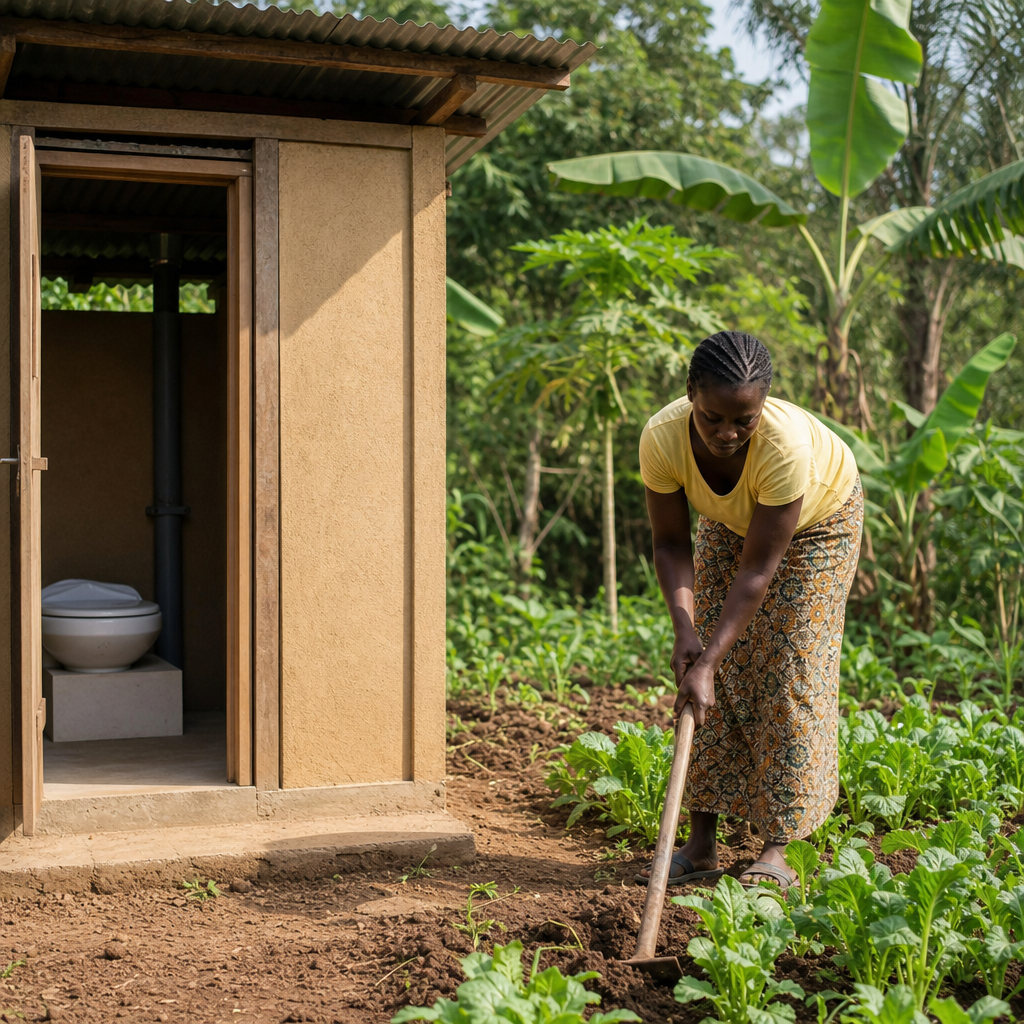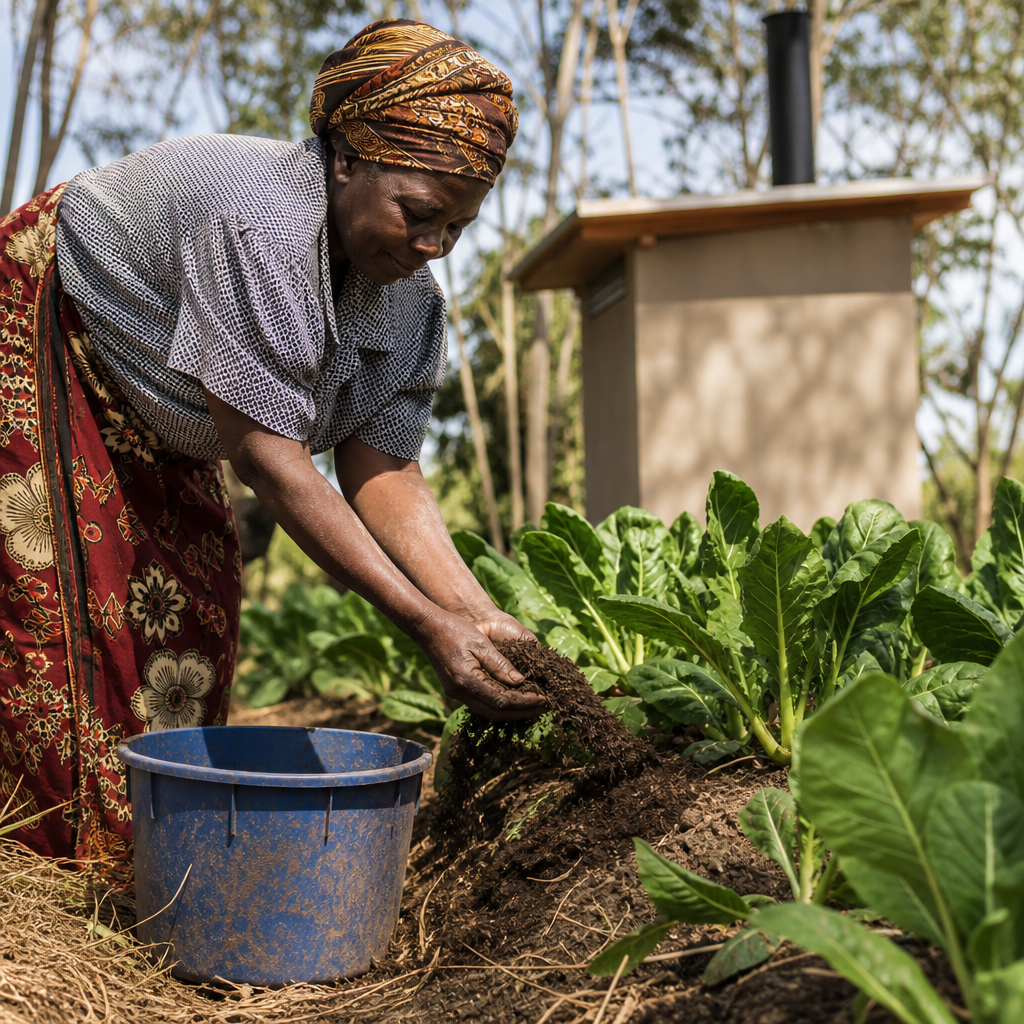
Enhancing soil fertility through EcoSan is one of the most practical ways to connect sanitation, agriculture, and environmental protection in a single system. EcoSan, short for ecological sanitation, is an approach that treats human excreta and household organic waste as resources rather than useless byproducts. Instead of flushing nutrients away with large volumes of water, EcoSan systems recover nitrogen, phosphorus, potassium, organic matter, and micronutrients that crops need. In regions facing degraded soils, rising fertilizer costs, water scarcity, and weak sanitation infrastructure, that shift matters immediately. I have worked on sanitation planning discussions where the turning point came when farmers stopped seeing toilets as endpoints and started seeing them as nutrient recovery tools.
The core idea is simple: safely capture, treat, and reuse nutrients while protecting human health and preventing pollution. Conventional sanitation often mixes urine, feces, and wastewater, making treatment expensive and nutrient recovery difficult. EcoSan separates flows when possible, reduces pathogens through dehydration, composting, storage, or other treatment steps, and returns the stabilized product to land. This directly supports sustainable practices in sanitation because it lowers pressure on freshwater supplies, cuts nutrient discharge into rivers and lakes, and reduces dependence on synthetic fertilizers whose production is energy intensive. The environmental impact is broader than waste management alone. Healthy soils store more carbon, hold more water, support stronger root systems, and improve resilience to drought.
As a hub topic within sustainable practices in sanitation, EcoSan deserves a comprehensive view. People usually ask three practical questions. Is it safe? Does it actually improve soil fertility? Can it work at household, community, and institutional scale? The answer to all three is yes, but only when design, user behavior, pathogen reduction, and agricultural application are handled correctly. This article explains how EcoSan systems function, what nutrients they recover, which technologies are commonly used, where the main risks lie, and why this approach is becoming central to circular resource management. For communities trying to improve public health without losing valuable nutrients, EcoSan offers a credible path that links sanitation infrastructure directly to long-term soil restoration.
What EcoSan means in practice
EcoSan is not one toilet design. It is a sanitation philosophy and technical framework built around containment, treatment, and productive reuse. In practice, the most recognized models include urine-diverting dry toilets, composting toilets, arborloos, dehydrating vault systems, and source-separated collection systems connected to treatment facilities. The common principle is that excreta are managed to preserve nutrient value while breaking disease transmission pathways. Urine is often separated because it contains most of the nitrogen and a large share of the phosphorus excreted by humans, yet it usually carries far fewer pathogens than feces. Feces contain organic matter, phosphorus, and many disease-causing organisms, so they require stricter treatment before reuse.
From field experience, the success of EcoSan depends less on the toilet hardware than on the full service chain. Collection without leakage, adequate storage time, moisture control, ash or cover material use, user training, transport logistics, and crop-specific application all determine outcomes. A poorly maintained urine-diverting toilet can fail hygienically and socially, while a well-supported system can become a valued farm input stream. That is why sustainable sanitation planning treats toilets, treatment, transport, and reuse as one integrated system. The goal is not merely disposal. The goal is resource recovery with public health protection.
How EcoSan improves soil fertility
Soil fertility depends on nutrient availability, organic matter, biological activity, structure, and moisture retention. EcoSan contributes to each of these. First, recovered urine provides plant-available nitrogen quickly, functioning in many cases like a mineral fertilizer. Second, treated fecal compost or dehydrated material can add phosphorus, stable organic matter, and some micronutrients. Third, repeated organic inputs improve aggregation, infiltration, and cation exchange capacity, especially in sandy or degraded soils. Farmers often notice practical signs before laboratory results: darker topsoil, better tilth, improved seedling vigor, and less moisture stress between rains.
The nutrient story is especially important. Human urine typically contains most of the nitrogen excreted by the body and significant potassium, while feces contain much of the phosphorus and carbon-rich material. Globally, phosphorus is a strategic nutrient because high-grade phosphate rock is finite and geographically concentrated. Recovering phosphorus through sanitation is therefore not just a local soil issue but a long-term food security issue. Where farmers cannot afford commercial fertilizer, nutrient recovery can stabilize yields. Where fertilizer is available, EcoSan can partially offset costs and diversify nutrient sources, reducing exposure to volatile input prices.
Organic matter is the second major benefit. Many tropical and subtropical soils lose carbon rapidly under heat, erosion, and continuous cultivation. When treated biosolids or composted excreta are applied correctly, they can help rebuild soil organic carbon over time. That improves water-holding capacity and nutrient buffering. In drought-prone areas, this is often more valuable than the nutrient content alone because it improves the soil’s physical resilience. Crops grown in soils with better structure generally root deeper and withstand short dry spells more effectively.
Key EcoSan technologies and their agricultural value
Different EcoSan technologies suit different climates, settlement patterns, and farming systems. Urine-diverting dry toilets are widely used because they separate nutrient streams at the source and reduce odor when maintained well. Users add dry cover material such as ash, lime, or sawdust to the feces chamber, helping reduce moisture and support pathogen die-off. Composting toilets rely on aerobic decomposition and need careful carbon balance, aeration, and moisture management. Arborloos are shallow pit systems where the superstructure is moved after filling and a tree is planted on the nutrient-rich pit. Container-based sanitation can also support EcoSan when collected material is professionally treated and redistributed as compost or fertilizer products.
The right technology depends on local constraints. High water tables may rule out pits. Dense urban settlements may favor container collection over on-site reuse. Cold climates slow composting and dehydration, demanding longer storage periods. Areas with strong agricultural demand can justify centralized treatment and certified end products. In every case, technology selection should match user acceptance, operation capacity, and crop demand. I have seen projects fail because they imported a design that looked efficient on paper but ignored maintenance habits, anal cleansing practices, or the availability of cover material. EcoSan works when the system fits daily life.
| Technology | Main Resource Recovered | Best Use Context | Main Limitation |
|---|---|---|---|
| Urine-diverting dry toilet | Urine for nitrogen, dried fecal matter for soil amendment | Water-scarce households and farms | Requires consistent user behavior and cleaning |
| Composting toilet | Compost-like soil conditioner | Households or institutions with maintenance capacity | Process control can be difficult |
| Arborloo | Tree growth from in-situ nutrients | Rural areas with space | Less suitable for dense settlements |
| Container-based EcoSan | Centralized compost or fertilizer product | Dense urban or peri-urban communities | Needs reliable collection service |
Health safety, treatment standards, and risk management
The strongest criticism of reuse sanitation is health risk, and that concern is justified if treatment is poor. Feces can contain helminth eggs, bacteria, viruses, and protozoa. Safe EcoSan therefore depends on multiple barriers: source separation, storage time, pH increase, desiccation, composting temperatures, controlled handling, restricted crop use where needed, and hand hygiene. The World Health Organization has long supported risk-based sanitation planning through multi-barrier approaches rather than relying on a single treatment step. That matters because treatment performance varies with climate, moisture, and operating discipline.
Urine is usually simpler to manage. After storage, it can often be applied safely to crops with low risk when direct contact with edible plant parts is avoided. Fecal material demands more caution. Helminth eggs, especially Ascaris, are among the toughest indicators because they survive harsh conditions. If a system cannot reliably inactivate helminths, the product should not be used on food crops. This is where professional oversight, routine monitoring, and clear reuse protocols are essential. In high-performing programs, treated outputs are categorized, application rates are defined, and farmers receive training on waiting periods and protective equipment.
Public acceptance also hinges on safety communication. Communities are more likely to use EcoSan products when they understand the treatment process, see demonstration plots, and trust the monitoring. In my experience, resistance drops sharply when people can compare crop performance and inspect a dry, stabilized end product rather than imagine raw waste. Transparent operating rules build confidence far better than abstract promises.
Environmental impact beyond the farm
EcoSan improves environmental performance well beyond soil fertility. Conventional wastewater systems often discharge nutrients into water bodies, fueling eutrophication, algal blooms, oxygen depletion, and fish kills. By recovering nutrients before they become pollutants, EcoSan reduces this burden. It also lowers water demand because dry or low-water systems avoid the flush-and-transport model that can consume substantial volumes of potable water. In arid and peri-urban regions, that alone can justify the approach.
There is also a climate dimension. Synthetic nitrogen fertilizer production relies heavily on the Haber-Bosch process, which is energy intensive and linked to significant greenhouse gas emissions. Recovered nutrients do not eliminate the need for industrial fertilizer everywhere, but they can reduce total demand. Better soil organic matter management can further increase carbon storage and reduce erosion losses. Transport emissions may rise if materials are hauled long distances, so localized reuse loops usually deliver the strongest environmental gains. A well-designed EcoSan program is therefore a circular economy system: it keeps nutrients in productive use, limits pollution, and strengthens local resource efficiency.
Implementation challenges and how successful programs address them
The main barriers to EcoSan are rarely technical alone. Social norms, unclear regulations, weak maintenance systems, and poor market development for reuse products cause more failures than toilet design. Households may reject systems that require extra handling. Institutions may install units without budgeting for caretakers. Farmers may hesitate unless nutrient value is demonstrated in field trials. Municipal authorities may support sanitation goals but lack standards for transporting and certifying treated products.
Successful programs solve these issues systematically. They start with user-centered design and realistic training. They establish service responsibilities, not just construction targets. They connect sanitation teams with agricultural extension workers so reuse guidance is practical and crop specific. They test products for pathogen reduction and nutrient content. They use demonstration farms to show yield effects and safe application methods. In some cases, social enterprises create a business model by collecting excreta, processing it into compost or pellets, and selling the product to growers. This shifts EcoSan from a household burden to a managed resource service.
Policy alignment matters too. Building codes, fertilizer regulations, public health rules, and land application standards should not work against each other. Where governments recognize treated human-derived inputs within clear safety frameworks, investment rises. Where regulation is silent or contradictory, projects stay small. For this subtopic hub, that is the key lesson: sustainable practices in sanitation succeed when engineering, health protection, agriculture, and governance are planned together rather than in isolated sectors.
Why EcoSan belongs at the center of sustainable sanitation
EcoSan belongs at the center of sustainable sanitation because it addresses two infrastructure gaps at once: safe excreta management and declining soil productivity. Instead of paying to dispose of nutrients and then paying again to replace them with imported fertilizer, communities can close part of the loop locally. The strongest EcoSan systems do not romanticize waste reuse or ignore health risks. They apply disciplined treatment, defined reuse pathways, and measurable agricultural outcomes. When that happens, the benefits are concrete: lower water use, reduced nutrient pollution, improved soil condition, and more resilient farming systems.
The central takeaway is practical. Enhancing soil fertility through EcoSan is not a fringe idea; it is a tested sanitation strategy with direct environmental and agricultural value. If you are evaluating sustainable practices in sanitation, start by mapping nutrient flows, treatment capacity, user behavior, and local crop demand. Then build systems that recover resources safely and consistently. Done well, EcoSan turns sanitation from a linear waste problem into a regenerative asset for soil, water, and long-term community resilience.
Frequently Asked Questions
What is EcoSan, and how does it improve soil fertility?
EcoSan, or ecological sanitation, is a system that safely captures, treats, and reuses nutrients from human excreta and household organic waste instead of discarding them as waste. Its value for soil fertility comes from the fact that urine and treated fecal matter contain many of the same nutrients crops require for healthy growth, especially nitrogen, phosphorus, and potassium, along with smaller amounts of calcium, sulfur, and micronutrients. In conventional sanitation systems, these nutrients are often flushed away with water and become an environmental burden. In an EcoSan approach, they are recovered and returned to the land, helping close the nutrient cycle.
From a soil management perspective, EcoSan can support both immediate and long-term fertility. Urine, when properly collected and applied, acts as a fast-available nutrient source, particularly for nitrogen-demanding crops. Treated fecal compost or dehydrated solids contribute organic matter, which improves soil structure, water-holding capacity, aeration, and microbial activity. Over time, this can help degraded soils become more productive and resilient. This is especially important in areas where farmers face rising fertilizer costs, low soil organic matter, and limited access to reliable agricultural inputs. By transforming sanitation outputs into soil resources, EcoSan creates a practical link between public health, food production, and environmental sustainability.
Which nutrients from EcoSan are most beneficial for crops and soil health?
The most important nutrients recovered through EcoSan are nitrogen, phosphorus, and potassium, often referred to as NPK. These are the same primary nutrients found in commercial fertilizers. Nitrogen supports leafy growth and overall plant vigor. Phosphorus is essential for root development, flowering, energy transfer, and early crop establishment. Potassium helps regulate water balance, improves disease resistance, and supports stronger stems and better yields. When these nutrients are returned to the soil through EcoSan systems, they can directly improve crop performance while reducing dependence on synthetic fertilizers.
EcoSan materials may also supply secondary nutrients and micronutrients that are critical for balanced soil fertility. These can include calcium, magnesium, sulfur, zinc, boron, and iron, depending on diet, collection methods, and treatment processes. In addition, treated organic solids contribute carbon-rich organic matter, which is not just a nutrient source but a major driver of healthy soil function. Organic matter feeds beneficial soil organisms, improves aggregate stability, reduces erosion risk, and increases the soil’s ability to retain both nutrients and moisture. In many farming systems, this combination of plant nutrients and organic matter is what makes EcoSan particularly valuable, because it supports productivity while gradually rebuilding soil quality.
Is it safe to use EcoSan products in agriculture?
Yes, EcoSan products can be safe for agricultural use when they are properly collected, treated, stored, and applied according to established health and sanitation guidelines. Safety is the foundation of any ecological sanitation system. The main concern is the possible presence of pathogens in untreated human waste. That is why EcoSan does not promote raw use. Instead, it relies on methods such as urine diversion, dehydration, composting, extended storage, pH increase, and careful handling to reduce health risks before any material is applied to fields.
Urine is usually lower risk than fecal matter and can often be safely reused after storage and proper dilution or controlled application, depending on local recommendations. Treated fecal materials require more rigorous handling and adequate treatment time to ensure pathogen reduction. Farmers and households should also use protective equipment when handling materials, wash hands thoroughly, and avoid applying untreated or insufficiently treated products to crops eaten raw. It is often best to apply treated materials to fruit trees, field crops, or soils ahead of planting, rather than directly onto harvestable edible parts. When well managed, EcoSan can be a safe and effective resource recovery strategy that protects health while improving agricultural productivity.
How does EcoSan compare with chemical fertilizers for improving soil fertility?
EcoSan and chemical fertilizers are not always direct replacements for one another, but EcoSan offers several advantages that make it highly valuable in soil fertility programs. Chemical fertilizers provide concentrated nutrients in a form that plants can access quickly, which is useful for correcting short-term deficiencies and boosting yields. However, they usually do not add organic matter to the soil, and overreliance on them without good soil management can contribute to declining soil structure, nutrient imbalance, acidity problems, and reduced biological activity. EcoSan, by contrast, not only returns nutrients but can also improve the physical and biological condition of the soil, especially when treated solids or composted materials are included.
In practice, many farmers get the best results by integrating EcoSan products with other fertility inputs rather than viewing them as an all-or-nothing alternative. Urine can supply fast-acting nutrients similar to some mineral fertilizers, while composted EcoSan solids can build long-term soil health. This combined effect can improve nutrient efficiency, reduce input costs, and increase resilience during drought or periods of poor soil performance. EcoSan is especially helpful in low-resource settings where commercial fertilizers are expensive, unavailable, or inconsistently supplied. While nutrient content may be more variable than packaged fertilizers, the broader benefits to nutrient recycling, waste reduction, and soil restoration make EcoSan a strong component of sustainable agriculture.
What are the main benefits of enhancing soil fertility through EcoSan for farmers and communities?
The benefits of EcoSan extend far beyond the farm plot. For farmers, one of the biggest advantages is access to a locally available source of nutrients that can reduce spending on external fertilizers. This can be especially important in rural or low-income areas where fertilizer prices are high or supply chains are unreliable. Improved soil fertility can lead to healthier crops, more stable yields, and better water retention in the field, all of which strengthen farm productivity over time. Where soils are depleted, the addition of nutrients and organic matter through EcoSan can help restore fertility gradually and support more reliable food production.
At the community level, EcoSan helps address sanitation and environmental challenges at the same time. Instead of allowing nutrients to pollute water bodies through unmanaged waste disposal or water-intensive flushing, EcoSan keeps those nutrients in a controlled cycle and returns them to productive use. This reduces nutrient losses, lowers pressure on freshwater resources, and supports a more circular local economy. It can also improve awareness of the connection between sanitation, health, and agriculture. When communities adopt well-managed EcoSan systems, they are not only producing fertilizer substitutes; they are building a more sustainable model for resource management, public health protection, and long-term land productivity.