Solid waste reduction through effective EcoSan practices is one of the most practical ways to cut pollution, conserve resources, and improve public health at the same time. EcoSan, short for ecological sanitation, is an approach that treats human waste as a resource rather than a disposal problem. In practice, that means separating waste streams, recovering nutrients, minimizing contamination, and designing sanitation systems that fit local environmental conditions. When EcoSan is planned well, it does more than handle excreta safely. It reduces the amount of solid waste sent to dumpsites, lowers pressure on sewers and landfills, and creates useful outputs such as compost-like soil amendments, recovered water, and cleaner recyclable materials.
I have worked on sanitation and waste management projects where the biggest environmental gains did not come from a single technology, but from better system design. Communities often focus on collection and disposal, yet much of the damage happens upstream when organic matter, plastics, greywater, and toilet waste are mixed together. Once mixed, these materials are harder and more expensive to recover. EcoSan matters because it prevents that loss at the source. It supports circular resource use, reduces methane generation from unmanaged waste, and protects soil and groundwater from poorly contained sanitation systems.
This topic sits at the center of environmental impact because sanitation is tied directly to water quality, soil health, greenhouse gas emissions, and urban cleanliness. The World Health Organization and UNICEF Joint Monitoring Programme consistently stress that safely managed sanitation is not only a health issue, but also an environmental one. The same is true in rural settings where pit latrines can affect aquifers, and in dense settlements where overflowing toilets increase solid waste accumulation in drains and open spaces. A strong EcoSan program helps communities move from disposal toward recovery, which is the core principle behind durable solid waste reduction.
To understand EcoSan and the environment, it helps to define the main terms clearly. Solid waste reduction means preventing waste generation, increasing reuse, and diverting materials from open dumping, burning, and landfilling. In EcoSan systems, key materials include feces, urine, anal cleansing materials, ash, sawdust, food scraps, and in some cases faecal sludge after treatment. Effective practices include urine diversion, dry toilets, composting, dehydration, co-composting with organics, and safe storage before agricultural reuse. The goal is not simply to install a toilet. The goal is to create a sanitation chain that protects people while shrinking the environmental footprint of waste.
How EcoSan Reduces Solid Waste at the Source
EcoSan reduces solid waste first by preventing materials from becoming mixed waste. In a conventional system, toilet waste, flush water, food scraps, packaging, and street litter often end up in the same physical environment: pits, drains, transfer points, or disposal sites. That mixing creates contamination and destroys recovery value. A urine-diverting dry toilet, for example, keeps liquid and solid fractions separate. This makes fecal matter easier to dry or compost, lowers odor, and reduces the volume of wet sludge that would otherwise need transport and disposal. In practical terms, a household or school using dry separation generates less unusable waste and more manageable material streams.
The environmental benefit becomes clearer when compared with open dumping or unmanaged pit emptying. Wet, mixed organic waste decomposes anaerobically and generates methane, a greenhouse gas far more potent than carbon dioxide over a twenty-year period. Separation and controlled composting improve aeration and push decomposition toward more stable outcomes. In projects I have reviewed, the simple act of keeping urine, feces, and kitchen organics separate cut disposal loads significantly because the organic fraction could be processed locally instead of hauled away as putrescible waste.
Source separation also protects other recyclable materials. When diapers, paper, bottles, or food packaging are exposed to fecal contamination, they usually lose recycling value and become a public health risk for waste pickers and collection crews. By containing sanitation waste in a dedicated system, EcoSan preserves cleaner municipal waste streams. This matters in cities where informal recyclers recover a large share of plastics, metals, and cardboard. Cleaner streams mean higher recovery rates and lower occupational exposure.
Resource Recovery and Circular Environmental Benefits
The defining environmental advantage of EcoSan is resource recovery. Human excreta contain nutrients plants need, especially nitrogen, phosphorus, and potassium. Urine usually carries most of the nitrogen and a substantial share of phosphorus and potassium, while feces contain organic matter and additional nutrients. When these materials are safely treated, they can substitute for part of the demand for synthetic fertilizers. That substitution matters because mineral fertilizer production is energy intensive, and phosphorus is a finite mined resource concentrated in a limited number of countries.
Recovered nutrients also reduce the solid waste burden on municipalities. Instead of paying for collection, transport, and disposal, local systems can transform waste into inputs for agriculture, landscaping, or soil restoration. In water-scarce or degraded areas, composted organic matter improves soil structure, water retention, and microbial activity. I have seen municipal pilots where co-composting treated fecal sludge with market waste produced a more stable product than composting food scraps alone. The reason is balance: carbon-rich bulking agents, controlled moisture, and turning schedules help create temperatures high enough to reduce pathogens while preserving nutrient value.
Urine diversion deserves special attention because it is one of the most efficient recovery steps in EcoSan. Stored urine can be used as a fertilizer in many agricultural contexts when local guidelines, crop restrictions, and storage periods are followed. This direct reuse sharply reduces the amount of nutrient-rich liquid entering drains, pits, or overloaded treatment systems. It also lowers eutrophication risk, since uncontrolled nutrient discharge can trigger algal growth in rivers and lakes. From a solid waste perspective, urine diversion keeps solids drier and easier to handle, reducing the mass and mess associated with sludge management.
| EcoSan practice | Waste reduction effect | Environmental benefit | Typical example |
|---|---|---|---|
| Urine-diverting dry toilets | Reduces wet sludge volume and keeps solids separate | Lowers transport needs and improves nutrient recovery | Household toilets in water-scarce rural areas |
| Dehydration with ash or dry cover material | Produces lighter, drier solids for storage and treatment | Reduces odor, flies, and leachate formation | School sanitation blocks with twin vaults |
| Co-composting with market or yard waste | Diverts organics from dumpsites into useful soil products | Cuts methane emissions and improves soil health | Municipal composting linked to fecal sludge treatment |
| Safe urine reuse | Prevents nutrient-rich waste from entering drains | Reduces fertilizer demand and eutrophication pressure | Peri-urban vegetable production under local controls |
Key EcoSan Technologies and When They Work Best
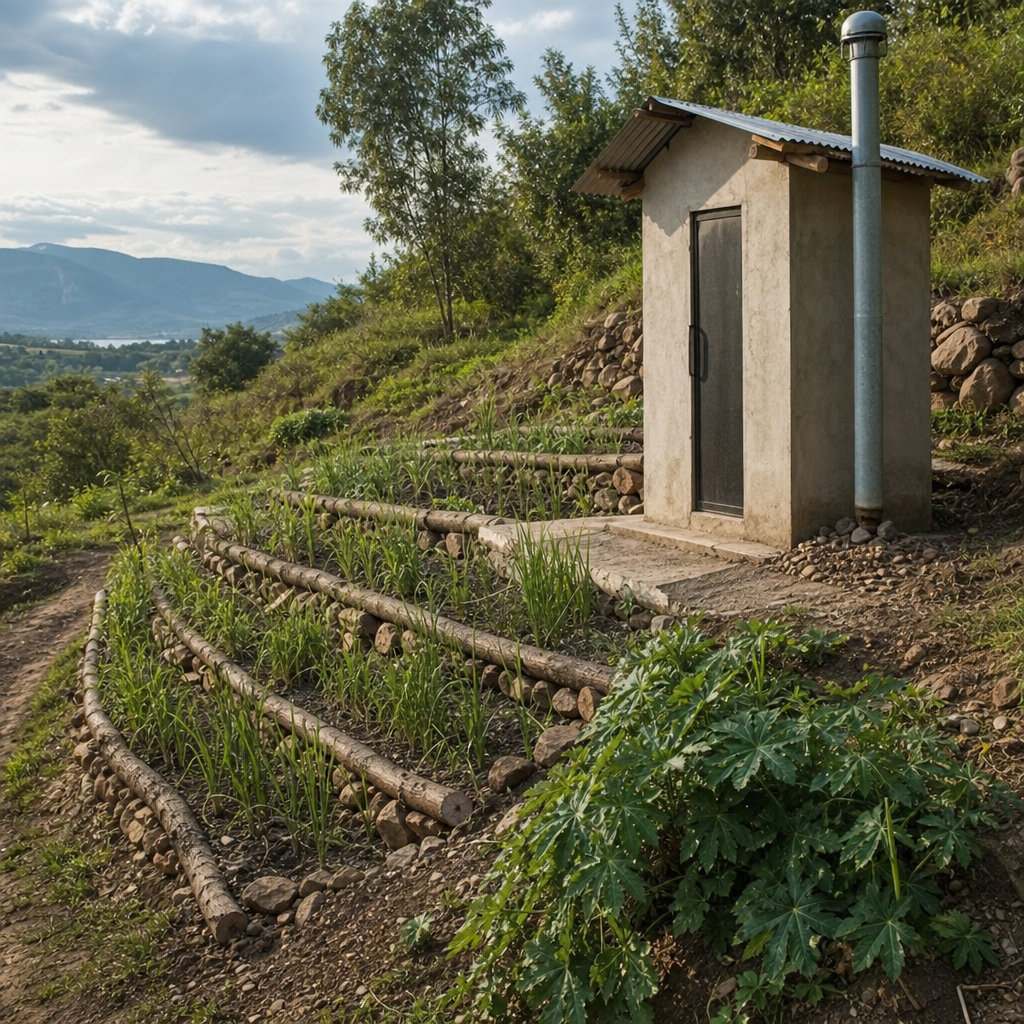
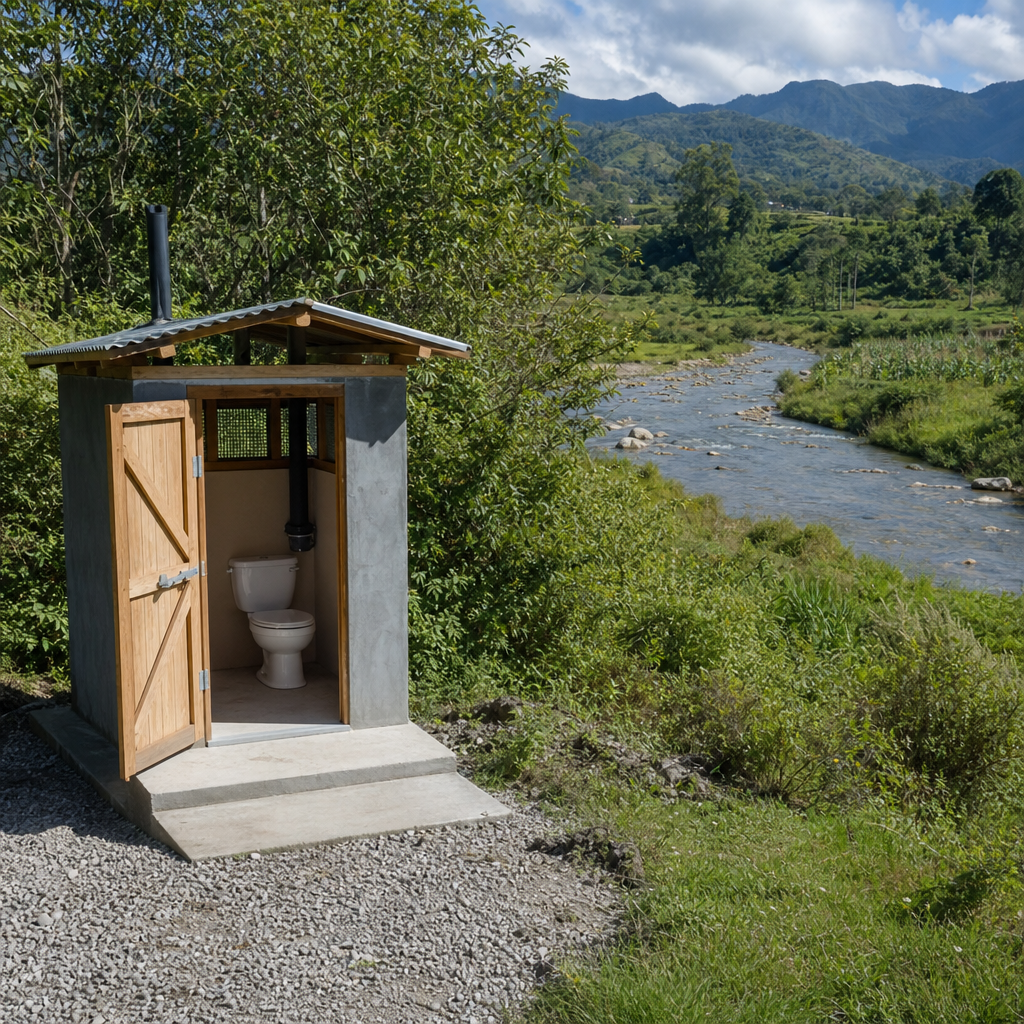
Not every EcoSan system fits every environment. The best technology depends on groundwater depth, population density, user habits, climate, land availability, and institutional capacity. Urine-diverting dry toilets work especially well where water is scarce, sewer access is limited, and users can manage dry cover materials such as ash, lime, or sawdust. Twin-vault dehydration toilets allow one chamber to rest while the other is in use, which supports pathogen reduction over time. Composting toilets can perform well where maintenance is reliable and operators understand moisture control, aeration, and temperature management.
In denser settlements, container-based sanitation can apply EcoSan principles even when households lack space for treatment. Sealed containers reduce leakage and allow scheduled collection to a centralized treatment site. This model has been used in informal urban areas where pits flood, trucks cannot reach narrow lanes, and sewer extensions are unrealistic in the short term. If the collected material is then composted, dried, or processed into fuel or fertilizer products under controlled conditions, the system reduces local dumping and creates a measurable diversion pathway from unmanaged waste disposal.
Faecal sludge treatment plants can also support solid waste reduction when they integrate screening, drying beds, planted beds, composting, or co-treatment with organic market waste. The important distinction is that treatment must be designed for resource recovery, not only for final disposal. Poorly run sites simply shift waste from one place to another. Effective sites control moisture, residence time, vector exposure, and runoff. They also maintain documented operating procedures, because treatment quality determines whether recovered material can be used safely or must still be discarded.
Environmental Risks, Safeguards, and Common Failures
EcoSan delivers environmental benefits only when safety controls are built into daily practice. The main risks are pathogen exposure, odor, fly breeding, nutrient loss, and contamination of soil or water through poor storage or premature reuse. These risks are manageable, but they are real. For fecal materials, treatment time, temperature, moisture, pH, and storage conditions matter. The World Health Organization sanitation safety planning framework is useful here because it examines hazards across the full service chain, from user interface to collection, transport, treatment, and end use.
The most common failure I have seen is treating EcoSan as a hardware project rather than a service system. A urine-diverting toilet fails if users do not understand separation. A composting unit fails if moisture remains too high and the pile turns anaerobic. A reuse scheme fails if farmers receive inconsistent product quality or unclear application guidance. Another recurring problem is using the wrong cover material. Sawdust that is too wet, ash applied inconsistently, or insufficient carbon bulking during co-composting can lead to odor, insects, and poor stabilization.
Groundwater protection is another major environmental consideration. In high water-table zones or flood-prone settlements, unlined pits and poorly sited toilets can leach nutrients and pathogens into shallow aquifers. EcoSan systems are often chosen precisely because they reduce that risk, but only if the vaults, containers, and storage areas are properly sealed and elevated where necessary. Rainwater intrusion must be prevented, and runoff from treatment areas must be managed. Simple site engineering such as roof overhangs, drainage channels, and impermeable pads can make the difference between safe recovery and environmental contamination.
Implementation Strategies for Communities, Cities, and Institutions
For EcoSan to reduce solid waste at scale, implementation has to connect user behavior, collection logistics, treatment standards, and end-market development. The most successful programs start with a waste flow assessment. That means mapping how much organic waste, toilet waste, greywater, and municipal solid waste is generated, where it moves, and where contamination happens. Without that baseline, planners often overbuild infrastructure or choose technologies that users cannot maintain. A school may need dehydration toilets and a strict cleaning protocol, while a market district may benefit more from co-composting linked to segregated organic waste collection.
Institutions play a decisive role. Municipal governments can support EcoSan through building codes, service licensing, land allocation for treatment, procurement of sanitation services, and quality standards for compost or biosolids. Health agencies can set reuse restrictions, storage periods, and occupational safety rules. Agricultural extension teams can help farmers use recovered products correctly by advising on application timing, dilution where relevant, and crop suitability. In my experience, reuse only scales when the sanitation side and the agriculture side are managed together. If either side is weak, material accumulates without a safe outlet.
Monitoring should be practical and routine. Operators need checklists for moisture, temperature, fill levels, odor, vector presence, collection intervals, and storage time. Municipal managers need diversion data that show how much waste is being kept out of pits, drains, transfer stations, and dumpsites. Communities need feedback that connects daily behavior to visible outcomes such as cleaner compounds, fewer blocked drains, lower hauling costs, and improved soil in gardens or farms. If you are building an environmental impact strategy around sanitation, EcoSan deserves a central place because it turns one of the dirtiest waste streams into a controlled resource cycle. The next step is straightforward: assess current waste mixing points, choose the right EcoSan model, and build the service chain needed to keep materials safe and useful.
Frequently Asked Questions
1. What is EcoSan, and how does it help reduce solid waste?
EcoSan, or ecological sanitation, is a sanitation approach built around the idea that human waste should not automatically be treated as useless garbage. Instead, it is managed as a potentially valuable resource that can be safely transformed and reused under the right conditions. This matters for solid waste reduction because conventional sanitation systems often mix different waste streams together, making treatment more difficult, increasing contamination, and creating larger volumes of material that must be transported, dumped, or processed. EcoSan works differently by emphasizing separation at the source, controlled treatment, nutrient recovery, and system designs suited to local environmental and social conditions.
In practical terms, EcoSan can reduce solid waste by preventing organic and sanitation-related materials from entering the general waste stream in the first place. For example, dry toilets, urine-diverting systems, and composting-based sanitation models can convert waste into stabilized compost-like material or nutrient-rich inputs for agriculture when managed correctly. This reduces the burden on landfills, lowers the amount of contaminated sludge requiring disposal, and cuts the need for expensive collection and hauling systems. It also helps communities avoid the secondary waste problems created when poorly managed sanitation contaminates packaging waste, soil, drainage channels, and nearby water sources.
Just as importantly, EcoSan supports a circular model instead of a disposal model. Nutrients such as nitrogen, phosphorus, and potassium can be recovered rather than lost, and water use can often be reduced as well. The result is a sanitation strategy that not only reduces solid waste volumes but also supports cleaner communities, better soil management, and more efficient resource use. When designed and operated properly, EcoSan becomes a powerful tool for reducing pollution while improving sanitation outcomes at the same time.
2. What EcoSan practices are most effective for reducing waste and preventing pollution?
The most effective EcoSan practices are the ones that separate waste streams early, treat materials safely, and create clear pathways for reuse or low-risk disposal. Source separation is one of the most important principles. When urine, feces, graywater, and solid household waste are kept apart, each stream can be managed in the most appropriate way. This reduces cross-contamination, lowers treatment complexity, and makes recovery of nutrients and organic matter much more practical. Urine-diverting dry toilets, composting toilets, and dehydrating toilet systems are common examples of EcoSan technologies that support this approach.
Another highly effective practice is controlled composting or dehydration of fecal matter. These processes reduce pathogens over time when managed according to health and environmental standards. By stabilizing the material, EcoSan systems can turn a sanitation liability into a safer product with agricultural or landscaping value, depending on local regulations and treatment quality. In areas where direct reuse is not appropriate or allowed, treatment still reduces the volume and hazard level of waste before final disposal, which is a major improvement over unmanaged dumping or poorly maintained pit systems.
Pollution prevention also depends on matching the sanitation system to the local setting. In flood-prone areas, for example, poorly located pits can leak and spread contamination widely. In water-scarce regions, dry or low-water EcoSan options can reduce wastewater generation and relieve pressure on limited supplies. Proper siting, ventilation, containment, user training, maintenance schedules, and safe handling protocols are all part of effective EcoSan practice. The best results come from combining technology with education, monitoring, and community acceptance. That combination is what keeps waste out of the environment and makes resource recovery sustainable over the long term.
3. Is EcoSan safe for public health, especially when waste is reused?
Yes, EcoSan can be safe for public health, but safety depends on correct design, proper operation, and strict attention to treatment and handling procedures. The central public health concern is pathogen control. Human waste can contain bacteria, viruses, parasites, and other disease-causing organisms, so any EcoSan system must be designed to reduce these risks before reuse or final handling takes place. This is why successful EcoSan programs focus heavily on containment, separation, treatment time, moisture control, temperature conditions where applicable, and user education.
When those controls are in place, EcoSan can actually improve public health compared with poorly managed conventional sanitation. Open dumping, leaking pits, broken sewer infrastructure, and unmanaged sludge disposal all create serious health hazards. EcoSan aims to avoid those problems by keeping waste contained, reducing contact with people and animals, and preventing contamination of groundwater, surface water, and living areas. In many settings, especially where sewer systems are incomplete or unreliable, EcoSan offers a more controlled and locally manageable solution.
Safe reuse is possible, but it should never be informal or improvised. Reuse must follow established health guidelines, including adequate storage or treatment periods, protective equipment during handling, and restrictions on where and how recovered materials are applied. Local regulations, agricultural practices, climate conditions, and treatment performance all matter. In other words, EcoSan is not simply about reusing waste; it is about reusing treated materials responsibly. When implemented with discipline and oversight, EcoSan can reduce disease risk, improve hygiene, and support healthier communities while still delivering major waste reduction benefits.
4. Can EcoSan work in both rural and urban areas?
EcoSan can work in both rural and urban environments, but the design and management approach usually needs to be adapted to the local context. In rural areas, EcoSan is often especially effective because there may be more space for on-site systems, stronger links to agriculture, and fewer centralized sewer connections. Households or small communities may be able to use composting toilets, urine-diverting toilets, or decentralized treatment systems that recover nutrients for local soil improvement. These setups can reduce transport needs, lower infrastructure costs, and provide direct benefits to farmers or households with gardens.
In urban areas, EcoSan can still be highly valuable, particularly in informal settlements, peri-urban zones, water-stressed cities, or neighborhoods where sewer expansion is too costly or technically difficult. However, urban implementation usually requires stronger service models. That can include scheduled collection, container-based sanitation, neighborhood-scale treatment hubs, safe transfer logistics, and formal reuse or disposal chains. Space constraints, population density, and the need for tighter health controls mean that urban EcoSan often depends on coordinated management rather than household action alone.
The key point is that EcoSan is not one single toilet type or one fixed system. It is a broader framework for ecological sanitation that can be adapted to climate, soil conditions, housing patterns, cultural preferences, and economic realities. A well-planned rural EcoSan program may focus on simple, low-cost systems with agricultural reuse, while an urban program may rely on professional collection and treatment services with centralized quality control. In both cases, the goals remain the same: reduce waste, prevent pollution, recover useful resources, and protect public health through smarter sanitation design.
5. What are the biggest challenges to adopting EcoSan, and how can they be overcome?
One of the biggest challenges is public perception. Many people are used to thinking of sanitation only in terms of disposal and flushing waste away, not as a system for recovery and reuse. Because of that, EcoSan may initially face resistance based on stigma, unfamiliarity, or concerns about cleanliness and convenience. These concerns are understandable, and they should be addressed directly through community engagement, demonstrations, transparent health safeguards, and designs that are easy to use and maintain. People are far more likely to accept EcoSan when they understand how it works, why it is safe, and what practical benefits it offers.
Another major challenge is operation and maintenance. EcoSan systems usually perform well when they are managed consistently, but they can fail when maintenance is neglected, when users are not trained, or when responsibility for service is unclear. Problems such as improper waste separation, excess moisture, poor ventilation, or unsafe handling can undermine both safety and user confidence. Overcoming this requires more than installing hardware. It means establishing maintenance plans, assigning responsibilities, providing technical support, and building local capacity for monitoring and repairs.
Financing and policy can also be barriers. In some places, sanitation funding is heavily oriented toward conventional sewer systems, even where those systems are impractical or too expensive to expand. EcoSan may also face regulatory gaps around reuse standards, collection systems, or treated product approvals. To overcome these obstacles, governments, NGOs, planners, and service providers need to integrate EcoSan into broader waste management, water conservation, and public health strategies. Pilot projects, supportive regulations, performance standards, and incentives for decentralized treatment can all help. When decision-makers treat EcoSan as serious infrastructure rather than a niche alternative, adoption becomes much more achievable and long-lasting.