Urban heat islands are one of the clearest signs that city growth can alter local climate, public health, and infrastructure performance, and they are increasingly central to any serious discussion of EcoSan and the environment. An urban heat island forms when built surfaces such as asphalt, concrete, brick, and dark roofing absorb solar radiation during the day and release that stored heat slowly at night, keeping cities warmer than surrounding rural areas. In dense districts with limited tree cover, restricted airflow, heavy traffic, and waste heat from buildings, the temperature gap can become several degrees Celsius, especially after sunset. That difference matters because heat raises cooling demand, worsens air pollution, stresses water systems, and increases illness and mortality during heat waves.
In practice, I have seen urban heat island effects show up in places people rarely consider first: schoolyards covered in synthetic surfacing, apartment courtyards with no shade, logistics yards surrounded by dark paving, and low-income neighborhoods where tree canopy is sparse and old buildings leak cooled air. Heat exposure is not evenly distributed. It follows patterns of land use, vegetation, building age, income, and access to public space. That is why mitigation cannot be treated as a single landscaping choice. It requires an environmental strategy that links sanitation, water reuse, soil health, vegetation, stormwater management, and urban design.
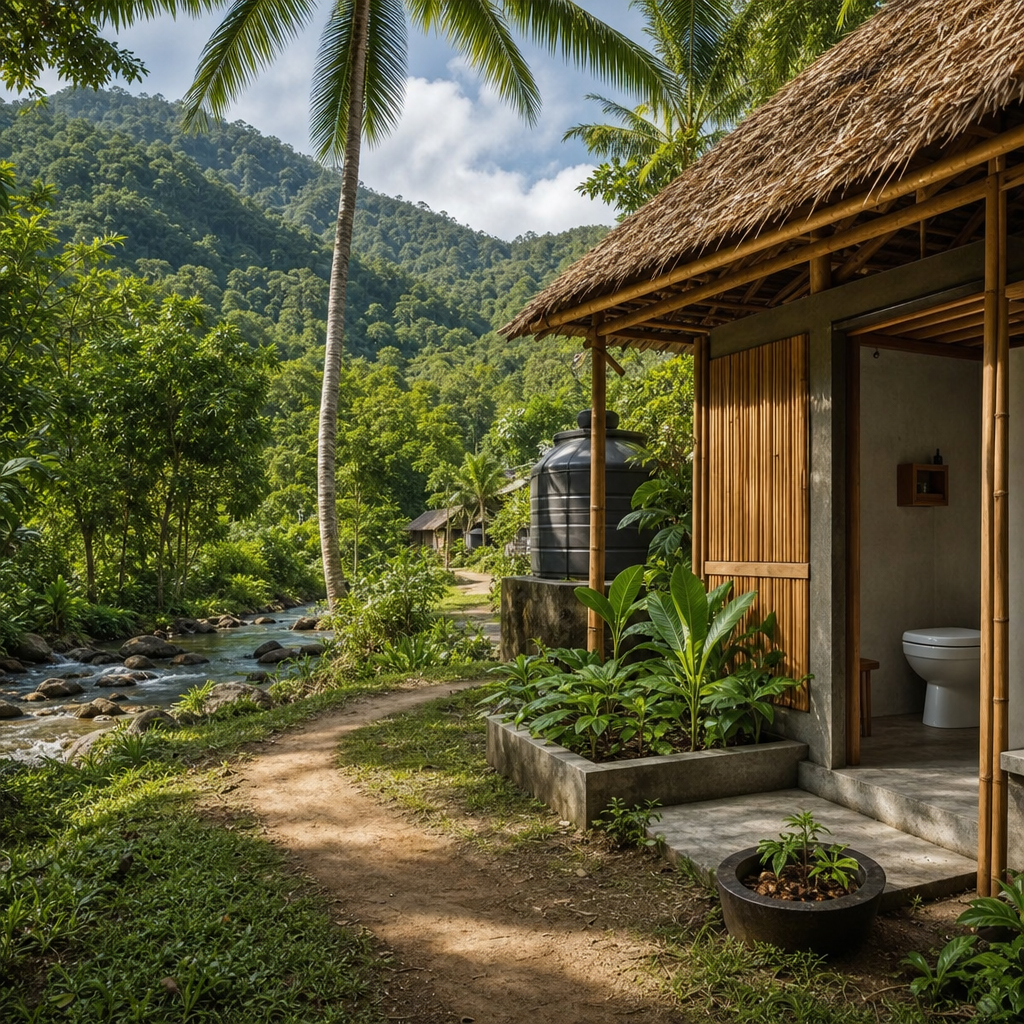
EcoSan, short for ecological sanitation, is often understood narrowly as a sanitation system that safely separates, treats, and reuses human waste. That definition is correct but incomplete for environmental planning. EcoSan is also a resource recovery approach. It treats nutrients, water, and organic matter as assets rather than waste streams. When designed well, EcoSan systems can reduce potable water use, support decentralized wastewater management, improve soil structure, enable productive vegetation, and cut pressure on energy-intensive sewer infrastructure. Those effects make EcoSan relevant to heat mitigation, especially where cooling, water scarcity, and degraded urban soils intersect.
This article serves as a hub for EcoSan and the environment by connecting urban heat islands to the wider environmental performance of sanitation choices. The key question is simple: how can ecological sanitation help cool cities? The answer is through indirect but measurable pathways. EcoSan can support urban greening by supplying treated water and recovered nutrients, improve evaporative cooling through healthier vegetation, reduce heat-retaining hardscape expansion tied to centralized infrastructure, and strengthen climate resilience in neighborhoods where conventional systems are costly or unreliable. Understanding those links helps planners, developers, utilities, and communities make better decisions about land, water, and heat.
What causes urban heat islands and why they are intensifying
Urban heat islands are driven by a combination of surface properties, urban geometry, and human activity. Dark impervious materials have low albedo, meaning they reflect little sunlight and absorb a large share of incoming radiation. Concrete and masonry also have high thermal mass, so they store heat and release it over many hours. Dense street canyons trap warm air and reduce longwave heat loss at night. Sparse vegetation means less shade and less evapotranspiration, the process by which plants cool surrounding air as water moves from soil through leaves into the atmosphere. Add traffic, air conditioning exhaust, industrial activity, and crowded buildings, and the heat load compounds.
Climate change is intensifying the problem by raising baseline temperatures and increasing the frequency, duration, and severity of heat waves. The U.S. Environmental Protection Agency, the Intergovernmental Panel on Climate Change, and many national meteorological agencies have documented how built environments amplify these extremes. In hot periods, nighttime temperatures become especially dangerous because the body loses its recovery window. Hospitals then see more dehydration, heat exhaustion, kidney stress, and cardiovascular incidents. Grids see peak electricity demand surge as air conditioners run longer. Pavements soften, rail lines deform, and building materials age faster. Urban heat islands are therefore not only a climate issue; they are also a public health and asset management issue.
Where EcoSan fits within environmental impact planning
EcoSan contributes to environmental impact reduction by closing loops that conventional sanitation often leaves open. A standard centralized sewer system usually mixes wastewater streams, transports them long distances, and depends on large treatment works that consume energy and chemicals before discharging effluent. EcoSan systems, by contrast, may use source separation, urine diversion, composting, anaerobic treatment, constructed wetlands, and decentralized reuse networks. The objective is safe treatment with beneficial reuse of water, nutrients, and biosolids under recognized public health controls.
That matters for heat mitigation because water and biomass are central to urban cooling. When sanitation systems recover usable water for irrigation, cities can maintain trees and planting beds during dry periods without relying entirely on potable supply. When nutrients are recovered in stabilized form, vegetation establishment becomes easier on poor urban soils. When organic amendments increase soil carbon and porosity, root zones hold more moisture, supporting longer periods of evapotranspiration. In projects I have evaluated, the cooling benefit did not come from the toilet technology itself. It came from the landscape performance the sanitation strategy enabled, particularly in campuses, housing clusters, parks, and peri-urban developments.
How ecological sanitation reduces heat through water, soil, and vegetation
The strongest environmental link between EcoSan and urban heat reduction is the water-soil-plant cycle. Trees and shrubs cool cities in two direct ways: they shade heat-absorbing surfaces and they release water vapor. A mature deciduous tree can have a powerful local effect on surface temperature by shading roofs, sidewalks, and walls. However, urban trees fail frequently when soils are compacted, nutrient poor, and chronically dry. EcoSan addresses those failure points by making nonpotable irrigation water and soil-building inputs more available.
Treated greywater and reclaimed effluent can be used for landscape irrigation where regulations permit and quality standards are met. The World Health Organization and many national reuse frameworks provide guidance on microbial limits, treatment barriers, and exposure controls. In climates with long dry seasons, this steady irrigation source can keep canopy alive when water restrictions would otherwise kill young trees. Nutrient recovery from urine-diverting systems or composted biosolids can also improve plant growth when applied according to agronomic needs, avoiding excess nitrogen runoff. Better vegetation translates into lower land surface temperatures and improved comfort in courtyards, streets, and public spaces.
Healthy soil is equally important. Urban fill is often compacted, alkaline, low in organic matter, and unable to infiltrate water effectively. Organic amendments derived from safely treated sanitation byproducts can improve aggregate stability, moisture retention, and microbial activity. That increases the time water remains in the root zone, which supports evapotranspiration between irrigation cycles. In other words, EcoSan can create the conditions that let green infrastructure actually function as cooling infrastructure rather than decorative planting that declines after one season.
Practical EcoSan strategies for cooler urban districts
Not every ecological sanitation system will mitigate urban heat islands equally. The highest value comes when sanitation design is coordinated with site hydrology, planting plans, and neighborhood-scale heat mapping. The following comparison shows how common EcoSan-related strategies contribute to cooling and environmental performance.
| Strategy | Primary environmental function | Heat mitigation pathway | Typical best-fit context |
|---|---|---|---|
| Greywater reuse | Reduces potable demand by reusing lightly contaminated water | Supports irrigation for trees, bioswales, and planting beds during dry periods | Multifamily housing, campuses, hotels |
| Urine diversion and nutrient recovery | Captures nitrogen and phosphorus for controlled reuse | Improves vegetation establishment and growth on poor urban soils | Eco-districts, schools, demonstration projects |
| Composting or treated biosolids reuse | Adds stabilized organic matter to soil | Raises moisture retention and plant resilience, extending evapotranspiration | Parks, street tree pits, peri-urban agriculture |
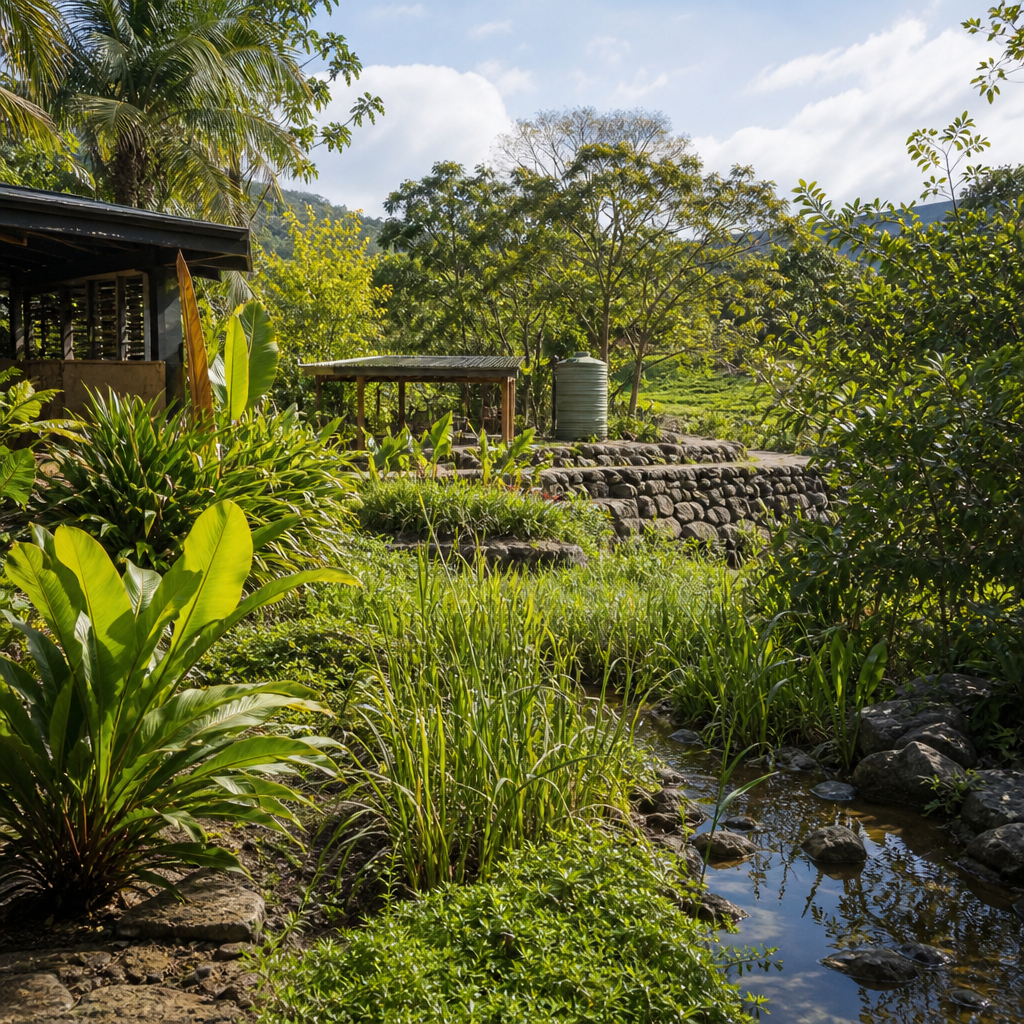
| Constructed wetlands | Provides decentralized wastewater treatment through planted systems | Adds vegetated, moist surfaces that cool microclimates | Institutional sites, edge developments, industrial campuses |
These strategies are most effective when paired with high-albedo surfaces, permeable paving, shade structures, and building energy upgrades. EcoSan is not a substitute for urban forestry or cool roofs. It is an enabling system that helps those measures perform better and remain viable under water stress.
Real-world applications and measurable benefits
Real projects illustrate the connection. On water-constrained campuses, decentralized treatment systems have supplied irrigation water for landscaping that would otherwise be cut during drought restrictions. In arid and semi-arid cities, this can preserve tree canopy that reduces pedestrian heat exposure and lowers wall and roof temperatures on adjacent buildings. Constructed wetlands used for wastewater polishing often create cooler microclimates than nearby hardscaped areas because vegetated wet surfaces absorb less heat and promote evaporation. The effect is local rather than citywide, but local cooling is exactly what matters at bus stops, playgrounds, care facilities, and housing courtyards.
There are also building-scale gains. Shaded facades and cooler surrounding air can reduce air-conditioning loads, especially in low-rise developments where landscaping is close to occupied spaces. Research on urban forestry and green infrastructure consistently finds surface temperature reductions on shaded pavements that can be dramatic compared with exposed asphalt. EcoSan strengthens these outcomes by helping maintain the vegetation needed to produce them. This is particularly relevant in fast-growing settlements where conventional sewer expansion lags development and where decentralized reuse can deliver practical environmental co-benefits sooner.
Another important benefit is resilience. During heat emergencies, systems that rely only on imported water are vulnerable if restrictions intensify. Reuse-based irrigation buffers that risk. Neighborhoods with restored soils and healthier canopy also manage stormwater more effectively, reducing flash runoff after intense rainfall. That dual performance matters because many cities now face the combined challenge of hotter dry periods and more severe downpours. EcoSan supports adaptation on both fronts.
Limits, safeguards, and planning requirements
EcoSan is not automatically beneficial, and poorly managed systems can create health, odor, or nutrient pollution problems. Heat mitigation benefits depend on safe treatment, regulatory compliance, maintenance, and end-use planning. Reclaimed water must meet quality standards appropriate to irrigation method and public exposure. Nutrient applications must match crop or landscape demand to prevent leaching and runoff. Composting and biosolids reuse require pathogen reduction, stabilization, and contaminant monitoring according to applicable standards.
Governance is often the hardest part. Successful projects define ownership, operator responsibility, monitoring schedules, and maintenance budgets from the start. They also account for seasonality. Irrigation demand is highest in hot months, while water generation is relatively steady, so storage and distribution must be planned carefully. In dense urban cores, land for wetlands or storage tanks may be limited. In cold climates, some reuse systems need freeze protection or seasonal operating adjustments. These are manageable issues, but they make one point clear: EcoSan delivers environmental value when integrated into urban systems planning, not when treated as a standalone gadget.
Why this topic matters across the full EcoSan and environment hub
Urban heat islands provide a useful lens because they reveal how sanitation choices connect to much larger environmental outcomes. EcoSan influences water conservation, nutrient cycling, greenhouse gas emissions, soil restoration, biodiversity support, and climate adaptation. Heat mitigation sits at the intersection of all of them. A city that recovers water and nutrients can sustain greener landscapes. A city that restores soil can support stronger roots and better infiltration. A city that reduces infrastructure strain can invest more effectively in shaded public space and resilient neighborhoods.
For readers exploring EcoSan and the environment, the core takeaway is that sanitation should be evaluated as environmental infrastructure, not only as waste disposal. The best systems reduce harm while creating usable resources that improve urban living conditions. If you are planning a development, reviewing municipal policy, or assessing climate resilience measures, examine how ecological sanitation can support cooler streets, healthier landscapes, and lower resource demand. That broader view is where the biggest environmental gains are found.
Frequently Asked Questions
What is an urban heat island, and why does it matter in fast-growing cities?
An urban heat island is a built-up area that stays noticeably warmer than nearby rural or less developed land because city materials and layouts trap and re-radiate heat. Surfaces such as asphalt roads, concrete sidewalks, brick walls, parking lots, and dark roofs absorb large amounts of solar energy during the day. After sunset, those materials release stored heat slowly, which prevents the city from cooling down as quickly as surrounding areas. The result is higher daytime temperatures, warmer nights, and longer periods of heat stress.
This matters because the effects reach far beyond simple discomfort. Higher urban temperatures can increase heat-related illness, especially among older adults, children, outdoor workers, and residents without reliable cooling. Warmer conditions also raise electricity demand as buildings rely more heavily on air conditioning, which can strain power grids and increase operating costs. Infrastructure performance can suffer as well, since repeated heat exposure affects road surfaces, building materials, and equipment efficiency. In environmental terms, heat islands can worsen air quality by accelerating the formation of ground-level ozone and amplifying other pollution-related problems. In fast-growing cities, the issue becomes especially important because every new paved surface, dark roof, or treeless development can strengthen the cycle unless cooling-focused planning is built in from the start.
What causes urban heat islands to become more intense in dense urban neighborhoods?
The intensity of an urban heat island usually comes from a combination of material choice, urban form, limited vegetation, and human activity. Dense neighborhoods often contain large concentrations of heat-absorbing surfaces with very little exposed soil or plant cover. Asphalt and concrete generally store far more heat than forests, grasslands, or wetlands, and they also reduce natural evaporative cooling. When trees and other vegetation are removed, cities lose shade and the cooling effect created when plants release moisture into the air through evapotranspiration.
Building arrangement also plays a major role. In tightly packed districts, tall structures can create “urban canyons” that trap heat and reduce airflow. This means warm air circulates less effectively, and nighttime cooling becomes weaker. Dark roofing and facade materials further increase heat gain by absorbing rather than reflecting sunlight. On top of that, vehicles, air-conditioning units, industrial processes, and other energy uses add waste heat directly into the local environment. In neighborhoods with limited green space and high traffic, these factors reinforce one another, making temperatures higher and more persistent. That is why heat island intensity is often strongest in the most paved, least shaded, and most heavily built parts of a city.
How does EcoSan help reduce the urban heat island effect?
EcoSan can help mitigate urban heat islands by supporting development patterns and environmental design strategies that restore cooling functions to the urban landscape. While the exact methods may vary by project, the general principle is clear: reduce heat absorption, increase shade, improve moisture cycling, and manage land use in ways that work with local ecology rather than against it. This can include integrating more trees and vegetated areas, preserving permeable ground surfaces, encouraging reflective or “cool” materials, improving stormwater design, and reducing unnecessary expanses of dark, heat-retaining pavement.
From an EcoSan perspective, urban heat reduction is not just about lowering air temperature by a degree or two. It is part of a broader environmental sanitation and sustainability strategy that connects land cover, water management, public health, and infrastructure resilience. Green corridors, planted buffers, bioswales, rooftop vegetation, and well-designed open spaces can all contribute to lower surface temperatures and better microclimate conditions. These measures also often deliver secondary benefits, including better stormwater infiltration, reduced flooding pressure, improved air quality, habitat support, and more comfortable public space. In other words, EcoSan mitigation is effective because it treats heat as part of a larger urban environmental system, not as an isolated problem.
What are the public health and infrastructure benefits of reducing urban heat through EcoSan strategies?
Reducing urban heat produces direct public health benefits, especially during extreme weather events. Lower ambient and surface temperatures can decrease the risk of heat exhaustion, heatstroke, dehydration, and cardiovascular stress. Cooler neighborhoods are particularly important at night, when the human body needs relief from daytime heat. If urban surfaces continue radiating warmth after sunset, vulnerable residents may experience cumulative heat exposure over several days. EcoSan-oriented interventions that add shade, vegetation, and cooler materials can help break that pattern and make entire communities safer.
The infrastructure benefits are equally significant. Lower temperatures can reduce peak energy demand by decreasing the need for mechanical cooling in homes, offices, schools, and commercial buildings. That helps improve grid stability and can lower energy costs for residents and municipalities alike. Cooler pavement and roofing systems may also experience less thermal stress, which can improve service life and reduce maintenance burdens over time. In addition, strategies such as permeable surfaces and vegetated systems can improve stormwater performance while cooling the environment, making them valuable in cities facing both heat and flooding risks. When taken together, these outcomes show why EcoSan-based heat mitigation is often viewed as a high-value investment: it supports health, lowers operating pressures on critical systems, and strengthens urban resilience under changing climate conditions.
Which practical city planning measures are most effective for limiting urban heat islands over the long term?
The most effective long-term measures are those that combine land-use planning, material standards, landscape design, and maintenance commitments. Expanding tree canopy is one of the strongest tools because trees provide shade and cool the air through evapotranspiration. Protecting existing mature trees is often just as important as planting new ones, since established canopy delivers larger and faster benefits. Cities can also revise building and paving standards to encourage reflective roofs, lighter-colored surfaces, and materials with lower heat retention. Reducing oversized parking areas, increasing permeable cover, and replacing unnecessary impervious surfaces with planted space can further lower surface temperatures.
Successful planning also depends on where these interventions are placed. Heat mapping can identify the neighborhoods facing the greatest exposure, allowing cities to prioritize schools, transit corridors, public housing areas, industrial edges, and low-canopy districts. Green roofs, pocket parks, shaded sidewalks, bioswales, and water-sensitive street design can be especially effective in dense settings where land is limited. Just as important, cities need long-term upkeep plans so vegetation survives, reflective materials remain effective, and cooling infrastructure continues to perform as intended. The best results usually come from a coordinated EcoSan approach that aligns environmental sanitation, climate adaptation, urban design, and public health goals. That kind of integrated planning not only limits future heat island growth but also helps cities become healthier, more efficient, and more livable over time.