Evaluating the impact of community sanitation training requires more than counting workshop attendees or distributing post-session surveys. In practice, strong evaluation asks a harder question: did the training change knowledge, behavior, and local conditions in ways that communities can sustain? Within community engagement and education, sanitation training sits at the point where public health information becomes everyday action. It covers handwashing, safe water storage, toilet use, menstrual hygiene, fecal sludge management, waste segregation, drainage maintenance, and the social norms that determine whether those practices stick. Fostering participation and learning is the core challenge because sanitation habits are shaped by trust, convenience, cost, gender roles, local leadership, and physical infrastructure as much as by information alone.
I have seen sanitation programs fail when evaluation focused only on outputs, such as the number of sessions delivered, and ignored whether people could actually apply what they learned. I have also seen modest training budgets produce durable results when facilitators measured community ownership, adapted materials for local literacy levels, and followed behavior over time. That is why this hub article approaches evaluation as a system, not a checklist. It explains what community sanitation training includes, which outcomes matter, how participation can be assessed, which tools produce credible evidence, and how lessons should feed into program improvement. Used well, evaluation protects scarce funding, improves health outcomes, and gives communities evidence they can use to advocate for better services, stronger local governance, and more practical education.
What community sanitation training is designed to achieve
Community sanitation training aims to build practical capability, not just awareness. The immediate objective is usually improved knowledge: people should understand contamination routes, disease transmission, safe toilet practices, water treatment options, handwashing at critical times, and the management of household and communal waste. Yet the real purpose is broader. Effective training strengthens collective responsibility, helps residents identify local hazards, and supports community decisions about maintaining clean shared spaces, reporting broken facilities, and protecting vulnerable groups. In many settings, it also addresses stigma around disability access, menstruation, child feces disposal, and sanitation work itself.
A useful way to define impact is to separate results into four levels. First are learning outcomes, such as recall of key messages. Second are behavioral outcomes, such as more consistent handwashing with soap or safer storage of drinking water. Third are service and environmental outcomes, such as cleaner latrines, reduced open defecation sites, or improved waste collection points. Fourth are health and social outcomes, including reduced diarrheal disease, improved school attendance for girls, and stronger trust in local committees. Programs that skip these distinctions often make weak claims because they measure one level and imply another. A rise in knowledge does not automatically prove a fall in disease. Sound evaluation keeps those links explicit.
Training formats vary, and evaluation should reflect that variation. Some programs use community-led total sanitation methods to trigger discussion and collective commitments. Others rely on school clubs, household visits by community health workers, market demonstrations, religious leaders, radio content, or training-of-trainers cascades. Urban informal settlements may focus on shared toilet management and safe emptying, while rural areas may emphasize latrine adoption and water source protection. The design matters because different formats produce different evidence opportunities. A school program can track attendance, peer education, and facility use. A neighborhood campaign may need observation checklists, committee records, and complaint logs. Evaluators should start by mapping the training model before choosing indicators.
Key indicators for participation, learning, and behavior change
The strongest evaluations combine process indicators with outcome indicators. Process indicators show whether the training was delivered as intended and whether participation was meaningful. These measures include attendance by age and gender, retention across sessions, speaking time among participants, accessibility for people with disabilities, facilitator quality, use of local language, and whether households from marginalized areas were reached. Participation is not simply presence. In sanitation training, I look for evidence that residents asked questions, challenged assumptions, demonstrated techniques, and contributed to local action plans. If the same vocal leaders dominate every meeting, the program may look active while excluding the people most affected by poor sanitation.
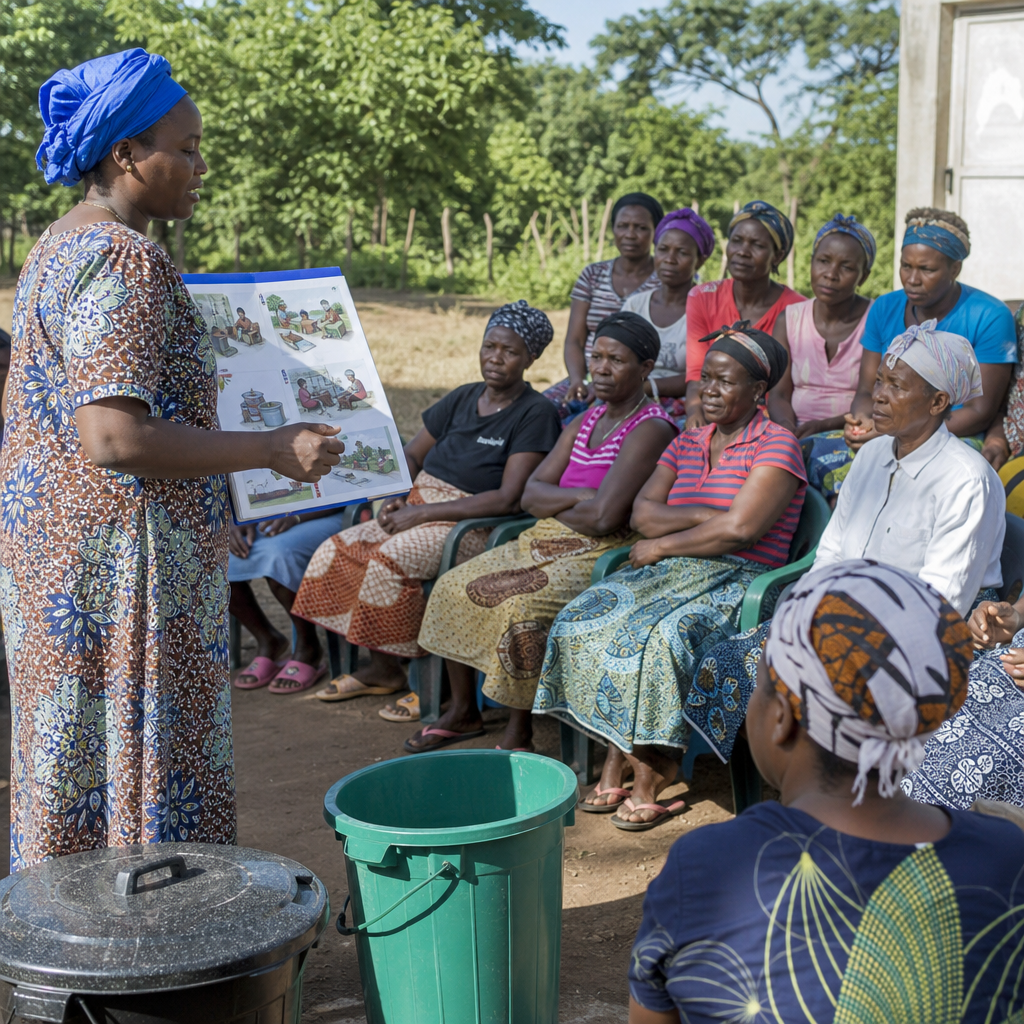
Learning indicators should be concrete and tied to action. Instead of asking whether participants “understand hygiene,” ask whether they can name critical handwashing times, explain how flies transmit pathogens, identify the safest place to store treated water, or describe how to report a blocked communal toilet. Short quizzes, demonstrations, and scenario questions are often more revealing than broad self-ratings. For low-literacy settings, picture sorting, role play, and oral recall work better than written tests. The point is not to create a classroom atmosphere but to verify that knowledge is usable in daily life.
Behavior change indicators require directness and realism. Self-reported handwashing rates are usually inflated, so triangulation matters. Structured spot checks can record the presence of soap and water at a handwashing station, cleanliness of toilets, covered water containers, child feces disposal practices, and signs of facility maintenance. Community scorecards and transect walks can add local interpretation. Where resources allow, digital observation tools such as KoboToolbox, SurveyCTO, or CommCare improve data quality through skip logic, timestamps, and photo verification. Administrative data can also help. School sanitation training can be linked to absenteeism records, while clinic data may show trends in diarrheal cases, though attribution must be handled carefully because seasonal changes and water supply conditions also influence illness.
| Evaluation focus | What to measure | Recommended method | Common risk |
|---|---|---|---|
| Participation | Attendance, inclusion, discussion quality | Registers, observation, focus groups | Counting presence as engagement |
| Learning | Recall, demonstrations, problem solving | Quizzes, oral questions, practical tasks | Testing memorization only |
| Behavior | Handwashing setup, toilet use, waste handling | Spot checks, household visits, photo logs | Overreliance on self-report |
| Environmental change | Cleanliness, drainage, open defecation sites | Transect walks, facility audits, GIS mapping | Ignoring infrastructure constraints |
| Health and social results | Disease trends, attendance, community trust | Clinic records, school data, interviews | Claiming direct causation too quickly |
Methods that produce credible evidence in real communities
No single evaluation method is enough. The most credible community sanitation training assessments use mixed methods because sanitation behavior is visible, social, and context dependent. Quantitative tools show scale and change over time. Qualitative tools explain why those changes did or did not happen. A practical starting point is a baseline, followed by midline and endline measurement using the same core indicators. Without a baseline, teams are often forced to compare current conditions with memory, which is unreliable. Even a lean baseline with household observations, a short knowledge test, and facilitator notes is better than none.
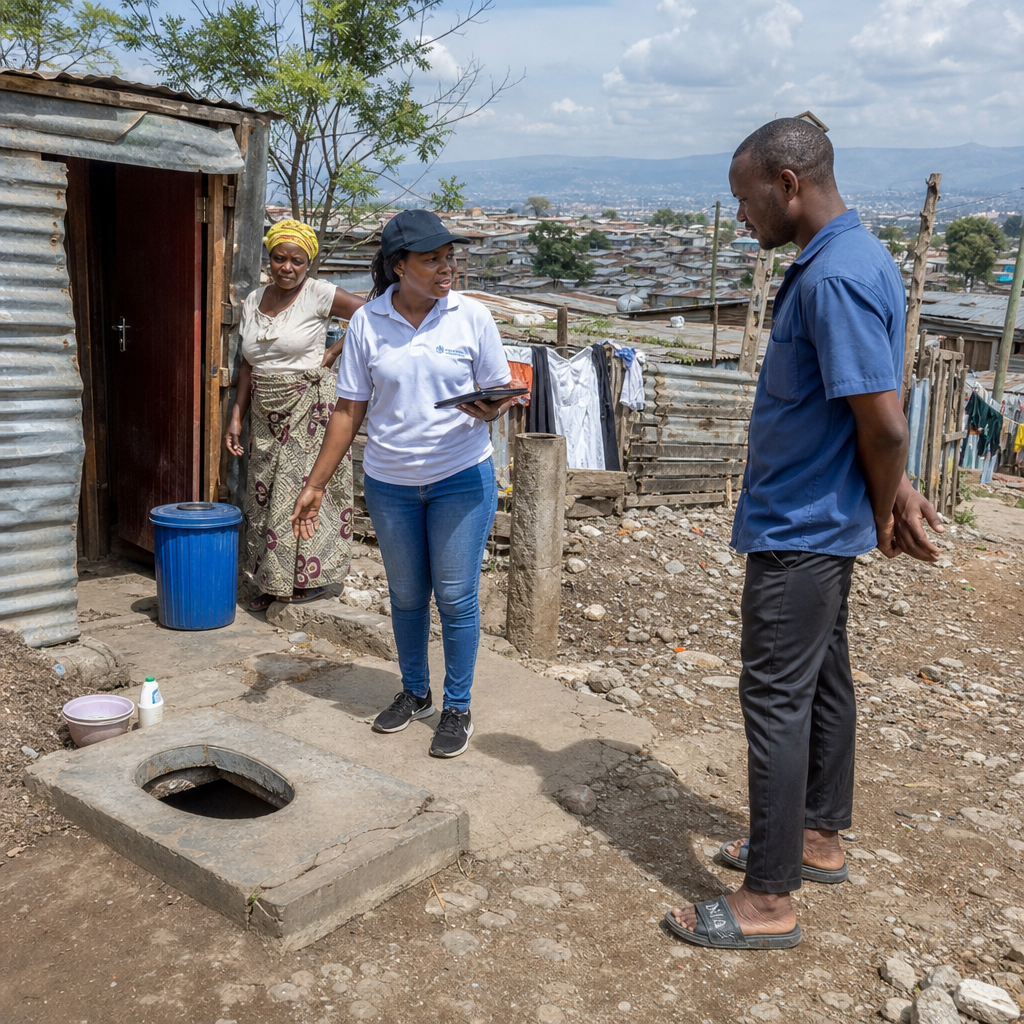
Observation is indispensable. During field reviews, I have found that a five-minute facility audit often reveals more than a long questionnaire. Are toilets usable, private, and clean? Is water available near the facility? Are soap and menstrual waste bins present? Are children able to reach handwashing points? These details matter because training cannot overcome design failures on its own. If a shared toilet lacks lighting or a school handwashing station has no drainage, low use may reflect infrastructure, not poor learning. Evaluators should therefore pair behavior indicators with service readiness indicators.
Interviews and focus groups are equally important when the goal is fostering participation and learning. They reveal whether people felt respected, whether women and adolescent girls could speak freely, whether facilitators were trusted, and whether local leaders reinforced or undermined training messages. In one settlement program, men reported strong support for improved toilet maintenance, but women’s groups explained that maintenance rosters failed because locks were broken and nighttime access felt unsafe. That insight changed both the interpretation of behavior data and the next phase of implementation. Good evaluation listens for power dynamics, not just opinions.
Where programs are mature and budgets allow, quasi-experimental designs can strengthen conclusions. Comparing trained and untrained areas, matched on population and infrastructure conditions, can help estimate the contribution of training. Randomized designs are sometimes possible for phased rollouts, though they require ethical planning and operational discipline. Even then, evaluators should avoid overstating certainty. Sanitation outcomes are influenced by water access, municipal services, rainfall, migration, and household income. Credible evidence comes from careful design, transparent limitations, and consistent measurement, not from presenting complex community change as a simple laboratory result.
How to assess whether participation is genuine and inclusive
Participation is often the stated goal of community engagement and education, but it is rarely measured with enough precision. Genuine participation means community members shape the learning process, influence decisions, and see their knowledge reflected in solutions. To evaluate this, assess who attended, who spoke, who decided, and who benefited. Disaggregate data by gender, age, disability status, location, and socioeconomic group. If attendance is high but renters, migrants, or people living far from water points are absent, the training may be reinforcing existing inequities. Inclusion should also cover timing, language, childcare, transport, and accessibility of venues.
One useful technique is participation mapping. Record not only numbers but also roles: facilitator, local leader, teacher, youth volunteer, sanitation worker, caregiver, landlord, or shop owner. This shows whether responsibility is shared or concentrated. Another technique is meeting observation with a simple rubric: Were examples locally relevant? Were questions welcomed? Did participants practice a skill? Was feedback incorporated in later sessions? Did the group produce any collective commitments, such as cleaning schedules or reporting mechanisms? These signals indicate whether learning moved from passive reception to active ownership.
Inclusive evaluation also requires attention to cultural and social barriers. In many communities, girls may not speak openly about menstruation in mixed groups, and sanitation workers may be excluded from planning despite their operational expertise. Faith leaders may be influential messengers, but they can also unintentionally narrow participation if alternative voices are sidelined. I have found that segmented sessions, peer educators, and anonymous feedback often produce more honest evidence than large public meetings. When trust is low, community members tell observers what they think they want to hear. Building confidentiality into the evaluation process improves data quality and program legitimacy.
Common mistakes, interpretation challenges, and program improvement
The most common mistake in evaluating community sanitation training is confusing activity with impact. A report may highlight fifty sessions, six hundred participants, and thousands of leaflets, yet provide no evidence that households changed practices or that facilities became cleaner and safer. A second mistake is relying exclusively on self-reported behavior. People know the “right” answers on sanitation, especially after training, so courtesy bias is predictable. A third mistake is evaluating too early. Some changes, such as improved handwashing stations, can appear quickly, while others, such as shifts in social norms or reduced open defecation, take months and require reinforcement.
Interpretation challenges are just as important. If behavior improves in one area but not another, the explanation may lie in water reliability, landlord cooperation, school management, or the quality of local facilitation. If knowledge scores rise but practice does not, barriers may be practical rather than educational. Soap may be unaffordable. Toilets may be unsafe. Waste collection may be irregular. This is why evaluation findings should feed directly into adaptive management. Training teams should review results with community committees, frontline workers, and local authorities, then revise content, schedules, facility support, and follow-up strategies. In well-run programs, evaluation is not an audit after the fact; it is part of implementation.
For a sub-pillar hub on fostering participation and learning, the central lesson is that community sanitation training succeeds when evaluation treats people as partners and behavior as contextual. Measure knowledge, but also observe practice. Track attendance, but also test inclusion and voice. Document environmental change, but also note service constraints. Use standards from public health monitoring, participatory facilitation, and WASH programming, then adapt them to local realities. If you are building or improving a sanitation education program, start with a clear theory of change, define indicators before training begins, and review findings with the community often. Better evaluation leads to better learning, stronger participation, and sanitation improvements that last.
Frequently Asked Questions
1. What does it really mean to evaluate the impact of community sanitation training?
Evaluating the impact of community sanitation training means looking beyond attendance lists, completed handouts, or whether participants said they enjoyed the session. A meaningful evaluation asks whether the training led to measurable changes in what people know, how they behave, and what conditions exist in the community over time. In sanitation work, that can include improved handwashing practices, safer water storage, more consistent toilet use, better menstrual hygiene management, cleaner shared spaces, and stronger local systems for maintaining those improvements.
Strong evaluation usually considers several layers of impact. First, it examines knowledge: do participants better understand disease transmission, hygiene practices, or the importance of safe sanitation? Second, it looks at behavior: are households actually washing hands at critical times, treating and storing water safely, or maintaining latrines more effectively? Third, it assesses environmental and community outcomes: are there fewer open defecation sites, cleaner public sanitation areas, or better waste disposal practices? Finally, the most useful evaluations explore sustainability by asking whether the changes continue after the training ends and whether community members have the skills, motivation, and support to maintain them.
In other words, impact evaluation is not just about proving that training happened. It is about understanding whether training translated into healthier routines and improved sanitation conditions in a way that fits local realities and can last. That broader perspective is what makes an evaluation credible and useful for future planning.
2. Which indicators are most useful when measuring the success of sanitation training programs?
The most useful indicators are the ones that connect directly to the goals of the training and reflect real-life change. In most community sanitation programs, indicators generally fall into three categories: knowledge, behavior, and environmental or system-level outcomes. Knowledge indicators might include whether participants can correctly describe when handwashing is most important, how water contamination occurs, or how poor sanitation contributes to illness. These indicators help show whether the educational content was understood.
Behavior indicators are often more important because they show whether learning became practice. Examples include the percentage of households with soap and water available at handwashing stations, the proportion using toilets consistently, the number of households storing water in covered containers, or the frequency of proper menstrual hygiene management practices where relevant. These indicators are especially valuable when they are measured through observation or repeated follow-up rather than self-report alone, since people may overstate positive behaviors when answering surveys.
Environmental and community-level indicators provide another critical layer. These may include the cleanliness and usability of toilets, reductions in visible open defecation, improvements in drainage, safer disposal of child feces, lower contamination risks around water points, or stronger local management of shared sanitation facilities. In some settings, health-related indicators such as trends in diarrheal illness may also be tracked, although these should be interpreted carefully because many factors beyond training can influence them.
The best evaluation frameworks combine multiple indicators instead of relying on just one. For example, a program might measure participant understanding immediately after training, observe household sanitation practices one to three months later, and then assess whether local sanitation committees or community volunteers are still active six months after that. This layered approach gives a far more accurate picture of success than a single survey score ever could.
3. Why is behavior change harder to measure than knowledge gain in community sanitation education?
Behavior change is harder to measure because it happens in daily life, not in the training room. Knowledge gain can often be captured quickly through quizzes, interviews, or group discussions immediately after a session. If people can explain the benefits of handwashing or identify safe toilet practices, that tells evaluators something important. But knowing what to do and consistently doing it are not the same thing. Sanitation behaviors are shaped by habit, convenience, household roles, access to supplies, cultural norms, infrastructure, privacy, and social expectations.
For example, a participant may fully understand the need for handwashing with soap, yet still be unable to practice it regularly because soap is expensive, water is scarce, or the handwashing station is inconveniently placed. Similarly, a family may support toilet use in principle but continue unsafe practices if the latrine is damaged, poorly maintained, or unsafe for children or women at night. These realities mean that behavior change is influenced by barriers that education alone cannot remove.
Measurement is also more difficult because self-reported answers are often unreliable. People tend to give the answer they believe is correct or socially acceptable, especially when discussing health and hygiene. That is why effective sanitation evaluations often use a mix of methods, such as direct observation, spot checks, household visits, structured interviews, and community mapping. Repeated measurements over time are especially valuable because they help distinguish between short-term compliance and lasting behavior change.
Ultimately, evaluating behavior change requires patience and context. It means recognizing that training may be necessary but not sufficient, and that genuine impact often depends on whether communities also have the resources, support, and local ownership needed to turn knowledge into routine practice.
4. How can evaluators determine whether sanitation training created lasting, sustainable change?
To determine whether sanitation training created lasting change, evaluators need to look at what happens after the initial enthusiasm fades. Short-term improvements right after a workshop can be encouraging, but sustainability is about whether those improvements remain in place weeks, months, or even longer after the intervention. This requires follow-up evaluation, not just immediate post-training assessment.
One of the clearest signs of sustainability is consistency. Are households still practicing key sanitation behaviors after the training team has left? Are toilets still being used and maintained? Do handwashing stations still have water and soap? Are community members continuing to discuss, reinforce, and model healthy practices? If positive behaviors disappear quickly, that suggests the training may have raised awareness but did not create durable change.
Another major sign of sustainability is local ownership. Lasting impact is more likely when communities are not simply recipients of information but active participants in problem-solving and decision-making. Evaluators should examine whether local leaders, health volunteers, school staff, women’s groups, youth groups, or sanitation committees are continuing the work. They can also assess whether the community has systems for maintenance, accountability, and peer support. When local structures take responsibility for sanitation efforts, changes are more likely to survive beyond the project period.
It is also important to identify whether practical barriers were addressed. Sustainable sanitation behavior depends on more than motivation. Communities need access to functioning facilities, affordable hygiene materials, safe water, and inclusive infrastructure that works for children, older adults, and people with disabilities. If training encourages behaviors that households cannot realistically maintain, long-term impact will be limited no matter how strong the educational content was.
In practice, sustainability is best judged through periodic follow-up visits, community interviews, observational data, and review of local action plans or maintenance records where available. A strong evaluation asks not only “Did people change?” but also “Can this change continue under real community conditions?” That is the key difference between temporary improvement and lasting impact.
5. What are the most common mistakes to avoid when evaluating community sanitation training?
One of the most common mistakes is focusing only on outputs instead of outcomes. Counting the number of workshops delivered, materials distributed, or participants reached may be useful for reporting activity, but it does not show whether the training made any meaningful difference. Evaluations become much stronger when they ask whether people actually adopted safer sanitation and hygiene practices and whether local conditions improved as a result.
Another frequent mistake is relying too heavily on self-reported data. Participants often want to please facilitators or avoid embarrassment, so they may overreport positive behaviors like toilet use or handwashing. If evaluators use only post-training questionnaires, they risk painting an overly optimistic picture. Combining surveys with observation, follow-up visits, and qualitative conversations usually produces a more accurate and nuanced understanding.
A third mistake is ignoring context. Sanitation behavior does not happen in a vacuum. Gender roles, water availability, poverty, disability access, seasonal conditions, local beliefs, and the condition of sanitation infrastructure all shape what people can realistically do. If an evaluation treats poor outcomes as a failure of training alone, it may miss the structural barriers preventing change. Good evaluation interprets results within the social and physical realities of the community.
It is also a mistake to measure too soon and stop too early. Immediate feedback can show whether participants understood the material, but it cannot fully capture behavior change or sustainability. Without longer-term follow-up, evaluators may confuse short-term awareness with genuine impact. Finally, many evaluations fail because they do not involve the community itself. When local people help define what success looks like, identify practical barriers, and interpret findings, the evaluation becomes more relevant, more credible, and more likely to support better sanitation programming in the future.