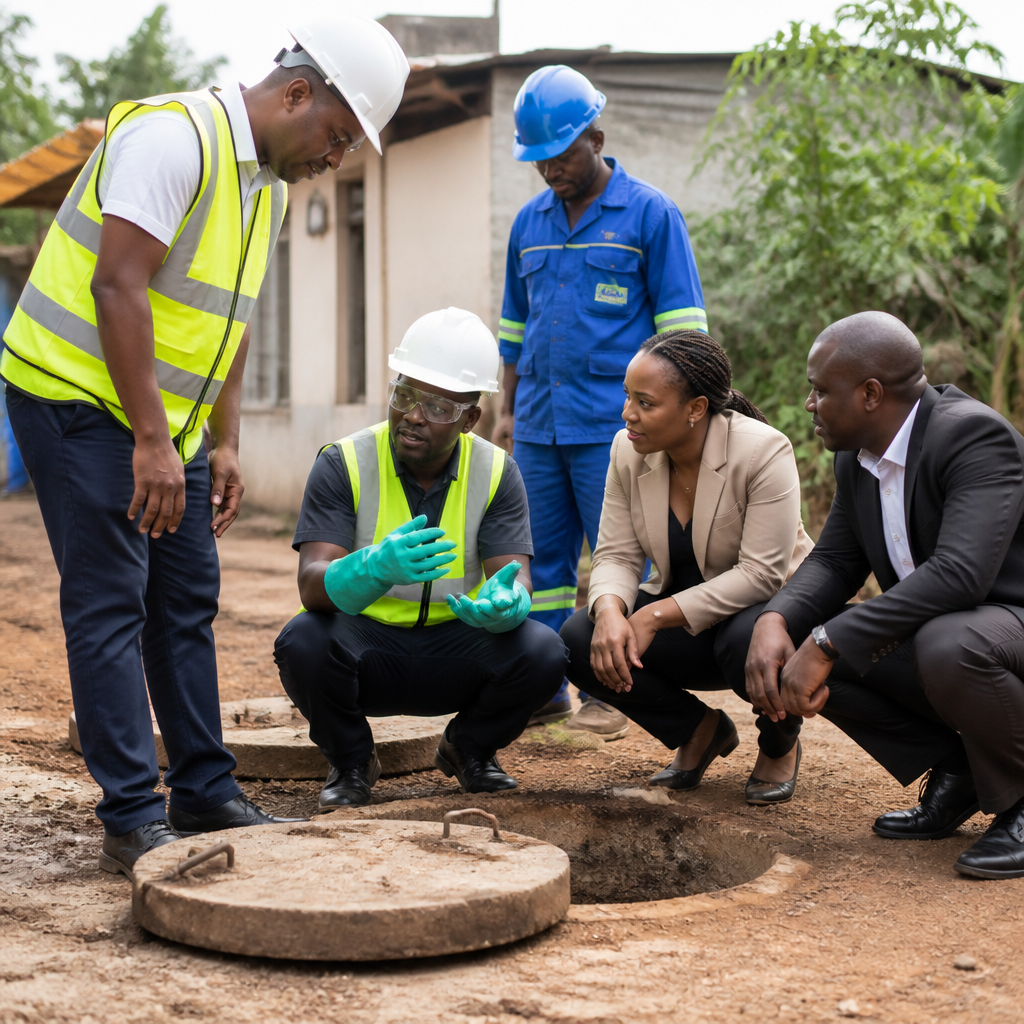
Partnerships in sanitation are the practical engine behind faster, fairer progress on one of the world’s most urgent development goals. In this context, sanitation means the systems, services, behaviors, financing, and governance that safely manage human waste from toilet to treatment or reuse. Partnerships matter because no single actor can deliver universal sanitation alone: governments set policy, utilities run infrastructure, community groups build trust, companies contribute technology and logistics, and donors reduce early-stage risk. I have seen sanitation programs stall when one link is weak, even when funding appears adequate, and accelerate when roles are clearly shared. That is why global opportunities in sanitation increasingly center on collaboration rather than isolated projects. Strong partnerships help countries expand sewer networks, improve fecal sludge management, support rural sanitation markets, strengthen schools and health facilities, and close service gaps affecting women, children, migrants, and informal settlements. They also connect sanitation to climate resilience, water security, public health, tourism, urban productivity, and circular economy models. For a hub page, the key point is simple: the biggest sanitation opportunities are not only technical; they are institutional. When partners combine strengths, they turn fragmented interventions into durable public systems that protect health, dignity, and economic growth.
Sanitation is often discussed as toilets, yet the global opportunity is much broader. The World Health Organization and UNICEF Joint Monitoring Programme distinguishes between basic, limited, and safely managed sanitation, highlighting that access alone is not enough if waste is not contained, transported, treated, and disposed of or reused safely. That distinction matters for policy and investment. A city can increase toilet coverage while still discharging untreated sludge into drains, rivers, or open land, creating disease risk and environmental damage. A rural district can declare itself open-defecation free yet fail to sustain behavior change without supply chains for repairs, pit emptying, and hygiene products. Partnerships address these weak points by aligning institutions around the full service chain. They also help solve a common operational problem: sanitation responsibilities are scattered across ministries of health, water, urban development, education, environment, and finance. Without coordination, budgets splinter and accountability fades. With coordination, sanitation becomes investable and measurable. This article maps the main global opportunities in sanitation through that lens, showing where collaboration creates outsized impact and why this topic deserves a central place in any discussion of global challenges and opportunities today.
Why partnership models unlock sanitation progress
Partnerships work in sanitation because the sector is structurally interdependent. Household behavior influences infrastructure performance; municipal regulation affects private operators; land tenure shapes service expansion; and treatment standards determine whether reuse markets can emerge. In practice, the best results usually come from partnership models that define who does what across planning, delivery, regulation, and monitoring. Public-public partnerships can pair a high-performing utility with a weaker one for technical mentoring. Public-private partnerships can improve desludging fleets, treatment plant operations, billing systems, or toilet maintenance in transport hubs and markets. Civil society partnerships are critical where trust is low, especially in peri-urban settlements and remote rural areas. Development finance institutions and philanthropies often play a catalytic role by funding feasibility studies, blended finance structures, or performance-based grants that unlock larger domestic investment.
One reason these models matter globally is that sanitation economics are challenging. Sewerage is capital intensive, while on-site sanitation requires decentralized service systems that many municipalities have not historically managed well. I have worked on sanitation planning processes where the turning point was not a new technology but a governance arrangement: a utility accepted responsibility for fecal sludge management, the municipality approved tariffs, and local entrepreneurs received contracts tied to service standards. Suddenly, a previously informal market became monitorable and safer. This pattern repeats across regions. In South Asia, container-based sanitation and scheduled desludging have emerged where dense settlements cannot wait for conventional sewers. In sub-Saharan Africa, citywide inclusive sanitation approaches are gaining traction because they treat sewers, septic tanks, pit latrines, and transfer stations as one managed urban system. In Latin America, utility reforms and watershed concerns increasingly connect sanitation investment to environmental compliance and water reuse.
Global opportunities across infrastructure, services, and markets
The strongest global opportunities in sanitation sit at the intersection of unmet need and scalable delivery models. Urban growth is creating demand for networked sewerage in some corridors, but the larger near-term opportunity in many low- and middle-income countries is improving non-sewered sanitation. That includes better containment, licensed emptying, transfer points, treatment facilities, and end-use markets for compost, fuel, or reclaimed water where safe and regulated. Fecal sludge management is not a niche topic; it is the backbone of sanitation for cities where most residents use pits or septic tanks. Partners can strengthen each link through service zoning, digital tracking, operator training, and treatment performance contracts.
Rural sanitation offers a different opportunity set. Community-led approaches can trigger behavior change, but sustained gains depend on local masons, suppliers, microfinance, and district-level monitoring. Market-based sanitation models help households move from temporary pits to durable, inclusive toilets adapted for flooding, rocky ground, or high water tables. School and healthcare sanitation remains another major global opportunity because service quality directly affects attendance, infection prevention, menstrual health management, and patient safety. Here, partnerships between ministries, facility managers, parent groups, and maintenance providers are often more important than one-time construction budgets. Data systems are equally important. When governments and partners map service levels using tools such as service ladders, safely managed indicators, and utility performance benchmarks, they can target investments where health and equity gains are highest.
| Opportunity area | Main challenge | Partnership strength that helps most | Practical example |
|---|---|---|---|
| Dense urban settlements | Limited space, weak tenure, mixed technologies | Municipality, utility, community groups, local operators | Scheduled desludging linked to transfer stations and treatment plants |
| Secondary cities | Low revenue base, fragmented responsibility | National government, development bank, technical assistance partner | Citywide service plans paired with capital grants and operator training |
| Rural districts | Slippage after toilet construction, weak supply chains | District government, NGOs, sanitation businesses, microfinance | Durable household toilet upgrades financed through small loans |
| Schools and clinics | Poor maintenance and unclear budgets | Education or health ministry, facility managers, local contractors | Annual maintenance contracts tied to hygiene and functionality checks |
| Resource recovery | Uncertain demand and regulation | Regulator, utility, agribusiness, environmental agency | Co-composting or biogas sales under clear quality standards |
Financing and governance: where collaboration changes outcomes
Financing is where many sanitation strategies either become real or remain aspirational. Because sanitation generates public health and environmental benefits that households cannot fully capture on their own, public finance is indispensable. Yet public budgets are rarely sufficient by themselves. The opportunity is to blend domestic revenue, tariffs, taxes, transfers, concessional loans, climate finance, philanthropy, and private capital in ways that fit the service model. For example, household toilets may rely on consumer finance and targeted subsidies, while trunk infrastructure may require sovereign borrowing and grants. Fecal sludge treatment plants often need viability gap support in early years until volumes rise. Partnerships help by matching the right capital to the right risk. Development banks can finance infrastructure; output-based aid can reward verified service delivery; local banks can support sanitation entrepreneurs when guarantees reduce perceived risk.
Governance determines whether that financing produces lasting service. Clear mandates matter more than lengthy strategy documents. When a city designates a lead sanitation authority, licenses operators, sets discharge standards, and publishes performance data, private and public partners can invest with confidence. Conversely, ambiguous ownership of assets and overlapping mandates are reliable causes of underperformance. Effective governance also requires regulation that is strict where health risk is high and flexible where innovation is needed. Container-based sanitation, decentralized wastewater treatment, and resource recovery businesses often struggle not because they fail technically but because regulations were written only for sewers. Good partnerships bring regulators, engineers, environmental authorities, and public health officials together early so standards protect users without blocking useful models. This is a major global opportunity, especially in fast-growing cities that need service options now rather than waiting decades for universal sewer coverage.
Innovation, climate resilience, and the circular sanitation economy
Innovation in sanitation is most valuable when it solves operational bottlenecks, lowers lifecycle cost, or expands service to populations conventional systems miss. Some of the most promising opportunities are not glamorous. Digital route management for desludging trucks can reduce illegal dumping by recording trips to treatment sites. Remote sensors can help utilities monitor pump stations and anaerobic digesters. Standardized toilet components make maintenance easier for schools and public facilities. Climate-resilient design is another urgent frontier. Flooding can inundate pits and septic tanks, spreading contamination; drought can reduce water available for conventional flushing systems; heat and storms can disrupt treatment plants and energy supply. Partnerships between climate planners, engineers, public health agencies, and local communities help adaptation move from reports into asset design, siting, and emergency response plans.
The circular sanitation economy presents a further global opportunity when managed safely. Wastewater and sludge can produce compost, soil conditioner, reclaimed water, black soldier fly larvae feed inputs, or biogas, but only under robust treatment and quality control. The point is not to force reuse everywhere. In many settings, transport costs, market demand, or contamination risks make disposal the better near-term option. However, where conditions align, partnerships can build real value chains. Utilities can supply treated effluent to industry or landscaping. Agribusiness firms can co-develop compost markets if nutrient content and pathogen reduction meet standards. Energy developers can use biogas from sludge digestion to offset plant electricity demand. I have seen projects become financially stronger once partners treated by-products as managed resources rather than incidental waste. Done well, this improves cost recovery, reduces emissions, and supports water security without compromising safety.
Equity, public health, and the role of community partnership
Sanitation succeeds only when it reaches people who are easiest to exclude. That includes low-income tenants, people with disabilities, women and girls needing privacy and menstrual health support, informal settlement residents, refugees, older adults, and workers in high-risk sanitation jobs. Equity is not a side issue; it determines whether systems deliver population-level health gains. Partnerships with community-based organizations are essential because infrastructure plans often miss lived realities such as shared toilets without cleaning arrangements, inaccessible cubicles, or desludging charges that landlords avoid by delaying service. Participatory mapping, user committees, and grievance mechanisms help surface these problems early. They also improve uptake. A toilet designed without considering wheelchair access, night lighting, child safety, or water availability is not truly a service.
Public health agencies are equally important partners. Diarrheal disease, helminth infection, undernutrition, cholera risk, antimicrobial resistance pathways, and environmental contamination all intersect with sanitation quality. Health surveillance can guide sanitation targeting, especially after floods, displacement, or disease outbreaks. At the same time, worker safety needs far more attention. Sanitation workers face exposure to toxic gases, pathogens, sharp waste, traffic hazards, and social stigma. Strong partnerships formalize training, protective equipment, vaccination, insurance, and mechanization where possible. This is one of the clearest opportunities for immediate impact because safer working conditions can be improved faster than citywide infrastructure can be rebuilt. For organizations building a sanitation strategy, the lesson is clear: combine engineering with social inclusion, occupational health, and accountable service management.
Partnerships in sanitation deliver the greatest impact when they connect policy, finance, technology, and community trust into one accountable system. Across the global sanitation landscape, the biggest opportunities are clear: expand citywide inclusive services, strengthen rural sanitation markets, improve schools and healthcare facilities, professionalize fecal sludge management, build climate resilience, and develop safe resource recovery where it makes economic sense. None of these advances depends on a single perfect technology. They depend on institutions that collaborate well, share data, define mandates, and stay focused on safely managed outcomes from containment to treatment and reuse or disposal.
For readers exploring global opportunities in sanitation, this hub should serve as the starting point. Use it to examine financing models, governance reforms, utility strengthening, behavior change, climate adaptation, and inclusive service design in greater depth. The core benefit of partnership is practical: it turns scattered efforts into durable systems that protect health, support dignity, and create economic value. If you are shaping policy, funding projects, running utility operations, or leading community programs, identify the missing partner in your sanitation chain and bring them to the table. That is where the next gains will come from.
Frequently Asked Questions
What does “partnerships in sanitation” really mean, and why are they so important?
Partnerships in sanitation refer to structured collaboration among the many actors needed to safely manage human waste from toilet to treatment, disposal, or reuse. In practical terms, that includes public agencies that create policy and regulate services, utilities and operators that build and maintain infrastructure, community-based organizations that engage households, private companies that provide technology and operational expertise, financiers that unlock capital, and civil society groups that advocate for accountability and inclusion. Sanitation is not a single product or project. It is a connected system involving behavior change, service delivery, maintenance, environmental protection, public health, land use, financing, and governance. Because of that complexity, no single institution can solve sanitation challenges alone.
These partnerships matter because they help combine strengths that are rarely found in one place. Governments can set standards and mobilize public investment, but they may not always move quickly at the neighborhood level. Local organizations often understand community priorities and cultural realities, but they may lack large-scale funding or technical capacity. Private firms can offer innovation, logistics, and performance-focused management, yet they need an enabling policy environment and public trust. When these capabilities are coordinated, sanitation programs become more effective, more inclusive, and more sustainable over time.
Strong partnerships also help close persistent gaps in access and service quality. Many sanitation failures do not happen because toilets are absent, but because containment is unsafe, waste is not emptied properly, treatment is inadequate, or systems are not designed for low-income, rural, informal, or climate-vulnerable settings. Cross-sector collaboration helps address the entire sanitation chain rather than just one visible part of it. That is why partnerships are often the practical engine behind faster, fairer progress: they turn scattered efforts into integrated systems that protect health, dignity, water resources, and the environment.
Who should be involved in an effective sanitation partnership?
An effective sanitation partnership typically includes a mix of public, private, and community actors, with each playing a clearly defined role. National and local governments are central because they establish policy, assign mandates, approve standards, and often provide budget support or public subsidies. Utilities, municipal departments, and service operators are equally important because they manage day-to-day delivery, from sewered systems to fecal sludge management, treatment plants, transport services, and customer relations. Their operational experience is essential for making sanitation work in real conditions, not just on paper.
Community-based organizations, neighborhood leaders, women’s groups, youth networks, and non-governmental organizations should also be involved early and meaningfully. These groups often understand local barriers that formal institutions overlook, such as affordability, social norms, gendered safety concerns, disability access, landlord-tenant dynamics, or mistrust of authorities. Their input helps ensure that sanitation solutions are accepted, used consistently, and adapted to people’s actual needs. They also play a crucial role in behavior change, citizen feedback, and social accountability.
The private sector brings another important layer of value. Engineering firms, toilet manufacturers, desludging operators, digital platform providers, treatment technology companies, and resource recovery businesses can contribute innovation, efficiency, maintenance expertise, and investment discipline. In many settings, small and medium enterprises are especially important because they provide the localized services that keep systems functioning. Academic institutions and technical experts can support data collection, planning, piloting, and evaluation, while development banks, philanthropic funders, and impact investors can supply capital for infrastructure, capacity building, and scale-up.
The best partnerships do not simply gather many names around a table. They bring together the right institutions for the specific sanitation challenge at hand, define responsibilities clearly, create mechanisms for coordination, and keep users at the center. When roles are aligned and incentives are understood, multi-actor partnerships become far more than symbolic alliances; they become delivery systems for measurable public health and development outcomes.
How do sanitation partnerships improve outcomes for communities?
Sanitation partnerships improve outcomes by addressing the full range of barriers that prevent safe, reliable, and equitable services. In many communities, the challenge is not only physical infrastructure. It may also include weak regulation, fragmented service chains, unaffordable tariffs, poor maintenance, limited public awareness, unsafe emptying practices, or a lack of treatment capacity. A partnership model allows different actors to solve different pieces of the problem at the same time. That coordinated approach tends to produce stronger results than isolated interventions.
For communities, the most immediate benefits often include better health protection, increased dignity, greater safety, and more dependable services. When sanitation systems are properly designed and managed, they reduce exposure to pathogens, lower the risk of water contamination, and support cleaner living environments. Partnerships can also improve service reliability by linking infrastructure development with operations, maintenance, training, financing, and user engagement. This matters because a toilet alone does not guarantee safe sanitation; the entire chain must function consistently.
Partnerships also make it easier to design inclusive solutions. For example, community groups may identify the needs of women, girls, older adults, people with disabilities, renters, or residents of informal settlements, while technical partners adapt facility design and service models accordingly. Public institutions can then formalize those solutions through policy, standards, or subsidies. The result is a sanitation strategy that serves more people more fairly, rather than reinforcing existing inequalities.
Another major advantage is resilience. Communities face changing pressures from population growth, urbanization, flooding, drought, and climate-related disruptions. Partnerships help bring together local knowledge, engineering expertise, environmental planning, and financial resources to build systems that can adapt over time. They also support long-term problem solving by creating channels for monitoring, complaint response, and service improvement. In this way, effective sanitation partnerships do more than deliver projects; they strengthen the institutions and relationships that keep communities healthier and better protected in the future.
What makes a sanitation partnership successful rather than just well-intentioned?
A successful sanitation partnership starts with a shared understanding of the problem and a realistic plan for solving it. Many collaborations fail because partners agree on broad goals but never define exactly what they are trying to achieve, who is responsible for what, how decisions will be made, or how success will be measured. Strong partnerships avoid that trap by setting clear objectives, assigning roles early, and building accountability into the structure from the beginning. This includes practical issues such as budgets, reporting lines, data sharing, maintenance responsibilities, and timelines for delivery.
Trust is another essential ingredient. Sanitation often involves institutions with very different cultures and incentives. Public agencies may be focused on regulation and public interest, companies on efficiency and commercial viability, and community groups on equity and local legitimacy. Those differences do not have to be obstacles, but they do need to be acknowledged and managed openly. Successful partnerships create space for honest communication, transparency around constraints, and processes for resolving conflict when it arises. Without trust, even technically sound sanitation plans can stall.
Local ownership is equally important. Partnerships are strongest when they are rooted in the priorities, capacities, and realities of the places they serve. Imported models or donor-driven programs may look impressive initially, but they rarely last if local institutions are not equipped to operate and finance them over time. This is why capacity building, institutional strengthening, and co-design with local stakeholders are so critical. Sustainable sanitation depends not just on building assets, but on ensuring there are people, systems, and incentives in place to manage them well for years to come.
Finally, successful partnerships measure results and adapt. They track whether services are reaching intended populations, whether waste is being safely managed across the chain, whether customer satisfaction is improving, and whether financial and operational assumptions are holding true. They use that information to refine service models rather than defending ineffective approaches. In sanitation, success is rarely about a single launch or ribbon-cutting moment. It is about continuous performance, inclusion, and safety. Partnerships that understand this are far more likely to create lasting impact.
What are the biggest challenges in sanitation partnerships, and how can they be overcome?
One of the biggest challenges is fragmentation. Sanitation responsibilities are often split across multiple agencies, service providers, and funding streams, which can lead to gaps, duplication, or confusion about who owns which part of the service chain. For example, one department may be responsible for toilets, another for drainage, another for wastewater treatment, and another for public health oversight. Without strong coordination, critical links break down. The most effective response is to establish clear governance arrangements, define responsibilities formally, and create regular mechanisms for joint planning and review.
Financing is another common barrier. Sanitation is frequently underfunded relative to its public health importance, and available money may be directed toward construction rather than long-term operations and maintenance. Partnerships can help by blending public funding, development finance, private capital, and targeted subsidies in ways that reflect the realities of different user groups and service models. However, financing only works when it is paired with sound regulation, realistic cost assumptions, and a clear plan for affordability. The goal is not just to mobilize money, but to build financially viable systems that still serve low-income and underserved populations.
There are also social and political challenges. Sanitation can be sensitive because it touches on daily habits, land tenure, informal settlements, social exclusion, and public perceptions about waste. Community resistance may emerge if solutions are imposed without consultation, while political turnover can disrupt long-term planning. These risks can be reduced through early