Safe sanitation for migrant and nomadic populations is a public health necessity, a protection issue, and a practical foundation for dignity in motion. These communities include seasonal farm workers, pastoralist families, displaced households moving between temporary sites, border-crossing labor groups, and mobile fishing or trading populations whose living arrangements change with climate, work, or security conditions. Sanitation means the safe management of human waste from use to treatment or reuse, along with handwashing, menstrual health support, and wastewater control. EcoSan, short for ecological sanitation, is an approach that treats human waste as a resource when it can be processed safely into soil amendments, water savings, or energy inputs. I have worked on sanitation planning for temporary settlements and transit sites, and the central lesson is consistent: systems fail when they assume people are static, fully documented, and connected to permanent infrastructure.
For mobile populations, health risks multiply because exposure points shift constantly. A family may spend one month in a roadside camp, another near grazing land, and another in an informal urban edge settlement. In each setting, people may face open defecation, overflowing pits, poor drainage, unsafe night access, and no reliable handwashing facilities. These conditions increase diarrheal disease, cholera transmission, soil contamination, parasitic infections, and risks for women, children, older adults, and people with disabilities. The World Health Organization and UNICEF Joint Monitoring Programme defines safely managed sanitation as use of improved facilities where excreta are safely disposed of in situ or transported and treated off-site. That standard matters here, but mobile realities demand adaptable models. Enhancing health through EcoSan means building sanitation options that are portable, culturally acceptable, affordable to maintain, and safe across changing landscapes.
This hub article explains how to design safe sanitation for migrant and nomadic populations by connecting disease prevention, behavior, engineering, governance, and resource recovery. It covers what works in transit corridors, informal encampments, and rural mobile settlements; why urine-diverting dry toilets, container-based sanitation, and modular handwashing stations are often better than conventional pits; how to handle menstrual waste, child feces, and accessibility; and how local authorities, employers, humanitarian agencies, and community leaders share responsibility. It also serves as the entry point for deeper articles in this subtopic, including toilet design, fecal sludge logistics, hygiene promotion, and pathogen-safe reuse. The core message is simple: when sanitation is designed for mobility rather than permanence, EcoSan can reduce disease, protect water sources, lower operating costs, and give communities cleaner, safer living conditions.
Why Mobile Communities Face Higher Sanitation Risks
Migrant and nomadic populations face sanitation gaps because most public systems are built around fixed addresses, land tenure, sewer networks, and predictable service routes. Mobile groups often settle temporarily on marginal land, roadside shoulders, peri-urban edges, farms, construction sites, or seasonal grazing zones where no one has clearly assigned sanitation responsibility. In practice, that means toilets arrive late, water points are too distant, and waste collection never starts. I have seen camps with one pit latrine for more than one hundred people, no lighting, and no cleaning plan. Under those conditions, people avoid toilets after dark, children defecate near shelters, and rain carries pathogens into water storage containers and cooking areas.
The health consequences are immediate. Fecal-oral transmission occurs through contaminated hands, food, flies, soil, and water. Acute watery diarrhea spreads quickly in crowded temporary sites, especially where handwashing with soap is irregular. Helminth infections rise when people walk barefoot on contaminated ground. Women and girls may reduce food and water intake to avoid unsafe toilets, worsening dehydration and urinary tract issues. Open or distant facilities also increase exposure to harassment and violence. These are not secondary concerns; they directly shape whether a sanitation option will be used. A technically sound toilet that feels unsafe, inaccessible, or humiliating will not deliver health benefits.
Mobility also disrupts maintenance. Conventional pit latrines can work in stable villages, but they are often a poor fit where occupancy fluctuates, groundwater is shallow, flooding is common, or the group may relocate before pits are safely closed. Sewer extension is usually too slow and expensive. The result is a service vacuum. EcoSan becomes valuable in this context because it separates sanitation from assumptions about fixed infrastructure. Dry systems, container collection, and modular treatment pathways can travel, scale up, or stand down more easily than buried permanent assets. When matched to local habits and managed properly, these systems keep excreta contained and reduce pressure on fragile land and water resources.
How EcoSan Improves Health in Mobile Settings
Enhancing health through EcoSan starts with one principle: pathogens must be contained at every step, even when people move. EcoSan is not a single toilet model. It is a framework for preventing contamination while recovering value where safe processing is possible. In mobile settings, the most useful EcoSan options are urine-diverting dry toilets, container-based toilets with sealed cartridges, elevated composting units for flood-prone areas, and service-linked handwashing stations. Their shared advantage is control. Instead of allowing waste to seep into the ground or overwhelm a pit, they keep waste separated, removable, and treatable.
Urine diversion is especially effective because it reduces moisture in feces, lowers odors, and slows fly breeding. Urine usually carries far fewer enteric pathogens than feces and can be stored separately for later agricultural use where regulations and treatment guidance allow. Feces can be covered with ash, lime, sawdust, or dry soil to improve desiccation and user comfort. In a pastoralist setting with little water and high transport costs, that simple adjustment can make toilet use more acceptable than a wet system that depends on regular flushing. Container-based sanitation goes further by treating excreta management as a scheduled service. Households use a compact toilet; filled containers are collected, replaced, and transported to treatment. This model has been used successfully by providers such as Sanergy and Clean Team in dense low-income contexts, and the logistics can be adapted for labor camps and transit hubs.
Health gains come from reliable barriers, not from the label attached to a technology. A well-run EcoSan program reduces contact with feces, protects nearby wells and surface water, and supports hand hygiene at the point of use. It can also cut environmental contamination where repeated temporary settlement would otherwise leave dozens of abandoned pits. However, these benefits depend on disciplined operation. If containers are not collected on time, if covering material runs out, or if reuse happens before treatment standards are met, the health case collapses. EcoSan works because it makes sanitation manageable under mobility, but only when service chains are planned as carefully as the toilet itself.
Choosing the Right Sanitation Model
Selecting a sanitation model for migrant and nomadic populations should begin with site conditions, movement patterns, and management capacity rather than with donor preference or standard templates. Key questions include length of stay, daily population variation, soil type, flood risk, privacy expectations, night safety, availability of cover material, water access, and who will empty or transport waste. In my field assessments, the fastest way to choose badly is to focus only on capital cost. A cheap pit can become an expensive hazard if it contaminates a shallow aquifer or requires relocation after one rainy season.
| Setting | Most suitable option | Main health advantage | Main limitation |
|---|---|---|---|
| Short-term transit site | Container-based toilets with handwashing stations | Fast deployment and controlled waste removal | Requires reliable collection schedule |
| Seasonal farm labor camp | Urine-diverting dry toilets | Low water use and reduced groundwater contamination | Needs user training and dry cover material |
| Flood-prone temporary settlement | Raised modular toilets with sealed storage | Prevents overflow into living areas | Higher setup cost |
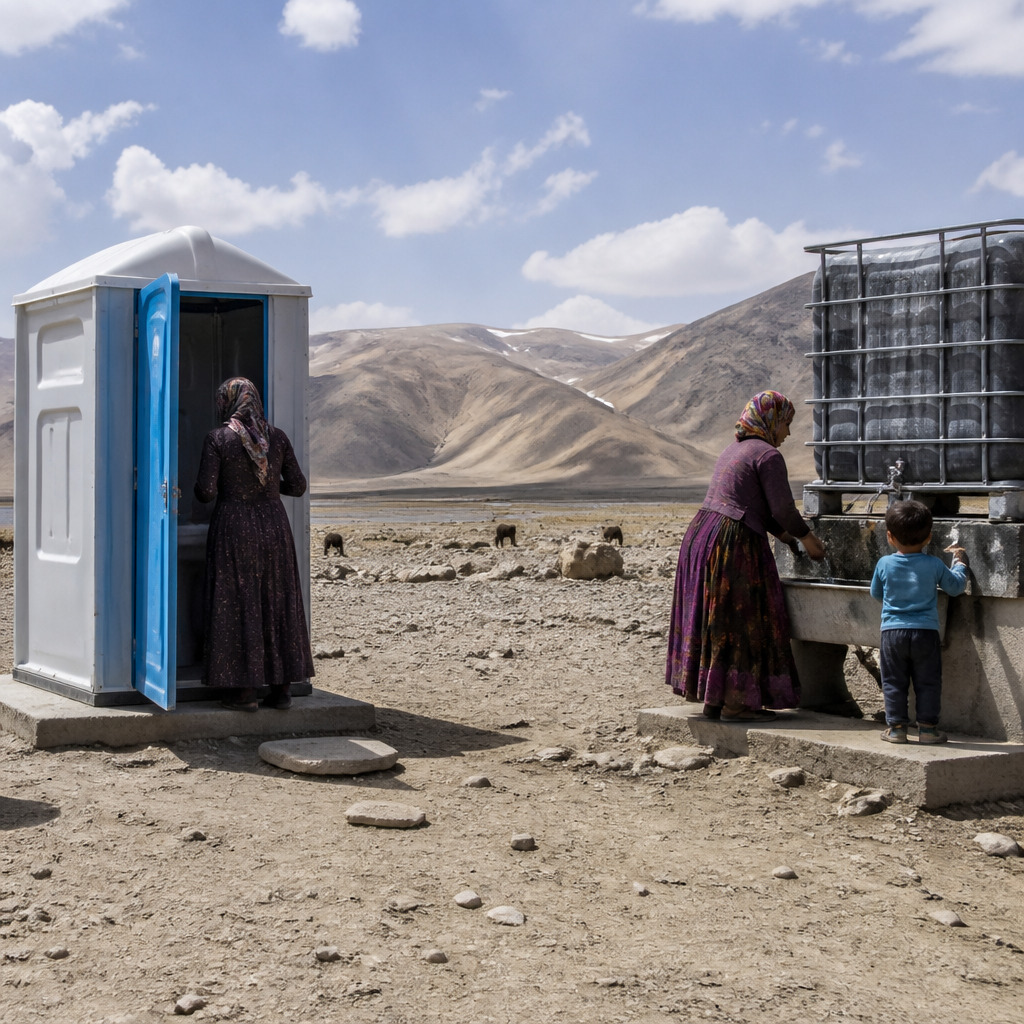
| Pastoralist encampment | Portable dry toilets or shared EcoSan blocks | Adaptable to movement and arid conditions | Transport and storage logistics |
The best sanitation model is usually the one that households will consistently use and local operators can consistently maintain. Shared facilities may be necessary, but they require lighting, a cleaning rota, gender-sensitive layout, lockable doors, menstrual disposal, and a visible maintenance contact. Household units improve uptake and reduce queueing, yet they demand stronger supply chains for emptying and consumables. There is no universal answer. The correct approach is context matching backed by direct observation, community consultation, and a realistic operations budget.
Design Features That Make Facilities Safe and Usable
Safe sanitation for mobile populations depends on design details that are often treated as optional. They are not optional. Distance to the toilet should be short enough for children, older adults, and nighttime use. Lighting matters because users avoid dark pathways. Doors must lock from the inside, and superstructures must provide full privacy. Slabs or floors need non-slip surfaces and easy cleaning. Open vent pipes should be screened to reduce flies. Handwashing stations should sit immediately outside the toilet, stocked with soap or soapy water, not fifty meters away at a separate tap stand.
Accessibility is another decisive factor. If a facility has steps without a ramp, a narrow doorway, or no handrail, many users will be excluded. Child-friendly features such as smaller drop-hole adapters or potties with safe feces disposal prevent contamination around shelters. Menstrual health support should include water where feasible, covered bins or chute systems for absorbents, and discreet disposal routes that do not block vault function. In mixed-use camps, separate blocks for women and men often improve usage, especially when supported by female attendants or hygiene promoters.
Materials should fit the environment. In hot arid areas, ventilation and shading reduce odor and heat buildup. In flood zones, raised platforms and anchored structures are essential. In windy pastoral regions, lightweight portable units may require ground anchoring and dust-resistant seals. Signage should use local languages and simple icons because literacy levels and language backgrounds vary widely. Good design reduces cleaning time, discourages misuse, and increases user trust. When people see a facility that is stable, private, and maintained, they treat it as infrastructure worth protecting rather than as a temporary last resort.
Operations, Treatment, and Safe Reuse
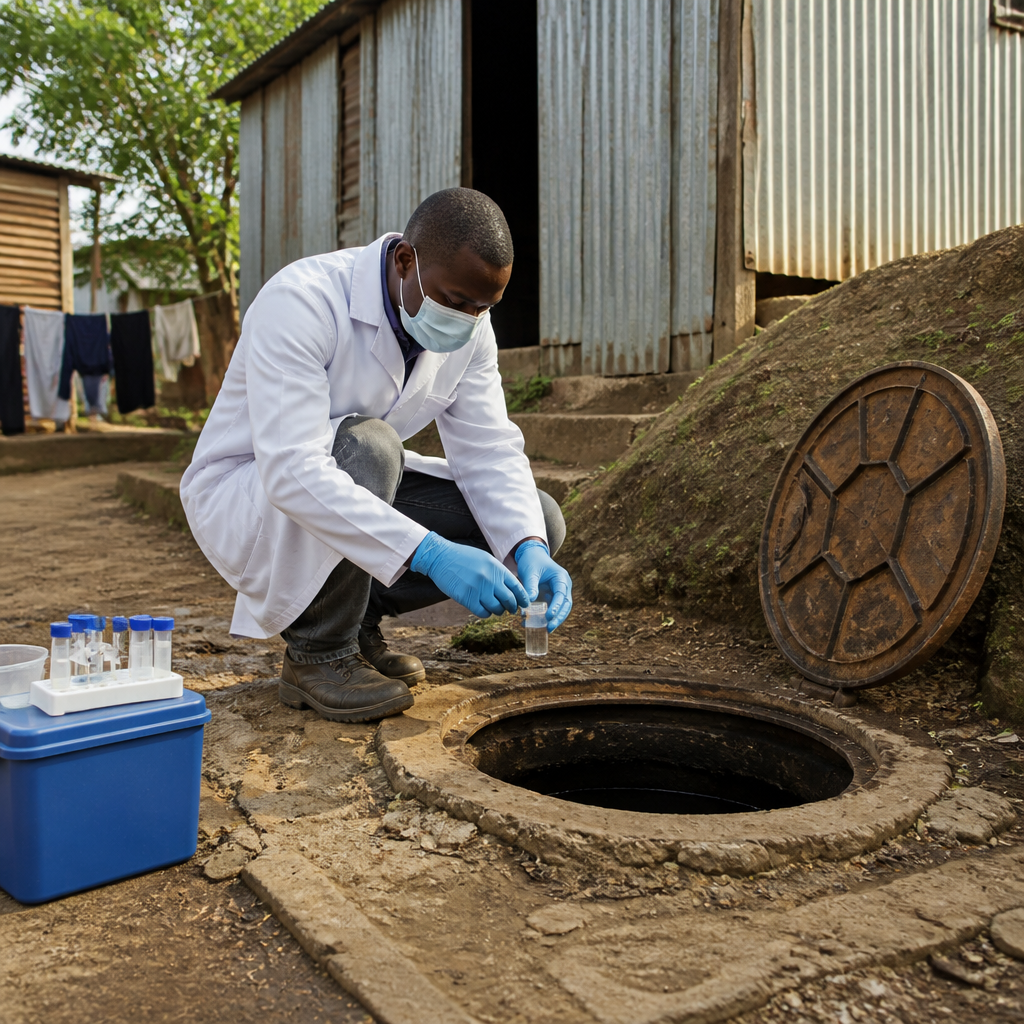
The strongest EcoSan program is usually the one with the clearest operations plan. Every site needs assigned responsibility for cleaning, consumable restocking, waste collection, transport, treatment, and emergency repair. Without that chain, even excellent hardware degrades quickly. Cleaning frequency should match traffic; high-use shared blocks may need multiple cleanings per day. Fill levels should be monitored with simple logs or marked containers. Operators need gloves, boots, masks where appropriate, handwashing access, and hepatitis A, tetanus, and other protections aligned with local occupational guidance.
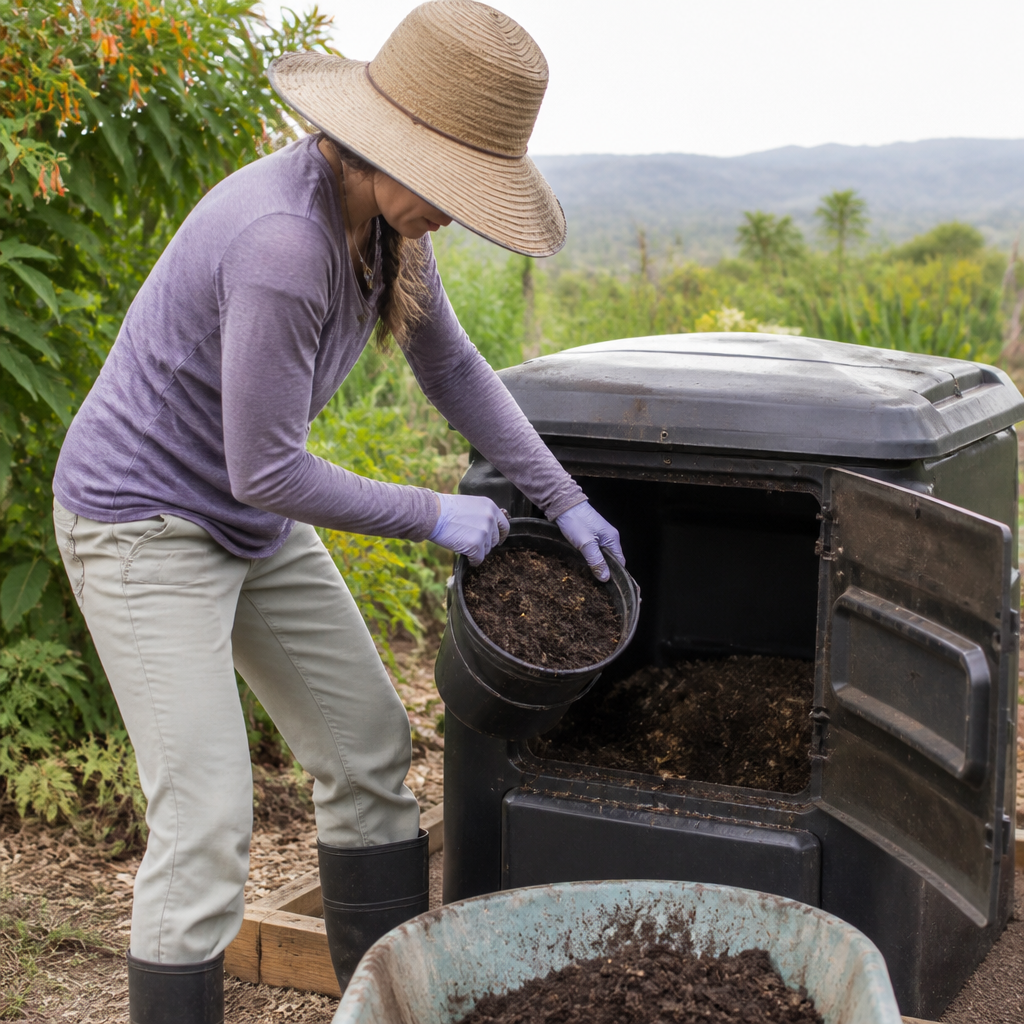
Treatment standards matter because resource recovery is only beneficial after pathogen reduction. Composting feces requires controlled conditions, adequate time, and temperature management; casual burial or partial drying is not enough. Urine storage duration depends on temperature, intended crop use, and cross-contamination risk. The WHO sanitation safety planning approach is useful here because it maps hazards from containment to end use and identifies barriers at each stage. In some jurisdictions, reuse may be restricted regardless of treatment quality, so program managers must align with environmental and public health regulations.
Safe reuse can provide tangible benefits. In water-scarce agricultural zones, sanitized urine can contribute nitrogen, phosphorus, and potassium. Stabilized composted material can improve soil structure for non-food crops, tree planting, or land rehabilitation where standards permit. These outputs can help offset operating costs, but they should never drive the program more than health protection does. If treatment capacity is weak, disposal through a regulated facility is the correct choice. EcoSan succeeds when it keeps waste out of the environment first and creates reuse value second.
Governance, Community Engagement, and What to Improve Next
Sanitation for mobile groups fails most often because responsibility is fragmented. Municipalities may say the land is informal, employers may say workers are temporary, camp managers may expect public agencies to intervene, and households may have no authority to build. The solution is explicit governance. Every site should have a named duty bearer, a service agreement, a complaints channel, and inspection routines tied to public health standards. Employers housing migrant labor should provide toilets, handwashing, cleaning staff, and sludge management as part of occupational welfare, not charity. Local governments should include mobile populations in sanitation mapping, outbreak surveillance, and waste transport planning.
Community engagement must be practical, not symbolic. Ask users where toilets feel safe, when queues are worst, which cleansing practices they prefer, and who can support maintenance oversight. Pay attention to clan dynamics, gender norms, and seasonal movement calendars. Pilot one block, observe actual use, then adjust placement or design before scaling. The most useful next steps for many programs are simple: replace distant pits with modular units, add handwashing at every toilet, formalize emptying schedules, and train attendants in safe handling. Safe sanitation for migrant and nomadic populations is achievable. Start with a mobility-aware assessment, choose an EcoSan model that can be operated reliably, and build the service chain with the same care as the structure. That is how health improves, outbreaks fall, and dignity becomes portable.
Frequently Asked Questions
Why is safe sanitation especially important for migrant and nomadic populations?
Safe sanitation is essential for migrant and nomadic populations because mobility often puts people in places where permanent services are limited, overcrowded, unsafe, or not designed for changing population sizes. When human waste is not safely contained, transported, treated, or disposed of, the risk of diarrhea, cholera, intestinal worms, hepatitis, and other sanitation-related illnesses rises quickly. For communities already facing long travel distances, insecure shelter, changing water access, and barriers to healthcare, even a short sanitation breakdown can become a serious public health problem.
Sanitation is also a protection and dignity issue. Women, girls, older adults, people with disabilities, and children may face higher risks when toilets are too far away, lack privacy, do not lock, are poorly lit, or are unsafe at night. For mobile groups, the challenge is not only having a toilet available, but having sanitation that works in transit, in temporary settlements, at work sites, and in stopping points along migration routes. Good sanitation planning helps reduce open defecation, protects water sources, supports handwashing and menstrual hygiene, and makes it easier for families to live, work, and move with greater safety and dignity.
What sanitation options work best for people who move frequently or live in temporary sites?
The best sanitation options are usually the ones that are safe, simple to use, easy to maintain, and realistic for the length of stay, site conditions, and movement pattern of the population. There is no single solution for every group. In a short-term transit setting, well-managed communal toilets may be the fastest practical answer, especially if they are paired with handwashing stations, cleaning schedules, lighting, and waste removal services. In temporary settlements, shared latrines, raised toilets in flood-prone areas, container-based sanitation, or portable toilet units may be more appropriate depending on groundwater levels, soil conditions, available space, and the ability to empty and treat waste safely.
For nomadic and highly mobile households, sanitation solutions need to account for transport, setup time, privacy, and cultural preferences. In some contexts, lightweight portable systems or designated sanitation zones at known stopping points can work better than fixed infrastructure. For seasonal labor camps, sanitation must be sized for peak population numbers, not average occupancy, and it should include separate facilities where appropriate, accessible options for users with limited mobility, and clear arrangements for cleaning and sludge management. The most effective systems are those chosen with input from the community and linked to a complete service chain from toilet use to final treatment, not just the construction of a latrine.
What makes sanitation safe, not just available?
Sanitation is safe when it prevents people from coming into contact with human waste at every stage. That starts with a usable toilet that offers privacy, is close enough to access, and is acceptable to the people using it. But availability alone is not enough. A toilet becomes unsafe if it overflows, leaks into nearby water sources, cannot be cleaned, fills too quickly, or has no system for emptying and treatment. Safe sanitation requires the full chain to function properly: containment, collection or emptying, transport, treatment, and final disposal or reuse under controlled conditions.
Safety also includes operational and social factors. Facilities should be stable, well lit where possible, gender-sensitive when needed, child-friendly, and designed so older adults and people with disabilities can use them without excessive difficulty. Handwashing with soap or another effective cleansing agent should be available nearby. In places where populations move in and out frequently, management matters as much as infrastructure. Without cleaning supplies, clear maintenance roles, and regular oversight, even well-built facilities can quickly become hazardous. In short, safe sanitation is a service system, not just a structure.
How can sanitation services protect dignity, privacy, and security for people on the move?
Protection-centered sanitation begins by recognizing that toilets are not only health infrastructure; they are places where privacy, safety, and social inclusion matter deeply. Facilities should be located close enough to where people sleep or gather so users do not have to walk long distances, especially after dark. Doors should close securely, partitions should provide full privacy, and layouts should avoid exposing users to harassment or surveillance. In many contexts, separate facilities or separate times of use can help women and girls feel safer, and menstrual hygiene needs should be considered from the start rather than treated as an afterthought.
Dignity also depends on whether sanitation is acceptable and practical in daily life. If facilities are too dirty, too crowded, culturally inappropriate, or difficult to use with children, people may avoid them. Inclusive design improves access for pregnant women, older adults, people with injuries, and persons with disabilities. Community engagement is especially important for migrant and nomadic populations because needs can differ widely by livelihood, travel route, language, and family structure. Asking people what makes a facility safe and usable often reveals issues that technical designs alone miss, such as preferred placement, nighttime concerns, cleaning expectations, or the need for facilities near livestock areas, work zones, or transit points.
What should governments, aid agencies, and employers do to improve sanitation for migrant and nomadic communities?
They should start by treating sanitation as an essential service that must move with people, not wait for permanent settlement. That means planning for mobility in policies, budgets, land use decisions, emergency preparedness, border and transit management, labor site standards, and rural service delivery. Governments can set minimum sanitation requirements for temporary camps, farm worker housing, transport hubs, and informal settlements, while also making sure waste can be safely emptied, transported, and treated. Aid agencies can support rapid assessments, flexible sanitation models, hygiene promotion, and coordination across water, health, protection, and shelter sectors. Employers who rely on seasonal or mobile labor should provide adequate, clean, accessible sanitation at worksites and living areas as a basic duty of care.
Long-term improvement depends on service continuity, not one-time installation. Authorities and service providers should map movement patterns, expected seasonal population changes, and high-use stopping points so sanitation can be placed where it is actually needed. Monitoring should include not just toilet counts, but functionality, cleanliness, safety, access for vulnerable groups, and whether waste is safely managed off-site. Community feedback mechanisms are also critical, especially for populations who may have little formal voice. When sanitation is planned with mobility, protection, and public health in mind, it helps reduce disease, preserve dignity, and create safer conditions for people whose lives depend on movement.