Building resilient sanitation systems for public health means designing toilets, treatment, reuse, and maintenance practices that keep people safe during everyday operation and during shocks such as floods, droughts, conflict, and rapid urban growth. In the Health and Safety field, this topic matters because sanitation failures spread diarrheal disease, contaminate drinking water, increase antimicrobial resistance risks, and expose workers and households to avoidable hazards. When I have assessed sanitation programs, the strongest systems were not simply the newest or most expensive. They were the ones that prevented fecal exposure consistently, matched local water and energy realities, and could still function when supply chains or public budgets were under pressure.
Resilient sanitation refers to systems that maintain safe service under stress while protecting ecosystems and public health over time. EcoSan, short for ecological sanitation, is a sanitation approach that treats human excreta as a resource to be safely contained, transformed, and reused where appropriate, usually through composting, dehydration, urine diversion, or decentralized treatment. Safety and sustainability in EcoSan depend on more than technology choice. They depend on pathogen reduction, user behavior, climate suitability, operation and maintenance capacity, safe transport, and regulatory oversight. A urine-diverting dry toilet can be highly effective in a water-scarce settlement, yet unsafe if stored material is handled too early. A sewered system can perform well in dense districts, yet fail badly when stormwater infiltration overwhelms treatment works.
Public health professionals, city planners, utilities, schools, hospitals, and community organizations all need practical guidance on how these systems work and where the risks sit. This hub article explains the principles, compares core options, and connects safety with sustainability so decision-makers can choose methods that reduce disease today without creating environmental burdens tomorrow. It also highlights the operational details that are often ignored in high-level planning: sludge emptying, handwashing access, vector control, worker protection, treatment verification, and reuse standards. If sanitation is the barrier between waste and exposure, resilience is the quality that keeps that barrier intact.
Why resilient sanitation is a public health priority
Unsafe sanitation remains a major driver of infectious disease and environmental degradation. Fecal pathogens move through water, soil, hands, food, flies, and surfaces. That transmission web is why sanitation must be viewed as a system, not a toilet procurement exercise. The World Health Organization sanitation safety planning framework and the broader water, sanitation, and hygiene practice base both emphasize identifying exposure points from containment to final disposal or reuse. In practical terms, a household may have a toilet, yet children still face risk if pits overflow, graywater stagnates near play areas, or sludge is dumped untreated into drains.
Resilience adds another layer. Climate variability increases flood damage to pits, septic systems, pumping stations, and treatment ponds. Drought makes flush systems less reliable and pushes communities toward lower-water alternatives. Informal urban growth can outpace sewer expansion for decades, so decentralized systems must be planned as long-term service models rather than temporary stopgaps. During field reviews, I have seen clinics with improved toilets that became unusable within months because spare parts were unavailable and no one owned the cleaning budget. Public health protection failed not because the concept was wrong, but because maintenance was treated as an afterthought.
For a sub-pillar hub on safety and sustainability in EcoSan, the central question is simple: how do you recover value from waste without increasing exposure? The answer lies in multiple barriers. These include source separation where useful, robust containment, defined storage times, moisture control, temperature management, treatment validation, safe personal protective equipment, hygiene stations, and rules for agricultural reuse. No single barrier is perfect. Together, they sharply reduce risk.
Core EcoSan models and where they fit
EcoSan is not one product. It is a family of approaches that seek safe sanitation with lower water demand, nutrient recovery, and decentralized treatment. The most common models include urine-diverting dry toilets, composting toilets, arborloo systems, container-based sanitation linked to off-site treatment, septic systems with reuse-oriented polishing steps, and fecal sludge treatment plants that support nutrient or energy recovery. Each model has a different risk profile and operational burden.
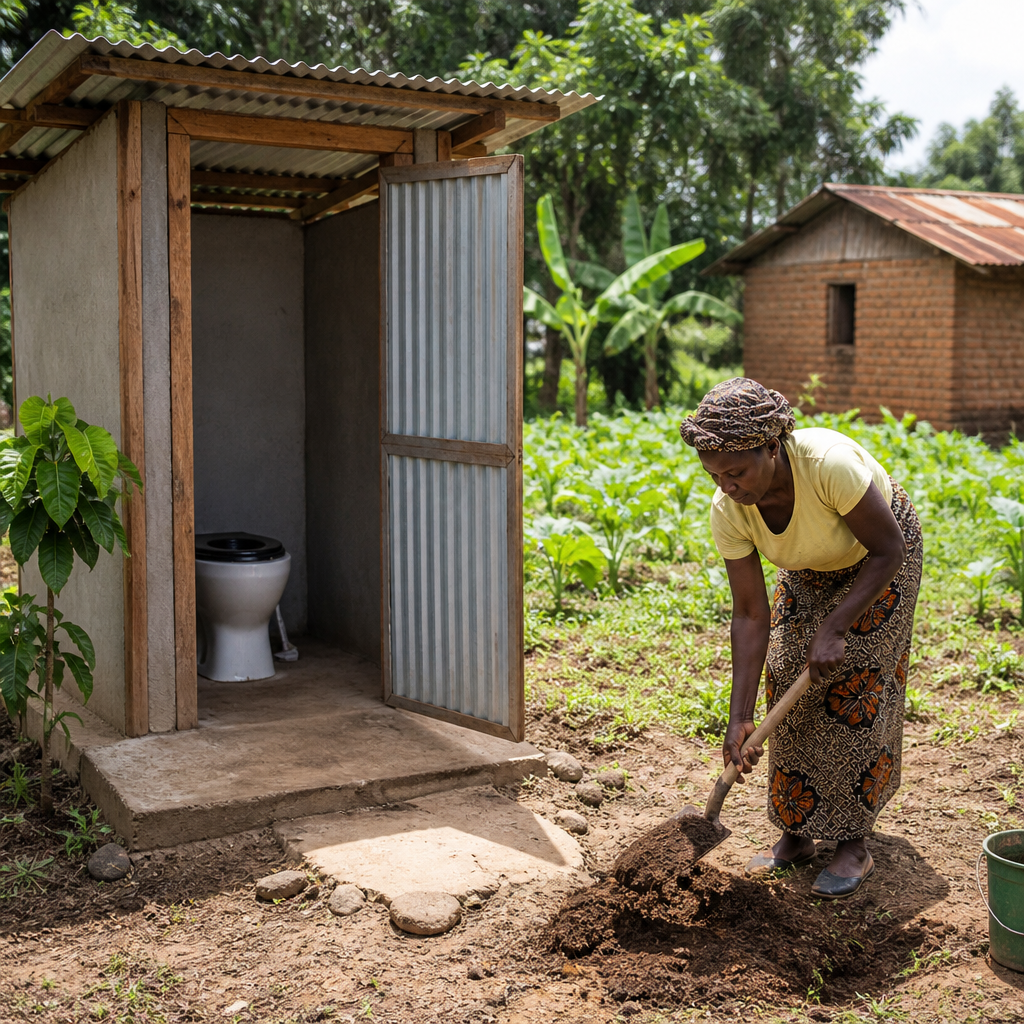
Urine-diverting dry toilets separate urine and feces at the point of use. This can reduce odor, improve dehydration, and preserve nitrogen in urine for controlled fertilizer use after appropriate storage. They work best where users can manage separate chambers, add dry cover material, and keep stormwater out. Composting toilets aim to biologically stabilize fecal matter, but true composting requires careful control of carbon, moisture, oxygen, and temperature. Many units marketed as composting toilets are really desiccation or storage systems, which means assumptions about pathogen kill must be conservative.
Container-based sanitation has become important in dense settlements where pits are impractical and sewers are unaffordable or physically infeasible. Sealed containers are collected on a service schedule and transported to treatment facilities. This model can outperform unmanaged pit emptying because logistics are formalized and exposure points are easier to control. Septic systems remain common and can be part of an ecological strategy when sludge removal, effluent polishing, and reuse are safely managed. However, poorly sited or overloaded septic tanks contaminate groundwater and should never be treated as maintenance-free.
| System | Best-fit context | Main public health risk | Key resilience measure |
|---|---|---|---|
| Urine-diverting dry toilet | Water-scarce homes, schools, rural sites | Unsafe handling of stored solids | Strict storage time, dry cover material, user training |
| Composting toilet | Households with strong maintenance capacity | Incomplete pathogen reduction | Moisture and temperature control, curing period |
| Container-based sanitation | Dense informal settlements | Collection failure or unsafe transfer | Scheduled service, sealed containers, licensed treatment |
| Septic plus reuse polishing | Peri-urban plots with space | Groundwater contamination, sludge neglect | Desludging plan, setback distances, effluent treatment |
| Fecal sludge treatment with resource recovery | Towns using pits and tanks | Treatment bypass or poor operator safety | Monitoring, worker PPE, controlled end-use markets |
The best option depends on hydrogeology, density, affordability, user preference, and institutional capacity. In flood-prone areas with shallow groundwater, lined and elevated containment may be essential. In schools, designs must support cleaning, menstrual hygiene management, privacy, and rapid repair. In agriculture-dependent communities, nutrient recovery can create local value, but only if treatment and application follow clear health safeguards.
Designing for safety from containment to reuse
Safe EcoSan starts with source containment. Toilets should prevent leakage, exclude insects, and minimize contact with fresh excreta. Superstructures need ventilation, washable surfaces, secure doors, and access for people with limited mobility. Where urine diversion is used, the fixture angle and flow path matter; poor geometry causes cross-contamination and user frustration. I have seen well-funded installations abandoned because the urine bowl splashed, the feces chute clogged, and no one corrected the design details.
Storage and treatment are where many systems succeed or fail. Pathogen reduction depends on time, temperature, pH, dryness, and biological competition. Helminth eggs, especially Ascaris, are notably persistent and are often used as conservative indicators for sludge treatment performance. That matters because material that looks dry and harmless may still contain viable pathogens. Programs should define minimum storage periods based on climate and treatment conditions, not guesswork. If composting is claimed, temperatures and turning practices should be documented. If alkaline treatment or dehydration is used, operators should verify that the process conditions are actually reached.
Transport is another neglected hazard point. Emptying pit latrines, vaults, or containers exposes workers to aerosols, splashes, sharps, and toxic gases. Occupational safety controls should include gloves, boots, eye protection, masks or respirators as appropriate, vaccination policies where available, handwashing stations, and mechanical emptying methods that reduce manual contact. Confined space entry around tanks requires especially strict procedures because hydrogen sulfide and oxygen-deficient atmospheres can kill within minutes.
Reuse can be safe and beneficial, but only when linked to crop type, treatment level, and application method. Urine that has been properly stored can provide nitrogen and phosphorus for non-food crops or for food crops where timing and application reduce contact with edible parts. Treated biosolids can improve soil organic matter, water retention, and fertility. However, direct application of insufficiently treated material to vegetables eaten raw is a clear public health failure. The principle is straightforward: match the product to the risk and maintain barriers between residual hazards and people.
Sustainability in EcoSan: water, nutrients, energy, and climate
EcoSan is often chosen for sustainability goals, but those goals need to be measured realistically. Water savings are one of the clearest benefits. Dry or low-water systems reduce demand in drought-prone areas and lower the burden on centralized treatment infrastructure. Nutrient recovery is another major advantage. Human urine contains much of the nitrogen and potassium excreted by households, while fecal solids contain organic matter and phosphorus. In regions facing fertilizer price volatility, recovering these nutrients can support local food systems and reduce dependence on imported inputs.
Energy and climate outcomes vary by design. Decentralized systems can reduce pumping and conveyance energy compared with long sewer networks. Some fecal sludge treatment facilities recover biogas through anaerobic digestion or produce fuel briquettes from dried solids. Yet sustainability claims should account for transport distances, drying energy, and contamination risks. A technically elegant solution loses credibility if trucks travel long distances or if market demand for end products is weak. The strongest projects begin with a material flow analysis: what enters the system, what leaves it, what value can be recovered, and what residuals must still be safely disposed of.
Climate resilience should be built in from the start. Flood-resistant siting, raised slabs, sealed vaults, stormwater diversion, corrosion-resistant components, and backup service routes all matter. In drought regions, user acceptance improves when systems are easy to clean with minimal water and when odor control is reliable. In hot climates, dehydration can work faster, but heat also intensifies smell if ventilation is poor. Sustainability is therefore not only environmental performance; it is sustained usability under local conditions.
Governance, financing, and behavior change that make systems last
Even well-designed sanitation systems fail without institutions that assign responsibility and pay for ongoing service. Resilience depends on governance across the whole chain: household use, collection, transport, treatment, monitoring, and end-use regulation. Municipalities need clear service mandates, tariff structures, and enforcement powers. Utilities or licensed private operators need performance standards for response times, emptying quality, spill control, and disposal records. Health departments should be involved because sanitation breakdowns appear first as exposure risks, not accounting errors.
Financing must cover capital and operations. Many EcoSan pilots succeed during donor support and decline later because spare parts, cover material, operator salaries, or transport contracts were never built into the business model. A resilient approach blends household contributions, public subsidy where justified by public health benefits, and revenue from resource recovery when markets are real. Carbon finance, fertilizer substitution, or compost sales may help, but they rarely replace the need for stable core funding.
Behavior change is equally important. Users need simple instructions on what goes into the toilet, how to keep chambers dry, when to switch vaults, how to wash hands, and why storage times matter. Social acceptance should never be assumed. Some communities strongly support reuse once they see crop results and understand the safety steps. Others prefer systems with no household handling at all. The right response is participatory design, demonstration sites, and honest discussion of tradeoffs. For organizations building a Health and Safety content cluster, this hub should connect readers to deeper guidance on fecal sludge management, school sanitation, occupational safety, water quality testing, and climate-resilient infrastructure. Resilient sanitation protects health when technology, operations, and human behavior are aligned. Audit your current system, identify the weakest link in the service chain, and strengthen it before the next shock turns a sanitation gap into a public health emergency.
Frequently Asked Questions
1. What does a resilient sanitation system include, and why is it so important for public health?
A resilient sanitation system is more than a toilet or a sewer line. It includes the full sanitation chain: safe toilet access, reliable containment, transport, treatment, reuse or disposal, routine operation and maintenance, worker protection, and emergency planning. Resilience means the system continues to protect health not only during normal conditions, but also during floods, droughts, power outages, conflict, population displacement, and rapid urban growth. In practice, that means facilities are designed to prevent overflow, contamination, and service disruption, and institutions are prepared to respond when conditions change quickly.
This matters deeply for public health because sanitation breakdowns create immediate and widespread exposure pathways. Human waste can enter drinking water sources, food production systems, homes, schools, healthcare facilities, and public spaces. That raises the risk of diarrheal disease, cholera, typhoid, hepatitis, parasitic infections, and other illnesses linked to fecal contamination. Poor sanitation also contributes to environmental degradation and can increase antimicrobial resistance risks when untreated waste, including healthcare-associated wastewater, is released into the environment. A resilient system reduces those risks by consistently separating people from pathogens and ensuring waste is managed safely at every stage.
Strong sanitation systems also protect sanitation workers, caregivers, and households from avoidable hazards. Exposure to untreated sludge, chemicals, unsafe pits, damaged infrastructure, and poorly ventilated spaces can cause serious injury and illness. From a health and safety perspective, resilience means engineering controls, standard operating procedures, personal protective equipment, monitoring, and maintenance are all built into the system from the beginning rather than added only after a failure occurs.
2. How can sanitation systems be designed to withstand floods, droughts, and other shocks?
Designing for shocks starts with understanding local hazards and how they affect sanitation performance. In flood-prone areas, toilets, septic systems, pumping stations, and treatment units should be sited and elevated to reduce inundation risk. Containment structures need watertight construction where appropriate, protection against infiltration, and overflow pathways that do not send waste into homes or water supplies. Drainage around facilities is critical, and systems should be assessed for how they perform during extreme rainfall, not just average seasonal conditions. In some settings, decentralized solutions can improve resilience because a single damaged trunk sewer or treatment plant will not disable service for a large population.
In drought-prone regions, water-efficient and non-sewered sanitation options may be more reliable than systems that depend on continuous water supply. Designers should consider low-flush or dry sanitation technologies, safe storage, sludge management capacity, and reuse opportunities such as nutrient recovery where regulations and public health safeguards allow. Drought can also concentrate pollutants in limited water sources, so treatment reliability becomes even more important. The goal is not simply to conserve water, but to ensure that the sanitation system still functions safely when water availability drops.
Other shocks require institutional resilience as well as physical resilience. Rapid urban growth can overwhelm systems that were correctly designed for a much smaller population. Conflict and displacement can interrupt maintenance, fuel supply, staffing, and spare parts availability. Power outages can disable pumps and treatment processes. To address these risks, resilient systems often include modular expansion plans, backup power, manual operating contingencies, diversified supply chains, emergency desludging arrangements, and clear response protocols. The best designs assume disruption will occur and build in practical ways to maintain essential sanitation services under stress.
3. What are the biggest health and safety risks when sanitation systems fail?
The most immediate risk is pathogen exposure. When toilets overflow, pits collapse, sewer lines break, or treatment systems stop functioning, fecal matter can spread into drinking water systems, surface water, soil, food chains, and indoor environments. That creates conditions for rapid disease transmission, especially in dense urban areas, informal settlements, schools, shelters, and healthcare settings. Children, older adults, pregnant people, and those with weakened immune systems are often hit hardest. Even short-term failures can trigger outbreaks if contamination reaches a shared water source or a heavily used public facility.
There are also major occupational health risks. Sanitation workers may face contact with untreated waste, needlestick injuries, toxic gases in confined spaces, slips and falls, traffic hazards during waste transport, and musculoskeletal strain from manual handling. In poorly managed systems, workers may be expected to enter pits or tanks without proper training, ventilation, gas monitoring, rescue procedures, or protective equipment. That is not only dangerous but unacceptable from a health and safety standpoint. A resilient system reduces these risks through safer design, mechanized emptying where possible, lockout and isolation procedures, confined space protocols, and routine supervision.
Longer-term failures create chronic public health burdens. Repeated environmental contamination can degrade groundwater, contaminate irrigation water, increase vector breeding, and undermine trust in public services. Poorly treated wastewater and sludge can spread resistant organisms and pharmaceutical residues, adding pressure to already strained health systems. There are also social and behavioral impacts: when sanitation feels unsafe, inaccessible, or unreliable, people may revert to open defecation or unsafe disposal practices. That is why resilience planning must look beyond emergency response and focus on sustained safe performance over time.
4. How do operation, maintenance, and worker protection influence sanitation resilience?
Operation and maintenance are often the difference between a sanitation system that looks good on paper and one that actually protects public health year after year. Even well-designed infrastructure fails if pits are not emptied on time, pumps are not serviced, leaks are not repaired, screens are not cleared, and treatment processes are not monitored. Resilience depends on having asset registers, maintenance schedules, inspection routines, spare parts, fuel or energy continuity, trained operators, and realistic budgets. It also depends on collecting operational data so problems can be detected early rather than after contamination has already occurred.
Worker protection is equally important. Sanitation workers are essential public health professionals, and resilient systems must be designed around their safety. That includes clear procedures for desludging, transport, treatment, cleaning, and emergency response; access to handwashing, hygiene supplies, vaccinations where appropriate, and fit-for-purpose personal protective equipment; and training on hazard recognition, infection prevention, chemical safety, traffic safety, and confined space entry. Where manual scavenging or other unsafe practices exist, resilience requires replacing those practices with mechanized, regulated, and dignified service models.
Good maintenance and worker safety also improve service continuity during emergencies. Teams that are trained, equipped, and supported can respond faster to blockages, flood damage, containment failures, or overloaded facilities. Facilities with preventive maintenance programs are less likely to fail during peak stress. In other words, resilience is not only about stronger hardware; it is about dependable systems of people, procedures, financing, and accountability that keep sanitation services functioning safely every day.
5. What should communities, municipalities, and health and safety professionals prioritize when assessing sanitation resilience?
They should begin by assessing the entire sanitation chain rather than focusing on toilets alone. A community may have high toilet coverage but still face major health risks if pits leak, desludging is unsafe, transport is informal, treatment is inadequate, or wastewater and sludge are discharged without control. A strong assessment looks at infrastructure condition, service reliability, treatment performance, worker safety, environmental discharge pathways, access for vulnerable groups, and the ability of the system to cope with shocks such as flooding, drought, displacement, or rapid population increase.
Risk mapping is a key priority. Municipalities and health and safety professionals should identify where sanitation failures are most likely and where the consequences would be greatest. That includes flood zones, areas with shallow groundwater, informal settlements, schools, healthcare facilities, markets, transport hubs, and communities with limited emergency access. It is also important to examine whether governance and financing support resilience. Questions such as who is responsible for maintenance, how services are monitored, whether operators are trained, and how emergency repairs are funded are just as important as technical specifications.
Finally, priorities should include practical improvement actions that reduce risk in stages. These may involve upgrading unsafe containment, strengthening fecal sludge management, improving drainage around facilities, introducing backup power, creating emergency desludging contracts, improving laboratory and field monitoring, and formalizing worker safety programs. Community engagement is essential throughout the process because local users often understand recurring failure points better than outside planners. The most effective resilience strategies combine engineering, public health protection, occupational safety, governance, and community participation into one coordinated approach.