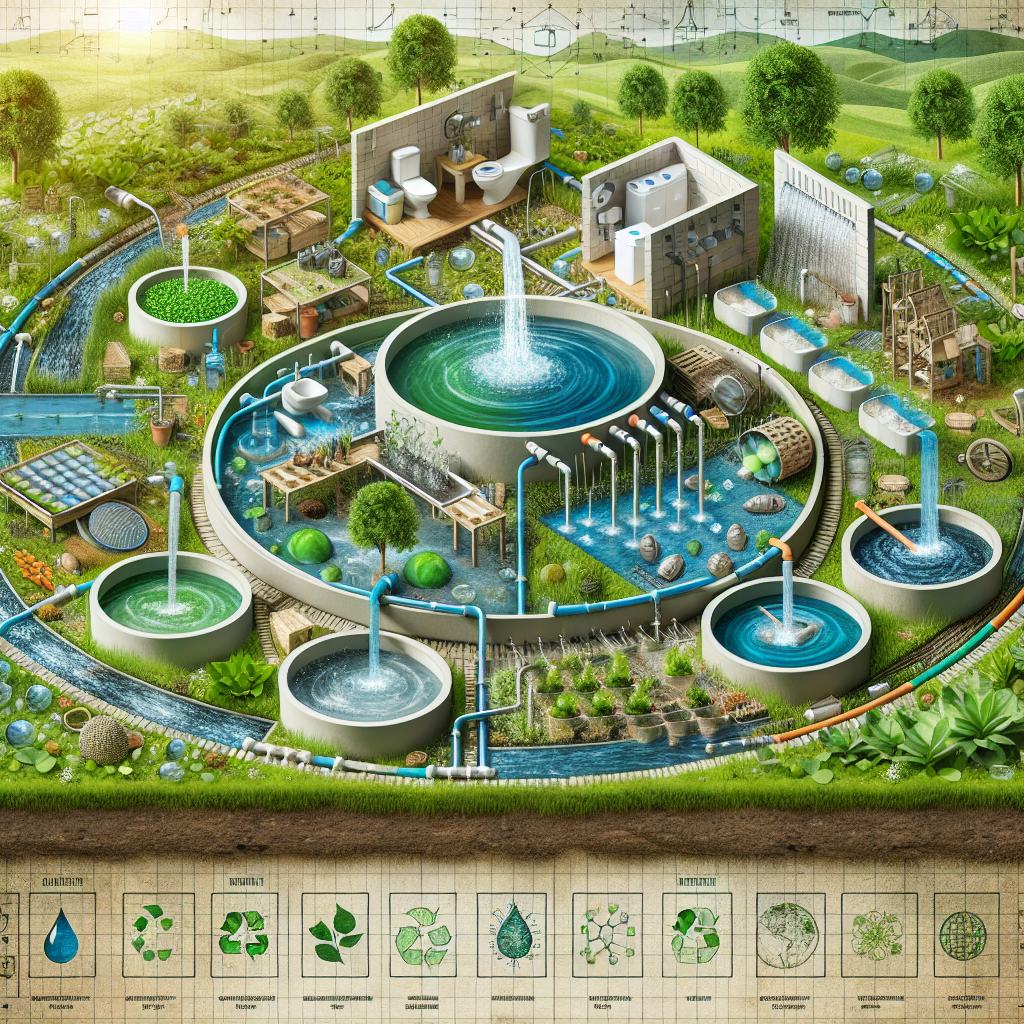
Ecological Sanitation (EcoSan) is an innovative and sustainable approach to sanitation that aims to protect public health and the environment, while also creating economic benefits for local communities. The principles and concepts of EcoSan revolve around closing the nutrient loop, which involves the safe treatment and recycling of human excreta to be reused as valuable resources, such as fertilizers and biogas. As global awareness of environmental sustainability grows, EcoSan is gaining traction as a practical solution to some of the sanitation challenges faced by communities, particularly in developing regions.
Traditional sanitation systems, such as flush toilets and septic tanks, often lead to environmental pollution and resource depletion. In contrast, EcoSan systems promote resource recovery and reuse, thus reducing dependence on chemical fertilizers and fossil fuels. By minimizing water use, protecting water resources, and transforming waste into valuable products, EcoSan contributes significantly to both environmental conservation and local economic development.
This article explores the economic impact of EcoSan on local communities by examining case studies, analyzing cost-benefit aspects, and highlighting the potential for job creation and income generation. Through this comprehensive look at EcoSan, we aim to provide a clear understanding of how these systems can foster sustainable development and improve the livelihoods of communities around the world.
Community Economic Benefits of EcoSan
One of the most compelling reasons for adopting EcoSan systems is their potential to bring numerous economic benefits to local communities. By converting waste into resources, EcoSan creates opportunities for cost savings and income generation, thereby supporting economic stability and growth.
For instance, farmers in rural areas can significantly reduce their reliance on chemical fertilizers by using composted human waste as an alternative. This, in turn, lowers their operating costs and improves the profitability of their agricultural activities. The composted product, which is rich in nutrients, can also enhance crop yields and soil health, further boosting agricultural productivity and revenue.
Additionally, EcoSan systems can generate biogas, which can be used as a renewable energy source for cooking, heating, and electricity generation. This not only reduces energy costs but also provides an alternative to environmentally damaging energy sources such as wood, charcoal, and fossil fuels. Households that use biogas can save money on energy expenses, and the surplus biogas can even be sold to generate supplemental income.
Moreover, implementing EcoSan systems creates job opportunities in various sectors, such as construction, maintenance, waste collection, and resource management. Skilled labor is required to build and maintain these systems, while training programs can empower community members with valuable skills, leading to improved employment prospects and economic independence.
Case Studies: EcoSan Success Stories
Several successful case studies from around the world highlight the positive economic impact of EcoSan systems on local communities. These real-world examples demonstrate the potential for EcoSan to transform both sanitation practices and economic conditions in diverse settings.
In the rural areas of Tamil Nadu, India, the implementation of EcoSan toilets has led to significant improvements in agricultural productivity and income levels. Farmers in these communities have been able to use composted human waste as a natural fertilizer, which has resulted in increased crop yields and reduced dependence on costly chemical fertilizers. This, in turn, has boosted their incomes, allowing them to invest in better farming equipment and improve their overall quality of life.
Similarly, in the peri-urban areas of Ouagadougou, Burkina Faso, EcoSan systems have been introduced to address the sanitation challenges faced by the rapidly growing population. Households equipped with EcoSan toilets have been able to produce biogas, which they use for cooking and heating. This has significantly reduced their reliance on traditional biomass fuels, cutting down on deforestation and indoor air pollution. The financial savings achieved through these EcoSan systems have been substantial, leading to improved household incomes and economic resilience.
In South Africa, the eThekwini Municipality has implemented a large-scale EcoSan program, providing thousands of urine-diverting dry toilets to households in underserved areas. The initiative has not only improved sanitation conditions but also generated valuable byproducts, including compost and urine-based fertilizers. These resources have been used by local farmers, leading to enhanced agricultural productivity and thriving local markets for EcoSan-derived products.

Cost-Benefit Analysis of EcoSan Systems
A comprehensive cost-benefit analysis reveals that the long-term economic benefits of EcoSan systems often outweigh the initial investment costs. While the upfront costs of building and implementing EcoSan solutions can be higher than traditional sanitation systems, the return on investment through resource recovery, cost savings, and income generation makes EcoSan a financially viable option.
The initial capital costs include expenses related to the design, construction, and installation of EcoSan toilets and associated infrastructure. However, these costs can be mitigated through government funding, grants, and community-based financing models. In many cases, local governments and development agencies have recognized the value of EcoSan and have provided the necessary support to jumpstart projects.
When comparing operational and maintenance costs, EcoSan systems generally prove to be more economical in the long run. Traditional sanitation systems require regular desludging and wastewater treatment, which are costly and often unsustainable for low-income communities. In contrast, EcoSan systems operate with minimal water usage and lower maintenance requirements, resulting in significant cost savings over time.
The economic benefits derived from resource recovery further bolster the financial case for EcoSan. By converting waste into valuable products, such as fertilizers and biogas, communities can reduce their spending on agricultural inputs and energy, while creating new revenue streams. These financial advantages, combined with the environmental and social benefits of EcoSan, make a compelling case for widespread adoption.
EcoSan and Sustainable Development Goals (SDGs)
EcoSan systems align closely with several United Nations Sustainable Development Goals (SDGs), particularly those related to clean water and sanitation (SDG 6), affordable and clean energy (SDG 7), decent work and economic growth (SDG 8), and responsible consumption and production (SDG 12). As such, the adoption of EcoSan can directly contribute to the achievement of these global objectives, fostering sustainable development across communities.
SDG 6 aims to ensure availability and sustainable management of water and sanitation for all. By reducing water consumption and preventing pollution of water bodies, EcoSan addresses water scarcity and improves sanitation services. EcoSan systems also support SDG 7 by promoting the use of renewable energy sources like biogas, which reduces reliance on fossil fuels and mitigates environmental damage.
SDG 8 focuses on promoting sustained, inclusive, and sustainable economic growth, full and productive employment, and decent work for all. The implementation of EcoSan generates job opportunities in construction, waste management, and resource recovery, thereby contributing to local economic development and reducing poverty.
Finally, SDG 12 emphasizes responsible consumption and production, advocating for the efficient use of resources and minimizing waste. EcoSan’s principle of closing the nutrient loop exemplifies this goal by turning human waste into valuable resources, thereby reducing waste and promoting sustainable resource management.
Challenges and Future Prospects
While EcoSan holds significant potential for transforming sanitation and local economies, it is not without challenges. Addressing these obstacles and leveraging future prospects are critical for the successful implementation and scaling of EcoSan systems.
One of the primary challenges is the cultural acceptance of using treated human waste as a resource. Educational campaigns and community engagement are crucial to overcoming the stigma attached to EcoSan products and promoting their safe and beneficial use. Building community trust and raising awareness about the health and economic benefits of EcoSan can facilitate broader acceptance.
Another challenge involves the initial investment costs and the need for suitable financing mechanisms. Governments, NGOs, and international development agencies can play a vital role in providing financial support, subsidies, and incentives to make EcoSan systems more accessible to low-income communities. Encouraging public-private partnerships can also foster innovation and reduce financial barriers.
Technical expertise and capacity building are essential for the sustainable operation and maintenance of EcoSan systems. Providing training and resources to local stakeholders ensures the smooth functioning of these systems and promotes long-term viability. Additionally, investing in research and development can lead to technological advancements and improved designs that address specific local needs.
The future prospects for EcoSan are promising, particularly in the context of growing environmental awareness and the global push for sustainable development. As more communities experience the economic, environmental, and social benefits of EcoSan, the demand for these systems is likely to increase. By addressing the challenges and fostering innovation, EcoSan can play a crucial role in building resilient and sustainable communities worldwide.
Conclusion
EcoSan represents a paradigm shift in sanitation practices, transforming human waste from a pollutant into a valuable resource. By closing the nutrient loop, EcoSan systems offer a range of economic benefits to local communities, including cost savings, income generation, job creation, and improved agricultural productivity. The case studies and cost-benefit analysis presented in this article highlight the tangible positive impacts of EcoSan on community livelihoods and economic stability.
Moreover, EcoSan aligns with several Sustainable Development Goals, promoting clean water and sanitation, renewable energy, economic growth, and responsible resource management. By addressing current challenges and leveraging future prospects, EcoSan has the potential to contribute significantly to sustainable development and environmental conservation.
In conclusion, the economic impact of EcoSan on local communities is substantial and multifaceted. Embracing EcoSan principles and concepts can lead to more sustainable and prosperous communities, where resources are used efficiently, and waste is minimized. As the world continues to seek innovative and sustainable solutions to sanitation challenges, EcoSan stands out as a practical and economically viable option that empowers local communities and supports global sustainability goals.