Ecological sanitation, usually shortened to EcoSan, is the design and management of sanitation systems that protect human health while recovering water, nutrients, and organic matter instead of treating waste as something to hide and discard. Wildlife conservation is the protection of species, habitats, and ecological processes that keep landscapes functioning. The intersection of EcoSan and wildlife conservation matters because sanitation choices shape rivers, wetlands, soils, coastlines, and the food webs that depend on them. In practice, I have seen sanitation projects judged only by toilet coverage or sewer connections, while their wider ecological effects were ignored. That is a costly mistake. Poorly managed waste drives eutrophication, pathogen loading, antibiotic resistance, habitat degradation, and chemical contamination. Well-designed EcoSan systems reduce those pressures and can actively support restoration goals.
As a hub topic under environmental impact, EcoSan’s role in environmental protection is broader than many readers expect. It includes nutrient recovery, water conservation, source separation, decentralized treatment, soil improvement, and safer reuse. It also includes careful controls, because misuse can create health risks or contaminate habitats. The core principle is circularity: nutrients such as nitrogen, phosphorus, and potassium are returned to productive use rather than flushed into waterways. This is important for wildlife because excess nutrients are a major driver of algal blooms, oxygen depletion, fish kills, and changes in plant communities. According to global assessments by organizations such as UNEP and FAO, nutrient pollution and wastewater mismanagement are significant pressures on freshwater and coastal ecosystems. Sanitation is therefore not just a public health service; it is an environmental management system with direct conservation consequences.
EcoSan differs from conventional sanitation in several practical ways. Conventional sewerage often relies on large water volumes, long pipe networks, centralized treatment, and discharge permits. EcoSan approaches may use urine-diverting dry toilets, container-based sanitation, composting toilets, anaerobic digestion, constructed wetlands, and decentralized treatment units that keep waste streams separate and easier to treat or reuse. Source separation is especially important. Urine contains most of the nitrogen and a large share of phosphorus excreted by people, while feces contain most of the pathogens and much of the organic matter. Separating these flows can lower treatment complexity and make nutrient recovery more efficient. For conservation planners, that means fewer pollutants reaching habitats and fewer withdrawals of freshwater for transport.
This intersection matters in cities, villages, protected areas, and tourism landscapes. A lodge near a savanna reserve, a peri-urban settlement upstream of a wetland, and a coastal town beside a mangrove estuary all face the same question: can sanitation systems protect people without damaging biodiversity? The answer is yes, but only if design follows site ecology, hydrology, public health standards, and long-term operations capacity. EcoSan is not a single device. It is a strategy for reducing ecological harm and creating measurable environmental benefits. When it is planned well, EcoSan cuts nutrient leakage, reduces wastewater discharge, supports resilient agriculture, and lowers pressure on species-sensitive ecosystems. For any organization building an environmental impact content framework, this topic belongs at the center because sanitation sits upstream of water quality, habitat integrity, and ecosystem recovery.
How EcoSan Protects Habitats Through Pollution Prevention
The clearest conservation benefit of EcoSan is pollution prevention. Untreated sewage introduces pathogens, suspended solids, nutrients, pharmaceuticals, and household chemicals into rivers and wetlands. Those pollutants alter habitat quality immediately and over time. In freshwater systems, nitrogen and phosphorus stimulate excessive plant and algal growth. As algae die and decompose, dissolved oxygen falls, which can kill fish and aquatic invertebrates. Turbid water blocks light, suppressing submerged vegetation used for spawning and shelter. In estuaries and lagoons, nutrient over-enrichment can shift ecosystems toward nuisance algal dominance and away from seagrass beds that support birds, juvenile fish, and crustaceans. By separating, treating, and reusing waste close to the source, EcoSan can sharply reduce the nutrient and pathogen loads reaching these habitats.
Source-separated systems are especially effective where sewer overflows, failing septic tanks, or direct discharge are common. Urine diversion reduces the largest share of nutrient transport before it enters mixed wastewater. Composting and dehydration can reduce fecal volume and make subsequent treatment safer and cheaper. Decentralized greywater treatment lowers bacterial and organic pollution from household washing water, which is often overlooked in conservation plans. In field projects, I have found that a small, well-operated decentralized system frequently outperforms a nominally “modern” network that leaks, overflows, or has no reliable treatment at the end. Wildlife benefits from actual performance, not from infrastructure labels.
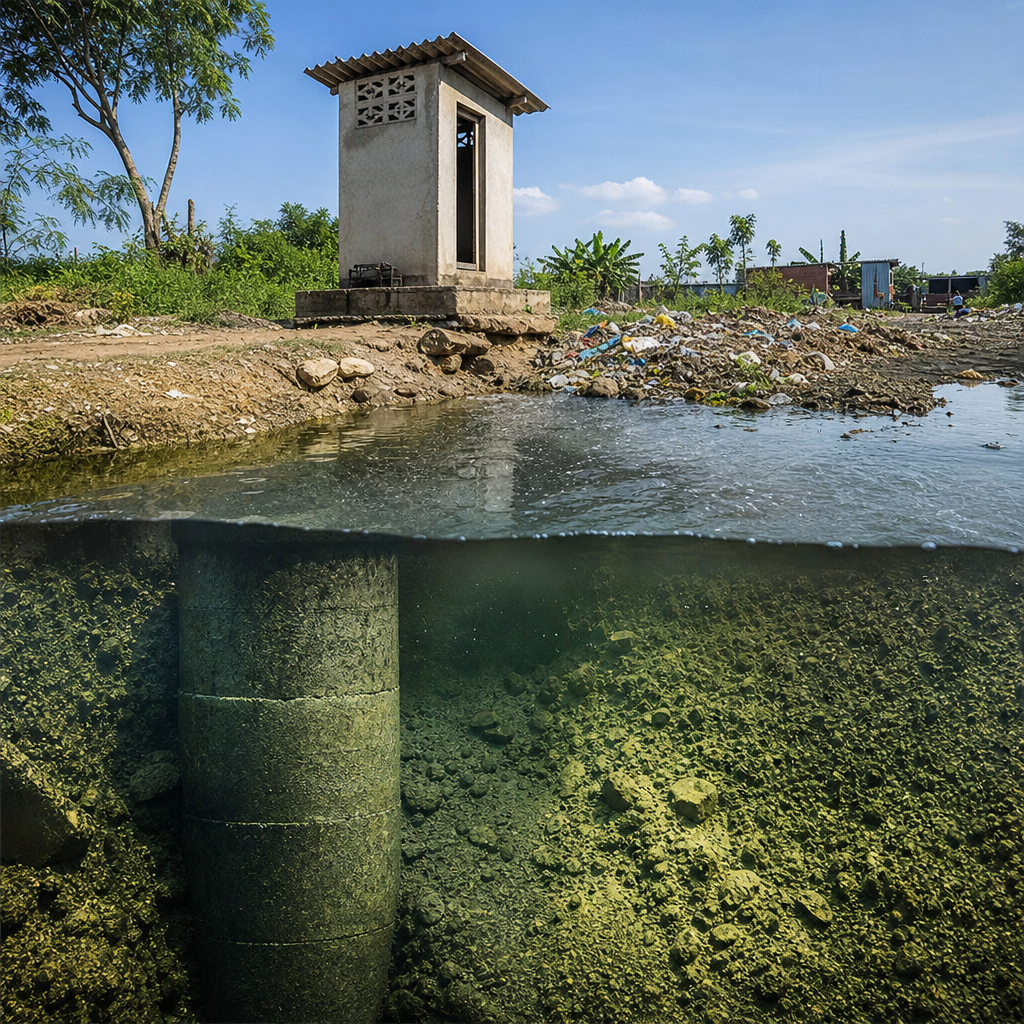
Pollution prevention also protects terrestrial habitats. Where pit latrines are densely clustered or placed in flood-prone soils, nutrients and microbes can migrate into shallow groundwater, springs, and adjacent riparian areas. That can affect amphibian breeding sites, drinking points used by mammals, and downstream wetlands. EcoSan systems designed for local soils and water tables reduce seepage and uncontrolled runoff. In drought-prone regions, dry or low-water systems also prevent the paradox of using scarce freshwater to transport nutrients into ecosystems that are already stressed.
Nutrient Recovery, Circular Resource Use, and Reduced Pressure on Ecosystems
EcoSan’s second major contribution is nutrient recovery. Agriculture depends heavily on synthetic fertilizer, particularly nitrogen from energy-intensive industrial processes and phosphorus mined from finite reserves. Recovering nutrients from human waste helps close that loop. When sanitized urine or treated compost is applied correctly, it can replace part of the fertilizer demand for crops, fodder, or forestry. That matters for wildlife conservation because fertilizer production and misapplication have indirect ecological costs: mining disturbance, greenhouse gas emissions, runoff into protected waters, and soil degradation. Circular sanitation reduces those pressures by turning a waste problem into a managed nutrient resource.
The recovery potential is not trivial. Human excreta contain substantial plant nutrients, and urine alone can provide a large proportion of crop nitrogen demand when collected and applied with proper storage and dosing. The environmental value depends on treatment quality and agronomic management. Urine is usually low in pathogens compared with feces, but storage time, dilution, and application timing still matter. Fecal-derived soil amendments require more rigorous treatment because pathogens persist longer. Standards from the World Health Organization and national reuse guidelines are essential here. The conservation gain comes not from reuse at any cost, but from safe reuse that displaces external inputs without creating new contamination pathways.
In buffer zones around protected areas, nutrient recovery can support local livelihoods while reducing illegal resource extraction. If communities can improve yields on existing plots using safe recycled nutrients, pressure to clear new habitat may ease. I have seen this logic work best when sanitation planners coordinate with agricultural extension officers, not when projects stop at toilet installation. Wildlife conservation improves when sanitation and land-use systems are planned together.
| EcoSan approach | Primary environmental benefit | Wildlife conservation relevance | Key operational requirement |
|---|---|---|---|
| Urine-diverting dry toilets | Reduces nutrient discharge and water use | Lowers eutrophication risk in wetlands and streams | Reliable user training and urine storage |
| Composting toilets | Stabilizes organic matter for soil use | Reduces uncontrolled fecal contamination near habitats | Temperature, moisture, and curing control |
| Anaerobic digestion | Produces biogas and nutrient-rich digestate | Cuts fuelwood demand that can degrade habitat | Consistent feedstock and post-treatment |
| Constructed wetlands | Polishes wastewater and removes pollutants | Protects downstream aquatic ecosystems | Hydraulic loading management and maintenance |
Water Security, Wetland Health, and Climate Resilience
EcoSan supports conservation by reducing water demand and improving catchment resilience. Conventional flush systems can use several liters per flush, multiplying household demand and increasing wastewater volumes. In water-stressed basins, that can intensify competition between human use and environmental flow needs. Dry sanitation, low-flush systems, and onsite reuse of treated greywater reduce extraction pressure on rivers and aquifers. Environmental flows matter because many species depend on seasonal water patterns for breeding, migration, and feeding. When water abstraction rises and pollution loads rise at the same time, habitat quality can collapse quickly.
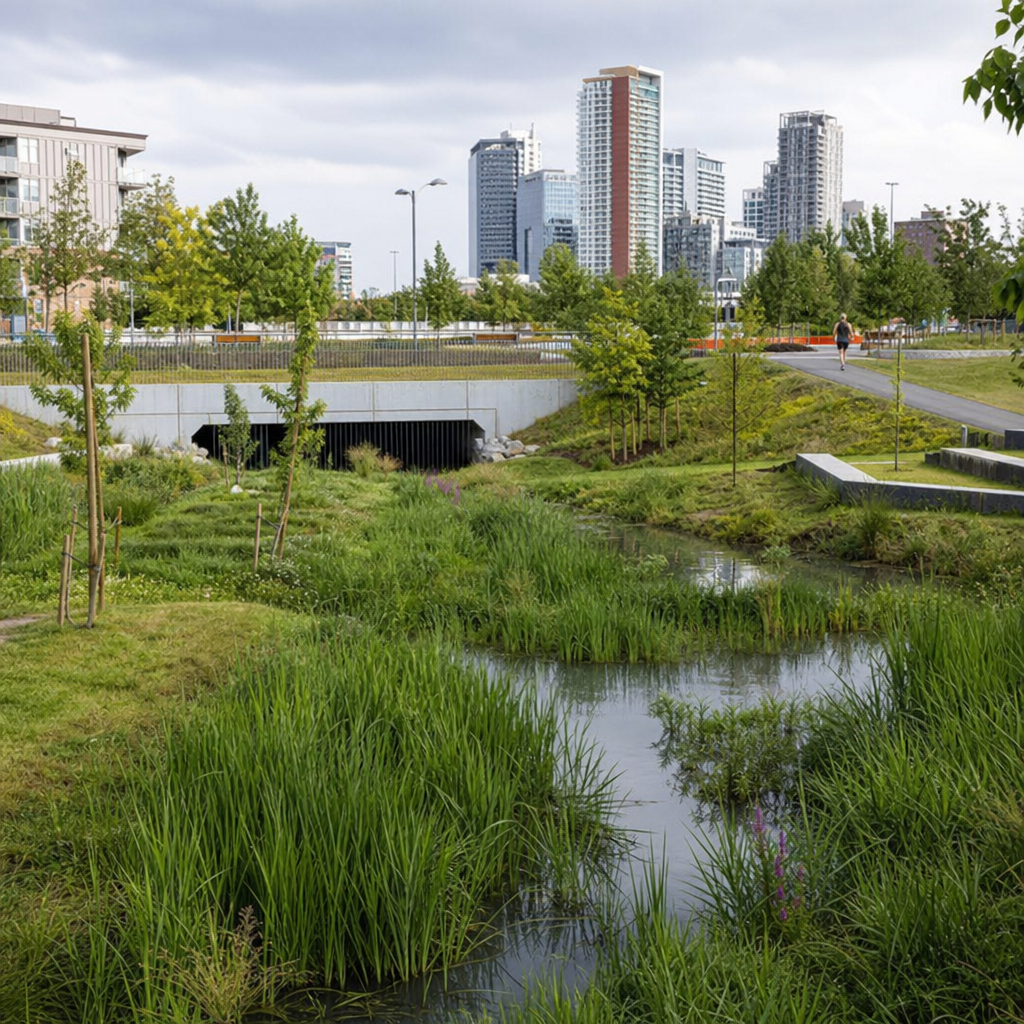
Constructed wetlands and decentralized treatment units can also act as buffers in climate-sensitive landscapes. Properly designed wetlands remove suspended solids, organic matter, and some nutrients while slowing runoff and supporting infiltration. They are not replacements for intact natural wetlands, and they should never be used to justify wetland destruction. However, as treatment infrastructure, they can reduce the burden placed on natural systems downstream. In flood-prone settlements, resilient EcoSan design limits overflow events that would otherwise wash raw waste into marshes, mangroves, and river corridors during storms.
Climate resilience extends beyond water. Anaerobic digestion can capture methane from organic waste and generate biogas for cooking or heating. In communities near forests or reserves, cleaner cooking energy can reduce fuelwood collection, which in turn lowers edge degradation and disturbance to wildlife. The climate benefit depends on avoiding leaks and managing digestate safely, but the systems can create a genuine co-benefit: lower emissions, better sanitation, and less habitat pressure.
Applications in Protected Areas, Tourism Sites, and Rural Landscapes
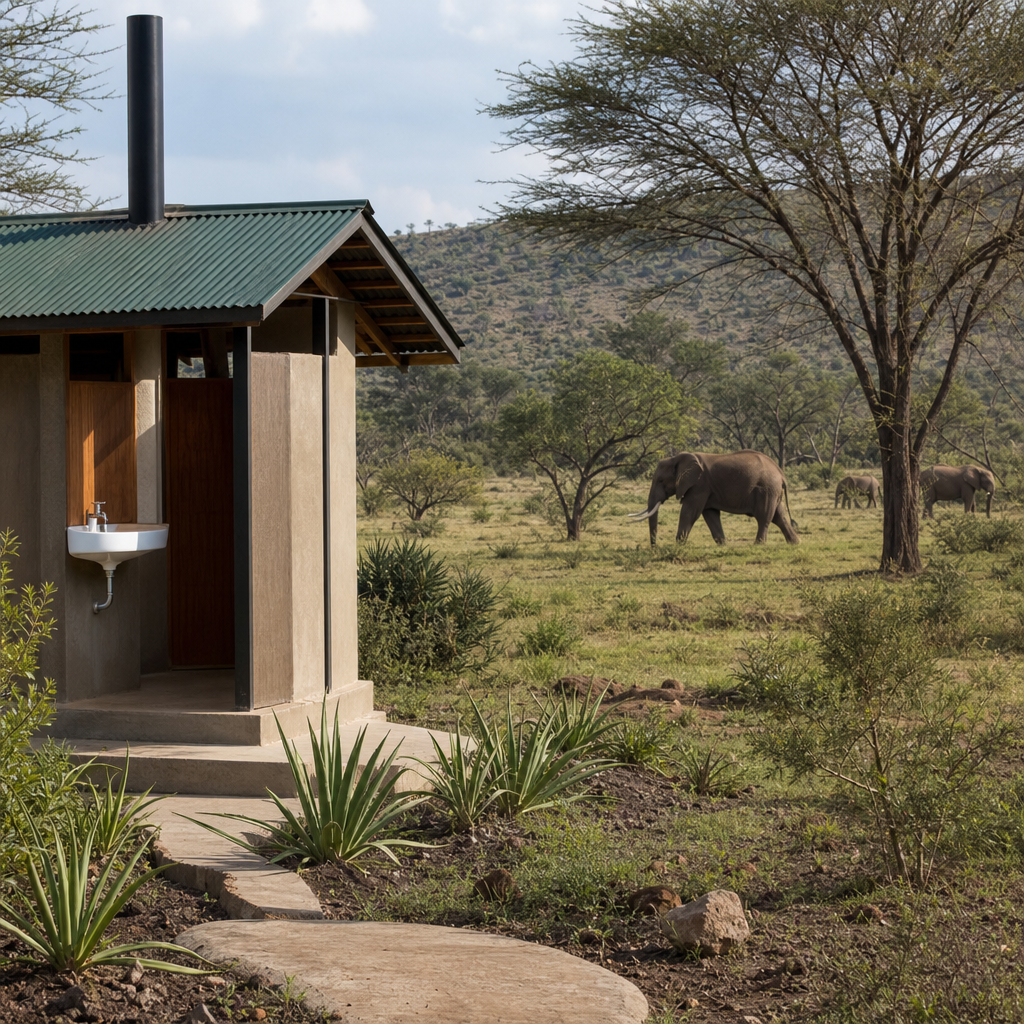
Protected areas and nature-based tourism sites are often ideal places to demonstrate EcoSan’s value. These locations have high sensitivity to pollution, seasonal visitor peaks, and limited tolerance for large centralized infrastructure. A poorly sited septic system near a lodge can contaminate groundwater that feeds a wetland used by birds and ungulates. A urine-diverting or container-based system with scheduled collection may be a better fit where soils are shallow or rocky. In mountain parks, composting toilets are widely used because trenching sewers is impractical and freeze-thaw cycles damage pipes. The conservation value is straightforward: keep waste out of fragile watersheds.
Rural landscapes also benefit when EcoSan is linked to farming, grazing, and watershed management. For example, a village upstream of a fish-bearing stream can reduce pathogen runoff by upgrading from unlined pits to managed composting units and greywater beds. If the treated outputs are reused on tree crops or non-leafy crops according to guidelines, the nutrient loop tightens and stream health improves. In peri-urban fringes, container-based sanitation can serve dense settlements where sewers are years away, preventing direct discharge into drainage channels that carry pollutants into urban wetlands.
The most successful projects share three traits. First, they match technology to context: soil type, rainfall, user preferences, maintenance capacity, and regulatory rules. Second, they include service chains, not just hardware. Collection, transport, treatment, storage, monitoring, and reuse all need ownership. Third, they measure outcomes. Water quality data, nutrient recovery rates, user adoption, and maintenance records matter more than installation counts. Conservation agencies and utilities should use indicators such as biochemical oxygen demand, fecal indicator bacteria, total nitrogen, and phosphorus to verify environmental protection.
Limits, Risks, and What Good Implementation Requires
EcoSan is powerful, but it is not automatically sustainable. Poorly maintained composting toilets can smell, attract flies, and fail to sanitize material. Urine diversion systems can clog if fixtures are unsuitable or users are not trained. Reuse can spread pathogens if storage, composting, or application practices are inadequate. Pharmaceuticals and trace chemicals also deserve attention, especially where reclaimed products are used repeatedly on the same soils. These are manageable risks, but they require disciplined operations, clear standards, and monitoring.
Good implementation starts with a sanitation safety planning approach. Hazard identification, exposure assessment, control measures, and verification should be built into project design. Operators need standard operating procedures, personal protective equipment, and maintenance schedules. Communities need realistic guidance on what can be reused, where, when, and on which crops. Regulators need performance-based rules that allow decentralized systems while still protecting public health and ecosystems. Financing models must cover lifecycle costs. A toilet that cannot be serviced is not environmental protection.
For this environmental impact hub, the central lesson is simple: EcoSan’s role in environmental protection is strongest when sanitation is treated as part of ecosystem management. It prevents pollution before it reaches habitats, recovers nutrients that would otherwise become contaminants, saves water in stressed basins, and can support climate and livelihood goals that reinforce conservation. It also demands competent design, user engagement, and verification. Organizations planning future content should connect this hub to deeper topics such as nutrient recovery systems, constructed wetlands, greywater reuse, sanitation safety planning, and protected-area waste management. The opportunity is practical and immediate. Audit local sanitation impacts on nearby ecosystems, identify where resource recovery can replace discharge, and build projects that protect both people and wildlife.
Frequently Asked Questions
What is the connection between EcoSan and wildlife conservation?
EcoSan and wildlife conservation are closely linked because sanitation systems influence the quality of water, soil, and habitat far beyond the household or community where they are installed. Traditional sanitation often focuses on removing waste from sight, but poorly managed sewage, leaking pits, untreated wastewater, and nutrient-rich runoff can enter rivers, wetlands, estuaries, and coastal waters. When that happens, the result may be algal blooms, oxygen depletion, fish kills, contamination of breeding sites, and long-term stress on entire ecosystems. EcoSan approaches sanitation differently by treating human waste as a resource that can be safely managed, transformed, and reused while protecting public health.
From a wildlife conservation perspective, that shift matters enormously. By recovering nutrients, reducing pathogen release, minimizing water pollution, and preventing excessive extraction of freshwater for flushing and conveyance, EcoSan can reduce pressure on sensitive habitats. Healthy sanitation systems help maintain ecological processes that wildlife depends on, including clean stream flow, balanced nutrient cycles, functioning soils, and intact wetlands. In practical terms, the intersection of EcoSan and conservation is about designing sanitation in a way that supports both people and nature instead of solving one problem while creating another. It is one of the clearest examples of how public health infrastructure can also become environmental infrastructure.
How can poor sanitation practices harm wildlife and natural habitats?
Poor sanitation can damage wildlife in direct and indirect ways, and the effects are often more widespread than people realize. Untreated or inadequately treated sewage introduces pathogens, nitrogen, phosphorus, pharmaceuticals, and organic pollutants into the environment. In freshwater systems, excess nutrients can fuel eutrophication, where algae grow rapidly and then decompose, using up oxygen that fish, amphibians, and aquatic invertebrates need to survive. This can alter food webs, reduce biodiversity, and make once-productive habitats unsuitable for native species. In coastal zones, nutrient loading can contribute to dead zones, seagrass loss, coral stress, and declining nursery habitat for marine life.
There are also land-based impacts. When sanitation systems leak or are poorly sited, they can contaminate groundwater, degrade soils, and affect vegetation that supports birds, mammals, reptiles, and pollinators. Wetlands are especially vulnerable because they sit at the interface between land and water and are often critical for migration, breeding, and flood buffering. Pollution in these areas can disrupt reproduction, reduce food availability, and increase disease exposure in wild populations. Even seemingly local sanitation failures can scale up across a watershed. The key point is that sanitation is not only a human settlement issue; it is also a habitat management issue. Once that is understood, the value of preventive, ecological approaches becomes much clearer.
What EcoSan practices are most beneficial for protecting ecosystems and biodiversity?
Several EcoSan practices can be especially beneficial when the goal is to protect ecosystems while meeting sanitation needs. Source-separating systems, such as urine-diverting dry toilets, are important because they separate nutrient-rich flows at the start, making treatment and safe reuse more efficient. Composting toilets and well-managed dehydration systems can reduce pathogen loads and produce soil amendments when used according to health and safety standards. Constructed wetlands, decentralized wastewater treatment, and small-scale reuse systems can also play a strong role when they are properly designed, monitored, and matched to local ecological conditions.
The greatest benefits usually come from context-specific design rather than from a single universal technology. In water-scarce areas, systems that avoid flushing can protect rivers and wetlands by reducing water demand. In agricultural landscapes near sensitive habitats, nutrient recovery can cut the need for synthetic fertilizers and reduce runoff that would otherwise reach streams or marshes. In flood-prone or high water-table regions, elevated or sealed systems may prevent contamination that would spread during storms. Biodiversity benefits are strongest when EcoSan is integrated with watershed planning, land-use management, and community education. In other words, the most effective EcoSan practice is one that safely contains and treats waste, prevents pollution, conserves water, and supports nutrient cycling without transferring environmental risk to nearby habitats or species.
Can EcoSan help reduce pollution in wetlands, rivers, and coastal ecosystems?
Yes, when it is implemented correctly, EcoSan can significantly reduce pollution reaching wetlands, rivers, lakes, and coastal ecosystems. One of its core advantages is that it aims to intercept waste before it becomes diffuse environmental contamination. Instead of relying solely on systems that transport waste with large volumes of water and risk discharge failures, EcoSan emphasizes containment, treatment, recovery, and reuse close to the source. That can mean lower nutrient loading, fewer pathogen releases, and reduced sediment and organic pollution entering natural water bodies.
This is particularly important in ecologically sensitive areas. Wetlands and riparian zones often function as biodiversity hotspots, nursery grounds, water filters, and buffers against flooding, but they can only perform those roles if they are not overwhelmed by pollution. Coastal ecosystems are similarly vulnerable because upstream sanitation failures travel downstream. By reducing nitrogen and phosphorus inputs, EcoSan can help prevent harmful algal blooms and oxygen depletion. By improving pathogen management, it can also reduce contamination risks for aquatic wildlife and for people who depend on those ecosystems for fishing, recreation, or livelihoods. It is worth noting, however, that EcoSan is not automatically beneficial just because it carries the label. The environmental gains depend on sound design, proper maintenance, safe handling protocols, and realistic governance. When those elements are in place, EcoSan can be a powerful tool for cleaner waters and more resilient ecosystems.
What should communities and planners consider when using EcoSan in areas important for wildlife conservation?
Communities and planners should begin by treating sanitation and conservation as connected planning priorities rather than separate sectors. The first consideration is ecological context: local hydrology, soil type, flood risk, groundwater depth, wildlife corridors, breeding sites, protected areas, and seasonal water movement all matter. A sanitation system that works well in a dry upland settlement may be inappropriate in a wetland edge community or near a coastal mangrove system. Careful siting is essential to avoid contaminating habitats, migration routes, and water sources used by both people and wildlife.
Second, planners need to evaluate operational capacity. EcoSan systems require training, monitoring, maintenance, and safe reuse practices. Without those, the promise of ecological sanitation can be undermined by poor performance or public mistrust. Communities should be involved early so that cultural preferences, affordability, land availability, and daily use patterns are reflected in the design. Third, health and conservation safeguards must go together. Reuse of nutrients and organic matter should follow clear standards so that pathogen risks are minimized and ecological benefits are real. Finally, successful EcoSan in conservation-sensitive areas often depends on cross-sector collaboration among public health officials, engineers, ecologists, farmers, local leaders, and conservation practitioners. That integrated approach helps ensure sanitation solutions protect human dignity and health while also preserving the habitats and ecological processes wildlife needs to survive.