Algae are moving from the margins of environmental engineering to the center of wastewater treatment research, and a new study adds strong evidence that they can clean water, recover nutrients, and reduce energy demand at the same time. In sanitation, wastewater treatment means removing contaminants from sewage or industrial effluent so water can be safely discharged, reused, or further polished. Algae, including microscopic microalgae and larger filamentous forms, are photosynthetic organisms that consume nitrogen, phosphorus, and carbon dioxide while producing oxygen and biomass. That combination matters because conventional treatment plants often rely on energy intensive aeration, chemical dosing, and sludge handling. When I have evaluated treatment options for utilities and campus scale systems, the most expensive line items were usually electricity for aeration and the downstream cost of managing biosolids. Algal systems change that equation by turning waste into a growth medium. They do not replace every treatment step, but they can strengthen nutrient removal, support water reuse, and create feedstocks for fertilizer, biogas, or bioproducts. That is why this topic sits at the heart of advancing research in sanitation.
The new study highlighted here reflects a broader shift in sanitation science: researchers are no longer asking whether algae can grow in wastewater, but under what operating conditions algae deliver stable, scalable performance. Across universities, public utilities, and industrial pilot sites, the focus has moved to hydraulic retention time, light penetration, species selection, harvesting methods, pathogen control, and life cycle impacts. Those details determine whether an algal process is a laboratory curiosity or a practical unit operation. For readers exploring technological innovations and research, this hub article maps the field clearly. It explains how algae based wastewater treatment works, what the latest study contributes, where the technology fits in modern sanitation, and which adjacent research areas deserve attention next. The goal is not to oversell algae as a universal fix. The goal is to show, with plain language and technical accuracy, why algae are becoming a serious tool in the sanitation toolkit and how current research is shaping their future use.
How algae clean wastewater and why the mechanism matters
Algae improve wastewater quality through several linked biological and chemical processes. First, they assimilate dissolved nutrients, especially ammonium, nitrate, and phosphate, into new biomass. That directly lowers the nutrient load that would otherwise drive eutrophication in rivers, lakes, and coastal waters. Second, through photosynthesis, algae release oxygen into the water. In mixed algal bacterial systems, that oxygen supports aerobic bacteria, which then oxidize organic matter measured as biochemical oxygen demand or chemical oxygen demand. Third, algal growth can raise pH during intense photosynthesis, which helps strip ammonia under some conditions and can suppress certain pathogens. In practice, the best performance usually comes from a consortium rather than a monoculture: algae provide oxygen and nutrient uptake, while bacteria degrade complex organics that algae cannot metabolize efficiently.
This mechanism is important because it distinguishes algae based treatment from conventional activated sludge. Activated sludge depends on mechanical aeration to supply oxygen, and aeration can account for roughly half or more of a plant’s electricity use. In algal ponds or photobioreactors, sunlight drives oxygen production, lowering external energy requirements. The tradeoff is that light becomes a process constraint. Turbid wastewater blocks light, deep reactors shade themselves, and seasonal variation changes productivity. That is why pretreatment and reactor design matter so much. Primary settling, screening, or anaerobic pretreatment can reduce suspended solids before algae are introduced. With that adjustment, the algal stage can focus on polishing nutrients and residual organics rather than handling the full raw sewage load.
Researchers generally evaluate algal treatment through a familiar sanitation lens: effluent quality, hydraulic performance, cost, resilience, and recoverable value. That broader framing is useful for a hub article because algae connect to several neighboring research areas. Nutrient recovery, decentralized sanitation, resource recovery, low energy treatment, and climate resilient infrastructure all intersect here. If you are building out a research roadmap for advancing sanitation, algae should not be viewed as a niche biology topic. They are a platform technology that links water quality goals with circular economy outcomes.
What the new study shows about performance, stability, and design
The new study strengthens the case for algae by showing that carefully designed systems can achieve high nutrient removal while maintaining operational stability under realistic wastewater conditions. Although results vary by wastewater source and reactor type, the most credible studies now report consistent reductions in total nitrogen and total phosphorus when hydraulic retention time, mixing, and light exposure are optimized. In many pilot systems, nutrient removal improves when algae are paired with bacteria in high rate algal ponds or controlled photobioreactors rather than grown in unmanaged lagoons. That distinction matters. Older literature sometimes made algae appear unreliable because the systems were under mixed, poorly controlled conditions. The latest work is more engineering focused and therefore more useful for utilities.
One of the most important contributions of recent studies is showing how design parameters interact. A shorter retention time may increase throughput but reduce nutrient contact and biomass accumulation. A denser culture may remove more nutrients up to a point, then lose efficiency because self shading limits photosynthesis. Intensive mixing can keep cells suspended and improve gas exchange, but it also consumes energy. The new study reportedly navigates these tradeoffs by identifying an operating window where removal efficiency stays high without erasing the energy advantage of algae. That kind of result is valuable because sanitation decisions depend on repeatable performance, not isolated peak numbers.
Another key finding in current algae research is that wastewater composition strongly influences treatment success. Municipal wastewater after primary clarification behaves differently from digestate centrate, food processing effluent, textile wastewater, or aquaculture discharge. High ammonia can support rapid growth but may become inhibitory at elevated pH and temperature. Industrial streams may contain metals, color, salinity, or toxic compounds that limit species viability. The best studies acknowledge these constraints instead of presenting a single universal model. From my own work reviewing pilot data, the projects that scaled best were those that matched algal species and reactor geometry to a specific wastewater profile rather than trying to force one design everywhere.
Where algae fit in the sanitation process train
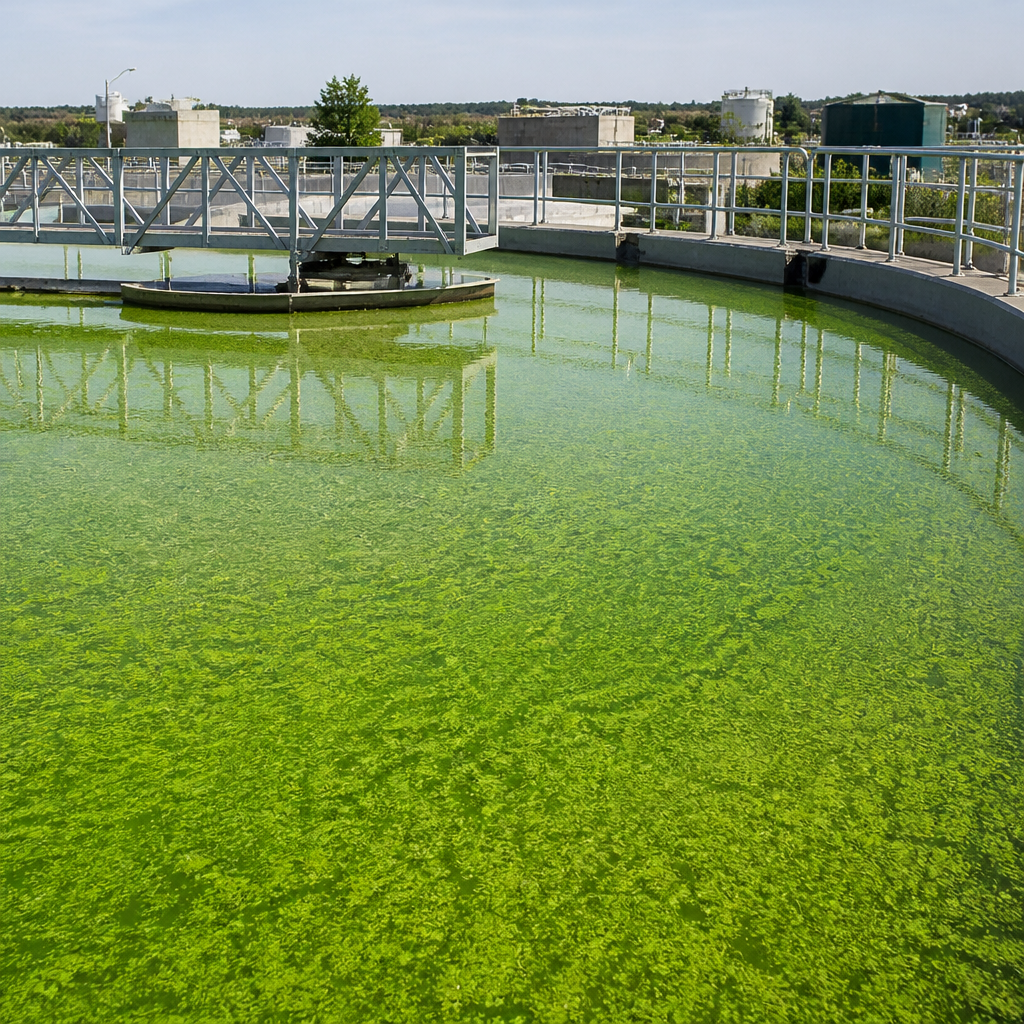
Algae based wastewater treatment works best when it is placed strategically within a broader process train. For municipal systems, the most common fit is after primary treatment or after anaerobic pretreatment, where solids have already been reduced and the remaining water still contains dissolved nutrients. In that role, algae act as a secondary or tertiary polishing step. For decentralized sanitation, they can be paired with septic tank effluent, anaerobic baffled reactors, or constructed wetlands to improve nitrogen and phosphorus removal before discharge or reuse. For industrial sanitation, they are often used on relatively consistent effluents from food and beverage processing, dairies, breweries, and some agricultural operations.
The decision about placement comes down to influent strength, land availability, climate, and effluent targets. High rate algal ponds are simpler and cheaper than enclosed photobioreactors, but they require more area and perform best where sunlight is reliable. Enclosed systems offer greater control over contamination, evaporation, and temperature, yet capital costs are significantly higher. Utilities considering algae usually compare them with membrane bioreactors, sequencing batch reactors, tertiary chemical phosphorus removal, and wetland systems. No single option wins on every metric. Algae are most competitive where nutrient limits are tightening, energy costs are rising, and there is a practical pathway to use the harvested biomass.
| System type | Best fit | Main advantage | Main limitation |
|---|---|---|---|
| High rate algal pond | Warm climates, larger sites, municipal polishing | Low energy operation and simple construction | Large land footprint and variable seasonal output |
| Photobioreactor | Space constrained or high value industrial applications | High process control and strong biomass productivity | Higher capital and maintenance cost |
| Algal bacterial consortium reactor | Decentralized sanitation and mixed nutrient removal | Balanced organic matter degradation and oxygen generation | Biology can shift with influent variability |
| Algae plus wetland hybrid | Rural reuse schemes and ecological treatment sites | Multi barrier treatment with habitat benefits | Design complexity and performance variability |
This process train perspective is essential for a hub page on advancing research in sanitation because it connects algae to the broader innovation landscape. Readers interested in toilet to treatment chain improvements, fecal sludge management, non sewered sanitation, and water reuse need to know where algal systems realistically plug in. They are not an isolated technology; they are part of integrated sanitation engineering.
Research priorities shaping the next generation of algal systems
The next wave of research is less about proving concept and more about solving bottlenecks. Harvesting remains one of the biggest barriers. Microalgae are small, dilute, and difficult to separate from water. Centrifugation works but uses too much energy for many municipal applications. Researchers are testing bioflocculation, electrocoagulation, dissolved air flotation, membrane assisted separation, and immobilized algae grown on surfaces or carriers. In my experience, harvesting is the point where promising bench scale projects often lose economic credibility, so this area deserves continued attention.
Pathogen management is another major research priority. Wastewater treatment is not only about nutrient removal; it must also protect public health. Algal systems can reduce some pathogens through sunlight exposure, elevated pH, predation, and longer retention times, but they do not guarantee complete disinfection. Most reuse applications still require a downstream barrier such as chlorination, ultraviolet irradiation, ozonation, or membrane filtration. Strong research does not hide that limitation. Instead, it quantifies log reductions and defines where supplementary disinfection is necessary.
Species selection is also becoming more sophisticated. Chlorella, Scenedesmus, and Spirulina are often studied because they are robust and well characterized, but native mixed cultures may outperform pure strains under real outdoor conditions. Genomics, metabolomics, and adaptive cultivation studies are helping researchers understand which communities tolerate fluctuating pH, salinity, temperature, and contaminant loads. At the same time, engineers are developing better models for light transfer, nutrient kinetics, and carbon mass balance. Tools such as computational fluid dynamics and life cycle assessment are now standard in serious evaluations because they show whether a process that looks good biologically still makes sense mechanically and environmentally.
Finally, there is growing interest in coupling algae with carbon capture and resource recovery. Flue gas can provide carbon dioxide, increasing algal productivity while potentially lowering emissions from nearby facilities. The harvested biomass can be processed into biogas through anaerobic digestion, soil amendments where regulations allow, pigments, or even platform chemicals in higher value applications. The economics improve when wastewater treatment is not the only service provided. That systems thinking is exactly what advancing research in sanitation requires.
Practical limits, policy questions, and what utilities should do next
Algae based wastewater treatment is promising, but it is not frictionless. Climate is a real constraint. Cold regions with weak winter sunlight will see lower productivity unless they use covered or heated systems, which changes project economics. Land availability can rule out pond based designs in dense cities. Regulatory frameworks may not yet recognize algal biomass pathways clearly, especially when wastewater derived material is intended for agricultural use. There are also operational risks: contamination by grazers, unstable culture dominance, odor if systems go anaerobic, and maintenance demands for mixing equipment or harvesting units.
Utilities should therefore approach algae as a targeted innovation, not a branding exercise. The right next step is usually a pilot or demonstration project with clear performance metrics: nutrient removal, energy use, seasonal resilience, biomass yield, pathogen reduction, and full life cycle cost. Benchmarking against conventional tertiary treatment is essential. Standards from organizations such as the International Water Association, Water Environment Federation, and national environmental regulators provide useful frameworks for monitoring and validation, even when they are not algae specific. A serious pilot also plans for sludge and biomass management from day one, because disposal assumptions can distort the business case.
For researchers and policy makers building the sanitation agenda, the practical message is clear. Fund field trials, not just laboratory studies. Require transparent reporting of influent characteristics, weather conditions, retention times, and harvesting energy. Encourage projects that link sanitation with reuse, agriculture, and industrial symbiosis. Most important, compare algae against the real alternatives in the same context. That is how the sector moves from promising papers to durable infrastructure.
Algae are earning a credible role in wastewater treatment because they address several sanitation challenges at once: nutrient pollution, energy intensity, carbon management, and resource recovery. The new study reinforces a pattern seen across the best recent research: when reactor design, species selection, and operating conditions are aligned, algae can deliver stable treatment performance rather than occasional laboratory success. That makes them highly relevant to advancing research in sanitation, especially for systems pursuing water reuse, lower operating costs, and circular economy outcomes.
The most important takeaway is balance. Algae are not a substitute for every conventional process, and they still face real limits in harvesting, climate sensitivity, and pathogen control. Yet those limits are increasingly well understood, which is exactly what progress looks like in sanitation engineering. Better evidence allows better deployment. For this sub-pillar hub, algae should be viewed as a gateway topic connecting decentralized treatment, nutrient recovery, low carbon infrastructure, and next generation biological process design.
If you are mapping future sanitation investments or editorial coverage, start with the practical questions this article raised: where algae fit in the treatment train, which wastewater streams suit them best, and how pilots should be measured. Then use those answers to explore the broader research landscape in technological innovations and sanitation. The field is moving quickly, and informed decisions now will shape cleaner, more resilient water systems for years.
Frequently Asked Questions
1. How do algae help treat wastewater?
Algae help treat wastewater by using sunlight, carbon dioxide, and the nutrients already present in sewage or industrial effluent to grow while removing pollutants from the water. In practical terms, many wastewater streams contain high levels of nitrogen and phosphorus, which are the same nutrients algae need for biomass production. As algae absorb these compounds, they reduce the nutrient load that would otherwise contribute to eutrophication in rivers, lakes, and coastal waters. Algae can also support the removal of organic matter by producing oxygen through photosynthesis, which benefits aerobic bacteria that break down additional contaminants. This creates a cooperative treatment environment where algae and bacteria work together rather than in isolation.
Depending on the system, algae may also assist with reducing suspended solids, capturing certain trace contaminants, and improving overall effluent quality before discharge or reuse. Some treatment designs use suspended microalgae in open ponds or enclosed photobioreactors, while others rely on attached growth systems where algae grow on surfaces. The new study highlighted in the article reinforces the idea that algae are not just a niche biological add-on, but a serious treatment tool with multiple simultaneous benefits: pollutant removal, nutrient recovery, and lower energy demand compared with some conventional treatment approaches.
2. Why is this new study important for wastewater treatment research?
This study matters because it strengthens the case for algae as a practical, multi-benefit solution rather than a purely experimental concept. Wastewater treatment has traditionally focused on contaminant removal alone, often with energy-intensive systems for aeration, nutrient removal, and sludge handling. What makes algae especially compelling is that they can address several of those goals at once. A well-designed algae-based process can lower nutrient concentrations, support microbial treatment, capture carbon, and generate biomass that may have downstream value. When a new study provides strong evidence for those combined outcomes, it helps move the field from theoretical promise toward engineering confidence.
It is also significant because the wastewater sector is under growing pressure to reduce energy use, recover resources, and meet stricter discharge standards. Conventional treatment can be effective, but it often comes with high operating costs and a large carbon footprint. Research showing that algae can help clean water while reducing external energy inputs speaks directly to current industry needs. For utilities, regulators, and environmental engineers, studies like this help answer key questions about reliability, scalability, and real-world performance. In other words, the importance of the study is not just that algae can work, but that the evidence may help define where, when, and how algae can be integrated into modern treatment systems.
3. What pollutants can algae remove from wastewater?
Algae are especially well known for removing nutrients such as nitrogen and phosphorus, which are among the most important pollutants in municipal and agricultural wastewater. These nutrients are valuable in controlled amounts, but when released in excess they can trigger harmful algal blooms, oxygen depletion, and ecosystem damage in receiving waters. Algae take up ammonium, nitrate, and phosphate as part of normal growth, effectively turning dissolved pollutants into harvestable biomass. This nutrient capture is one of the strongest reasons algae are attracting attention in wastewater engineering.
Beyond nutrients, algae can contribute to the reduction of organic pollutants by increasing dissolved oxygen through photosynthesis, which supports aerobic bacterial degradation of biodegradable matter. In some systems, algae also help remove suspended particles through bioflocculation, making solids easier to separate from the treated water. Certain strains have shown the ability to interact with metals, dyes, pharmaceuticals, and other emerging contaminants, although performance varies depending on species, wastewater composition, and operating conditions. It is important to note that algae are not a universal replacement for every treatment step, but they can be a highly effective component of a broader treatment train. The new study adds weight to the idea that algae-based systems can target the pollutants that matter most while creating opportunities for resource recovery.
4. Can algae-based wastewater treatment reduce energy use and operating costs?
Yes, that is one of the most promising aspects of algae-based treatment. Traditional biological wastewater treatment often depends heavily on mechanical aeration, which is one of the largest energy demands at many treatment plants. Because algae produce oxygen naturally during photosynthesis, they can partially offset the need for energy-intensive aeration in certain treatment configurations. If the process is designed well, that oxygen production can support bacterial activity and reduce the overall power required to maintain treatment performance. This is a major reason researchers and utilities are increasingly interested in algae as part of low-energy sanitation strategies.
There is also the possibility of recovering value from the resulting algal biomass, which can improve system economics over time. Harvested biomass may be explored for uses such as bioenergy, fertilizers, soil amendments, or feedstock for bioproducts, although the best use depends on biomass quality and local regulations. That said, cost savings are not automatic. Algae systems still face practical challenges, including land requirements, climate sensitivity, harvesting costs, and the need for consistent performance under variable wastewater conditions. The real takeaway is that algae can shift wastewater treatment from a purely consumptive model toward a more circular one. Instead of spending energy only to remove pollutants, facilities may be able to remove pollutants while producing useful biomass and lowering some operating demands at the same time.
5. Are algae ready to replace conventional wastewater treatment systems?
In most cases, algae are better understood today as a complementary technology rather than a complete replacement for conventional wastewater treatment. Established treatment systems remain essential for handling large hydraulic loads, meeting strict regulatory standards, and delivering consistent performance across changing weather and influent conditions. Algae-based processes can be extremely effective, but they are influenced by light availability, temperature, retention time, species selection, and reactor design. Those factors can make them more suitable for some applications than others, especially when compared with fully controlled conventional systems.
Where algae may have the greatest near-term impact is in hybrid treatment models. For example, they can be integrated into tertiary nutrient removal, polishing stages, decentralized sanitation systems, lagoons, or treatment trains designed around water reuse and resource recovery. They may also be especially attractive in regions with abundant sunlight or where energy costs are high. The new study supports the idea that algae deserve a more central role in wastewater treatment planning, but it does not mean every plant will suddenly switch to algae-only systems. Instead, the field is moving toward smarter integration, where algae are used where they provide the most environmental and operational value. That is often how important treatment innovations succeed: not by replacing everything at once, but by improving the system as a whole.