Using participatory methods to design EcoSan solutions starts with a simple truth: sanitation systems work better when the people who will use, maintain, and pay for them help shape the design from the beginning. EcoSan, short for ecological sanitation, refers to sanitation approaches that safely manage human waste while recovering value from it, often through nutrient reuse, water conservation, and decentralized treatment. Participatory methods are structured ways to involve residents, local leaders, schools, operators, artisans, and public agencies in decisions about technology, siting, operation, financing, hygiene behavior, and long-term governance. In practice, this means communities are not treated as passive beneficiaries. They become co-designers.
This matters because sanitation failure is rarely just a technical problem. I have seen well-built urine-diverting dry toilets sit unused because households were never asked about privacy, menstrual hygiene needs, child use, odor concerns, or who would empty the vaults. I have also seen modest systems succeed because the design team mapped daily routines, tested user preferences, and trained local caretakers before construction. Participatory design reduces those blind spots. It improves acceptance, reveals constraints early, strengthens learning, and creates the social ownership needed for maintenance. As a hub for fostering participation and learning, this article explains the principles, methods, facilitation tools, and implementation steps that make EcoSan projects more practical, equitable, and durable.
Why participation is essential in EcoSan design
Participation is essential because ecological sanitation depends on human behavior as much as infrastructure. A composting toilet, urine-diverting toilet, container-based sanitation service, or decentralized greywater system only performs as intended when users understand separation rules, cleaning practices, safe handling, and maintenance schedules. If those requirements conflict with local habits or labor realities, the system degrades fast. Community engagement helps teams identify those issues before they become operational failures. It also improves technology fit by aligning design choices with climate, water scarcity, soil conditions, housing density, and cultural expectations around purity, reuse, and gendered care work.
In rural projects, participation often reveals agricultural opportunities that engineers alone may miss. Farmers may value sanitized urine for maize or vegetable production, while households may prefer compost use on trees rather than food crops. In informal urban settlements, the priority may be safe collection logistics, fees, and service reliability rather than on-site reuse. In schools, girls may prioritize doors that lock, disposal options for menstrual materials, handwashing stations, and clear cleaning responsibilities. These are not minor preferences. They determine usage. Good participatory work also surfaces power dynamics: who speaks in meetings, who cleans facilities, who controls land, and who bears the burden when systems fail.
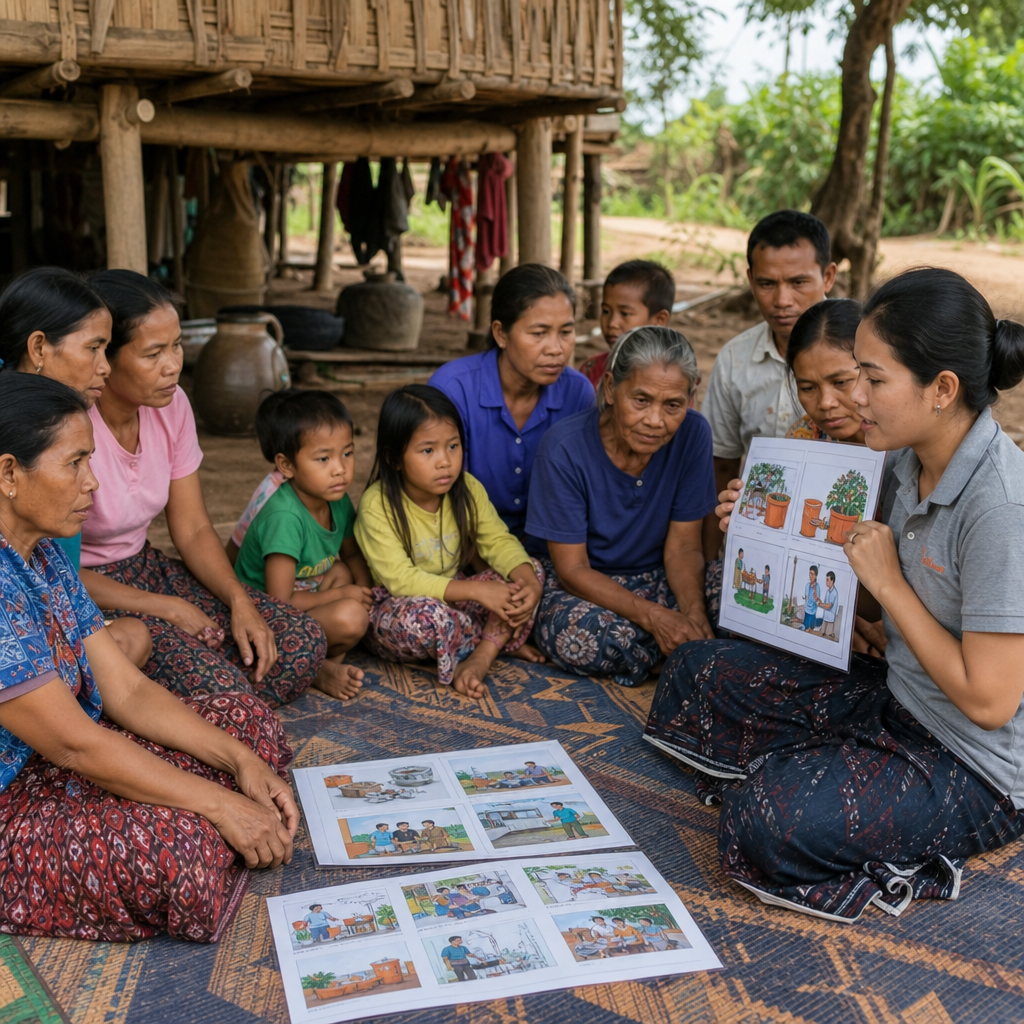
Participation should not be confused with a single consultation meeting. Effective engagement is iterative. It includes problem framing, option generation, prototyping, testing, adaptation, training, and monitoring. The most reliable projects use mixed methods: household interviews, focus groups, community mapping, transect walks, seasonal calendars, user journey analysis, and pilot demonstrations. When I facilitate these processes, the turning point usually comes when abstract sanitation talk becomes concrete. Asking residents to compare toilet interface designs, plot waste flow routes, or rank maintenance tasks produces better decisions than asking whether they “support” EcoSan in general. Specific questions lead to specific, usable answers.
Core participatory methods that improve design decisions
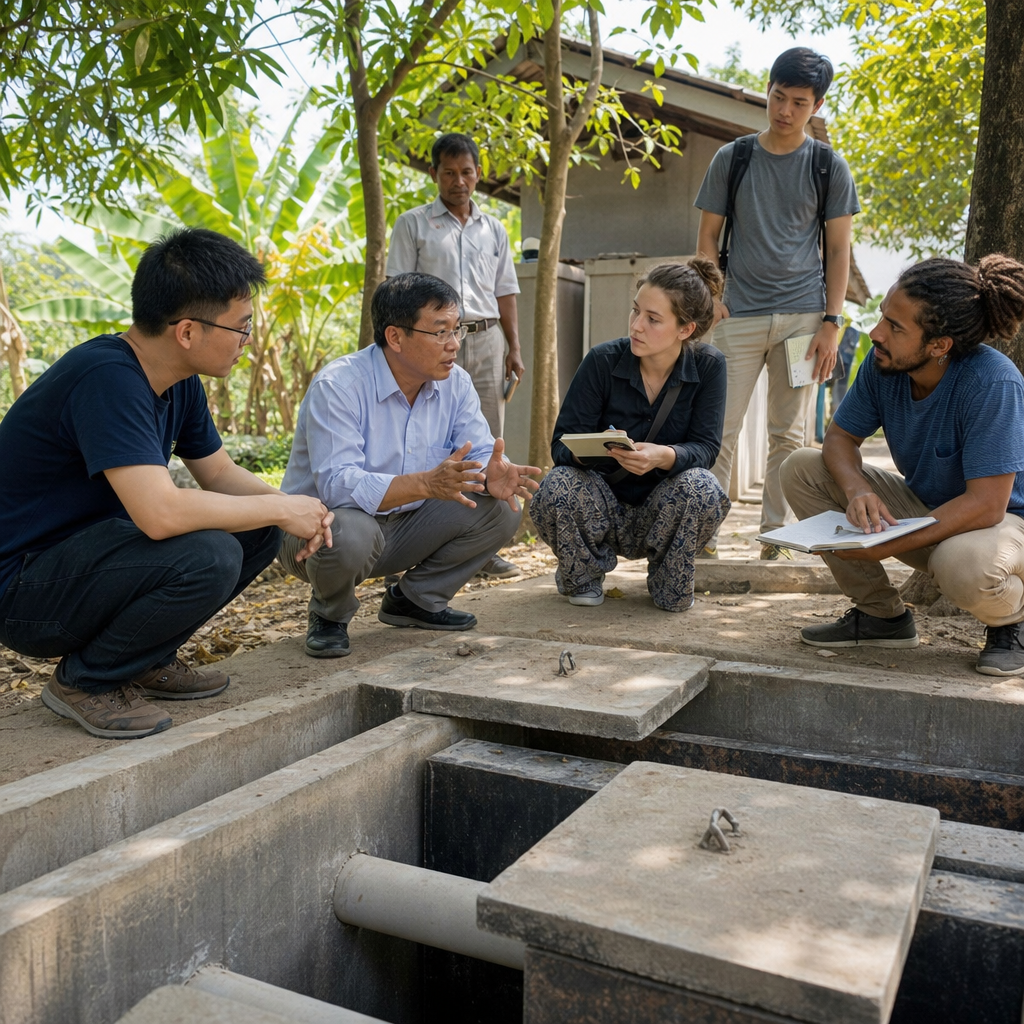
Several participatory methods consistently strengthen EcoSan planning. Community mapping helps identify where toilets, drainage routes, water points, farms, schools, and flood-prone zones sit in relation to each other. This is critical for siting toilets, composting areas, urine storage tanks, and collection routes. Transect walks add reality to the map by letting residents and technical staff inspect terrain, smell nuisance points, and discuss access conditions. Seasonal calendars are especially useful where rainfall, groundwater levels, crop cycles, migration, or school attendance change through the year. A toilet model that looks workable in the dry season may fail during floods or holiday occupancy peaks.
Focus group discussions remain valuable when they are segmented well. Separate sessions with women, men, adolescent girls, tenants, landlords, people with disabilities, sanitation workers, and farmers often reveal different priorities. Key informant interviews with teachers, health workers, masons, local government officers, and waste service providers help validate what is feasible under existing rules and market conditions. Participatory ranking methods can compare options transparently. For example, a group can score alternatives against privacy, ease of use for children, water demand, cost, emptying frequency, fertilizer value, and odor control. This makes tradeoffs visible and reduces the risk that the loudest voice dominates the final choice.
Prototype testing is one of the most underused methods. Even a simple full-scale mock-up made from timber, chalk lines, or cardboard can reveal design problems quickly. Users can test squat hole placement, door swing, handwashing location, urine diversion bowls, vault access, lighting, and accessibility features. School staff can walk through cleaning routines. Emptying teams can assess whether vault doors allow safe removal. In one project, changing the position of the urine container and adding a small shelf for ash transformed user satisfaction because it reduced spills and made the daily routine intuitive. Those insights rarely emerge from drawings alone.
| Method | What it reveals | Best use in EcoSan projects |
|---|---|---|
| Community mapping | Spatial risks, access routes, service gaps | Siting toilets, storage, treatment, collection points |
| Transect walk | Real conditions on terrain, drainage, smell, access | Validating maps and technical assumptions |
| Focus groups | User priorities by gender, age, role, ability | Interface design, privacy, management rules |
| Participatory ranking | Transparent tradeoffs between options | Choosing technologies and service models |
| Prototype testing | Usability problems before construction | Improving layout, operation, cleaning, accessibility |
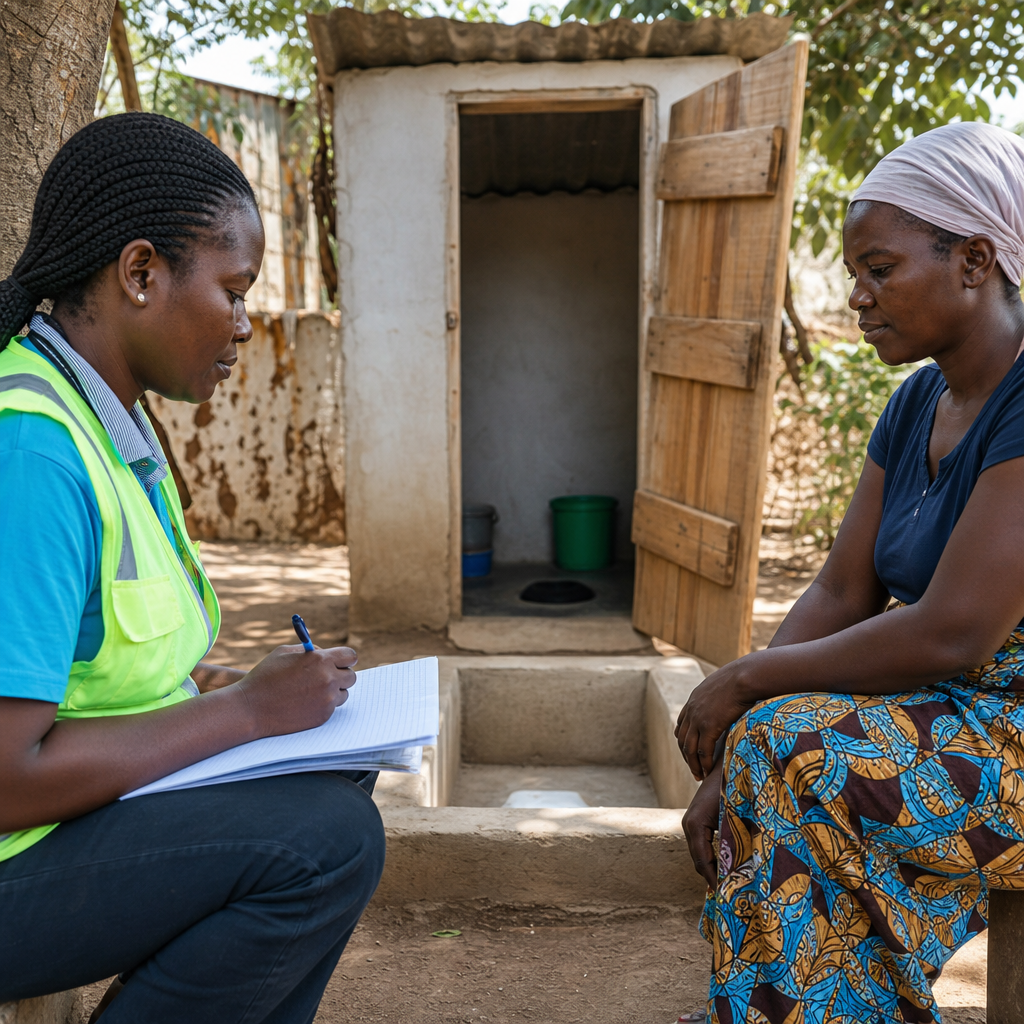
| Household interviews | Ability to pay, habits, preferences, constraints | Tariffs, behavior change, adoption forecasting |
Designing for inclusion, learning, and behavior change
Inclusive EcoSan design begins by identifying who is usually left out. Women and girls often carry sanitation management burdens yet are underrepresented in public meetings. Renters may depend on landlords for construction decisions but live with the daily consequences. People with disabilities may need ramps, handrails, transfer space, seated interfaces, or tactile cues. Older adults may struggle with steep steps or narrow doors. Children need smaller interfaces, supervision strategies, and cleaning routines that adults can actually sustain. Sanitation workers need protective equipment, safe access, and dignified contracts. Participation must be organized so these groups can influence outcomes, not merely attend events.
Learning is not an add-on after construction. It is part of design. EcoSan systems often require new routines: adding cover material, keeping urine separate, not dropping trash in vaults, washing hands at the right place, storing treated products safely, and following harvest intervals for reuse. Adults learn best when training is practical, repeated, and tied to visible benefits. Demonstration plots are especially effective. When farmers compare yields from control plots and fertilized plots using sanitized urine or compost under extension guidance, skepticism usually shifts into informed judgment. The point is not to pressure adoption. It is to let users evaluate evidence under local conditions.
Behavior change works when messages match barriers. If a school toilet is not kept clean, the problem may be missing water, unclear duty allocation, no budget for soap, or an interface that traps feces in hard-to-reach areas. If households are not using urine diversion correctly, the issue may be confusing geometry or poor signage, not unwillingness. That is why co-design and education should move together. Tools such as user instructions with icons, caretaker checklists, maintenance calendars, and peer educator programs translate technical intent into everyday practice. Repetition matters. So does feedback. Monitoring should ask what users find difficult and what small change would make compliance easier.
Turning community input into technical and governance choices
Participation has value only if it changes decisions. After gathering input, project teams need a clear process for converting community knowledge into technical specifications and management arrangements. Start by separating non-negotiables from variables. Public health protections, safe treatment times, structural safety, and legal requirements are not optional. But within those limits, many design features can adapt: the user interface, superstructure materials, handwashing setup, collection model, vault size, payment schedule, and reuse pathway. A simple design matrix helps. List each issue raised by users, the technical implication, possible responses, cost impact, and who decides. This creates traceability and builds trust.
Governance choices are as important as hardware choices. Who cleans shared toilets, who collects fees, who buys cover material, who monitors filling rates, who empties containers, and who owns the recovered product? In dense settlements, a service-based model may outperform household-managed systems because maintenance can be standardized and waste handling professionalized. In peri-urban areas with available land, cluster composting and managed reuse may be feasible if local bylaws permit it. In schools, the strongest arrangements usually assign responsibilities formally across teachers, student clubs, parent committees, and local government, with line items for cleaning supplies and repairs rather than vague promises.
Technical design should respond directly to what participation uncovers. If odor is the main fear, improve ventilation, reduce urine contamination in feces vaults, and specify cleaning protocols. If users worry about handling compost, consider containerized transfer to trained operators rather than household emptying. If affordability is the barrier, phase construction, use locally available materials for superstructures, or compare capital subsidies with service tariffs transparently. If flood risk is severe, raise platforms and protect storage areas. Standards from organizations such as the World Health Organization and ISO provide a safety baseline, but local co-design determines whether the system is actually usable and maintained over time.
Measuring success and strengthening the participation cycle
A participatory EcoSan project should be evaluated with both technical and social indicators. Technical metrics include correct separation rates, vault fill times, odor incidence, handwashing functionality, pathogen reduction, collection reliability, and safe reuse compliance. Social metrics include user satisfaction, inclusion of marginalized groups, meeting attendance quality, fee payment regularity, caretaker retention, and confidence in management. I recommend establishing baseline conditions before design starts, then checking performance at one month, three months, six months, and one year. Early follow-up matters because most avoidable failures show up in the first operational cycle, when habits are still forming.
Feedback loops should be built into governance, not left to external evaluators. Community scorecards, user hotlines, school sanitation clubs, and periodic review meetings can all surface problems quickly. The most useful review question is not “Is the project successful?” but “What is stopping correct use or safe management this week?” That framing prompts practical fixes. Maybe ash is unavailable in the rainy season. Maybe the urine container is too heavy for older users. Maybe fees are collected monthly while expenses arise weekly. Small operational mismatches often cause bigger failures than core technology flaws. Continuous participation catches them before they become reasons for abandonment.
For a sub-pillar hub on fostering participation and learning, the central lesson is clear: EcoSan design succeeds when communities shape the system, understand how it works, and retain a meaningful role after launch. Participation is not a ceremony held before construction. It is the operating logic of resilient sanitation. Use mapping, interviews, focus groups, ranking, and prototype testing to discover real needs. Translate those findings into concrete technical and governance decisions. Then keep learning through monitoring and adaptation. If you are planning EcoSan in a community, school, camp, or settlement, start by asking users to co-design the solution and keep them involved until safe use becomes routine.
Frequently Asked Questions
1. What does it mean to use participatory methods when designing EcoSan solutions?
Using participatory methods in EcoSan design means involving the people who will live with the sanitation system in the planning, decision-making, and refinement process from the start. Rather than having engineers, NGOs, or local authorities choose a solution on their own, participatory design brings in residents, local leaders, users, maintenance workers, health staff, and other stakeholders to identify needs, discuss priorities, and evaluate options together. In the context of ecological sanitation, this is especially important because EcoSan systems often depend on daily user behavior, regular maintenance, and local acceptance of practices such as source separation, composting, nutrient recovery, or water-saving toilet use.
In practice, participatory methods can include community meetings, household interviews, focus groups, mapping exercises, design workshops, sanitation walks, problem-ranking sessions, and prototype testing. These methods help reveal the real conditions that affect whether a system will work, such as cultural preferences, gender-specific needs, land availability, seasonal flooding, affordability, privacy concerns, and attitudes toward reuse of treated waste products. The result is not just a more technically suitable sanitation system, but one that people understand, trust, and are more likely to use correctly and maintain over time.
2. Why are participatory approaches so important for the success of EcoSan projects?
Participatory approaches are critical because sanitation systems do not succeed on technical performance alone. An EcoSan toilet may look efficient on paper, but if users find it inconvenient, unacceptable, too complex to maintain, or inconsistent with local habits, it may be abandoned or misused. Participation reduces that risk by grounding the design in local realities. It helps project teams understand who uses sanitation facilities, how they use them, what barriers they face, and what trade-offs they are willing to accept in terms of cost, maintenance, water use, and reuse practices.
These approaches also improve long-term ownership. When communities have had a genuine role in shaping the solution, they are typically more invested in protecting and sustaining it. This matters greatly for EcoSan systems, which often require ongoing management such as separating urine and feces, handling composting chambers, emptying vaults safely, or managing reuse pathways for treated outputs. Participation can also uncover social and institutional issues that might otherwise be missed, such as who is responsible for cleaning, whether landlords or tenants will pay for upgrades, whether women and girls feel safe using the facility, and whether local regulations support nutrient reuse. By bringing these factors into the design process early, participatory methods improve acceptance, functionality, and durability.
3. Which participatory methods are most useful for designing EcoSan systems in communities?
The most useful participatory methods are the ones that help teams move from broad understanding to practical design decisions. Community mapping is often a strong starting point because it allows residents to show where people live, where water sources are located, which areas flood, where current sanitation problems occur, and which spaces could support decentralized treatment or reuse activities. Transect walks and site visits add another layer by letting stakeholders observe real environmental and infrastructure conditions together. These methods are valuable for identifying constraints that influence EcoSan feasibility, including soil conditions, drainage patterns, access paths, and household density.
Focus groups and interviews are equally important because they create space for more candid discussion about sanitation habits, discomforts, taboos, and priorities. Separate discussions with women, men, youth, elderly residents, people with disabilities, and sanitation workers often reveal different design needs that would be overlooked in a single large meeting. Ranking exercises, preference testing, and co-design workshops can then help communities compare options such as urine-diverting dry toilets, container-based systems, composting toilets, or low-water flushing models. In many cases, pilot units or prototypes are especially effective because they allow users to respond to a real system instead of an abstract concept. The best participatory process usually combines several methods, using each one to build practical, user-centered evidence for the final design.
4. How do participatory methods help address cultural, behavioral, and maintenance challenges in EcoSan design?
One of the biggest strengths of participatory design is that it helps surface sensitive issues that strongly influence sanitation behavior. EcoSan systems can introduce unfamiliar routines, such as separating waste streams, adding cover material, storing treated waste, or participating in agricultural reuse. These practices may conflict with local beliefs about cleanliness, privacy, religion, caste, gender roles, or handling of human waste. If these concerns are not discussed openly and respectfully, even a well-engineered system can fail. Participatory methods create opportunities to understand these concerns in detail and adapt the design accordingly, whether that means changing user interfaces, improving privacy features, revising maintenance arrangements, or adjusting communication strategies.
They also help clarify who will actually maintain the system and under what conditions. In many sanitation projects, maintenance is treated as a secondary issue, but for EcoSan it is central. Through participatory planning, communities and project teams can define responsibilities for cleaning, emptying, transporting, monitoring, and reuse management before construction begins. This makes it easier to align the system with realistic labor capacity, local service models, and willingness to pay. Participation can also identify where training is needed and what kind of behavior change support is most likely to work. Instead of assuming that users will simply adapt, the design process can integrate practical instructions, demonstration activities, and maintenance plans that match how people actually live and work.
5. What are the key steps for applying participatory methods effectively in an EcoSan project?
Applying participatory methods effectively starts with stakeholder identification. Project teams should map not only end users, but also landlords, masons, local government, public health officials, sanitation workers, farmers, school representatives, women’s groups, and others affected by the sanitation chain. From there, the process should move into a structured assessment phase that combines technical analysis with community input. This often includes understanding existing sanitation practices, environmental constraints, household economics, social norms, public health concerns, and local attitudes toward reuse. At this stage, it is important to listen more than prescribe, because premature assumptions can narrow the design space too quickly.
Once needs and constraints are clearly understood, teams can facilitate co-design sessions to compare options and develop selection criteria together. Those criteria may include affordability, ease of use, safety, privacy, resilience to climate conditions, maintenance burden, and potential for nutrient recovery. Testing and feedback are also essential. Small pilots, demonstration units, or phased rollouts allow communities to interact with the system and suggest improvements before full implementation. Finally, effective participation does not end when construction begins. Ongoing monitoring, user feedback loops, refresher training, and clear governance arrangements help ensure the EcoSan solution remains functional and accepted over time. In other words, participatory design should be treated as a continuous process of learning and adaptation, not a one-time consultation exercise.