Addressing hygiene and sanitation in schools is one of the most practical ways to protect student health, support attendance, and strengthen learning outcomes. In the EcoSan context, safety and wellness depend on much more than building toilets. They require a complete system that safely separates waste, protects water, promotes hand hygiene, manages menstrual health, supports cleaning staff, and teaches students how sanitation affects their bodies and environment. EcoSan, short for ecological sanitation, refers to sanitation approaches designed to recover resources, reduce contamination, and close nutrient loops while keeping people safe from pathogens. In schools, that usually includes urine-diverting toilets, composting systems, handwashing stations, greywater control, and clear maintenance routines.
I have worked on school sanitation programs where the visible infrastructure looked impressive on opening day but failed within a term because no one had planned for soap procurement, desludging schedules, student supervision, or safe handling of byproducts. That pattern explains why this topic matters. Poor school hygiene contributes to diarrheal disease, worm infections, skin conditions, dehydration from toilet avoidance, and missed school days, especially for girls during menstruation. UNICEF and WHO repeatedly link inadequate water, sanitation, and hygiene services in schools with poorer health, lower attendance, and reduced dignity. A school can have classrooms, teachers, and books, but if students avoid the toilets or cannot wash their hands, the learning environment is fundamentally compromised.
This hub article covers Safety and Wellness in EcoSan as a practical framework for schools, administrators, facility managers, school health committees, and community partners. It explains what safe school sanitation looks like, which risks matter most, how to design and maintain facilities, and how to create habits that last. It also serves as a gateway topic for related work on school handwashing, menstrual hygiene management, cleaning protocols, wastewater reuse, student health education, disability access, and emergency preparedness. The central principle is simple: school sanitation succeeds when facilities are safe, usable, inclusive, maintained every day, and supported by behavior change, not when they are treated as construction projects alone.
What Safety and Wellness in EcoSan Means for Schools
Safety and wellness in EcoSan means managing human waste in a way that protects students, staff, cleaners, and the surrounding environment at every step. In school settings, that includes the user experience inside the toilet, the path waste follows after use, and the health controls that prevent exposure. A safe system prevents fecal-oral transmission, minimizes contact with untreated waste, controls odors and flies, reduces groundwater contamination, and gives children privacy and dignity. A wellness-oriented system goes further by making toilets accessible, reducing fear and embarrassment, supporting menstrual care, and reinforcing healthy routines through teaching and supervision.
In practical terms, schools need to think in service chains rather than isolated assets. A toilet block is only one link. The full chain includes containment, user instructions, handwashing, cleaning, inspection, waste treatment, final reuse or disposal, and incident response. For example, a urine-diverting dry toilet can be highly effective in water-scarce schools, but only if students understand which chamber to use, ash or cover material is available, chambers remain dry, and staff know when composted material is mature enough for safe handling. If any of those controls fail, the technology can become unusable quickly.
Well-run EcoSan schools also treat sanitation as part of the wider health and safety culture. That means assigning responsibilities, setting budgets, training caretakers, involving student clubs, and auditing conditions regularly. Many successful schools use daily checklists for water availability, soap stock, odor, cleanliness, locks, lighting, and waste bin emptying. Those simple controls matter because children respond immediately to facility conditions. When toilets are dark, dirty, or lack privacy, usage drops. When handwashing stations are nearby and stocked, compliance rises. School sanitation behavior is strongly shaped by convenience and social norms, not only by knowledge.
Core Health Risks Schools Must Control
The main sanitation risks in schools are well established. Fecal pathogens such as rotavirus, norovirus, Shigella, pathogenic E. coli, and intestinal worms spread through contaminated hands, surfaces, food, water, and soil. Young children are especially vulnerable because they touch shared surfaces frequently and often need supervision to wash properly. Where toilets are poorly cleaned or broken, students may practice open urination or defecation in hidden areas, increasing environmental contamination. In dense school settings, one weak point can affect hundreds of children in a day.
EcoSan systems add a few specific operational risks that schools must manage carefully. If urine-diversion plates clog, if feces chambers get wet, or if compost is removed too early, pathogen die-off may be incomplete. If workers handle waste without gloves, boots, handwashing access, and training, occupational exposure increases. Vector control matters too. Flies, cockroaches, and rodents are not just nuisances; they are indicators of poor containment and cleaning. Odor is also a safety signal. Persistent smell often points to ventilation failure, urine pooling, blocked drains, or decomposition happening in the wrong place.
There are social risks as well. Children may avoid toilets because of bullying, lack of doors, teasing around menstruation, fear of pits, or concerns about cleanliness. Toilet avoidance can lead to constipation, urinary tract discomfort, reduced concentration, and lower fluid intake. I have seen students wait all day rather than enter a facility they considered unsafe. That is why sanitation risk assessments should include both microbiological hazards and user acceptability. A technically sound toilet that children refuse to use is still a failed school health intervention.
Designing School Facilities for Daily Safe Use
Good school sanitation design starts with predictable daily use. The layout should separate younger and older students where appropriate, provide distinct facilities for girls and boys, include at least one accessible cubicle, and place handwashing stations immediately outside or inside exit paths. Durable doors with functioning locks, internal hooks, lighting, ventilation, and easy-to-clean surfaces are basic requirements, not upgrades. Where EcoSan is used, clear pictorial instructions should show students how to use the system correctly, especially in early grades or multilingual schools.
Schools should size facilities to avoid long queues that push students to unsafe alternatives. National standards vary, but planners commonly use pupil-to-toilet ratios and handwashing point ratios to estimate demand. Those standards should be adapted for peak break times, menstruation needs, disability access, and boarding arrangements. If a school relies on stored water, planners should calculate dry-season demand for handwashing, cleaning, and emergency flushing. I strongly recommend designing for maintenance access from the beginning. Chambers, urine pipes, inspection points, and storage for cover material should be reachable without disrupting classes or exposing students.
Materials choice affects both hygiene and operating cost. Smooth floors, washable walls, proper drainage gradients, corrosion-resistant fittings, and tamper-resistant taps make cleaning easier and extend asset life. In hot climates, ventilation and shading improve comfort and reduce odor buildup. In low-water settings, foot-operated taps, tippy taps, and urine-diverting systems can reduce water demand, but they must not undermine usability. The safest design is the one students can understand and staff can maintain consistently with available resources.
| School sanitation component | Primary safety purpose | Common failure point | Practical control |
|---|---|---|---|
| Toilet cubicle | Privacy and hygienic waste containment | Broken locks or dirty floors | Daily inspection and rapid minor repairs |
| Handwashing station | Interrupt fecal-oral transmission | No soap or no water | Assign stock checks by shift or class monitor |
| Urine-diversion system | Keep feces dry and reduce odor | Incorrect use or blocked pipe | Pictorial instructions and weekly flushing checks |
| Menstrual waste bin | Safe disposal and dignity | Overflow or no liner | Scheduled emptying and discreet placement |
| Compost or storage chamber | Pathogen reduction before handling | Early emptying | Access control and documented resting periods |
Operations, Cleaning, and Maintenance That Keep Systems Working
The difference between a sanitary school and an unsanitary one is usually not the technology but the routine. Every school needs a written operations and maintenance plan that names responsible staff, cleaning frequencies, inspection points, supply levels, and escalation procedures. High-touch surfaces such as door handles, latches, taps, and handrails need frequent attention. Toilet seats or slabs, floors, and wash basins must be cleaned with appropriate detergents and disinfectants according to risk and local guidance. Cleaning teams also need storage for tools, protective equipment, and chemicals away from children.
For EcoSan systems, maintenance is technical as well as custodial. Staff should know the correct carbon cover material, chamber rotation timing, moisture control methods, and criteria for safe emptying. Urine lines need periodic checks for crystal buildup, especially in systems with poor slope or infrequent dilution. Composting units need protection from stormwater infiltration. Records matter here. A logbook that shows cleaning rounds, soap stockouts, repairs, and chamber dates allows school managers to spot patterns before they become health hazards.
Budgeting is often the hidden weakness. Schools may receive capital funds for construction but no recurring funds for soap, gloves, pads for emergency menstrual support, drain tools, replacement taps, or caretaker labor. Sustainable sanitation requires ring-fenced operating money. Some schools solve this by integrating hygiene supplies into standard procurement cycles rather than treating them as donations. Others partner with parent committees or local government health offices. The method can vary, but the principle is fixed: if operating supplies are uncertain, sanitation quality will decline.
Hand Hygiene, Menstrual Health, and Student Behavior
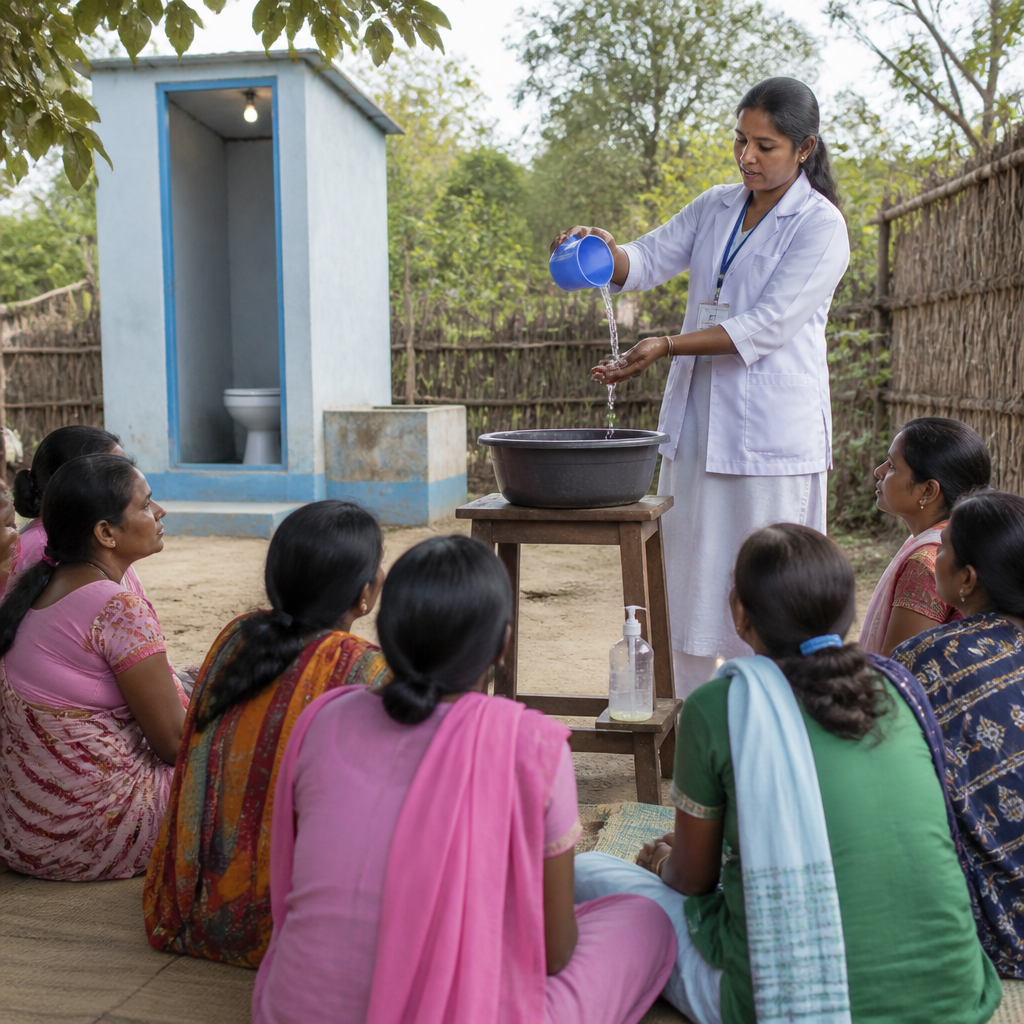
Hand hygiene is the fastest health gain available in school sanitation. Washing hands with soap after toilet use and before eating reduces transmission of diarrheal pathogens and some respiratory infections. Yet compliance improves only when stations are visible, functional, and easy to use within the school schedule. Short breaks, crowded layouts, and missing soap are predictable barriers. Schools that improve handwashing rates usually combine infrastructure with prompts, teacher modeling, songs for younger pupils, and student monitors. The habit becomes normal when adults reinforce it daily and children can perform it without delay.
Menstrual health management is equally central to safety and wellness in EcoSan. Girls need private spaces with doors, water, soap, disposal bins or appropriate reuse washing areas, and a place to change clothing if needed. Teachers and school nurses should understand menstrual pain, irregularity, and stigma, while boys need age-appropriate education to reduce teasing. In many schools, attendance problems are wrongly blamed on “lack of confidence” when the real issue is no functioning menstrual disposal option. A safe sanitation system must allow menstruating students to manage their periods discreetly, hygienically, and without shame.
Behavior change works best when schools avoid one-off lectures and instead build routines. Effective approaches include hygiene clubs, peer educators, school-led total sanitation activities, visual reminders near toilets, and classroom links to science and environmental studies. I have found that involving students in monitoring cleanliness can help, but only if it does not replace trained adult cleaning. Children can report faults and champion hygiene norms; they should not carry the burden of sanitation maintenance.
Safe Resource Recovery, Inclusion, and Governance
EcoSan differs from conventional sanitation because it aims to recover value from waste streams, but schools must handle that goal cautiously. Reuse of treated urine or compost can support school gardens and environmental education, yet health protection comes first. Any reuse program should follow national regulations and recognized guidance such as the WHO Sanitation Safety Planning approach, which identifies hazards along the sanitation chain and sets barriers to reduce risk. Storage times, treatment conditions, crop restrictions, application methods, and restricted access are not optional details. They are the basis of safe resource recovery.
Inclusion is another non-negotiable requirement. Facilities must work for younger children, students with mobility limitations, those with visual impairments, and anyone needing assistance. That means ramps with manageable gradients, handrails, enough turning space, reachable taps, clear signage, and, where needed, support for caregivers. Safety also includes psychosocial comfort. Schools need supervision plans that prevent harassment near toilet blocks and ensure students can report problems confidentially. When sanitation excludes even a small group, absenteeism and health inequity follow.
Governance ties every element together. The strongest school programs assign oversight to a committee that includes administration, teachers, caretakers, student representatives, and health or community members. That committee should review incidents, budgets, water supply reliability, cleaning performance, and infrastructure condition at scheduled intervals. Simple indicators work well: percentage of toilets functional, days with soap available, number of repairs pending, and student satisfaction by sex and age group. Data turns sanitation from an afterthought into a managed service. It also creates a foundation for related school health and safety planning across the wider campus.
Addressing hygiene and sanitation in schools through the lens of Safety and Wellness in EcoSan means treating sanitation as a living system that protects health every day. The key lessons are consistent across contexts: safe toilets must be usable, handwashing must be immediate and reliable, menstrual health support must be built in, cleaners must be trained and equipped, and any resource recovery must follow strict health safeguards. Infrastructure matters, but routine management matters more. Schools that succeed do not simply install facilities; they maintain standards, monitor risks, and respond quickly when conditions change.
This hub topic connects directly to every other school sanitation concern, from handwashing promotion and menstrual hygiene management to maintenance planning, inclusion, water security, and safe reuse practices. If you are improving a school program, start with a full sanitation service review: inspect facilities, map the waste flow, check supplies, talk to students, and verify who is responsible for each task. Then prioritize the fixes that most reduce exposure and increase daily use. Strong school sanitation is not a side issue in health and safety. It is one of the clearest signs that a school is truly safe, dignified, and ready for learning.
Frequently Asked Questions
Why is hygiene and sanitation in schools so important for student health and learning?
Hygiene and sanitation in schools directly affect whether students can stay healthy, attend class consistently, and concentrate on learning. When schools do not have safe toilets, reliable handwashing facilities, clean water, and clear hygiene practices, the risk of illness rises quickly. Students may be exposed to diarrheal disease, intestinal parasites, skin infections, and other preventable health problems that can lead to repeated absences and reduced academic performance. Even when illness is not severe, discomfort, dehydration, embarrassment, and stress can make it much harder for children to focus and participate in class.
Strong sanitation systems also shape the overall school environment. A school that is clean, safe, and well maintained sends a clear message that student wellbeing matters. This can improve confidence, dignity, and daily routines for both students and staff. In practical terms, good hygiene and sanitation reduce contamination, help protect shared spaces, and lower the likelihood that one health issue spreads across many classrooms. For girls in particular, access to private, functional sanitation facilities and menstrual health support can make the difference between regular attendance and missed school days.
In the EcoSan context, the importance goes beyond simply installing toilets. Ecological sanitation emphasizes managing human waste in a way that protects people, water sources, and the surrounding environment. That means thinking about the entire system: how waste is contained, separated, treated, and handled; how water is conserved; how students wash their hands; and how schools build habits that support long-term public health. When schools address hygiene and sanitation as a complete system rather than a single construction project, they create conditions that support both learning and lasting health outcomes.
What does a complete school sanitation system include beyond just building toilets?
A complete school sanitation system includes infrastructure, daily operations, behavior support, and safe management practices. Toilets are only one part of the picture. Schools also need accessible handwashing stations with soap and water, a dependable water supply, systems for cleaning and maintenance, safe waste containment or treatment, menstrual health support, and hygiene education that students can understand and practice every day. Without these additional elements, even well-built toilets may become dirty, unsafe, underused, or ineffective.
From an EcoSan perspective, a complete system begins with safe separation and management of waste. Depending on the design, ecological sanitation may separate urine and feces, reduce water use, and support treatment methods that minimize contamination of soil and groundwater. This is especially important in areas where conventional sewer systems are unavailable, unreliable, or too costly to maintain. A good system is designed for the local climate, school population, maintenance capacity, and water conditions, not just for short-term installation.
Equally important are the human and operational pieces. Cleaning staff need training, protective equipment, clear schedules, and adequate supplies. Students need age-appropriate instruction on handwashing, toilet use, and respect for shared facilities. School leaders need monitoring routines so they can identify problems such as broken taps, lack of soap, odor, overflow, or unsafe disposal practices before they become serious. Privacy, safety, accessibility for students with disabilities, and separate facilities where appropriate also matter. In short, a complete sanitation system is one that works every day, protects health at every step, and can be realistically maintained over time.
How does EcoSan improve sanitation in schools compared with more conventional approaches?
EcoSan, or ecological sanitation, improves school sanitation by treating waste management as part of a larger environmental and public health system rather than as a matter of disposal alone. In many conventional setups, the focus is on moving waste away from sight, often without fully addressing what happens next. If toilets are poorly connected, pits are unmanaged, or wastewater contaminates nearby water sources, the apparent solution can still create major health risks. EcoSan aims to prevent that by emphasizing safe containment, separation, treatment, and reuse or disposal practices that reduce environmental harm.
One of EcoSan’s main advantages in schools is that it can work well in areas with water scarcity, limited sewer infrastructure, or challenging ground conditions. Many ecological sanitation systems are designed to use less water than flush-based alternatives, which can make them more practical and resilient. Some systems also support nutrient recovery after proper treatment, helping communities think about waste as a resource when safely managed. However, the key benefit in schools is not only environmental efficiency. It is the potential to create sanitation systems that are safer, more sustainable, and better matched to local conditions.
That said, EcoSan is not automatically successful just because the technology is installed. It depends on correct design, consistent maintenance, user understanding, and strong hygiene practices. Students and staff need to know how to use facilities properly. School administrators need realistic plans for cleaning, monitoring, and long-term upkeep. When these pieces are in place, EcoSan can strengthen school sanitation by protecting water, reducing contamination risks, encouraging environmental awareness, and supporting a more sustainable model of student health and school management.
How can schools support menstrual health as part of hygiene and sanitation planning?
Supporting menstrual health in schools requires much more than making products available, although that is an important step. Schools need private, safe, and clean toilets with doors that lock, reliable water access, soap, and places for students to wash and change comfortably. There also needs to be a practical system for disposing of menstrual materials safely and discreetly. If any of these basic conditions are missing, students may experience anxiety, embarrassment, discomfort, or avoid school altogether during menstruation.
Menstrual health support should also include education that is accurate, age-appropriate, and free of stigma. Students need to understand menstruation as a normal part of health, not as something shameful or secret. This education should reach all students, not only girls, because reducing stigma depends on broader awareness and respect. Teachers and school staff should be prepared to respond supportively when students need help, whether that means access to supplies, permission to visit facilities, or help managing pain or unexpected bleeding during the school day.
Within a broader hygiene and sanitation strategy, menstrual health is essential because it affects attendance, participation, confidence, and dignity. A school may have a sanitation block on paper, but if students do not feel safe using it during menstruation, the system is not fully serving them. In the EcoSan context, menstrual waste management should be considered alongside other sanitation flows so that disposal methods are hygienic, environmentally responsible, and feasible for staff to manage. When schools plan with menstrual health in mind from the beginning, they create a more equitable environment where students are better able to learn without avoidable barriers.
What are the best ways for schools to maintain hygiene and sanitation improvements over the long term?
Long-term success depends on treating hygiene and sanitation as an ongoing school management priority rather than a one-time project. The most effective schools establish clear routines for cleaning, inspection, repairs, supply restocking, and reporting problems. Toilets, handwashing stations, water points, and waste systems need regular checks so issues like leaks, broken doors, missing soap, bad odors, blocked drains, or unsafe waste handling are addressed quickly. Small failures often become major problems when there is no maintenance structure in place.
Staff support is a major factor in sustainability. Cleaning personnel should have defined responsibilities, training in safe sanitation procedures, and access to gloves, tools, and cleaning materials. School leaders should make sure sanitation duties are respected and funded, not treated as an afterthought. Budgeting matters because even the best-designed facilities decline rapidly if there is no reliable money for repairs, soap, water, protective equipment, and replacement parts. In many schools, long-term improvement happens when sanitation is built into school plans, budgets, and accountability systems rather than depending only on temporary outside support.
Student engagement also helps improvements last. Hygiene education should be practical and continuous, showing students how sanitation affects their bodies, classrooms, families, and local environment. Student clubs, peer leaders, and classroom activities can reinforce habits like proper handwashing, respectful toilet use, and reporting broken facilities. Schools may also benefit from involving parents, local health authorities, and community partners, especially when technical support or behavior change efforts are needed. In an EcoSan framework, sustainability means the entire system continues to function safely over time: waste is managed correctly, water is protected, facilities remain usable, and the school community understands why these practices matter. That is what turns sanitation infrastructure into lasting health protection.