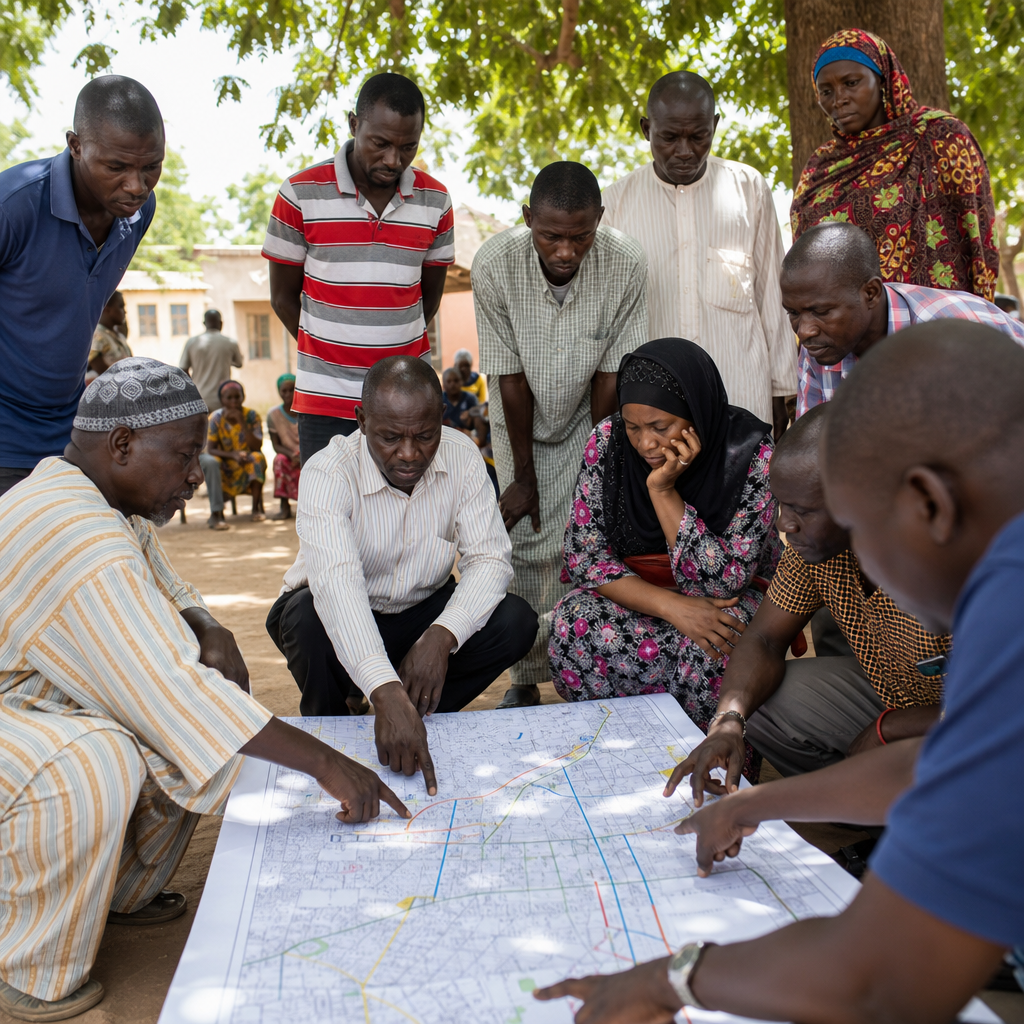
Civic engagement and participation in sanitation planning determine whether toilets are used, drains are maintained, waste is collected reliably, and public health gains last beyond a single project cycle. In practice, sanitation planning means the process governments, utilities, civil society groups, schools, neighborhood associations, and residents use to assess needs, set priorities, finance services, build infrastructure, and monitor performance across toilets, sewerage, fecal sludge management, stormwater, solid waste interfaces, and hygiene behavior. Civic engagement means people are not treated as passive beneficiaries. They help define problems, compare options, influence budgets, and hold providers accountable. Participation can range from information sharing and public meetings to participatory mapping, social audits, citizen science, and co-management agreements.
This matters because sanitation is intensely local. A treatment plant can be engineered perfectly and still fail if user fees are unaffordable, desludging routes cannot reach dense settlements, women feel unsafe using facilities at night, or schools lack cleaners and water for handwashing. I have worked on community sanitation programs where technical drawings looked complete on paper, yet one walk through the neighborhood exposed missing details: flood-prone lanes, informal landlords controlling access, tenants excluded from consultations, and residents already paying private operators far more than officials realized. Effective sanitation planning starts by listening early and continues by educating for change. That means building practical understanding of health risks, service chains, rights, responsibilities, financing, and maintenance so communities can make informed decisions and sustain better outcomes.
As a hub page under Community Engagement and Education, this article explains how to educate for change through sanitation participation. It covers why public involvement improves results, who should be included, which methods work, how education shifts behavior and governance, what tools help turn input into decisions, and how to measure whether participation is meaningful. The core principle is simple: sanitation systems work best when communities understand them well enough to shape them.
Why civic engagement improves sanitation planning
Sanitation planning improves when residents contribute lived knowledge that engineers and administrators do not have. Community members know which alleys flood first, where children defecate when school toilets are locked, which landlords block shared toilet upgrades, and when desludging trucks are overcharging. That information changes design choices. For example, in dense informal settlements, households may prefer shared facilities with professionally managed cleaning over unrealistic targets for individual toilets. In peri-urban areas, the decisive issue may be legal land tenure rather than toilet technology. Participation reveals these constraints before funds are wasted.
Engagement also increases legitimacy. When people understand why one neighborhood receives simplified sewerage and another gets container-based services or scheduled desludging, they are more likely to accept tradeoffs. Transparent consultation reduces conflict, especially around tariffs, site selection for transfer stations, or treatment facilities that often trigger opposition. Public participation is also a risk management tool. It surfaces exclusion, mistrust, and misinformation early, when plans can still be adjusted at lower cost.
There is a direct health dimension. The World Health Organization has long tied sanitation outcomes to behavior, service reliability, and safe management across the entire chain. A toilet alone does not protect health if sludge is dumped into drains or if handwashing stations sit empty. Engagement creates feedback loops that keep planners focused on actual exposure pathways. In one municipal process I supported, citizen reporting showed that blocked storm drains near market toilets were spreading contaminated runoff during rains. That evidence redirected maintenance budgets faster than annual engineering reviews had done.
Who must be included in meaningful participation
Inclusive sanitation planning is not achieved by inviting “the community” as if it were one group with one interest. Different users experience sanitation differently. Women and girls often prioritize privacy, menstrual hygiene management, lighting, and safety. Persons with disabilities may need ramps, handrails, wider doors, and caregiver access. Children need age-appropriate school facilities and maintenance routines that teachers can realistically manage. Tenants may use shared toilets but have little power to approve improvements. Informal workers, market vendors, and transport operators rely on public toilets at different hours than households. Older adults may need nearby services because mobility limits use of distant facilities.
Stakeholder mapping should therefore identify users, duty bearers, and intermediaries. Users include households, schools, clinics, businesses, and institutions. Duty bearers include municipalities, utilities, public health departments, environmental regulators, and elected councils. Intermediaries include community-based organizations, faith leaders, landlords, women’s groups, youth groups, savings associations, and local entrepreneurs such as emptiers or toilet attendants. Each group brings different evidence. Frontline sanitation workers can explain equipment failures and route constraints. Teachers can show why school toilet ratios on paper still translate into long queues. Health workers can connect outbreaks to service gaps. Elected representatives understand political feasibility, while civil society groups often spot chronic exclusion.
Meaningful participation requires removing barriers to attendance and influence. Meetings held during work hours exclude wage earners. Technical language excludes residents unfamiliar with planning documents. Mixed public forums may silence women, tenants, migrants, or lower-caste groups in some contexts. Good practice includes separate focus groups, translated materials, childcare support, accessible venues, transportation stipends where appropriate, and multiple participation channels such as SMS surveys, neighborhood walks, and school-based consultations. Inclusion is not symbolic representation. It is designing a process so people can safely contribute information that affects decisions.
Educating for change: from awareness to informed action
Education in sanitation planning is often misunderstood as one-way messaging about hygiene. That is too narrow. Educating for change means equipping residents and institutions with enough practical knowledge to understand the sanitation service chain, compare service options, recognize health and environmental risks, interpret costs, and track whether commitments are being delivered. It turns consultation from opinion gathering into informed decision-making. When communities understand the difference between containment, emptying, transport, treatment, and reuse or disposal, they ask better questions and make better demands.
In my experience, the most effective education combines local evidence with clear explanations. Maps of open drains, photos of overflowing pits, school absenteeism data, desludging price comparisons, and simple diagrams of fecal contamination pathways make sanitation visible. People respond when they can connect system failures to everyday experience. For example, showing how an unlined pit near a shallow well can contaminate water is more persuasive than repeating generic health messages. Likewise, explaining why a sewer connection fee may be high but lifetime maintenance costs lower than repeated emergency emptying helps households evaluate options rationally.
Education should also clarify rights and responsibilities. Residents need to know which agency empties public toilets, who regulates private emptiers, what service standards apply, where complaints can be filed, and how tariffs are set. Without that information, frustration rises but accountability does not. Schools need operation and maintenance plans, not just hardware. Landlords need to understand minimum standards and enforcement. Community leaders need budget literacy so they can read sanitation line items and ask whether funds cover capital expenditure only or also cleaning, repair, and sludge transport. Educating for change creates a shared vocabulary that makes participation productive rather than performative.
Methods that turn participation into better decisions
Different planning stages require different engagement methods. Early diagnosis benefits from participatory mapping, transect walks, seasonal calendars, and service chain assessments. These methods capture where toilets exist, who uses them, how sludge is emptied, where flooding occurs, and which groups face the highest exposure. During option appraisal, planners can use scenario workshops to compare onsite upgrades, condominial sewers, communal facilities, or scheduled desludging against land availability, density, affordability, and institutional capacity. Later, implementation benefits from grievance systems, public dashboards, and community monitoring.
Tools work best when linked to formal decisions. A consultation that gathers comments but does not show how plans changed will quickly lose trust. I recommend documenting each major input, the action taken, and the reason. If residents request household sewers in an area where topography or tenure makes that impossible, planners should explain why and present the feasible alternative. That transparency matters as much as agreement. Recognized approaches such as Community-Led Total Sanitation, participatory budgeting, social accountability scorecards, and Water, Sanitation, and Hygiene in Schools programming can all contribute, but none should be copied mechanically. Urban sanitation especially requires service-chain thinking that goes beyond triggering behavior change.
| Planning stage | Participation method | What it reveals | Practical output |
|---|---|---|---|
| Diagnosis | Participatory mapping and transect walks | Service gaps, flooding points, unsafe areas, shared toilet conditions | Prioritized problem map |
| Option appraisal | Scenario workshops with cost comparisons | User preferences, affordability limits, land and access constraints | Preferred service model |
| Design | Focus groups with women, tenants, and persons with disabilities | Safety, accessibility, privacy, operating needs | Inclusive design criteria |
| Implementation | Grievance channels and community monitors | Construction defects, missed collections, fee abuses | Corrective action log |
| Monitoring | Citizen scorecards and public review meetings | Service quality, trust, maintenance performance | Annual accountability report |
Digital tools can strengthen these methods when used carefully. KoboToolbox, SurveyCTO, and GIS platforms help collect structured community data quickly. WhatsApp groups can support reporting, though they should not replace inclusive offline methods. Open data dashboards can improve transparency if indicators are easy to understand. The rule is straightforward: technology should reduce friction and expand voice, not centralize power among the already connected.
Building accountability, financing, and long-term ownership
Participation becomes transformative when it influences budgets, contracts, and performance management. Many sanitation failures are not design failures but governance failures. Facilities break because no budget exists for cleaning supplies, operators are unpaid, emptying schedules are ad hoc, or agencies dispute mandates. Civic engagement helps expose these weak points and negotiate realistic responsibilities. Community members can help define service standards, such as maximum response times for public toilet repairs, frequency of sludge removal, or publication of tariff schedules. Once standards are public, they can be monitored.
Financing discussions are especially important. Residents often oppose sanitation fees because they do not trust services to improve. Conversely, governments may underprice sanitation and then fail to maintain systems. Honest engagement can reset this relationship. When planners present full lifecycle costs, capital subsidies, cross-subsidies for low-income users, and the consequences of underfunding maintenance, people are better able to judge fairness. In several city consultations, I found that resistance fell when officials stopped presenting tariffs as isolated numbers and instead explained the service package, complaint channels, and penalties for nonperformance.
Ownership does not mean communities should replace the state. It means users understand the system, know what they can influence, and participate in oversight and co-production where appropriate. In schools, this may involve student hygiene clubs and parent committees monitoring cleaning routines. In informal settlements, it may involve resident associations managing shared facilities under clear agreements with municipalities or NGOs. In small towns, it may mean public hearings before sanitation capital plans are approved. The lasting benefit is institutional memory. When elected leaders change, informed communities preserve momentum, protect standards, and continue pushing for equitable services.
How to measure meaningful participation and keep improving
Meaningful participation is measurable. Start with process indicators: who attended, who spoke, what languages were used, whether venues were accessible, and whether marginalized groups had dedicated channels. Then track decision indicators: which community recommendations were adopted, modified, or rejected, and why. Finally, monitor outcome indicators tied to sanitation performance: toilet functionality, desludging frequency, user satisfaction, complaint resolution times, school attendance linked to adequate facilities, reductions in open defecation or illegal dumping, and safe treatment or disposal rates. If participation does not shift decisions or service quality, it is not yet working.
Qualitative evidence matters too. Residents should be able to explain the sanitation plan in plain language, identify who is responsible for each step, and describe how to raise concerns. Officials should be able to show that feedback changed priorities, not merely that meetings were held. Independent verification from civil society, universities, or audit bodies strengthens credibility. The Sanitation Safety Planning approach, developed by the World Health Organization, is useful because it links risk identification, control measures, and stakeholder roles across the service chain.
Civic engagement and participation in sanitation planning are ultimately about educating for change so infrastructure, behavior, and governance move together. The strongest sanitation programs do not ask communities to endorse prewritten plans. They equip people to understand systems, weigh tradeoffs, challenge weak assumptions, and help sustain services over time. For a subtopic hub under Community Engagement and Education, the key takeaway is clear: inclusive participation improves technical design, public trust, accountability, and health outcomes when education is practical, continuous, and tied to real decisions. Use this page as your starting point, then build deeper guidance on school outreach, participatory budgeting, social accountability, behavior change communication, and inclusive facility design across your sanitation content strategy.
Frequently Asked Questions
Why is civic engagement so important in sanitation planning?
Civic engagement matters because sanitation systems only work well when they reflect how people actually live, move, pay for services, and use shared spaces. A technically sound toilet block, sewer extension, drain rehabilitation project, or fecal sludge collection route can still fail if residents were never asked about location, affordability, safety, maintenance, or cultural preferences. When communities participate early, planners gain local knowledge about flooding hotspots, informal dumping areas, shared toilet conditions, household constraints, and service gaps that may not appear in official maps or engineering reports. That input helps governments and utilities prioritize investments that are more practical, equitable, and likely to be used consistently.
Participation also builds trust and accountability. Residents are more likely to support tariffs, comply with service rules, report breakdowns, and protect infrastructure when they understand how decisions were made and believe their concerns were taken seriously. In neighborhoods where sanitation has historically been neglected, engagement can also correct power imbalances by ensuring women, tenants, informal settlement residents, people with disabilities, school communities, and low-income households are included in decisions that affect health and dignity every day. In short, civic engagement improves not just the design of sanitation systems, but also their legitimacy, long-term maintenance, and public health impact.
Who should be involved in sanitation planning, and what roles do they play?
Effective sanitation planning depends on a broad coalition rather than a single agency acting alone. Local governments usually lead policy, budgeting, land-use coordination, regulation, and service standards. Utilities or sanitation departments often manage infrastructure, operate networks, oversee treatment, or coordinate contracted service providers. Public health agencies contribute disease surveillance, hygiene promotion, and risk analysis. Schools, clinics, and other public institutions help identify needs in places where sanitation failures have immediate consequences for attendance, safety, and infection control. Civil society organizations and community-based groups often play a critical bridging role by organizing residents, translating technical plans into understandable terms, and ensuring marginalized voices are not excluded.
Residents themselves are central participants, not just beneficiaries. Households can identify service barriers, affordability limits, unsafe locations, irregular collection schedules, and maintenance failures that formal systems miss. Neighborhood associations can help prioritize local improvements, monitor implementation, and coordinate community-level upkeep of drains or shared facilities. Private operators, including pit emptiers, waste collectors, and contractors, provide practical insight into what is operationally feasible and what regulatory or financial obstacles prevent safe service delivery. The strongest sanitation plans are shaped through structured collaboration among these actors, with clear roles, transparent decision-making, and channels for feedback throughout assessment, design, financing, construction, operation, and monitoring.
How can communities participate in sanitation planning in practical ways?
Community participation is most effective when it is built into the full planning cycle rather than limited to a single public meeting. In the assessment phase, communities can contribute through household surveys, focus groups, participatory mapping, safety walks, and neighborhood discussions that identify toilets in poor condition, blocked drains, flood-prone streets, open defecation areas, illegal dumping sites, and places where waste collection is unreliable. During priority-setting, residents can help compare options based on cost, convenience, land constraints, gender safety, environmental risk, and long-term maintenance needs. This is especially useful in dense settlements where choices between household toilets, communal facilities, simplified sewers, container-based services, or fecal sludge management systems require local trade-offs.
Participation should continue after plans are approved. Communities can join user committees, school sanitation committees, ward forums, and citizen oversight groups to track whether projects are delivered on time and whether services improve after construction. Mobile reporting tools, help lines, public scorecards, and social audits can make it easier to report broken toilets, overflowing pits, missed waste collection, or blocked drains. In many settings, communities also support behavior change by promoting toilet use, handwashing, proper solid waste disposal, and regular desludging. The key is to make participation meaningful: people should be able to influence outcomes, receive updates, see how feedback was used, and access data on budgets, service standards, and performance.
What are the biggest challenges to meaningful participation in sanitation planning?
One major challenge is that participation is often treated as a formality rather than a decision-making process. Authorities may hold consultations after major choices have already been made, leaving little room for communities to shape priorities or designs. Technical language can also exclude residents, especially when plans are presented without clear explanations of costs, timelines, service levels, or trade-offs. Another frequent barrier is unequal representation. The people most affected by poor sanitation, such as women, children, older adults, tenants, informal workers, people with disabilities, and residents of underserved settlements, may have the least time, confidence, mobility, or political influence to attend meetings and speak openly.
There are also structural barriers. In fragmented governance systems, responsibilities for toilets, drains, sewerage, solid waste, and fecal sludge management may be spread across multiple agencies, making it hard for communities to know where to raise concerns. Limited budgets can create frustration if participation raises expectations that cannot be met quickly. Political turnover may disrupt long-term planning, while weak monitoring systems can make it difficult to prove whether engagement improved outcomes. Overcoming these challenges requires inclusive meeting formats, targeted outreach, translation into plain language, compensation or scheduling that reduces participation costs, publicly shared decision criteria, and sustained feedback loops so people see evidence that engagement leads to action.
How does strong civic participation improve long-term sanitation outcomes and public health?
Strong civic participation helps sanitation gains last beyond the construction phase because it strengthens the everyday systems that keep services functioning. Communities that understand service responsibilities and have channels to report failures are better able to flag overflowing pits, damaged toilets, clogged drains, illegal dumping, or missed collection before these problems become chronic. Local monitoring also helps governments and utilities identify patterns, such as neighborhoods repeatedly missed by waste trucks, public toilets that are unsafe for women and girls, or drainage points that fail during heavy rain. This improves operational responsiveness and makes sanitation planning more adaptive over time.
From a public health perspective, participation helps close the gap between infrastructure and actual health protection. Disease risks fall when toilets are used consistently, sludge is safely contained and transported, wastewater and stormwater are managed properly, and waste does not accumulate in living areas. Community involvement supports each of these links by improving uptake, maintenance, oversight, and behavior change. It also increases resilience: when residents are organized and informed, they can respond faster to flooding, service interruptions, or breakdowns that threaten sanitation conditions. Ultimately, civic engagement turns sanitation from a one-time project into a shared public service system, grounded in accountability, local knowledge, and continued community ownership of healthy living environments.