Using local stories and experiences in sanitation training turns abstract health advice into practical behavior change people can recognize, trust, and repeat. In community engagement and education, sanitation training works best when it is rooted in the daily realities of households, schools, markets, clinics, and shared water points rather than delivered as a generic lesson imported from somewhere else. Local stories include personal testimonies, village histories, case examples from nearby neighborhoods, and common problem scenarios discussed in familiar language. Local experiences include existing hygiene routines, seasonal constraints, cultural beliefs, labor patterns, and lessons learned from previous sanitation campaigns. When educators connect technical guidance to those lived experiences, participants understand not only what to do, but why it matters and how to make it feasible in their own environment.
I have seen this difference repeatedly in field training sessions. A lecture about fecal-oral transmission may be politely heard and quickly forgotten. A story about a child who became ill after floodwater entered an open pit latrine, contaminated stored drinking water, and kept a parent from working for a week is remembered, repeated, and acted on. That is why this topic matters across the full scope of educating for change. It improves recall, lowers resistance, supports discussion of sensitive subjects, and helps communities adapt sanitation guidance to real constraints such as cost, distance, disability access, tenancy, water scarcity, and social norms. As a hub topic, it links sanitation promotion, hygiene behavior, risk communication, school education, participatory facilitation, monitoring, and community leadership into one practical approach.
Effective sanitation training is not entertainment added to technical content. It is a structured educational method that uses narrative, local evidence, and participatory reflection to produce safer habits and stronger ownership. The goal is behavior change that lasts after the trainer leaves. To reach that goal, educators need to collect relevant stories, verify facts, protect dignity, and frame examples around decisions people can control. They also need to know when stories are enough and when demonstrations, infrastructure support, or policy action are also required. The most effective programs blend narrative with standards, such as handwashing with soap at critical times, safe child feces disposal, toilet maintenance, menstrual hygiene support, and inclusive design for older adults and people with disabilities.
Why local stories improve sanitation learning
Local stories improve sanitation learning because they reduce psychological distance. People pay more attention when they hear about a family, school, or street they know. In risk communication, relevance drives recall. A message about diarrheal disease framed around a nearby outbreak, a blocked drain after market day, or a school toilet that became unusable during exams is easier to remember than a national statistic presented without context. Stories also help learners sequence events: unsafe disposal, contaminated hands, food preparation, illness, missed work, treatment costs, and preventable hardship. That cause-and-effect chain is essential in sanitation education because many health risks are invisible.
Stories also make room for nuance. In many communities, people already understand cleanliness and dignity, but they may face barriers that outsiders miss. A caregiver may know that handwashing matters yet skip soap use when prices rise. A tenant may want a better toilet but cannot modify a shared compound. A school may receive latrine blocks yet have no budget line for water, cleaning supplies, or pad disposal bins. When local experiences are included in training, participants can examine those constraints openly and identify realistic actions. This is one reason participatory hygiene and sanitation transformation methods remain influential: they help people analyze their own sanitation environment instead of passively receiving instructions.
Another advantage is social proof. When a respected market vendor explains how regular toilet cleaning improved customer confidence, or a teacher describes how student handwashing routines reduced absenteeism, the message gains credibility. In my experience, peer examples often shift behavior faster than expert warnings. They show that change is possible within the same economic and cultural conditions. That matters for educating for change because sanitation habits are social behaviors shaped by observation, routine, convenience, and shared expectations.
What belongs in a strong sanitation training hub
A comprehensive hub on educating for change should connect every major sanitation learning need, from basic awareness to sustained community action. That means covering household sanitation, school and workplace hygiene, community-led facilitation, inclusion, menstrual hygiene management, environmental cleanliness, waste handling, and outbreak preparedness. It should also guide readers toward linked topics such as behavior change communication, water safety, hand hygiene, monitoring indicators, and community feedback systems. The hub function is important because sanitation outcomes rarely improve through one lesson alone. People need a connected learning pathway that moves from understanding risk to choosing practices, solving barriers, and tracking results.
In practice, the strongest hubs answer direct questions clearly. What makes sanitation training effective? How do local stories support behavior change? Which audiences need different teaching methods? How should trainers handle shame, stigma, and privacy? What evidence shows that community engagement works? These are not side questions. They are the core questions practitioners, local leaders, teachers, and health promoters ask when they need a method they can apply immediately. A useful hub page also reflects how field programs actually run: one session for mothers will differ from one for adolescent boys, school staff, sanitation workers, faith leaders, or compound landlords.
For this reason, hub content should organize the subtopic into practical pillars: audience analysis, message design, facilitation methods, local storytelling, visual demonstration, follow-up coaching, and evaluation. Each pillar should point toward implementation details while keeping the central message clear: sanitation education succeeds when communities see themselves in the content and can act on it without unrealistic assumptions.
How to collect and use local stories responsibly
Collecting local stories requires method, not improvisation. Trainers should begin with structured listening: household visits, focus groups, school walk-throughs, market observations, and interviews with health workers, cleaners, and local leaders. During these conversations, ask for specific incidents rather than general opinions. Instead of asking, “Is sanitation a problem here?” ask, “Tell me about the last time a toilet overflowed,” or “What happens when water runs short during the dry season?” Specific stories reveal triggers, consequences, workarounds, and decision points that can be translated into training content.
Responsible use also requires consent and protection. Stories involving illness, menstruation, child feces, disability, or open defecation can expose people to embarrassment or blame if told carelessly. Remove identifying details unless the speaker explicitly wants to be named. Verify timelines and causes before presenting a story as fact. In one program review I supported, a widely repeated story blamed a single household for contamination, but later inspection showed drainage failure affecting several compounds. Accuracy matters because sanitation education should build trust, not reinforce rumor.
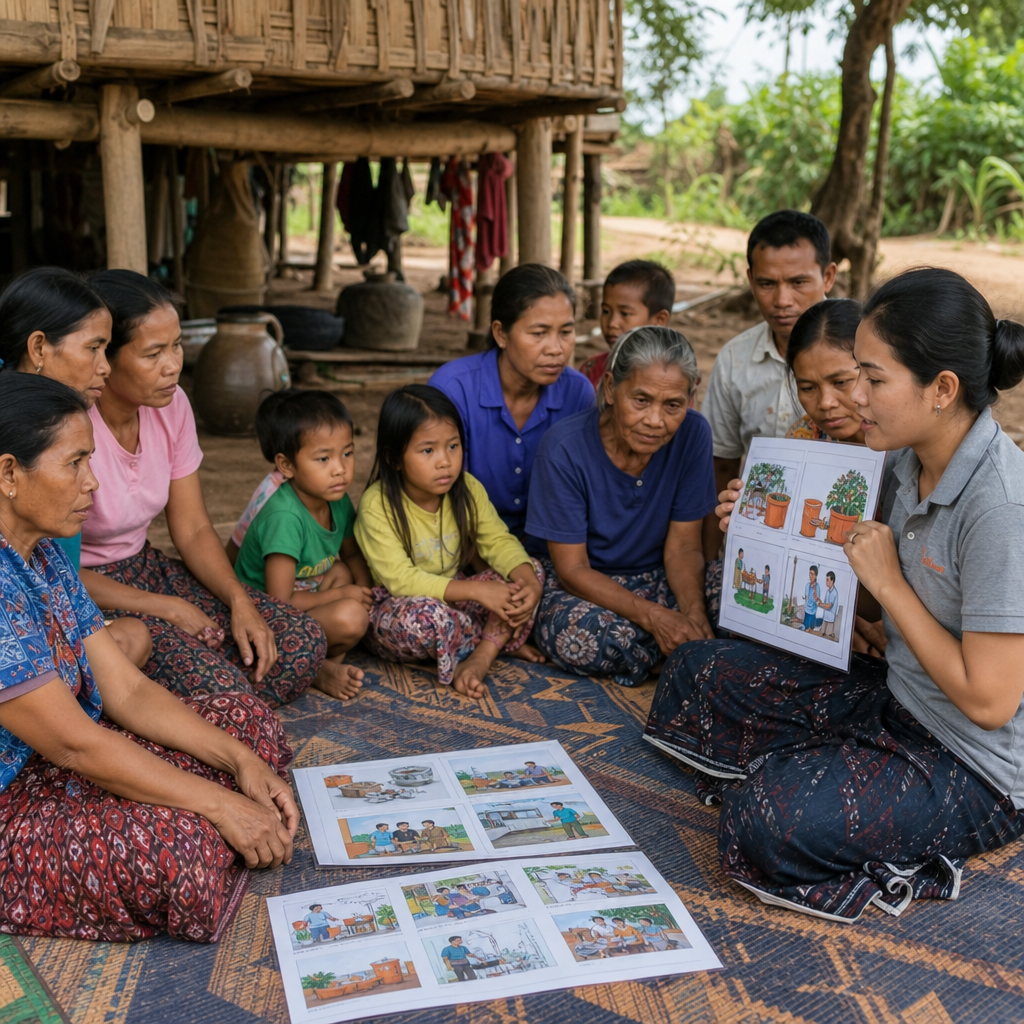
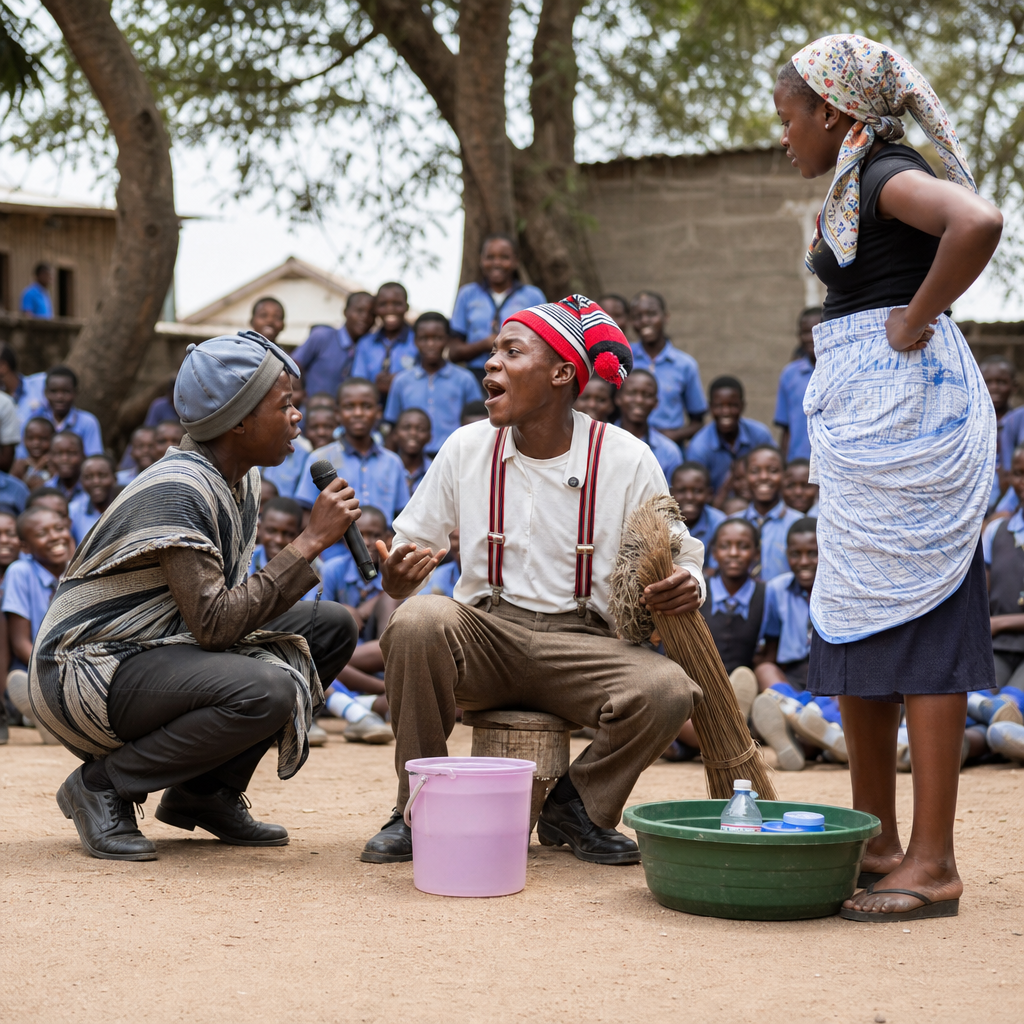
After collection, adapt stories into teaching formats that match the audience. For community meetings, short narrative case studies work well. For schools, role-play and picture sequencing are often more effective. For frontline health workers, stories can be paired with job aids and action checklists. The content should always end with a practical decision: cover water containers, establish a cleaning rota, add a handwashing station near the toilet, separate child play areas from waste disposal points, or report a broken latrine slab promptly. A story without an action step may create emotion, but it will not reliably change sanitation behavior.
| Training setting | Best local story format | Primary sanitation objective | Example action |
|---|---|---|---|
| Village meeting | Short narrated case from nearby households | Trigger discussion on shared risks | Create a compound cleaning schedule |
| School session | Role-play based on daily routines | Build repeatable hygiene habits | Handwash before meals and after toilet use |
| Clinic outreach | Testimony linked to illness recovery | Connect sanitation to health outcomes | Safely dispose of child feces every time |
| Market training | Vendor example focused on customers and cleanliness | Improve facility maintenance | Assign daily toilet inspection and soap restocking |
Turning stories into behavior change, not just awareness
Awareness is not the same as behavior change. Many sanitation campaigns fail because participants leave knowing the correct answer but return to the same routines. To change behavior, stories must be linked to cues, commitment, opportunity, and reinforcement. A well-designed training session uses a local example to capture attention, then follows with demonstration, problem solving, public agreement, and simple follow-up. For example, after discussing a neighborhood flooding story, a trainer might demonstrate tippy tap placement, facilitate a household barrier-mapping exercise, and ask each family to commit to one fix by the next visit.
Behavior change is strongest when the story highlights a moment of choice. Consider a compound where several families share one latrine. The local story is not merely that the toilet became dirty. The learning moment is that no one felt responsible, soap ran out, and children avoided the facility. Training can then focus on governance as much as hygiene: assign responsibility, display a cleaning rota, store supplies in a dry container, and agree on reporting rules for repairs. This moves the discussion from blame to management.
Named behavior change tools help here. Prompt cards near toilets, public pledges, reminder murals painted by students, and periodic follow-up by community health workers all reinforce the lesson. Monitoring can be simple but should be visible: soap present, path to toilet clear, slab clean, handwashing station functional, waste bin emptied, and drain unobstructed. When people see progress tied to a story they recognize, change feels local, measurable, and worth sustaining.
Adapting stories for different audiences and settings
One sanitation story does not fit every audience. Children respond to concrete routines and fairness. Adolescents often engage better when privacy, dignity, peer influence, and menstrual hygiene are addressed directly. Caregivers may need content tied to child health, time savings, and medical costs. Landlords and employers usually respond to maintenance, compliance, reputation, and productivity. In schools, I have found that students remember handwashing messages more consistently when the story involves a missed sports day or exam disruption than when it relies on distant health statistics alone.
Settings matter just as much. Rural sanitation training may focus on open defecation, pit location, flood risk, and safe child feces disposal. Dense urban settlements may need emphasis on shared toilets, desludging, drainage, solid waste blocking sewers, and tenancy constraints. In healthcare facilities, training must include infection prevention and control, cleaning protocols, safe waste handling, and access for patients with limited mobility. In each setting, local experiences shape what is realistic. Advising daily water-intensive cleaning where water is scarce is poor training. So is promoting toilet construction standards without considering soil collapse, high water tables, or landlord permission.
Language and symbolism should also stay local. Technical terms like pathogen transmission, fecal contamination, and vector control are useful for staff training, but community sessions often work better when those ideas are explained through ordinary routines and visible consequences. The aim is clarity without distortion. Good trainers translate science into familiar speech while keeping the health logic intact.
Common mistakes and how to avoid them
The most common mistake is using stories that shame people. Fear and embarrassment can create attention, but they often suppress honest discussion. If participants think they will be judged for current practices, they may hide barriers instead of solving them. A better approach is to describe unsafe conditions accurately, then move quickly to shared responsibility and feasible improvements. Another frequent mistake is presenting one dramatic story as universal evidence. Stories are powerful, but they do not replace observation, facility inspection, local health data, or user feedback.
Programs also fail when they ignore maintenance economics. Telling a compelling story about clean toilets means little if no one has budgeted for brushes, detergent, water access, pit emptying, or minor repairs. Similarly, narrative-based school training will underperform if facilities are locked, broken, dark, or unsafe for girls. The lesson is straightforward: educational content must align with service reality. Training can motivate action, but infrastructure and management determine whether action is possible.
Finally, avoid treating local culture as static. Communities are not monolithic. Younger people, elders, migrants, tenants, and sanitation workers may interpret the same story differently. Test messages before scaling them. Listen for misunderstanding, defensiveness, or unintended stigma. Then revise. The strongest sanitation education programs treat storytelling as an iterative tool within a broader system of community engagement, not as a fixed script.
Using local stories and experiences in sanitation training is one of the most effective ways to educate for change because it connects health guidance to daily life, social norms, and practical decision-making. It helps communities understand risk, discuss barriers honestly, and choose actions that fit their setting. When done well, it strengthens every part of sanitation education: household habits, school routines, shared facility management, inclusive design, and community accountability. It also makes training more memorable, which matters when behavior must be repeated consistently to protect health.
The central lesson is simple. People act on sanitation advice when they recognize themselves in it and believe the recommended step is possible now, not in theory. That is why strong educators gather local evidence, protect dignity, verify facts, adapt stories to each audience, and pair narrative with demonstrations, reminders, and follow-up. They do not rely on inspiration alone. They build a clear path from story to action to maintenance.
As the hub for educating for change under community engagement and education, this topic should guide your wider sanitation content and program design. Use it to shape linked articles, training plans, school materials, outreach sessions, and monitoring tools. Start with one local story, connect it to one sanitation behavior, and measure one visible improvement. Then expand from there.
Frequently Asked Questions
1. Why are local stories and experiences so effective in sanitation training?
Local stories and experiences make sanitation training more believable, memorable, and actionable because they connect health messages to situations people already know. When training uses examples from nearby households, schools, markets, clinics, or shared water points, people do not have to imagine whether the advice applies to them. They can immediately see how it fits into their own routines, risks, and decisions. A story about a family that improved handwashing after repeated illness, or a market that reduced contamination by changing waste disposal practices, turns a general recommendation into something concrete and real.
This approach also strengthens trust. Communities are often more responsive when they hear examples drawn from their own environment rather than messages that sound imported or overly technical. Local references show respect for people’s knowledge and daily realities. They acknowledge that sanitation behavior is influenced by water access, household space, cultural habits, caregiving roles, seasonal conditions, and shared infrastructure. By reflecting those realities, training becomes more practical and less abstract.
Just as importantly, stories help people remember key lessons. Facts alone can be forgotten, but a familiar narrative tends to stay with people and be repeated in conversations with neighbors, family members, and community groups. That makes local storytelling especially useful for reinforcing behavior change over time. In sanitation training, the goal is not simply awareness; it is consistent action. Local stories support that goal by helping people recognize problems, believe solutions are possible, and repeat the practices that protect health.
2. What kinds of local stories can be used in sanitation training?
A wide range of local stories can be used, as long as they are relevant, respectful, and connected to practical sanitation behaviors. Personal testimonies are often powerful. These might include a caregiver explaining how better handwashing reduced illness in the household, a teacher describing improvements after school toilet cleaning routines were organized, or a health worker sharing what happens when waste is not safely managed at a clinic. These stories are especially useful because they combine real experience with clear lessons people can apply.
Village or neighborhood histories can also be effective. For example, trainers may refer to how a community handled sanitation during a flooding season, how a shared water point became contaminated because drainage was ignored, or how a local clean-up effort improved safety and hygiene in a market area. These examples show that sanitation is not only an individual issue but also a shared community responsibility. They can help people understand patterns of risk and the consequences of collective action or inaction.
Case examples from nearby places are another strong option. If a neighboring school improved toilet maintenance, if a clinic introduced safer waste disposal methods, or if a settlement organized household-level sanitation mapping, those experiences can serve as relatable models. Trainers can also draw on common daily situations, such as managing children’s feces safely, maintaining latrines during the rainy season, preventing wastewater from pooling near homes, or keeping handwashing stations functional when water is limited. The best local stories are those that reflect familiar challenges, demonstrate realistic solutions, and leave participants with a clear idea of what to do next.
3. How can trainers use local stories without losing accuracy or spreading misinformation?
Local stories are most effective when they are grounded in verified facts and linked to sound public health guidance. Trainers should treat stories as teaching tools, not as replacements for evidence. That means checking details before using them, especially when a story includes claims about disease causes, treatment outcomes, or sanitation practices. If a community member shares an experience about repeated diarrhea linked to poor waste disposal, for example, the trainer can use that experience to open discussion while still clearly explaining the scientifically accurate pathways of contamination and prevention.
It is also important to avoid exaggeration. A story does not need to be dramatic to be useful. In fact, realistic examples are often more persuasive because participants can recognize them as true to life. Trainers should present stories in a way that highlights specific behaviors and their consequences: unsafe child feces disposal, lack of soap at handwashing points, blocked drainage channels, dirty latrines, or poorly maintained shared facilities. Then they should connect those behaviors to established sanitation principles and practical corrective actions.
Respect and ethics matter as well. Personal testimonies should be shared with permission, and trainers should avoid exposing private details that could embarrass individuals or households. If needed, stories can be anonymized while keeping the lesson intact. The strongest sanitation training balances local voice with technical clarity. It honors community experience, corrects misconceptions gently, and ensures that every story leads back to accurate, useful, and safe guidance people can trust.
4. How do local stories help create real behavior change instead of just raising awareness?
Behavior change happens when people move from hearing advice to seeing its relevance, believing it is possible, and practicing it repeatedly. Local stories support each step in that process. First, they make the issue feel immediate. When participants hear about sanitation problems from places like their own homes, schools, markets, or water points, the risks no longer feel distant. The message becomes connected to familiar routines such as preparing food, helping children use the toilet, cleaning compound areas, fetching water, or maintaining shared facilities.
Second, local stories reduce the gap between recommendation and action. Generic advice may tell people what they should do, but a local example shows how someone actually did it under similar conditions. This is especially important in sanitation training, where people may face practical barriers such as limited water, cost constraints, shared living spaces, or social norms that discourage change. A relatable story can demonstrate small, achievable steps: setting up a low-cost handwashing station, organizing toilet cleaning duties, improving drainage around a water point, or agreeing on rules for using shared latrines.
Third, stories help reinforce social norms. When people hear that nearby families, schools, or community leaders are adopting better sanitation practices, those practices begin to feel normal and expected rather than unusual. That social influence can be a major driver of sustained change. Finally, stories are easy to retell. Participants often repeat them to others, which extends the reach of the training beyond the original session. In that way, local storytelling does more than inform individuals. It helps build a shared understanding of why sanitation matters and how communities can act on it together.
5. What are the best practices for designing sanitation training around local experiences?
Effective sanitation training begins with listening. Before selecting stories or examples, trainers should learn how people in the community talk about sanitation, what challenges they face, and which settings matter most in daily life. That may include household compounds, school toilets, clinic sanitation systems, market waste areas, drainage paths, and communal water points. Understanding these realities helps trainers choose examples that feel authentic and useful rather than forced or generic.
Once local realities are clear, trainers should choose stories with a clear teaching purpose. Each example should connect to a specific sanitation behavior or decision, such as handwashing with soap, safe feces disposal, toilet use and maintenance, waste management, menstrual hygiene support, or protection of water sources from contamination. The lesson should be easy to identify. After telling a story, trainers should guide discussion with practical questions: What happened? Why did it happen? What could have been done differently? What can this community do now? This helps participants move from passive listening to active problem-solving.
Good training also includes a mix of voices and settings. Stories should not come only from officials or one social group. Including parents, children, teachers, health workers, vendors, sanitation workers, and local leaders makes the training more representative and credible. Trainers should also adapt content for the audience. What resonates in a school session may differ from what works in a clinic, a rural village meeting, or an urban settlement workshop.
Finally, the most effective programs connect stories to demonstration and follow-up. If a story is about better handwashing, show how to build or maintain a handwashing station. If it is about cleaner shared latrines, discuss roles, schedules, and supplies. If it concerns wastewater management, map trouble spots and agree on actions. Local experiences are powerful because they make sanitation training feel real, but they have the greatest impact when they are paired with clear instruction, community participation, and practical next steps that people can implement immediately.