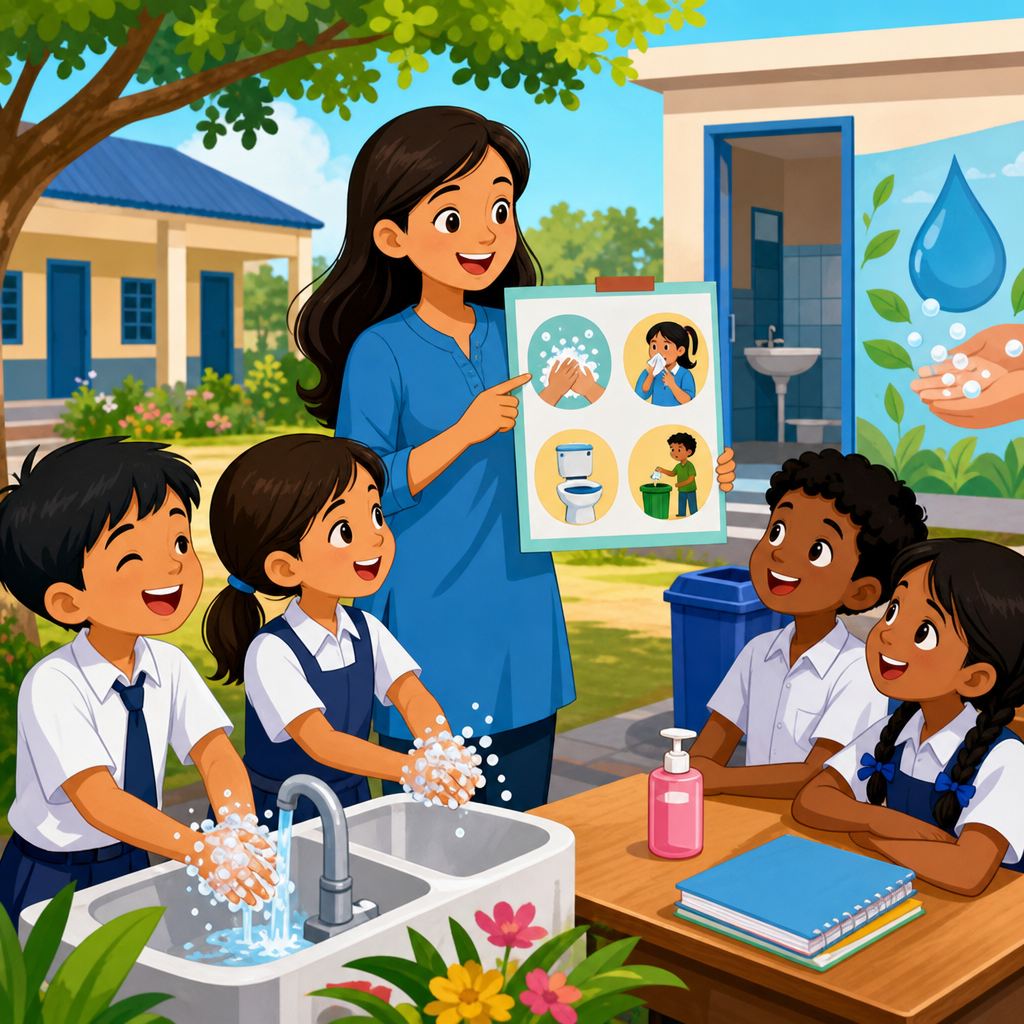
School competitions to promote sanitation awareness turn hygiene lessons into active participation, helping students understand why clean water, safe toilets, handwashing, and waste management matter in daily life. In community engagement and education programs, sanitation awareness means more than teaching children to wash their hands; it includes building knowledge, habits, social norms, and leadership that improve health at school and at home. A school competition is any structured challenge, contest, campaign, or performance activity that motivates learners to demonstrate knowledge or behavior, often through teams, deadlines, judging criteria, and public recognition. When designed well, these events become practical education tools that connect classrooms, families, teachers, local government, and health workers around shared goals.
I have seen sanitation campaigns fail when they stayed limited to posters on walls and one-time lectures. Students remembered slogans for a week, then returned to broken routines because nobody linked information to action, peer influence, or school systems. Competitions solve part of that problem by making sanitation visible and social. A handwashing relay, clean classroom scorecard, poster contest, debate on menstrual hygiene, or waste segregation challenge gives students repeated exposure to the same health messages in different formats. That repetition matters. UNICEF, WHO, and many national school health frameworks consistently show that behavior change improves when learning is participatory, reinforced, and supported by facilities.
This hub article explains how school competitions can educate for change across the full sanitation spectrum. It covers what these competitions are, why they work, how to design them, what formats deliver the best results, how to include younger children and adolescents, and how schools can measure impact beyond applause on prize day. It also serves as a central guide for the broader community engagement and education topic by linking sanitation awareness to health promotion, student leadership, parent engagement, gender inclusion, and local accountability. For schools, NGOs, and public health teams, the core benefit is clear: well-run competitions transform sanitation from a rule students hear into a practice they own.
Why school competitions work as sanitation education tools
School competitions are effective because they combine three drivers of behavior change: attention, participation, and reinforcement. Traditional teaching delivers information, but competition adds urgency and personal investment. Students want their team to win, their class to be recognized, or their idea to be displayed. That motivation increases attendance, effort, and memory. In sanitation education, where daily habits are the real outcome, this matters more than a single test score. When children practice correct handwashing steps during a timed contest or monitor litter hotspots for a clean campus challenge, they move from passive awareness to repeated action.
Competitions also make sanitation norms public. In many schools, students already know that toilets should be clean or that soap should be used, yet behavior stays inconsistent because social cues are weak. A visible competition changes that. Classrooms compare cleanliness charts. Students talk about drainage, waste bins, and toilet etiquette during assemblies. Teachers praise teams that maintain hygiene corners. What was previously a private or neglected issue becomes a common standard. This is especially useful in contexts where open discussion about sanitation, menstruation, or toilet use has been uncomfortable. A structured event gives permission to discuss practical issues without stigma.
Another reason these activities work is that they invite peer leadership. Older students can judge junior contests, sanitation club members can mentor teams, and prefects can collect monitoring data. Peer-led learning is powerful because students often imitate classmates faster than they absorb adult instructions. I have watched schools with limited budgets improve toilet use simply by assigning student monitors to explain queueing, water use, and cleaning expectations in friendly terms. The competition created a reason to organize that student leadership. It also gave teachers a manageable framework for recognition, which is vital because small wins sustain long-term programs.
Types of sanitation competitions schools can run
The best school competitions to promote sanitation awareness match the age group, available facilities, and education goals. Knowledge-focused contests work well when schools need to establish foundational understanding. These include quizzes on disease transmission, debates on open defecation, essay writing on waste management, spelling bees using hygiene terminology, and science fairs on water filtration. They are easy to organize and align with curriculum goals, but they should not stand alone. Knowledge does not automatically produce behavior change, especially when students lack practice or facilities.
Behavior-focused competitions are usually more effective for lasting sanitation outcomes. Examples include handwashing challenges before meals, toilet cleanliness scorecards by grade level, classroom waste segregation contests, reusable menstrual product awareness campaigns, and weekly inspection awards for clean drinking water stations. These formats work because they measure visible actions. A school can track whether soap is present, bins are used correctly, or classrooms maintain daily sweeping routines. Students learn that sanitation is not only something to talk about; it is something to maintain.
Creative competitions expand reach by making the message memorable. Poster contests, school murals, drama festivals, songs, poems, puppet shows, and short video campaigns allow students to explain sanitation in their own language and cultural context. In one program I supported, a school drama about a family dealing with diarrhea sparked more parent discussion than months of printed notices. Performance-based formats help schools address sensitive topics like menstrual hygiene, disability access, and bullying around toilets because stories create empathy without sounding preachy.
| Competition type | Best use | Example activity | Main education outcome |
|---|---|---|---|
| Knowledge | Introducing concepts | Quiz on fecal-oral transmission | Improved understanding of sanitation basics |
| Behavior | Building habits | Class handwashing compliance challenge | Routine hygiene practice |
| Creative | Changing attitudes | Drama on toilet etiquette and dignity | Greater empathy and message recall |
| Innovation | Solving school problems | Student design for low-cost tippy taps | Practical problem-solving |
How to design competitions that educate for change
Effective competition design starts with a specific sanitation objective. Schools should ask a simple question first: what exact change do we want to see in four to twelve weeks? Possible answers include increased handwashing with soap after toilet use, cleaner latrines, less litter in the compound, better menstrual hygiene knowledge, or safer drinking water handling. Once the objective is clear, the competition format, judging criteria, and communication plan become much easier to define. Vague campaigns produce vague results. A “clean school week” sounds good, but “reduce visible litter in the compound by 70 percent using daily class audits” is measurable and teachable.
Judging criteria should reward both effort and outcomes. If schools recognize only final results, well-resourced classes may dominate while others disengage. Better criteria include participation rates, consistency, creativity, teamwork, and demonstrated learning. For example, a toilet maintenance challenge might score classes on inspection results, student-led improvement ideas, and accurate knowledge of cleaning schedules and reporting channels. That approach teaches responsibility without unfairly blaming students for infrastructure problems they cannot control.
Schools should also align competitions with recognized standards. The Three Star Approach for WASH in Schools, national school health policies, and WHO-aligned hygiene protocols offer useful benchmarks. Using established indicators helps schools avoid superficial activities and focus on essentials such as soap availability, functional toilets, menstrual hygiene support, disability inclusion, and safe water storage. In practice, this means a competition should never reward appearance alone. A painted toilet block is not a sanitation success if locks are broken, girls lack disposal options, or water is unavailable.
Prizes matter, but not in the way many organizers assume. Expensive rewards are less important than timely, visible recognition. Certificates, assembly announcements, rotating trophies, student badges, and opportunities to present winning ideas to the school board often have stronger educational value than cash items. Recognition should reinforce the behavior being promoted. If the goal is handwashing, then celebrating the class that kept soap stations functional and demonstrated correct technique is more meaningful than giving a general “best class” award with no explanation.
Inclusion, gender, and age-appropriate sanitation engagement
Sanitation education works only when all students can participate with dignity. Younger children need simple, concrete tasks such as matching pictures of clean and dirty practices, singing handwashing songs, or joining supervised clean-up teams. Adolescents can handle debates, data collection, journalism projects, and peer education. The mistake many schools make is using one competition format for everyone. Five-year-olds and fifteen-year-olds learn differently, and their sanitation concerns differ. Younger students need routine-building and visual cues; older students need honest discussion about privacy, menstrual health, infection prevention, and leadership.
Gender inclusion deserves deliberate planning. Girls often face greater sanitation barriers at school, especially when toilets lack privacy, water, disposal systems, or menstrual hygiene materials. Competitions can help normalize these discussions if designed respectfully. Examples include student innovation contests for discreet disposal solutions, peer-led campaigns on period dignity, and mixed-gender debates that frame menstrual hygiene as a school-wide responsibility rather than a “girls’ issue.” Boys also need sanitation education that addresses toilet respect, shared responsibility, and the rejection of teasing. Where stigma is high, anonymous question boxes paired with judged awareness campaigns can open conversation safely.
Disability inclusion is equally important. A sanitation awareness competition should not celebrate access while excluding students with mobility, visual, hearing, or cognitive impairments. Schools can adapt formats through tactile materials, sign language interpretation, simplified instructions, buddy systems, and judging criteria that include accessibility audits. In one district event, students mapped barriers such as narrow toilet doors and slippery paths. That competition did more than raise awareness; it produced a facility improvement list the school used in its budget request. Inclusion is not an add-on. It is a core marker of whether sanitation education is actually equitable.
Connecting school competitions with families and the wider community
The strongest sanitation awareness programs extend beyond the school gate. Children can influence households, but only when schools create structured links to parents and community members. Competitions are ideal for this because they generate stories, artifacts, and routines families can see. A student poster taken home, a parent-child handwashing checklist, or a community clean-up event judged by local health officers turns school learning into household conversation. This is where community engagement and education become practical rather than symbolic.
Schools should invite partners strategically. Parent-teacher associations can sponsor supplies, local clinics can provide judges, sanitation workers can speak about waste systems, and municipal officials can respond to student proposals on drainage or collection points. These partnerships teach students that sanitation is a shared civic responsibility, not just a classroom rule. They also improve credibility. When a nurse explains how diarrhea spreads, or a public works officer discusses blocked drains and vector breeding, students hear how daily habits connect to real infrastructure and disease control.
Community-linked competitions are especially useful in places where school sanitation problems mirror neighborhood conditions. If students learn waste segregation at school but see open dumping outside the gate, the message weakens. A better approach is to run linked campaigns: school recycling contests, household compost demonstrations, market cleanliness days, and ward-level recognition for youth-led sanitation action. The educational value grows because students see consistency across settings. In my experience, this alignment is what turns short campaigns into durable local norms.
Measuring impact and sustaining results over time
A sanitation competition should be evaluated like any serious education intervention. The first level is participation: how many students, classes, and teachers took part? The second is learning: what knowledge improved, based on quizzes, interviews, or observation? The third is behavior: are students actually washing hands, using bins, reporting broken facilities, or keeping toilets cleaner? The fourth is system change: did the school repair infrastructure, assign responsibilities, budget for soap, or update supervision routines? Without these layers, organizers often mistake enthusiasm for impact.
Simple measurement tools work well. Schools can use baseline and endline observation checklists, soap consumption logs, toilet inspection forms, student surveys, absenteeism review, and photo documentation. Digital tools like KoboToolbox, Google Forms, or Excel dashboards can help larger programs track multiple schools, but paper scorecards remain effective for single-campus initiatives. The important point is consistency. If judges rate cleanliness differently each week, data becomes unreliable. Clear rubrics and brief staff training solve most of that problem.
Sustainability depends on embedding competitions into school systems rather than treating them as annual celebrations. Sanitation clubs, class monitors, routine inspection calendars, maintenance budgets, and links to health education lessons keep the message alive after prize day. Schools should also rotate themes over the year: hand hygiene one term, waste management the next, menstrual health and toilet dignity after that. This prevents fatigue while covering the full sanitation agenda. When leaders review results publicly and act on student feedback, competitions stop being events and become part of school improvement.
School competitions to promote sanitation awareness are most powerful when they educate for change, not merely entertain. They work because they convert health information into practice, peer influence, and community action. The most successful programs set precise objectives, use fair and visible criteria, include every learner, connect school efforts with families, and measure real outcomes such as cleaner facilities, stronger hygiene habits, and better student confidence. For educators and community partners building a strong Community Engagement and Education strategy, this hub topic offers a practical path: use competitions as structured learning systems that make sanitation everyone’s responsibility. Start with one measurable goal, one inclusive format, and one follow-up plan, then build a culture of dignity, cleanliness, and health from there.
Frequently Asked Questions
1. How do school competitions help promote sanitation awareness more effectively than regular classroom lessons?
School competitions make sanitation awareness practical, visible, and memorable. While classroom lessons are important for explaining concepts such as handwashing, clean drinking water, toilet hygiene, and waste disposal, competitions turn those ideas into active participation. Students are not only told what good sanitation looks like, but are also encouraged to demonstrate it, practice it, and promote it among their peers. This active involvement helps children connect health messages to everyday behavior in school and at home.
Competitions also create motivation through teamwork, creativity, and recognition. Activities such as poster contests, debates, quiz bowls, clean classroom challenges, handwashing demonstrations, and school-wide sanitation campaigns give students multiple ways to engage. Some learners respond best to visual expression, others to public speaking, problem-solving, or leadership. Because competitions can include many formats, they make sanitation education more inclusive and more likely to reach a broad range of students.
Another major advantage is that competitions help build social norms. When students see their classmates participating in hygiene-related challenges and being recognized for healthy habits, sanitation stops being treated as a private instruction and becomes part of the school culture. This matters because long-term sanitation improvement depends not only on knowledge, but also on repeated behavior, peer influence, and shared responsibility. In this way, competitions can strengthen both learning and habit formation, making sanitation awareness more effective and more sustainable than lessons alone.
2. What types of school competitions work best for teaching students about sanitation and hygiene?
The most effective school competitions are those that match students’ ages, available resources, and local sanitation priorities. For younger students, simple and highly visual activities often work best. Drawing competitions, storytelling sessions, classroom cleanliness contests, and supervised handwashing demonstrations can help children understand basic messages such as using toilets properly, washing hands with soap, and keeping their surroundings clean. These activities are easy to organize and help reinforce habits through repetition.
For older students, schools can introduce more analytical and leadership-based competitions. Debate contests on public health issues, science fair projects on clean water and disease prevention, essay writing on community sanitation challenges, and student-led awareness campaigns can deepen understanding. These formats encourage students to think critically about why sanitation matters, how poor hygiene contributes to illness, and what practical solutions can improve conditions in schools and communities. When students research these topics and present their ideas publicly, they often become stronger advocates for change.
Team-based competitions are especially valuable because sanitation is a shared responsibility. Inter-class clean campus challenges, recycling drives, waste segregation contests, and “best sanitation ambassador” programs can promote cooperation instead of focusing only on individual performance. In many schools, the strongest results come from combining education with action. For example, a quiz on hygiene knowledge followed by a week-long clean toilet campaign allows students to move from awareness to application. The best competition is not just entertaining; it should clearly connect student participation to real sanitation behaviors and measurable improvements in the school environment.
3. How can schools make sanitation competitions educational, inclusive, and not just about winning prizes?
To make sanitation competitions truly meaningful, schools should design them around learning goals and behavior change rather than only rewards. The first step is to define what students should understand or do by the end of the activity. These goals may include proper handwashing technique, consistent toilet use, safe water handling, waste segregation, menstrual hygiene awareness, or keeping shared spaces clean. When the purpose is clear, the competition becomes an educational tool rather than a one-time event.
Inclusiveness is equally important. Not every student is comfortable with public speaking or high-pressure contests, so schools should offer varied participation formats. Some students may contribute through artwork, songs, skits, group projects, observation logs, peer education, or community outreach. This broad approach allows children with different abilities, ages, and learning styles to take part. Schools should also ensure that girls and boys participate equally and that the competition respects the needs of students with disabilities, including access to facilities and communication materials.
Recognition should go beyond first, second, and third place. Schools can reward teamwork, creativity, improvement, leadership, and positive sanitation practices. For example, a class that shows the most progress in cleanliness or a student who consistently encourages peers to wash their hands can be acknowledged alongside top scorers. This helps students understand that sanitation is about responsibility and collective well-being, not just competition. Teachers and program organizers can further strengthen the learning impact by holding reflection sessions after the event, where students discuss what they learned, what challenges they noticed, and how they can continue good hygiene practices in daily life.
4. What should schools and community programs consider when organizing sanitation awareness competitions?
Successful sanitation competitions require thoughtful planning, not just enthusiasm. Organizers should begin by identifying the sanitation issues most relevant to the school and surrounding community. In some settings, the priority may be handwashing with soap; in others, it may be toilet use, menstrual hygiene, safe water storage, or proper waste disposal. Competitions are most effective when they reflect real local needs rather than generic health messaging. A strong theme helps students understand why the activity matters and how it connects to their own lives.
Schools should also consider logistics, fairness, and safety. Clear rules, age-appropriate judging criteria, realistic timelines, and teacher support are essential. If students are asked to participate in clean-up campaigns or facility improvement activities, supervision and basic protective measures should be in place. Organizers should avoid creating contests that unintentionally shame students for poor hygiene conditions that are outside their control, such as a lack of clean water or damaged toilets. Instead, competitions should encourage problem-solving, awareness, and shared responsibility among students, staff, and school leadership.
Partnerships can significantly improve the quality of these programs. Health workers, local government officials, parent groups, youth clubs, and sanitation-focused organizations can contribute expertise, educational materials, and sometimes small resources or prizes. Their involvement also helps connect school-based learning with community action. Importantly, competitions should not stand alone. If a school promotes handwashing but does not provide soap and water, the message loses credibility. The strongest sanitation awareness competitions are supported by an enabling environment, where infrastructure, school policy, and community engagement reinforce the behaviors being promoted.
5. How can schools measure whether sanitation competitions are actually making a difference?
Measuring impact is essential if schools want sanitation competitions to lead to lasting improvement. The simplest level of measurement is knowledge gain. Schools can use short quizzes, oral questions, or classroom discussions before and after the competition to see whether students better understand topics such as when to wash hands, how diseases spread, why safe toilets matter, and how waste should be managed. These learning checks help determine whether the competition delivered clear educational value.
However, sanitation awareness is not only about knowledge; it is also about behavior. Schools should look for practical signs of change, such as more students washing hands at key times, cleaner classrooms, proper toilet use, reduced littering, or better waste separation. Teachers, student leaders, and school health clubs can use simple observation checklists to track these behaviors over time. Attendance patterns may also offer clues, especially if improved hygiene contributes to fewer illness-related absences. In some cases, schools may gather feedback from parents to learn whether students are bringing sanitation messages home and influencing family habits.
Long-term impact is best measured by whether the competition leads to stronger routines and student leadership. If students continue hygiene clubs, organize peer education sessions, monitor cleanliness, or advocate for better facilities after the event ends, the competition has likely moved beyond awareness into sustained engagement. Schools should review what worked, what did not, and what support is needed next. This might include better access to soap, improved toilets, regular reinforcement activities, or closer parent involvement. When evaluation is built into the process, sanitation competitions become more than school events; they become part of a broader strategy for improving health, dignity, and community well-being.