Collaborative projects between schools and sanitation programs turn public health goals into daily habits, giving communities a practical way to improve hygiene, protect water sources, and build lasting local capacity. In this context, a school is more than a classroom building. It is a trusted gathering point where children, teachers, families, health workers, and local government can coordinate behavior change and infrastructure improvements. A sanitation program includes the systems, services, and educational efforts that safely manage human waste, handwashing, menstrual health needs, solid waste, and wastewater. When these two institutions work together, they create a powerful model for empowering communities through knowledge.
I have seen the difference firsthand on projects where a handwashing campaign struggled until teachers, parent committees, and municipal sanitation officers agreed on shared routines, maintenance responsibilities, and student-led outreach. Attendance improved because toilets were usable, families started asking better questions about septic tanks and desludging, and children became credible messengers at home. That is why this topic matters. Poor sanitation contributes to diarrheal disease, helminth infection, missed school days, and reduced dignity, especially for girls during menstruation. UNICEF and WHO have consistently shown that safe water, sanitation, and hygiene in schools are foundational to health and learning outcomes.
As a hub within Community Engagement and Education, this article explains how collaborative projects are designed, who participates, what interventions work, how success is measured, and where this subtopic connects to related issues such as hygiene promotion, school infrastructure, community-led monitoring, menstrual health management, and local policy advocacy. The central principle is simple: communities gain power when knowledge is shared in forms people can use. Children need practical lessons, teachers need training and time, caretakers need maintenance plans, and families need clear information on risks, costs, and services. Effective collaboration converts information into routines, and routines into healthier environments.
Why schools are strategic partners in sanitation improvement
Schools are strategic partners because they combine scale, credibility, and repetition. A sanitation message delivered once at a clinic may be forgotten. A sanitation practice reinforced every day at school becomes normal behavior. Students learn by doing: washing hands after toilet use, reporting broken taps, separating waste, and understanding why stagnant wastewater attracts pests. Teachers can connect these actions to science, civic responsibility, and environmental stewardship. In many communities, schools also host meetings, vaccination campaigns, and parent forums, making them natural anchors for broader sanitation engagement.
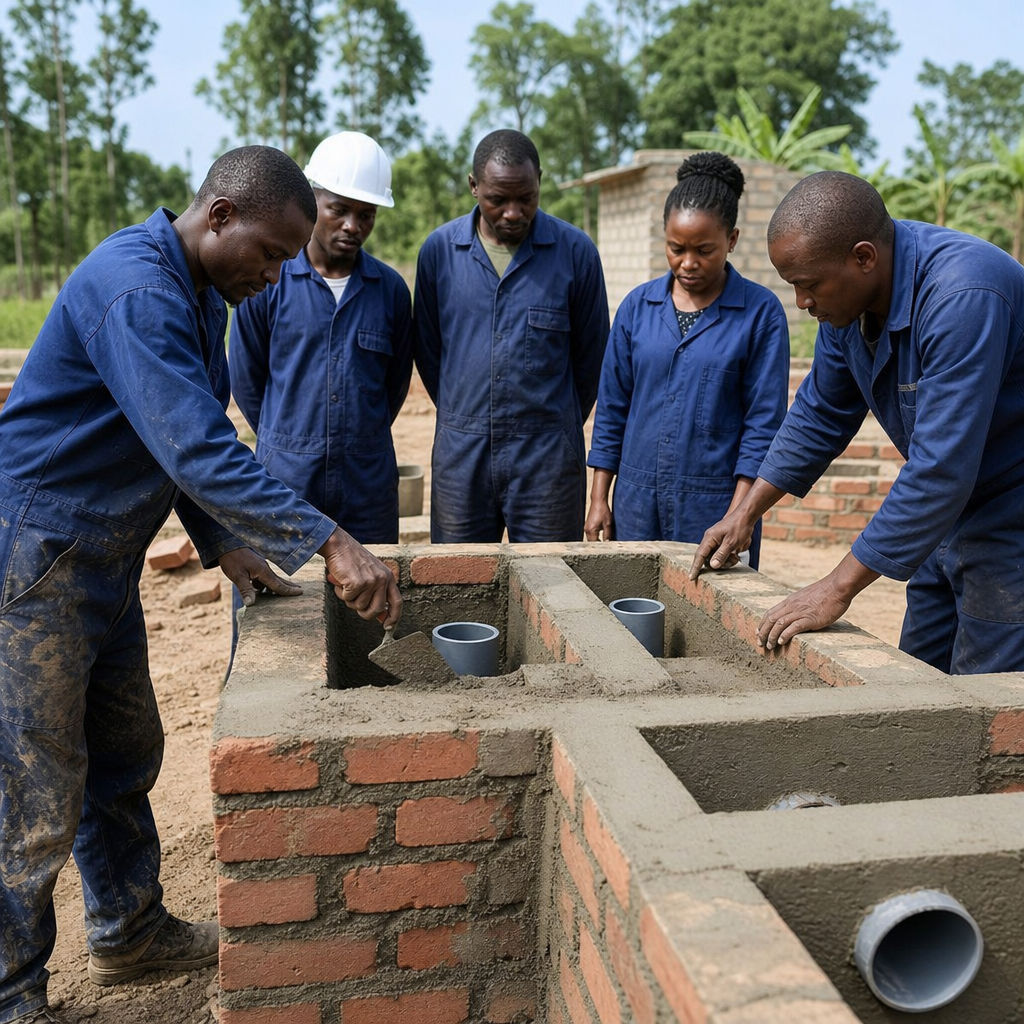
Collaborative projects work best when they align educational goals with service realities. A school may teach proper toilet use, but if pits are full, doors are broken, or soap is unavailable, education loses credibility. That is why school-sanitation partnerships must integrate hardware and software. Hardware includes toilets, handwashing stations, water access, menstrual hygiene facilities, drainage, and waste storage. Software includes lesson plans, maintenance logs, student clubs, caretaker training, behavior change materials, and referral pathways to service providers. The strongest projects budget for both from the start.
Another reason schools matter is intergenerational influence. Children often carry lessons home, but this only works when messages are concrete and relevant. Telling students to “practice hygiene” is too vague. Showing them how germs spread through contaminated hands, food, and water is memorable. Assigning them to map household handwashing stations or interview caregivers about sludge disposal creates dialogue at home. In programs I have supported, student surveys often revealed service gaps that adults had normalized, such as toilets without privacy locks or households emptying pits into drainage channels.
Core models of collaboration that empower communities through knowledge
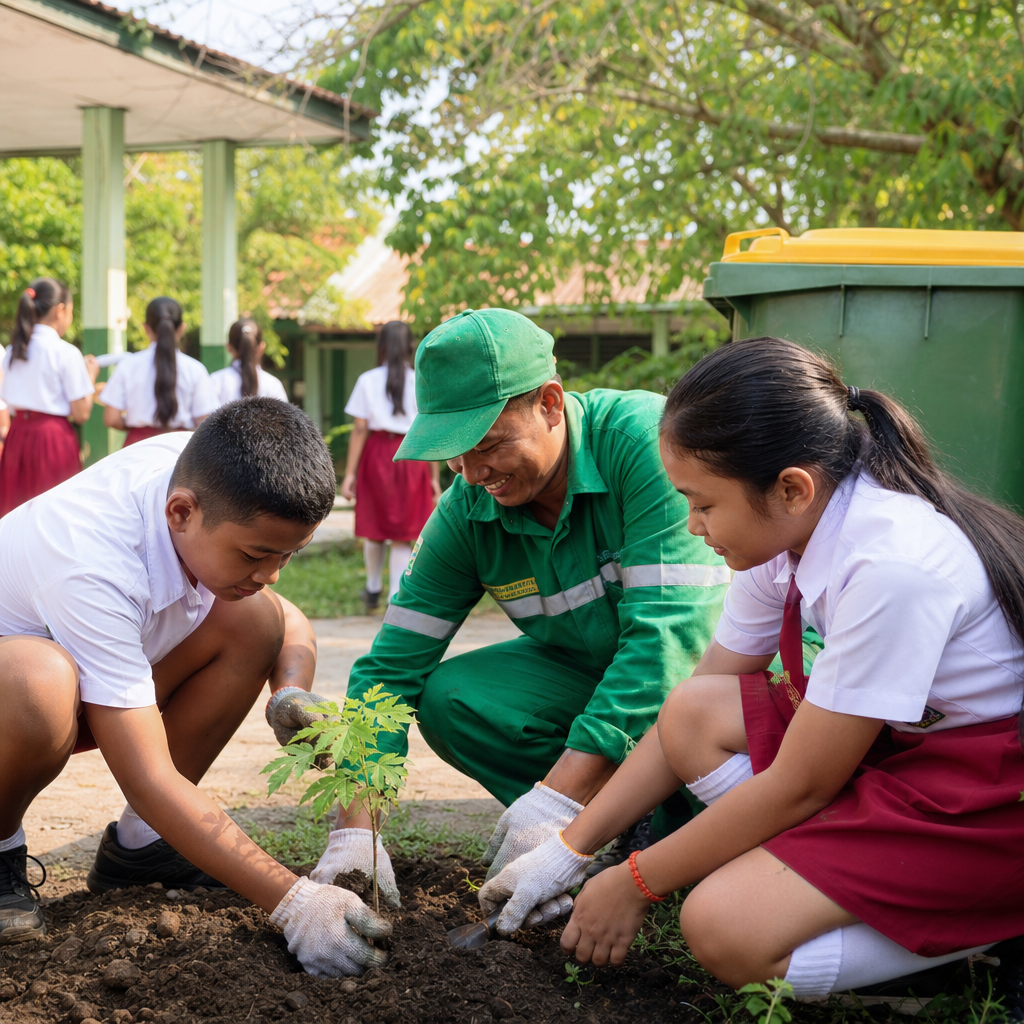
There is no single template, but successful collaborative projects usually follow a few proven models. The first is the school WASH committee, which brings together the headteacher, student representatives, parents, local health staff, and sanitation officials. This group sets priorities, tracks repairs, and oversees hygiene promotion. The second is curriculum-linked sanitation education, where lessons on disease transmission, water safety, waste management, and menstruation are integrated into existing subjects instead of treated as one-off events. The third is community outreach led by students and teachers through open days, neighborhood cleanups, school radio segments, and household campaigns.
A fourth model is facility stewardship. Here, schools partner with local government, NGOs, or utilities to define who funds construction, who handles routine cleaning, who pays for soap and minor repairs, and who arranges pit emptying or septic maintenance. This is where many projects fail if responsibilities remain informal. A memorandum of understanding, however simple, prevents confusion. The fifth model is participatory monitoring. Students and staff collect data on toilet functionality, handwashing compliance, absenteeism, and water point reliability. Shared dashboards make sanitation visible, and visible problems are more likely to be fixed.
| Collaboration model | Main participants | Primary benefit | Common risk |
|---|---|---|---|
| School WASH committee | Teachers, students, parents, health staff | Clear local coordination | Irregular meetings |
| Curriculum-linked education | Teachers, education officers | Daily reinforcement of habits | Content stays theoretical |
| Student outreach campaigns | Students, families, community groups | Knowledge spreads beyond school | Weak follow-through at home |
| Facility stewardship agreements | Schools, municipalities, service providers | Defined maintenance accountability | Unfunded repair obligations |
| Participatory monitoring | Student clubs, caretakers, administrators | Early detection of failures | Poor data quality |
These models empower communities because they make knowledge actionable. Instead of treating sanitation as a technical problem owned only by engineers, they distribute understanding across the people who use and manage facilities every day. That is the defining strength of this subtopic hub: education becomes a governance tool, not just a teaching activity.
Designing projects that combine infrastructure, behavior change, and inclusion
Good design starts with a baseline assessment. Before selecting activities, project teams should inspect toilets, count users per stall, review water availability, map handwashing locations, and ask students what prevents consistent use. International guidance from UNICEF, WHO, and many national school health standards emphasizes usability, privacy, accessibility, and maintenance, not just construction totals. A toilet block is not a success if it lacks water, lighting, doors, or safe disposal pathways. In practice, the most useful baseline combines engineering checks with focus groups involving girls, younger children, children with disabilities, teachers, and cleaners.
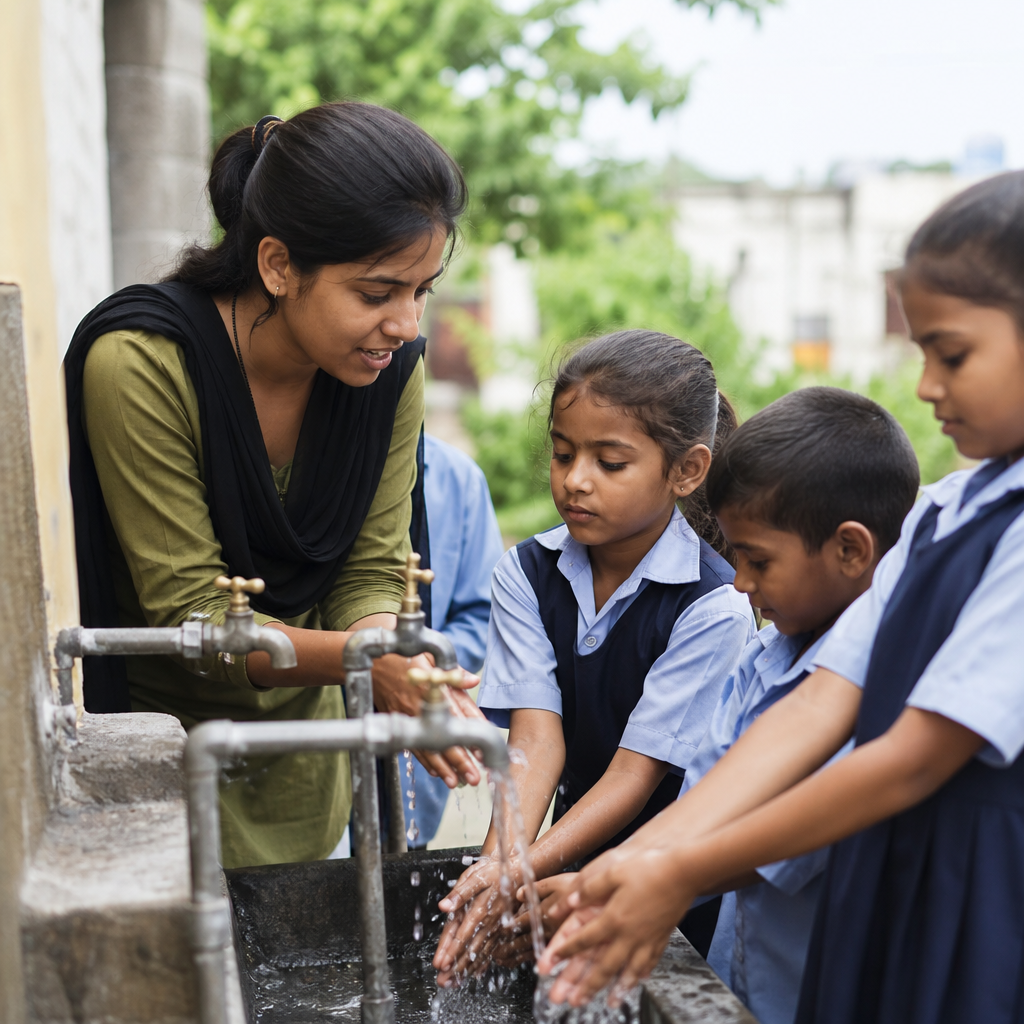
Behavior change should be designed with the same rigor as infrastructure. Posters alone rarely shift habits. Effective school sanitation projects use routines, cues, supervision, and social reinforcement. For example, schools can place handwashing stations directly outside toilets, paint footprints leading to sinks, assign rotating hygiene monitors, and schedule supervised handwashing before meals. Teachers can use simple demonstrations with glitter or colored powder to show contamination transfer. Repetition matters. So does convenience. If soap is locked away in an office to prevent theft, handwashing rates will fall.
Inclusion is not optional. Girls need private, safe toilets with disposal bins, water, and space to manage menstruation. Younger children need age-appropriate facilities and support using them correctly. Students with mobility limitations may require ramps, handrails, wider doors, and adapted cubicles. Neurodiverse learners may need clearer signage and calmer spaces. I have seen schools declare a sanitation project complete while cleaners had no gloves, girls had nowhere to dispose of pads, and a wheelchair user could not enter the toilet block. That is not community empowerment. It is partial delivery presented as success.
Projects also need environmental fit. In flood-prone areas, raised latrines or sealed containment may be necessary. In dense peri-urban settlements, schools may depend on septic systems and scheduled desludging rather than pits. In water-scarce regions, low-flush or dry options may be more sustainable, but only if users are trained and maintenance capacity exists. Technology choice should follow operation and maintenance reality, not donor preference. The most durable solution is the one the community can understand, finance, monitor, and repair.
Roles of teachers, students, families, and local institutions
Each stakeholder contributes a different form of knowledge. Teachers translate sanitation into understandable lessons and daily expectations. Students test whether systems are actually usable and often notice failures first. Families reinforce habits at home and influence whether household investments, such as tippy taps or toilet upgrades, are adopted. Local health departments contribute disease prevention expertise. Municipal sanitation teams or utilities connect schools to desludging schedules, sewer links, waste collection, and water quality oversight. NGOs often support training, pilot methods, and monitoring systems, but they should not replace local ownership.
Student leadership deserves special attention. Health clubs, prefect systems, peer educators, and eco-clubs can normalize positive behaviors without making sanitation feel punitive. Older students can mentor younger ones on toilet etiquette, handwashing, and waste segregation. They can also help collect simple indicators, such as soap availability or broken locks, if adults verify the data. The aim is not to shift adult responsibilities onto children. It is to give students structured participation in decisions that affect their health and dignity.
Families are most engaged when projects respect local realities. If a school promotes pour-flush toilets in a community where water is unreliable, families may dismiss the message as unrealistic. If a campaign discusses safe fecal sludge management, handwashing with soap, and child-friendly toilet design using practical examples and local service contacts, participation improves. Parent-teacher associations can become strong sanitation allies when they see clear costs, responsibilities, and benefits. In several programs, the turning point came when parents reviewed maintenance budgets and understood why small monthly contributions prevented expensive emergency repairs.
Local institutions matter because sanitation is a service chain, not a single facility. Toilets must be cleaned, repaired, emptied, and connected to safe disposal or treatment. Wastewater must drain properly. Solid waste must not block systems. Schools cannot manage these chains alone. Sustainable collaboration requires links to approved service providers, public budgets, and local regulations. Where those links are absent, school projects should advocate upward rather than pretending self-sufficiency.
Measuring success and linking this hub to wider community education
Measurement should answer a practical question: are students safer, healthier, and better able to learn because of this collaboration? Useful indicators include student-to-toilet ratio, percentage of functional toilets, soap and water availability, cleaning frequency, time to repair faults, attendance patterns, menstrual health-related absenteeism, and household adoption of key practices. Some outcomes, such as reduced diarrheal disease, are influenced by many factors and should be interpreted carefully. Still, tracking school and community indicators together gives a more honest picture than counting facilities alone.
Good monitoring blends quantitative and qualitative evidence. Spot checks can confirm whether taps work and soap is present. Student interviews can reveal whether toilets feel safe and private. Cleaner logs can show whether supplies run out midweek. Community mapping can identify illegal dumping, blocked drains, or unsafe sludge disposal near homes. Digital tools such as KoboToolbox, ODK, and simple spreadsheet dashboards make school-level tracking feasible even in low-resource settings. The important point is regular review. Data that sits in a binder does not improve sanitation.
As the hub page for Empowering Communities through Knowledge, this topic links naturally to deeper articles on hygiene education methods, menstrual health management in schools, sanitation financing, inclusive toilet design, community-led total sanitation, school waste management, water safety planning, and monitoring frameworks. Readers exploring this hub should understand that school collaboration is not a side project within community engagement. It is one of the most effective platforms for turning technical sanitation goals into shared public understanding and daily practice.
Collaborative projects between schools and sanitation programs succeed when they treat knowledge as infrastructure. Facilities matter, but so do routines, accountability, and local problem-solving capacity. Schools can teach the why of sanitation, demonstrate the how, and connect families to the systems that keep services working. The best projects combine usable toilets, reliable handwashing, menstrual health support, clear maintenance arrangements, student participation, and measurable follow-up. They acknowledge tradeoffs, adapt to context, and build from existing community strengths rather than importing generic solutions.
For communities, the benefit is larger than cleaner school grounds. Children miss fewer classes, girls have more dignity and continuity in learning, families gain practical information, and local institutions coordinate more effectively around health. For practitioners, educators, and local leaders, this hub offers a framework for planning connected work across education and sanitation instead of treating them as separate sectors. Use it as a starting point: assess current conditions, define shared responsibilities, involve students and families early, and build the next phase of community education around actions people can sustain.
Frequently Asked Questions
1. What are collaborative projects between schools and sanitation programs?
Collaborative projects between schools and sanitation programs are coordinated efforts that connect education, public health, and community services to improve hygiene, sanitation access, and long-term health outcomes. In practice, this means schools work alongside sanitation agencies, local government, health workers, community leaders, and sometimes nonprofit organizations to identify sanitation needs and turn solutions into everyday routines. These projects may include building or upgrading toilets and handwashing stations, creating safe water access points, organizing hygiene education campaigns, improving waste management systems, and teaching students how sanitation protects both personal health and the local environment.
What makes these partnerships especially effective is that schools are already trusted community spaces. Children learn new habits quickly, teachers can reinforce them consistently, and families often adopt practices that students bring home. At the same time, sanitation programs contribute technical expertise, service delivery systems, maintenance planning, and standards for safety and quality. When both sides work together, sanitation stops being treated as a one-time construction issue and becomes part of a broader culture of health, responsibility, and community participation.
2. Why are schools such important partners in sanitation improvement efforts?
Schools are uniquely valuable because they bring together large numbers of children, staff, and families on a regular basis, making them ideal settings for lasting behavior change. Good sanitation depends not only on infrastructure but also on daily habits such as handwashing with soap, safe toilet use, menstrual hygiene management, drinking water protection, and proper waste disposal. Schools provide a structured environment where these behaviors can be taught, practiced, monitored, and normalized. When students experience clean, functional sanitation facilities every day, they begin to see hygiene as a standard part of life rather than an occasional instruction.
Schools also have influence beyond their walls. Students often carry lessons home, and parents are more likely to engage when sanitation messages are connected to their children’s health and attendance. Teachers can reinforce public health guidance, student clubs can lead peer education, and school administrators can coordinate with local authorities to report gaps and support maintenance. In many communities, a school is one of the few institutions that regularly connects households, local government, and service providers. That makes it a practical hub for improving sanitation systems, protecting water sources, and building community-wide awareness.
3. What kinds of activities are typically included in school and sanitation program partnerships?
These partnerships often combine infrastructure improvements with education and community engagement. On the infrastructure side, common activities include constructing or rehabilitating toilets, installing handwashing stations with soap and water, improving drainage, organizing waste collection, creating accessible facilities for students with disabilities, and ensuring safe water storage and treatment. Some projects also include menstrual hygiene facilities such as private changing spaces, disposal systems, and reliable water access so that all students can attend school with dignity and comfort.
Equally important are the behavior-change and capacity-building activities that support those physical improvements. Schools may integrate hygiene lessons into the curriculum, hold student-led campaigns, create sanitation clubs, conduct clean-up days, and invite health workers to lead demonstrations on disease prevention. Teachers and school management committees may receive training on facility oversight, maintenance schedules, and reporting problems early. Families and community members may be involved through meetings, volunteer labor, awareness events, and local monitoring groups. The strongest collaborative projects do not stop at installing facilities; they build the knowledge, systems, and accountability needed to keep those facilities functional and well used over time.
4. How do collaborative sanitation projects benefit students and the wider community?
The benefits are immediate and long-term. For students, improved sanitation means a cleaner, safer, and more supportive learning environment. Access to toilets, handwashing facilities, and safe water reduces exposure to germs that cause diarrhea, intestinal infections, and other preventable illnesses. That can lead to fewer absences, better concentration in class, and stronger overall well-being. For girls in particular, appropriate sanitation and menstrual hygiene support can make a major difference in attendance, comfort, privacy, and retention in school. When facilities are inclusive and well maintained, students with disabilities also have a better chance of participating fully in school life.
For the wider community, the impact often spreads well beyond the school grounds. As students practice hygiene and understand why sanitation matters, they influence household routines and community expectations. Parents may begin prioritizing handwashing stations at home, safer water handling, or better waste disposal. Local leaders may become more willing to invest in sanitation when they see visible results at the school level. Over time, collaborative projects can help protect shared water sources, reduce environmental contamination, strengthen public trust in local services, and build a generation that sees sanitation as a shared civic responsibility rather than someone else’s job.
5. What makes a school-sanitation collaboration successful and sustainable?
Successful collaborations usually share several core features: clear roles, local ownership, practical planning, and ongoing maintenance. Schools cannot carry the burden alone, and sanitation programs are most effective when they do more than deliver hardware. A strong project begins with a realistic assessment of needs, including the number of students, water availability, accessibility requirements, privacy concerns, maintenance capacity, and local health risks. From there, partners should define who is responsible for funding, construction, behavior-change education, supplies such as soap, routine cleaning, repairs, and monitoring. When responsibilities are unclear, facilities often fall into disrepair even if the original project was well designed.
Sustainability also depends on community participation and simple systems that people can maintain locally. Teachers, students, school committees, caretakers, health personnel, and local officials should all understand how the project works and why it matters. Regular inspections, hygiene promotion, student engagement, and dedicated budgets for cleaning and repairs are essential. It also helps to track outcomes such as facility use, handwashing behavior, attendance, and maintenance needs so that problems can be addressed early. The most durable school-sanitation partnerships are not one-time campaigns. They are ongoing community systems that combine infrastructure, education, service support, and accountability to create healthier habits that last.