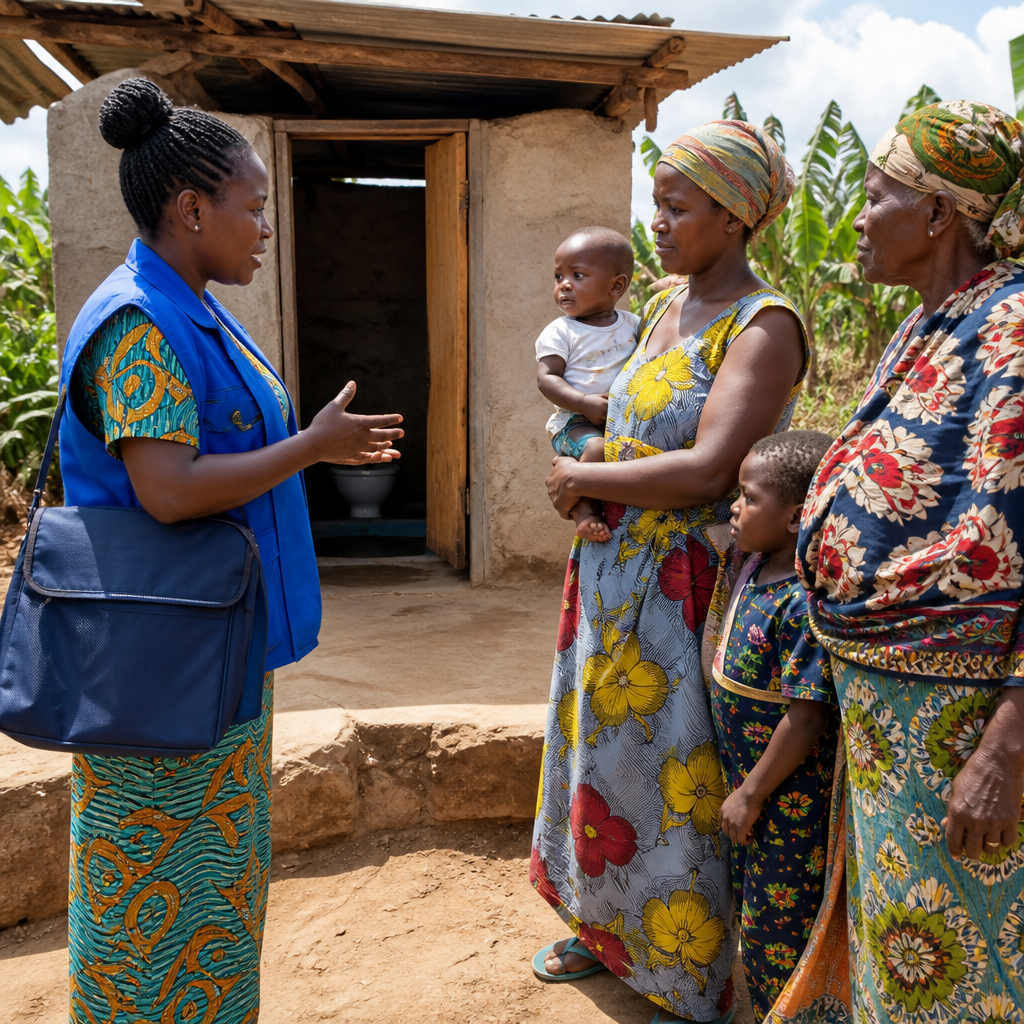
Community health workers are often the most effective link between sanitation systems and the daily habits that determine whether those systems improve health. In the context of Enhancing Health Through EcoSan, their role is especially important because ecological sanitation does more than move waste away from homes. It treats human waste as a resource, protects water, reduces disease transmission, and creates practical pathways for safer communities. EcoSan, short for ecological sanitation, refers to sanitation approaches designed to safely contain, treat, and reuse nutrients from human excreta while minimizing environmental harm. Community health workers translate that technical model into behavior change people can understand, trust, and sustain.
I have seen sanitation projects fail not because the toilet technology was poor, but because nobody explained maintenance, handwashing, storage safety, or why urine diversion mattered. I have also seen modest projects succeed because a trained local worker visited households repeatedly, answered questions without judgment, and connected sanitation with child health, dignity, and household economics. That is why community health workers matter in sanitation: they bridge the gap between infrastructure and adoption. They turn a latrine, composting unit, or handwashing station into a functioning public health intervention.
This hub article explains how community health workers support EcoSan programs, where they create measurable health gains, and what implementation lessons matter most for local governments, nonprofits, clinics, schools, and community groups. It also serves as an organizing page for the wider Health and Safety topic by connecting disease prevention, hygiene education, waste handling, water protection, and safe resource recovery into one practical framework. If a reader wants to understand how sanitation becomes healthier, safer, and more sustainable at community level, this is the starting point.
Why EcoSan matters for community health
Sanitation is not only about convenience. It is one of the strongest determinants of infectious disease burden, child growth, school attendance, and environmental exposure. According to the World Health Organization and UNICEF Joint Monitoring Programme, billions of people still lack safely managed sanitation, and unsafe sanitation remains tied to diarrheal disease, helminth infection, environmental enteric dysfunction, and contamination of local water sources. EcoSan addresses these risks by focusing on containment, treatment, and reuse rather than simple disposal. That matters in water-scarce regions, dense settlements, flood-prone areas, and agricultural communities where nutrient recovery has direct value.
Unlike conventional sewer-dependent systems, EcoSan can be decentralized. Common examples include urine-diverting dry toilets, composting toilets, arborloos, container-based sanitation models, and systems that treat fecal sludge for agricultural application under controlled conditions. The health benefit comes from breaking fecal-oral transmission pathways. The environmental benefit comes from reducing groundwater contamination and reclaiming nitrogen, phosphorus, and organic matter. The economic benefit can include lower water use, reduced fertilizer purchases, and lower transport demands where centralized systems are unrealistic.
Still, the technology alone does not deliver outcomes. Safe use depends on correct separation, ash or cover material application where required, sealed storage, treatment time, pathogen die-off, hand hygiene, and culturally acceptable reuse practices. This is where community health workers become indispensable. They help households move from awareness to consistent safe behavior, which is the difference between theoretical sanitation coverage and actual health protection.
The frontline role of community health workers
Community health workers operate at the intersection of public health, education, and local trust. In sanitation programs, their job is not limited to distributing leaflets or recording toilet ownership. Effective workers assess household practices, identify barriers, conduct follow-up visits, reinforce key safety steps, and escalate complex issues to environmental health officers, engineers, or clinic staff when needed. In many places, they are the first people residents call when a toilet smells, fills too quickly, attracts flies, or causes family concern.
In EcoSan settings, their responsibilities usually include explaining how specific systems work, demonstrating routine maintenance, supporting safe fecal sludge handling protocols, teaching handwashing with soap at critical times, and correcting misconceptions about pathogen risk and reuse. They also play a monitoring role by observing whether facilities are accessible for children, older adults, and people with disabilities, whether water is stored safely nearby, and whether households have soap, ash, or other essential supplies.
The trust factor is critical. A sanitation engineer may understand vault design and dehydration parameters, but a community health worker understands local language, household dynamics, gender norms, and the reasons people resist changing long-established habits. I have watched households reject technically sound systems during initial installation, then accept them after a respected community worker framed the system in practical terms: less smell, fewer flies, safer play areas for children, and useful compost after proper treatment. Technical accuracy matters, but translation into lived reality matters just as much.
How community health workers make EcoSan adoption stick
Adoption succeeds when people know what to do, why it matters, and how to solve common problems quickly. Community health workers support all three. They teach operational basics such as keeping urine and feces separated in a urine-diverting dry toilet, adding dry cover material after use, cleaning pans without excess water when the design requires dryness, and allowing sufficient storage time before handling treated material. They explain why each step exists, linking practice directly to pathogen reduction, odor control, and vector prevention.
They also reduce abandonment rates by addressing confusion early. For example, if a household pours wash water into a dry vault, moisture rises, odor increases, and decomposition may not proceed as intended. A worker can spot that in a follow-up visit, explain the design limitation, and suggest a separate greywater channel or soak pit. If users fear that reuse is inherently unsafe, the worker can explain treatment stages, storage periods, and crop restrictions in plain language. If women report privacy concerns, workers can push for design modifications such as interior locks, lighting, menstrual hygiene provisions, and easier cleaning surfaces.
Behavior change in sanitation is rarely linear. Households may adopt handwashing but neglect pit sealing, or maintain toilets well but mishandle child feces. Community health workers help integrate the full chain of safe sanitation behavior rather than isolated actions. That systems view is essential in EcoSan because one weak point in containment, treatment, transport, or reuse can undermine the health benefits of the entire approach.
Core tasks that improve health and safety
When EcoSan programs work well, community health workers usually perform a defined set of tasks consistently. The most effective programs train workers not just once, but through refresher sessions, supervision, and field coaching.
| Task | What the worker does | Health and safety benefit |
|---|---|---|
| Household assessment | Checks toilet use, cleanliness, water access, soap availability, and waste flow | Finds breakdowns in the sanitation chain before exposure risks increase |
| Hygiene education | Teaches handwashing after defecation, before food handling, and after child care | Reduces fecal-oral disease transmission |
| System-specific coaching | Explains urine diversion, cover materials, vault rotation, and safe emptying intervals | Improves correct operation and lowers pathogen exposure |
| Risk communication | Clarifies what treated waste can be used for, on which crops, and after what storage time | Prevents unsafe reuse and builds confidence through clear rules |
| Referral and escalation | Connects households to technicians, clinics, or authorities when hazards appear | Prevents minor failures from becoming major public health problems |
These tasks may sound simple, but they require judgment. A worker must know whether a bad smell points to moisture imbalance, vent blockage, poor cleaning practice, or structural defects. They must distinguish between routine educational needs and actual outbreak signals, such as multiple diarrhea cases linked to flooding or shared facility overflow. The strongest programs give workers checklists, visual aids, and clear referral criteria so their decisions are consistent and auditable.
Health outcomes linked to stronger sanitation outreach
The main public health value of community health workers in EcoSan is risk reduction across the full sanitation pathway. Better toilet use and maintenance can reduce open defecation and environmental contamination. Better hand hygiene lowers transmission of enteric pathogens. Better child feces disposal protects courtyards and play spaces. Better treatment and reuse practices reduce direct contact with viable pathogens in excreta and sludge.
These gains are especially relevant for children under five, who face the highest risk from diarrheal disease and repeated exposure to contaminated environments. Safer sanitation also supports maternal health, school participation for girls, and safer living conditions for older adults and immunocompromised people. In flood-prone communities, decentralized EcoSan systems can outperform poorly maintained pits that overflow into water sources. In water-scarce settings, dry systems conserve water while still supporting hygiene if handwashing infrastructure is planned properly.
Results do vary. Sanitation improvements alone may not immediately eliminate disease where water quality, drainage, housing density, and food hygiene remain poor. That limitation should be stated clearly. However, community health workers increase the odds that EcoSan delivers its intended benefits because they integrate sanitation with the broader health environment instead of treating a toilet as a stand-alone asset.
Training, supervision, and trust-building
Effective sanitation outreach depends on worker preparation. At minimum, training should cover disease transmission pathways, local sanitation technologies, safe handling procedures, menstrual hygiene management, disability inclusion, behavior change methods, and basic data collection. Workers should be able to explain concepts like pathogen die-off, dehydration, compost maturation, cross-contamination, and safe storage without using jargon that confuses households.
Supervision matters just as much as initial training. In programs I have evaluated, the biggest performance gap was not motivation but inconsistent support. Workers need field observation, refresher coaching, and practical troubleshooting guides. They also need protective equipment where handling or inspection creates exposure risk. If a program expects workers to promote reuse of treated waste, it should align with national sanitation guidelines, agricultural extension advice, and public health safeguards. Mixed messages from different agencies quickly erode trust.
Trust-building requires cultural competence. Communities may have taboos around handling excreta, concerns about smell or status, or fear that low-water systems are inferior to flush toilets. Workers must acknowledge those concerns respectfully, not dismiss them. Demonstration sites, peer champions, school engagement, and visible cleanliness standards often help normalize new practices faster than brochures alone.
Building a strong EcoSan hub within Health and Safety
As a hub topic, Enhancing Health Through EcoSan should connect readers to every major issue that shapes safe sanitation outcomes. That includes toilet design options, fecal sludge management, hand hygiene, greywater handling, pathogen reduction, compost safety, urine reuse, school sanitation, emergency sanitation, and monitoring indicators. Community health workers are the practical thread linking all of those topics. They turn technical guidance into repeated household action, and they feed community realities back into program design.
For organizations building content or services around this hub, internal connections should be clear. A reader exploring EcoSan for a school needs linked guidance on menstrual hygiene, disability access, cleaning protocols, and student health education. A municipality comparing sanitation options needs linked material on lifecycle cost, maintenance models, sludge treatment, and environmental compliance. A rural health project needs linked resources on agricultural reuse standards, behavior change campaigns, and household monitoring tools. Hub pages work best when they map the whole system, not just one device.
Measurement should also be part of the hub. Useful indicators include consistent toilet use, presence of soap at handwashing stations, safe storage duration before reuse, fly and odor control, user satisfaction, diarrhea reporting trends, desludging safety, and groundwater protection where relevant. These measures help decision-makers move beyond installation counts toward real health performance.
Community health workers bridge the gap in sanitation because they bridge the gap between systems and people. In EcoSan, that role is decisive. They explain how ecological sanitation works, help households use it correctly, catch problems early, and connect sanitation behavior to disease prevention, dignity, and environmental protection. Without them, even well-designed facilities can become misunderstood, misused, or abandoned. With them, communities are far more likely to achieve the core promise of Enhancing Health Through EcoSan: safer waste management, healthier households, and more resilient local environments.
The key takeaway is simple. Sanitation infrastructure matters, but health outcomes depend on daily practice, and daily practice changes through trusted local support. Community health workers provide that support through education, follow-up, risk communication, and problem-solving grounded in community realities. They are not an optional add-on to EcoSan programs. They are a central delivery mechanism for making sanitation safer and more effective.
If you are building a Health and Safety strategy around EcoSan, start by strengthening the community workforce alongside the technology. Train workers well, support them consistently, measure what households actually do, and connect this hub to deeper guidance on hygiene, treatment, reuse, and maintenance. That is how sanitation improvements translate into lasting public health gains.
Frequently Asked Questions
What do community health workers actually do in sanitation programs?
Community health workers serve as the practical bridge between sanitation infrastructure and the everyday behaviors that make that infrastructure effective. Building toilets, introducing handwashing stations, or promoting ecological sanitation systems is only part of the solution. Lasting health gains happen when families understand how to use these systems correctly, maintain them consistently, and connect them to broader hygiene practices such as handwashing, safe water storage, menstrual hygiene, child feces management, and food safety. Community health workers help translate public health guidance into actions that fit local routines, beliefs, and constraints.
In many communities, they conduct home visits, lead small-group education sessions, demonstrate proper toilet use and cleaning, answer questions about odor, safety, and maintenance, and identify barriers that prevent adoption. They may also track sanitation-related illnesses, refer households for additional support, and reinforce key messages over time so that behavior change becomes sustainable rather than temporary. Because they are often trusted local figures, they can address stigma, myths, and resistance more effectively than outside experts. Their role is not simply to deliver information, but to build confidence, encourage consistent practice, and make sanitation improvements meaningful in daily life.
Why are community health workers especially important for ecological sanitation, or EcoSan?
Ecological sanitation, commonly called EcoSan, requires more than a one-time installation because it introduces a different way of thinking about human waste. Instead of treating waste only as something to remove, EcoSan systems aim to safely contain, treat, and in some cases reuse nutrients in ways that protect public health and the environment. That shift can be highly beneficial, but it also means households need clear guidance on correct use, safe handling, maintenance routines, and the reasons these practices matter. Community health workers are essential because they help people move from unfamiliarity to confidence.
They explain how EcoSan systems can reduce contamination of water sources, lower disease transmission, conserve nutrients, and support healthier surroundings when managed properly. Just as importantly, they help households understand the practical details that determine success, such as separating waste streams where required, adding treatment materials correctly, storing treated matter safely, and following hygiene precautions. Without this kind of ongoing support, even well-designed EcoSan systems may be misunderstood, underused, or misused. Community health workers help ensure that the health, environmental, and social benefits of EcoSan are realized in real-world conditions, not just in theory.
How do community health workers help reduce disease through better sanitation habits?
Community health workers reduce disease risk by focusing on the chain of transmission. Many sanitation-related illnesses spread when pathogens from human waste contaminate hands, water, soil, food, or household surfaces. A toilet alone does not break that chain if people continue unsafe disposal practices, skip handwashing with soap, leave children’s feces unmanaged, or allow wastewater and waste storage areas to become sources of contamination. Community health workers help households understand these pathways and adopt specific behaviors that interrupt them.
For example, they may teach families to wash hands after toilet use and before preparing food, keep sanitation areas clean, ensure children use age-appropriate facilities, dispose of feces safely, and protect drinking water from contamination. In EcoSan settings, they also reinforce proper treatment and storage procedures so that any reuse components remain safe and controlled. Their guidance is often personalized, which matters because barriers differ from one household to another. Some families may need low-cost hygiene solutions, others may need reassurance about safety, and others may need help organizing maintenance responsibilities. By turning broad health recommendations into daily habits, community health workers help lower the incidence of diarrhea, intestinal infections, parasitic disease, and other sanitation-related illnesses.
What challenges do community health workers face when promoting sanitation and EcoSan systems?
Community health workers often work at the point where technical sanitation goals meet complex social realities. One major challenge is behavior change. Sanitation practices are deeply connected to habit, culture, privacy, gender roles, and perceptions of cleanliness and dignity. Even when people recognize the value of improved sanitation, cost concerns, limited water access, maintenance demands, fear of odor, or discomfort with unfamiliar systems can slow adoption. In the case of EcoSan, the idea of handling treated waste or viewing it as a resource can also face strong cultural resistance unless communication is respectful, clear, and evidence-based.
They may also face operational obstacles such as large service areas, limited supplies, inconsistent training, weak referral systems, or inadequate follow-up support from health and sanitation institutions. In some settings, households need infrastructure repairs or technical assistance that health workers alone cannot provide. Despite these difficulties, community health workers remain effective because they can identify local barriers early, build trust over repeated interactions, and relay community concerns back to program leaders. Their experience on the ground often reveals what must change for a sanitation initiative to succeed, whether that means improving education materials, adapting technology, strengthening maintenance systems, or involving local leaders more directly.
How can sanitation programs better support community health workers for long-term success?
Sanitation programs can support community health workers most effectively by treating them as central actors in public health improvement rather than as an afterthought to infrastructure delivery. That starts with strong training that covers not only sanitation and hygiene basics, but also the specific design, use, troubleshooting, and safety aspects of EcoSan systems. Workers need to understand both the technical and behavioral sides of sanitation so they can answer questions accurately, build trust, and respond to household concerns with confidence. Refresher training is equally important because community conditions, technologies, and public health priorities can change over time.
Programs should also provide practical tools such as visual education materials, clear referral pathways, protective supplies where needed, data collection systems, and transportation or logistical support for household outreach. Fair compensation, supervision, and recognition matter as well, because sustained community engagement requires time, consistency, and motivation. Just as importantly, successful programs create feedback loops: community health workers should be able to report challenges, suggest adaptations, and influence how sanitation interventions are implemented. When they are well-supported, they do far more than deliver messages. They help create community ownership, improve correct use of sanitation systems, strengthen disease prevention, and make the promise of healthier, safer, and more sustainable sanitation outcomes far more achievable.