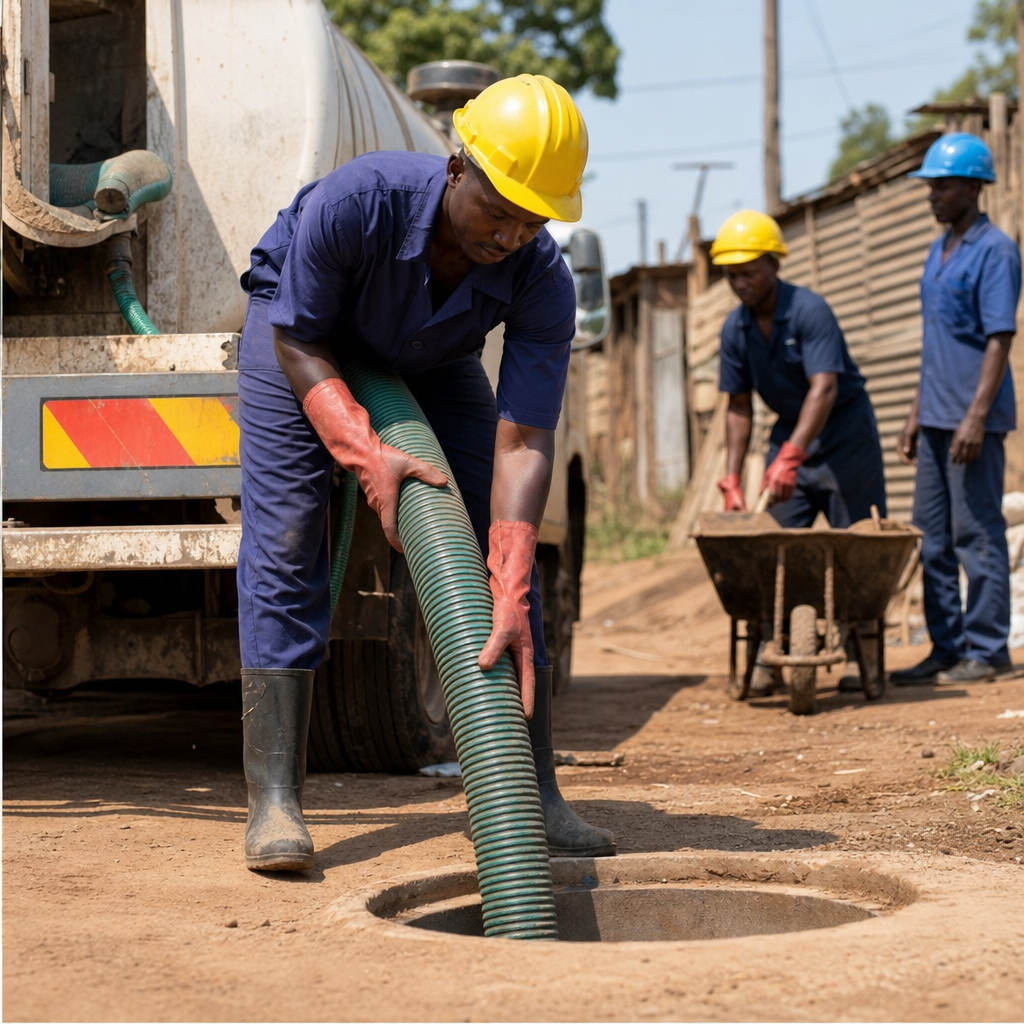
Cost analysis of different sanitation technologies is the practical foundation of understanding EcoSan economics, because sanitation decisions succeed or fail on lifecycle cost, service reliability, resource recovery value, and the local capacity to operate each system over time. In this context, sanitation technologies include conventional sewered systems, septic tanks, pit latrines, urine-diverting dry toilets, composting toilets, container-based sanitation, and decentralized wastewater treatment. EcoSan, or ecological sanitation, refers to systems designed to protect health while recovering nutrients, water, energy, or organic matter from human waste. I have worked on sanitation budgeting exercises where the cheapest option on paper became the most expensive after desludging delays, groundwater contamination, or failed maintenance contracts. That is why a serious cost analysis must go beyond construction price. It should account for capital expenditure, operating expenditure, major rehabilitation, financing costs, user time, land needs, treatment performance, and the market value of recovered outputs such as compost, struvite, biogas, or irrigation water. This matters for municipalities, utilities, schools, humanitarian programs, housing developers, and households because sanitation creates long-term obligations, not one-time purchases. A pit latrine may look affordable, yet replacement frequency, emptying access, and environmental risk can raise its true cost. A sewer network may deliver high convenience, yet pumping energy, infiltration, and treatment plant underuse can undermine value. EcoSan economics helps decision-makers compare options on a common basis, usually cost per household, cost per user per year, or cost per cubic meter or kilogram of pollutant managed. It also helps identify where subsidies are justified, where tariffs can cover service, and where recovered resources offset expenses. For an economic hub page, the core question is simple: which sanitation technology provides the best health, environmental, and financial outcome under real local conditions?
How sanitation costs should be measured
The first rule in cost analysis is to use lifecycle costing rather than upfront price alone. In sanitation planning, costs are usually grouped into capital expenditure for construction and equipment, operating expenditure for labor, energy, water, consumables, and routine servicing, and capital maintenance expenditure for major repairs or replacement of tanks, pumps, slabs, liners, and treatment units. A complete comparison also includes direct support costs such as monitoring, regulation, operator training, billing, customer service, and community engagement. In citywide inclusive sanitation work, these support costs are often ignored even though they determine whether fecal sludge is actually collected and treated. The result is a misleadingly low estimate.
A sound methodology standardizes assumptions. Analysts define design life, discount rate, inflation treatment, household size, sludge accumulation rates, and utilization level before comparing technologies. For example, a urine-diverting dry toilet serving a five-person household in a water-scarce rural area should not be benchmarked against a waterborne sewer in a dense apartment block without adjusting for occupancy, water tariff, and land cost. I typically convert all options into equivalent annual cost so decision-makers can compare systems with different asset lives. A septic tank with periodic desludging and a composting toilet with regular cover material use may have similar annualized costs even if construction costs differ sharply.
Benefits should also be monetized where credible data exist. Reduced healthcare costs from lower diarrheal disease, time saved from not walking to shared facilities, avoided fertilizer purchases from nutrient reuse, and lower water consumption from dry systems all have economic value. The World Health Organization has repeatedly shown that sanitation investments produce returns through health and productivity gains, but those returns vary with context, service quality, and user behavior. Cost analysis is strongest when it combines financial cost with service outcomes rather than treating all technologies as equal in performance.
Comparing major sanitation technologies by cost drivers
Different sanitation technologies have distinct cost structures, and understanding those cost drivers is the center of EcoSan economics. Sewered sanitation is dominated by high network capital cost. Pipes, manholes, house connections, pumping stations, and wastewater treatment plants require major investment, especially where terrain is flat, groundwater is high, or roads are already built up. However, in dense urban areas with stable utility management and strong billing systems, sewers can spread fixed costs across many users. The key economic risk is underloading or poor maintenance: a treatment plant operating far below design capacity can become extremely expensive per user.
Septic systems shift cost from network infrastructure to household-level containment and periodic fecal sludge management. Their affordability depends on soil percolation, plot size, desludging access, and the existence of licensed emptiers and treatment sites. Where trucks travel long distances or disposal is informal, septic economics deteriorate quickly. Pit latrines usually have the lowest entry cost, which explains their prevalence in low-income and rural settings, but repeated rebuilding, unsafe manual emptying, and contamination of shallow aquifers often create substantial hidden costs.
EcoSan technologies such as urine-diverting dry toilets and composting toilets often reduce water demand and create recoverable products, but they require disciplined use, safe storage, and local acceptance of handling dried feces or urine. Their economics improve in water-scarce regions, rocky terrain, flood-prone areas, or peri-urban zones where sewer expansion is prohibitively expensive. Container-based sanitation can perform well in dense informal settlements because it avoids excavation and allows scheduled collection, yet unit economics depend heavily on routing efficiency, transfer logistics, and downstream processing markets.
| Technology | Main capital cost driver | Main operating cost driver | Typical economic advantage | Main financial risk |
|---|---|---|---|---|
| Sewered sanitation | Network and treatment plant construction | Energy, staffing, repairs | High convenience in dense areas | Very high sunk cost and underused assets |
| Septic tank | Tank construction and drainage field | Desludging and transport | No full sewer network needed | Poor sludge service chain raises total cost |
| Pit latrine | Pit excavation and slab | Emptying or rebuilding | Low upfront cost | Short life and environmental damage |
| Urine-diverting dry toilet | Superstructure and diversion hardware | User management and storage materials | Water savings and nutrient recovery | User error reduces performance |
| Container-based sanitation | Toilet unit and collection system setup | Frequent collection logistics | Works in dense unserved settlements | High recurring service cost if scale is low |
Understanding EcoSan economics in practice
Understanding EcoSan economics means examining how ecological sanitation shifts value within the sanitation chain. Conventional systems are designed mainly to remove waste from sight and discharge treated effluent. EcoSan systems are designed to separate, sanitize, and reuse outputs where feasible. That design change affects both cost and revenue. Urine diversion can reduce pathogen handling complexity and preserve nitrogen and phosphorus, which can be used as fertilizer if storage and application standards are followed. Composting or dehydration can reduce transport weight and create soil amendment value. Anaerobic digestion can produce biogas for cooking or heat, though feedstock consistency and digester management are critical.
In the projects I have reviewed, EcoSan economics is strongest when three conditions align. First, conventional infrastructure is expensive or unreliable, such as areas with water scarcity, weak sewers, high pumping requirements, or difficult ground conditions. Second, there is an actual use case for recovered resources, such as nearby agriculture, landscaping, or institutional energy demand. Third, there is a service model that does not assume perfect household behavior without support. A urine-diverting toilet can be economical, but only if users receive training, spare parts are available, and there is a plan for collection or safe on-site reuse.
Resource recovery value should be treated conservatively. The nutrient content of urine is real, and compost or dried fecal matter can reduce fertilizer purchases, but revenue rarely covers the full sanitation service cost by itself. Transport, storage, certification, social acceptance, and seasonal demand all affect marketability. A practical analysis therefore models low, medium, and high recovery scenarios. This avoids overstating benefits while still recognizing that EcoSan can materially improve financial performance compared with disposal-only systems.
Context factors that change the cheapest option
No sanitation technology is universally cheapest. Density is one of the most decisive variables. In dense urban neighborhoods, shared network infrastructure or frequent container collection may outperform household septic systems because land is limited and truck access is poor. In dispersed rural communities, household dry sanitation or well-designed pits often beat centralized sewers by a wide margin because pipe length per customer becomes excessive. Water availability is another major factor. Flush-based systems impose both water supply costs and wastewater volume costs, so in drought-prone regions dry or low-flush options often become economically superior.
Soil and hydrogeology matter just as much. High water tables, floodplains, and fractured rock can make pits and soakaways environmentally risky and expensive to maintain. Under those conditions, raised latrines, sealed vaults, urine diversion, or containerized approaches may protect groundwater at lower total cost. Labor markets also shape economics. A composting toilet that relies on regular material handling may be affordable where local labor is available and accepted, but less viable where service labor is scarce or highly regulated.
Institutional capacity is often the hidden variable. I have seen towns procure treatment units that were technically suitable but financially doomed because no one budgeted for spare parts, laboratory testing, or operator retention. A simpler technology with lower treatment efficiency on paper can produce better economic value if it is consistently operated. This is why cost analysis must be linked to service delivery models, not just hardware selection.
Financing, tariffs, subsidies, and affordability
Sanitation economics is not only about total cost; it is also about who pays, when they pay, and whether payment mechanisms match cash flow. Capital-intensive systems such as sewers often require public finance, concessional loans, or long-term utility borrowing because household connection fees alone cannot fund network buildout. On-site systems distribute capital costs to households, but that can exclude low-income users unless microfinance, output-based aid, or targeted subsidies are available. Effective sanitation policy distinguishes between affordability for users and financial sustainability for providers.
Tariff design should reflect service reality. A monthly sanitation fee can work for container-based collection or scheduled desludging programs because it smooths payment and supports preventive service. By contrast, pay-on-demand emptying often leads households to delay service until pits overflow, increasing public health risk and eventual emergency cost. Cross-subsidies from higher-income customers or from water bills are common, but they must be transparent and politically durable. Capital subsidies are often justified for public health protection and environmental compliance, while operating subsidies should be carefully structured to avoid masking inefficiency.
Affordability analysis usually tests household expenditure as a share of income, but that metric alone misses coping behavior. A family may tolerate irregular large payments only by borrowing or postponing desludging. Therefore, the economically better system is often the one with predictable smaller payments, even if nominal annual cost is slightly higher. EcoSan models can fit this pattern when service contracts, user support, and reuse arrangements are built into financing from the start.
Common mistakes in sanitation cost analysis
The most common error is comparing technologies at different service levels. A private pour-flush toilet connected to regular emptying is not equivalent to an unmanaged pit, even if both are labeled on-site sanitation. Analysts also routinely omit emptying, transport, and treatment from on-site costs, which makes pits and septic systems look cheaper than they really are. Another mistake is using vendor claims about output value without discounting for contamination risk, market access, and handling costs.
A third problem is ignoring failure rates. If a low-cost toilet is abandoned after two years because of odor, inconvenience, or social rejection, its annualized cost is far higher than the spreadsheet suggests. User acceptance, gender safety, accessibility, and maintenance burden have economic consequences because they determine utilization and asset life. Finally, analysts often overlook land value. Treatment ponds, infiltration fields, and replacement pits can consume valuable urban land, turning a technically simple option into a financially poor one.
Building a practical decision framework
For this economic subtopic hub, the best approach is to evaluate sanitation technologies using a consistent framework: service level, lifecycle cost, environmental protection, institutional fit, and resource recovery potential. Start with the containment, emptying, transport, treatment, and reuse chain. Quantify each cost element over the asset life. Test scenarios for low and high usage, different fuel or electricity prices, and realistic maintenance intervals. Then compare cost per safely managed user, not merely cost per toilet built.
The main benefit of understanding EcoSan economics is better decisions that last. Ecological sanitation is not automatically cheaper, and conventional sanitation is not automatically more reliable. The winning option is the one that matches place, people, and service capacity while protecting health and controlling long-term cost. If you are planning a household system, municipal investment, school upgrade, or development program, use lifecycle costing and include reuse value without exaggeration. That disciplined approach will help you choose sanitation that is affordable, operable, and genuinely sustainable over time.
Frequently Asked Questions
1. What factors matter most when comparing the cost of different sanitation technologies?
The most important point is that sanitation costs should never be judged by upfront construction price alone. A low-cost installation can become expensive very quickly if it is hard to maintain, fails often, creates health risks, or requires frequent emptying, repair, or replacement. A sound cost analysis looks at the full lifecycle of the system, including capital expenditure, operation and maintenance, energy use, water demand, spare parts, labor, sludge or waste transport, treatment, compliance costs, and eventual rehabilitation or replacement.
It is also essential to look at service reliability. Conventional sewered systems may offer high user convenience, but they often require major network investment, pumping, treatment infrastructure, skilled operators, and stable energy supply. By contrast, septic tanks, pit latrines, and dry sanitation systems can have lower initial costs in some settings, but may involve recurring emptying costs, variable performance, or higher demands on user behavior and local service chains. Technologies such as urine-diverting dry toilets, composting toilets, and container-based sanitation can create resource recovery opportunities, yet their economics depend heavily on consistent collection, treatment, end-use markets, and community acceptance.
Local conditions strongly influence the true cost profile. Soil type, groundwater level, population density, climate, water availability, road access, land value, and local technical capacity all affect which system is genuinely affordable over time. In dense urban areas, a cheap onsite system may become costly if safe fecal sludge management is unavailable. In water-scarce regions, dry or low-water systems may provide better long-term value than flush-based alternatives. The most reliable comparison is therefore one that combines financial cost, public health protection, environmental performance, and operational practicality over the entire service life.
2. Are sewered sanitation systems always the most expensive option?
Not always, but they are often among the most capital-intensive options, especially when starting from scratch. Conventional sewered sanitation usually requires extensive pipe networks, household connections, pumping stations in some terrains, wastewater treatment plants, land for treatment facilities, and trained operators to keep the system functioning. These elements create high upfront costs, and the long payback period means financing structure matters just as much as engineering design.
That said, sewered systems can become cost-effective in specific contexts, particularly in dense urban areas where many users can share the same network and treatment infrastructure. If population density is high, water supply is reliable, institutions are strong, and public budgets or tariff systems can support long-term operations, the cost per household served may become more competitive than it first appears. Centralized systems can also deliver consistent service levels and may simplify user experience, which has value in itself.
However, the economics change sharply where water is scarce, electricity is unreliable, terrain is difficult, or treatment plants are poorly maintained. In such cases, sewer systems may suffer from blockages, overflows, under-treatment, and expensive rehabilitation needs. A sewer network that is not adequately operated can become both a financial burden and an environmental liability. For this reason, sewered sanitation should not be treated as the automatic benchmark. It is one option among many, and its value depends on whether the city or community can realistically afford not just to build it, but to run it effectively for decades.
3. How do septic tanks, pit latrines, and other onsite systems compare in long-term cost?
Onsite systems often appear cheaper at first because they avoid the major network costs associated with sewers. Septic tanks and pit latrines are commonly selected for this reason, especially in peri-urban and rural settings. But their long-term economics depend on how well they are designed, how often they need emptying, whether sludge removal services are accessible and affordable, and whether there is a safe downstream treatment system. If those service chains are weak, a low-cost onsite system can generate hidden public costs through groundwater pollution, unsafe dumping, and disease exposure.
Septic tanks generally require regular desludging and perform best when paired with appropriate soakaway or secondary treatment arrangements. If households delay desludging to save money, system performance can deteriorate, leading to backups, odors, and environmental contamination. Pit latrines may have lower construction costs than septic tanks, but their cost-effectiveness varies depending on pit lifespan, soil stability, groundwater conditions, and whether pits are emptied, covered, or rebuilt when full. In flood-prone or dense settlements, pit systems can become much more expensive from a risk management and land-use perspective than they seem on paper.
Other onsite systems, such as composting toilets and urine-diverting dry toilets, may reduce water use and potentially lower wastewater handling costs, but they shift the cost structure toward user management, collection logistics in some cases, treatment discipline, and market development for recovered products. The lesson is that onsite does not automatically mean low-cost. It often means that costs are distributed differently across households, service providers, and local government. A strong cost analysis should therefore include both household expenses and the broader costs of safely managing waste after it leaves the toilet or containment unit.
4. Do resource-recovery systems like EcoSan, composting toilets, and urine-diverting dry toilets really save money?
They can, but the savings are highly context-dependent and should be evaluated carefully. Resource-recovery sanitation systems are often promoted because they can reduce water consumption, lower dependence on sewer infrastructure, and create usable outputs such as compost, soil amendments, or separated urine for nutrient recovery. In theory, these benefits improve long-term economics by offsetting fertilizer costs, reducing transport and treatment burdens, and supporting circular sanitation models.
In practice, the financial outcome depends on several critical conditions. First, the system must be used correctly and consistently. Second, there must be technical capacity to manage storage, treatment, and handling safely. Third, there needs to be either direct household use or a reliable market for recovered materials. If users are unwilling to separate waste streams properly, if collection systems are inconsistent, or if the recovered products have little local demand, expected economic benefits may not materialize. In those situations, the technology may still be environmentally valuable, but not necessarily the lowest-cost option.
It is also important to distinguish between avoided costs and actual revenue. A household may save money by reducing water use or fertilizer purchases, but that does not automatically mean the system generates cash income. Likewise, a municipality may reduce treatment loads, but still need to invest in education, quality control, and service oversight. Resource recovery should therefore be treated as a potential economic advantage, not a guaranteed one. The most credible cost analysis includes conservative assumptions about product value, ongoing behavior support, maintenance, and quality assurance rather than relying on best-case projections.
5. What is the best way to choose the most cost-effective sanitation technology for a community or project?
The best approach is to compare sanitation options using a lifecycle cost framework tied to local service realities. That means evaluating not only what it costs to install a toilet, tank, pipe, or treatment unit, but what it will cost to keep the entire sanitation chain functioning safely over time. A complete assessment should include containment, conveyance or collection, emptying, transport, treatment, reuse or disposal, monitoring, repairs, user support, and eventual replacement. This is especially important because the cheapest hardware option is often not the cheapest service option.
Decision-makers should also look beyond engineering cost to affordability, institutional capacity, and user fit. A technology can be technically excellent and still fail economically if households cannot pay recurring fees, if spare parts are unavailable, if operators are not trained, or if the system depends on behaviors that are unlikely to be sustained. Conversely, a modest technology can be highly cost-effective if it matches local habits, climate, density, and governance capacity. Container-based sanitation and decentralized wastewater treatment, for example, may offer strong value in locations where conventional sewers are impractical, but only when the collection and treatment business model is robust.
In the end, the most cost-effective sanitation technology is the one that delivers safe, reliable, acceptable service at a manageable total cost over its full life. That usually requires comparing multiple scenarios, testing assumptions, and considering both direct and indirect costs. Public health impacts, environmental protection, resilience, and resource recovery value should all be part of the analysis. Communities and planners make better decisions when they focus on sustainable service delivery rather than choosing a technology based solely on the lowest initial price.