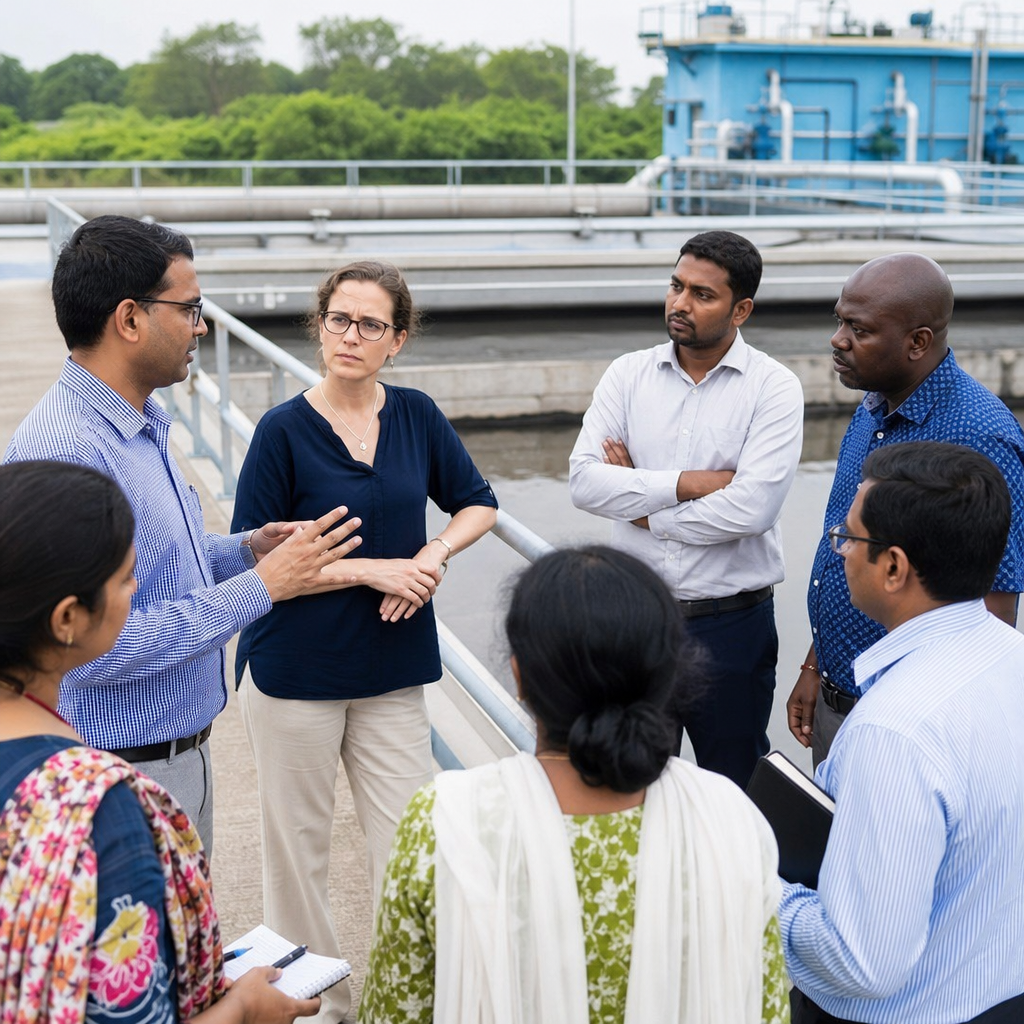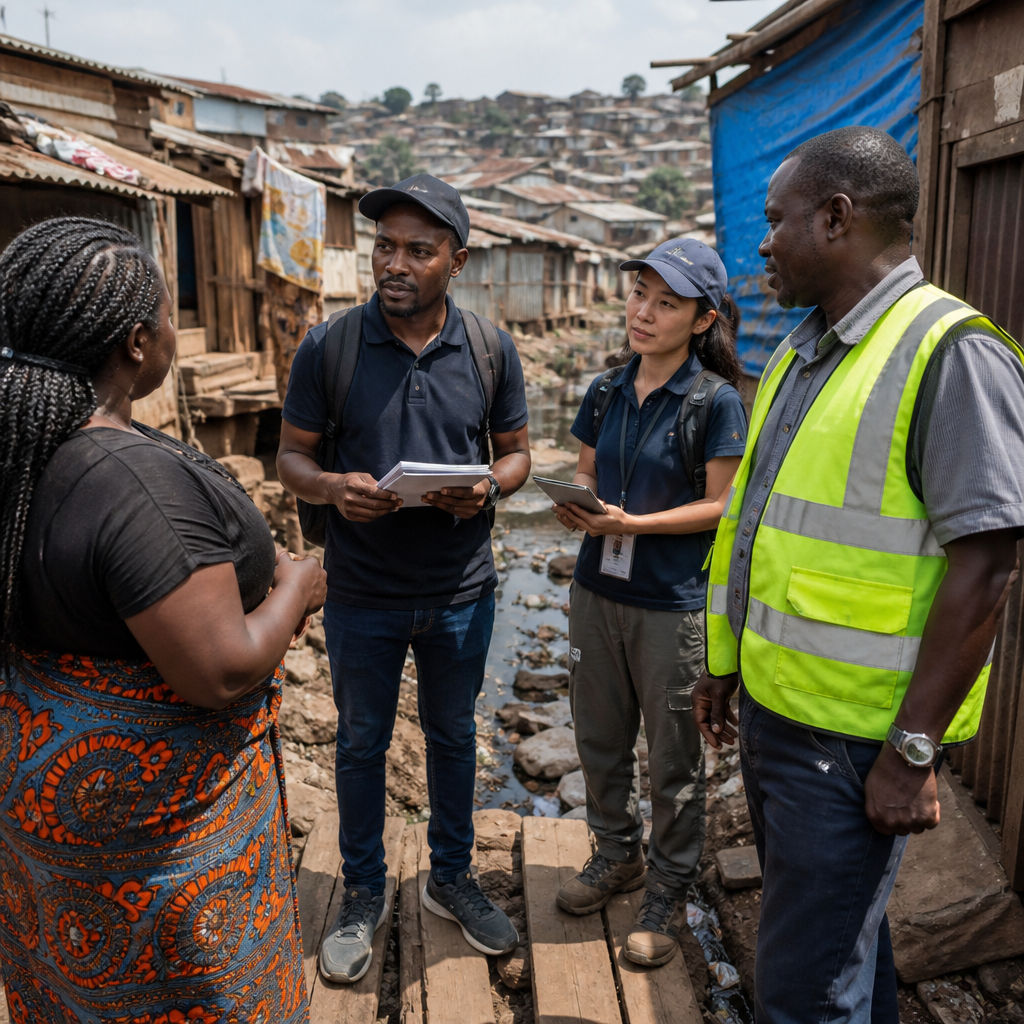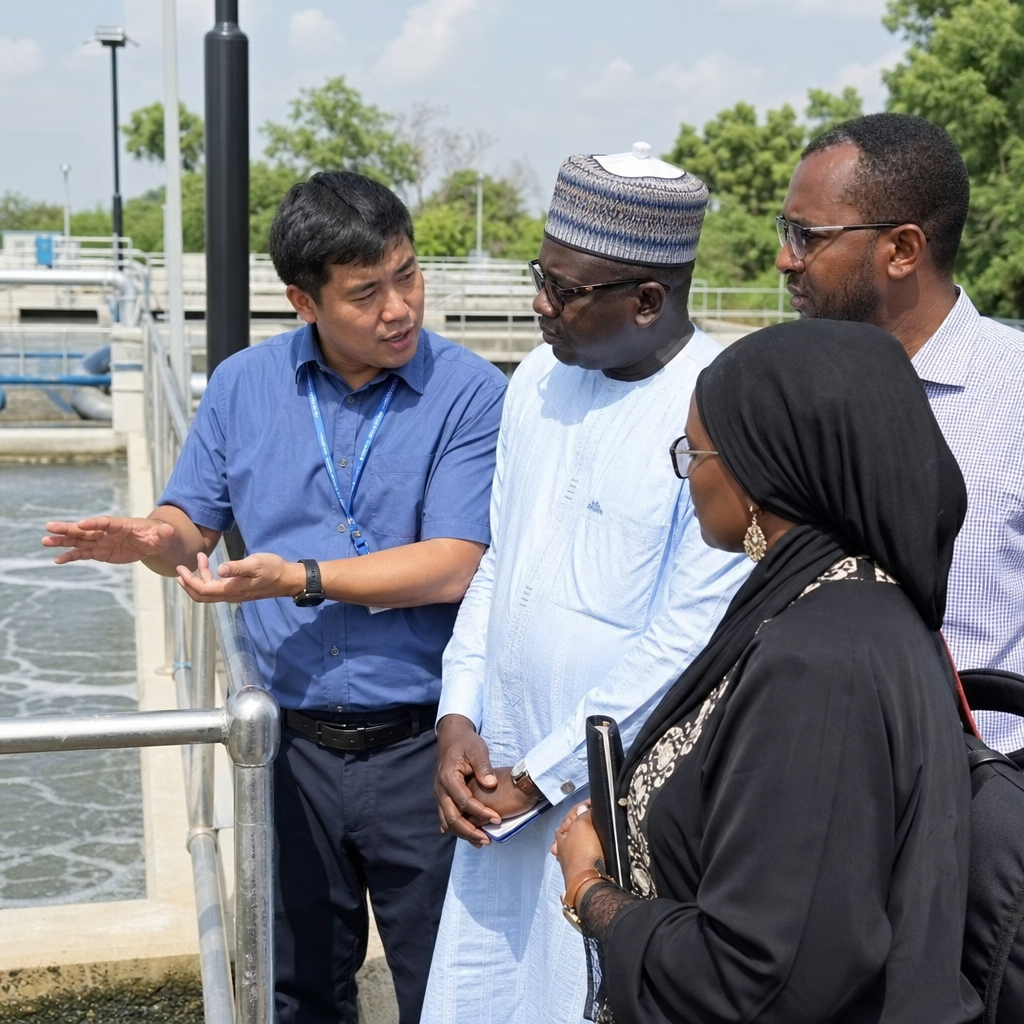
Cross-cultural exchange of sanitation best practices has become one of the most practical ways to improve public health, conserve water, strengthen city services, and reduce inequality across borders. In sanitation, the term covers the safe management of human waste, hygiene behaviors, drainage, fecal sludge treatment, wastewater reuse, and the policies that make those systems function over time. When countries, utilities, engineers, health workers, and community leaders learn from one another, they avoid repeating mistakes and adapt proven solutions faster. I have seen sanitation projects stall because a design copied from one city ignored local habits, and I have also seen modest systems succeed because planners borrowed the right idea and adjusted it carefully. That contrast explains why global opportunities in sanitation matter. Billions of people still lack safely managed sanitation services, according to the WHO and UNICEF Joint Monitoring Programme, and the consequences include diarrheal disease, school absenteeism, unsafe waterways, stunting, and economic loss. At the same time, many regions have developed highly effective approaches: community-led behavior change in South Asia, fecal sludge management models in West Africa, utility regulation in Europe, wastewater reuse in Israel and Singapore, container-based sanitation pilots in dense informal settlements, and school hygiene standards shaped through international collaboration. This hub article examines how cross-cultural sanitation exchange works, where the biggest opportunities lie, what safeguards are necessary, and how organizations can turn shared knowledge into durable local improvements.
Why Cross-Cultural Sanitation Exchange Delivers Results
Sanitation systems are never only technical. They are social, financial, legal, and cultural systems that must fit daily life. A sewer network designed for high water availability will fail in drought-prone regions if households cannot afford continuous connections. A toilet design that overlooks anal cleansing practices, menstrual hygiene needs, disability access, or shared compound arrangements will be underused even when the construction quality is strong. Cross-cultural exchange matters because it helps practitioners compare assumptions openly. Instead of asking, “What is the best toilet?” experienced teams ask, “What sanitation service chain works in this setting, for these users, under these constraints?”
In practice, successful exchange usually happens around service models rather than isolated hardware. The sanitation value chain includes user interface, containment, emptying, transport, treatment, disposal, and possible reuse. Cities that improved outcomes most consistently learned how another place financed desludging, licensed operators, tracked customer complaints, or enforced discharge standards. Dakar’s structured fecal sludge management framework influenced programs elsewhere because it linked household demand, private emptiers, transfer logistics, treatment plants, and municipal oversight. Likewise, Singapore’s integrated wastewater planning is frequently studied not because every city can replicate it directly, but because it shows how regulation, engineering, and long-term water security can be aligned.
There is also a speed advantage. Public agencies do not need to invent policy templates from zero when they can review sanitation safety planning guidance from the World Health Organization, citywide inclusive sanitation principles promoted by global sector organizations, or utility benchmarking methods used by the International Water Association. Shared learning reduces pilot fatigue. It gives local decision-makers tested options, cost ranges, contract structures, and monitoring indicators. That makes donor funds, municipal budgets, and private investment more efficient.
Global Opportunities Across the Sanitation Service Chain
The biggest global opportunities in sanitation are found where knowledge transfer can improve both coverage and reliability. Urban growth is one area. Rapidly expanding cities in Africa and Asia cannot depend on sewer expansion alone; the capital cost, land disruption, pumping energy, and treatment requirements make universal sewerage unrealistic in many districts. Cross-cultural learning has accelerated interest in non-sewered sanitation, simplified sewers, condominial systems pioneered in Brazil, and scheduled desludging programs now used in parts of India. These approaches show that progress does not require choosing between “modern sewer” and “no service.” It requires matching infrastructure to density, topography, groundwater conditions, and municipal capacity.
Another opportunity is resource recovery. Wastewater and fecal sludge contain water, nutrients, organic matter, and in some cases energy potential. Countries facing water scarcity have demonstrated the value of treated wastewater reuse for agriculture, landscaping, and industry, provided quality standards and risk controls are in place. Nutrient recovery from sludge can reduce fertilizer dependence, though pathogen reduction, heavy metal management, and market acceptance are critical. In low-income settings, co-composting and waste-to-fuel briquettes have had mixed results, but the most promising examples succeed when business models are grounded in realistic demand rather than optimistic pilot assumptions.
Rural sanitation is a third opportunity. Community mobilization approaches refined in one region can inform another, but only when adapted carefully. Triggering methods that helped reduce open defecation in some villages have not always sustained toilet use where supply chains were weak or pits filled quickly. Cross-country exchange is strongest when it covers the entire enabling environment: mason training, spare parts, hygiene education, local credit, pit emptying options, and post-construction follow-up. School sanitation offers similar lessons. Separate facilities for girls, inclusive design for students with disabilities, handwashing stations with soap, menstrual health provisions, and maintenance budgets matter as much as initial construction.
| Opportunity Area | What Can Be Shared Internationally | Key Caution |
|---|---|---|
| Dense urban settlements | Container-based sanitation, shared toilet management, scheduled desludging | Must align with tenure, collection logistics, and user willingness to pay |
| Secondary cities | Fecal sludge treatment plant design, operator licensing, tariff models | Underfunded regulation can weaken service quality |
| Water-scarce regions | Treated wastewater reuse standards and monitoring systems | Public health controls and public acceptance are essential |
| Rural communities | Behavior change methods, local supply chain development, low-cost latrine upgrades | Construction targets alone rarely deliver sustained use |
| Schools and clinics | Accessible toilet design, hand hygiene protocols, maintenance checklists | Facilities fail quickly without cleaning budgets and accountability |
What Countries and Cities Actually Learn From One Another
The most valuable lessons exchanged internationally are often operational details that never appear in glossy project summaries. Utilities want to know how another city reduced noncompliance among pit emptiers, what turnaround time was achieved for blockage repairs, how treatment plants handled grit and plastics, and what customer messaging increased demand for legal desludging. Municipal leaders ask which department owns fecal sludge regulation, whether tariffs cover operations, and how enforcement works when households use informal providers. Public health teams ask how hygiene campaigns measured behavior change rather than attendance at meetings.
For example, the condominial sewer model associated with Brazilian cities has been studied widely because it lowered connection costs by using smaller, shallower pipes arranged around housing clusters. Yet the transferable lesson is not merely pipe diameter. It is the governance model: community engagement on routing, shared responsibilities, and adaptation to informal layouts. Similarly, sanitation planners studying Japan often focus on advanced wastewater treatment, but the broader lesson includes disciplined asset management, operator training, and strong maintenance culture. In East Africa, city officials have examined how scheduled desludging can smooth household payments and reduce unsafe dumping; the lesson is financial predictability as much as service convenience.
Digital monitoring is another growing area of exchange. Mobile tools now help map containment types, route vacuum trucks, log sludge deliveries, and verify treatment performance. Systems built with GIS layers and dashboard software can transform planning, especially in cities where no complete sanitation map previously existed. However, technology transfer works only when local staff can maintain the platform, data definitions are consistent, and collected information influences budgeting and enforcement. A dashboard that no department trusts becomes an expensive reporting exercise.
Barriers, Risks, and the Cost of Copying Without Adapting
Cross-cultural sanitation exchange fails when it turns into policy tourism. Visiting a high-performing utility or reading a successful case study is useful, but direct replication is risky. Climate, groundwater tables, land tenure, labor costs, building forms, social norms, and institutional history all shape sanitation outcomes. I have seen imported toilet designs ignored because they lacked privacy features considered basic by local women, and I have reviewed desludging plans that collapsed because roads were too narrow for the proposed vehicles. These are not small implementation issues; they are core design variables.
Financing is another common barrier. Some sanitation systems depend on tax bases, utility creditworthiness, or regulatory capacity that other municipalities do not have. A wastewater reuse program may appear attractive until laboratory costs, operator certification, and industrial pretreatment requirements are added. Likewise, donor-funded pilots can distort expectations if they subsidize user fees below sustainable levels. Decision-makers need lifecycle costing, not just capital estimates. Operations, maintenance, replacement cycles, sludge hauling distances, energy demand, and staffing requirements determine whether a model can survive beyond inauguration.
There are also ethical and political risks. Communities may resist projects they perceive as externally imposed, especially in informal settlements with histories of eviction or neglect. Data sharing across borders raises questions about privacy and representation if local conditions are oversimplified for global comparison. Public health safeguards cannot be compromised in the name of innovation. For instance, resource recovery products must meet safety criteria; untreated or poorly treated waste can spread helminths, bacteria, and chemical contaminants. The lesson from mature sanitation programs is consistent: adaptation, participation, and risk management are nonnegotiable.
How to Build Effective Exchange Programs and Lasting Partnerships
The strongest sanitation exchange programs are structured around problems, peers, and measurable outcomes. Problem-focused exchange starts with a clear question such as how to regulate private emptiers, finance public toilets, reduce open drains, or improve treatment plant uptime. Peer exchange then connects operators with operators, municipal finance teams with finance teams, and regulators with regulators. This matters because practitioners trust detailed advice from people managing similar constraints. Finally, outcomes are tracked through indicators such as safe emptying rates, treatment compliance, school toilet functionality, response times, or customer satisfaction.
Several mechanisms work well. Utility partnerships allow staff from one service provider to mentor another over months rather than during a single study tour. City networks help mayors and planners compare by-laws, procurement templates, and capital planning methods. University collaborations strengthen local research on pathogen reduction, user acceptance, and sludge characteristics. Nonprofit and private-sector partnerships can accelerate innovation when contracts define service levels, maintenance duties, and accountability clearly. In my experience, the most productive exchanges include site visits in both directions, joint troubleshooting sessions, and plain-language documentation of what did not work.
Institutions should also formalize adaptation methods. Before adopting an external model, teams should assess climate risk, settlement patterns, disability access, gender considerations, operator skills, legal authority, and affordability thresholds. A pilot should test assumptions openly, then refine standards before scale-up. International standards and guidance are useful anchors: WHO sanitation safety planning for health risk management, ISO standards relevant to sanitation technologies and reuse contexts, and citywide inclusive planning approaches that consider the full population rather than only sewered neighborhoods. Good exchange does not flatten local knowledge; it combines it with external evidence to create better decisions.
The Future of Global Opportunities in Sanitation
The next decade of sanitation exchange will be shaped by urbanization, climate pressure, public health preparedness, and better data. Flooding and drought are already forcing cities to reconsider sewer overflows, onsite system resilience, and wastewater reuse. Informal settlements will continue to demand service models that are flexible, lower cost, and easier to deploy than conventional sewers. At the same time, governments are under pressure to show measurable progress toward safely managed sanitation, not just toilet construction numbers. That will favor approaches that link infrastructure to service performance.
New opportunities are emerging around non-sewered treatment units, circular economy markets, and blended finance, but none of these will matter without stronger local institutions. The most valuable global lesson is straightforward: sanitation improves when technical design, behavior, regulation, and maintenance are treated as one system. Cities that exchange best practices effectively do not copy; they translate. They borrow what is proven, test it against local realities, and invest in operators who will keep services running long after consultants leave.
For policymakers, utilities, NGOs, researchers, and investors, this hub should serve as a starting point for deeper work across the global opportunities in sanitation landscape. Focus on service chains, not isolated products. Compare financing and governance as closely as engineering. Build partnerships that produce evidence, not just visibility. If you are planning the next sanitation initiative, use cross-cultural exchange deliberately: identify the problem, study proven models, adapt them rigorously, and commit to the local systems that make sanitation safe, inclusive, and durable.
Frequently Asked Questions
What does cross-cultural exchange of sanitation best practices actually mean?
Cross-cultural exchange of sanitation best practices refers to the process of sharing practical knowledge, tested systems, local innovations, and policy experience between countries, regions, cities, and communities to improve sanitation outcomes. In this context, sanitation includes much more than toilets. It covers the safe collection, transport, treatment, and disposal or reuse of human waste, as well as hygiene behaviors, drainage, fecal sludge management, wastewater treatment, maintenance systems, financing models, and regulations that keep services working over time. The exchange becomes “cross-cultural” because the learning happens across different social norms, climates, governance structures, income levels, and public health realities.
What makes this exchange so valuable is that sanitation challenges are often shared, even when local conditions differ. One city may have developed an effective low-cost fecal sludge collection model, while another may have strong public hygiene education programs or better stormwater and drainage integration. A rural community may have found successful ways to increase household toilet adoption through trusted local leadership, while a large utility may have advanced techniques for wastewater reuse and water conservation. Cross-cultural exchange allows these lessons to move beyond borders so others can adapt them rather than starting from scratch.
Importantly, this is not about copying a solution exactly as it was used somewhere else. The most successful exchanges involve adaptation, not imitation. A practice that works in a dense urban settlement may need to be redesigned for a remote rural area. A policy that succeeds in one country may need changes to fit another nation’s legal system, budget constraints, or cultural expectations around privacy, cleanliness, and household roles. Done well, cross-cultural learning respects local knowledge while opening the door to faster, smarter, and more inclusive sanitation improvements.
Why is cross-cultural learning so important for public health and sanitation progress?
Cross-cultural learning matters because sanitation failures are one of the clearest pathways through which disease, inequality, and environmental damage spread. Unsafe management of waste can contaminate drinking water, increase diarrheal disease, contribute to outbreaks, and place a heavy burden on children, older adults, and low-income communities. By learning from places that have already solved similar problems, governments and service providers can adopt approaches that have been field-tested, improve results more quickly, and avoid costly mistakes.
Another major benefit is speed. Public health challenges do not wait for every city or country to invent its own model independently. If one municipality has successfully improved toilet access in informal settlements, reduced open defecation through behavior change campaigns, or built a sustainable fecal sludge treatment chain, those insights can save years of trial and error elsewhere. In the same way, areas facing water scarcity can learn from regions that already reuse treated wastewater safely or design sanitation systems that use less water without reducing hygiene standards.
Cross-cultural exchange also improves equity. Many of the most effective sanitation solutions are not always the most expensive or technically complex. Sometimes the breakthrough comes from community engagement, women-led design input, better maintenance planning, or simpler service delivery methods that reach underserved neighborhoods. When countries and organizations share what has worked for vulnerable populations, they help shift sanitation policy away from one-size-fits-all systems and toward services that are safer, more affordable, and more inclusive. That is why cross-cultural learning is increasingly seen not as an optional add-on, but as a practical strategy for strengthening public health and long-term resilience.
Which sanitation practices are most commonly shared across countries and communities?
A wide range of sanitation practices are exchanged across borders, depending on local needs and development priorities. One of the most common areas is toilet and containment design. Countries often share lessons on low-cost household toilets, school sanitation blocks, public toilet management, septic tank standards, and sanitation options for flood-prone or high-density areas. These exchanges help decision-makers understand which designs are durable, affordable, culturally acceptable, and easier to maintain in real conditions.
Another major category is fecal sludge and wastewater management. Many cities are learning from one another about how to organize desludging services, regulate private operators, improve treatment facilities, and safely reuse treated byproducts such as water, compost, or energy. These operational lessons are especially valuable because many sanitation systems fail not at the point of construction, but later in the service chain when transport, treatment, oversight, or financing are weak. Sharing real-world management models helps utilities and local governments build systems that function beyond the initial infrastructure investment.
Behavior change and hygiene promotion are also frequently exchanged. Programs aimed at handwashing, toilet use, menstrual hygiene, school sanitation habits, and community-led sanitation often produce some of the strongest public health gains, but they depend heavily on trust, communication, and cultural relevance. Learning from successful outreach strategies in other settings can help health workers and community leaders craft more effective campaigns at home. In addition, many countries share policy tools such as tariff structures, subsidy models, service regulations, monitoring frameworks, and emergency sanitation planning. Together, these practical, institutional, and behavioral lessons form the core of cross-cultural sanitation exchange.
What are the biggest challenges when applying sanitation ideas from one culture or country to another?
The biggest challenge is assuming that a successful sanitation model can simply be transplanted without adjustment. Sanitation systems are deeply shaped by local realities, including climate, geography, housing patterns, water availability, governance capacity, income levels, social norms, and public attitudes toward waste and hygiene. A technology that performs well in one location may fail in another if roads are inaccessible, electricity is unreliable, spare parts are unavailable, or local users do not find the design practical or acceptable. This is why adaptation is essential at every stage.
Cultural context is especially important. Sanitation is linked to privacy, dignity, gender roles, religious practice, caregiving, and household decision-making. If a project ignores how people actually use facilities, who maintains them, or what social barriers prevent adoption, even technically sound solutions can go unused or fall into disrepair. Language and communication also matter. Training materials, community engagement methods, and hygiene messaging must make sense within local traditions and everyday life. Without that sensitivity, imported ideas can feel imposed rather than useful.
Institutional constraints present another challenge. Some places may lack funding mechanisms, clear regulation, skilled operators, or long-term maintenance plans. Others may have fragmented responsibilities between health agencies, utilities, municipalities, and environmental authorities. In those cases, a best practice must be supported not just by infrastructure, but by governance and service systems that can sustain it. The strongest cross-cultural exchanges therefore involve co-design, pilot testing, local feedback, and ongoing monitoring. Instead of asking, “How do we copy this?” the better question is, “What problem did this solve, and how can we solve that problem in a way that fits our own setting?”
How can governments, utilities, and communities make cross-cultural sanitation exchange more effective?
To make cross-cultural sanitation exchange effective, the first step is to approach it as a two-way learning process rather than a top-down transfer of expertise. Governments, utilities, researchers, NGOs, and community organizations all bring valuable knowledge. Technical specialists may contribute engineering and treatment models, while local leaders and residents often understand usage patterns, maintenance realities, land constraints, and cultural expectations better than anyone else. Effective exchange happens when these forms of knowledge are treated as complementary.
Structured learning mechanisms also make a major difference. These may include city-to-city partnerships, utility peer networks, study visits, joint pilot projects, professional training, shared data systems, and regional knowledge platforms focused on sanitation performance. Documenting both successes and failures is especially important. Too often, only polished success stories are shared, when in fact some of the most useful lessons come from understanding why a financing model broke down, why a treatment technology was difficult to maintain, or why a behavior change campaign did not reach the intended audience. Honest evidence creates stronger decisions.
Finally, effective exchange requires local adaptation, long-term commitment, and measurable goals. Decision-makers should test new ideas in phases, involve affected communities early, train operators and managers, secure maintenance funding, and monitor outcomes such as service reliability, public health impact, affordability, and environmental protection. When exchange is grounded in evidence, cultural respect, and operational realism, it can do more than inspire good ideas. It can help build sanitation systems that are safer, more resilient, more water-efficient, and more equitable for the people who depend on them every day.