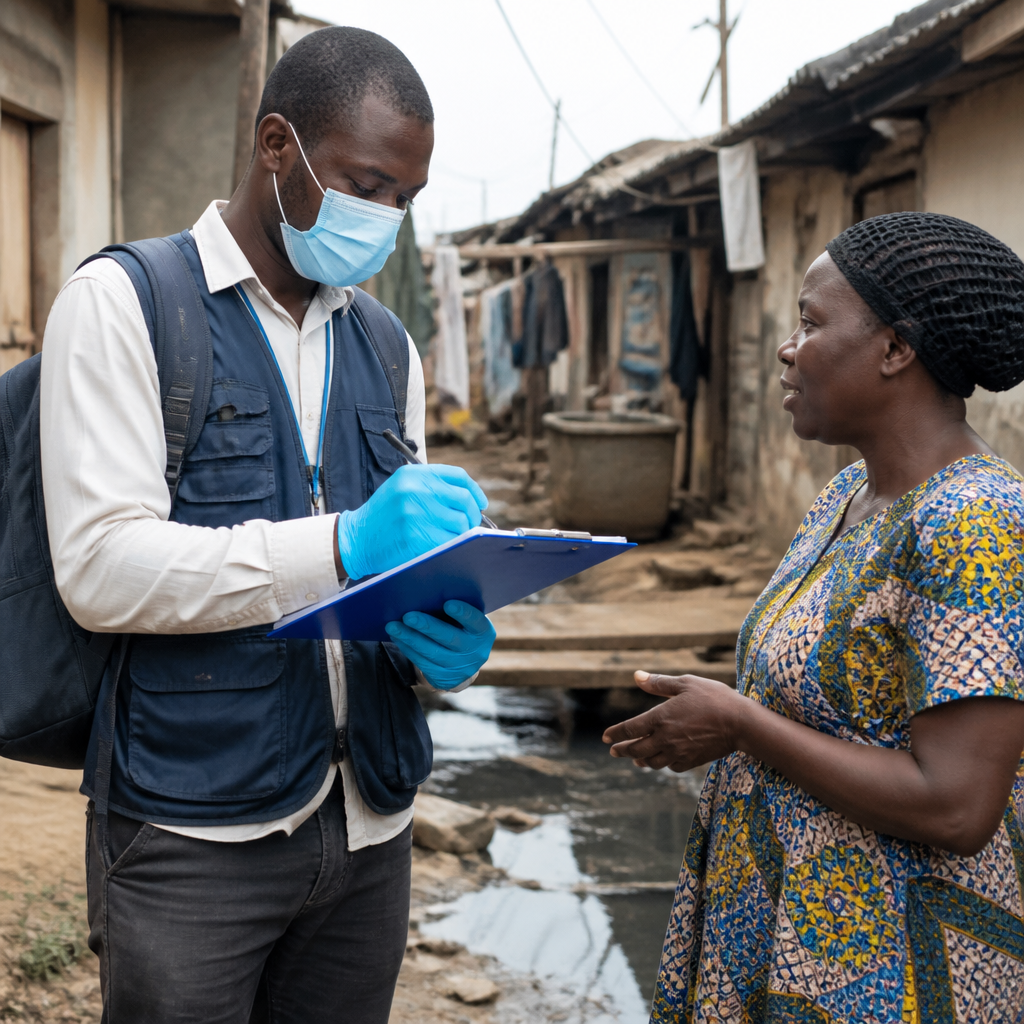
Disease surveillance and reporting in sanitation projects is the practical system that turns scattered illness events into actionable public health intelligence, and in EcoSan programs it is one of the clearest ways to protect workers, users, and surrounding communities. In the field, I have seen sanitation systems judged only by construction quality or reuse efficiency, yet a composting toilet, urine diversion unit, fecal sludge transfer point, or decentralized treatment site can perform well technically while still creating health risks if disease signals are missed. Surveillance means the ongoing, systematic collection, analysis, interpretation, and communication of health data. Reporting means documenting those findings through clear pathways so operators, health departments, regulators, and community leaders can act quickly. Together, they help identify outbreaks, verify whether controls are working, and show where sanitation design, maintenance, or behavior change needs improvement.
For EcoSan, prioritizing health requires a wider lens than counting pathogens in a laboratory sample. It means tracking exposure routes, clinical symptoms, environmental indicators, occupational incidents, and community concerns across the entire sanitation chain. Key terms matter. Hazard is the agent or condition with potential to cause harm, such as helminth eggs in sludge, aerosolized bacteria during pumping, or standing wastewater that supports mosquito breeding. Risk is the likelihood and severity of harm after exposure. A case definition is the standard description used to decide whether a person counts as a suspected, probable, or confirmed case of disease. Sentinel surveillance focuses on selected sites or groups to detect trends early. Event-based surveillance captures unusual signals, such as sudden diarrhea complaints near a drying bed. These concepts are not academic; they determine whether a program spots transmission early or reacts too late.
This topic matters because sanitation projects directly influence diseases that remain major causes of illness and lost productivity worldwide. Diarrheal diseases, cholera, typhoid fever, hepatitis A and E, soil-transmitted helminth infections, leptospirosis, schistosomiasis in certain water contact settings, and vector-borne disease linked to poor drainage all have sanitation dimensions. Workers face added hazards from sharps, dermal exposure, inhalation, and manual handling. Children, older adults, pregnant women, and immunocompromised residents are often more vulnerable when containment fails or reuse is unmanaged. A health-centered EcoSan hub therefore has to connect engineering, operations, occupational safety, community engagement, and public health reporting. When disease surveillance is built into project design from day one, managers can prove whether separation, storage, composting, transport, treatment, and reuse are reducing disease rather than simply moving waste from one place to another.
Why disease surveillance is central to health in EcoSan
EcoSan aims to recover nutrients, conserve water, and close resource loops, but none of those goals outrank disease prevention. In practice, the strongest sanitation projects treat surveillance as core infrastructure, not an afterthought. A urine diversion toilet may reduce fecal contamination, yet the health outcome still depends on user behavior, storage time, cross-contamination during maintenance, hand hygiene, and the way collected material is applied in agriculture. Surveillance answers the question every responsible operator should ask: are people getting sick less often because of this system, or are we missing hidden transmission pathways?
The answer requires both routine and responsive monitoring. Routine systems track indicators over time: diarrheal visits at local clinics, absenteeism at nearby schools, worker incident logs, complaints about odor or overflow, water quality tests downstream, and parasite findings in treated biosolids. Responsive systems investigate spikes, clusters, and unusual events. If a neighborhood reports vomiting and diarrhea after heavy rain flooded vault toilets, a project team needs an incident report, a case line list, environmental inspection results, and coordination with local health authorities within hours, not weeks. The speed of reporting often determines whether contamination is contained.
Good surveillance also protects project credibility. I have worked on sites where community acceptance improved only after operators published simple, regular health updates and showed that treatment barriers were being verified. People are more willing to use ecological sanitation when they know someone is checking whether storage times are adequate, whether sludge handlers have protective equipment, and whether any illness trend is being reviewed against a baseline. Transparent reporting reduces rumor, supports regulatory compliance, and provides evidence for funding decisions.
Diseases and exposure pathways sanitation projects must track
A health-focused EcoSan program starts by mapping likely diseases and their routes of transmission. The highest-priority group in many projects is acute gastrointestinal illness, including diarrhea caused by enteric bacteria, viruses, and protozoa. Cholera surveillance is essential in endemic or outbreak-prone areas because failures in fecal containment, unsafe transport, and contaminated drainage can amplify transmission rapidly. Typhoid and paratyphoid matter where sewage contamination of food or water remains possible. Hepatitis A and E should be considered where hand hygiene, water quality, and food handling overlap with sanitation failures.
Helminths deserve special attention because some ecological sanitation systems involve treatment and reuse of excreta. Ascaris eggs are particularly important in risk assessment because of their environmental persistence and resistance. If composting temperatures are inconsistent, drying is incomplete, or storage periods are too short, reuse can expose farmers and households. Protozoa such as Giardia and Cryptosporidium may also persist in some settings. Leptospirosis becomes relevant where workers contact water or mud contaminated by animal urine in poorly drained sanitation environments. Vector-linked risks emerge when wastewater stagnates and supports mosquitoes, or when solid waste around facilities creates rodent harborage.
Exposure pathways should be documented step by step: user contact at the interface, child contact with contaminated surfaces, leakage to groundwater, aerosol generation during desludging, splash exposure during transfer, runoff from treatment areas, contamination of tools and footwear, and unsafe agricultural reuse. A simple hazard map for each facility often reveals weak points faster than a general discussion of hygiene. On one decentralized site, the biggest risk was not the toilet itself but the hose connection used during emptying, which repeatedly leaked onto a walkway shared by workers and schoolchildren. Surveillance data only made sense after that pathway was identified.
Building a surveillance system that works on real projects
An effective system begins with clear objectives. Decide whether the program is designed to detect outbreaks, measure long-term health impact, monitor occupational safety, verify treatment performance, or all four. Then define indicators, data sources, reporting frequency, thresholds for action, and who is responsible at each step. Standard operating procedures are essential. Without them, one operator reports “stomach illness,” another records “gastroenteritis,” and a clinic uses a different code, making trend analysis unreliable.
Case definitions should be practical. For example, suspected acute diarrheal illness might be three or more loose stools in twenty-four hours with onset in the last seven days. A probable sanitation-linked cluster could be three or more cases among users of one facility or among households along one sludge transport route within a defined period. Confirmed cases may require laboratory testing where available. Not every project needs advanced diagnostics, but every project needs consistency.
Data sources should combine health and operational signals. Clinics provide syndromic data. Community health workers capture household reports. Operators log spills, overflows, and personal protective equipment failures. Environmental teams sample water, sludge, compost, or high-touch surfaces. Supervisors document near misses and sharps injuries. Community hotlines and grievance mechanisms often detect problems before formal systems do. Digital tools such as KoboToolbox, DHIS2, ArcGIS Survey123, and simple mobile forms can make reporting faster and geospatially precise, especially when dashboards flag clusters automatically.
| Component | What to monitor | Example trigger | Immediate action |
|---|---|---|---|
| Community health | Diarrhea, vomiting, jaundice, fever clusters | Cases exceed baseline for one week | Notify health unit, inspect facilities, review water and hygiene controls |
| Occupational safety | Splashes, needle sticks, PPE failures, skin infections | Any high-risk exposure incident | Medical evaluation, incident report, corrective training |
| Environmental quality | E. coli, helminth indicators, turbidity, leakage evidence | Sample exceeds project threshold | Isolate source, repeat testing, adjust treatment or storage |
| Operations | Overflow, odor, blocked vents, vector presence | Two repeated failures in one month | Maintenance response and root-cause review |
The best systems also define feedback loops. Reports must lead somewhere: toolbox talks, targeted cleaning, redesign of drainage, updated reuse restrictions, or referral for vaccination campaigns where relevant. Surveillance that never changes practice becomes paperwork, not protection.
Reporting protocols, governance, and emergency response
Reporting succeeds when responsibilities are explicit. Site operators should know which incidents require immediate notification, same-day reporting, or inclusion in monthly summaries. Public health officials need access to relevant sanitation data during investigations. Contractors must report worker exposures without fear of blame. Community members need a trusted way to raise concerns. In my experience, underreporting usually comes from confusion, fragmented authority, or incentives that punish disclosure.
Governance should align with recognized public health and safety frameworks. A water safety plan approach helps connect hazards, control measures, and verification. A sanitation safety planning process provides a structured way to identify exposure groups and prioritize controls along the chain. Occupational reporting should align with local labor and health regulations, including requirements for incident logs, training records, immunization policies, and access to post-exposure care. Where laboratories are involved, chain of custody, sampling protocols, and turnaround expectations must be documented.
Emergency response thresholds should be written before incidents happen. If a treatment barrier fails, if floodwater enters storage vaults, if cholera is suspected, or if multiple workers report compatible symptoms after a spill, the team should already know the response sequence. That sequence typically includes isolation of affected areas, temporary suspension of reuse or transport, medical referral, targeted disinfection, risk communication to users, and notification of authorities. The value of advance planning is simple: it compresses decision time when uncertainty is highest.
Risk communication deserves equal weight. Communities rarely need technical jargon; they need accurate, timely instructions. Say what happened, who may be affected, what symptoms to watch for, what precautions to take, and when the next update will come. Avoid minimizing concerns. If data are incomplete, say so plainly. Trust grows when reporting is transparent and corrective action is visible.
Using surveillance data to improve design, operations, and reuse safety
The real benefit of disease surveillance is that it sharpens decisions. If repeated diarrhea clusters occur during rainy months, drainage and flood resilience may be the priority. If worker splash incidents cluster during manual transfer, equipment layout, hose fittings, or mechanization may need redesign. If treated compost consistently meets process targets yet users still report illness, the problem may be storage after treatment, transport containers, market handling, or household hygiene rather than the treatment unit itself.
EcoSan projects should link surveillance results to the hierarchy of controls. Elimination and substitution come first where possible, such as removing unnecessary manual handling steps. Engineering controls include sealed transfer points, splash guards, ventilation, leachate control, impermeable surfaces, handwashing stations, and vector barriers. Administrative controls include access restrictions, standard cleaning schedules, vaccination policies where recommended, and clear reuse instructions. Personal protective equipment is necessary, but it is the last layer, not the main strategy.
Reuse decisions need special discipline. Storage time, temperature profiles, moisture content, pH treatment, and end-use restrictions should be verified against pathogen reduction goals, not assumed from design intent. Where standards specify microbiological criteria, projects should document compliance and explain limitations honestly. For example, a product suitable for tree crops may not be appropriate for raw-eaten vegetables. Surveillance can validate whether those restrictions are understood and followed in practice.
Over time, this approach creates a learning system. Baselines become benchmarks. Seasonal patterns become predictable. Training becomes targeted. Capital upgrades can be justified with evidence rather than opinion. Most importantly, health protection becomes measurable. That is the standard EcoSan should meet: resource recovery that does not ask communities or workers to absorb hidden disease risk. Build the reporting chain, review the data routinely, and use every signal to make sanitation safer.
Disease surveillance and reporting in sanitation projects is therefore the operational backbone of prioritizing health in EcoSan. It defines the diseases to watch, the exposure pathways to interrupt, the indicators to measure, and the actions to take when something goes wrong. Strong programs combine clinic data, worker incident logs, environmental monitoring, and community feedback. They use practical case definitions, clear thresholds, digital reporting tools, and written escalation protocols. They also recognize limitations: not every illness can be laboratory confirmed, not every cluster is caused by sanitation, and small datasets can mislead if context is ignored. Even so, a disciplined system is far better than relying on assumptions or waiting for obvious outbreaks.
The main benefit is straightforward: surveillance turns sanitation from a construction project into a public health intervention that can be verified, improved, and trusted. For a Health and Safety hub focused on EcoSan, this page connects every related topic, including worker protection, pathogen reduction, safe reuse, hygiene behavior, water quality, and emergency response. Use it as the foundation for project standards, staff training, and internal links to detailed guidance on each subtopic. Start with a hazard map, define your reporting chain, establish a baseline, and review the results every month. Health protection in EcoSan is not automatic. It is designed, monitored, reported, and continuously strengthened.
Frequently Asked Questions
What does disease surveillance and reporting mean in sanitation projects?
Disease surveillance and reporting in sanitation projects refers to the organized process of detecting, recording, analyzing, and communicating health events that may be linked to sanitation systems, services, or operational failures. In practical terms, it means tracking signs of illness among workers, users, nearby residents, and sometimes even downstream populations affected by waste handling, reuse, drainage, or treatment performance. Rather than waiting for a major outbreak, a good surveillance system looks for patterns early: repeated diarrheal cases near a sludge transfer point, skin infections among operators, unusual fever clusters in a settlement using shared toilets, or increased complaints after flooding around decentralized treatment units.
In EcoSan and other sanitation programs, this process is especially important because exposure can happen at multiple points along the chain, from containment and collection to transport, treatment, reuse, and final disposal. A composting toilet may appear technically sound, but if users are handling material unsafely, if leachate is escaping, or if maintenance staff lack protection, the public health risk can still be significant. Surveillance turns those scattered signals into usable intelligence. It helps project teams move from assumptions to evidence, so they can identify whether a problem is isolated, recurring, seasonal, or system-wide.
Reporting is the other half of the system. It ensures that information does not remain stuck at the site level but reaches supervisors, public health officials, utility managers, community leaders, and response teams who can act on it. Effective reporting should be timely, consistent, and clear enough to trigger decisions. That may include increasing cleaning frequency, inspecting containment structures, changing sludge handling procedures, distributing protective equipment, improving handwashing access, or referring suspected outbreaks to health authorities. In short, disease surveillance and reporting is how sanitation projects protect health not just by building infrastructure, but by continuously checking whether that infrastructure is actually keeping people safe.
Why is disease surveillance so important in EcoSan and other sanitation programs?
Disease surveillance is important because sanitation projects are public health interventions first and infrastructure projects second. It is easy to focus on construction quality, technology choice, or resource recovery outputs, but the real test of any sanitation system is whether it reduces exposure to pathogens and prevents illness. EcoSan systems, including urine diversion toilets, composting toilets, fecal sludge transfer stations, and decentralized treatment facilities, can deliver major environmental and service benefits, but they also create distinct handling and exposure points that require careful monitoring. Without surveillance, project teams may assume a system is successful because it is functioning mechanically, even while disease risks are increasing quietly in the background.
Surveillance is also important because health impacts linked to sanitation are often diffuse and easy to miss. A single diarrheal case may not attract attention, but several similar cases across households using the same facility may indicate contamination, poor maintenance, unsafe emptying, or failure in treatment barriers. Workers may normalize recurring skin irritation, respiratory symptoms, or gastrointestinal illness as part of the job, when in fact those patterns point to inadequate protective practices. Communities may report bad odors, flies, or flooding before any formal disease investigation begins, and these observations can serve as early warning signs if the project has a mechanism to capture them.
Another reason surveillance matters is accountability. Sanitation programs often involve municipalities, NGOs, contractors, utilities, health departments, and community-based operators. A structured disease surveillance and reporting system creates a shared record of risks, incidents, and responses. That makes it easier to prioritize investments, justify operational changes, train staff, and demonstrate that the project is being managed responsibly. Most importantly, it allows action before problems become emergencies. The value of surveillance is not in collecting data for its own sake; it is in creating a reliable feedback loop that protects users, frontline workers, and surrounding communities over the life of the project.
What kinds of diseases and health indicators should sanitation projects monitor?
Sanitation projects should monitor a combination of disease outcomes, exposure-related symptoms, environmental warning signs, and operational indicators that can signal elevated health risk. The most commonly tracked disease categories include acute diarrheal illness, cholera and other waterborne disease outbreaks, typhoid, hepatitis A and E, intestinal parasite infections, and dysentery. Depending on the setting, teams may also watch for skin infections, eye irritation, respiratory complaints from aerosol or gas exposure, and vector-related illnesses where poor waste handling encourages flies or mosquitoes. The exact list should reflect local epidemiology, sanitation technology, climate conditions, and the groups most likely to be exposed.
It is equally important to monitor health indicators that may not yet meet the threshold of a confirmed diagnosis. Frequent vomiting, fever with diarrhea, persistent abdominal pain, increased absenteeism among sanitation workers, repeated reports of child illness in households using the same facilities, or unusual clinic visits from a specific neighborhood can all be meaningful signals. Community complaints should not be dismissed as informal or anecdotal. Reports of foul odor, overflowing pits, visible sludge spills, blocked drainage, rising fly populations, or unsafe reuse practices often provide critical context for interpreting health data and identifying the source of exposure.
Projects should also track operational and environmental indicators because they often explain why disease patterns are emerging. These may include toilet functionality rates, containment integrity, emptying frequency, sludge spill incidents, handwashing station availability, protective equipment use, treatment temperature and retention time, safe storage conditions, and compliance with transport protocols. In reuse-oriented EcoSan systems, monitoring whether treated products are actually reaching the intended level of pathogen reduction is essential. A strong surveillance system does not rely on one data type alone. It combines clinical information, worker health observations, community feedback, and sanitation performance data to create a fuller picture of risk and guide corrective action quickly.
How should disease reporting be organized in a sanitation project?
Disease reporting in a sanitation project should be organized around clear roles, simple reporting pathways, agreed case definitions, and specific thresholds for action. The most effective systems are practical rather than overly complex. Field operators, cleaners, desludging crews, supervisors, community focal points, and local health workers should all know what types of illness events or sanitation failures need to be reported, to whom, how quickly, and through what channel. That could involve paper logs, mobile forms, hotline systems, facility registers, or integration with municipal health reporting platforms. What matters most is consistency and speed.
A strong reporting structure usually begins at the point of observation. If a worker notices repeated illness among staff, if users report several cases of diarrhea linked to a shared block, or if a spill occurs near homes or water points, that information should be documented immediately using a standard format. The report should capture the location, time, symptoms or event description, number of people affected, possible exposure route, and any immediate containment steps already taken. Supervisors should then review incoming reports regularly, verify what they can, and escalate serious events to project management and public health authorities based on predefined criteria. For example, a single minor complaint may trigger local inspection, while multiple similar illnesses in a short period may require formal health investigation.
Good organization also depends on feedback. Reporting systems fail when people submit information but never hear what happened next. Workers and community members are much more likely to continue reporting when they see that concerns lead to inspections, maintenance, training, supply of protective equipment, or emergency response. Confidentiality should also be respected, especially when worker health or household illness data are involved. Finally, the reporting process should be reviewed and practiced regularly. A disease reporting system is only useful if people can use it under real field conditions, during busy operations, after storms, during outbreaks, and in low-resource settings where communication may be limited. Simplicity, clarity, and follow-through are what make it work.
What should a sanitation project do when surveillance data suggests a health risk or outbreak?
When surveillance data suggests a health risk or possible outbreak, the project should move quickly from observation to verification, containment, communication, and corrective action. The first step is to confirm whether the signal is credible and whether it reflects a localized incident, a broader pattern, or an unrelated health event. That may involve checking facility records, speaking with operators and affected households, reviewing clinic or community health data, inspecting the sanitation site, and identifying possible exposure points such as overflows, leaks, poor sludge handling, failed treatment barriers, or unsafe reuse practices. The goal is not to delay action until every detail is known, but to distinguish rumor from a real threat while taking sensible protective measures immediately.
Once a plausible risk is identified, the project should implement short-term controls. These might include restricting access to a contaminated area, improving disinfection and cleaning, repairing broken infrastructure, halting reuse of inadequately treated material, increasing emptying or transport safety, supplying gloves and masks, reinforcing hand hygiene, and issuing targeted guidance to workers and users. If the health event meets local reporting criteria or appears to involve multiple households, vulnerable populations, or severe symptoms, public health authorities should be notified without delay. Sanitation teams should not attempt to manage a suspected outbreak in isolation. Coordination with health departments, laboratories, environmental officers, and local leaders is often essential.
After the immediate response, the project should analyze root causes and document lessons. A strong response asks not only what happened, but why the system allowed it to happen. Was there a design weakness, a maintenance gap, poor training, weak worker protections, delayed emptying, inadequate treatment performance, or a missing communication link between sanitation