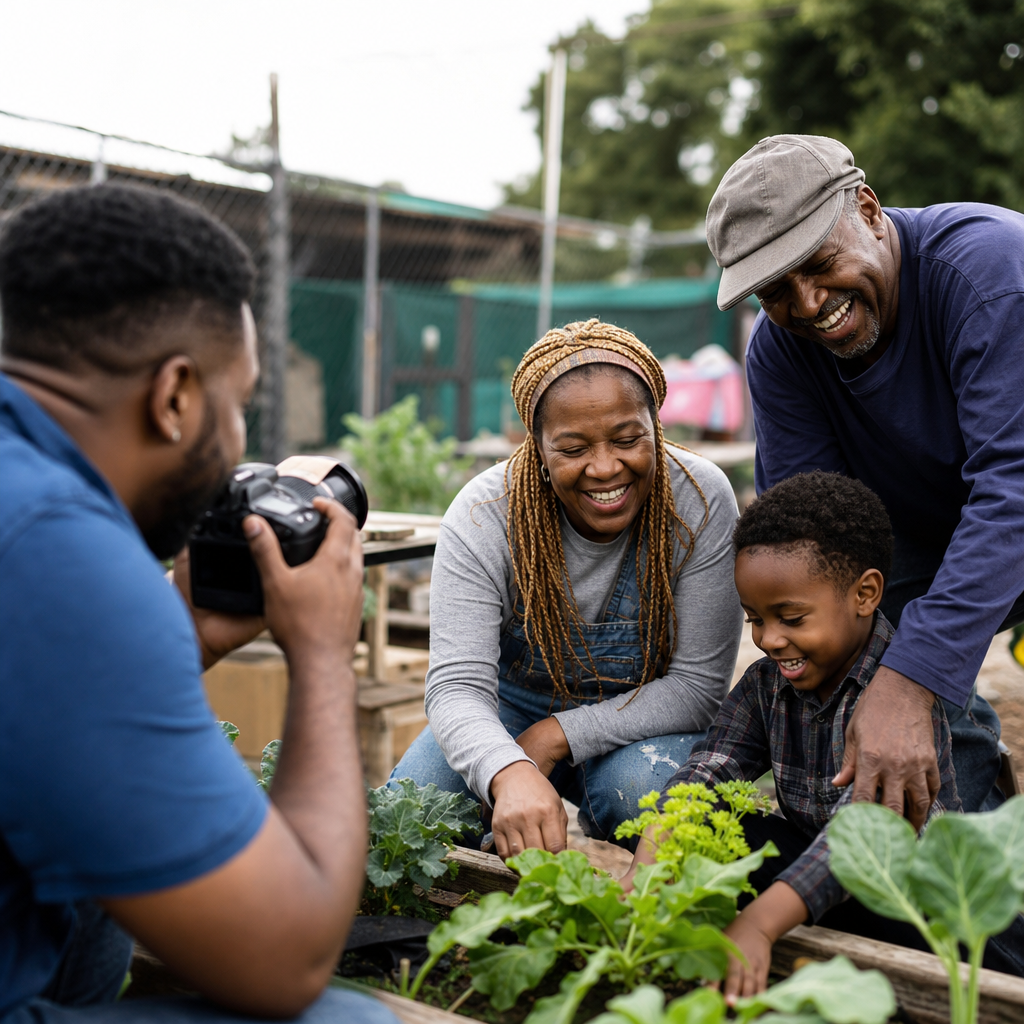
Documenting and sharing community success stories is one of the most practical ways to foster participation and learning inside any community engagement program. A success story is a structured account of a real outcome: who was involved, what challenge they faced, what action they took, what changed, and why that change matters to others. In community settings, that can mean a neighborhood garden that improved food access, a parent workshop that raised school attendance, or a peer mentoring circle that helped new members stay involved. When these stories are gathered carefully and shared consistently, they do more than celebrate wins. They teach transferable lessons, build trust, attract participation, support funding, and create a living record of what the community can achieve together.
I have seen this firsthand in outreach programs where attendance was flat until residents began hearing examples from people like themselves. A flyer listing services rarely moves people. A plainspoken story about a local family using those services successfully often does. That difference matters because participation depends on relevance, credibility, and social proof. Learning works the same way. People absorb practices more readily when they are embedded in specific human examples rather than abstract guidance. As a hub topic under community engagement and education, documenting and sharing community success stories connects directly to participation, peer learning, volunteer development, program improvement, stakeholder communication, and long term community memory.
The strongest community success stories are not testimonials polished beyond recognition. They are evidence based narratives built from interviews, observations, photos, outcome data, and informed consent. They answer practical questions a reader or listener naturally has: What happened? How was progress measured? What barriers came up? What can another group copy, adapt, or avoid? Done well, this work supports communication goals and educational goals at the same time. It helps organizers, educators, libraries, nonprofits, schools, health initiatives, mutual aid groups, and local governments show impact without reducing people to statistics. It also creates internal assets that can feed newsletters, workshops, onboarding materials, annual reports, grant proposals, social posts, and community archives.
This article explains how to make community storytelling useful, ethical, and repeatable. It covers what qualifies as a success story, how to identify story candidates, how to collect details accurately, how to write and distribute stories for different audiences, and how to use them as a hub for fostering participation and learning across a wider engagement strategy.
Why community success stories drive participation and learning
Community success stories work because they combine emotional connection with practical evidence. In my experience, communities participate more readily when they can picture themselves succeeding. That is why case based learning is so effective in adult education, public health outreach, and volunteer training. Stories lower uncertainty. Instead of asking a resident to trust a program description, you show how someone with similar constraints navigated the process and benefited. This creates what behavioral researchers describe as social proof, but in local work it is simply recognizable credibility.
Stories also improve learning retention. People remember sequences, obstacles, turning points, and outcomes more easily than isolated instructions. A story about how a youth council used meeting agendas, text reminders, and transportation vouchers to raise participation teaches several operational tactics at once. It also reveals conditions behind success, which is critical because communities are complex. Learning from stories means seeing context, not just outcomes. For educators and engagement leads, that context helps others adapt an approach rather than copying it blindly.
There is another strategic benefit: stories make impact visible across audiences. Residents look for relevance. Staff look for practice insights. funders look for evidence of outcomes. Partners look for alignment. Local media look for a clear narrative. A well documented success story can serve all of those audiences with modest adaptation, especially when it includes quotes, baseline conditions, actions taken, measurable results, and lessons learned.
What qualifies as a strong success story
Not every positive anecdote is a community success story. A strong story has five elements. First, it defines the starting point clearly. Second, it names the action taken. Third, it shows change with credible evidence. Fourth, it explains why the change matters to the community. Fifth, it captures lessons that others can use. If one of those elements is missing, the story may still be inspiring, but it will not teach as effectively or support accountability.
A practical standard I use is simple: could a new volunteer, partner organization, or resident read this and understand both the value of the effort and the mechanics behind it? For example, “Our literacy circle helped adults feel more confident” is too vague. A stronger version would say that twelve adult learners attended weekly sessions for ten weeks at the library, eight improved one reading level on a recognized assessment, and participants credited childcare support and peer encouragement for helping them finish. That version respects the audience and gives future organizers details they can act on.
Strong stories also include nuance. Success does not mean perfection. If turnout was low for the first month, say so. If translation support was added after feedback, include it. Communities trust stories that acknowledge iteration. In fact, some of the most useful stories explain how a program corrected course after early mistakes.
How to find the right stories and gather evidence
Good story collection starts before writing. Build a simple intake process so staff and community members can flag potential examples throughout the year. I recommend a shared form that asks for the program name, participants involved, challenge addressed, actions taken, results observed, available data, and contact details for interviews. Tools such as Google Forms, Airtable, Microsoft Forms, or a CRM like Salesforce can handle this efficiently for small and mid sized organizations.
Then screen candidates using clear criteria. Prioritize stories that reflect the diversity of the community, show replicable practices, include credible outcomes, and align with current engagement goals. A single dramatic story may attract attention, but a hub page should also represent ordinary, repeatable wins: a senior center increasing workshop completion, a tenant group improving meeting turnout, a school family night raising parent questions and follow up participation. These examples teach sustainable participation, not just exceptional moments.
Evidence gathering should blend qualitative and quantitative inputs. Interview participants, facilitators, and partners. Review attendance logs, survey responses, referral counts, pre and post assessments, volunteer retention, or other relevant indicators. If the story involves health, education, or youth services, check your obligations around confidentiality and consent carefully. For many organizations, a written release form and a plain language explanation of where the story will appear are essential.
| Story component | What to collect | Why it matters |
|---|---|---|
| Starting point | Baseline conditions, barriers, participant context | Shows the real challenge and prevents vague claims |
| Action | Program steps, timeline, resources, partners | Helps others understand what actually happened |
| Evidence | Attendance, surveys, assessments, quotes, photos | Supports credibility and measurable impact |
| Learning | Adjustments, setbacks, recommendations | Makes the story educational, not merely promotional |
| Permissions | Consent forms, name preferences, image approval | Protects participants and reduces ethical risk |
During interviews, ask open questions that surface specifics. What problem were you trying to solve? What changed first? What almost stopped progress? Which support made the biggest difference? What would you tell someone starting now? Those questions produce practical material, not generic praise.
How to write stories people trust and remember
The best structure for most community success stories is straightforward: challenge, response, result, lesson. Start with a concrete scene or problem, then move quickly into the action taken. After that, present outcomes with evidence and close by naming one or two lessons that others can apply. This format works in articles, reports, presentations, email newsletters, and short videos because it respects how people process information.
Plain language matters. Avoid institutional jargon such as capacity building, stakeholder activation, or holistic pathway support unless you immediately define it. Community members should recognize themselves in the language. Use short quotations where they add insight, not sentiment alone. A line such as “The text reminders mattered because I work nights and missed paper notices” teaches more than “This program changed my life.” Both may be true, but the first helps a future organizer improve outreach.
Accuracy matters just as much as readability. Verify names, dates, metrics, and program details. If a result is directional rather than proven, say that clearly. For example, if participants reported feeling more connected, do not rewrite that as a measured reduction in isolation unless you used a valid instrument. The most credible organizations distinguish observed outcomes, self reported outcomes, and causal claims. That discipline protects trust and makes the story more useful to funders, evaluators, and community leaders.
Strong editing also includes representation checks. Are people described with dignity rather than deficit framing? Does the story credit community members as agents, not just recipients? Does it avoid implying that one story stands in for every experience? Those questions are central when the goal is fostering participation and learning, because people engage more when they feel respected and accurately represented.
How to share stories across channels and connect them to learning
Publishing a story once is not enough. The most effective hub strategy turns one documented success into multiple learning assets. A full length article on your site can link to a workshop guide, a volunteer onboarding resource, an event recap, a partner spotlight, and a downloadable checklist. Internally, the same story can inform training sessions, board updates, and reflective debriefs. Externally, it can become a newsletter feature, a short captioned video, a community meeting slide, or a local media pitch.
Match the format to the audience. Residents often prefer brief stories with clear next steps: where to join, whom to contact, what to expect. Practitioners and partners usually need more detail on process, staffing, timing, and resources. Funders often want outcomes linked to goals and evidence collection methods. If you create one core version with modular elements, adapting it becomes efficient without sacrificing consistency.
Distribution should also support accessibility. Add alt text to images, captions to video, translated versions where needed, readable typography, and mobile friendly formatting. If internet access is uneven, print stories for bulletin boards, community centers, schools, libraries, and faith spaces. In several projects I have worked on, printed one page stories posted where people already gathered outperformed social media alone, especially for older adults and busy parents.
Most importantly, connect stories to participation pathways. Every story should answer the reader’s next question: what can I do now? Invite them to attend a session, join a committee, download a guide, mentor a peer, or subscribe for updates. Stories inspire action best when the next step is immediate and visible.
Building a repeatable storytelling system for long term impact
A hub article should point beyond isolated examples toward a durable practice. The organizations that benefit most from community success stories build a repeatable system with roles, templates, timelines, and review standards. Assign who identifies stories, who interviews participants, who verifies data, who secures permissions, and who publishes. Create a consistent template for title, summary, challenge, response, outcome, lessons, and call to action. Review stories for ethics, accuracy, and accessibility before release.
Measure performance as seriously as you document impact. Track page views, time on page, shares, newsletter clicks, event signups, volunteer inquiries, referral traffic, and partner mentions. Also collect qualitative feedback. Ask staff whether a story improved training. Ask residents whether it felt relatable and useful. Ask partners whether it clarified your approach. These signals show whether stories are only being consumed or are actually fostering participation and learning.
Over time, organize stories by theme so your hub becomes a navigational asset. Group examples under youth engagement, adult learning, health education, neighborhood leadership, volunteer development, digital inclusion, and multilingual outreach. Link each story to practical resources and related articles. That structure strengthens community memory. New staff can learn from it. Residents can find relevant examples quickly. Partners can see where collaboration fits. Decision makers can observe patterns across programs instead of isolated anecdotes.
Documenting and sharing community success stories is not a decorative communications task. It is core infrastructure for participation, learning, and accountability. When stories are selected carefully, grounded in evidence, written with dignity, and distributed through the right channels, they help communities see what works and why. They turn lived experience into shared knowledge. They help hesitant residents imagine themselves taking part. They help practitioners refine programs using concrete lessons, not assumptions.
For a community engagement and education strategy, this hub matters because it links celebration with practice. A strong success story honors participants, teaches replicable methods, demonstrates outcomes to supporters, and preserves local knowledge for future organizers. It also reminds institutions that impact is relational. Numbers are necessary, but people learn through examples they can recognize, trust, and adapt to their own context.
If you want to strengthen participation and learning, start by documenting one recent community win with more rigor than usual. Interview the people involved, gather baseline and outcome evidence, write the story in plain language, publish it where your audience already pays attention, and connect it to a clear next step. Then repeat the process until storytelling becomes part of how your community learns from itself.
Frequently Asked Questions
What is a community success story, and why is it important to document one?
A community success story is a clear, structured narrative that explains how a person, group, or organization responded to a local challenge and achieved a meaningful result. It usually includes the starting problem, the people involved, the actions taken, the outcome, and the broader significance of that outcome. In practical terms, it turns a positive experience into a useful learning tool. For example, instead of simply saying a neighborhood garden project worked, a well-documented success story explains how residents organized, what barriers they faced, how they secured volunteers or resources, what changed for local families, and what others can learn from the process.
Documenting these stories matters because it preserves knowledge that might otherwise be lost. Community work often depends on relationships, trust, local context, and repeated small actions that are easy to overlook when people only focus on final results. A written or recorded success story captures those details so others can understand not just what happened, but why it worked. That makes it easier to replicate effective strategies, inspire participation, build credibility with funders and partners, and recognize the efforts of community members whose work deserves visibility.
Success stories also strengthen internal culture. When communities see real examples of progress, participation feels more tangible and achievable. People are more likely to stay engaged when they can point to evidence that their time and effort lead to real change. In that sense, documenting success stories is not just a communications activity. It is a practical method for learning, motivating action, and reinforcing the value of community engagement over time.
What should be included in an effective community success story?
An effective community success story should be specific, balanced, and easy for others to follow. At minimum, it should identify who was involved, what issue they were trying to address, what steps they took, what results followed, and why those results matter. This structure helps readers move from context to action to impact. Without that sequence, stories can become vague or overly promotional, which limits their usefulness for others who want to learn from the experience.
Strong stories usually begin with the challenge. This gives readers a clear understanding of the need or barrier that existed before any action was taken. The next section should explain the response in practical terms: who led the effort, how decisions were made, what partnerships were formed, and what activities took place. The outcome should then be described with as much clarity as possible, using both measurable indicators and human examples. For instance, a story might note that school attendance improved by a certain percentage after parent workshops began, while also including a short quote from a parent or teacher explaining what changed on the ground.
It is also important to include lessons learned. Not every effort succeeds immediately, and readers benefit from hearing what obstacles emerged and how the group adapted. This adds credibility and makes the story more useful to other communities facing similar conditions. A strong ending ties the local outcome to a wider takeaway, such as how the approach can inform future programming, strengthen trust, or address a broader community need. In short, the best success stories combine facts, human experience, and practical insight.
How can organizations collect community success stories in a respectful and accurate way?
The most effective approach is to treat story collection as a relationship-based process rather than a simple content request. Organizations should start by identifying participants, volunteers, staff members, or community leaders who were directly involved in the outcome being documented. From there, they should ask for permission, explain the purpose of the story, and be transparent about where and how it may be shared. This builds trust and helps ensure people feel respected rather than used for promotional purposes.
Accuracy depends on gathering information from multiple sources whenever possible. Interviews are often the best starting point because they allow people to describe what happened in their own words. Helpful questions include: What challenge were you facing? What changed? Who helped make it possible? What did you learn? What would others need to know if they wanted to try something similar? Alongside interviews, organizations should review available data, attendance records, program reports, photos, or partner feedback to confirm timelines, outcomes, and context. This helps create a fuller and more reliable account.
Respect also means paying attention to ethics. Individuals should have the opportunity to review their quotes or contributions, especially when stories involve children, health issues, financial hardship, or sensitive personal circumstances. Consent should always be clear, and privacy should be protected when needed. In some cases, names or identifying details may need to be changed. Organizations that document stories thoughtfully not only produce better content, but also strengthen community trust. That trust is essential if storytelling is going to support long-term engagement rather than feel extractive or one-sided.
How do community success stories encourage participation and learning?
Community success stories encourage participation by making progress visible and relatable. Many people hesitate to join a program or volunteer effort because they are unsure whether their involvement will matter. A strong story answers that uncertainty with real evidence. It shows that ordinary residents, families, students, mentors, or local partners faced a challenge, took action, and created change. That kind of example is powerful because it gives people something concrete to connect with. They can see themselves in the story and better understand how their own participation might contribute to similar results.
These stories also support learning because they capture experience in a usable format. Community work often generates valuable insights about outreach, collaboration, trust-building, timing, communication, and problem-solving. When those insights remain informal, they are difficult to share across teams or with future participants. A documented success story turns experience into a resource. Staff can use it in training, partners can use it in planning, and community members can use it to spark discussion about what approaches are worth repeating or adapting.
Just as importantly, success stories help communities learn from strengths instead of focusing only on problems. While it is necessary to acknowledge challenges, communities also need examples of what is working. Stories about a peer mentoring circle, a food access initiative, or a family engagement effort can reveal patterns of success that might otherwise go unnoticed. Over time, this builds a more informed and hopeful culture. Participation grows when people believe change is possible, and learning improves when they can study real examples of how that change was achieved.
What are the best ways to share community success stories so they reach and influence the right audience?
The best distribution strategy starts with knowing who the story is for. A success story intended to motivate residents may need a more personal and accessible format, while a story for funders, policymakers, or partner organizations may need stronger emphasis on evidence, outcomes, and scalability. Once the audience is clear, organizations can choose the most effective channels. These may include newsletters, community meetings, websites, social media, annual reports, email campaigns, local media outreach, printed flyers, or short video testimonials. The same story can often be adapted across multiple formats without losing its core message.
To increase impact, organizations should make stories easy to understand and easy to share. That means using a clear structure, concise headlines, compelling quotes, relevant photos, and straightforward language. Visual elements can help draw attention, but the real strength comes from presenting a credible narrative with a clear outcome and a clear takeaway. Including a call to action is also useful. After reading a story, the audience should know what to do next, whether that means attending an event, joining a program, supporting funding, replicating a model, or contacting the organization for more information.
Consistency is another key factor. Sharing one story occasionally can be helpful, but building a regular practice of documenting and distributing success stories creates much stronger long-term results. It keeps community achievements visible, reinforces trust, and establishes the organization as a reliable source of practical community knowledge. Over time, a collection of well-crafted stories becomes more than a communications asset. It becomes evidence of impact, a source of motivation, and a valuable archive of what the community has learned together.