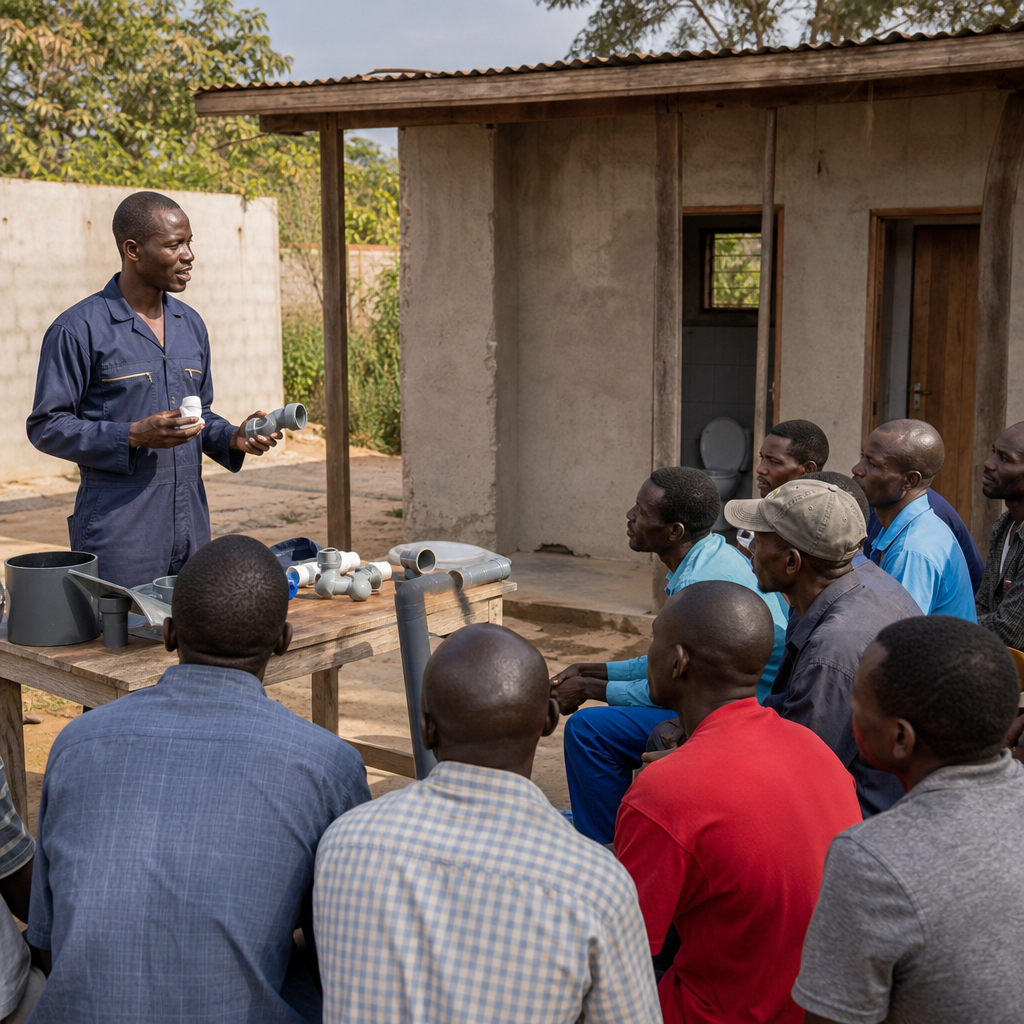
Training sessions for sustainable sanitation maintenance turn good infrastructure into lasting public health protection. Toilets, drains, septic systems, handwashing stations, and waste collection points fail not only because equipment breaks, but because users, caretakers, local leaders, and service providers are not trained to operate, inspect, and improve them over time. In community engagement and education work, fostering participation and learning means building the knowledge, habits, and local ownership that keep sanitation services functioning long after construction crews leave. I have seen well-funded facilities become unusable within a year when no one knew the cleaning schedule, spare parts list, desludging cycle, or complaint process. I have also seen modest systems perform reliably for years when communities were trained together and responsibilities were clear.
Sustainable sanitation maintenance refers to the routine activities that preserve safety, usability, environmental compliance, and user trust. That includes preventive cleaning, minor repairs, sludge management, safe chemical handling, recordkeeping, budgeting, and behavior reinforcement. Training sessions are structured learning events designed to transfer those skills to specific audiences: facility operators, school staff, households, health workers, local government teams, sanitation entrepreneurs, and community volunteers. A strong hub article on fostering participation and learning must connect these audiences, explain what each group needs to learn, and show how training becomes a continuing system rather than a one-time workshop. When participation is designed well, sanitation maintenance stops being someone else’s problem and becomes a shared community practice with measurable results.
Why Participation and Learning Matter for Sanitation Outcomes
Community participation improves sanitation maintenance because people protect systems they understand and help shape. Learning matters because sanitation is operational, not merely physical. A toilet block needs cleaning protocols, water availability, lock management, menstrual hygiene support, ventilation checks, and response plans for blockages. A septic tank needs inspection, access protection, and scheduled emptying by trained operators. A handwashing station needs soap supply, drainage, and user reminders. When training sessions address these realities in plain language, facilities stay open, cleaner, and safer.
Public health evidence supports this practical view. The World Health Organization and UNICEF Joint Monitoring Programme distinguishes between basic access and safely managed sanitation, emphasizing the full service chain from containment through transport, treatment, and disposal or reuse. Training affects every link in that chain. In schools, a caretaker who knows how to mix disinfectant correctly and document faults prevents closures. In rural areas, households that understand pit filling rates and slab maintenance avoid contamination and expensive emergency repairs. In towns, local authorities that can interpret maintenance logs and vendor contracts make better budgeting decisions. Participation also reduces conflict. When users help set rules for cleaning rosters, payment collection, and grievance handling, compliance rises because the process feels legitimate.
Designing Training for Different Stakeholders
The most effective training sessions are audience-specific. One common mistake is delivering the same presentation to everyone. In practice, each group needs different competencies, examples, and incentives. Caretakers need operational checklists. Community leaders need governance and accountability skills. Households need simple guidance on daily use, child feces disposal, and reporting faults. Emptying service providers need occupational safety, confined-space risk awareness, and disposal compliance. School sanitation clubs need peer education techniques and routines they can actually sustain during the term.
I build sanitation training plans by mapping stakeholders against tasks, frequency, and risk. If a market toilet serves hundreds of users a day, cleaners and attendants need shift-based procedures, PPE use, stock monitoring, and customer communication. If a village relies on shared latrines, user committees need conflict resolution, fee collection, and maintenance escalation steps. Local government engineers need asset inventories, inspection standards, and contractor supervision methods. This mapping prevents a familiar failure: broad awareness sessions that create enthusiasm but not capability. Good training answers four direct questions for every audience: What do you do, when do you do it, what tools do you need, and what happens if you do not act?
Core Topics Every Sanitation Maintenance Training Should Cover
Although audiences differ, several topics belong in nearly every sanitation maintenance curriculum. First is hygiene and health risk: how pathogens spread through contact surfaces, aerosols, wastewater, and unsafe sludge handling. Second is routine maintenance: cleaning frequency, safe unclogging, water management, pest control, and ventilation checks. Third is inspection: identifying cracks, leaks, odors, overflows, handwashing failures, and accessibility barriers before they become serious faults. Fourth is service-chain awareness: where waste goes after it leaves the toilet and why improper dumping harms groundwater, rivers, and neighborhoods.
Fifth is worker safety. Training must cover gloves, boots, masks or respirators where appropriate, hand hygiene, sharps handling, heat stress, and emergency response. The International Labour Organization and national occupational safety rules provide clear principles here, and they should be translated into practical instructions. Sixth is recordkeeping. I recommend simple logs showing date, task completed, materials used, fault found, action taken, and person responsible. Seventh is financing. Communities need to understand the true cost of cleaning agents, water, replacement parts, transport, and desludging so maintenance fees are realistic. Eighth is inclusion. Facilities that ignore children, older adults, people with disabilities, and menstruating users are poorly maintained by design because they do not meet actual user needs.
Training Formats That Build Real Capability
Sanitation maintenance training works best when it combines demonstration, practice, reinforcement, and follow-up. Lecture alone rarely changes behavior. In the field, I have had the strongest results from short modular sessions linked to real tasks at the actual facility. For example, a ninety-minute session at a school toilet block can cover cleaning sequence, dilution ratios, refill points, defect reporting, and a supervised walkthrough. Participants leave having done the work, not just heard about it. Refresher sessions one month and three months later help convert learning into routine.
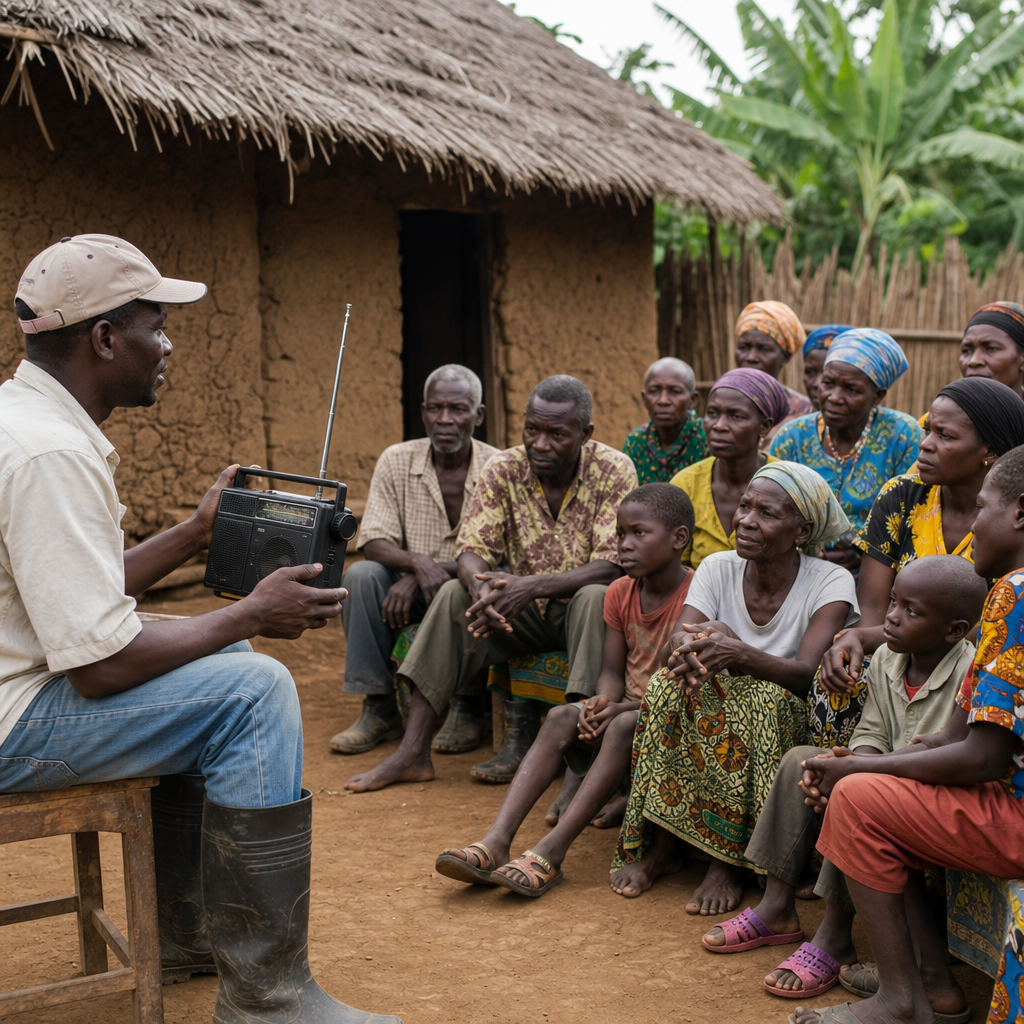
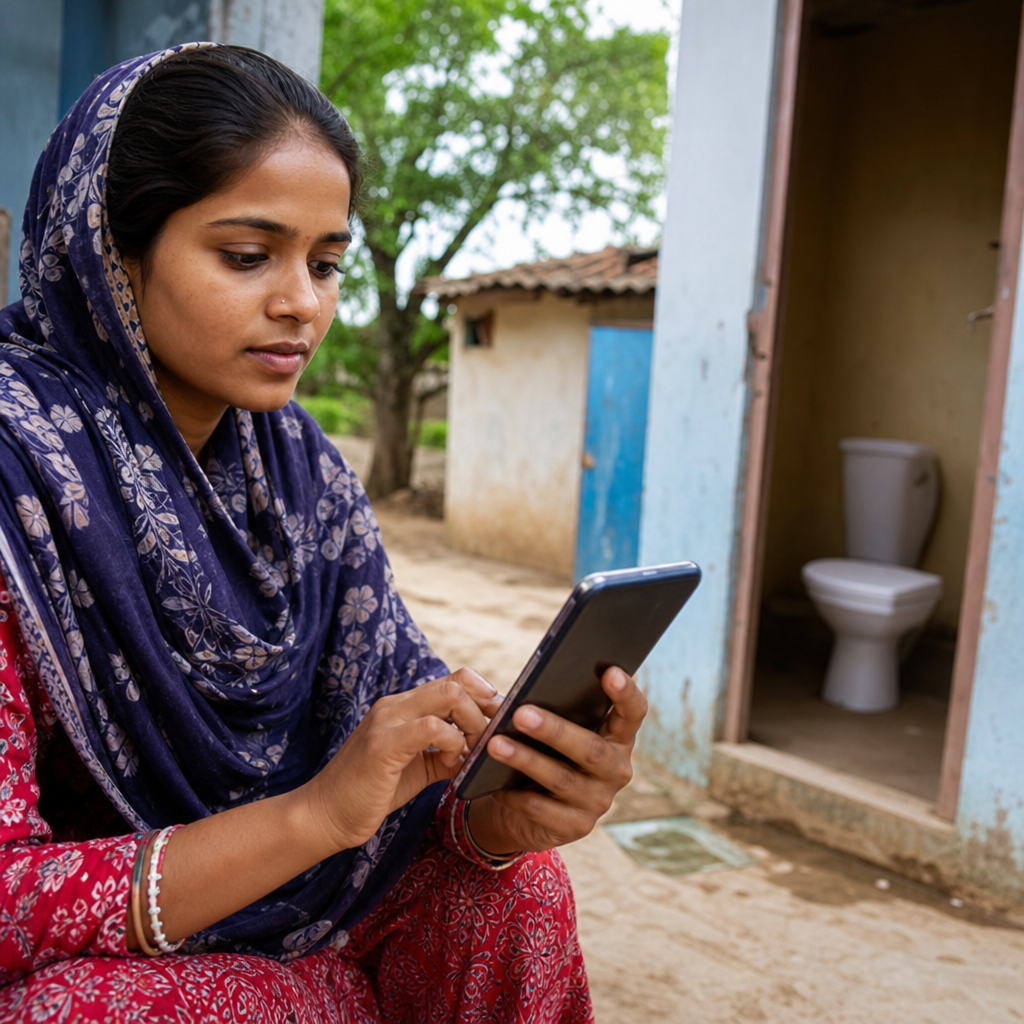
Different formats serve different goals. Toolbox talks are ideal for cleaners and desludging crews because they fit shift schedules. Community meetings work for agreeing rules, budgets, and user responsibilities. Peer-led sessions are effective in schools and dense settlements where trusted local voices matter. Visual job aids, such as laminated cleaning charts and defect-report stickers, support low-literacy contexts. Mobile messaging can reinforce reminders about desludging dates or supply shortages. Training of trainers can extend reach, but only if trainers are observed and coached; cascade models often weaken when materials are too generic or supervision is absent.
| Audience | Main training focus | Useful format | Example outcome |
|---|---|---|---|
| Facility cleaners | Cleaning sequence, PPE, stock control | On-site demonstration | Daily checklist completed correctly |
| Households | Safe use, reporting faults, minor upkeep | Small-group meeting | Fewer blockages and misuse incidents |
| School staff | Supervision, budgeting, child protection | Workshop plus walkthrough | Faster repair response and cleaner toilets |
| Local officials | Asset management, contracts, monitoring | Structured training session | Better maintenance planning and oversight |
| Service providers | Occupational safety, legal disposal, equipment care | Practical drill | Safer emptying and fewer spill events |
Methods for Fostering Participation and Local Ownership
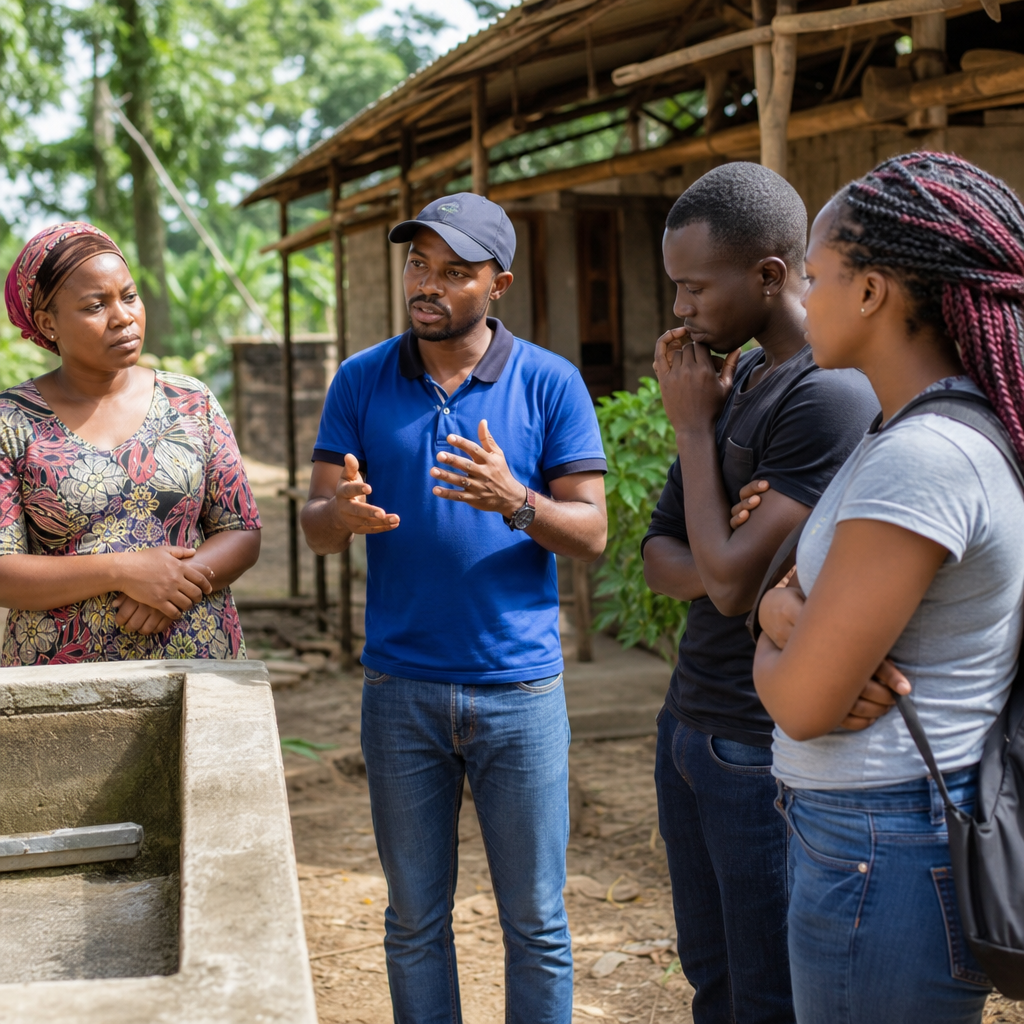
Participation is not asking people to attend a meeting after decisions are made. It means involving them in problem definition, rule setting, role assignment, and review. For sanitation maintenance, that starts with listening to how people actually use facilities. Women may identify privacy and lighting problems that male officials overlook. People with disabilities may point out door width, rail placement, and uneven paths that make cleaning and use harder. Vendors in a market may explain peak-use times that determine cleaning shifts better than any consultant can. When training sessions incorporate these realities, attendance improves because the content feels relevant.
Effective participation methods include facility walks, risk mapping, co-created maintenance calendars, and public role boards showing who does what. In one settlement project, we asked users to mark overflow points, broken locks, and dark areas on a map before the training began. That exercise changed the agenda immediately: the community wanted odor control and night safety discussed before budgeting. Another reliable method is participatory monitoring. User committees can score cleanliness, water availability, soap presence, and fault response weekly using simple criteria. Those scores create accountability without complicated software. Recognition matters too. Publicly acknowledging the best-maintained school block or market facility can motivate teams more sustainably than one-off allowances.
Measuring Whether Training Sessions Actually Work
Attendance is not impact. A useful sanitation training program measures knowledge, behavior, and service performance. Start with baseline data: cleaning frequency, downtime, user complaints, refill rates, overflow incidents, desludging records, and observed handwashing conditions. Then assess what changes after training. Did cleaning logs become complete? Did response time for repairs improve? Did the facility remain open during the rainy season? Were users reporting faults sooner? These indicators show whether learning translated into maintenance outcomes.
Practical evaluation combines simple tools. Pre- and post-session quizzes test essential knowledge, but observation is more important. Supervisors should use spot-check forms that verify if a cleaner follows the correct sequence, if PPE is available and worn, and if supplies are stored safely. Photo records with dates can document condition changes over time. For larger programs, dashboards in KoboToolbox, CommCare, or DHIS2 can help aggregate inspection data. Financial indicators also matter. If training improves stock management, emergency purchases often drop because supplies are ordered on time. If user satisfaction rises, fee collection for public toilets can become more stable. Training works when systems perform better, not when certificates are printed.
Common Barriers and How to Address Them
Several barriers repeatedly undermine sanitation maintenance training. The first is turnover. Cleaners, teachers, committee members, and local officials change, taking knowledge with them. The answer is documented standard operating procedures, visible job aids, and scheduled induction for new personnel. The second barrier is unrealistic expectations. Communities are sometimes trained to maintain systems without being given cleaning tools, spare parts access, or a budget line. Training must be paired with resources, procurement pathways, and escalation contacts. Otherwise, participants leave informed but powerless.
A third barrier is cultural mismatch. Technical language, mixed-gender settings where some participants cannot speak freely, or examples that ignore local practices reduce learning. Trainers should adapt vocabulary, use local-language facilitation, and create breakout groups where needed. Fourth is weak institutional backing. If school leadership does not inspect sanitation conditions or municipal officers never review logs, maintenance slips. Fifth is safety neglect. I have seen workers asked to empty pits manually without proper protection or legal disposal plans. No training program is credible if it normalizes unsafe labor. Finally, many programs stop after the initial workshop. Sustainable sanitation maintenance requires refreshers, coaching, and periodic audits. Learning is a cycle, not an event.
Building a Long-Term Learning System
As a hub within community engagement and education, this topic connects to household behavior change, school WASH, local governance, worker safety, monitoring, and sanitation financing. The central lesson is simple: sustainable sanitation maintenance depends on people who know what to do, have the means to do it, and believe the system belongs to them. Training sessions create that foundation when they are practical, audience-specific, participatory, and linked to real maintenance tasks. They should teach daily routines, inspection, safety, budgeting, inclusion, and service-chain awareness in language participants can use immediately.
The strongest programs treat training as an ongoing management function. They schedule refreshers, track facility performance, coach new staff, and review data with communities and authorities together. They also link local action to wider support, such as municipal desludging services, approved disposal sites, and school or clinic budgets. If you are developing this subtopic for a broader sanitation education strategy, start by mapping stakeholders, defining maintenance responsibilities, and creating training modules for each group. Then measure outcomes that matter: cleaner facilities, fewer breakdowns, safer workers, and more consistent service. Build the learning system first, and the infrastructure will last longer, serve people better, and protect community health more reliably.
Frequently Asked Questions
What are training sessions for sustainable sanitation maintenance, and why are they so important?
Training sessions for sustainable sanitation maintenance are structured learning activities that teach people how to operate, inspect, clean, repair, monitor, and improve sanitation systems over time. They go far beyond one-time demonstrations or basic hygiene messaging. Effective sessions help users, caretakers, maintenance teams, community leaders, and service providers understand how toilets, septic systems, drains, handwashing stations, waste collection points, and related facilities actually function in daily use. Participants learn practical routines such as identifying early signs of blockage, managing cleaning schedules, handling waste safely, reporting faults, protecting water sources, and responding quickly before small issues become serious failures.
These sessions are important because sanitation infrastructure does not remain effective simply because it was installed correctly. Even well-designed systems can deteriorate when people do not know how to use them properly, when no one is assigned to inspect them, or when communities lack clear procedures for repair and accountability. Training turns sanitation from a construction project into an ongoing public health system. It helps prevent overflowing toilets, clogged drainage channels, unsafe sludge handling, broken taps, foul odors, and contamination that can spread disease. Just as importantly, it strengthens local ownership. When people understand both the purpose and the maintenance needs of a sanitation facility, they are more likely to protect it, budget for it, and improve it over time.
Who should participate in sanitation maintenance training sessions?
The most effective sanitation maintenance training includes more than just technical staff. A strong program identifies all the groups who influence whether sanitation systems stay safe, clean, and functional. This often includes facility users, cleaners, school staff, health workers, landlords, caretakers, local government officials, waste collectors, desludging operators, community committee members, and local artisans or technicians who may be called on for repairs. In many settings, women, youth, and people with disabilities should be intentionally included because they often have direct experience with daily sanitation challenges yet are excluded from decision-making.
Different groups need different levels of training. Users may need guidance on proper toilet use, handwashing habits, waste disposal, and how to report problems. Caretakers and cleaners may need practical instruction on inspection routines, safe cleaning methods, protective equipment, and basic troubleshooting. Community leaders and local authorities often need support in planning budgets, assigning responsibilities, setting standards, and monitoring performance. Service providers may require more technical modules on pit emptying, septic tank safety, drainage maintenance, recordkeeping, and environmental compliance. When training is designed for all relevant stakeholders instead of a single audience, the sanitation system becomes more resilient because responsibility is shared, communication improves, and problems are addressed earlier.
What topics should be covered in a high-quality sustainable sanitation maintenance training program?
A high-quality training program should cover both technical and behavioral topics so participants understand not only what to do, but why it matters. Core technical subjects usually include routine cleaning procedures, inspection checklists, drainage management, septic system care, pit latrine maintenance, handwashing station upkeep, safe waste handling, basic repair techniques, and how to identify signs of failure such as leaks, cracks, odors, standing water, or unusually slow drainage. Training should also explain maintenance schedules, inventory management for cleaning supplies and spare parts, proper use of tools and protective gear, and safe escalation procedures when specialist intervention is required.
Just as important are the human systems that keep sanitation functioning. Good training addresses roles and responsibilities, communication channels, community reporting mechanisms, hygiene behavior, financial planning for maintenance, and recordkeeping. Participants should learn how to create cleaning rosters, maintenance logs, simple budgets, and response plans for emergencies such as floods, system overflows, or contamination events. In community-based settings, the program should also include participation methods that encourage discussion, problem-solving, and local adaptation. This is especially useful because sanitation challenges differ across schools, markets, health centers, public spaces, and households. A sustainable program connects technical knowledge with practical routines, accountability, and a culture of care.
How often should sanitation maintenance training be conducted to remain effective?
Sanitation maintenance training should be treated as an ongoing process rather than a one-time event. Initial training is essential when a facility is first built, upgraded, or handed over to a community or institution, but that first session is rarely enough to ensure long-term performance. Refresher training should be scheduled regularly to reinforce correct practices, address staff turnover, and respond to changing conditions such as seasonal flooding, increased user numbers, or aging infrastructure. In many cases, quarterly or biannual refreshers work well, especially for facilities with heavy use such as schools, public toilets, transport hubs, and health centers.
Frequency should also be adjusted based on risk, complexity, and performance. If a sanitation system has recurring breakdowns, misuse, weak cleaning standards, or safety concerns, training may need to happen more often and be paired with closer supervision. Spot coaching, on-site demonstrations, and peer learning sessions can be especially effective because they connect lessons directly to real maintenance issues. It is also wise to provide orientation for new staff or committee members as soon as they take on responsibilities, rather than waiting for the next formal training cycle. The goal is to make learning continuous, practical, and tied to actual system performance so sanitation services remain reliable over time.
How can communities measure whether sanitation maintenance training is actually working?
The impact of sanitation maintenance training can be measured by looking at both behavior change and infrastructure performance. A useful starting point is to track whether participants are applying what they learned. This may include checking if cleaning schedules are being followed, inspection forms are completed, faults are reported promptly, protective equipment is used correctly, and maintenance tasks are carried out on time. Communities and institutions can also observe whether users are following proper sanitation practices, whether waste is being disposed of correctly, and whether handwashing stations remain stocked and functional. These indicators show whether training is influencing daily routines.
Longer-term success is visible in the condition and reliability of the sanitation system itself. Facilities should stay cleaner, safer, and more usable; breakdowns should become less frequent; repairs should happen faster; and problems like persistent odors, clogged drains, standing wastewater, or overflowing pits should decrease. Other valuable indicators include reduced maintenance costs caused by preventable damage, stronger community participation, clearer accountability, and more consistent budgeting for supplies and repairs. In some settings, training effectiveness can also be linked to broader health and dignity outcomes, such as lower exposure to contamination, improved user satisfaction, and increased confidence in local sanitation services. The strongest evaluation combines simple records, direct observation, user feedback, and periodic review meetings so communities can keep improving the training and the systems it supports.