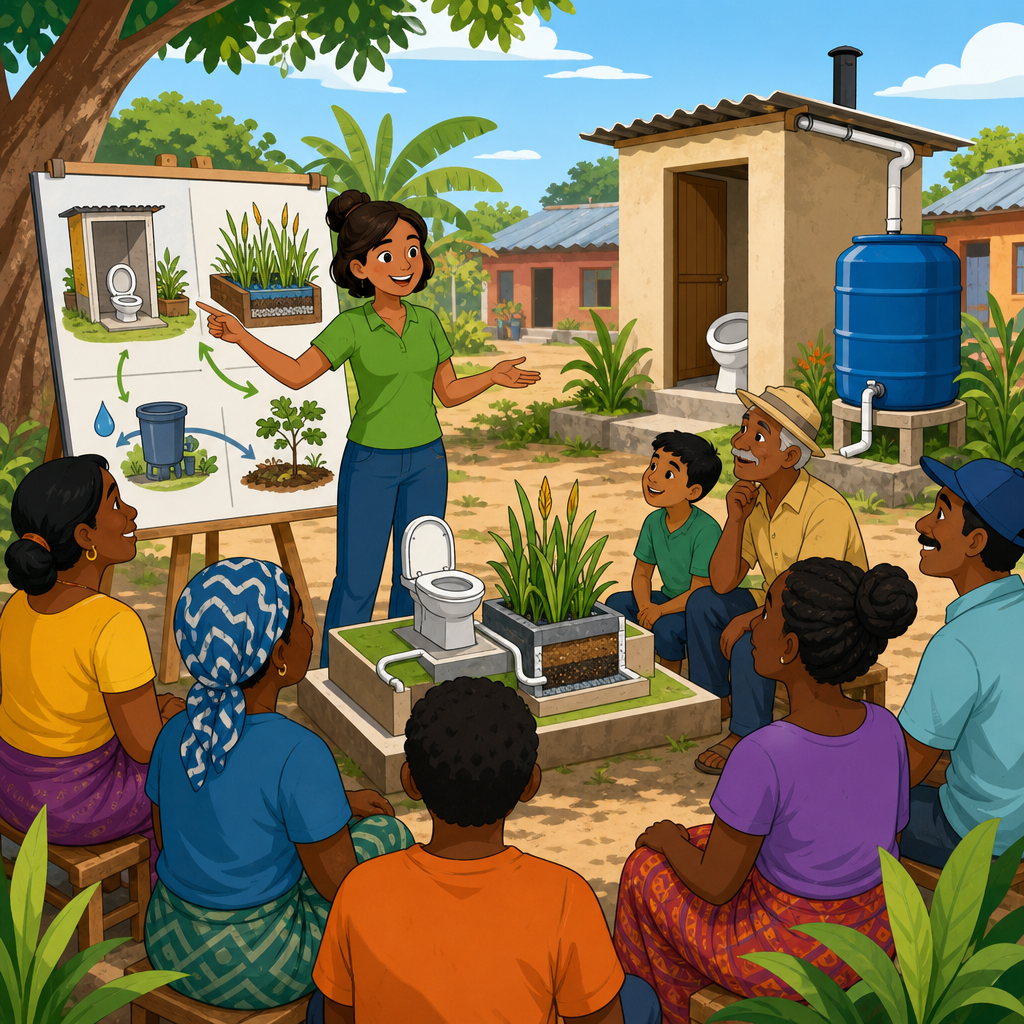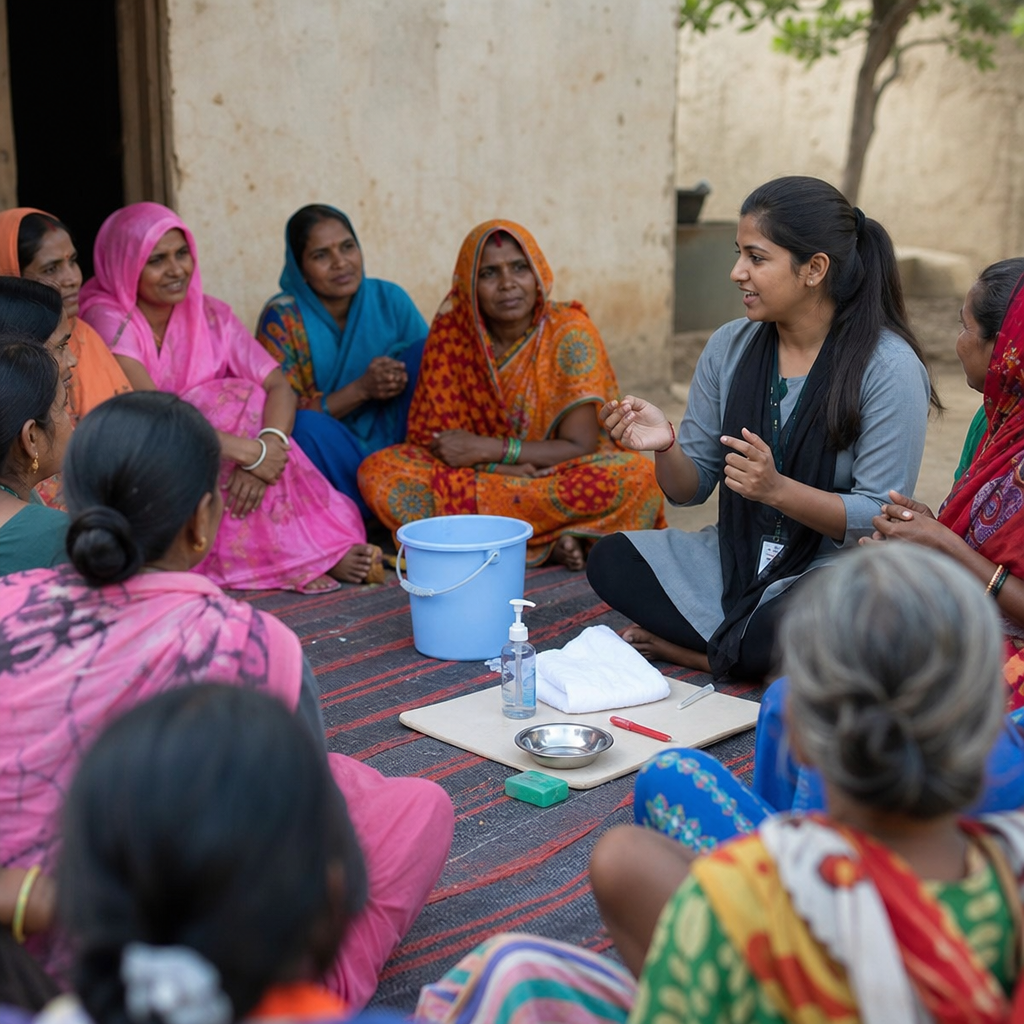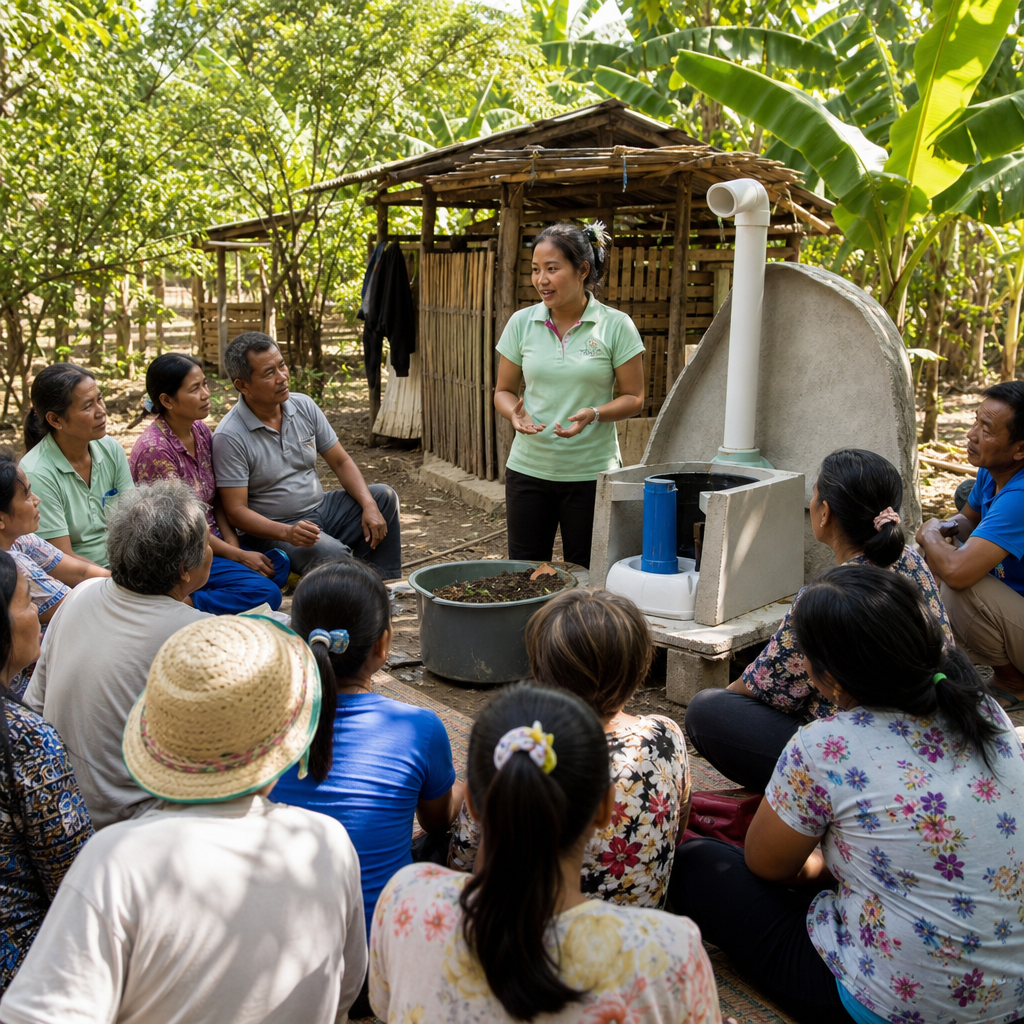
EcoSan and its impact on local economies become most visible when communities learn how the system works, why it matters, and how to manage it themselves through practical workshops. Ecological sanitation, often shortened to EcoSan, is an approach to sanitation that treats human waste as a resource rather than only a disposal problem. In practice, that usually means separating urine and feces, reducing water use, sanitizing by-products, and returning nutrients to soil when local regulations, health safeguards, and agricultural conditions allow it. Community workshops are the bridge between the technical design of EcoSan systems and the everyday habits that make them succeed.
I have seen sanitation projects fail not because the toilets were poorly engineered, but because families were not shown how to maintain vaults, handle ash, understand dehydration time, or see the economic value of recovered nutrients. I have also seen the opposite: once residents, masons, farmers, teachers, and local officials share the same understanding, EcoSan shifts from an unfamiliar toilet model into a local service economy. That matters because sanitation affects public health, school attendance, household spending, agricultural productivity, and the livelihoods of people who build, empty, repair, and manage systems. This hub page explains how community workshops empower people with knowledge, how that knowledge circulates through a local economy, and which workshop practices produce measurable, durable results.
Why community workshops are the engine of EcoSan adoption
Community workshops are structured learning sessions where residents gain the knowledge and confidence to use, maintain, finance, and govern EcoSan systems. They matter because EcoSan depends on behavior as much as hardware. A urine-diverting dry toilet, for example, only performs well when users understand separation, cover material use, moisture control, and cleaning methods that do not damage pipes or block diversion pans. If any of those steps are skipped, odor, insects, and user dissatisfaction appear quickly.
Workshops solve this by turning abstract sanitation messages into hands-on routines. A strong workshop typically includes a live demonstration unit, visual maintenance guides, local language instruction, and time for questions that people may not ask in public meetings about health. In one rural training program I supported, attendance improved when facilitators stopped presenting EcoSan as an environmental idea and instead opened with household economics: lower water bills, reduced fertilizer purchases, and fewer emergency pit emptying costs. Once the financial case was clear, technical training became easier.
These sessions also reduce misinformation. Many first-time users assume all dry sanitation systems smell or that reuse is automatically unsafe. Workshops allow trainers to explain pathogen die-off, storage periods, World Health Organization risk reduction principles, and the difference between fresh excreta and properly treated material. That distinction is critical. Communities do not need vague reassurance; they need precise operating rules and a clear explanation of what is permitted, what is recommended, and what is prohibited.
How knowledge creates local economic value
EcoSan workshops influence local economies by creating both direct and indirect value. Direct value comes from jobs and services: trained masons build toilets, artisans fabricate urine-diversion components, local suppliers sell ash or cover material containers, and maintenance workers provide inspection or emptying support. Indirect value comes from reduced disease burden, less time lost to water collection or toilet breakdowns, and nutrient recovery that can offset spending on synthetic fertilizer.
In agricultural communities, the economic case can be especially strong. Urine contains plant-available nitrogen, potassium, and phosphorus. Fecal matter, once adequately treated according to local guidance, can contribute organic matter that improves soil structure. Workshops teach safe handling protocols and appropriate crop use, which is essential because the value of nutrient recovery depends on good agronomic practice, not simply collection. Farmers need practical guidance on dilution ratios, application timing, storage containers, and recordkeeping. When that guidance is absent, reuse rates remain low and the economic loop never closes.
Households also benefit from cost predictability. Conventional pit systems can require expensive emptying or reconstruction, especially in flood-prone or rocky areas. EcoSan systems often shift spending toward planned maintenance and local consumables instead of emergency services. That shift supports local microenterprises. Over time, the community keeps more sanitation spending circulating nearby rather than sending money to outside contractors after failures or contamination events.
| Workshop Focus | Knowledge Gained | Economic Effect |
|---|---|---|
| User operation | Correct separation, cover material use, cleaning routines | Fewer breakdowns and lower repair costs |
| Construction training | Vault sizing, ventilation, slope, sealing, material selection | Income for local builders and better system lifespan |
| Resource recovery | Safe storage, application timing, crop guidance | Reduced fertilizer purchases and better yields |
| Enterprise management | Pricing, service packages, maintenance scheduling | Growth of sanitation microbusinesses |
| Public health education | Hygiene, pathogen risk reduction, household monitoring | Lower illness-related productivity losses |
Designing workshops that people trust and remember
Effective EcoSan workshops are not lecture-heavy campaigns. They are participatory, practical, and adapted to local livelihoods. The first design principle is audience segmentation. Users, builders, farmers, school staff, health workers, and local leaders each need different levels of detail. A mason needs specifications for urine pipe gradient, vault access, and superstructure durability. A parent needs a simple cleaning routine and signs of misuse. A farmer needs nutrient management advice linked to local crops and seasons.
The second principle is demonstration. Adults learn sanitation best by seeing and doing. I have found that opening the vault inspection chamber, showing correct ash application, and comparing a well-maintained unit with a misused one creates immediate understanding. This is also where trust is earned. Communities are more likely to adopt EcoSan when facilitators answer difficult questions directly: What happens during the rainy season? What if children misuse the pan? How often must material be removed? What are the legal limits on reuse? Clear, operational answers outperform broad awareness messaging.
The third principle is continuity. A single workshop rarely changes sanitation behavior for good. High-performing programs use refresher sessions, household visits, school demonstrations, and peer mentors. In several projects, local champions did more to sustain use than external experts because they could model the routine in familiar conditions. Workshops should therefore produce local trainers, not just informed participants. This train-the-trainer approach is one of the fastest ways to expand sanitation literacy while lowering program costs.
Who benefits economically from EcoSan education
The most immediate beneficiaries are households that gain safer, more reliable sanitation, but the economic impact reaches much further. Builders and masons are often the first local group to monetize EcoSan knowledge. Once trained, they can offer installation, retrofits, inspections, and repairs. In markets where public subsidies are limited, households usually choose the builder they trust most, which means workshop certification or public demonstration days can become a strong local signal of quality.
Women frequently benefit in ways that standard sanitation accounting misses. When toilets are closer, safer, and easier to maintain, time burdens drop. That time can shift toward paid work, farming, schooling, or caregiving. Women also play a central role in household sanitation decisions, so workshops that include them early tend to have better adoption outcomes. In some communities, women’s groups have successfully run cover material supply chains, hygiene education, and nursery production linked to safely managed nutrient reuse.
Young people benefit through skills development. School-based EcoSan education can support science learning, environmental clubs, and vocational pathways in plumbing, masonry, agriculture, and waste management. Local government benefits as well. When communities understand correct use and maintenance, public investments in sanitation last longer. Health clinics may see fewer sanitation-related illnesses, and municipal departments gain stronger data from engaged residents who can report failures early and participate in service planning.
Common barriers and how workshops overcome them
The main barriers to EcoSan adoption are usually social, technical, and institutional rather than purely financial. Social barriers include taboos around handling excreta, resistance to new toilet habits, and concerns about smell or status. Technical barriers include poor construction quality, lack of spare parts, inadequate ventilation, and confusion about maintenance intervals. Institutional barriers include weak local policy, unclear guidance on reuse, and limited follow-up after construction.
Workshops address social barriers by normalizing informed discussion. When facilitators explain the sanitation chain clearly, show treated outputs safely, and invite testimony from respected local users, fear declines. They address technical barriers by standardizing good practice. A trained community can identify whether a problem comes from excess moisture, incorrect cover material, blocked urine diversion, or flawed design. That matters because quick diagnosis prevents abandonment.
Institutional barriers require workshops that include decision-makers, not only end users. Local officials need to understand procurement standards, building oversight, and how EcoSan fits into broader sanitation planning. Public health staff need consistent messages on hygiene and treatment. Agricultural extension officers need evidence-based guidance on nutrient reuse. When these actors are trained separately, the community receives mixed advice. When they learn together, implementation becomes coherent.
Measuring outcomes from community workshops
Communities should not treat workshop success as attendance alone. Useful measurement includes correct usage rates, maintenance compliance, number of functioning units after one year, reduction in repair costs, local enterprise revenue, and changes in fertilizer spending or crop performance where reuse is approved. Baseline and follow-up surveys are valuable, but direct observation is equally important because self-reported sanitation behavior often overstates compliance.
Good programs track both household and market indicators. At the household level, look for cleanliness, odor control, handwashing access, and evidence that users understand routine tasks. At the market level, track how many trained builders are active, whether spare parts are locally available, whether service fees are affordable, and whether farmer demand exists for recovered nutrients or compost-like soil amendments. These indicators show whether EcoSan is becoming a functioning local system rather than a donor-funded installation campaign.
Digital tools can strengthen monitoring. Simple mobile forms built in KoboToolbox or Open Data Kit allow facilitators to record inspection data, map toilet locations, and identify maintenance hotspots. For local governments, this improves planning and budget allocation. For community groups, it supports accountability. The important point is not sophisticated software; it is consistent feedback that turns workshop lessons into operational improvement.
Building a lasting hub for empowering communities through knowledge
As a hub within community engagement and education, this topic should connect sanitation training to related themes that communities actually navigate together: school programs, behavior change communication, local entrepreneurship, health promotion, agricultural extension, and participatory governance. EcoSan works best when knowledge is treated as infrastructure. Toilets, storage chambers, pipes, and slabs matter, but the community’s shared understanding is what protects the investment and unlocks economic return.
The strongest hub content therefore answers practical questions in full. What is EcoSan and how is it different from a pit latrine? What training do users need before installation? How can communities finance workshops? What role do teachers, farmers, and masons play? How should safety guidance be communicated? What indicators prove that a program is helping the local economy? Each supporting article under this hub can go deeper into one of those questions, but the central message remains consistent: people adopt and sustain sanitation systems they understand, trust, and can manage with local skills.
For practitioners, the lesson is straightforward. Do not separate engineering from education or sanitation from livelihoods. Plan workshops from the beginning, budget for follow-up, train local trainers, and measure whether knowledge is changing behavior and creating value. For community leaders, the next step is equally simple: bring users, builders, health workers, farmers, and officials into the same room, start with honest questions, and build EcoSan knowledge as a local economic asset. When communities own the knowledge, they are far more likely to own the results.
Frequently Asked Questions
1. How do community workshops help local economies understand and benefit from EcoSan systems?
Community workshops turn EcoSan from an abstract sanitation concept into a practical local development tool. When residents, farmers, small business owners, health workers, teachers, and local leaders gather to learn how ecological sanitation works, they begin to see how sanitation connects directly to household savings, job creation, soil health, and long-term resilience. Workshops explain the core principles of EcoSan, including source separation, reduced water demand, safe handling practices, treatment methods, and the responsible reuse of nutrients where regulations and health standards permit. This shared understanding helps communities make informed decisions rather than relying on outside assumptions or incomplete information.
From an economic standpoint, workshops are important because they build local capacity instead of long-term dependency on external operators. Participants learn how systems are maintained, what materials are needed, what repairs are common, and how reuse pathways may support agriculture or landscaping. That knowledge can create opportunities for local masons, fabricators, maintenance providers, trainers, and agricultural producers. It also helps households and institutions reduce expenses tied to water use, pit emptying, fertilizer purchases, or poorly functioning sanitation systems. In many communities, the real economic impact begins when workshops give people the confidence to manage the system themselves, organize service models, and keep more of the value within the local economy.
2. What topics are usually covered in EcoSan workshops, and why are they important for community success?
Effective EcoSan workshops usually cover both technical and social topics because successful sanitation systems depend on more than infrastructure alone. On the technical side, workshops often explain how urine-diverting toilets or other EcoSan designs function, how waste streams are kept separate, how moisture is controlled, how sanitization works over time, and what daily use practices prevent odor, pests, or contamination. Participants may also learn about cleaning routines, storage methods, protective equipment, safe transport, and local standards for handling treated outputs. These details matter because a well-designed system can still fail if users do not understand how to operate and maintain it properly.
Just as important are the wider topics that shape adoption and long-term performance. Workshops often address public health, environmental protection, water conservation, agricultural reuse, local regulations, gender considerations, school sanitation, financing options, and community governance. In a strong workshop format, participants can ask practical questions, discuss cultural concerns openly, and see demonstrations that make the process less intimidating. This combination of technical instruction and community dialogue is what supports real success. It helps people understand not only what to do, but also why the system matters and how it can deliver economic and environmental value over time.
3. In what ways can EcoSan workshops create jobs or support small businesses in a community?
EcoSan workshops can be an entry point for new local livelihoods because they introduce a sanitation model that requires skilled construction, user education, routine servicing, material supply, and in some cases the safe management of treated by-products. Once communities understand the system, local entrepreneurs may step in to produce toilet components, provide installation services, offer maintenance contracts, sell cover materials, organize collection logistics, or support treatment and reuse operations under approved conditions. Workshops help identify these opportunities early by showing where labor, knowledge, and local enterprise fit into the sanitation value chain.
They also reduce a major barrier to business development: uncertainty. When people understand how EcoSan systems function and what standards must be followed, they are more likely to trust local providers and invest in services. For example, a workshop may help a trained builder specialize in EcoSan toilet construction, or it may encourage a farming cooperative to explore the safe and regulated use of treated nutrients as part of broader soil management strategies. In addition, workshops often reveal support roles that are easy to overlook, such as community educators, monitoring staff, spare-parts suppliers, and sanitation committee members. While the exact business opportunities depend on local policy, demand, and health safeguards, workshops often lay the groundwork for a more circular local economy in which sanitation spending creates value close to home.
4. Why is local participation so important when introducing EcoSan through workshops?
Local participation is essential because EcoSan works best when it is shaped around real community conditions rather than imposed as a one-size-fits-all solution. Sanitation habits, available materials, water access, farming practices, land constraints, climate, and cultural attitudes all affect whether a system will be accepted and maintained. Workshops create a space where these realities can be discussed openly. Residents can explain what is practical, what concerns them, what they can afford, and what kind of support they need. That feedback helps planners and facilitators adapt the design, training approach, and management model so the system is more likely to succeed.
Participation also strengthens accountability and ownership. When people are involved in learning, questioning, and decision-making from the start, they are more likely to use the system correctly, monitor problems early, and support ongoing maintenance. This directly affects economic outcomes. A sanitation system that communities understand and trust is more likely to stay functional, protect public health, and avoid the costly cycle of breakdown and replacement. Workshops that encourage local leadership, peer learning, and hands-on demonstrations often produce better long-term results because they build confidence and practical competence at the community level. In short, participation is not just a social ideal; it is a key factor in making EcoSan financially and operationally sustainable.
5. How can communities measure the economic impact of EcoSan workshops over time?
Communities can measure the economic impact of EcoSan workshops by looking at both direct financial changes and broader local development outcomes. Direct indicators may include reduced household spending on water, lower sanitation-related maintenance or emptying costs, fewer disruptions caused by failing systems, and lower fertilizer expenses where treated outputs are legally and safely reused. Communities can also track how many local people were trained, how many EcoSan units were built or maintained by local workers, and whether new businesses or service roles emerged after the workshops. These are practical measures that help show whether knowledge-sharing is translating into economic activity.
Broader indicators are just as valuable. Communities may examine whether school or workplace sanitation has improved, whether time savings have increased productivity, whether agricultural plots show better soil management outcomes, and whether local governments are spending less on emergency sanitation responses. Surveys, follow-up visits, maintenance records, and local business data can all contribute to a clearer picture. It is also helpful to compare conditions before and after workshops so the community can distinguish real progress from assumptions. The strongest evaluation approach combines economic, health, environmental, and operational indicators because EcoSan’s value is rarely limited to one category. Over time, workshops should not only increase technical understanding but also support a more self-reliant local sanitation system that keeps knowledge, skills, and economic benefits rooted in the community.