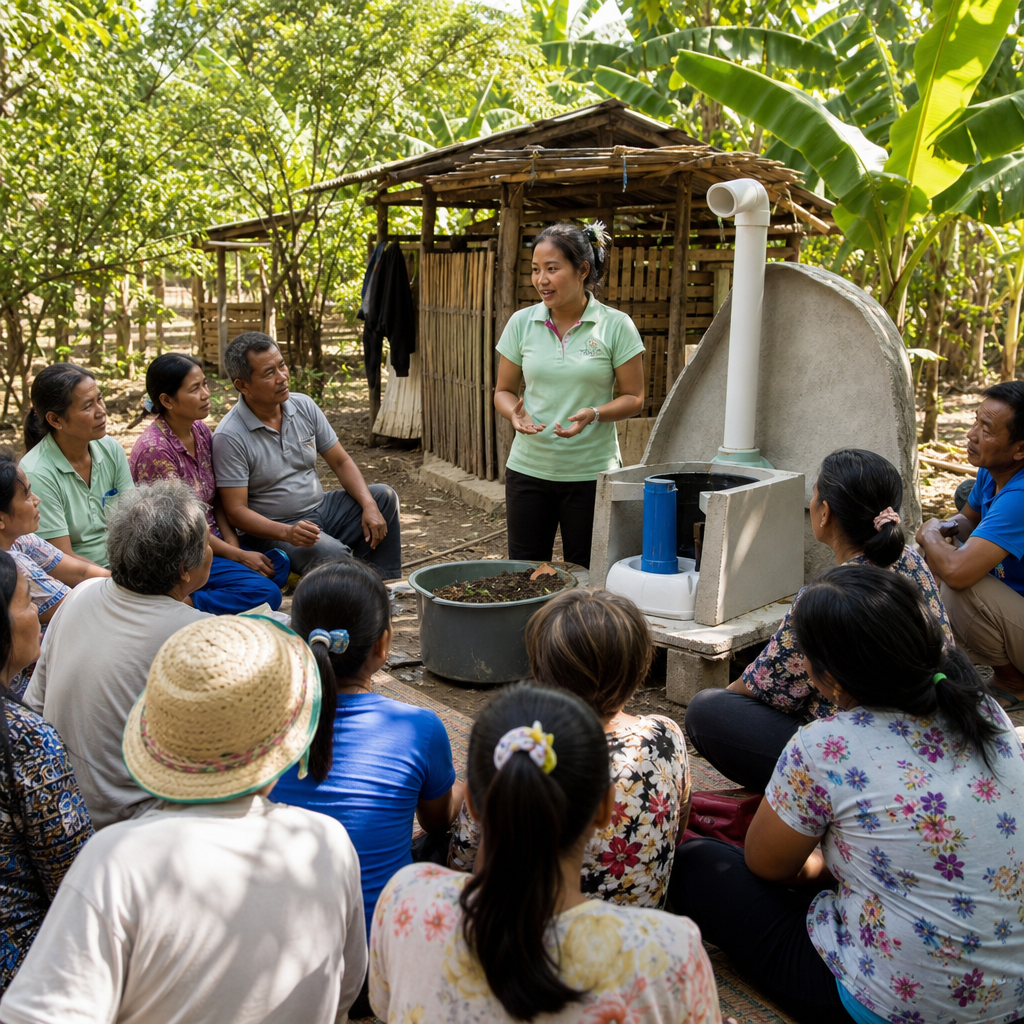
EcoSan education in Indigenous communities is most effective when it treats sanitation as both a technical system and a cultural relationship with land, water, health, and shared responsibility. Ecological sanitation, often shortened to EcoSan, refers to approaches that safely separate, treat, and reuse human waste as a resource rather than disposing of it as useless matter. In practice, that can include urine-diverting dry toilets, composting toilets, handwashing stations, greywater reuse, and community-led hygiene education. In Indigenous communities, however, EcoSan education is not simply about teaching toilet use. It is about strengthening local decision-making, respecting traditional knowledge, reducing contamination, improving dignity, and building systems people can manage for decades.
I have seen sanitation projects succeed when education came first and hardware came second. Where outside teams arrived with preselected toilet designs and generic posters, facilities often sat unused, broke down, or conflicted with local customs. Where communities helped define health priorities, water realities, household roles, and acceptable maintenance routines, adoption rose sharply. This matters because many Indigenous communities face a mix of historic underinvestment, remote geography, fragile water supplies, overcrowding, climate pressures, and public health burdens such as diarrheal disease, parasitic infection, and unsafe waste disposal. Education is the bridge between infrastructure and lasting use.
As a hub topic under community engagement and education, empowering communities through knowledge means creating learning systems that are practical, respectful, multilingual, intergenerational, and tied to local governance. It includes school programs, elder-led knowledge sharing, operator training, women’s health discussions, maintenance planning, and monitoring based on community priorities. Effective EcoSan education answers direct questions: What is EcoSan? Why use it? Is it safe? Who maintains it? What happens to waste? How are children taught? What does success look like after five years? The strongest programs answer each question clearly, with examples people can test in daily life.
Why EcoSan education must begin with culture, land, and trust
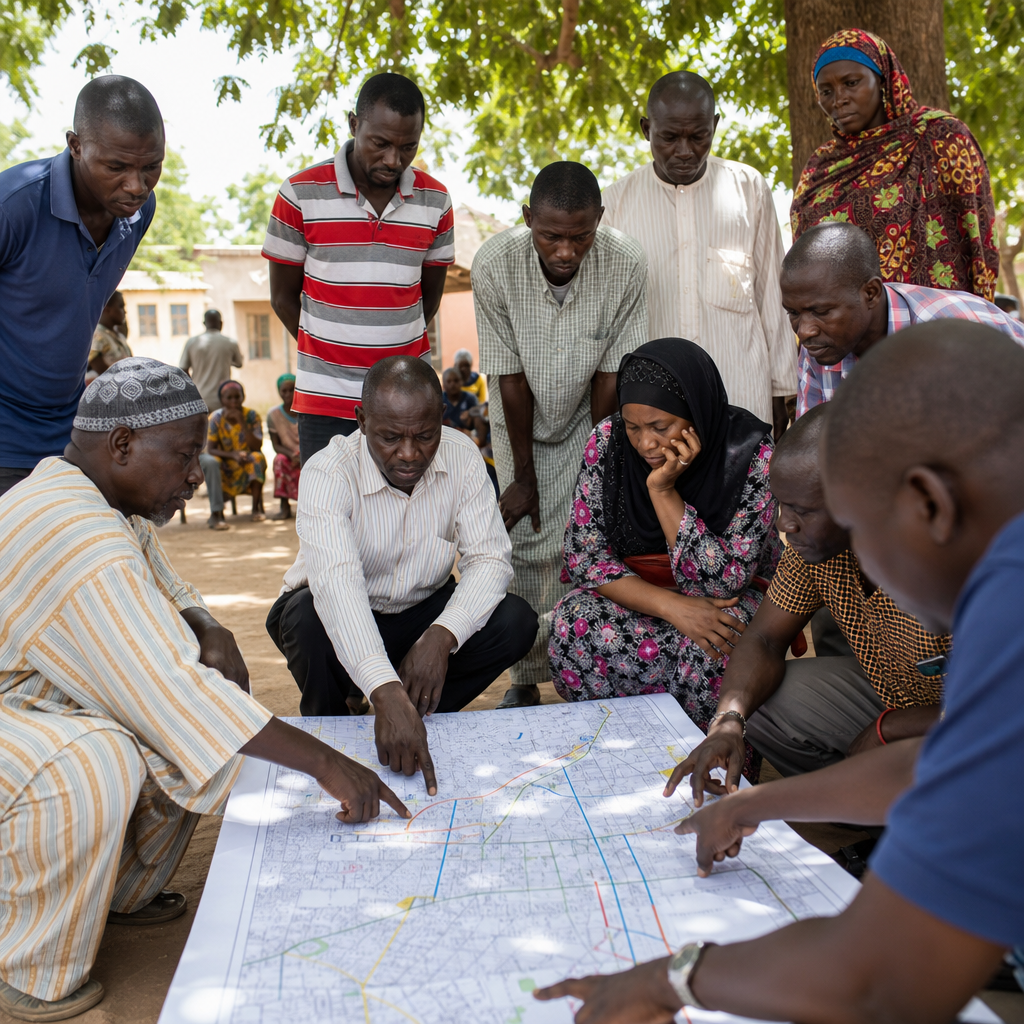
In Indigenous communities, sanitation cannot be separated from place. Water sources may be sacred, seasonal, or already stressed by drought, flooding, mining, or failing centralized systems. Concepts of cleanliness, privacy, menstruation, caregiving, and waste handling may vary across nations and clans. That is why community engagement must start with listening sessions, household visits, and mapping exercises rather than technical lectures. The purpose is not token consultation. It is to understand daily habits, language preferences, accessibility needs, spiritual concerns, and governance structures that shape whether any sanitation system will be accepted.
Trust is usually the deciding factor. Communities that have experienced extractive research or short-term pilot projects are rightfully cautious. Education programs work better when they are delivered by trained local facilitators, health workers, teachers, and respected elders, with external specialists acting as support rather than authority. In my experience, a simple shift in approach changes everything: instead of saying, “Here is the toilet we brought,” teams ask, “What sanitation problems do you want solved, and what conditions must any solution respect?” That creates ownership from the start.
Local knowledge also improves technical outcomes. Residents know where the ground floods, which paths become inaccessible in winter, how many people actually use a household toilet, and what maintenance burden is realistic. They understand whether ash, sawdust, leaves, or other cover materials are available year-round. They know if water hauling is difficult, whether schools can manage handwashing stations, and which households need design adaptations for elders or people with disabilities. Education that captures this knowledge produces better siting, safer operation, and stronger long-term performance.
Core components of empowering communities through knowledge
An effective EcoSan education hub combines health literacy, technical instruction, local leadership development, and practical behavior support. The health literacy piece explains fecal-oral disease pathways, hand hygiene, safe water handling, vector control, and why separating waste from living areas protects children. The technical instruction covers how specific systems function, what users must do each day, how to troubleshoot odor or moisture problems, and how treated outputs can be managed safely under local regulations. Leadership development prepares community champions to train others, keep records, and advocate for resources. Behavior support reinforces new habits until they become normal practice.
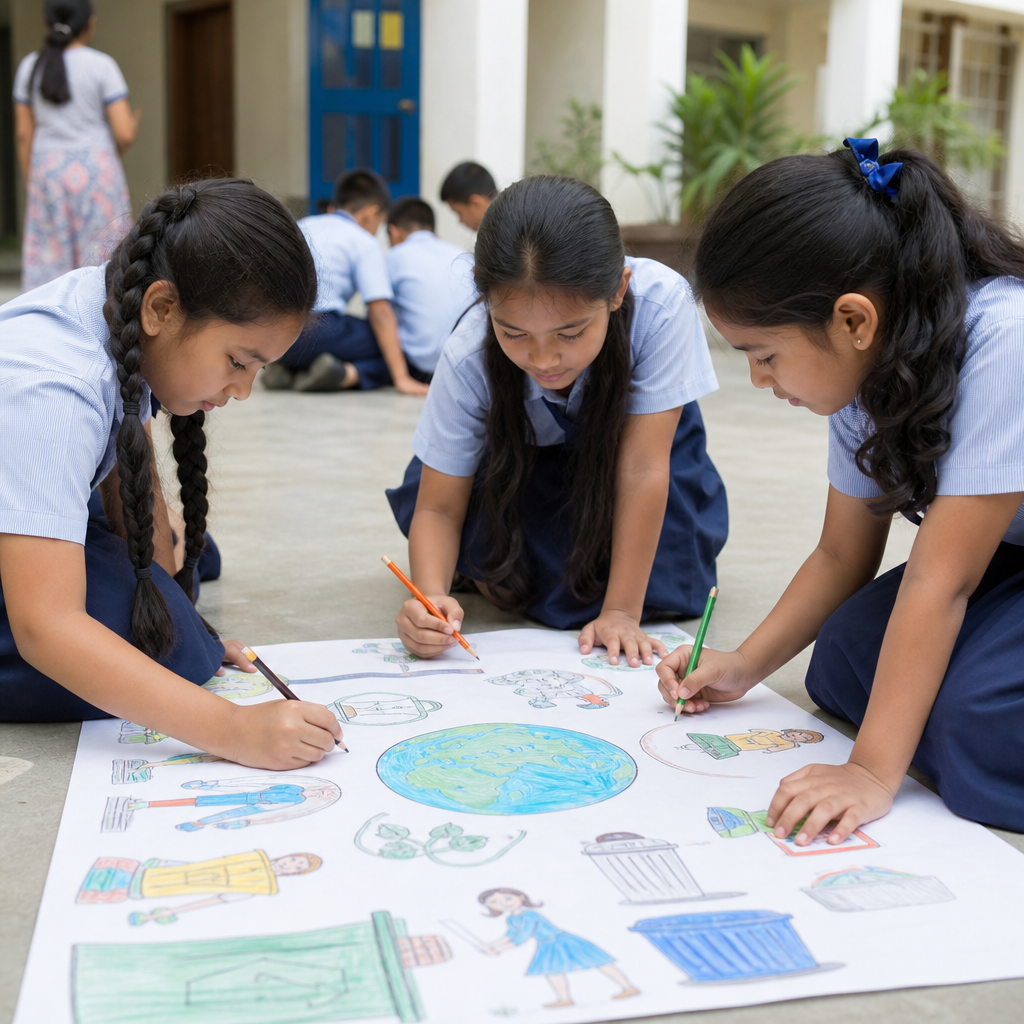
Programs are strongest when they segment audiences instead of teaching everyone the same way. Schoolchildren need hands-on demonstrations and age-appropriate hygiene lessons. Household caregivers need clear guidance on cleaning routines, menstrual hygiene management, and child toilet training. Operators need maintenance schedules, personal protective equipment protocols, and treatment standards. Community leaders need budget models, replacement plans, and evidence to support policy decisions. This layered education model prevents the common failure point where only the initial trainees understand the system.
| Audience | Primary learning need | Best teaching format | Example topic |
|---|---|---|---|
| Elders and leaders | Governance and cultural fit | Dialogue circles and planning meetings | Site rules, stewardship roles, long-term oversight |
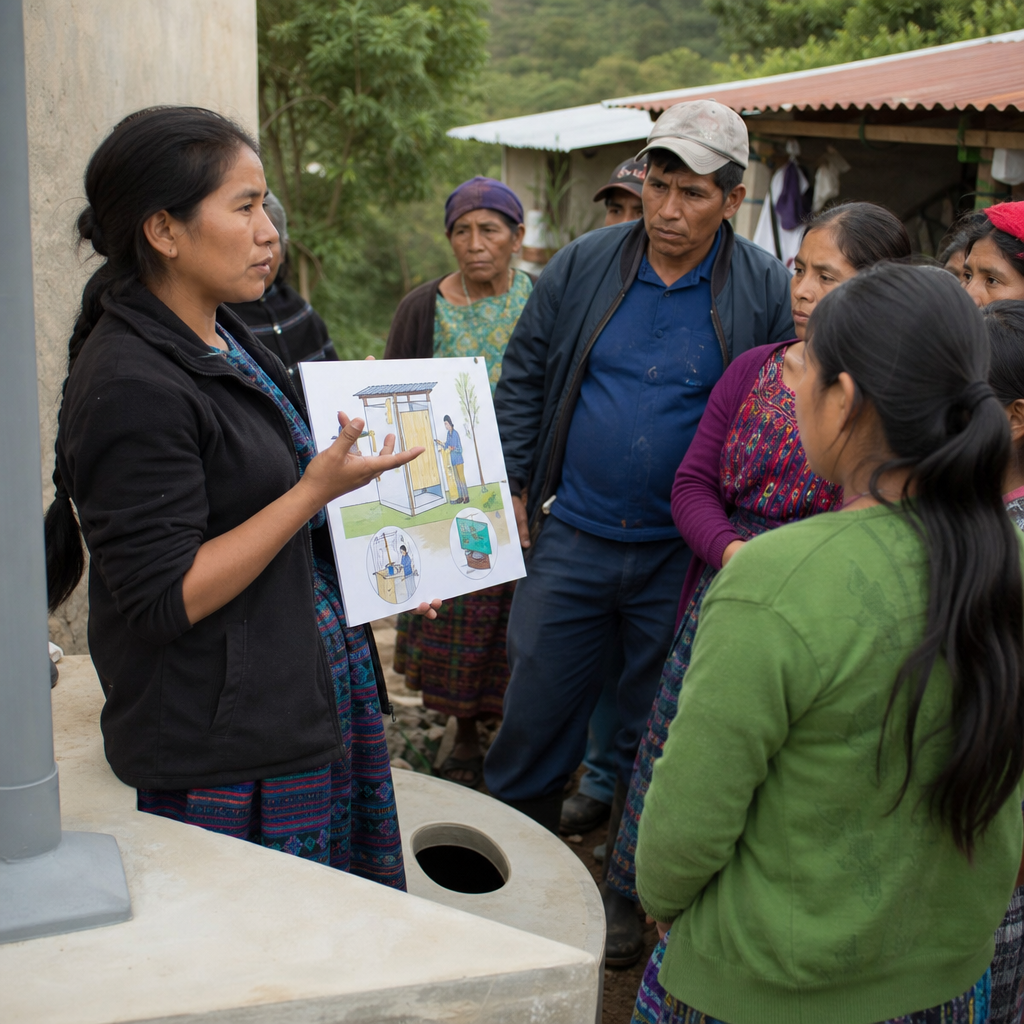
| Households | Daily use and hygiene | Home visits and visual guides | Adding cover material, cleaning, handwashing |
| Schoolchildren | Habits and health basics | Interactive lessons and demonstrations | How germs spread and why toilet use matters |
| Operators | Maintenance and safety | Hands-on technical training | Ventilation checks, vault emptying, recordkeeping |
| Health staff | Monitoring and outreach | Workshops and household follow-up | Tracking illness trends and reinforcing messages |
This structure creates internal linking signals across the broader community engagement and education topic because each audience naturally connects to related pages on school sanitation, women’s health, maintenance training, participatory planning, and monitoring. As a hub, this page should point readers toward those specialized resources while clearly establishing the overarching principle: knowledge transfer only works when it is designed for the people who will use, manage, and defend the system.
Teaching EcoSan systems in plain terms without losing technical accuracy
Many sanitation projects fail because explanations are either too vague or too technical. Communities deserve precision in plain language. For example, a urine-diverting dry toilet works by collecting urine and feces separately. Separation reduces smell, lowers moisture in the feces chamber, and supports safer drying or composting. Users must sit or squat in a way that sends urine to the front diversion area. Dry cover material such as ash or sawdust is added after defecation to reduce flies, absorb moisture, and support treatment. If too much liquid enters the solids chamber, odors increase and decomposition slows. That single explanation gives people both the reason and the action.
Safety education must be equally direct. Untreated human waste can carry pathogens including bacteria, viruses, protozoa, and helminths. Treatment time, dryness, temperature, pH, and storage conditions determine when outputs can be handled or reused more safely. Standards vary by climate and jurisdiction, so no education program should promise blanket safety without local verification. Where reuse is part of the system, guidance should align with recognized frameworks from the World Health Organization and national sanitation authorities. Communities need to know exactly what is permitted, what is prohibited, and what protective steps are nonnegotiable.
It also helps to compare EcoSan with alternatives honestly. Flush toilets can be convenient, but they require reliable water supply, pipes, treatment capacity, and funding for operation. Pit latrines are common and lower-cost, but they can contaminate groundwater in some soils and high water table areas. EcoSan can reduce water demand and support nutrient recovery, yet it requires consistent user behavior and maintenance. Presenting these tradeoffs builds credibility. People are more likely to adopt a system when educators admit its responsibilities instead of pretending every option is effortless.
Methods that make Indigenous sanitation education effective
The most durable programs use participatory methods, not one-way instruction. Community mapping identifies homes, schools, water points, flood zones, and current defecation or dumping areas. Seasonal calendars reveal when roads are cut off, when maintenance materials are scarce, and when disease risk spikes. Demonstration units let families test comfort, privacy, odor control, and cleaning routines before scaling up. Training-of-trainers models build local capacity so the knowledge remains after external funding ends. Visual materials with local language labels, photographs, and symbols work better than imported manuals full of unfamiliar examples.
Storytelling is especially powerful. In many communities, public health concepts land more effectively when connected to lived experience: a grandparent recalls hauling water through winter, a parent describes repeated stomach illness in children, or an operator explains how a vent cap prevented flies after a storm. These stories convert abstract sanitation messages into practical memory. School programs can extend that impact by linking hygiene to science lessons, gardening, watershed protection, and cultural teachings about caring for the land. When students bring those lessons home, education spreads through families.
Monitoring should also be participatory. Rather than only counting toilets built, communities can track indicators that matter locally: handwashing station use, odor complaints, maintenance completion, school attendance during menstruation, diarrhea episodes, vault fill rates, and repair response time. Simple tools such as checklists, wall charts, KoboToolbox forms, or Open Data Kit surveys can support this process. The point is not bureaucratic reporting. It is making progress visible so the community can solve problems early.
Common barriers and how communities overcome them
Several barriers appear repeatedly across EcoSan education efforts. The first is stigma. Talking about feces, menstruation, and toilet maintenance can be uncomfortable, especially across age groups or with outside facilitators. Skilled programs address this by creating separate discussion spaces when needed, using culturally appropriate language, and normalizing sanitation as a health and dignity issue rather than a shame topic. The second barrier is maintenance fatigue. If one person, often a woman, becomes the default caretaker without support, systems are less likely to last. Clear role-sharing and routine schedules prevent that problem.
Another barrier is supply instability. Dry toilets may depend on cover materials, replacement parts, or protective gear that are hard to source in remote locations. Education must therefore include local supply planning, storage, and simple contingency procedures. Climate is another challenge. High humidity can slow drying; freezing temperatures can affect urine lines; flooding can damage structures. The best training addresses these realities upfront with design adaptations such as raised platforms, insulated piping, larger storage capacity, and weather-specific maintenance steps.
Finally, there is the barrier of short project timelines. Behavior change and trust building take longer than construction schedules. Communities overcome this when funders support phased engagement, refresher training, and local staffing beyond the installation period. A well-built toilet without education is a short-term asset. A community that understands, governs, repairs, and teaches its system has long-term sanitation security.
Building a lasting community education hub
As the hub for empowering communities through knowledge, EcoSan education in Indigenous communities should connect every sanitation decision back to community leadership, practical learning, and stewardship of land and water. The essential lesson is straightforward: technology alone does not create sanitation success. People do. When education is culturally grounded, technically accurate, and organized around real household and community roles, EcoSan systems become more usable, safer, and more resilient. They also create local expertise that reduces dependence on outside contractors and makes future improvements easier to plan.
The strongest hub content supports action at multiple levels. It helps leaders frame policy, gives teachers and health workers adaptable learning tools, shows households how to use systems confidently, and points operators toward maintenance excellence. It also links naturally to related subtopics such as participatory design, school engagement, hygiene promotion, menstrual health, monitoring, and community-led maintenance. That is the true meaning of empowering communities through knowledge: not delivering information once, but building an ongoing local capability to make informed sanitation choices.
If you are developing sanitation programs, start by listening before designing, training before installing, and partnering before promising results. Build education with the community, not just for the community. That approach protects health, strengthens trust, and gives EcoSan the best chance to succeed for the long term.
Frequently Asked Questions
What is EcoSan, and why is it especially relevant in Indigenous communities?
Ecological sanitation, or EcoSan, is an approach to sanitation that treats human waste not simply as something to remove, but as a material that can be safely managed, treated, and in some cases reused as part of a healthy local system. Instead of relying only on conventional sewer-based disposal, EcoSan may include urine-diverting dry toilets, composting toilets, handwashing stations, greywater reuse systems, and other methods that reduce contamination, conserve water, and support nutrient cycling. The goal is to protect human health while also respecting the land, water, and long-term wellbeing of the community.
In Indigenous communities, EcoSan education is particularly relevant because sanitation is often connected to deeper cultural values about stewardship, reciprocity, shared responsibility, and the relationship between people and place. In many communities, land and water are not viewed as passive resources, but as living relations that require care and protection. EcoSan aligns well with this perspective when it is taught and implemented in a way that honors Indigenous knowledge, local governance, and community-defined priorities. Rather than introducing sanitation as a purely technical fix, effective EcoSan education recognizes that infrastructure, health, culture, and environmental care are interconnected.
It is also highly relevant in settings where conventional sanitation systems may be expensive, difficult to maintain, poorly suited to local geography, or dependent on unreliable water and utility infrastructure. Remote communities, areas with sensitive ecosystems, and places facing groundwater contamination or water scarcity can benefit from sanitation strategies that are more adaptable and locally manageable. When communities lead the process, EcoSan can support practical improvements in hygiene and health while strengthening local capacity, environmental protection, and cultural continuity.
How should EcoSan education be taught in Indigenous communities to be respectful and effective?
EcoSan education is most effective when it is community-led, culturally grounded, and based on relationship-building rather than one-way instruction. Respectful teaching begins by recognizing that Indigenous communities already hold extensive knowledge about land, water, seasonal cycles, health practices, and collective care. Outside educators, technical specialists, and partner organizations should begin by listening, asking permission, and learning how the community defines sanitation challenges, health priorities, and acceptable solutions. This helps ensure that EcoSan is not imposed as an outside model, but adapted in ways that make sense locally.
In practice, this means educational programs should involve Elders, local leaders, youth, health workers, and families from the earliest stages. Workshops are often more successful when they include discussion of cultural teachings about water protection, cleanliness, dignity, and responsibility alongside practical instruction on toilet use, maintenance, compost handling, handwashing, and greywater management. Demonstration sites, hands-on training, visual materials in local languages, and peer educators from within the community can all make learning more accessible and more trusted. The strongest programs connect technical knowledge with lived experience rather than separating them.
It is also important to frame EcoSan education as an ongoing process, not a single training session. People need space to ask questions, raise concerns, test systems, and refine practices over time. Follow-up visits, local maintenance training, school-based learning, and community feedback sessions all improve long-term outcomes. Respectful education also addresses privacy, gender roles, disability access, and household routines, because sanitation systems only work well when they fit daily life. When communities have real decision-making power over design, messaging, placement, and maintenance, EcoSan education becomes far more effective, trusted, and sustainable.
What are the main health and environmental benefits of EcoSan systems?
The primary health benefit of EcoSan is that it helps break the cycle of disease transmission by improving how human waste is contained, treated, and kept away from drinking water, food, hands, and living spaces. Poor sanitation can contribute to diarrhea, parasitic infections, skin conditions, and other illnesses, especially where waste contaminates soil or water sources. EcoSan systems are designed to reduce these risks by separating waste streams, supporting safe treatment, and encouraging associated hygiene practices such as handwashing and safe water handling. When education is done well, families understand not just what to do, but why each step matters for community health.
Environmentally, EcoSan can significantly reduce pollution of rivers, lakes, wetlands, and groundwater. Conventional systems that leak, overflow, or depend on poorly managed disposal can damage sensitive ecosystems and threaten both human and ecological health. EcoSan approaches are designed to minimize direct contamination and, in some cases, recover nutrients in ways that support soil fertility rather than wasting them. This is especially valuable in places where water is scarce, soils are fragile, or local ecosystems are central to food harvesting, cultural practices, and spiritual life.
Another major benefit is water conservation. Many EcoSan systems, particularly dry or low-water designs, reduce the need for large volumes of water to transport waste. This can be essential in communities facing drought, limited infrastructure, or the high cost of water delivery and wastewater treatment. EcoSan can also support broader environmental resilience by linking sanitation with composting, household hygiene, and greywater reuse where appropriate. Taken together, these health and environmental benefits make EcoSan more than a toilet technology; it becomes part of a community-wide strategy for protecting people, land, and water for future generations.
What challenges can come up when introducing EcoSan education and systems, and how can they be addressed?
One of the most common challenges is the assumption that a sanitation system that works in one place will automatically work in another. In reality, EcoSan systems must fit local climate, soil conditions, housing patterns, cultural preferences, maintenance capacity, and community governance. If a design is introduced without consultation or adaptation, people may find it inconvenient, confusing, or incompatible with daily routines. Education can also fail if it focuses only on technical instructions and ignores local beliefs, language, or concerns about smell, privacy, safety, dignity, or handling treated materials. These issues are not minor; they are central to whether a system will actually be used and maintained.
Another challenge is long-term support. Even well-designed systems can fall into disrepair if spare parts are unavailable, maintenance roles are unclear, or training is too brief. Some communities may also have understandable skepticism based on past experiences with outside projects that were underfunded, poorly explained, or abandoned after installation. Building trust requires transparency, time, and accountability. It helps to train local operators, create simple maintenance plans, ensure materials can be sourced locally where possible, and establish clear responsibilities for households, schools, or community institutions.
Addressing these challenges starts with participatory planning. Communities should help select technologies, identify suitable locations, define educational priorities, and evaluate what success looks like. Pilot projects and demonstration units can allow people to see, question, and improve a system before broader adoption. It is also essential to communicate clearly about safe use, treatment timelines, hygiene, and any reuse practices so that people feel informed rather than pressured. When EcoSan education is approached as a partnership grounded in respect, adaptation, and long-term support, challenges become more manageable and the likelihood of lasting success increases significantly.
How can EcoSan education support long-term community wellbeing beyond sanitation alone?
EcoSan education can have effects that reach far beyond the immediate goal of safer sanitation. At a practical level, it can strengthen community knowledge about hygiene, water protection, household health, waste management, and environmental stewardship. When people understand how sanitation connects to soil, water quality, food systems, and disease prevention, they are better positioned to make informed decisions in many areas of community life. This can improve resilience, especially in places where infrastructure is limited or where environmental changes are increasing pressure on local resources.
It can also contribute to local capacity and self-determination. Training community members to build, monitor, maintain, and teach EcoSan systems reduces dependence on outside contractors and creates a foundation for local leadership. Youth engagement is especially valuable, because it allows technical learning to be connected with cultural knowledge, intergenerational teaching, and future community planning. In schools and community programs, EcoSan education can become part of a broader conversation about health, climate adaptation, land care, and the responsibilities people share toward one another and the natural world.
Perhaps most importantly, EcoSan education can reinforce a holistic understanding of wellbeing. In many Indigenous contexts, health is not limited to the absence of disease; it includes balance among people, community, culture, land, and water. Sanitation systems that are taught and managed within this broader framework can support dignity, safety, environmental care, and cultural continuity all at once. That is why the most meaningful EcoSan education does not treat sanitation as an isolated technical subject. It treats it as part of a larger, living relationship with place, responsibility, and collective wellbeing.